

As a child reaches the age of seven, they enter a fascinating developmental stage, often bridging the gap between early childhood and later school years. This is a period of rapid growth in cognitive, social, and emotional domains, where the building blocks of literacy and numeracy firmly take hold, and complex skills like problem-solving and emotional regulation begin to emerge. Providing your child with fun learning activities is crucial for nurturing this development.
This guide offers a wide selection of engaging, developmental, and fun activities specifically designed for children aged 7 that support core developmental skills: from foundational academics to burgeoning creativity and emotional development. The goal isn’t just to entertain, but to encourage your child to explore, question, and ultimately, love the process of learning.
Games and Activities
Activities for 7-year-olds need to be diverse to match their blossoming curiosity and energy. This age group thrives on structure blended with imagination. Introducing a range of games and activities helps develop essential learning skills, improves focus, and offers plenty of fun—crucial for sustained engagement. Cognitive and social skills are significantly boosted through activities like movement games, logic tasks, and creative projects that require them to interact and think critically.
| Activity Category | Examples of Fun Activities | Core Developmental Benefits |
| Movement Games | Classic scavenger hunt, “Simon Says” variations, outdoor tag games | Gross motor skills, following instructions, energy release |
| Creative Games | Building with found objects, shadow puppetry, making a craft project | Imagination, fine motor skills, expressive language |
| Logic Tasks | Simple sudoku, beginner logic puzzles, chess or checkers | Problem-solving skills, critical thinking, patience |
| Family Games | Board games, cooperative card games, family riddle challenges | Turn-taking, sportsmanship, communication, bonding |
Language Games
Word-based games are an excellent way to improve vocabulary, speaking, reading fluency, and verbal creativity. Simple games like “I Spy” become more complex at this age by focusing on adjectives or categories. Try “Story Starters,” where one person begins a story with a single sentence, and the next person adds a sentence, gradually building a narrative. This is a great, simple way to teach children storytelling and sequencing.
Phonics Games
At age seven, many children learn to decode sounds and letter patterns more fluently. Activities that help them sound out words, improve spelling, and build reading confidence are vital. Creating silly rhyming strings or having your child identify all the words in a book that contain a specific phoneme (like “sh” or “th”) are great ways to practise this skill.
Memory Games
Fun exercises that boost memory retention, focus, and attention span can be as simple as playing “Concentration” with homemade cards or using sequences. The classic memory game “I Went to the Shops” can be adapted to make it progressively harder, challenging your child to remember a growing list.
Listening Games
The ability to listen and follow multi-step instructions is a key life skill. Games like “Statues” (where the child freezes when the music stops) or “Telephone” (Whispers) strengthen auditory processing. A great way to encourage your child is to give them three- or four-step instructions for a simple household task, like “Go to the kitchen, find the red bowl, and bring it back to the table.”
Action Games
Physical development is still important! Incorporating action into learning with physical games helps release energy, build coordination, and promotes teamwork. Outdoor learning with a nature scavenger hunt is a fantastic example, combining movement with observation skills.
Tactile Games
Hands-on activities that involve sensory play, textures, and shapes are essential for improving fine motor skills and spatial reasoning. Creating a homemade batch of playdough or kinetic sand, and then challenging your child to build specific shapes or models, provides hours of quiet, focused time.
Screen Games
In the digital age, supervised screen time can be an effective tool for interactive learning. There are many educational apps and programs that offer structured, fun and educational content. For example, platforms like Twinkl Kids TV or Twinkl Parents offer engaging, curriculum-aligned videos and interactive logic puzzles that make learning maths and literacy entertaining.
Car Journey Games
Long journeys don’t have to be a struggle. Travel-friendly, no-prep activities that boost imagination and communication are lifesavers. Classic word games like “The Alphabet Game” (find something starting with each letter) or telling a collaborative story where each person adds a sentence keep children aged 7 to 11 happily entertained.
Practical Activities
Teaching independence and applied skills can be done through everyday tasks. Allowing your child to manage simple life skills, such as sorting laundry, helping set the dinner table, or making their own sandwich, boosts confidence and shows them the practical application of sequencing and responsibility.
Read Together
The benefits of shared reading at age seven go beyond just literacy growth. It strengthens comprehension, builds a strong parent-child bond, and exposes your child to read more complex stories. Even if your child can read independently, continuing to read aloud to them exposes them to higher-level vocabulary and sentence structures.
Play Maths Games
Math games are a superb way to make numbers and logic puzzles engaging. Using dice to add and subtract, playing dominoes, or even setting up a small “shop” with play money provides a great opportunity for your child to learn applied arithmetic in a fun and engaging way.
Cook Together
Cooking involves a host of fundamental skills: following a recipe (sequencing), measuring ingredients (math), and understanding safety. Allowing your child to help you cook together for a simple meal or bake cookies is an excellent way to help them learn practical skills. This is both enjoyable and a great way to reinforce concepts in a real-world scenario.
Activities for Age 7
A structured approach to fun and educational activities throughout the week ensures a balanced development. By the age of seven, children benefit from a routine that incorporates academics, creativity, and physical activity.
Daily Skill Boosters
These are short, focused activities that can be slotted in during a quiet time, like after school or before dinner.
- Reading Fluency: Spend 10-15 minutes reading aloud together, focusing on expression.
- Math Fact Recall: Use flashcards or simple digital math games to practise addition and subtraction facts.
- Journaling/Creative Writing: Encourage your child to write three sentences about their day or invent a short story. This can be supported with a printable writing frame if needed.
Weekend Creativity Projects
Weekends offer time for larger, more in-depth projects that demand planning and sustained effort.
- Building a craft or model from recycled materials.
- Designing a blueprint for a ‘dream house’ or a fantasy city.
- Putting on a short play or puppet show for a friend or family member.
Outdoor Learning
Nature-based exploration builds essential motor skills, scientific curiosity, and a sense of wellbeing.
- Start a small scavenger hunt with a list of nature items to find (a smooth stone, a curly leaf, a feather).
- Visit a local park and try climbing frames or balance beams to boost physical development.
- Learn to identify local birds or trees.
Make Own Comic
Creating a comic strip is an excellent way to boost literacy and artistic skills. It improves storytelling, sequencing, drawing, and character development in a way that is incredibly appealing to this age group. A comic allows the child to complete a story project that is less intimidating than a long written essay.
Comic Planning Steps
- Character Creation: Decide on a main character, a sidekick, and perhaps a villain (as detailed in a later section).
- Plot Idea: What is the main conflict? Keep it simple: a lost pet, a small mystery, or a silly adventure.
- Panels & Captions: Map out the story in six to eight simple panels. Use captions for scene setting and speech bubbles for dialogue.
Drawing Tips for Kids
Focus on making the characters expressive. Simple shapes for bodies and exaggerated features (big eyes, wide smiles) help convey emotion and action. Remember, this is a fun activity—the drawing doesn’t need to be perfect!
Story Sequencing Practice
The panel-based structure is fantastic for building logical thinking. Each panel must logically lead to the next. You can ask: “What needs to happen before your character can find the treasure?”
Write Own Tongue-Twisters
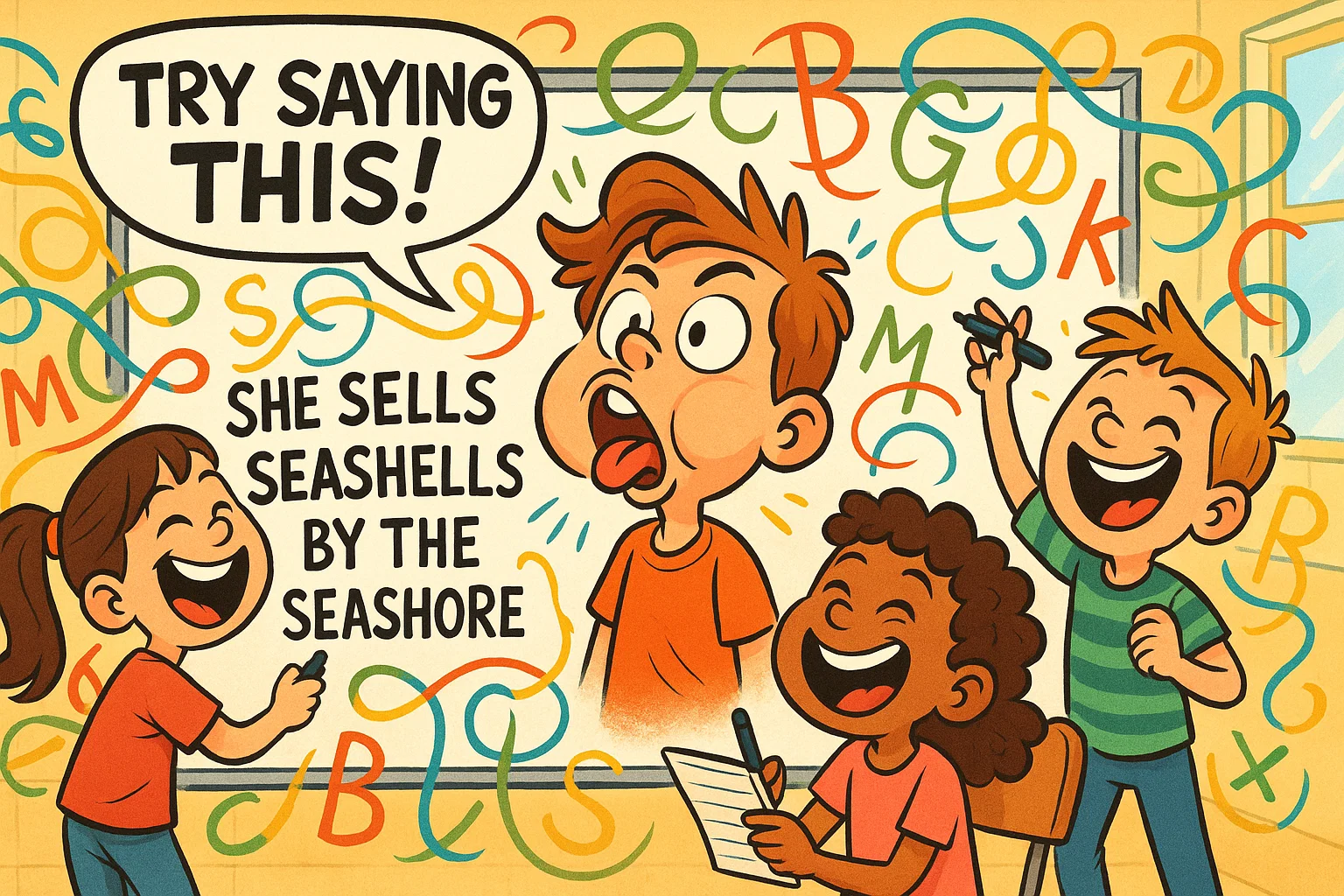
This fun activity challenges your child’s phonological awareness. Creating original, tricky tongue-twisters helps improve articulation, phonics, and speech clarity in a highly engaging, playful way.
Sound Patterns to Use
Encourage your child to focus on repeating letters and sounds that are close together, such as:
- Sibilants: S, Sh, Ch (e.g., Silly Sue sells shiny seashells.)
- Plosives: P, B, T, D, K, G (e.g., Big brown bears bite brilliant bananas.)
Creative Writing Exercise
Brainstorm funny scenarios or characters (e.g., a purple penguin, a grumpy ghost) and try to combine sounds and funny words to create the challenge.
Speaking Practice
The goal is clear articulation. Help them practise by starting slowly, then gradually increasing the speed. This verbal practice is highly beneficial for overall speech development.
Counting Coins
A truly practical application of math games involves money. Counting coins is a hands-on activity that helps kids practise money recognition, addition, subtraction, and essential real-life calculations. It’s a key life skill that provides lots of fun when framed as a game.
Coin Sorting Tasks
Ask your child to sort various coins and group them by value. Then, challenge them to figure out: “How many 5p coins make 20p?” This teaches value comparison and grouping.
Real-Life Buying Scenarios
Set up a mock shop (using toys or household items). Give your child a budget and price tags. Have them calculate the total cost, and then work out the change from a fixed amount. This is a great way to help children understand abstract money concepts.
Money Games
There are many simple board games focused on handling money, or you can create your own simple “Money Race” where players roll a dice and collect that number of pennies, converting them into larger coins as they can.
Create Own Villain Character Profile
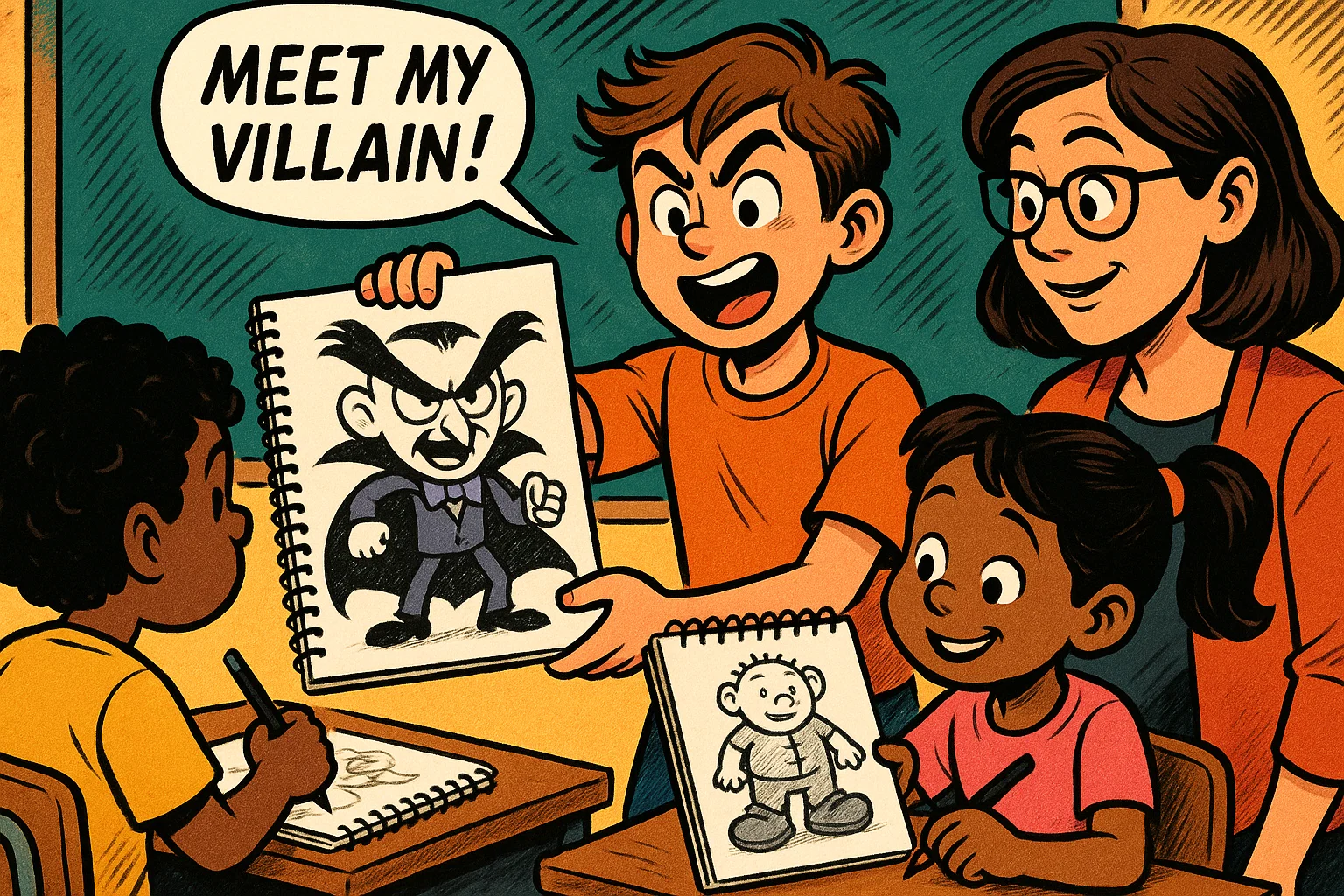
This imaginative task is a deep dive into creative writing and emotional literacy. Building a villain profile boosts imagination, descriptive writing, and helps children learn about motivations and character development.
Character Traits List
Help your child brainstorm a villain’s:
- Personality: Grumpy, sneaky, overly dramatic, misunderstood.
- Powers/Skills: Can fly backwards, can talk to mice, has super-stinky socks.
- Weaknesses: Afraid of kittens, allergic to carrots, needs a nap every hour.
Appearance Description
Encourage your child to write a detailed description of the villain’s looks, costume (is it made of feathers, slime, or metal?), and unique traits.
Backstory Creation
Developing a simple origin story—why are they a villain? Did they trip over a magical stone, or were they simply sad?—aids in building writing skills and empathy.
Books for Age 7
Reading at seven is a transition point. Children move from heavily illustrated picture books to more text-heavy early chapter books. Finding engaging titles is vital for keeping the momentum.
Funny Adventures
Humorous stories are fantastic for boosting reading motivation. Laughter makes the reading experience enjoyable, encouraging your child to read for longer.
Fantasy Books
Fantasy introduces rich, descriptive language and complex worlds, greatly expanding vocabulary and imagination. Look for titles with gentle magic and clear heroes.
Early Chapter Books
These books, often with larger text and illustrations every few pages, are perfect for the transition, helping to build reading stamina without overwhelming the reader.
Addition and Subtraction Age 6–7
Reinforcing math foundations with fun and free activities is key for children progressing into age seven.
Mental Math Techniques
Math games that build quick recall of facts are highly beneficial. Use number bonds to 10 and 20. Simple card games like “Make 10” (find two cards that add up to 10) are excellent.
Hands-On Math Tools
Visualisation is key at this age. Use physical objects like cubes, beads, or even dry pasta to help your child see and solve addition and subtraction problems. This makes abstract concepts concrete.
Featured Books for Age 7
Selecting the right books can make all the difference in a child’s reading journey.
Warrior Monkeys and Volcano Adventure
Action-packed stories with clear plot lines and engaging, slightly older protagonists greatly engage 7 to 11-year-olds and improve reading stamina. The excitement serves as a motivator for fun reading.
Comic Books: Looga and Barooga
Comic-style reading, which relies on interpreting both text and image, is an exceptional way to encourage reluctant readers. It breaks the text into manageable chunks and supports comprehension visually.
Winnie and Wilbur: Go, Winnie, Go!
Books featuring friendly, familiar characters and a simple, episodic structure are ideal for independent reading practice. They build confidence and are great for wellbeing and development by offering comfort and predictability.
Interactive Learning Resources
Digital tools, when used mindfully, can offer interactive learning that supports and extends what children learn in school.
Interactive Puzzles and Games
Online platforms are full of interactive logic puzzles and interactive sudoku puzzles that are specifically graded for children aged 7 to 11. These activities help children build problem-solving skills in a visually appealing way. You can download the interactive version of many resources from Twinkl and other reputable sources.
Interactive Holiday Activities
Seasonal or event-based digital tasks (e.g., themed maths challenges for Christmas or a digital egg hunt for Easter) provide timely and fun educational content.
Digital Learning Tools
Platforms and apps that use gaming elements to help with reading, maths, and coding (e.g., block-based programming) provide a fun and engaging way to help develop foundational computer skills.
Support for Parents
A positive, supportive home environment is the most important factor in a child’s wellbeing and development. Here are some useful ideas for parents of children aged 7.
How to Encourage Daily Learning
Create a dedicated, clutter-free space for quiet activities. Make learning a natural part of your day, not a chore. For instance, talk about fractions while cutting a pizza, or calculate travel distance during a drive.
How to Support Emotional Well-Being
- Acknowledge Feelings: Validate their emotions without judgment. “I see you’re frustrated with that puzzle.”
- Play-Based Confidence Building: Give them tasks where they are guaranteed to succeed, and follow up with structured challenges. Praise the effort, not just the result.
- Mindfulness: Introduce simple breathing exercises to manage big emotions.
How to Develop Critical Thinking
Introduce simple riddles or “What If?” scenarios. When your child is facing a problem (e.g., a broken toy, a disagreement), ask open-ended questions instead of providing the solution: “What are three different ways we could solve this?”
Advanced Creative and Educational Activities
As children mature, they are ready for more complex, sustained activity ideas.
Competitive Sports
Enrolling a child in competitive sports like football, swimming, or martial arts is excellent for physical development, discipline, and learning cooperation and teamwork.
Advanced Arts and Crafts
Move beyond simple colouring to projects that require planning, such as creating a model out of clay, learning to knit, or trying more detailed arts and crafts activities that involve precision.
Science Projects
Simple experiments, such as making a vinegar and baking soda volcano or a simple pulley system, promote curiosity and logical thinking. These hands-on activities provide plenty of fun.
Basic Coding Tasks
Beginner coding games, often using visual, block-based programming (like Scratch Jr.), teach children the principles of sequence, logic, and loops, which are fundamental problem-solving skills.
Interest-Based Clubs
Joining clubs (e.g., drama, music, chess, robotics) allows a child to explore interests deeply, meet new friends outside of school, and build social skills.
Outdoor Exploration
Turn a regular walk into an adventure. Try basic map reading or a more complex neighbourhood scavenger hunt with written clues. Every child is different, so adjust the complexity to their interest level.
FAQs
Parents often have specific questions about maximising their child’s learning potential. Below are direct answers to the most common questions parents ask.