

The age of six marks an exciting transition in a child’s learning journey. Your little one is likely entering or fully engaged in primary school, experiencing a burst of cognitive and social development. This is a time when curiosity peaks, and foundational skills in literacy and numeracy are rapidly cemented. The key to successful learning at this stage is to make learning an adventure, not a chore. The most effective way to support this growth is through fun and engaging experiences that bridge classroom lessons with home life.
This guide provides an authoritative, comprehensive collection of fun learning activities and ideas for kids aged six, covering everything from core math skills and phonics to imaginative play and physical development. This guide offers proven, hands-on learning ideas to engage your child’s whole mind, fostering a lifelong love of discovery while adhering to key developmental milestones.
Games and Activities
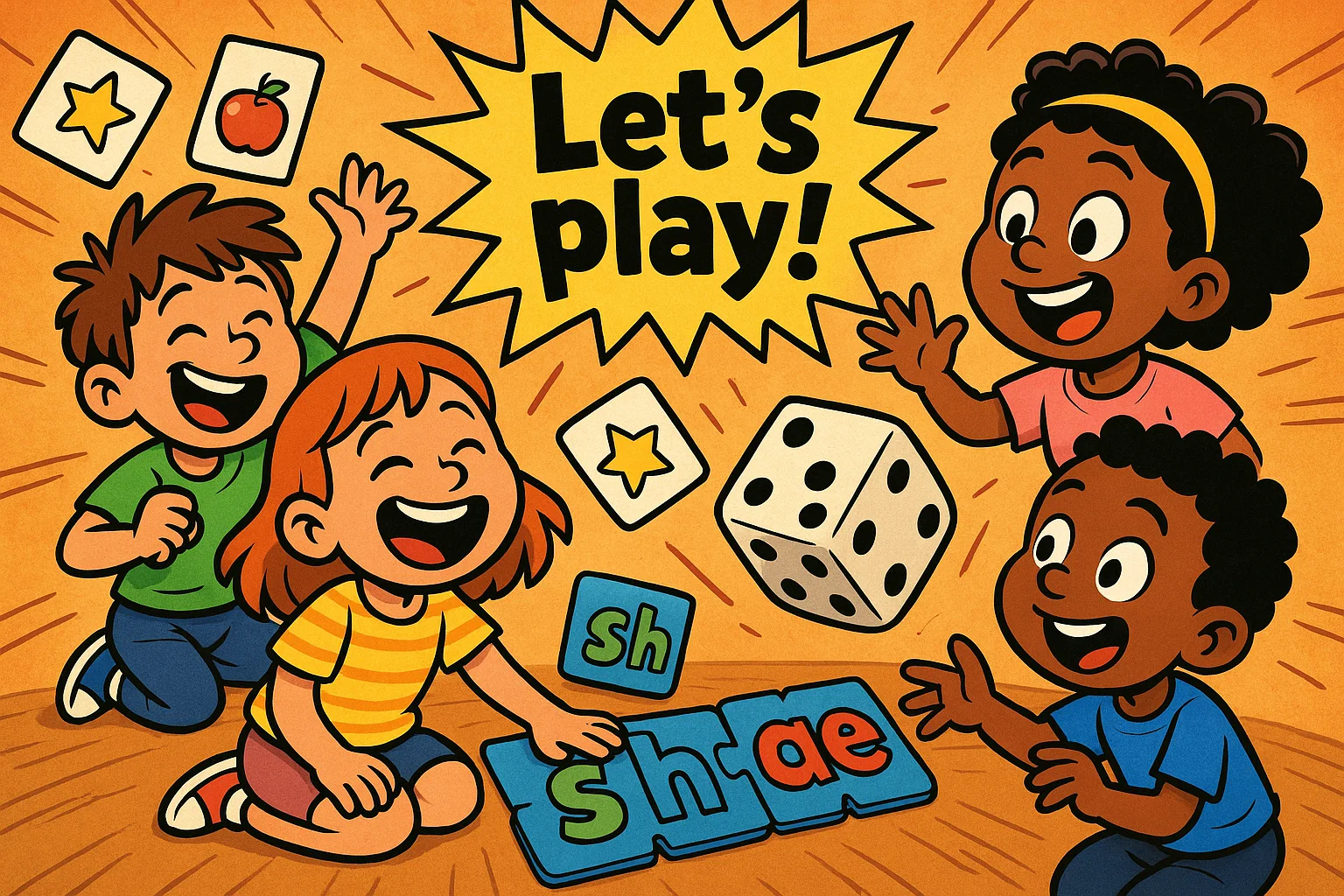
Six-year-olds thrive on structure mixed with plenty of play. Playing games is the brain’s favorite way to learn, as it provides instant feedback, allows for safe mistakes, and encourages persistence. By diversifying the activities your child engages in, you ensure a balanced development across cognitive, motor, language, and social domains.
Tongue Twisters and Language Games
Playful speech activities are an excellent way to enhance articulation, expand vocabulary, and sharpen phonemic awareness—the ability to hear and manipulate individual sounds in words. This directly supports reading games and fluency development.
- Silly Sentences: Have your child repeat simple, alliterative tongue twisters like, “She sells seashells by the seashore,” or create their own nonsensical phrases. This activity fosters precise mouth movements needed for clear speech.
- Rhyme Time Challenge: Say a simple word (e.g., “cat”) and ask your child to quickly list as many real or invented rhyming words as possible. This strengthens auditory discrimination, a core literacy skill.
Phonics Games
Phonics forms the foundation of early reading. At this age, children are moving from learning individual letter sound associations to blending those sounds to form words. Simple, repetitive, fun learning activities make this complex process manageable.
- Sound Scavenger Hunt: Call out a sound (e.g., /m/) and encourage your child to find objects that start with that sound. This links the abstract sound to the concrete world.
- Blend & Segment Snap: Use word cards featuring simple CVC (consonant-vowel-consonant) words like tap, sun, or dog. Say the sounds (/t/-/a/-/p/) and have your child blend them to read the word. You can also reverse it: say the word and have them segment the sounds.
Memory Games
Developing working memory is critical for academic success, as it affects everything from multi-step instructions to early math skills.
- Classic Card Matching: Use a standard deck or a themed matching game. Lay the cards face down and take turns flipping two over. This simple game develops attention, concentration, and visual recall.
- Tray Recall: Place 5–10 small, common objects on a tray. Give your child 30 seconds to look at them, then cover the tray and ask them to recall the items. Challenge them by gradually increasing the number of objects.
Listening Games
The ability to listen effectively is a foundational skill. These games strengthen auditory processing, the skill needed to follow directions, and focus amidst distractions.
- Simon Says (The Focus Edition): Play the classic game, but make the actions complex (e.g., “Simon says touch your left ear, clap twice, and hop”). This activity requires sustained attention and strong working memory.
- Sound Detective: Close your eyes and ask your child to make a sound with a nearby object (e.g., tapping a pencil, crumpling paper). Your child must guess the source and location of the sound.
Action Games
Activities to keep kids physically active while learning are essential. Movement-based tasks support gross motor development and can make abstract concepts more concrete.
- Move & Spell: Write letters on pieces of paper and spread them across the floor. Call out a simple word, and your child must hop, jump, or run to stomp on the letters in the correct order to “spell” the word.
- Balance Beam Maths: Use masking tape to create a line on the floor. Ask your child to walk heel-to-toe across the line while reciting numbers backwards or skip counting.
Tactile Games
Sensory and tactile play helps children internalize information through touch. Hands-on learning is a powerful tool, especially for kinesthetic learners.
- Textured Letters: Trace letters onto sandpaper or use modelling clay to form the alphabet. Having your child trace the letters with their finger provides a multi-sensory approach to letter formation and word recognition.
- Sand Tray Spelling: Use a shallow tray of sand or rice to practice writing letters and simple words with a finger or stick.
Screen Games
When used in moderation, high-quality, online learning tools and educational videos can supplement classroom instruction and deliver fun and educational content. Look for interactive activities that require participation rather than passive viewing.
Car Journey Games
Long car journeys can be transformed into fun activities. These travel-friendly games support literacy, numeracy, and vocabulary without needing supplies.
- The Alphabet Game: Spot letters on signs, billboards, or license plates in alphabetical order (A, then B, then C…).
- ‘I Spy’ Variations: Instead of color, use letter sound or initial blend (e.g., “I spy with my little eye something that starts with /br/”).
Practical Games
Involve your child in real-world tasks. These practical games support sequencing, logical reasoning, and fine motor skills.
- Sorting & Categorizing: Ask your child to sort laundry by color or item, or organize toys by size and type. This strengthens early classification and set theory skills.
- Building Challenges: Provide a set number of blocks or materials and challenge your child to build a structure that is taller than they are or that can hold a specific toy.
Reading Together
Shared reading remains one of the most important activities for children at any age. Even as they become independent readers, continue to show your child the joy of books.
- Paired Reading: Take turns reading pages or paragraphs. This boosts confidence and allows you to help your child with more challenging words or complex sentences, improving comprehension.
- Expressive Reading: Encourage your child to read with feeling, changing their voice for different characters. This helps them connect emotion with text, improving fluency and comprehension.
Maths Games
Making maths playful is the way to help your child see numbers as fun.
- Dice Games: Use two dice to practice simple addition and subtraction. Roll the dice and have your child find the sum, or roll one and subtract it from the other.
- Number Matching Puzzles: Create simple puzzles where the problem is on one piece and the answer is on the matching piece (e.g., 2 + 3 matches 5).
Cooking Together
Cooking is a fun and educational activity that seamlessly integrates math skills (measuring, fractions, time), sequencing (following recipe steps), and reading (interpreting a recipe).
Activities for Age 6
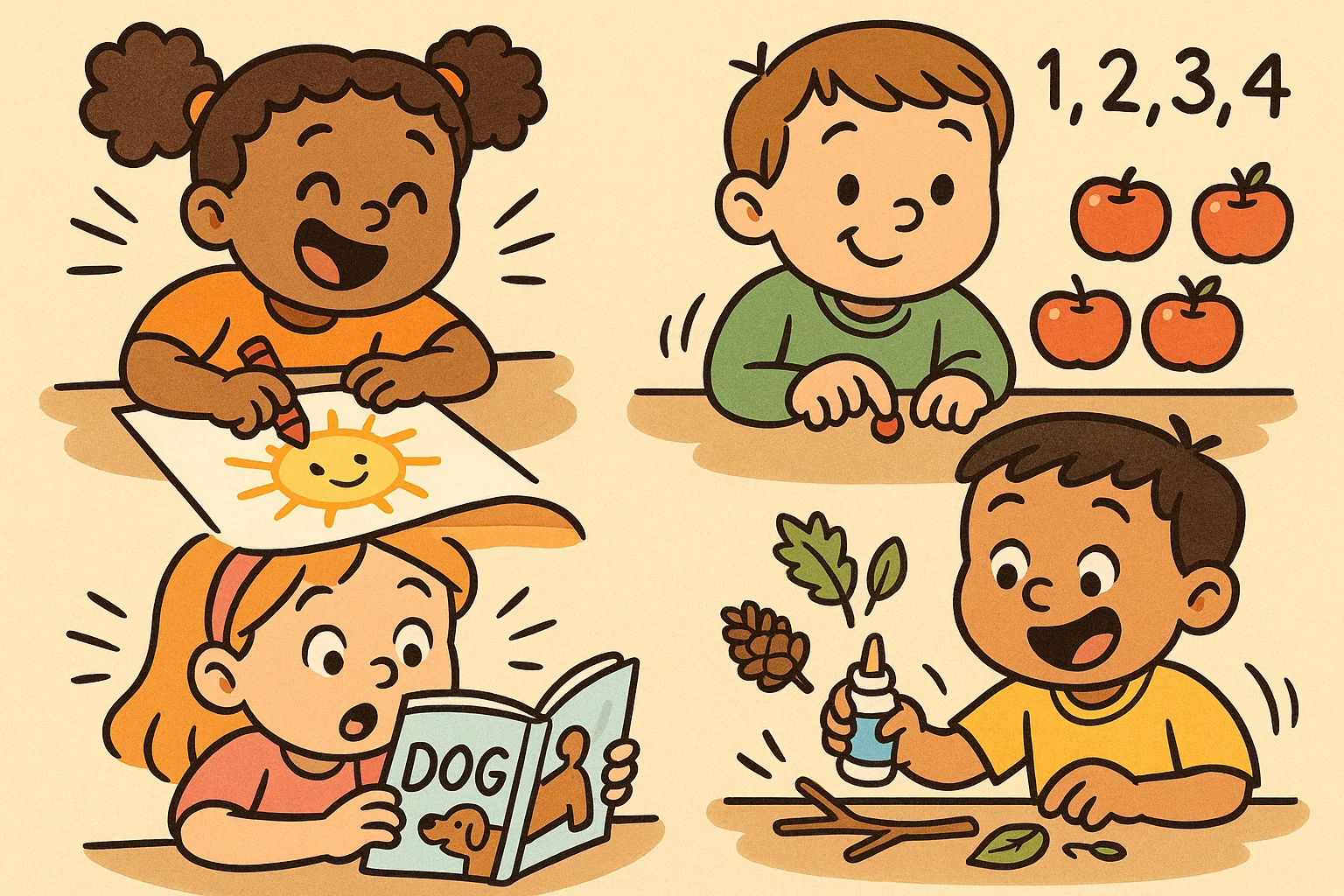
The 6-year-old stage is often defined by a huge leap in independence and a growing desire for mastery. Activities for 6 year olds should balance focused academic work with plenty of free, imaginative play.
| Developmental Area | Key Milestone at Age 6 (Approx.) | Activity to Support It |
| Literacy | Reading simple sentences with increasing fluency; recognizing sight words. | Create a story card sequence (H2 below). |
| Numeracy | Understanding place value (tens/ones); adding/subtracting single digits. | Roll two dice and add the numbers together (H3 – Basic addition). |
| Motor Skills | Improved fine motor control for legible printing; better gross motor coordination. | Drawing, cutting, and pasting crafty and fun projects. |
| Social-Emotional | Better understanding of rules; increased cooperation in groups. | Cooperative board games or group role play. |
Indoor Activity Ideas
- Quiet Reading Corner: Create a cozy space with blankets and pillows. This encourages independent reading and downtime.
- Literary Arts and Crafts Ideas: After reading a book, engage in arts and crafts based on the story. For example, make a mask of the main character.
- Jigsaw Puzzles: Complex puzzles (50+ pieces) boost spatial reasoning and problem-solving.
Outdoor Activity Ideas
- Nature Exploration: Start a nature journal. Collect leaves, draw flowers, and record observations.
- Backyard Scavenger Hunt: Ask your child to find objects based on criteria (e.g., “something rough,” “three objects that are red,” or objects that start with the letter ‘P’).
- Active Games: Organized games like tag, hopscotch, or simple ball games improve coordination and social skills.
Group Activity Ideas
- Role Play: Set up a “shop,” “hospital,” or “school.” This strengthens language, negotiation, and social cooperation.
- Partner Drawing: Two children draw on the same large piece of paper, one guiding the other on what to draw next, reinforcing communication.
Fraction Wall
Understanding fractions is a key stepping stone in math skills. A fraction wall is an enjoyable hands-on way to foster visual maths by showing the relationship between a whole and its parts.
How to Build a Fraction Wall at Home
You can easily create this with colored construction paper or card stock.
- The Whole: Cut one long, whole strip of paper (this represents 1).
- Halves: Cut a strip of the same length and divide it into two equal parts (1/2, 1/2).
- Thirds/Quarters/Etc.: Continue the process, creating strips divided into three, four, six, and eight equal parts. Label each piece.
Fraction Wall Games
- Matching Game: Ask your child to cover the ‘Whole’ strip using only pieces from other strips (e.g., two 1/2 pieces, or four 1/4 pieces).
- Comparison: Ask, “Is 1/2 bigger or smaller than 2/4?” Visually comparing the pieces makes the abstract concept concrete.
Learning Outcomes
This hands-on activity makes concepts like equivalence (e.g., 1/2 = 2/4) and comparison instantly clear. It strengthens early division concepts and provides a powerful visual aid for adding and subtracting fractions later on.
Learn to Tell Time
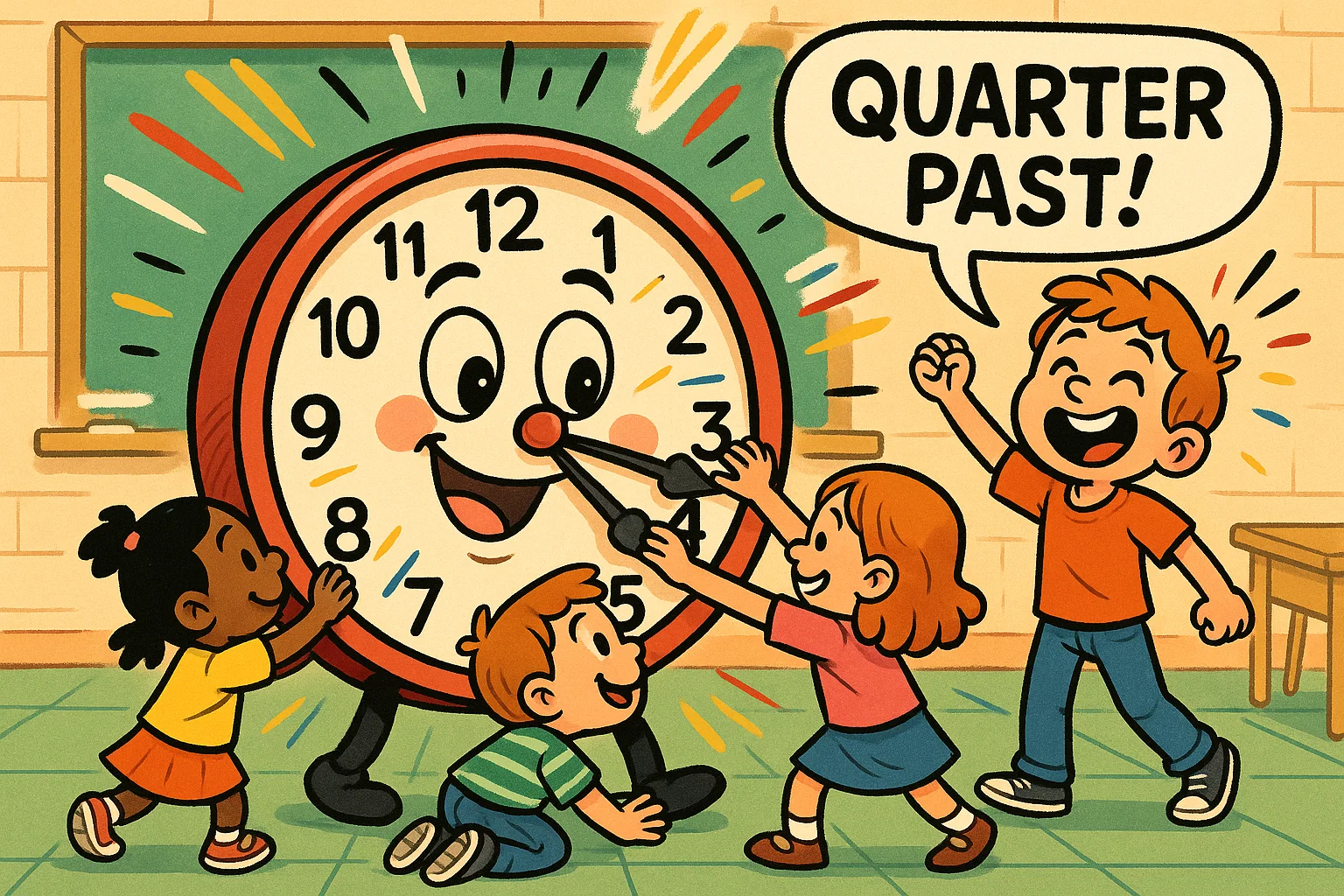
Learning to tell time is a practical skill that supports sequencing and numeracy. Fun learning methods should focus on both analog and digital clocks.
Clock Crafting Activity
Let your child create their own clock.
- Use a paper plate as the clock face.
- Help your child write the numbers 1–12 around the edge.
- Use two strips of card stock for the hour and minute hands, attaching them to the center with a split pin so they can move. This crafty and fun project provides a working model for practice.
Daily Time Challenges
- Set the Clock: Call out a time (e.g., 3:15), and your child moves the hands on their craft clock to match it.
- Morning Routine Schedule: Use the clock to visually plan the morning routine (e.g., “At 7:00, we eat breakfast; at 7:30, we leave for school”).
Story-Based Time Tasks
Read short books about telling time or use daily activities as a backdrop. “The bus leaves at 8 o’clock. Show me where 8 o’clock is on the clock.”
Word Game
Interactive word recognition games are excellent for building vocabulary, spelling skills, and reading fluency, transforming rote learning into a memorable educational experience.
Vocabulary Treasure Hunt
This is a fantastic way to turn learning into a playful adventure. Encourage your child to find several objects that start with a specific letter (e.g., ‘S’) and then use those objects to create a sentence.
Silent Letter Snap
Create pairs of cards: one with a word containing a silent letter (e.g., knife, gnome, write) and one with a simple picture. Play a fast-paced play snap game, where the match is the word and the picture. This helps with trickier phonics patterns.
Sentence-Building Games
Use magnetic letters, Scrabble tiles, or word cards to collaboratively build funny, descriptive sentences. Focus on parts of speech (nouns, verbs, adjectives). Challenge your child to make the sentence longer by adding descriptive words.
Story Cards
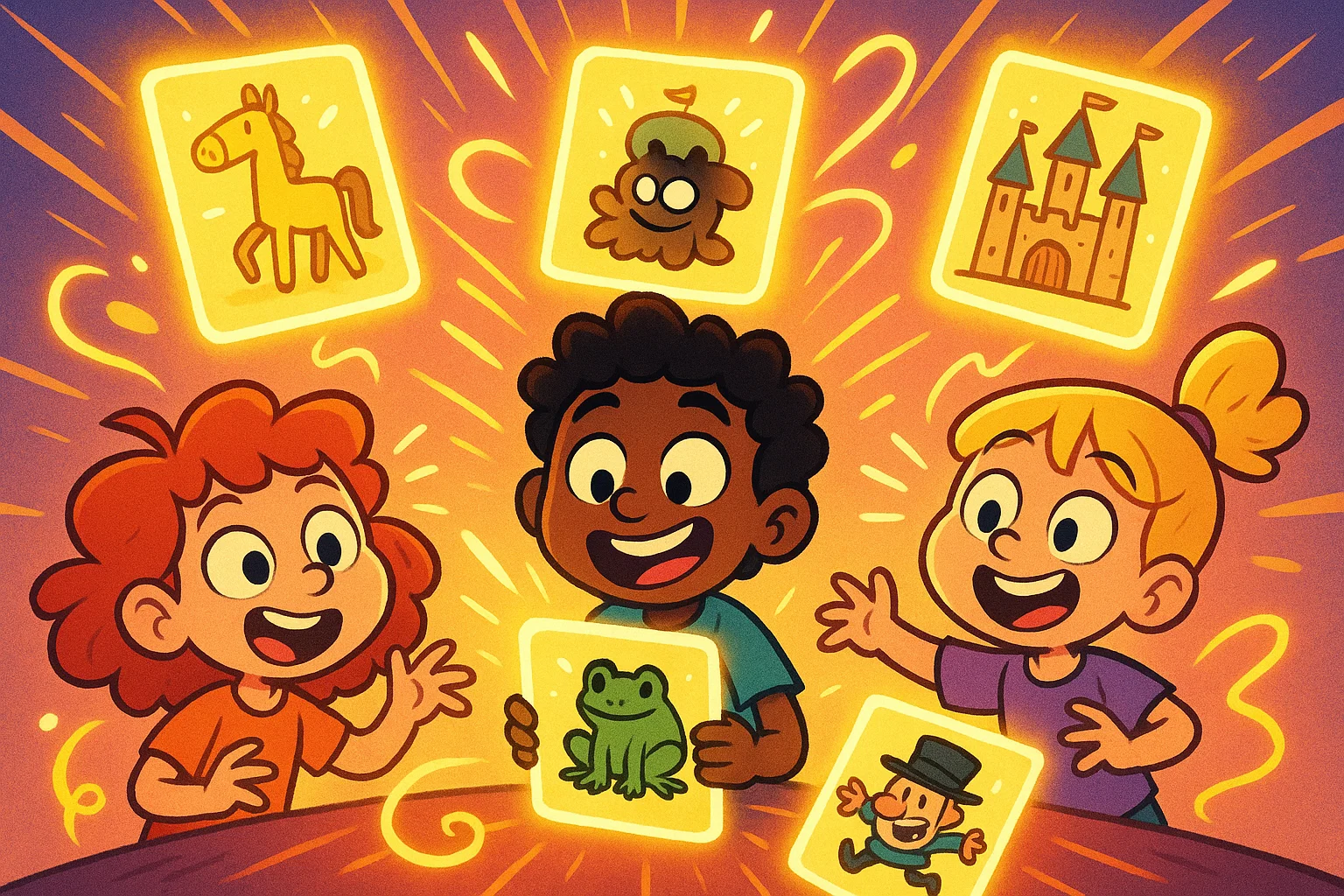
Story cards are a fun and engaging tool for boosting imagination, narrative sequencing, and early creative writing skills.
Interactive Storytelling
Use a deck of picture cards (or prompt words like dragon, beach, car). The first player chooses a card and starts a story. The next player chooses a card and adds the next sentence or paragraph, passing the story back and forth. This activity fosters collaborative language learning.
DIY Storybooks
Provide paper, crayons, and simple sentence starters. Your little one can choose a favorite story card and use it as a prompt to write and illustrate their own short book.
Storytelling Charades
Use the story cards as prompts for charades. One child acts out the scene or character on the card, and the others guess what the “story” is.
Books and Kits for Age 6
The right learning tools provide structured practice and independent educational programs.
Reading Kits
These often include structured lesson plans, readers, and practical activities designed to systematically teach decoding, fluency, and comprehension. They are a helpful way to help support word recognition skills learned in school.
Activity Boxes
Look for STEM (Science, Technology, Engineering, Maths) boxes or art kits that focus on a single project (e.g., building a small motor or making a mosaic). These encourage problem-solving and perseverance.
Phonics Kits for Early Readers
Kits that include letter manipulatives, sound mats, and specific high-frequency word lists are a superb hands-on learning adventure.
Handwriting Age 5–6
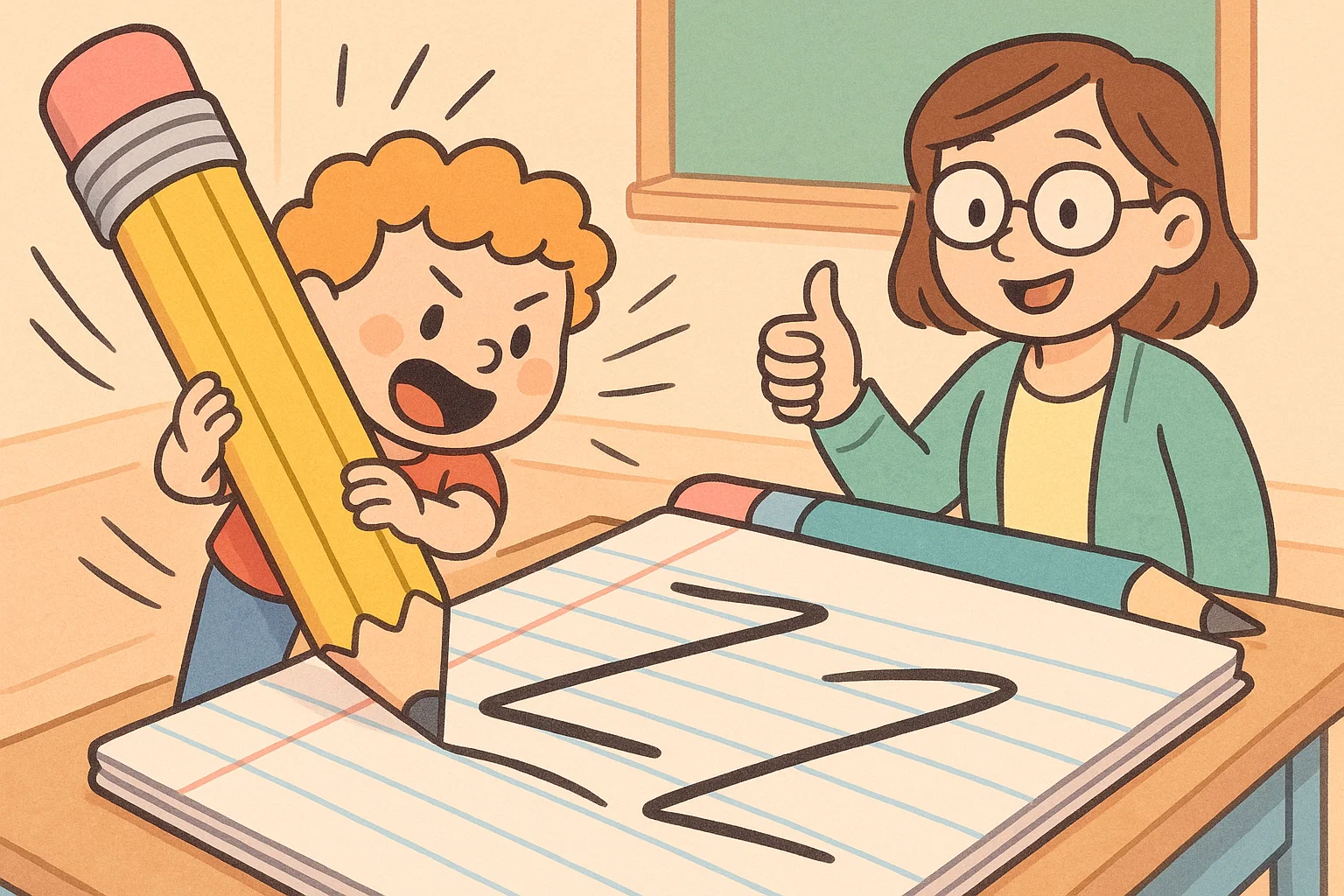
Around age six, handwriting moves from emergent to conventional. The goal is to develop automaticity—writing with ease so the brain can focus on composition.
Letter Formation Practice
- Rainbow Writing: Have your child write the same letter or word multiple times using different colors. This repetition helps cement the muscle memory for proper letter formation.
- Pattern Lines: Before writing letters, practice drawing simple patterns (waves, loops, zigzags). This warms up the hands and strengthens the underlying motor skills.
Fine Motor Strengthening Tasks
Fine motor skills are the foundation of good handwriting.
| Activity | Skill Strengthened |
| Beads to create pattern bracelets | Pincer grasp, eye-hand coordination, patterning |
| Threading/Lacing | Fine motor control, bilateral coordination |
| Playdough or Clay | Hand strength, dexterity |
| Using Scissors | Hand separation, grasp control (must be supervised) |
Handwriting Games
- Creative Prompts: Instead of simple copywork, give a fun prompt (e.g., “Write three things a penguin would pack for vacation”).
- Secret Messages: Use a white crayon to write a message and then have your child paint over the paper with watercolor to reveal the text.
My Winnie and Wilbur Reading and Activity Kit
This kit, often tied to a popular book series, exemplifies how commercial products can deliver fun and educational value when used correctly.
Kit Contents Overview
Such kits typically include several illustrated books, stickers, activity sheets focusing on comprehension, and simple arts and crafts prompts.
Key Literacy Skills Supported
These resources often offer targeted practice in:
- Sound recognition and blending (Phonics).
- Reading comprehension through themed activities.
- Fluency by providing engaging, levelled texts.
How to Use Kit Effectively
Integrate the kit into a daily routine (e.g., 15 minutes of quiet time). Use the activities to extend the story rather than just as busywork.
Numbers Age 6–7
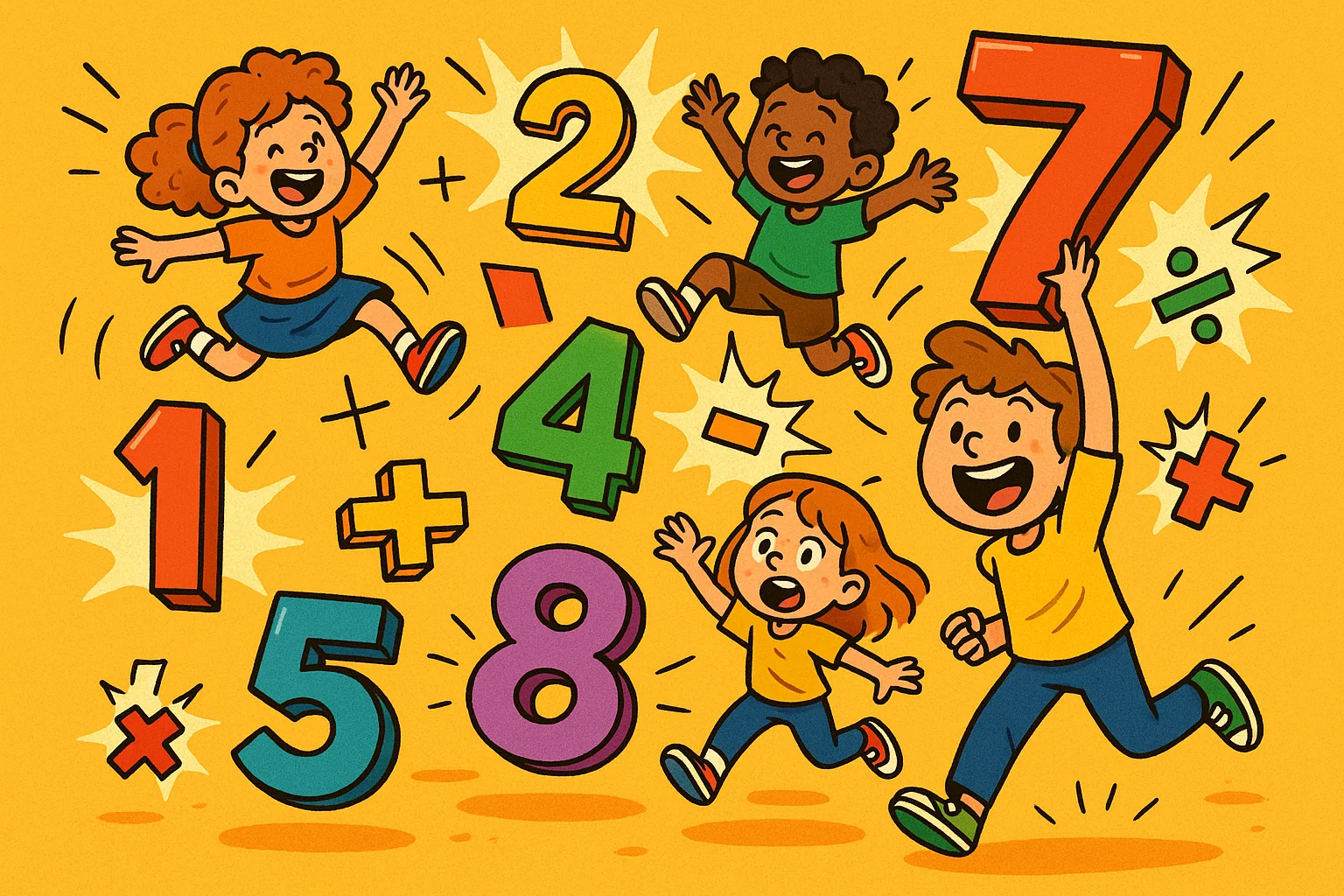
At this age, children solidify their understanding of counting, begin to master basic operations, and start grasping concepts like time and simple fractions.
Counting and Sequencing Tasks
- Number Lines: Use a large, visible number line for adding and subtracting fractions (and whole numbers). Physically jumping forward for addition and backward for subtraction makes these operations tangible.
- Skip Counting Races: Race to count by 2s, 5s, or 10s. This is a brilliant foundation for multiplication.
Basic Addition and Subtraction Games
- Dice Games: Roll two dice and add the numbers. Roll three dice for a greater challenge in your child activity.
- Card Games: Use a deck of cards (remove face cards) and draw two cards, adding them up.
Pattern Recognition Activities
- Creating Pattern Bracelets Together: Using beads to create pattern bracelets (e.g., red, blue, blue, red, blue, blue…) is an enjoyable hands-on way to foster both fine motor skills and complex pattern recognition—a key math skills concept.
- Nature Patterns: Look for patterns in leaves, petals, or stones outdoors.
Isadora Moon Goes Camping
Using a book like this can inspire creative, themed activities for 6 year olds, extending the learning from the page into imaginative play.
Story-Themed Crafts
After reading the book, create crafty and fun items related to the plot, such as paper lanterns for the campsite or masks of the characters.
Reading Comprehension Prompts
Ask open-ended questions after reading to encourage critical thinking: “Why do you think Isadora made that choice?” or “How would the story be different if…?”
Imaginative Play Scenes
Set up a ‘campsite’ in the living room using blankets and pillows. Encourage your child to role-play scenes from the story, which strengthens language skills and social understanding.
Hands-on Learning Activities
Hands-on learning is a powerful tool because it allows children to directly manipulate objects, leading to deeper, more meaningful retention of knowledge. These are brilliant fun learning activities for any six-year-old.
Craft-Based Literacy Tasks
- Story Stones: Draw characters or symbols on smooth stones. Your child picks up a few stones and uses them as prompts to tell a story.
- Collage Sentences: Cut out words and letters from old magazines and newspapers and arrange them to create humorous sentences.
Maths Through Play
- Fraction Pizza: Draw a large circle and cut it into halves, quarters, or eighths. Ask your child to “serve” the pizza, verbally describing the fractions they are serving. This is an enjoyable hands-on way to foster fractional understanding.
- Outdoor Maths: Collect sticks and stones to create addition or subtraction problems.
Science Exploration Tasks
- Simple Experiments: Try the classic “baking soda volcano” or use water and food coloring to learn about absorption.
- Nature Projects: Build a bird feeder or plant seeds and track their growth in a simple journal.
Educational Games for 6 Year Olds
Focus on games that deliberately strengthen core academic and cognitive skills.
Language and Phonic Games
- Phonics Bingo: Create bingo cards with simple CVC words or blends. Call out the sounds, and your child marks the corresponding word.
Reading and Word Recognition Tasks
- Word Family Tasks: List all the words you can think of that end with the same sound (e.g., -at: cat, bat, mat).
Vocabulary-Building Activities
- Themed Word Games: If your child is learning about dinosaurs, hide cards with dinosaur-related words and create a scavenger hunt for your child to find them. Once found, discuss the meaning of each word.
Family-Oriented Activities
Learning is a family affair. Activities that include the whole family strengthen bonds and provide a supportive learning environment.
Games to Play Together
- Board Games: Choose classic board games that require strategy, counting, and reading. This provides a rich, interactive learning experience.
- Simple Team Challenges: Work together to build the tallest tower or solve a family riddle.
Cooking and Baking Together
Measuring ingredients offers practical math skills, while reading the recipe aloud reinforces literacy and following instructions. The reward is a shared, delicious treat!
Creative Weekend Projects
Dedicate time each weekend to a major project: building a birdhouse, creating a family mural, or staging a play.
Screen Time Tips
Digital engagement should be intentional and balanced. The goal is to maximize the educational experience while minimizing passive consumption.
Tips for Reducing Screen Time
- Set Clear Limits: Experts suggest limiting recreational screen time to around one hour per day for this age group.
- Engaging Alternatives: Keep a “boredom box” full of hands-on learning ideas—art supplies, puzzles, building bricks—as an easy alternative when the screen is off.
- Family Schedule: Implement a routine where quiet reading or outdoor time precedes screen time.
High-Quality Screen Activities
Look for apps and educational programs that are:
- Interactive: Require the child to actively solve problems or create.
- Adaptive: Adjust the challenge level based on your child’s performance.
- Educational: Specifically focus on key math skills, language learning, or problem-solving.