

The age of five is a truly remarkable time in a child’s development, marking the transition from the highly imaginative world of preschool to the more structured environment of kindergarten or early primary school. This is a critical window where young minds are incredibly receptive to new concepts, laying the foundation for future learning. Child development specialists agree that the most effective way to nurture this growth is not through rigorous lessons, but through joyful, purposeful engagement.
This guide provides an extensive collection of fun learning activities and age-appropriate experiences specifically designed for 5-year-olds to boost their cognitive skills, emotional intelligence, and physical capabilities. We focus on academic, creative, and play-based methods to ensure that learning remains an adventure, helping your child develop crucial skills in literacy, numeracy, and problem-solving, all while enjoying the process of learning through play.
Games and Activities for 5 Year Olds
Play is the primary language of childhood, and it is through fun and educational games that children build essential skills. Playful learning directly supports the development of memory, language, logic, fine motor skills, early numeracy, and creative expression. These activities are structured to be enjoyable while still delivering powerful educational benefits.
Rhyming Games
Rhyming is foundational to reading and writing skills. It helps children recognize the different sounds (phonemes) within words, a key step in decoding.
- Simple Rhyming Tasks: Say a word, like “cat,” and encourage your child to suggest words that rhyme. Start with simple CVC (consonant-vowel-consonant) words.
- Sound Matching: Use pictures of rhyming pairs (e.g., car and star) and have your child match them.
- Daily Rhyming Challenges: Turn everyday conversation into a game, “Can you make a rhyming word for the spoon?” This helps with speech development and phonemic awareness.
Memory Games
Memory skills are crucial for concentration and following multi-step directions.
- Card-Matching Games (Concentration): Simple card games like matching pairs not only enhance memory but also teach turn-taking and focus.
- Object-Spotting: Place several small objects on a tray. Have your child study them, cover the tray, and try to recall what they saw.
- Daily Memory Challenges: Encourage your child to recall details of an activity from earlier in the day (“What color was the shirt the librarian was wearing?”).
Listening Games
Developing strong listening skills is fundamental for classroom readiness and social interaction.
- Sound-Recognition: Play different household sounds (running water, a slamming door, an animal noise) and have your child identify them.
- “Follow the Sound”: Have your child close their eyes and guide them using only sound (e.g., clap your hands, shake a rattle).
- Slow/Fast Audio Games: Read a familiar story using dramatically different paces or voices, and discuss how the changes affect the meaning or feeling of the story.
Action Games
These games engage gross motor skills and promote physical activity, which is vital for a healthy, growing body.
- Movement-Based Games: Classics like Simon Says, Hopscotch, or a simple obstacle course encourage listening and coordination.
- Role-Play Actions: Pretending to move like animals or act out energetic roles supports language skills while keeping children physically active.
- Gross Motor Skill Activities: Throwing and catching a soft ball develops hand-eye coordination.
Tactile Games
Sensory play is essential for brain development, allowing children to explore the world through touch.
- Games Using Textures: Create a ‘feely bag’ with various textures (smooth silk, rough sandpaper, crinkly foil) and have your child describe what they feel without looking.
- Shapes and Sensory Bins: Fill a bin with dried beans, rice, or sand and hide building blocks or small toys for them to find.
- Touch-Based Exploration: Encourage exploration with playdough, molding and shaping different objects.
Screen Games
While screen-free time is important, supervised and limited screen time can be educational.
- Educational Apps: Use apps that focus on letters and sounds or early math concepts like counting and simple addition.
- Digital Puzzles: Age-appropriate digital puzzles can enhance spatial awareness and problem-solving.
- Safe Screen Time: Limit sessions to 20–30 minutes and ensure the content is high quality and interactive.
Car Journey Games
Long car rides are perfect opportunities for low-prep learning activities.
- Spotting Letters, Shapes, and Colors: Have your child find a specific letter on a sign, a circle on a car, or a particular color.
- I Spy: A classic game that promotes observation and descriptive language.
- Story Building: Start a story with one sentence and have each person add the next sentence in turn.
Out and About Activities
Outdoor play connects children with nature and encourages exploration.
- Outdoor Exploration: Visit a local park or nature reserve and focus on observation—what animals, plants, or insects can you spot?
- Park Tasks: Simple tasks like collecting three different types of leaves or finding a smooth stone.
- Scavenger Hunt: Create a simple list of things to find (e.g., a feather, a blue flower, a piece of wood) to work on categorization and observation.
Reading Books Together
Instilling a love for reading is perhaps the greatest gift you can give a young learner.
- Reading Routines: Establish a consistent time each day for reading, even if it’s just 15 minutes.
- Picture Books: Choose books with engaging illustrations and rich vocabulary. Point to the words as you read.
- Reading Questions and Early Comprehension: After reading, ask open-ended questions like, “Why do you think the character was sad?” or “What do you think will happen next?”
Activities for Age 5
At age five, children are typically refining their ability to think logically, express themselves creatively, and engage with early academic concepts. Activities designed for this age group should encourage independence and complex thinking. A key developmental milestone at this age is the ability to shift focus and sustain attention for longer periods.
| Skill Focus | Example Activity | Developmental Benefit |
| Literacy | “Sound Detective” (Finding objects starting with ‘s’) | Phonics, Auditory Discrimination |
| Numeracy | Simple Board Games (e.g., Chutes and Ladders) | Counting, Turn-taking, Strategy |
| Fine Motor | Lacing Cards or Arts and Crafts | Hand-eye coordination, Pencil Grip |
| Creativity | Building a den or fort | Imagination and language, Spatial awareness |
Backyard Treasure Hunt
This activity combines physical movement with problem-solving.
- Clue-Based Searching: Start with a simple visual clue (e.g., a drawing of a tree) that leads to the next clue.
- Map Skills: Draw a simple map of your backyard or living room and have your child use it to find a “treasure.” This is a fantastic early introduction to spatial awareness.
- Role Play: Pretend to be pirates or explorers on a quest.
Writing Practice
A child’s hand muscles are strengthening rapidly at this age, preparing them for handwriting.
- Tracing Letters: Provide large-font letter sheets for tracing uppercase and lowercase letters.
- Writing Simple Words: Encourage them to write their name or short, familiar words like “Mom” or “cat.”
- Drawing Letters in Sand/Flour: Use a tray filled with a shallow layer of sand, salt, or flour for a tactile, low-pressure way to practice letter formation.
Gardening Tasks
Gardening is a wonderful way to teach responsibility and introduce simple science experiments.
- Planting Seeds: Allow your child to plant large seeds (like beans or sunflowers) and explain what seeds need to grow.
- Watering Routines: Assign them the task of watering the plants regularly.
- Observing Plant Growth: Keep a simple journal (with drawings or early writing) of the plant’s growth over time.
Simple Board Games
Card games and board games are excellent tools for developing social skills and basic math.
- Turn-Taking: Games naturally teach the concept of waiting, sharing, and following rules, boosting social skills.
- Counting Moves: Games like Candy Land or Snakes and Ladders require counting spaces, which reinforces numeracy skills.
- Strategy Basics: Introducing very simple strategy games (like checkers or even a basic memory game) can enhance problem-solving.
Art and Craft
Creative expression through art allows children to process thoughts and feelings and strengthen their fine motor skills.
- Cutting and Gluing: Provide child-safe scissors and various materials (colored paper plate, felt, magazines) for creating collages.
- Painting: Encourage free-form painting and introduce basic color mixing.
- Creating Objects: Use recycled materials (cardboard tubes, boxes) to make simple crafts, fostering creative expression through art.
The hands are the instruments of man’s intelligence. Engaging in hands-on activities like cutting and building is not merely art; it is a critical pathway for cognitive development.
Phonic Games
These are essential learning activities for 5-year-olds to build a strong reading foundation.
- Letter-Sound Matching: Display a letter and ask your child to say its sound, then find an object in the room that begins with that sound.
- Blending Activities: Say the sounds of a simple word slowly (c-a-t) and have the child blend them together to say the word (“cat”). This is key for early reading and writing skills.
Doubling Numbers for Early Math Skills
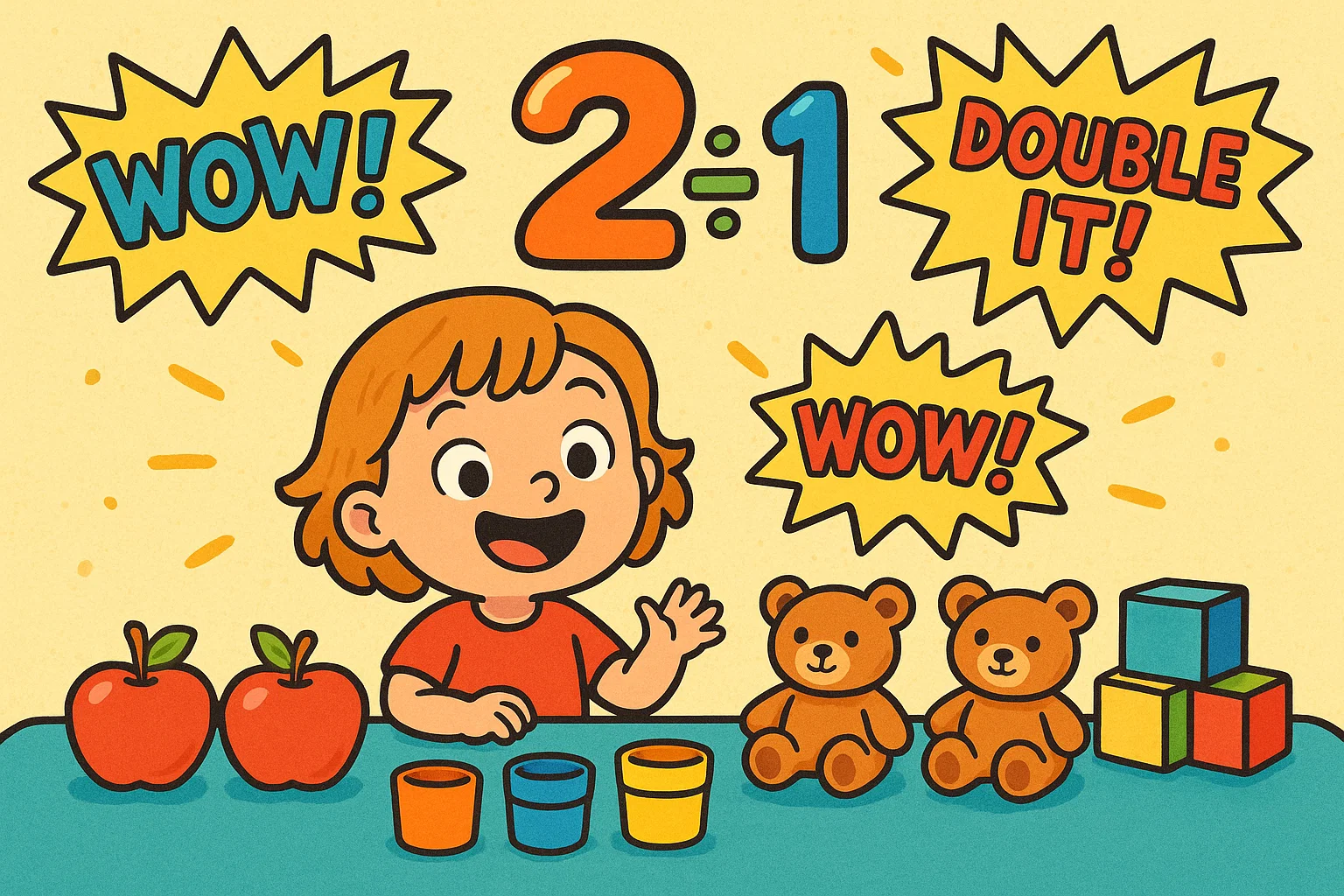
Introducing basic math concepts like doubling helps to build number sense. Children learn to see numbers not just as individual units, but as quantities that can be manipulated.
Hands-On Doubling with Objects
Using physical objects makes abstract math concepts concrete.
- Use Blocks, Snacks, or Toys: Start with a small number (e.g., 2 building blocks). Ask your child to make another pile with the same number, and then count the total. “If you have two blocks and you double them, how many do you have?”
- Drawing: Draw two circles, then double them by drawing two more. This visual representation supports comprehension.
Doubling Songs or Rhymes
Music aids memory, making it easier to recall math facts. Simple chants about doubling (e.g., “Two and two is four, four and four is eight…”) can be a fun memory-boosting exercise.
Musical Notes for Early Music Learning
Exposure to rhythm, melody, and pitch lays the groundwork for auditory processing and even supports language development.
Clapping Rhythm Patterns
Start with a simple, slow rhythm (tap-tap-pause-tap-tap) and have your child repeat it back exactly. Gradually increase the complexity.
Identifying Instrument Sounds
Play recordings of different instruments (piano, violin, drum) and help children identify what they hear. This hones listening skills and vocabulary.
Creating Simple Melodies
Use child-friendly instruments like toy keyboards, xylophones, or even pots and wooden spoons to encourage your child to create their own sequences of sounds.
Wordsearch Games for 5 Year Olds
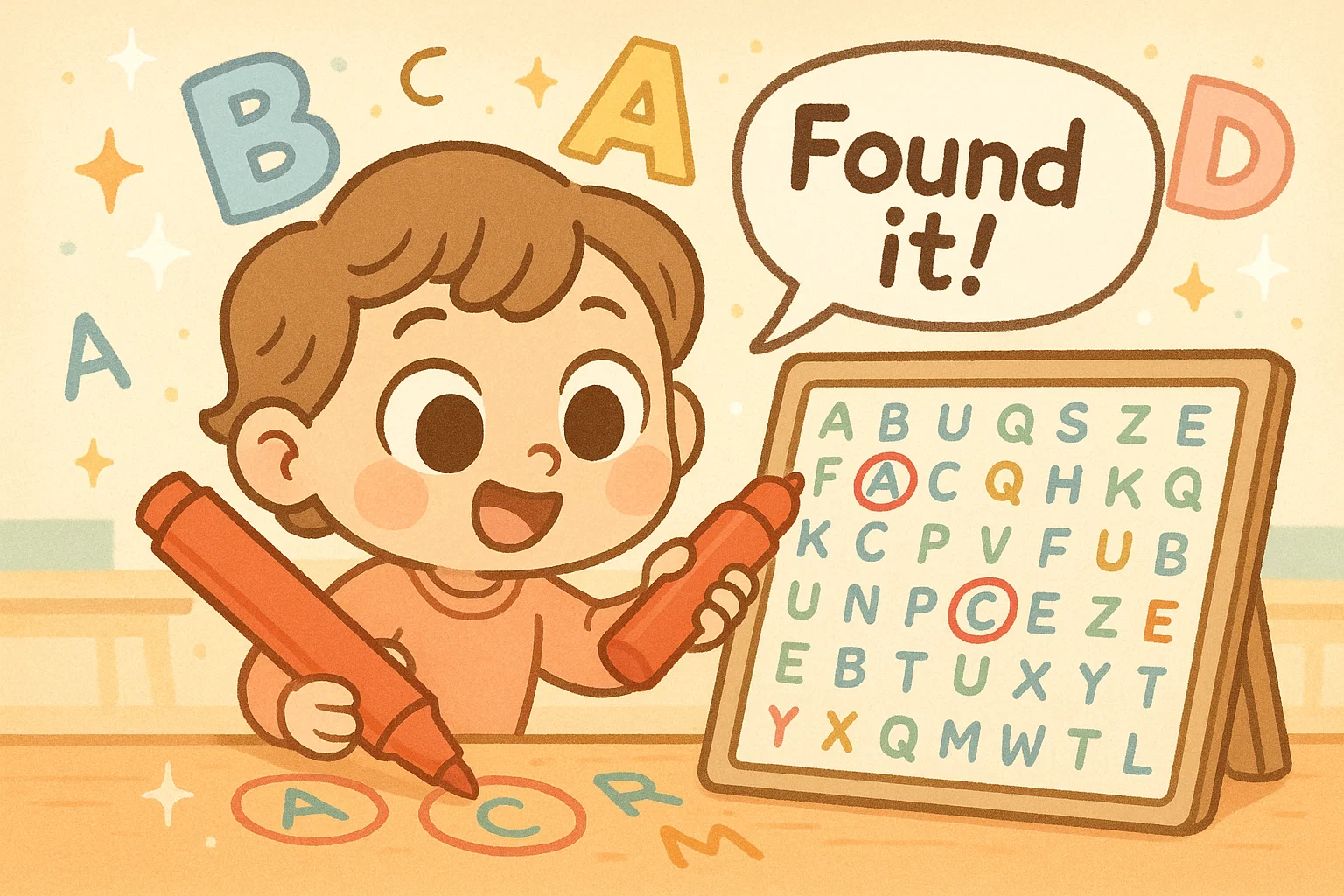
Wordsearches, when simplified for this age, are fantastic activities to keep kids engaged while developing visual discrimination and attention to detail.
Theme-Based Wordsearches
Create a very small grid (5×5, for instance) with words related to familiar themes like animals, colors, or daily objects.
Letter Spotting Tasks
Instead of finding full words, challenge your child to simply find and circle every instance of a specific letter (e.g., the letter ‘A’) in a line of text. This strengthens recognition of letters and sounds.
Phonics Skills: Sounds in Words
Phonics is the cornerstone of early reading. Mastering the link between sounds and letters is the most important pre-academic skill for this age group.
Vowel Sounds Games
Focus on the difference between long and short vowel sounds. Use pictures of objects that demonstrate the sound (e.g., a in apple versus a in acorn).
Consonant Blend Tasks
Introduce consonant blends like “bl,” “tr,” or “sn.” Ask your child to say these sounds quickly together and list words that contain them.
Guided Phonics Activities
Use systematic programs or materials that offer step-by-step blending and segmenting exercises. Start with simple CVC words (c-a-t) before moving to slightly more complex ones (s-t-o-p).
Books and Kits for Age 5
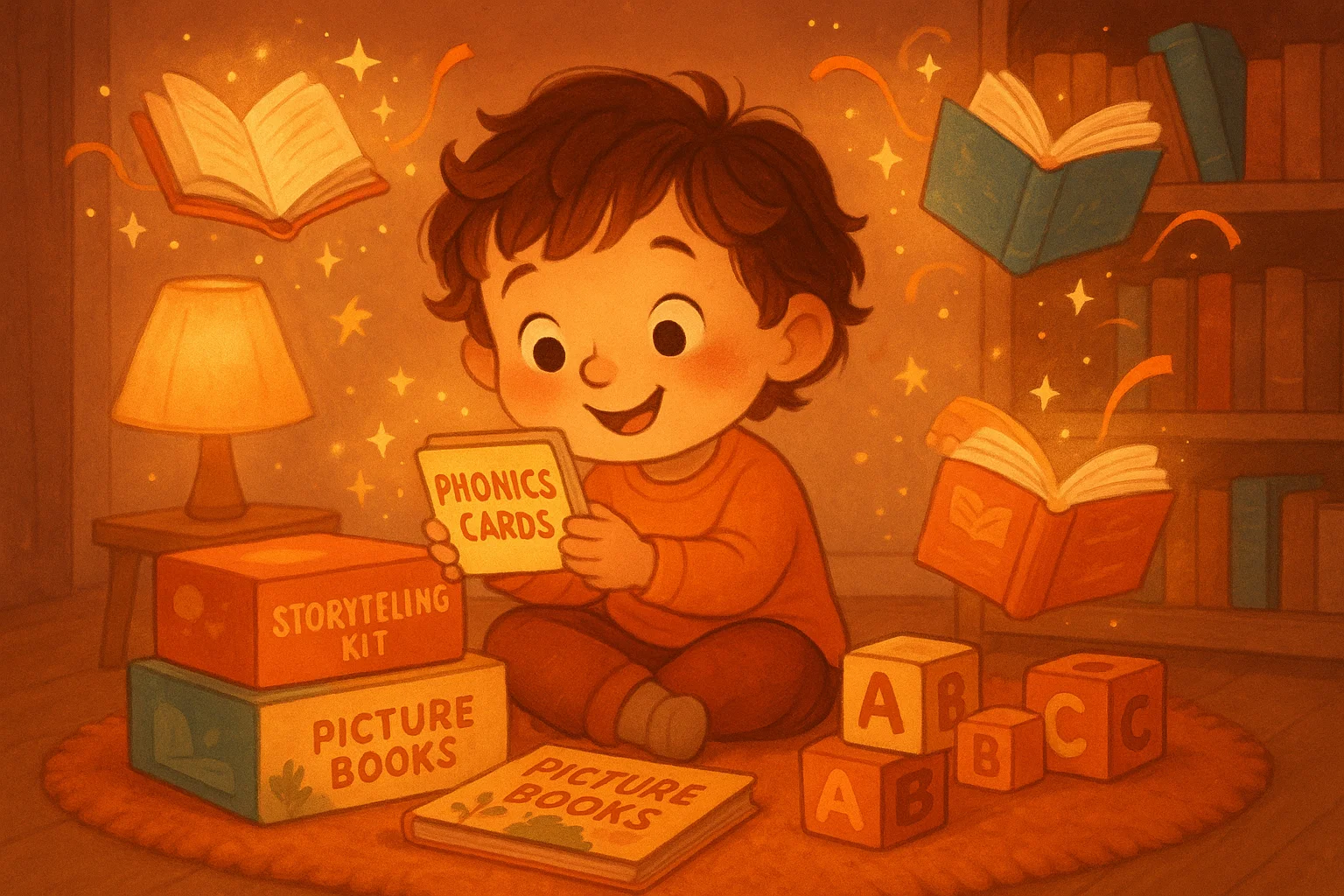
Having the right tools can make learning more effective and appealing.
Storytelling Kits
- Sequencing Cards: Sets of four to six pictures that, when arranged correctly, tell a simple story. This develops narrative skills and logical flow.
- Build-a-Story Activities: Provide various cards depicting characters, settings, and objects. Encourage your child to mix and match them to invent a brand-new story, boosting their imagination and language.
Early Reader Books
Look for decodable books that use words children can sound out based on the phonics rules they are learning. Balance these with rich picture books that expand vocabulary.
Handwriting Activities Age 5–6
Handwriting requires controlled movement, which is achieved by strengthening fine motor skills and developing a proper pencil grip.
Letter Tracing Sheets
Practice tracing large letters first, focusing on the correct starting point and direction of the stroke for both uppercase and lowercase.
Pencil Control Patterns
Work on pre-writing patterns: zigzags, loops, spirals, and waves. These help build the muscle memory needed for smooth letter formation.
Copying Simple Words
Once tracing is comfortable, introduce copying very simple, short words. Focus on forming the letters neatly rather than speed. This activity is vital for preparing children for school.
Addition and Subtraction Activities for Age 4–5
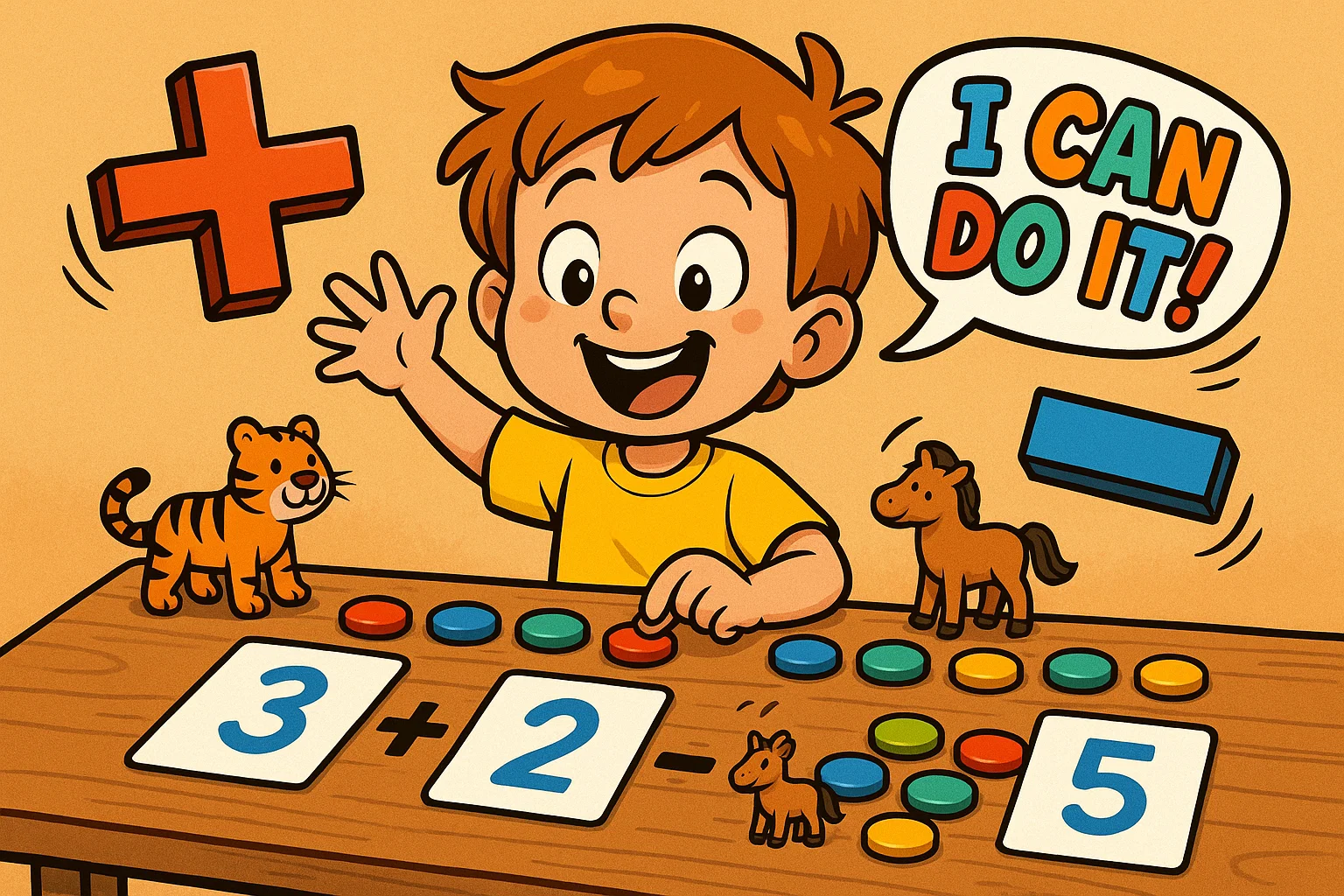
Introducing simple operations now builds a positive association with math and ensures a strong start in school.
Using Counters for Math
Hands-on counting is the best method. Use small, tangible objects (buttons, cheerios, or lego bricks) to physically show addition and subtraction. “If we have 4 blocks and we add 1 more, how many do we have?”
Visual Number Lines
Draw a simple number line (1 to 10) on a large paper plate or floor. Use a small toy as a marker and “jump” forward for addition and backward for subtraction.
Picture-Based Problems
Create simple story problems with pictures. “The cat had 3 fish. He ate 1 fish. How many fish does he have now?” Have your child draw the problem and the answer.
Storytelling Phonics Kit for 5 Year Olds
Combining literacy with creativity enhances both skills simultaneously.
Sequencing Cards
These cards help children understand the structure of a story (beginning, middle, end) and practice using time-based language (first, next, then, finally).
Character and Setting Cards
Provide a deck of cards featuring diverse characters (a brave knight, a talking bear) and settings (a deep forest, a tall castle). Encouraging children to randomly draw cards and create a story from those elements fosters spontaneous creativity.
What Are Educational Activities for 5 Year Olds?
Educational activities are not just lessons; they are structured forms of learning through play that intentionally support a child’s holistic development across four main domains: cognitive, physical, social, and creative.
Key Developmental Skills at Age 5
At this age, children are typically mastering:
- Speech and Language: Telling detailed stories, using future tense, understanding jokes.
- Logic and Reasoning: Sorting, categorizing, understanding cause and effect.
- Early Math: Counting to 20, recognizing basic shapes, simple addition/subtraction.
- Creativity: Engaging in detailed pretend play and artistic representation.
Types of Activities Beneficial at Age 5
- Indoor: Crafty projects, card games, reading, and building blocks.
- Outdoor: Gross motor skills development through running, jumping, and riding.
- Academic: Phonics, early numeracy, and pre-writing.
- Creative: Art, music, and role-playing games.
Top Educational Activities for 5 Year Olds
The most effective educational activities are those that are multi-sensory and directly involve the child.
Developing Counting Skills
- Counting Exercises: Count everything daily: stairs, toys, food items.
- Skip Counting: Introduce counting by 2s or 10s using physical movements (e.g., clapping every time they say a number).
- Everyday Number Practice: Ask for a specific number of objects during chores, “Please bring me four spoons.”
Science Exploration Tasks
These are wonderful hands-on activities that help children to ask questions and understand the world.
- Simple experiments: Try classic activities like the baking soda and vinegar volcano, and discuss the fizzing reaction.
- Magnets and Colors: Explore what objects are magnetic and try mixing primary colors to make secondary colors.
Enjoyable Activities for 5–7 Year Old Children
While this article focuses on 5-year-olds, the following fun activities maintain engagement as children grow and transition into elementary school.
Reading Beginner Books
Continue the practice of shared reading, gradually encouraging them to take over the reading of the simple, decodable text.
Practicing Writing at Home
Introduce a daily writing skills routine, such as keeping a simple journal or writing short thank-you notes.
Solving Math Problems
Introduce simple logic puzzles or age-appropriate math worksheets that focus on number order and simple equations.
How Parents Support Development Through Activities
Parental involvement is the single most important factor in a child’s early learning success. Your presence, encouragement, and the environment you create are pivotal.
Building Daily Learning Routines
Consistent, predictable schedules provide security. A routine might include 15 minutes of reading, 30 minutes of outdoor play, and a short craft activity each day.
Encouraging Independence in Play
Provide open-ended materials (like lego or cardboard boxes) and step back. Allow the child to solve their own problems, fostering a strong sense of accomplishment.
Academic Development Activities for Age 5
These activities build the specific cognitive skills needed for formal education.
Early Reading Skills
- Phonics and Decoding: Focus on the sounds of the alphabet before the names of the letters.
- Picture Clues: Teach children to use the illustrations to help them predict and understand the text.
Early Math Reasoning
- Patterns and Shapes: Ask your child to continue simple patterns (blue, red, blue, red…) and identify 2D and 3D shapes in the environment.
- Simple Logic: Use questions like “If the blue block is bigger than the red block, and the red block is bigger than the green block, which block is the biggest?”
Developing Social and Emotional Skills Through Play
These are just as important as academic skills, teaching teamwork, empathy, and self-regulation.
Teamwork Games
- Group Tasks: Work together on a large puzzle or build a complicated building blocks structure. Cooperative play teaches compromise.
- Cooperative Play: Role-playing games where each person has a specific role (e.g., in a pretend restaurant) enhance communication.
Dramatic Play
Encouraging role-play (e.g., playing house or being a veterinarian) allows children to safely explore social roles and express thoughts and feelings.
Mindfulness for Kids
- Breathing Games: Simple “balloon breathing” (breathing in slowly to fill the belly like a balloon and letting it out slowly) can introduce mindfulness and emotional regulation.
- Calm Activities: Provide a quiet corner with coloring books or soft music for self-soothing.