

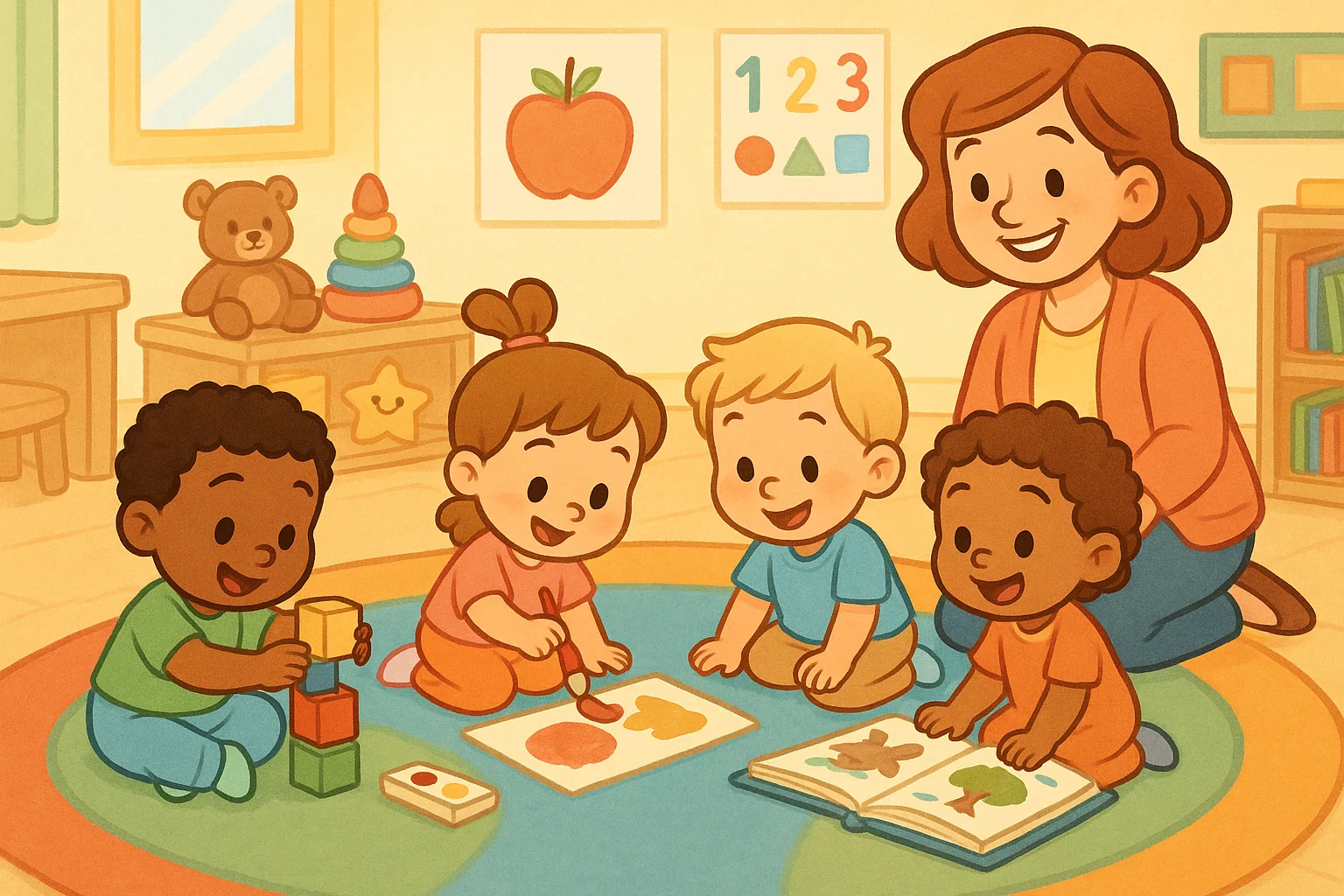
The world is opening up for your 3-year-old — a stage filled with curiosity and remarkable developmental leaps. At this age, a child isn’t just playing; they are actively working to understand the world around them. That’s why play-based learning is one of the most effective ways to nurture their growth. Through fun, engaging experiences, you can effortlessly help your child learn and boost their foundational skills.
These developmental activities for 3-year-olds are designed to spark creativity, refine fine motor skills, build vocabulary, and lay the groundwork for problem-solving skills—all while they are having a blast! From simple art projects at the kitchen table to exciting outdoor adventures, every moment of play can help your child grow into a confident, capable preschooler.
Benefits of Educational Play for 3 Year Olds
Play is the primary occupation of a toddler, and it’s much more than just a way to pass the time. Engaging in fun activities that are developmentally appropriate supports the holistic growth of your child—physically, emotionally, and cognitively. Dr. Stuart Brown, founder of the National Institute for Play, emphasizes that play is essential for wiring the brain for success. It’s how a 3 year old processes information and develops crucial life skills.
A variety of simple activities can develop both motor skills and emotional intelligence at the same time. For instance, playing with building blocks not only strengthens hand-eye coordination and fine motor skills but also introduces early math concepts like balance, symmetry, and spatial reasoning.
Building Early Skills Through Play
Around age three, children begin reaching important developmental milestones that prepare them for school. Structured play is a purposeful way to support these leaps.
- Motor Skills: Both gross motor skills (like running and jumping) and fine motor skills (like holding a crayon) see huge improvements. Activities that encourage motor skill development, such as arts and crafts projects, are vital.
- Speech and Language: Their vocabulary expands dramatically. Pretend play and engaging in imaginative conversations with you help develop their listening and verbal skills.
- Emotional Expression and Social Skills: They learn how to take turns, manage disappointment, and express empathy. Games that require cooperation, like imaginary play with dolls or action figures, are a fun way to help them master these complex social concepts.
| Skill Area | How Educational Play Helps | Example Activity |
| Cognitive | Enhances memory, logic, and reasoning, strengthening problem-solving skills. | Matching shapes and colors with flashcards or puzzles. |
| Motor | Refines small muscle control and overall coordination. | Cutting and gluing crafts or manipulating playdough. |
| Social-Emotional | Teaches cooperation, sharing, and self-regulation. | Playing “store” or having a “tea party” to practice interaction. |
| Language | Builds vocabulary, sentence structure, and narrative skills. | Creating and sharing stories with a puppet or favorite toy. |
Why 3-Year-Olds Learn Best Through Hands-On Experiences
Three-year-olds are sensory explorers. They learn by doing, touching, tasting (sometimes!), and moving.
“Young children learn best through active, hands-on exploration of their surroundings.” — American Academy of Pediatrics, 2023
Sensory play and movement-based activities like “Simon Says” or simple obstacle courses are a fun and engaging way for toddlers to process information. Introducing different textures through sand, water, or playdough provides rich tactile input essential for developing their motor skills and help develop their cognitive skills. The tactile feedback they get from digging in a sensory bin or pouring water is a direct pathway to learning.Parental Role in Learning
As a parent, your main role is to be a supportive guide and enthusiastic playmate. You want to offer a variety of stimulating activities without taking over.
- Offer Choices: Provide a selection of two or three activities for 3-year-olds and let your child choose. This gives them a sense of control and fosters intrinsic motivation.
- Balance Guided and Free Play: Some activities for 3 should involve you teaching a specific concept (like counting blocks), while others should be imaginative play where your child leads the way.
- Model and Observe: Sit with your child, play with your child, and model new behaviors, like how to sort objects or use a tool. Then, step back and observe their independent problem-solving.
- Focus on the Process, Not the Product: Praise effort and creativity (“Wow, you worked so hard on that tower!”), not just the outcome.
Indoor Learning Activities for 3 Year Olds
Rainy days or quiet afternoons are perfect for exploring fun learning activities that refine fine motor skills right at home. These are low-prep, high-impact activities at home.
Letter and Sound Recognition Games
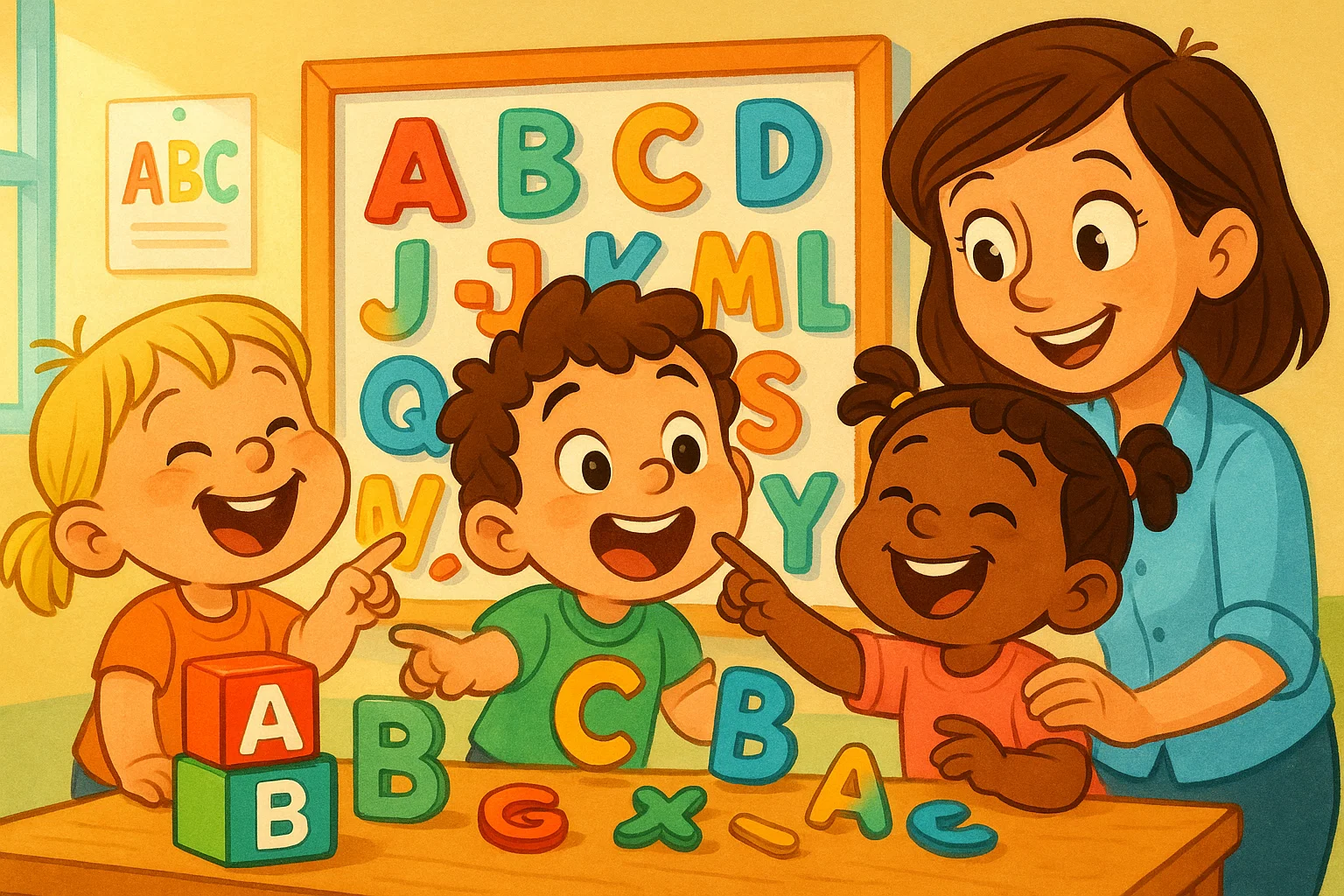
You can introduce your child to the alphabet in a fun, non-stressful way:
- Magnetic Letter Match: Say a sound (“/b/”), and help your child find the corresponding letter on the fridge.
- Letter Scavenger Hunt: Look around the room and find objects that start with a specific letter (e.g., “Find something that starts with /t/, like your teddy bear!”).
- Alphabet Song Tracing: As you sing the ABC song, have your child trace the letters in a shallow pan of sand or rice.
Counting and Sorting Activities
These activities include hands-on practice with early math concepts. Use everyday household items to help your child learn how to sort and count.
- Cereal Sorting: Give your child a handful of multi-colored cereal or small pasta shapes and have them sort them by color into separate cups. This activity is perfect for developing their motor skills.
- Block Counting: Build a small tower and count the blocks as you stack them. Have your child try to replicate the tower and the count.
- Toy Shape Match: Use masking tape to outline simple shapes on the floor. Have your child place their toys into the correct shape.
DIY Sensory Bins
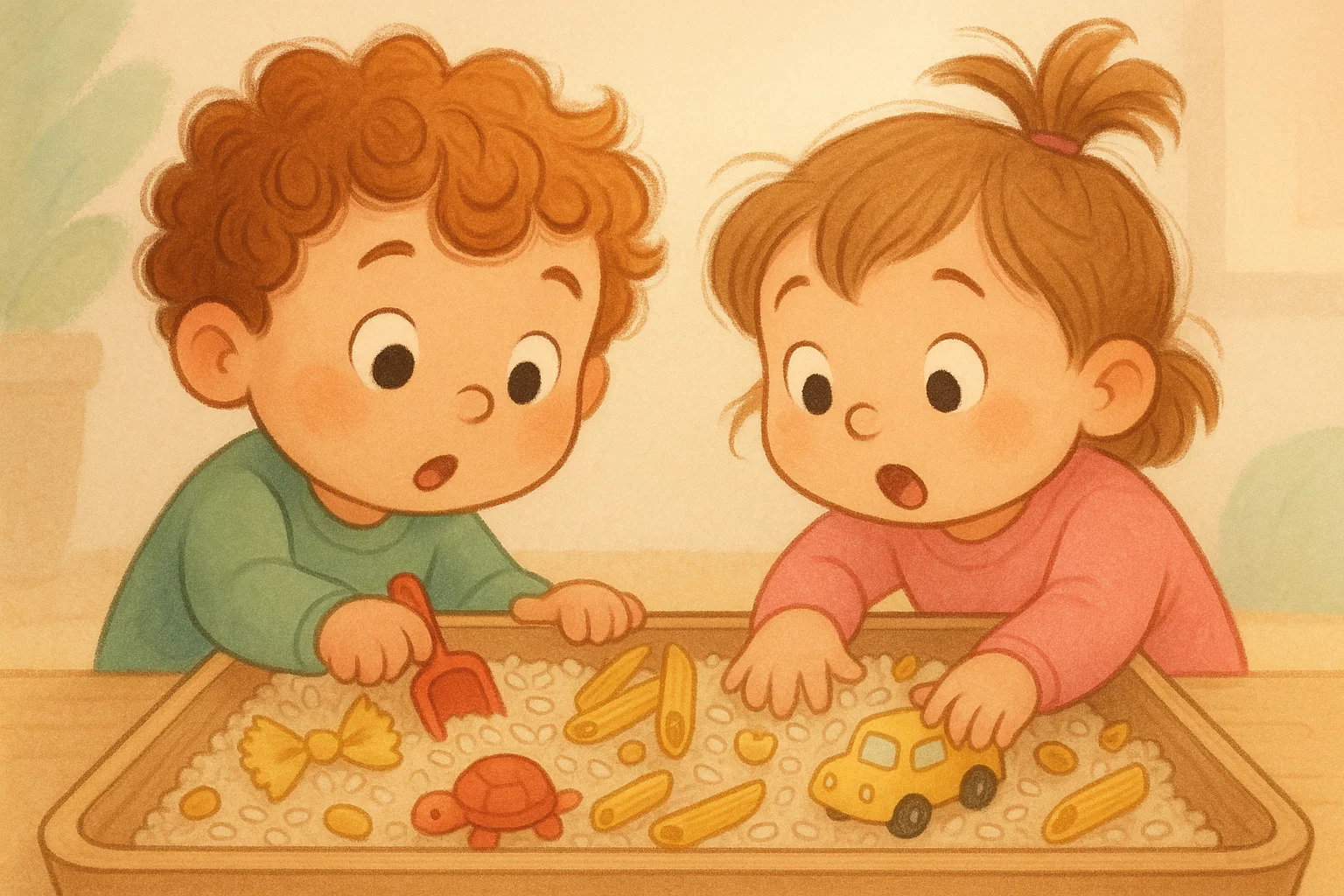
A sensory bin is a container filled with materials that stimulate the senses. It’s one of the best activities to help develop focus, fine motor skills, and early science concepts.
- The Base: Use dried rice, beans, pasta, cornmeal, or water beads.
- Tools: Include small cups, scoops, funnels, measuring spoons, and tweezers.
- Thematic Items: Add small toy animals, leaves, plastic gems, or seasonal items.
- Instructions: Encourage scooping, pouring, and manipulating the materials. Activities should focus on developing control over their movements.
Cutting and Gluing Crafts
Safe cutting practice is a fantastic activity for toddlers to develop fine motor skills and hand strength.
- Use small, child-safe spring-loaded scissors that make cutting easier.
- Start with cutting straight lines on construction paper.
- Progress to cutting out simple shapes.
- Once cut, use the pieces to create a collage, which also strengthens concentration and the hand-eye coordination needed for gluing.
Outdoor Educational Activities for 3 Year Olds
The outdoors offers the best setting for practicing gross motor skills and engaging in stimulating, whole-body learning. These fun activities encourage exploration and help develop a child’s natural curiosity.
Nature Walk Scavenger Hunt

Turn a walk in the park into a thrilling adventure that helps your child develop their cognitive skills and sharpens observation skills.
Create a simple checklist with pictures (or just words for you to read) of common nature items:
- A smooth stone
- A curly leaf
- Something brown
- Three sticks
As you walk, encourage motor skill development by having them climb over roots or step across small streams to find the items.
Sidewalk Chalk Learning Games
A sidewalk or driveway makes a perfect canvas for big, sweeping movements.
- Giant Letter Tracing: Draw huge letters or numbers and have your child trace them with their feet or a piece of chalk.
- Color-Block Hop: Draw large squares in different colors. Call out a color and have the child jump to that square, working on both gross motor skills and color recognition.
Gross Motor Play
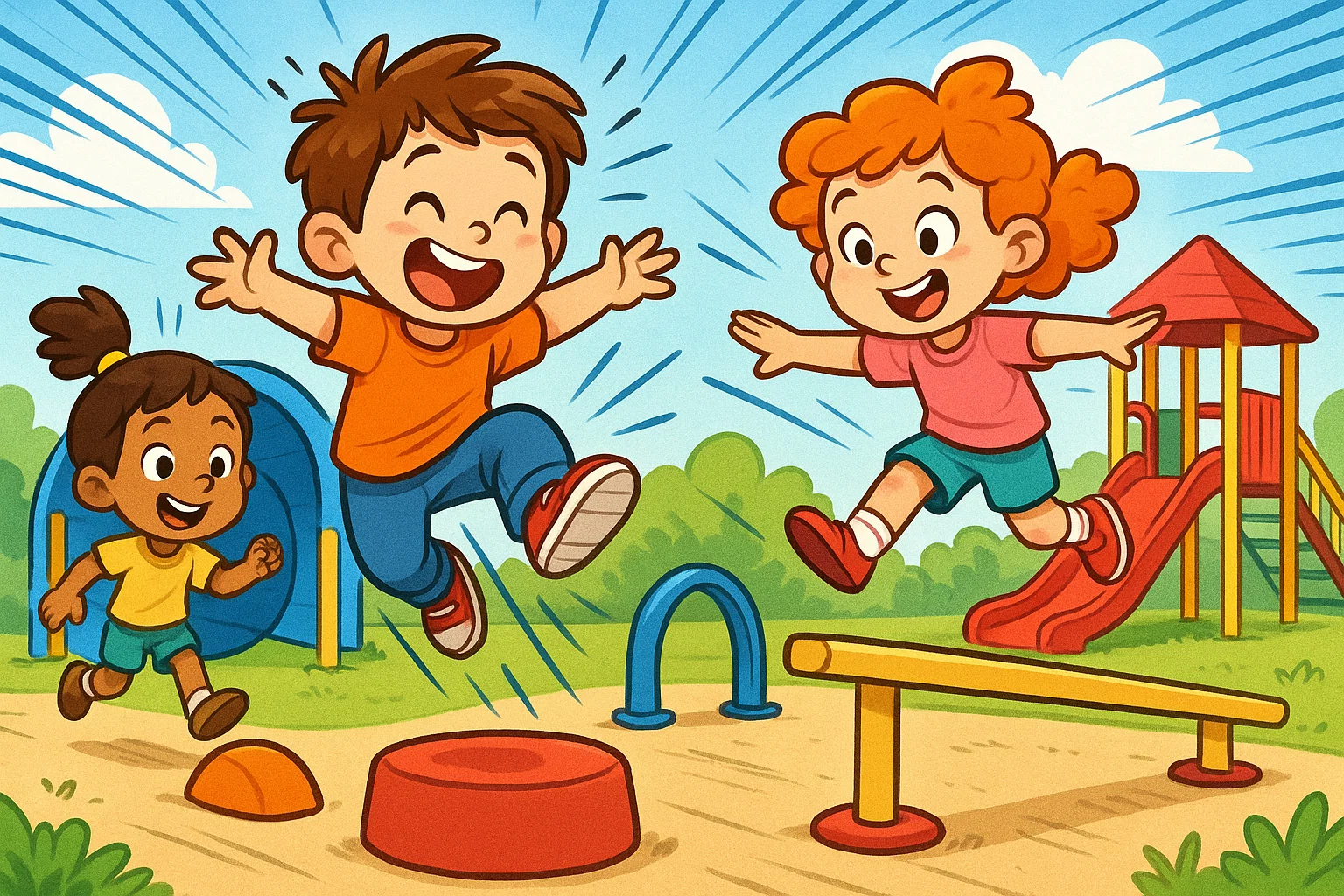
These activities include the kind of movement a 3-year-old craves:
- DIY Obstacle Course: Use pillows for stepping stones, a rope on the ground as a balance beam, or a tunnel to crawl through. This fun way to play also enhances listening skills as they follow your instructions.
- “Statue” Game: Play music and have them dance, then pause the music and have them freeze. Games like Simon Says are great for building listening comprehension and body awareness.
Water and Sand Play
Water and sand play is a natural way to introduce early science and math concepts.
- Provide various containers, such as cups, bowls, and measuring spoons.
- Encourage them to create different mixtures or measure out “ingredients.”
- Early cooking-style play often begins here — measuring cups of sand or “baking” mud pies builds hand-eye coordination and problem-solving skills.
Creative and Art Activities for 3 Year Olds
Arts and crafts projects are essential for a 3 year old’s development, as they are a primary outlet for self-expression, creativity, and refining fine motor skills. These art activities are a fun way to learn without pressure.
Finger and Sponge Painting

- Benefits: This is pure sensory play that helps children explore different textures and colors. It’s a wonderful way to improve coordination.
- Tip: Use safe, washable, non-toxic paint and a large piece of paper taped to a table for easy cleanup and ample space. Encourage them to create freely without worrying about a specific outcome.
Making Playdough Figures
Working with dough is one of the best ways to strengthen hand and finger muscles while developing fine motor control.
- Activities like rolling, flattening, squeezing, and cutting dough are perfect.
- Make learning fun by trying to form the first letter of their name or a simple number.
Simple Collage and Sticker Projects
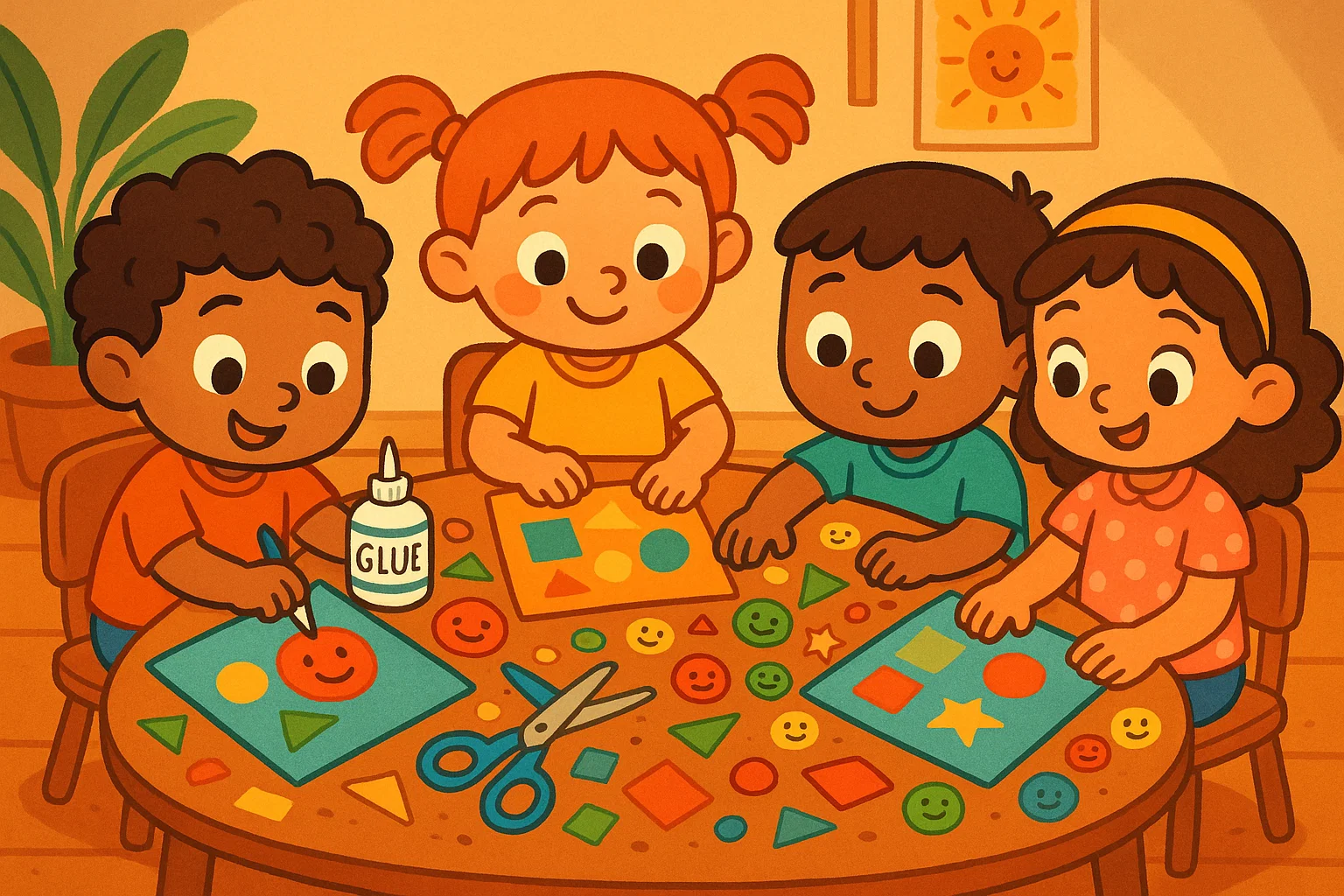
Collages allow children to explore composition and patterns, while stickers are fantastic for pincer grasp and focus.
- Sticker Patterns: Draw a line or shape and have your child place stickers along the line. This requires concentration and precision.
- Nature Collage: Glue items collected from the nature walk (leaves, petals, small twigs) onto paper to help build a picture.
Music and Movement Games
Music is a powerful tool to help develop their listening skills and memory.
- Freeze Dance: A classic fun activity that works on self-control and following directions.
- Rhythm Clapping: Clap out a simple rhythm (e.g., tap, tap, clap, pause) and have your child copy it. This helps your child develop memory and rhythm skills.
Montessori and STEM-Inspired Activities for 3 Year Olds
Montessori and STEM (Science, Technology, Engineering, and Math) focus on practical life skills and hands-on investigation. These learning activities for 3-year-olds introduce core concepts in a grounded, sensory way.
Montessori Busy Boards
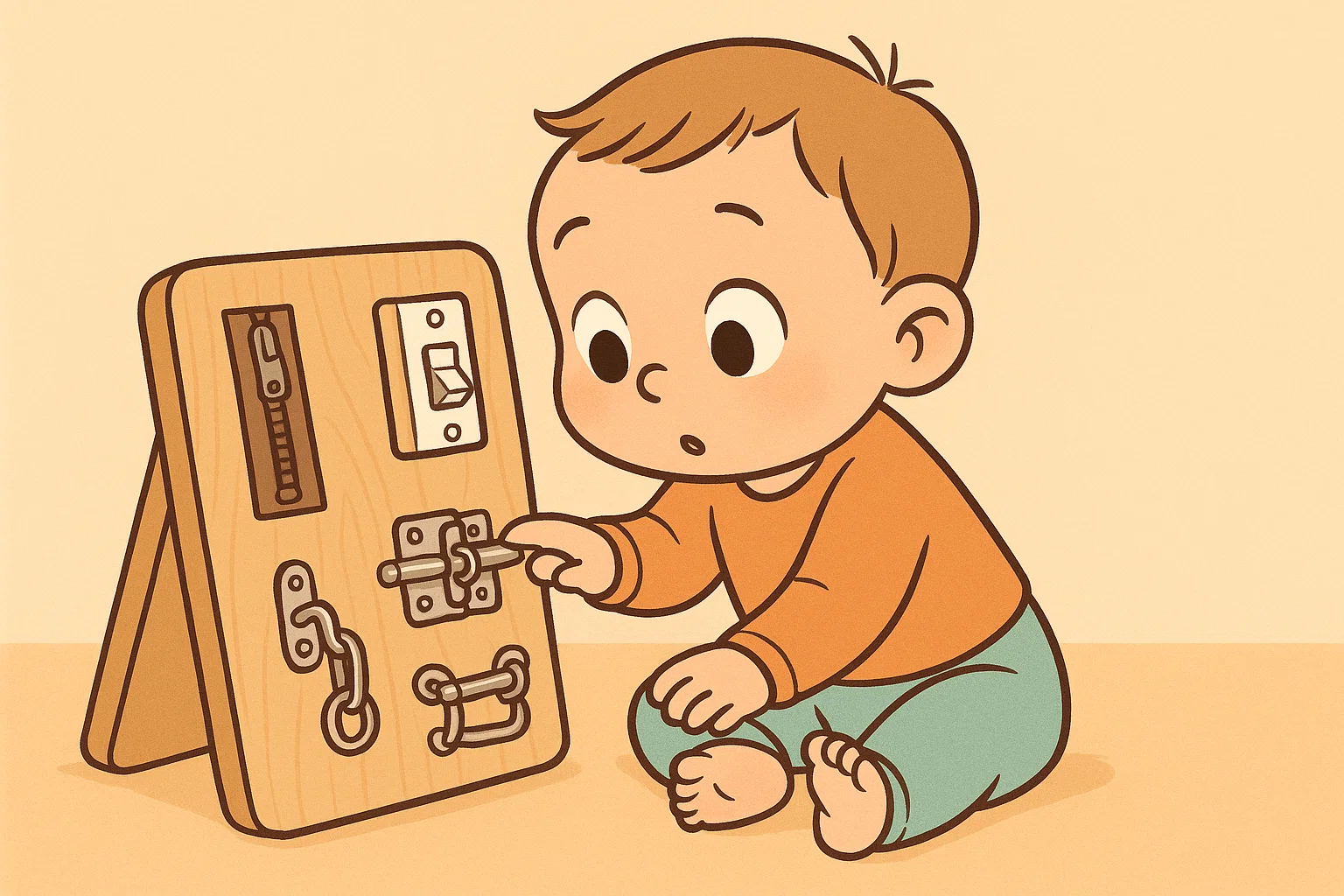
Busy boards are fantastic developmental tools that teach independence and fine motor skills through practical life tasks.
- What to Include: Simple locks, zippers, Velcro patches, buckles, latches, and buttons.
- Goal: These activities can help develop the skills a child needs for dressing themselves and manipulating common household objects, fostering self-sufficiency.
Simple Science Experiments
Introduce basic scientific concepts through exciting, hands-on exploration.
- Water Exploration: Place different objects in a basin of water and observe which ones sink and which ones float. This is a fun way to introduce density.
- Color Mixing: Use an eyedropper to mix primary colors (red, yellow, blue) in small cups of water. Watching the secondary colors appear helps develop their observation skills.
Building Blocks and Shapes
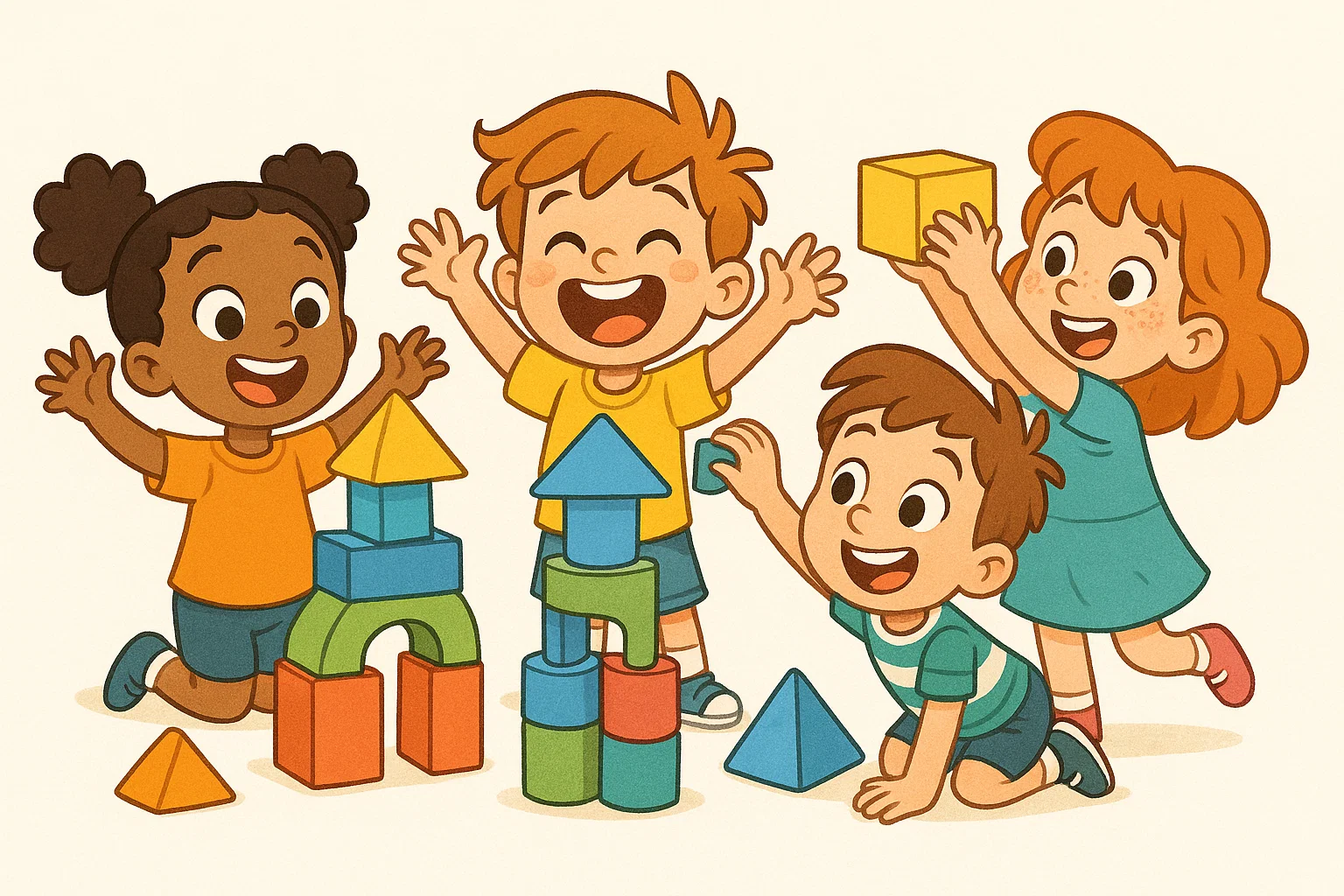
Whether playing with blocks or puzzles, these toys lay the foundation for early engineering skills.
- Duplo or Wooden Blocks: Challenge your child to build blocks taller than they are or to build a bridge long enough for a toy car to drive under. This strengthens problem-solving skills.
- Tangrams/Shape Puzzles: Working to fit shapes into specific spaces enhances spatial reasoning and hand-eye coordination.
Sorting and Matching Challenges
Activities like these are crucial for developing categorization and logic.
- Color and Size Sorting: Use mixed items like pom-poms, buttons, or small toys and have your child sort them by color or size.
- Card Matching: Start with a few pairs of picture cards laid face-up and have them match the identical images, a simple memory-building task.
Social and Pretend Play Ideas for 3 Year Olds
Engaging in imaginative play is fundamental for emotional and social growth. Pretend play is where a 3-year-old develops empathy, practices language, and learns about social roles.
Puppet Theater or Role Play
Creating stories and scenarios is a natural extension of a child’s imagination.
- Use hand puppets, socks, or even just their favorite stuffed animals.
- Encourage them to create stories and scenarios where the puppets interact, argue, and share. This helps them process emotions and practice conversational skills.
- Playing with building blocks can be used to construct a puppet stage.
Play Kitchen or Shop
Setting up a miniature world like a kitchen or a grocery store is a powerful way to help your child practice real-world interactions.
- Kitchen Play: Practice simple cooking and baking activities to help them learn about sequencing (first we mix, then we bake).
- Shopkeeper: Use fake money and items to play with your child as the customer. This provides a natural opportunity to practice taking turns and early counting.
Simple Board and Card Games
Games are a structured way to teach the often-difficult concepts of winning, losing, and waiting.
- Games like “Candy Land” or “Chutes and Ladders” are perfect for toddlers because they rely on color matching or simple counting, not complex strategy.
- The primary goal is to teach them to take turns and deal with the mild frustration of losing in a fun, controlled environment.
Tips for Choosing the Right Activities
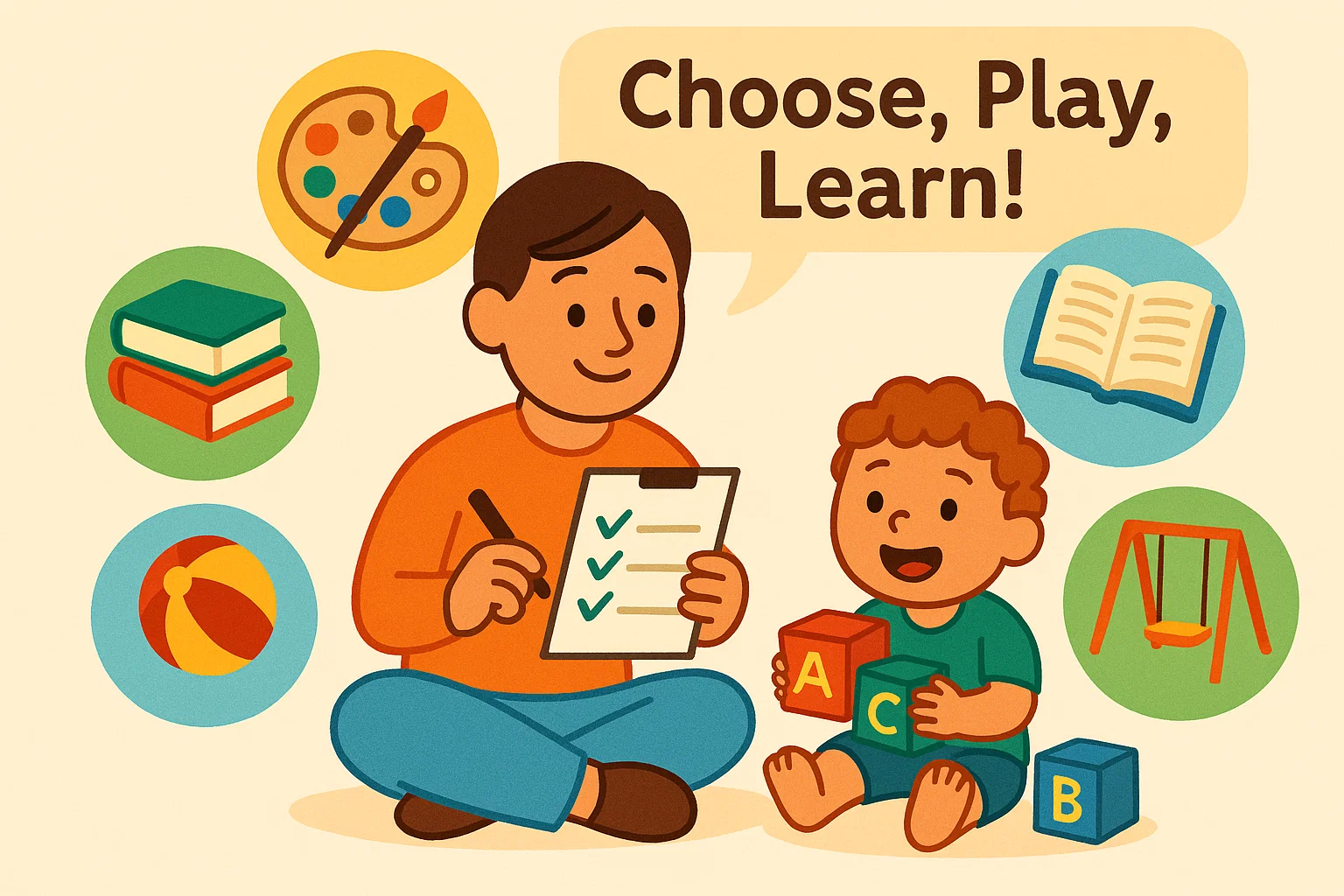
Selecting the best learning activities for 3-year-olds should always prioritize your individual child’s interests and personality. What is an engaging activity for one may not be for another.
Balance Between Structure and Freedom
While a consistent routine is comforting, rigid schedules can stifle creativity.
- Offer Flexible Playtime: Dedicate a specific “creation hour” but allow your child to choose the activity (e.g., painting, blocks, or pretend play).
- Choice-Driven Learning: If they show a deep interest in dinosaurs, tailor a sensory bin or an art activity around that theme. This is an engaging way to capitalize on their natural curiosity.
Adapting Activities for Different Energy Levels
Matching the activity to the mood is key for a successful experience.
- For High-Energy Days: Focus on gross motor skills activities like the outdoor obstacle course, dancing, or jumping games.
- For Calm or Quiet Time: Choose fine-motor activities like puzzles, lacing beads, sticker books, or imaginative play with dolls.
Materials and Safety Considerations
Always ensure that the activities for 3-year-olds you choose are safe and age-appropriate.
- Non-Toxic Materials: For sensory or cooking play where items might end up near the mouth, use non-toxic or edible ingredients whenever possible.
- Size: Small pieces can be choking hazards. Ensure all toys and small objects used for sorting or sensory play are larger than the child’s windpipe.
- Supervision: Always supervise a toddler during cutting and gluing crafts or during water play to ensure safety and proper use of materials.