

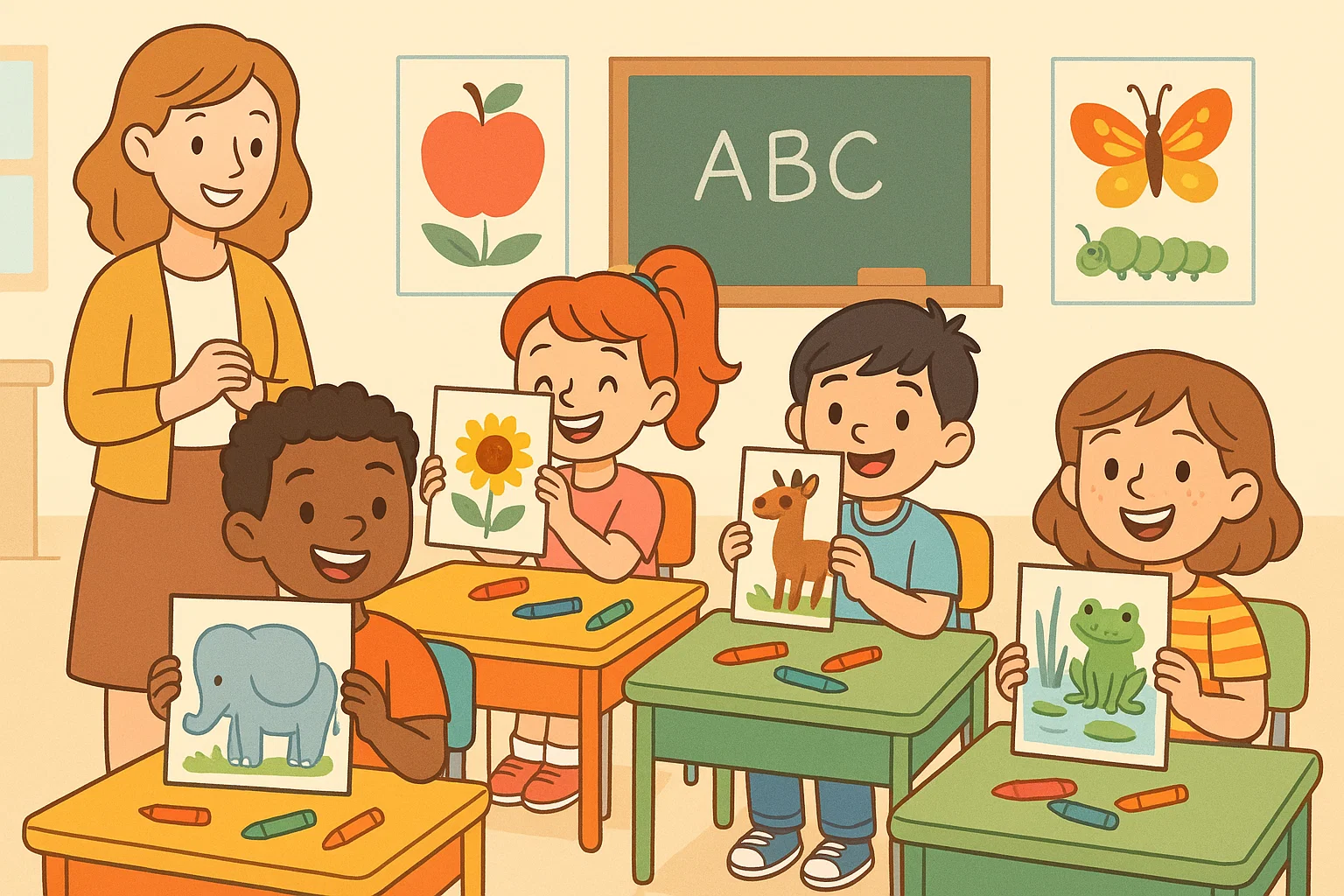
Learning to draw is a fundamental part of childhood development, offering benefits that go far beyond creating a beautiful picture. For 3rd graders, engaging in regular art projects – especially easy drawing activities – are a fantastic way to boost creativity, enhance focus, and develop those crucial fine motor skills that support academic growth. Simple drawing prompts and structured art activities can inspire both lively classroom art lessons and meaningful, quiet sessions at home, turning everyday moments into opportunities for self-expression and discovery.
As children transition from early elementary grades, their skills become more refined, making 3rd grade art projects an ideal time to introduce foundational techniques and expand their artistic vocabulary. This guide explores a variety of accessible, fun, and educational drawing ideas designed specifically for this age group, ensuring every third grader feels confident picking up a pencil, a marker, or a crayon to create something amazing.
Simple Drawing Projects for Grade 3 Students
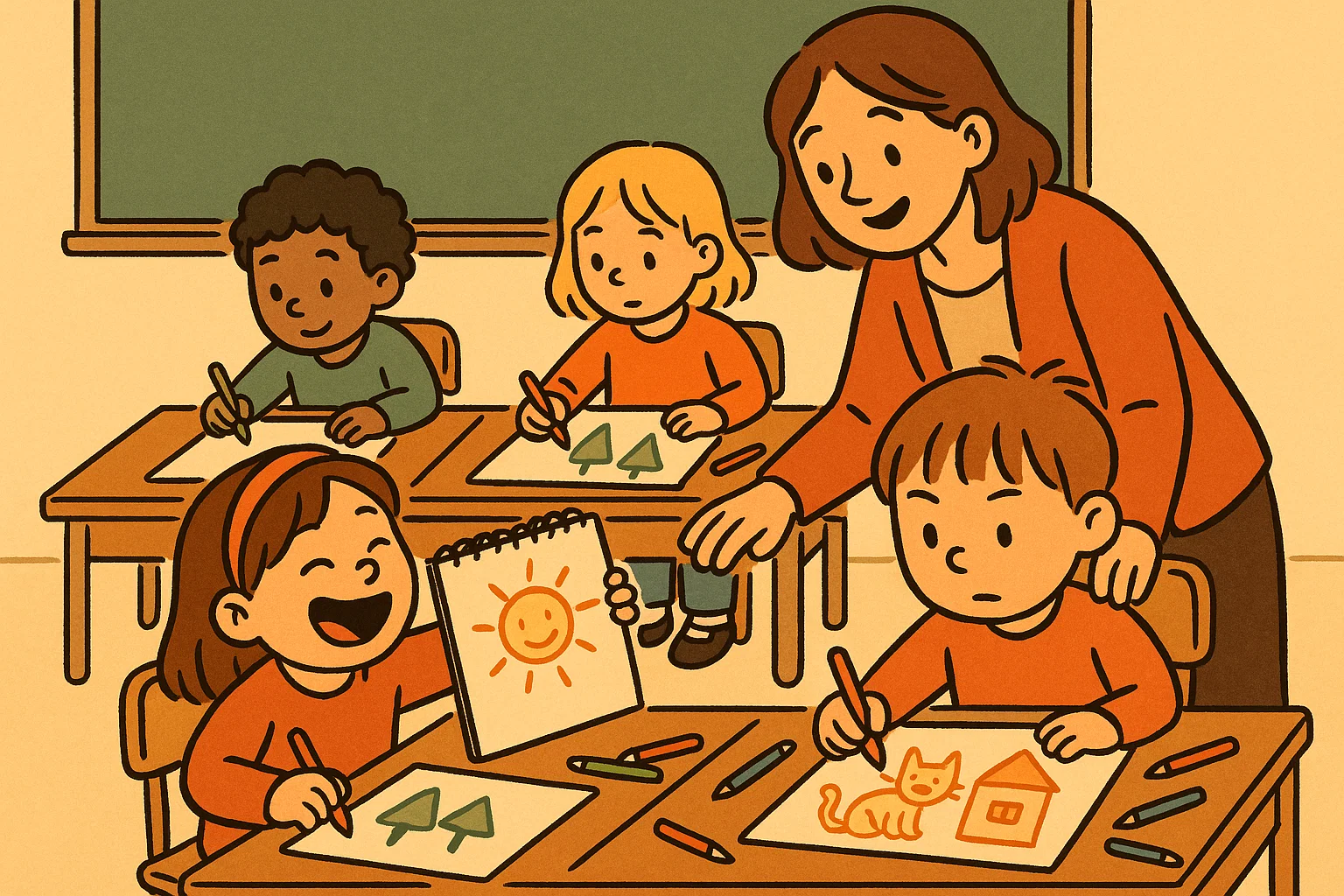
Art projects for grade 3 students should strike a balance: they need to be simple enough to avoid frustration but complex enough to teach a new skill or concept. Drawings at this level should be recognizable, allowing children to feel a sense of accomplishment. They are often themed around subjects students are currently studying – such as nature, seasons, or personal interests. Focusing on easy drawing techniques using basic shapes is key.
Fun Animal Drawing Ideas
Animals are eternally popular subjects for kids’ art. Third graders can learn to sketch animals like cats, dogs, fish, or jungle creatures by breaking them down into basic shapes: circles for heads, ovals for bodies, and triangles for ears.
- Shape-Building Method: Start with a large oval for the body and a smaller circle for the head. Students then add details and connecting lines. This step-by-step method makes complex subjects approachable.
- Personalization: Encourage children to give their animals unique characteristics, like patterns, costumes, or funny expressions. They can use colored pencils or Crayola supplies to add vibrant details.
- Case Study: A popular art project for 3rd grade is the “Zentangle Animal,” where students draw an animal outline and fill the interior with small, repetitive patterns, blending animal drawing with abstract art principles.
Nature and Landscape Drawings
Nature provides limitless inspiration. Trees, mountains, flowers, and weather scenes are excellent subjects for teaching composition and the use of color. These projects help students in this grade observe the world around them more closely.
| Nature Element | Drawing Focus | Material Suggestion |
| Trees | Lines, texture of bark, branches (canopy shapes) | Crayons, oil pastels to create rough texture |
| Mountains | Overlapping shapes, perspective, easy drawing of jagged lines | Chalk pastels for misty or layered effects |
| Flowers | Organic shapes, symmetry, detailed centers | Colored pencils for fine details and blending |
Students can use colored pencils or crayons to experiment with shading – a vital artistic concept – by drawing shadows on one side of an object to make it appear three-dimensional.
Seasonal and Holiday Themes
The changing seasons offer a natural rotation of art project ideas. Themes make it easy to connect art to the calendar year, keeping lessons fresh and relevant.
- Fall-Themed Art: Drawing pumpkins, leaves changing colors, or scarecrows. Students can use warm and cool colors to represent the season.
- Spring Art: Gardens, butterflies, and rainy-day scenes. This is a great time to introduce using watercolors for light, flowing effects.
- Winter: Simple snowmen, cozy houses, or abstract winter art using black construction paper and white chalk pastels.
Cartoon Characters and Imaginary Creatures
Encouraging students to draw cartoon characters or fantasy creatures like dragons and aliens is a powerful way to foster pure creativity. This type of kids’ art helps develop storytelling through visual elements – an important foundation for future literacy and communication. Simple, bold lines often work best in this style. This is also an opportunity to discuss the concept of personal symbols – what design or shape represents them?
Drawing Ideas to Use in Classroom Activities
Integrating drawing into the core curriculum reinforces learning and helps make abstract concepts concrete. These collaborative and cross-curricular 3rd grade art lessons turn the classroom into a dynamic studio.
Story Illustration Projects
When students read a book or a short story, have them illustrate a scene, a character, or even an alternative ending. This transforms reading comprehension into a visual art project. For example, after reading a folk tale, they can create an illustration using that traditional style. This encourages visual literacy and a deeper understanding of the text.
Group Art Murals and Classroom Displays
Collaborative projects are excellent for promoting teamwork and shared ownership of the classroom environment. A simple idea is a large mural on drawing paper where each third grader contributes an element based on a common theme, like “Our Community” or “The Solar System.”
- Collaborative Collage: Using construction paper scraps, magazine clippings, and drawings, students can create a collage that represents a subject. This is an accessible way to introduce students to Henri Matisse’s famous cut-out style.
Art Games and Quick Sketch Challenges
Keeping art lessons lively is crucial. Quick-sketch challenges – such as drawing five objects in two minutes – help students loosen up and sharpen their observational skills without the pressure of perfection.
- Themed Quick Draw: Give a topic (e.g., “Something that flies”) and a short time limit.
- Exquisite Corpse (Collaborative Drawing): Students draw the head of a creature on a folded paper, pass it to the next person for the body, and so on. The final reveal is always a hilarious, creative surprise.
Step-by-Step Drawing Prompts for Kids

Structured, step-by-step drawing prompts are excellent for building confidence. They provide a roadmap, helping students plan their composition and realize that even complex drawings are just a series of simple steps. This is a crucial skill for kids learning to manage multi-step tasks.
How to Draw Everyday Objects
Guiding students to draw common items using basic lines and shapes is fundamental. For example, drawing a house starts with a square, adding a triangle roof, and then smaller squares for windows.
- Start with the main shape (e.g., a large rectangle for a truck body).
- Add smaller foundational shapes (circles for wheels).
- Add details (windows, doors, headlights).
- Refine lines and add color with markers or tempera paint.
Drawing with Numbers and Letters
This clever exercise turns simple characters into complex pictures, making art feel like a fun puzzle. For instance, turning the number “3” into a butterfly by adding wings and antennae, or using a capital “M” to start a mountain range. This activity strengthens problem-solving and observational skills.
Symmetry and Pattern Drawing
Introducing symmetry helps connect art to math. Students can fold a sheet of drawing paper in half and draw one side of a shape (such as a mask or butterfly) along the fold. When they unfold it, they have a guide to draw the mirrored half. Creating decorative borders or mandalas is a great way to explore principles of design and create repetitive, calming patterns.
Thematic Drawing Ideas by Subject
Combining art with other subjects creates deeper learning experiences and shows third graders how art is integrated into the real world. This cross-curricular approach enhances the educational value of every art project.
Science-Inspired Drawings
Visualizing concepts makes science stick.
- Life Cycles: Draw the step-by-step life cycle of a frog or butterfly, blending accurate illustration with creative design.
- Planets and Habitats: Create a detailed art project of a specific animal habitat (e.g., a rainforest) or use oil pastels to create vibrant, swirling planets in space.
Math and Geometry in Art
Art is applied geometry. Show how shapes and patterns can form creative abstract art designs. Students can use rulers to create precise geometric designs, then color them to explore the color wheel and basic color theory.
- Tessellations: Creating repeating patterns that fit together perfectly without gaps.
- Grid Drawings: Using a grid to copy or enlarge a simple image – a foundational skill in practice drawing.
Cultural and Historical Art Projects
Exploring art from different cultures introduces students to diverse perspectives and history.
- Personal Symbols and Shields: Students can design their own family crests or shields using personal symbols to represent their interests and values.
- Masterpiece-Inspired Art: Simple introductions to artists like Vincent Van Gogh’s swirling stars or Frida Kahlo’s use of self-portraiture can inspire new painting techniques. For example, a simplified drawing of a Sunflowers vase.
Encouraging Creativity in Grade 3 Art Lessons
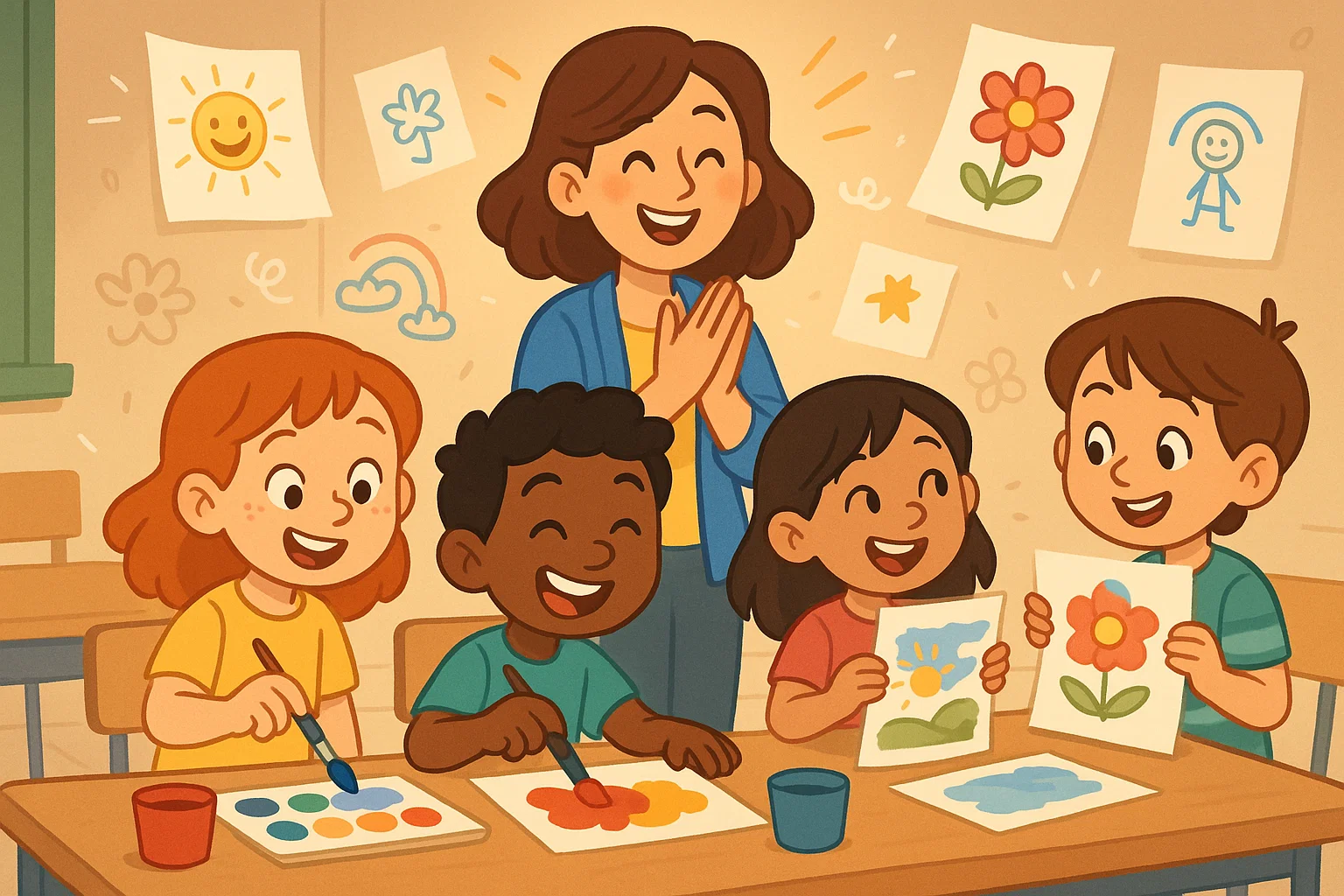
The goal of a third-grade art lesson is not just a finished product, but the development of a lifelong creative mindset. Kids love to experiment when given the freedom to do so.
Using Colors and Textures
Provide a variety of materials: crayon, marker, watercolor, tempera paint, chalk pastels, and oil pastels.
- Color Mixing: Teach the basics of primary and secondary colors. Let students mix two tempera paint colors to create a third.
- Texture Exploration: Show how oil pastels can create thick, layered textures, while using markers gives a smooth, flat look. They can also try a simple collage with textured materials like fabric scraps or sand.
Building Confidence Through Art
Positive feedback is the cornerstone of creative confidence. Avoid judging artwork based on realism; instead, focus on effort, unique ideas, and the bravery to try a new painting technique. The journey is more important than the destination.
Expert Insight: Child development experts suggest, “When evaluating a child’s artwork, focus on process, not just product. Saying, ‘I see you used so many bright colors!’ or ‘Tell me about the story in your drawing,’ is more effective than simply, ‘That’s a good picture.’”
Displaying and Sharing Artwork
Displaying student work validates their effort. Create a rotating “Art of the Week” display or a simple “Digital Gallery” using photographs of the kids art. This encourages students to take pride in their work and inspires others. Even a dedicated space on a refrigerator for a new art project is highly motivational.
Tips for Teachers and Parents
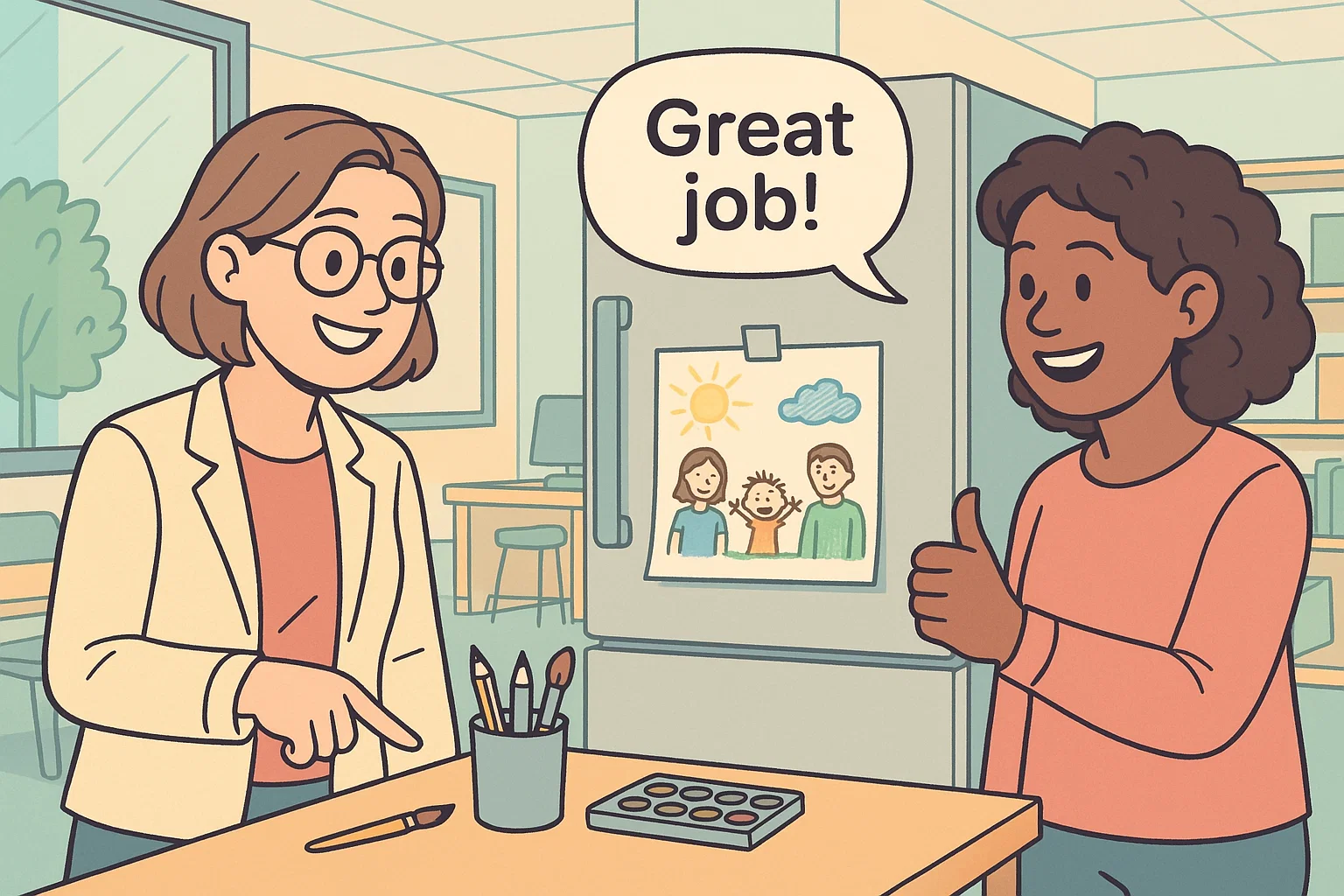
As the guide, your role is to facilitate the creative process, providing structure when needed but never dictating the final outcome.
How to Give Constructive Feedback
Focus on effort and specific elements. Instead of, “I like it,” try:
- “You used an interesting mix of warm and cool colors in the background.”
- “The way you drew the lines on the trunk makes the tree look very rough.”
- “That is a very creative idea! How did you come up with that?”
Setting Up a Creative Corner at Home
Designate a space for art that is always stocked and ready.
- Must-Haves: A variety of drawing paper, a set of Crayola-style colored pencils, markers, and maybe a sketchbook.
- Organization: Use clear bins to separate materials – pastels, paint, and construction paper – making them easy to access. A well-organized space encourages spontaneous creation.
Managing Time During Art Lessons
A common challenge is maintaining a balance between freedom and structure. Use a simple timer. For a 45-minute art lesson, you might allocate time like this:
| Activity | Time Allocation | Purpose |
| Introduction | 5 minutes | Introduce the art concept and materials. |
| Sketching/Drafting | 15 minutes | Focus on practice drawing and composition. |
| Coloring/Refining | 20 minutes | Adding detail, color (using markers or paint). |
| Clean-up/Sharing | 5 minutes | Finalize, clean up, and a quick gallery walk. |
The world of art is a magical space for third graders, filled with endless opportunities to learn, grow, and express themselves. By providing structured, engaging, and diverse art projects, educators can help students become not only better artists but also better thinkers.