

Welcome to your comprehensive guide on celebrating Earth Day with your children! This resource is designed to give parents, educators, and caregivers a rich selection to provide parents, educators, and caregivers with a rich selection of meaningful and fun Earth Day activities that promote environmental awareness and essential developmental skills. Whether you’re looking for simple Earth Day crafts using recycled materials, engaging outdoor nature walk ideas, or age-appropriate Earth Day lesson plans for little ones in a nursery or primary school setting, you’ll find actionable, expert-approved strategies here.
Our goal is to help you easily integrate sustainability and a love for protecting the environment into your family’s routine. The activities included—ranging from creative art projects to hands-on gardening and sustainable games—not only teach children about the importance of protecting our planet but also help develop fine motor skills, creativity, and problem-solving abilities. Get ready to transform everyday materials into instruments for learning and celebrate the Earth this April 22nd.
What Is Earth Day
Earth Day is an annual worldwide event celebrated on April 22 that demonstrates support for environmental protection. It was first celebrated in 1970 and is now recognized globally. For children, it’s a dedicated moment to learn how to care for the Earth and practice being responsible inhabitants of our planet. It goes beyond a single date on the calendar; it’s an opportunity to instill lifelong values of conservation and appreciation for the natural world.
Earth Day meaning for kids
The core message of Earth Day is simple: We need to look after the one home we all share. When explaining Earth Day to your kids, focus on the interconnectedness of all living things—humans, animals, and the environment. It’s a day to say “thank you” to the planet and to commit to making choices that keep it healthy and beautiful. You can ask children what their favorite part of nature is (trees, oceans, animals) and then talk about how we keep those things safe.
Key themes: nature, reuse, sustainability
Earth Day centers around several key themes that you can easily integrate into daily life:
- Nature Appreciation: Spending time outdoors, observing plants and animals, and understanding ecosystems. A nature walk is a perfect way to reinforce this.
- Reuse and Recycling: Learning to sort waste and, more importantly, finding new purposes for things we might otherwise throw away. Using a milk carton for a craft, for example, embodies this theme.
- Sustainability: Making choices that can be continued indefinitely without harming the environment, like saving water or choosing items without single-use plastic. These are essential concepts to teach children.
Why Earth Day matters for families and nurseries
Participating in Earth Day activities offers meaningful benefits for children’s development and family bonding:
- Develops Environmental Awareness: It introduces children to the concepts of pollution, conservation, and resource management in an age-appropriate way.
- Boosts Motor Skills: Crafts using recycled materials, like cutting, gluing, and painting, significantly enhance fine motor skills and coordination.
- Fosters a Connection with Nature: Hands-on activities create positive associations with the outdoors, encouraging children to explore and appreciate their surroundings.
- Promotes Creativity and Problem-Solving: Turning trash into treasure with easy craft projects challenges children to think creatively about how to reuse items.
Earth Day Activities for Kids at Home or Nursery
There are endless ways to celebrate Earth Day with your children, no matter their age. The key is to keep it fun and hands-on. By incorporating easy Earth Day concepts into play, you’ll naturally teach children to help the environment.
Craft ideas with recycled materials
Using what you already have is the ultimate Earth Day theme. These fun Earth Day crafts use items that would otherwise be discarded:
- Recycled Bird Feeder: Transform an empty milk carton or juice carton into a simple bird feeder. Cut a large hole, decorate it with paint and natural materials, and hang it outside. This teaches kids about caring for animals and the natural world.
- Cardboard Tube Creatures: Toilet paper or paper towel rolls can become anything from bees to caterpillars or even small Earth models painted blue and green.
- Newspaper or Magazine Collages: Use old paper to create vibrant Earth Day art. Tearing and gluing small pieces is excellent for motor skills.
Nature-based activities for toddlers and preschoolers
For little ones, simple observation and exploration are powerful learning tools.
- Sensory Nature Walk: Encourage children to use all their senses (safely!) during a nature walk. What does a pine cone feel like? What sounds do they hear? What do the leaves smell like?
- Cloud Gazing and Storytelling: Lie down outside and watch the clouds. Ask your child what shapes they see. This is a quiet activity that encourages imagination and observation.
- Color Scavenger Hunt: Give your child a list of colors (green, brown, blue) and have them find natural items that match, teaching them about the colors of Earth.
Outdoor sustainable games
Turn environmental action into a fun activity that kids will love:
- Family Clean-Up Challenge: A safe, supervised litter picking session in a local park or yard. Provide child-sized gloves and litter pickers (if age-appropriate). Make it a game by seeing who collects the most plastic or paper.
- Eco Scavenger Hunt: Instead of just finding items, have children find examples of the recycling system in action (a blue bin, a compost pile, a reusable shopping bag).
- Water Saving Race: Challenge kids to see who can brush their teeth the fastest while using the least amount of water (turning the tap off while scrubbing).
Sensory activities for young kids
Sensory play is vital for early development and can easily incorporate an Earth Day theme:
- “Dirt” Sensory Bin: Fill a bin with safe materials that resemble soil, such as crumbled O-shaped cereal or black beans. Add small shovels, plastic insects, and small flower pots for digging and exploration.
- Natural Material Texture Trays: Use sand, stones, dried beans, water, and collected leaves to create different textures for children to touch and explore. This is a wonderful opportunity to teach kids about different elements of nature.
Early learning ideas for EYFS
You can build entire Earth Day lesson plans around these simple concepts:
- Counting and Sorting Natural Items: Use collected pebbles, sticks, or leaves for counting practice. Sort them by size, color, or texture.
- The Colors of Earth: Focus on blue and green. Create an art project using only these colors, discussing what each color represents (water/air and land/plants).
- Storytelling with Recycled Puppets: Create simple puppets from paper bags or socks and put on a play about how to care for our planet.
Fun Earth Day Crafts for Kids
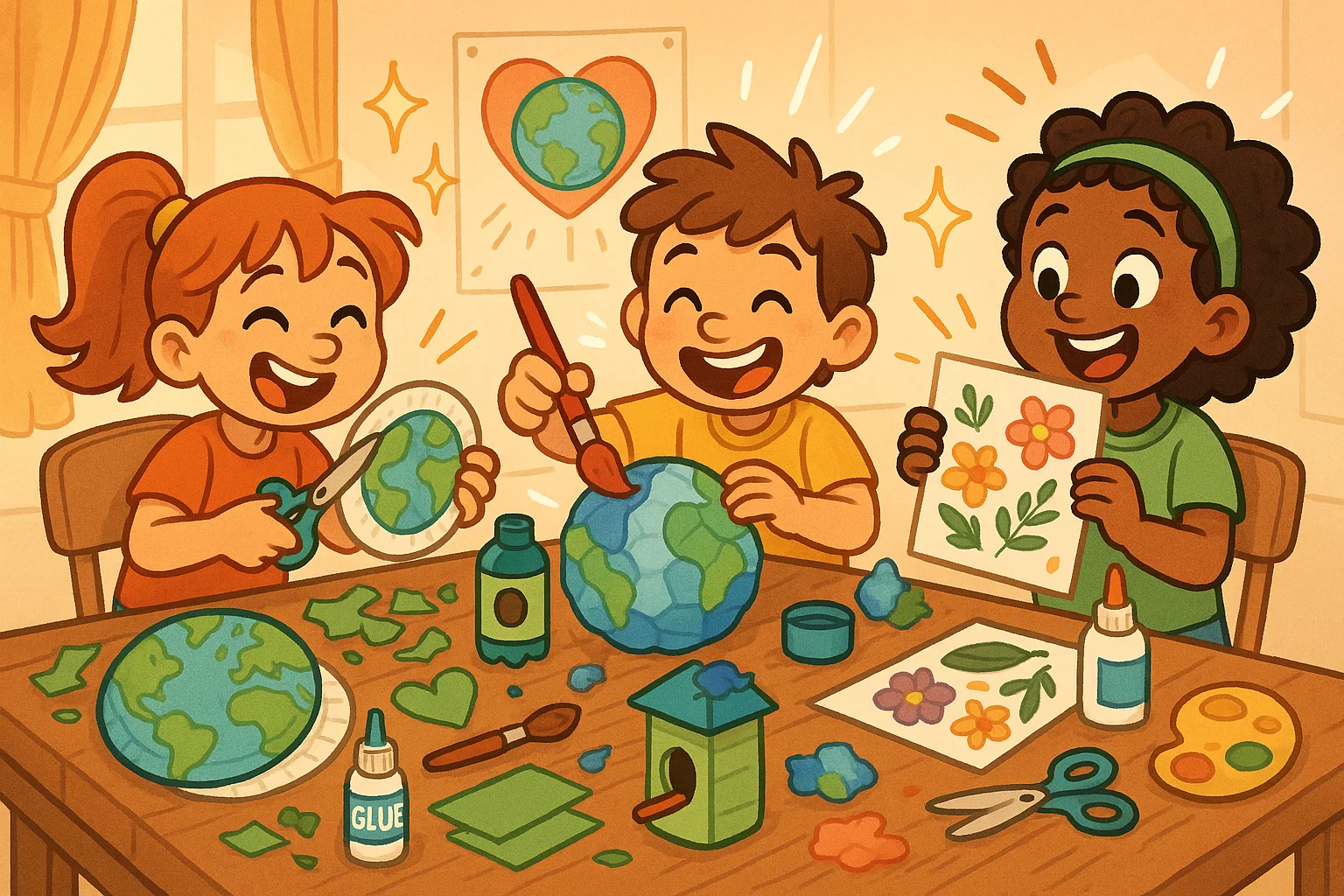
Creating something beautiful from something old is a core principle of Earth Day. These fun Earth Day crafts are simple and impactful.
Earth watercolor art
Watercolor is a forgiving and beautiful medium, perfect for creating a simple representation of the Earth.
- Technique: Draw a large circle on watercolor paper. Use only blue and green watercolors. Encourage kids to blend the colors slightly to represent continents and oceans.
- Benefits: This is a calming art project that encourages creativity and reinforces the green and blue motif of our planet.
Recycled birdhouse craft
A milk carton or juice carton can be transformed into a cozy home for feathered friends.
- DIY Steps: Rinse the carton thoroughly. Cut an entrance hole. Decorate the outside with natural materials like small sticks, moss, or non-toxic paint. Place a small dowel or stick near the entrance for a perch.
- Benefit: This teaches children about empathy for animals and the concept of reuse in a practical, impactful way.
Handprint Earth craft
Ideal for toddlers and preschoolers, this activity makes a memorable keepsake.
- Process: Paint your child’s hands with blue or green tempera paint. Have them press their handprints onto a white sheet of paper, a paper plate, or construction paper, forming the outline of a circle (the Earth). Add details with a marker after the paint dries.
- Fine Motor Skills: The act of printing and later decorating enhances fine motor skills.
Tissue paper Earth project
This is an excellent activity to practice the pincer grasp and improve concentration.
- Technique: Draw an outline of the Earth. Have your child tear small squares of blue and green tissue paper. Then, instruct them to roll the squares into small balls and glue them onto the paper, filling the continents and oceans.
- Result: The resulting textured Earth craft is vibrant and teaches color layering.
Pebble art or pine cone wreath
Gathering materials outdoors makes this a delightful, two-part activity.
- Collection: Go on a nature walk to collect smooth pebbles or pine cones.
- Creation: Use acrylic paint to turn the pebbles into small insects, flowers, or animals. For the wreath, glue the pine cones onto a cardboard ring or circle cut from a paper plate, spraying the completed wreath with non-toxic sealant if desired.
Growing and Gardening Activities
Involving children in gardening is a powerful way to teach them about life cycles, responsibility, and how to care for our planet. It’s the ultimate hands-on lesson on growth and sustainability.
Growing herbs in small pots
Starting a small indoor herb garden is easy and immediately rewarding.
- Simple Herbs: Mint, basil, or chives are robust and grow quickly. Use small clay flower pots or even upcycled containers and jars.
- Sensory Learning: Children can touch and smell the leaves, engaging their senses while learning basic plant care (sunlight, water).
Creating a mini terrarium
A terrarium is a beautiful, self-contained miniature ecosystem—a representation of the Earth itself!
- Materials: A clear glass jar or plastic bottle (reused), small stones, charcoal (optional), potting soil, and small, slow-growing plants like moss or succulents.
- Concept: Explain that the terrarium is like a tiny world where everything helps everything else, demonstrating how the real Earth works.
Planting seeds from fruits and veggies
A practical zero-waste activity that shows children where food comes from.
- Seeds to Save: Save pits from avocados, seeds from apples, or seeds from bell peppers.
- Process: Research the best way to start the seeds (some need to dry first, others need to be sprouted) and plant them in small, reused containers. It’s a great way to teach children about minimising waste and maximising reuse.
Worm observation and soil exploration
Worms are nature’s tireless recyclers and a fascinating subject for kids.
- Safe Observation: Create a simple worm farm (a jar filled with layers of soil, sand, and leaves) for temporary observation. Explain how worms eat decaying matter and make the soil healthy for plants, connecting this to compost systems.
- Soil Health: Talk about how healthy soil supports all life on Earth. This is a great introduction to the importance of soil as a resource.
Outdoor Earth Day Activities
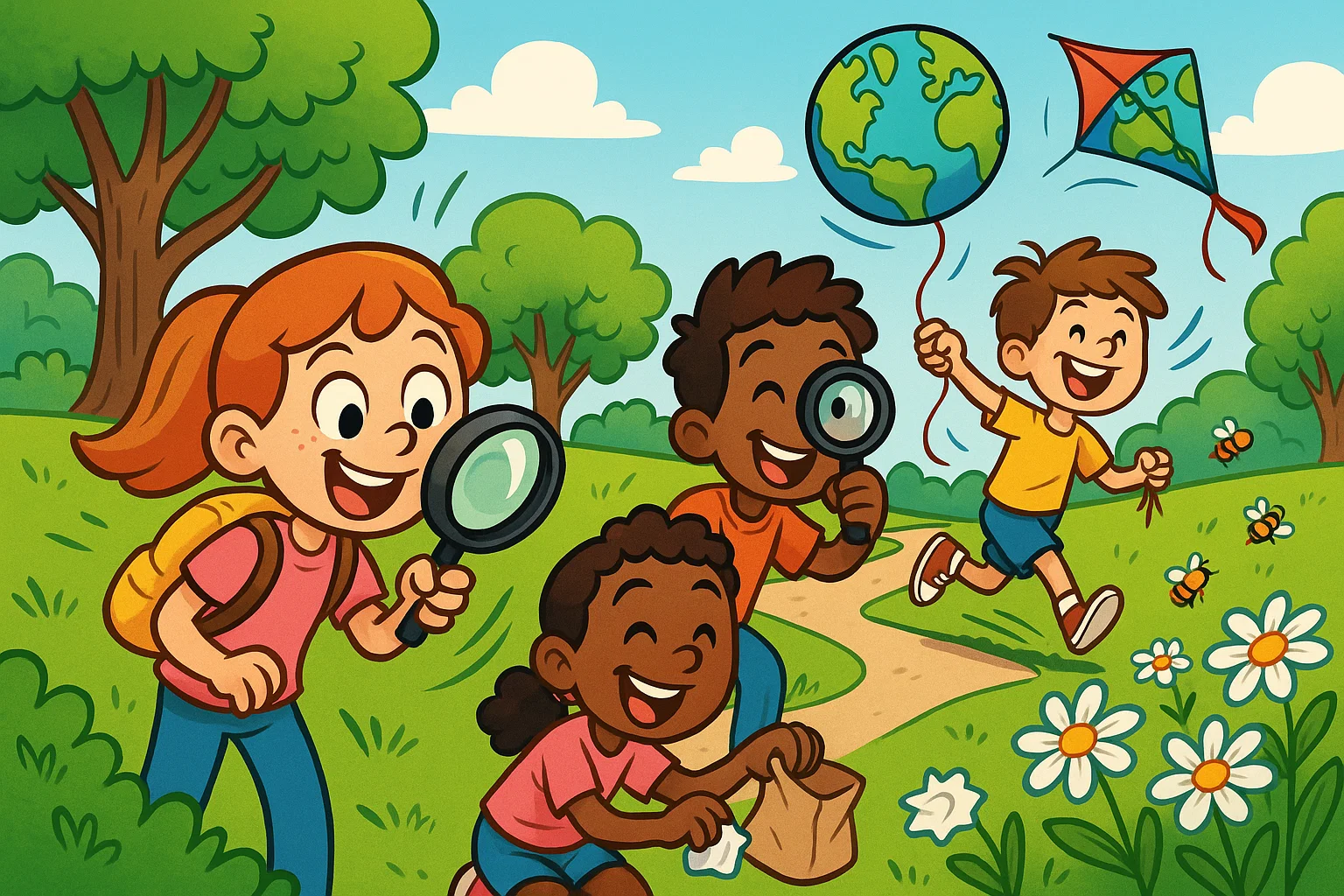
Getting outside is the best way to connect with the Earth directly.
Nature walk checklist
A list transforms a simple walk into an engaging, focused activity.
| To Find (Checklist) | Teaches Kids About |
| Something rough (bark) | Textures and tree life |
| Something soft (moss or petals) | Delicate parts of nature |
| Something blue and green | The colours of Earth |
| A fallen leaf or feather | Natural cycles and animals |
| A quiet spot to listen | Sound pollution and appreciation |
Family clean-up challenge
This provides a direct, measurable way to help the planet.
- Safety First: Always use gloves and brightly colored vests if picking up litter near traffic. Focus on parks or playgrounds.
- The “Why”: Explain that collecting single-use plastic and trash prevents it from harming animals and keeps our shared spaces beautiful. This is an essential lesson in environmental awareness.
Kite flying outdoors
A fun activity that can teach simple physics and the power of nature.
- Connection to Wind Energy: As you fly the kite, discuss the wind. Explain that we can use the wind’s energy to make electricity without polluting the air—a simple lesson in sustainability. Easy DIY kites can be made from paper and string.
Bee and flower hunt activity
Bees are vital to our planet’s food supply and make for a great observation game.
- Observation: Look for different flowers and try to find a bee or other pollinator. Look, but don’t touch!
- Simple Pollination Lesson: Explain that when a bee visits a flower, it carries tiny yellow powder (pollen) that helps new flowers and fruits grow. This helps teach your kids the delicate balance of nature.
Recycled Art Projects
Encourage your child’s inner artist to use recycled materials for creating masterpieces.
Upcycled containers and jars
- Lanterns: Decorate glass jars with tissue paper or paint to turn them into beautiful, safe candle holders or display vases.
- Plant Pots: Decorate plastic food containers or tins and use them as small flower pots for herbs or succulents.
Cardboard engineering for kids
Use old boxes and tubes for ambitious earth day projects.
- 3D Earth Model: Cut strips of cardboard and glue them together in a spherical shape, then cover them with papier-mâché (made from flour, water, and old newspaper) and paint green and blue.
- Recycled Robots or Castles: Your kids will love building large structures, using masking tape and glue to connect various cardboard pieces. This is fantastic for spatial reasoning.
Scrap fabric crafts
Leftover fabric or worn-out clothes can be given a second life.
- Simple Soft Toys: Cut basic shapes from old t-shirts or towels and stitch them together to make small stuffed animals or plushies, stuffing them with fabric scraps for a zero-waste project.
Storytelling and Learning Activities
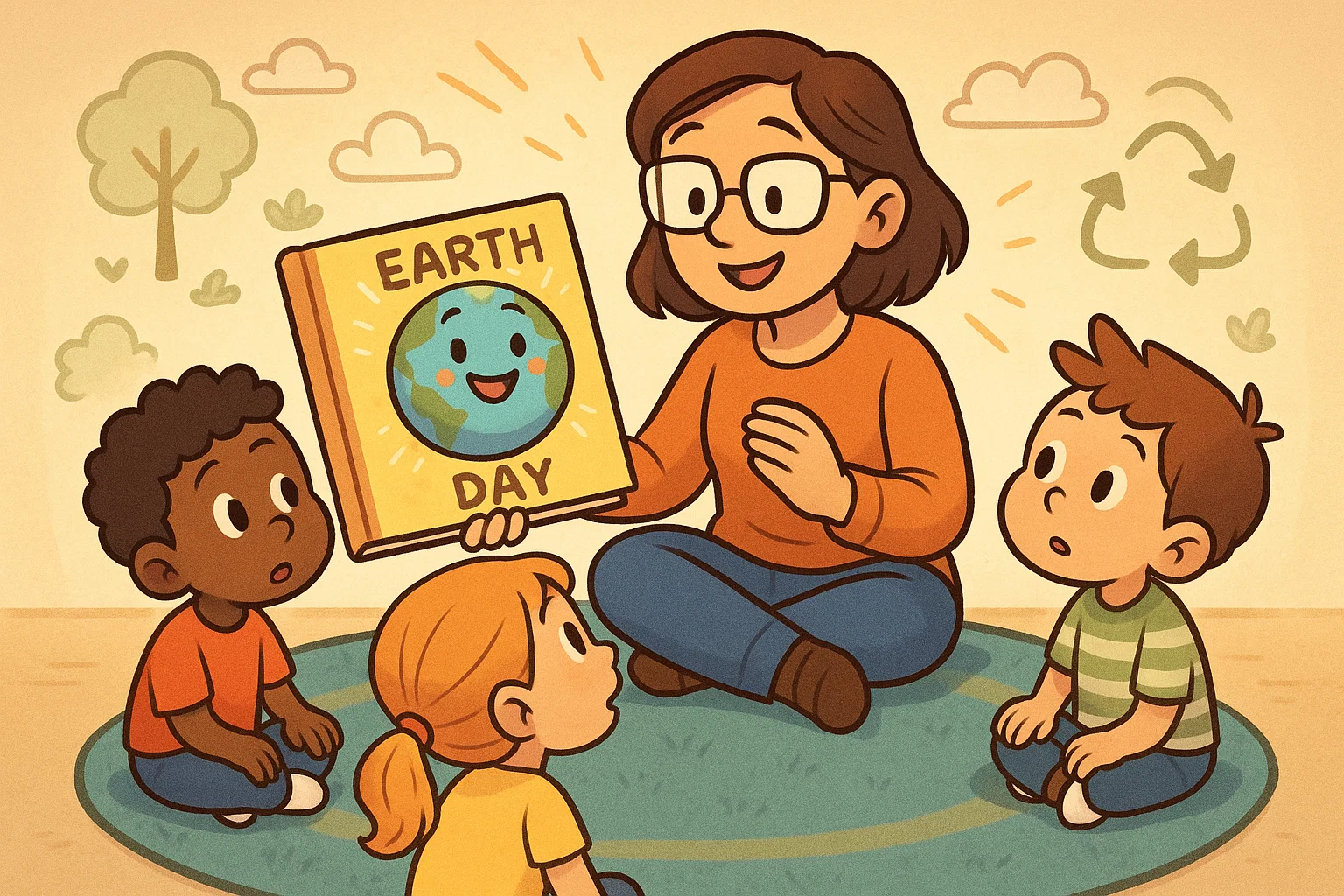
Books and conversations are foundational tools for instilling eco-values.
Eco-themed story time
Reading books about the Earth, animals, and recycling systems is a relaxed yet effective way to teach children.
- Reading Prompts: Pause during the story to ask questions like, “What could the character have done differently to help the environment?” or “How does that animal help protect the environment?”
Simple lessons on reuse and waste
Focus on small, daily habits that reduce their carbon footprint.
- Explaining Bins: Clearly label recycling, compost, and trash bins. Have a supervised sorting game where kids place various clean items into the correct bin.
- Saving Water and Paper: Talk about why we need to save water (it’s limited!) and how reusing paper Earth drawings or scrap paper saves trees.
Screen-free Earth Day challenges
Dedicate Earth Day to activities that connect the family to the physical world, offering alternatives to digital entertainment.
- Nature Journaling: Give your child a notebook to draw what they observe on a nature walk or during an outdoor activity. This encourages quiet reflection and observation.
Family Sustainability Habits to Start on Earth Day
Earth Day should be the launchpad for ongoing environmentally friendly habits.
Reducing waste as a family
Adopt small, manageable changes:
- Composting for Beginners: Start a small indoor or outdoor compost bin. Kids love adding food scraps and watching them decompose.
- Reusable Bags and Lunchboxes: Make sure everyone has their own reusable shopping bag and lunch container or water bottle to avoid single-use plastic.
Water and energy saving habits
These are easy for kids to understand and monitor:
- Turn It Off: Create visual reminders (like a painted Earth sign) near light switches and taps that say “Turn Me Off to Care for the Earth!”
- “Navy” Showers: Introduce the concept of a short shower to save water.
Eco-friendly fashion for kids
- Upcycling Clothes: When clothes are outgrown, turn them into cleaning rags, fabric scraps for crafts, or simply donate them. Teaching the value of items helps teach kids the importance of consuming less.
Earth Day Activities for Classrooms and Groups
For teachers or group leaders, these activities promote collaboration and learning.
Group experiments with water and soil
- Water Filtration Demo: Set up a simple experiment where students layer sand, pebbles, and cotton wool in a jar to show how the Earth naturally filters water. This makes an excellent Earth Day lesson.
Collaborative recycled art mural
- Big Picture: Designate a large wall or bulletin board. Have students bring in clean, decorative recycled materials (like bottle caps, colorful paper, carton scraps). The class works together to create one giant Earth Day art piece. This demonstrates teamwork in protecting our planet.
Outdoor stations rotation
If you can take students outside, set up three or four activity stations for smaller groups to rotate through:
- Planting Station: Planting seeds in small pots.
- Nature Observation Station: Using magnifying glasses to examine leaves and insects.
- Recycling Sorting Game: A timed challenge to correctly sort different types of trash.
- Water Play/Saving Station: Using measuring cups to see how much water is wasted if the tap is left running.
By implementing these fun earth day activities, you are providing more than just a single day of celebration; you are laying the foundation for a lifetime of environmental stewardship.