

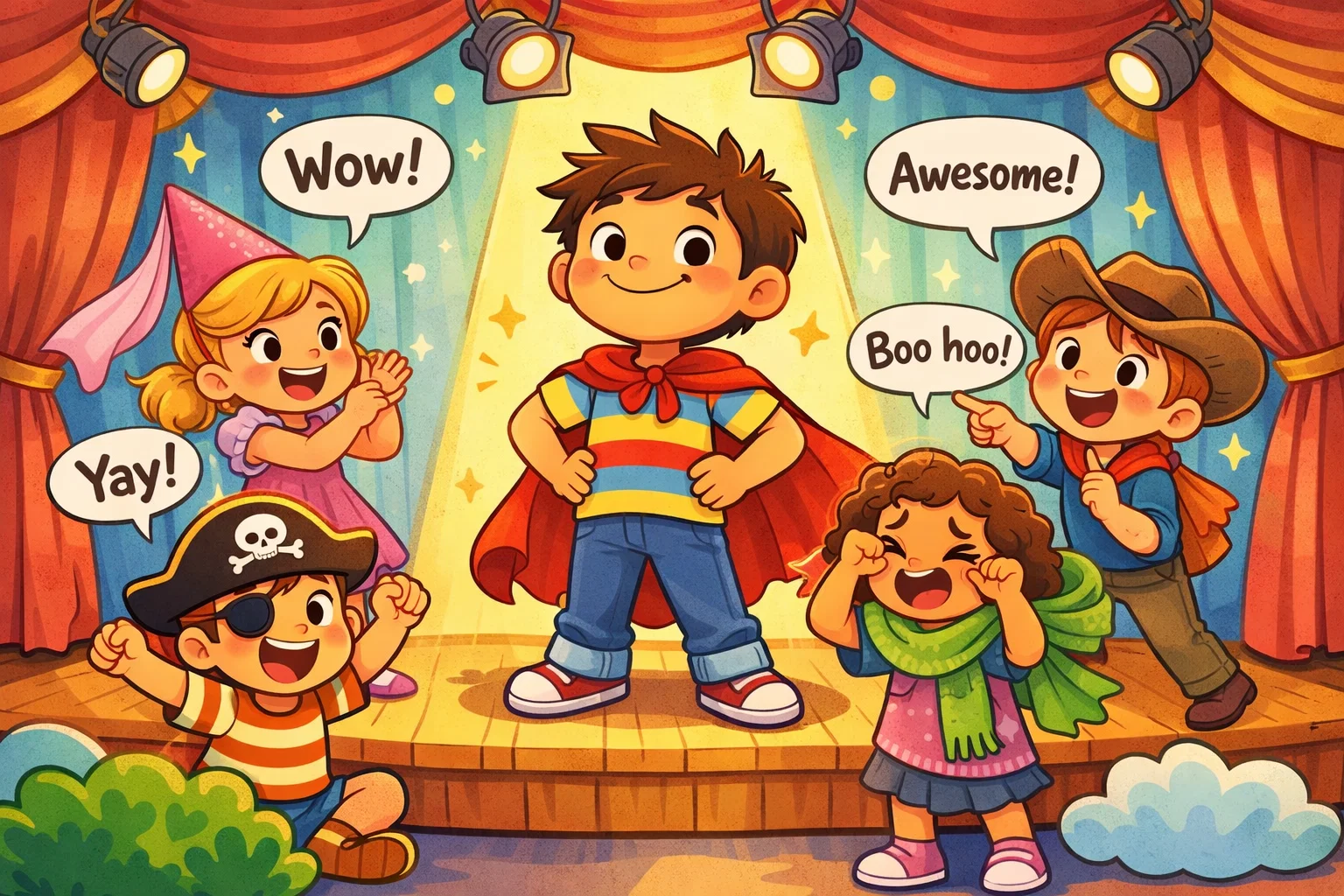
Drama activities for kids are far more than simple “pretend play.” They form a powerful toolkit for holistic development, giving children space to explore the world, test social boundaries, and find their own voices. Whether in a bustling primary school classroom, a dedicated theater club, or even a living room on a rainy afternoon, these games and activities provide essential opportunities for learning through movement and imagination. Research in educational psychology suggests that active participation in performance-based play can significantly enhance a child’s cognitive flexibility and social-emotional skills.
For educators and parents alike, incorporating a fun game into a child’s routine isn’t just about entertainment; it is about providing a safe “laboratory” for life. From preschoolers learning to mimic animal movements to teens tackling complex improvisation, these exercises accommodate every age and ability level. This guide explores a comprehensive range of games and activities designed to build confidence, foster teamwork, and ignite the imaginative spark in every young performer.
Drama Activities Purpose and Benefits

The purpose of a theatrical lesson extends far beyond the stage itself. Engaging in creative play for kids serves as a bridge between structured learning and spontaneous play. By stepping into a variety of characters, children learn to navigate perspectives different from their own, which is a cornerstone of empathy and social maturity.
| Benefit Area | Developmental Outcome |
| Cognitive | Improved memory, focus, and narrative sequencing skills. |
| Social | Enhanced cooperation, turn-taking, and conflict resolution. |
| Emotional | Safe exploration of feelings and increased self-regulation. |
| Physical | Better spatial awareness, coordination, and vocal control. |
Social skills development through drama activities
Games and exercises are inherently social. Unlike solitary play, a drama activity in a group setting requires children to negotiate, listen, and respond. When kids participate in teamwork exercises, they must align their goals with others to keep the “story” alive. This constant feedback loop helps build awareness of social cues and body language, teaching children how to cooperate effectively to achieve a common creative goal.
Emotional expression through drama activities
Role-play provides a kind of “mask” that allows children to express complex emotions safely. Through an imaginative drama activity, a child might explore what it feels like to be brave, sad, or frustrated without the real-world consequences of those emotions. Using emotional voices and physical gestures helps children label and process their feelings, leading to better emotional literacy.
Confidence building through performance play
One of the most significant reasons educators advocate for these programs is to build confidence. For a shy child, speaking through a character can feel less intimidating than speaking as themselves. Over time, the positive reinforcement found in a creative class reduces performance anxiety. As they master a classic drama game or successfully lead an improvisation, their self-esteem grows, translating into better public speaking skills and a more robust sense of self-assurance.
Drama Activities by Age Group
To ensure a game for kids that works, it is essential to tailor the complexity to their developmental stage. What delights a toddler might bore a teenager, and vice versa.
Drama activities for preschool kids
At this age, the focus is on imitation and sensory exploration. Drama activities for preschoolers should focus on short, high-energy bursts of activity. Simple tasks like “walking through tall grass” or “becoming a melting ice cube” help develop motor skills. Use an imaginary box to “pull out” different animals for the children to mimic, focusing on the sounds and shapes they make.
Drama activities for primary school kids
For primary students, activities can become more structured. This is the prime age for a fun drama game like “Statues” or “Freeze Frame.” An upper primary teacher might introduce basic improvisation where students must solve a simple problem in character. These games and activities help bridge the gap between simple play and narrative storytelling.
Drama activities for older kids and teens
Teenagers thrive on improvisation and “long-form” exercises. They are capable of exploring narrative building and deep character motivations. Challenging them with a lesson focused on “The Director” or complex ensemble scenes helps develop critical thinking. These sessions often focus on the confidence and group dynamic, pushing them to trust their instincts and their peers.
Warm Up Drama Activities

A proper warm-up is non-negotiable. It transitions the mind from the “real world” into the creative space, waking up the body and the voice while sharpening focus.
Physical warm up drama games
Physical warm-ups should release pent-up energy and prepare the muscles.
- Shake Out: Start by shaking the right arm 8 times, then the left, then legs, counting down to 1.
- The Blob: A game of tag where everyone tagged joins hands, becoming a larger “blob” that must move in unison.
- Space Walking: Asking students to walk through the room as if the air is thick like honey or light like clouds.
Voice warm up drama exercises
Drama teaching involves protecting young voices while also teaching safe projection.
- Humming Resonators: Gently humming to feel vibrations in the chest and lips.
- Tongue Twisters: Rapid-fire phrases like “Red leather, yellow leather” to improve articulation.
- The Siren: Sliding the voice from the lowest note to the highest on an “ooo” sound to stretch the vocal cords.
Ice breaker drama activities
These are essential for confidence and group bonding, especially in a new session.
- Name and Action: Each child says their name accompanied by a unique physical gesture; the whole group then repeats it back.
- Zip Zap Zop: A fast-paced energy-passing game that requires eye contact and quick reflexes.
Focus and Listening Drama Activities
Focus is the foundation of any successful theatrical lesson. Without the ability to listen and react, improvisation falls flat.
Concentration drama games
Fun drama games like “The King of Silence” or “Night at the Museum” require students to remain perfectly still and attentive. These games teach patience and the importance of subtle observation, which are crucial drama teaching skills.
Listening skills drama activities
A fun game helps students realize that acting is 90% listening. Try “Sound Ball,” where students “throw” a specific sound to a peer, who must “catch” it and immediately throw a new sound to someone else. This builds auditory processing and rapid response times.
Awareness building group exercises
“The Human Mirror” is a general drama activity where pairs try to move in perfect synchronization. This builds spatial awareness and teaches students to pick up on the micro-movements of their partners, fostering a deep sense of connection.
Movement Based Drama Activities
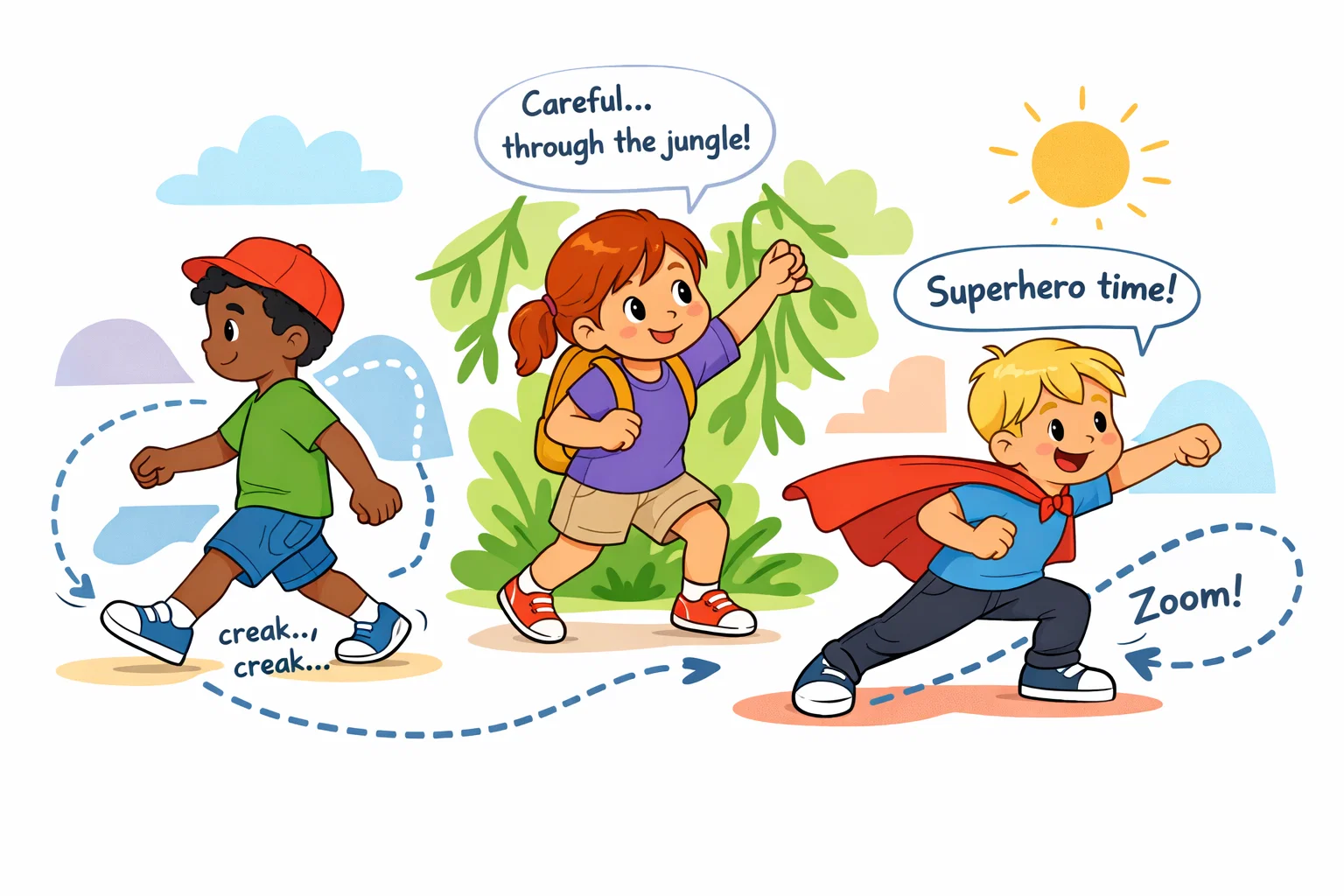
Movement is the “language” of theater before a single word is spoken. It allows for physical storytelling and helps children understand how to use their bodies as tools.
Body control drama games
Drama teaching often involves “freeze” games. In “Slow-Motion Race,” the goal is to be the last person to cross the finish line. This requires incredible muscle control and balance, turning a simple race into a fun exercise in discipline.
Space exploration drama activities
Using the “Magic Elevator,” tell students they are entering different floors: a floor made of marshmallows or a floor where gravity is 10 times stronger. This imaginative drama activity encourages kids to use the entire room and think about how the environment dictates movement.
Physical storytelling through movement
Challenge students to tell a story in this imaginative drama without speaking. Can they show us they are waiting for a bus that is late? Can they “open” a heavy door? This builds the foundation for mime and non-verbal communication.
Imagination and Creativity Drama Activities
At the heart of every creative activity for kids is the spark of “What if?”
Improvisation drama games
The golden rule of improvisation is “Yes, and…” If one child says, “Look, a dragon!” the other must agree and add to it: “Yes, and it’s wearing a tutu!” This teaches children to accept ideas and build upon them, a vital skill for collaborative problem-solving.
Object transformation drama activities
Take a simple prop, like a scarf or a ruler, and pass it around. Each child must use it as something other than what it is (e.g., the scarf becomes a river or a bandage). This is a fun way to stretch the creative muscles.
Story creation drama exercises
Try “One Word at a Time” stories. Sitting in a circle, the group attempts to tell a coherent tale where each person contributes only a single word. It’s a drama game for kids that emphasizes the importance of individual contribution.
Character and Role Play Drama Activities
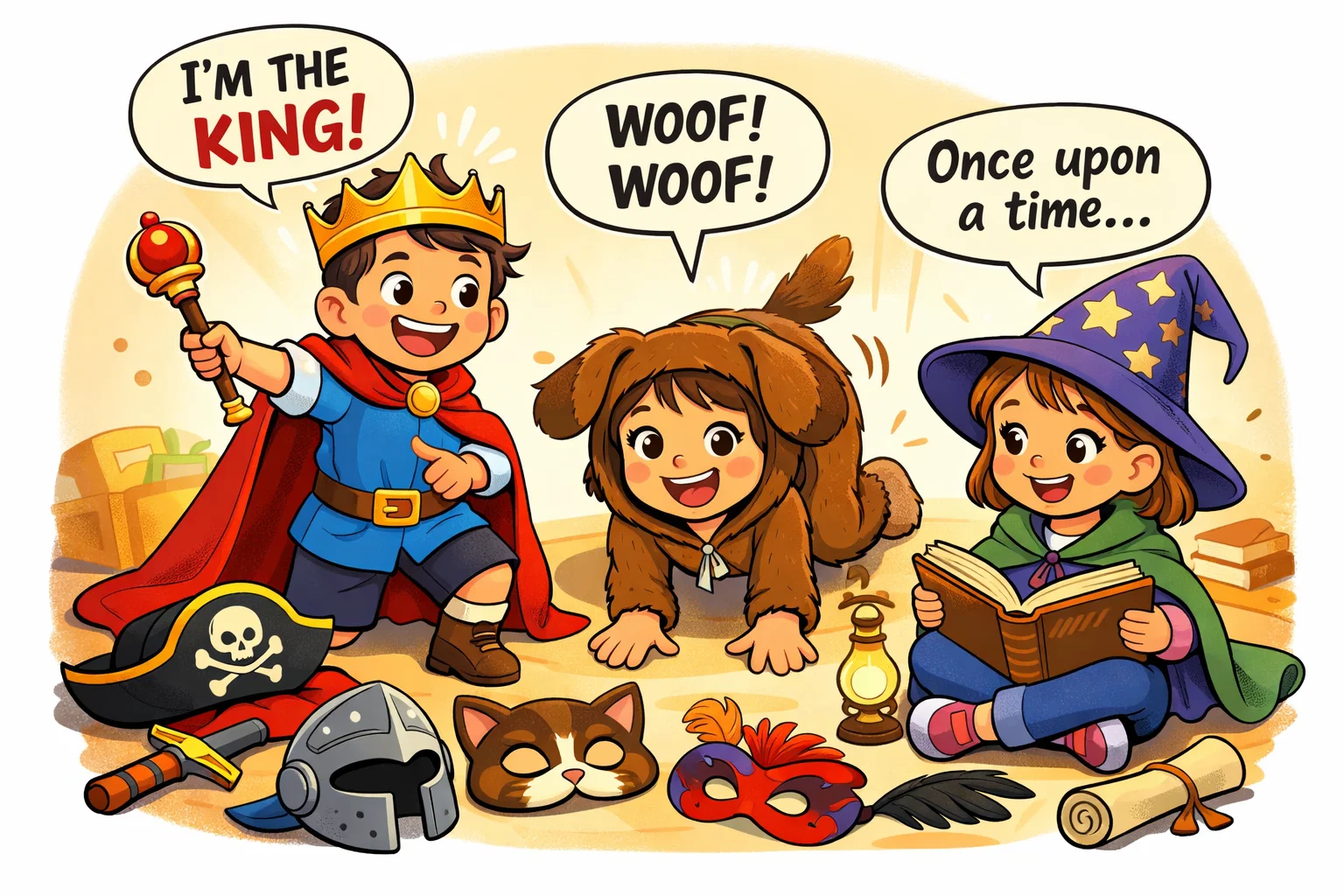
Stepping into someone else’s shoes is the most recognizable part of performance play for kids.
Character creation drama games
Drama teachers often use “The Hot Seat,” where a student sits in front of the class as a character and answers questions. To prepare, students might use a list of characters from a book or create their own, deciding how that person walks and talks.
Role switching drama activities
In a scene about a doctor and a patient, have the students “switch” roles halfway through. This drama teaching approach helps them see both sides of a dynamic and prevents them from getting stuck in one way of performing.
Emotion-based character play
Give a student a simple task, like “tying a shoelace,” but tell them to do it while they are “extremely joyful” or “very suspicious.” This emotion-based character play helps them understand how internal states affect external actions.
Ensemble and Group Drama Activities
A performance class is only as strong as its ensemble. These games focus on the “we” rather than the “me.”
Team building drama games
“The Great Knot” involves students standing in a circle, reaching in, and grabbing two different hands. Without letting go, they must untangle themselves into a circle. It requires patience and teamwork.
Synchronization and rhythm activities
Clapping rhythms that travel around a circle or moving as a “flock of birds” are excellent games and exercises for building group intuition and shared timing.
Collaborative scene creation
Give a small group a “Who, Where, and What.” For example: Who: Three pirates. Where: A supermarket. Giving them 5 minutes to create a 1-minute scene encourages quick thinking and shared creative ownership.
Drama Activities for Inclusive Learning
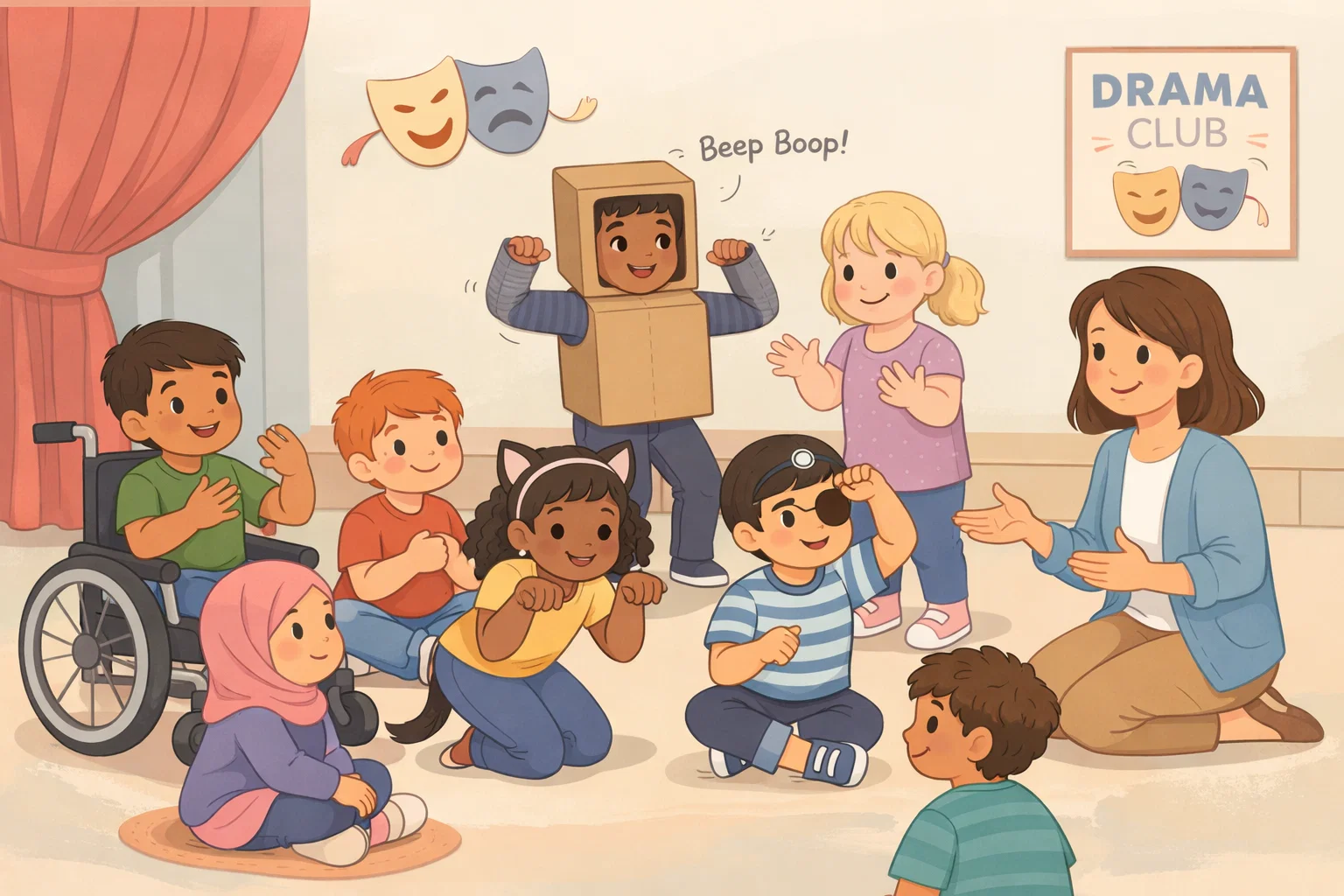
Creative play is a powerful tool for inclusion because it can be adapted to meet diverse learning needs.
- Non-Verbal Options: For children with speech delays, focus on movement and “Mirroring” games where they don’t have to speak.
- Low Pressure Environments: Use “Parallel Play” where everyone does the same action at once (like “everyone is a tree”) so no one feels “on the spot.”
- Sensory Considerations: Be mindful of light and noise. For some, a quiet fun game is more comfortable than a loud, high-energy one.
Drama Activities for Classroom and Home
You don’t need a stage to reap the benefits of teaching drama.
Classroom drama activities
Teachers can use lesson starters or quick activities to integrate these exercises into other subjects. For example, “Acting out a Water Cycle” makes a science lesson memorable. Drama games for kids like “Freeze Frame” can be used to check comprehension of a story the class just read.
Home drama activities for kids
Parents can encourage fun by setting up a “costume trunk” with old clothes. Use games for kids activity cards for quick inspiration. Even a simple “Dinner Party” where everyone has to eat as a specific character can turn a routine meal into an imaginative drama activity.
Drama activities without props
The best games and activities require nothing but space. “The Imaginary Box” is a classic: pretend to open a box and pull out something heavy or something that flies away. Your imagination is the only limit.
Tips for Running Drama Activities with Kids
To ensure drama activities run smoothly, keep these practical tips in mind:
- Safety First: Establish a “Stop” signal (like a whistle or a double-clap) that means everyone must freeze and listen immediately.
- Positive Reinforcement: Focus on “bold choices” rather than “good acting.” Celebrate the effort to try something new.
- Group Size Matters: For large groups, use games where everyone is active simultaneously. For small groups, you can afford more individual performance time.
- Energy Management: Follow a high-energy game with a quiet, focus-based one to keep the group from becoming over-stimulated.
Popular Drama Activity Examples
| Game Name | Primary Focus | Best Age Group |
| Yes, And… | Improvisation & Agreement | 8+ |
| Mirroring | Focus & Coordination | All Ages |
| Human Knot (also known as “The Great Knot”) | Teamwork & Problem Solving | 7+ |
| Freeze Frame | Storytelling & Control | 5+ |
Yes based improvisation games
The “Yes, And” game is the bedrock of improvisation. It prevents “blocking” (saying no to an idea) and keeps the creative energy flowing. It is a fun game that teaches children that their ideas have value.
Movement mirroring activities
This is a classic drama game where two students face each other. One is the “actor” and the other is the “mirror.” It builds incredible awareness and requires the “actor” to move slowly and thoughtfully.
Group coordination drama games
“The Machine” is a fantastic ensemble activity. One student starts with a repetitive movement and sound. One by one, others join in, connecting themselves to the “machine” until the whole group is working as one rhythmic unit.
Drama activities for kids are a gift that keeps on giving. They provide the tools for effective communication, the courage to stand in front of a crowd, and the empathy to understand a neighbor. By using these drama teaching ideas, you are not just teaching performance — you are teaching life skills.