

The future of our people and planet rests significantly on the sustainable mindset we cultivate in our youngest generations. The early childhood years—from infancy through age eight—represent a critically formative period where foundational values, attitudes, and behaviors are established. It’s during this time that children are most receptive to learning about the interconnectedness of natural and human systems. By introducing the core tenets of sustainability now, we can help children develop lifelong habits of sustainability and environmental responsibility, preparing them to face global challenges like climate change and biodiversity loss with competence and care.
This article is designed to be an authoritative guide for educators and parents, offering actionable insight into how to effectively integrate sustainability education into daily life. It’s more than just teaching kids to recycle; it’s about fostering a transformative mindset—a holistic approach that encompasses ecological well-being, social equity, and economic prudence. By nurturing these skills early, we are equipping our children with the tools needed to shape a genuinely sustainable future and become active, engaged citizens who prioritize a just and environmentally responsible world.
Key Concepts in Sustainable Minds Development
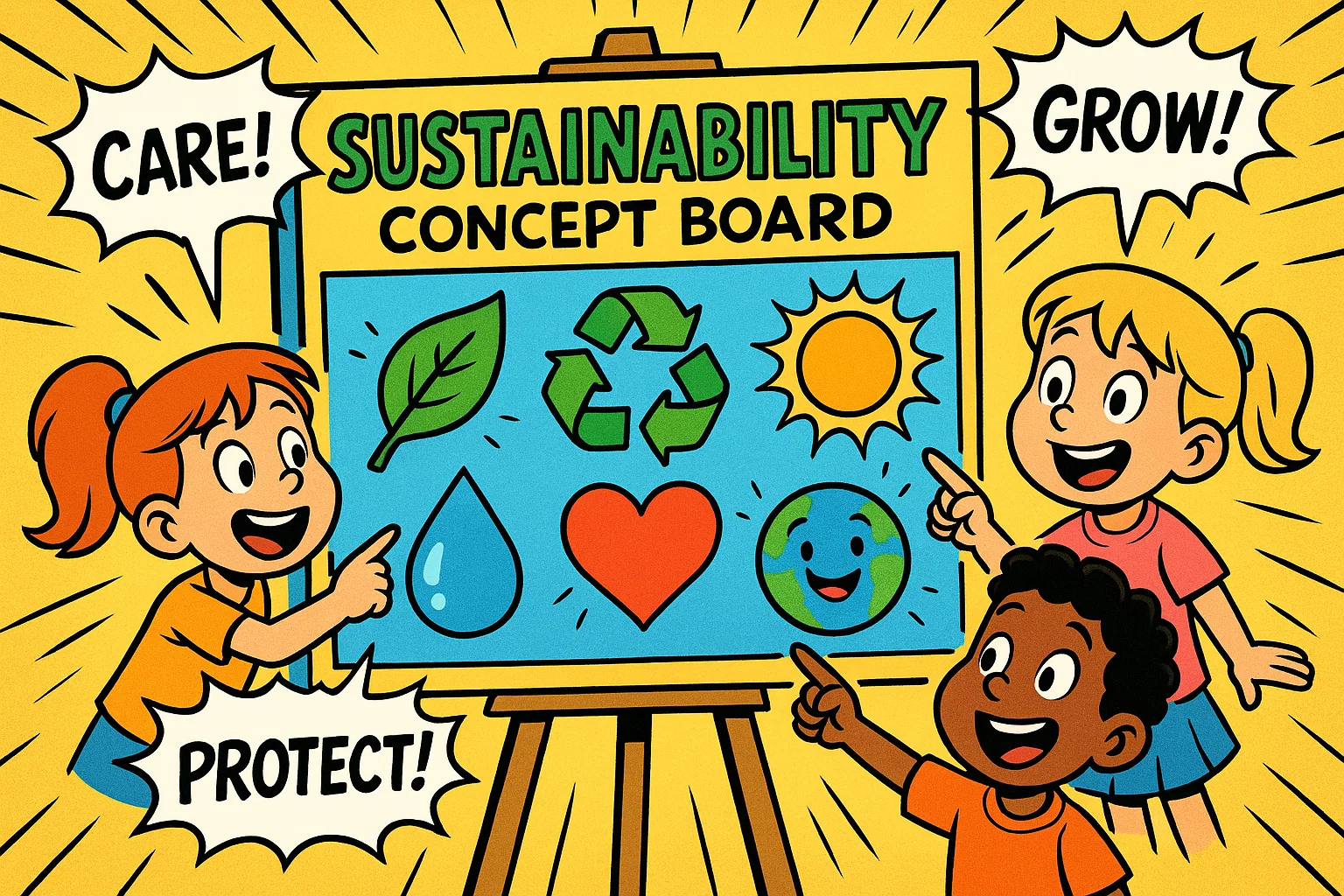
Developing a sustainable mindset in early childhood isn’t about complex scientific concepts; it’s about laying a foundation of positive dispositions toward the world. These foundational concepts are crucial for later formal learning in education for sustainable development (ESD).
- Values and Empathy: Children learn to value all living things. This extends beyond the natural world and fosters empathy for diverse communities, tackling the root of inequality. A core value is recognizing the intrinsic worth of both the environment and people.
- Behavioral Patterns: Simple routines—like turning off the water or lights—become ingrained habits. These early, positive behaviors around responsible consumption are the building blocks of a sustainable lifestyle.
- Cognitive Growth and Systems Thinking: Young children naturally explore cause-and-effect. By observing how their actions affect the environment (e.g., composting, feeding a garden), they begin to grasp systems thinking and the interconnectedness of natural cycles.
- Environmental Curiosity: Allowing children to explore and interact with nature directly fosters a deep-seated love and desire to protect the environment. This innate curiosity is the fuel for future problem-solving related to environmental issues.
Core Principles of Sustainability in Early Childhood
These principles are translated into simple, age-appropriate actions that children can understand and practice daily.
- Care for Nature and Living Things: From watering a plant to observing insects, children learn about the fragility and importance of biodiversity.
- Mindful Consumption: This is taught through simple concepts like “take only what you need” and “finish what you start,” applying to food, craft supplies, and energy.
- Empathy and Fairness: Understanding that people in different places may have fewer resources introduces concepts of global equity and the need for a sustainable and just world.
- Understanding Long-Term Consequences (Simple): Relating today’s action to tomorrow’s result (e.g., throwing trash on the ground makes the park dirty for everyone later).
Environmental Citizenship Foundations
Early educational efforts serve as the bedrock for developing active environmental citizenship later in life. By participating in classroom discussions, simple community involvement projects, and decision-making, young learners begin to understand the role of their actions in contributing to the common good. These efforts cultivate a sense of belonging and responsibility, turning passive learners into engaged participants ready to promote sustainability. The goal is not just compliance but a deep-seated desire to protect the environment and challenge environmental challenges.
Positive Psychology Role in Sustainable Mindset Growth
A sustainable mind is a resilient mind. The principles of positive psychology—focusing on strengths, gratitude, and hope—are essential.
| Positive Psychology Element | How it Fosters Sustainability |
| Joy and Connection | Deep, positive experiences in nature create a lasting motivation to protect it. |
| Self-Efficacy | Giving children real, meaningful tasks (like composting) shows them their actions have an impact, creating the belief they can solve problems. |
| Wellbeing and Self-Awareness | Mindful living practices (like quiet observation) connect the child’s inner state to the surrounding world, promoting reflective and less impulsive, more responsible consumption. |
Early Childhood Programs Supporting Sustainable Skills
The movement to integrate sustainability into early learning is global, driven by the urgency of climate change and the ambition of the United Nations’ 17 Sustainable Development Goals (SDGs).
Country-Level Initiatives for Sustainable Education 🇦🇺🇸🇪
Many nations, often inspired by UNESCO’s guidelines, have implemented nationwide programs for ESD.
- Australia’s National Quality Framework (NQF): Emphasizes sustainability as a core element of quality education, requiring approved services to integrate sustainability into daily practice and curriculum planning.
- Sweden’s Forest School and Outdoor Education: Long-standing programs deeply embed children in the natural environment, promoting knowledge and understanding of ecological systems through direct, regular, unstructured nature play.
School-Based Sustainability Activities
Schools are critical hubs for sustainability initiatives because they provide a structured environment for teaching and learning alongside peers.
- Closed-Loop Systems: Creating a small worm farm for food scraps, followed by using the “worm castings” to fertilize the class garden. This illustrates resource management and circularity.
- Nature Play and Biodiversity Journals: Regular, unstructured time in a natural setting (even a small, overlooked green corner) combined with recording observations (drawings, simple notes) about local plants and animals.
- Class Workshop on “Product Lifecycles”: Deconstructing simple broken items (with supervision) to discuss where the materials came from and where they will go, touching on product development and waste.
Family-Centered Approaches to Sustainability
For habits to stick, the home environment must reinforce lessons learned in school. Parents are the child’s primary educator and role model.
- Energy Audit Walk-Throughs: Involving children in checking for unnecessary lights or dripping taps, making them “Energy Detectives.”
- Zero-Waste Food Prep: Having children help plan meals, use up leftovers creatively, and participate in local food initiatives like farmers’ markets.
- Repair, Not Replace: Engaging children in simple repair tasks for toys or clothing, shifting the focus from novelty to lasting value.
Community Participation and Local Projects
Community involvement gives children a sense of agency and shows them the real-world impact of sustainability issues.
- Adopting a Local Spot: Regularly cleaning up a nearby park or stream, directly confronting pollution and environmental degradation.
- Seed Libraries and Community Gardens: Children grow food, learn about local ecology, and share resources, building a sense of resilience and resource sharing.
- Local Policy Awareness (Simplified): Discussing local issues like a new bike path or waste program teaches them the basics of local governance and the process of creating a sustainable and just world.
Key Figures and Global Progress Metrics
Global bodies like the United Nations and UNESCO are championing the cause of early ESD, recognizing that it is key to achieving a sustainable future.
Significant Statistics Highlighting Early Sustainability Outcomes
While hard data on the long-term impact of specific early childhood sustainability initiatives is growing, early sustainability programs are commonly associated with positive shifts in children’s environmental awareness and habits:
- Knowledge and Understanding: Children who take part in sustained environmental activities often develop stronger familiarity with basic environmental topics and resource care than those with less exposure to such practices.
- Attitudes and Behaviors: Programs similar to the UNESCO Green Schools initiative commonly aim to encourage more responsible attitudes and everyday actions among children, both at home and in school settings.
How SDG 4.7 Relates to Early Learners
SDG 4 is about Quality Education. Target 4.7 specifically aims to ensure that all learners acquire the knowledge and skills needed to promote sustainability, including through education for sustainable development and sustainable lifestyles.
- Early Implementation: This target begins in pre-primary settings, focusing on foundational competencies: appreciating diversity, developing empathy, and understanding the concept of a shared planet.
- Holistic Approach: It pushes educators and governments to adopt a transformative teaching and learning approach that addresses the socio-emotional and cognitive aspects of sustainability.
Sustainable Learning Activities for Early Age Groups
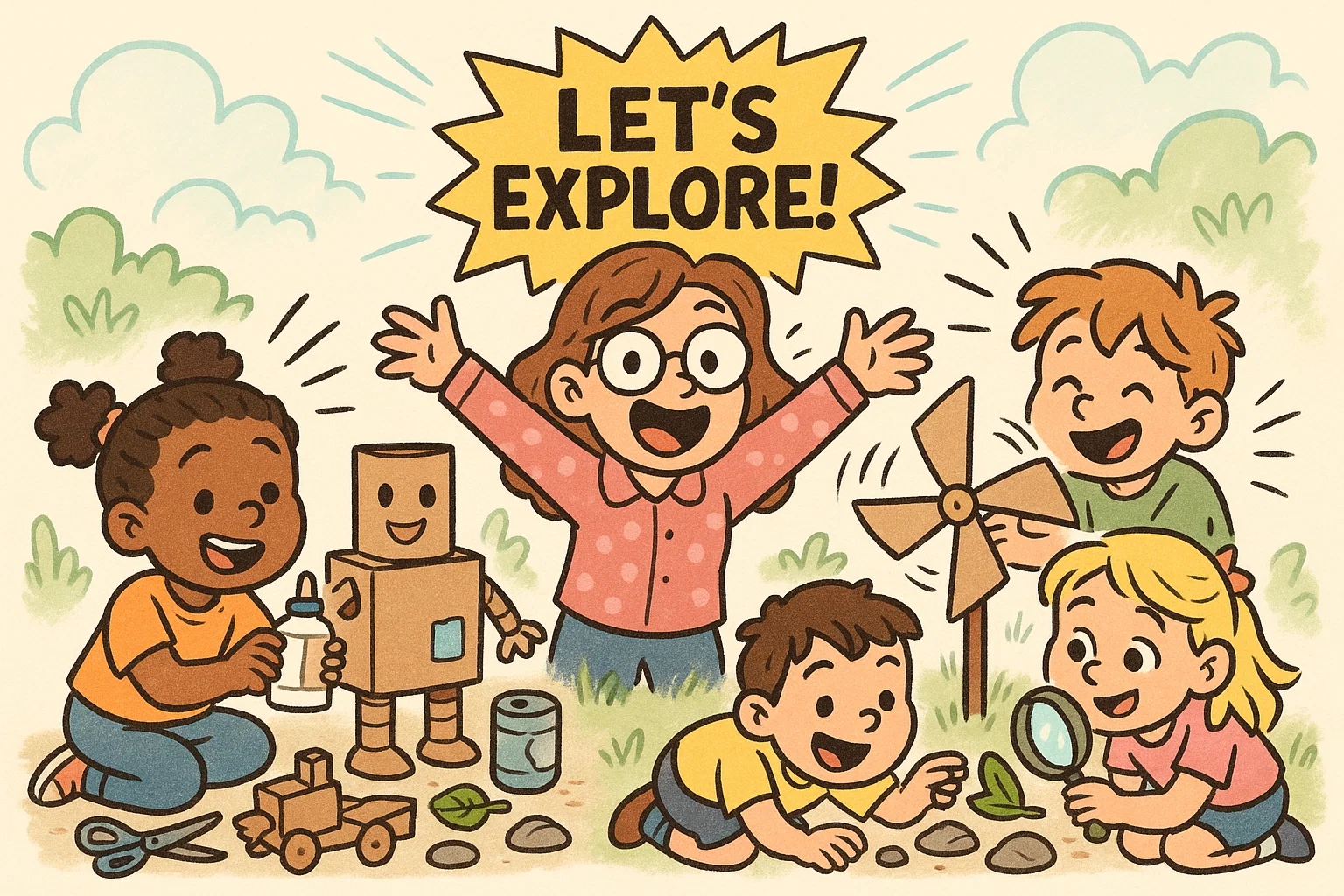
Learning about sustainability is best done actively and joyfully, especially for young children.
Nature-Based Play Sessions
This is foundational to sustainability education. It builds the emotional connection that motivates action.
- Sensory Engagement: Activities like “mud kitchens” or collecting natural treasures (leaves, stones) allow children to explore textures, smells, and colors, building deep sensory engagement and a lasting attachment to the natural world.
- Outdoor Storytelling: Creating stories using natural materials as props, fostering cultural narratives that connect to local ecology.
Circular Economy Activities Adapted for Kids
Teaching the concept of “waste is a resource” is key to future resource management.
- Upcycling Crafts: Turning plastic bottles into planters or old socks into puppets.
- Toy Swaps: Organizing a class or neighborhood toy exchange to teach the value of sharing and reusing, countering the impulse for constant new purchases.
- Simple Repair Tasks: Learning to glue a broken puzzle piece or sew a loose button introduces them to mending rather than discarding.
Cultural Narratives and Storytelling for Sustainability
Stories are a powerful medium for conveying complex values and addressing environmental problems.
- Traditional Tales: Utilizing local or indigenous cultural narratives that emphasize respect for the land, balance, and the consequences of greed.
- Creating ‘Our Planet’ Stories: Having children invent stories where they solve a local sustainability issue (like a polluted river), encouraging collaborative problem-solving.
Mindful Living Practices for Children
These practices are the quiet foundation for sustainable lifestyles. By calming the mind, children become better observers and more thoughtful decision-makers.
- Breathing Games: Simple exercises to regulate emotions, which can then be related to calming “big feelings” about environmental issues.
- Noticing Walks: Focusing on one sense at a time (e.g., listening for five different sounds), enhancing self-awareness and connection to surroundings—a precursor to global interconnectedness.
Sustainable Thinking Development in School Environment
The school environment itself acts as the third educator, demonstrating best practices in sustainable living.
Educator Roles in Shaping Daily Eco-Friendly Habits
The educator’s behavior is the most powerful curriculum.
- Modeling Responsible Choices: Teachers explicitly describe why they choose a reusable coffee cup or repair a classroom item, vocalizing the sustainable minds behind the action.
- Class Rules for Resource Management: Creating clear, visible rules around paper usage, light switches, and water use, empowering children to enforce them.
Classroom Design Encouraging Resource-Wise Behaviors
The physical space can subtly guide children toward sustainable minds.
- Reusable Materials Focus: Stocking art corners with items like cardboard tubes, fabric scraps, and natural elements instead of single-use craft items.
- Visible Waste Streams: Clearly labeled bins for compost, recycling, and trash, making the choice transparent and easy.
Tools and Frameworks Adopted in Schools
Tools help schools evaluate and track their progress in integrating sustainability.
- Environmental Literacy Tools: Simple checklists or observation rubrics used to track children’s growing knowledge and understanding of environmental sustainability.
- Sustainability Rubrics: Frameworks used by schools to evaluate their practices across multiple domains (energy, water, waste, curriculum), supporting a commitment to quality education (SDG 4).
Responsible Consumption Habits in Early Years
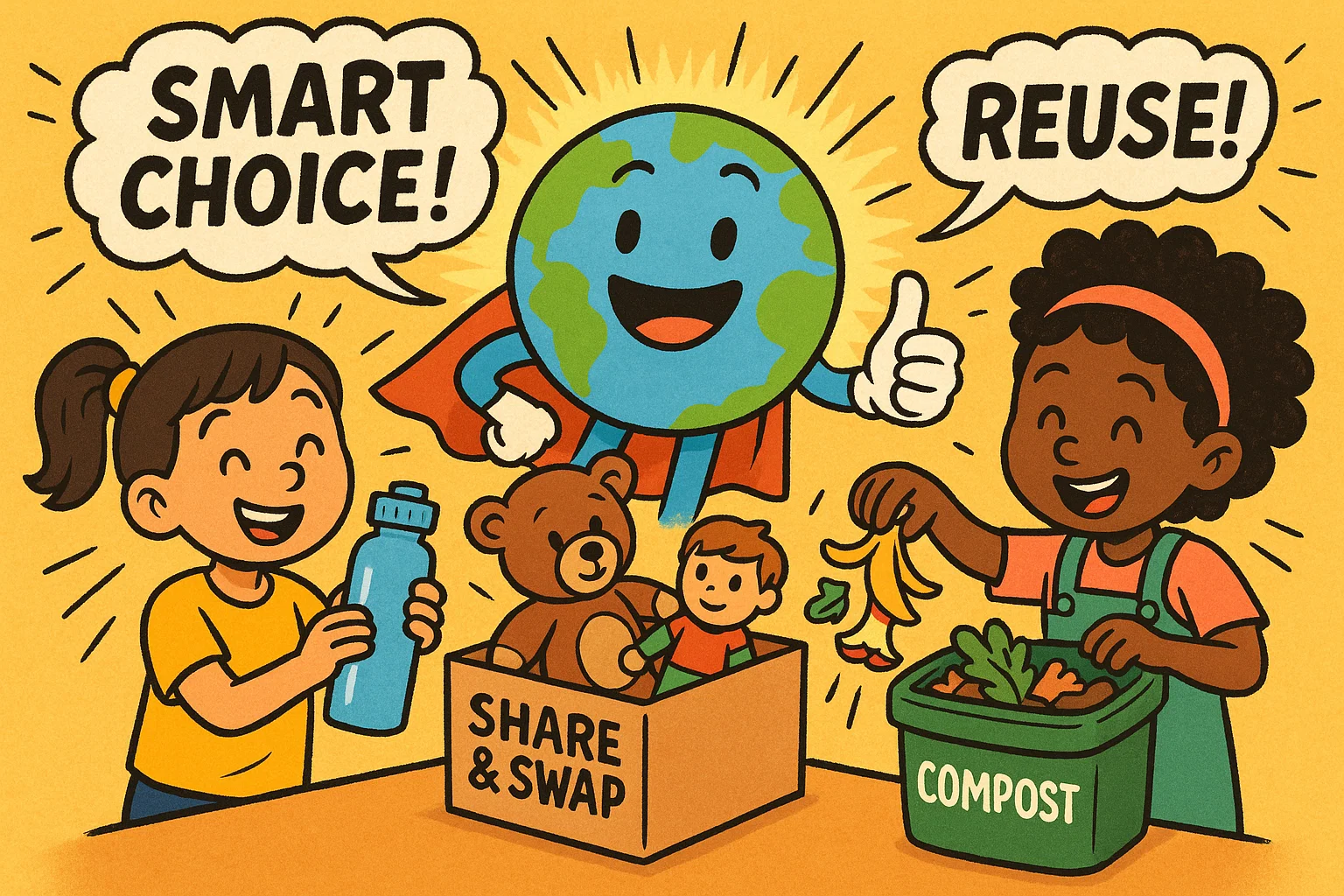
The seeds of responsible consumption are sown in childhood, shaping adult habits related to product development and economic choices.
Early Lessons in Reducing Waste
- Composting and Portion Awareness: Learning that food scraps can become ‘food for the garden,’ and taking only the amount of food or snack they can eat to reduce plate waste.
- The workshop of the “Three Rs”: Making ‘Refuse’ (saying no to unnecessary items) just as important as ‘Reduce’ and ‘Recycle.’
Conscious Toy Selection and Play Material Rotation
- Durable and Natural: Choosing wooden, metal, or cloth toys that last longer and avoid excessive plastic or battery waste.
- Material Rotation: Storing away toys and bringing them back later makes them feel “new” again, teaching appreciation and avoiding over-accumulation.
Daily Routines Promoting Resource Care
- Water Conservation Songs: Creating simple songs or rhymes to sing while washing hands to ensure the tap isn’t running too long.
- Sharing Routines: Encouraging children to share art supplies, tools, and toys, emphasizing that shared resources are a more sustainable model.
Courses and Programs for Educators Promoting Sustainability
For educators and caregivers committed to cultivating sustainable minds, continuous professional development is essential.
Professional Development Programs
- Project WET/WILD/Learning Tree: These programs offer foundational workshops on environmental concepts, providing teachers with ready-to-use, interdisciplinary activities that support ESD.
- Eco-Schools Program: Provides a structured, participatory framework for schools to evaluate and improve their environmental performance, leading to certification and knowledge and understanding for the staff.
Erasmus+ and International Training Opportunities 🇪🇺
The European Union’s Erasmus+ program provides funding for educators to participate in international training programs and study visits focused on integrating sustainability and best practices from other countries, broadening their insight into diverse approaches to ESD. This helps enrich local practices through global perspectives.
Continuous Learning for Educators and Caregivers
The commitment to sustainable development requires ongoing skill growth. As climate science and sustainability research evolve, educators must continually update their knowledge through:
- Online MOOCs from UNESCO or leading universities on ESD.
- Collaborative workshops with peers to evaluate and refine local programs.
- Reading peer-reviewed research on the evaluation of the effectiveness of various sustainability education models.