

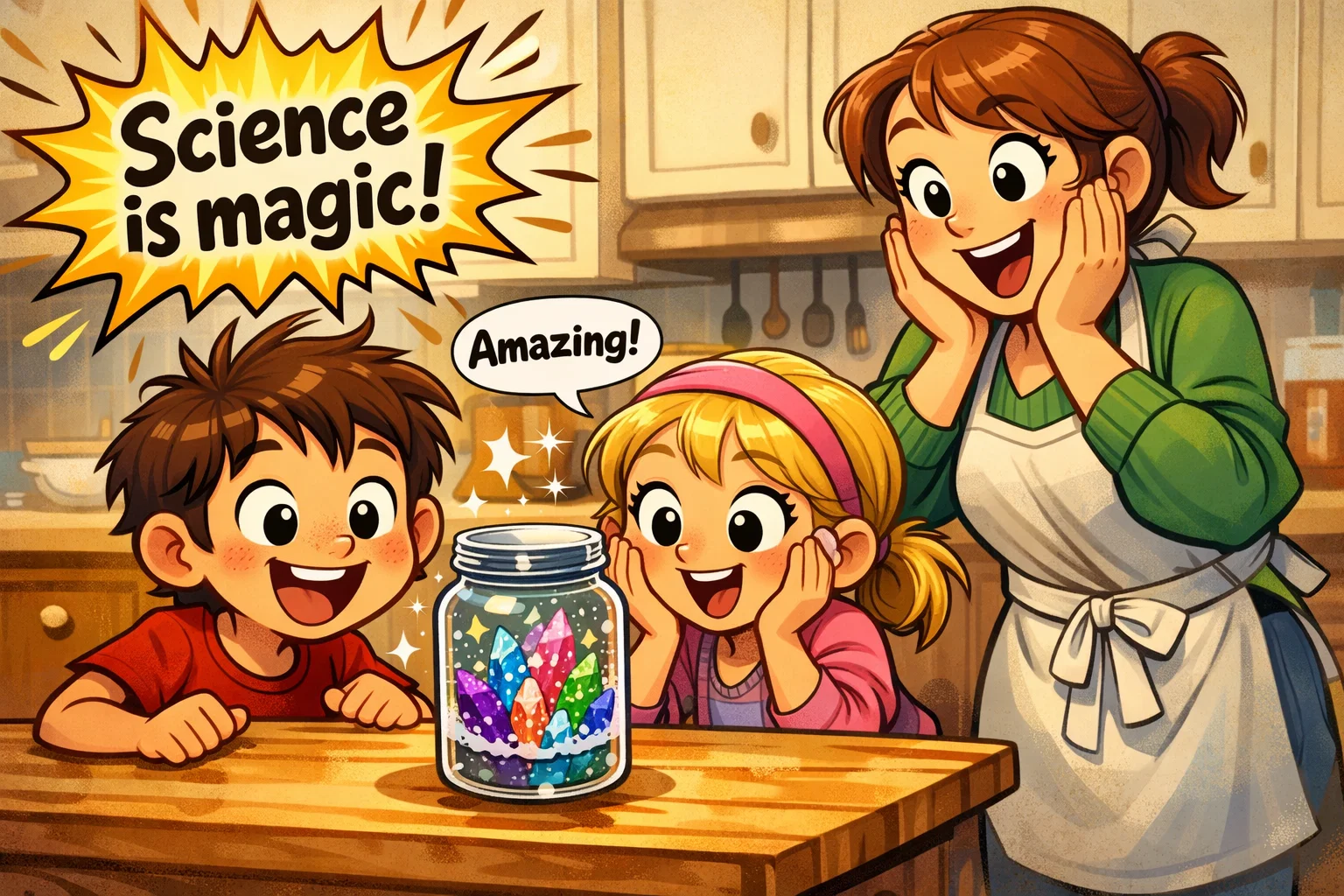
Creating your own laboratory at home is one of the most rewarding ways to spark a lifelong interest in the sciences. When you engage in a crystal growing science experiment, you aren’t just making something pretty; you are participating in a complex dance of chemistry and physics that happens all around us in nature. From the salt on your dinner table to the majestic formations in deep caves, crystals represent one of the most organized states of matter in the universe.
For parents and educators, these activities offer a bridge between abstract classroom concepts and tangible reality. By using simple materials like sugar, salt, or borax, you can demonstrate how hidden molecular structures reveal themselves through patience and precision. This guide will walk you through the essential steps, safety protocols, and the fascinating science that makes these experiments possible.
Essential Supplies for Crystal Science
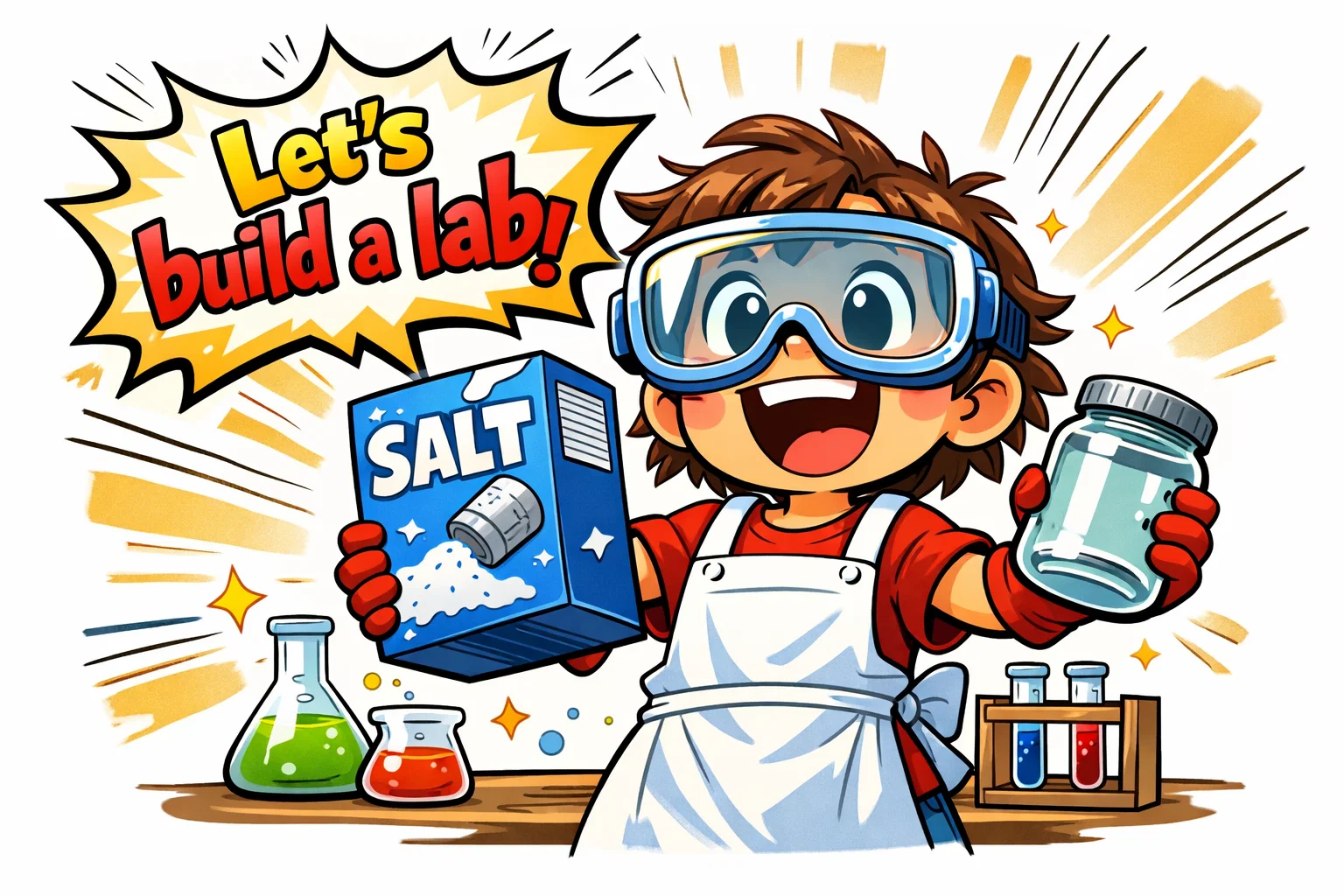
To begin your journey into home-based chemistry, you need to gather specific materials that ensure both success and safety. While many of these items are already in your kitchen, some require careful selection to achieve the best results.
Common Household Ingredients
Most beginner-friendly experiments rely on solutes that are readily available. Common table salt and granulated sugar are excellent starting points for young children. For more advanced or faster-growing projects, you might look for Epsom salt (magnesium sulfate) or Alum (potassium aluminum sulfate), which is often found in the spice aisle. Using food coloring allows you to customize the appearance of your creations, turning a simple science project into a vibrant piece of art.
Safety Equipment for Young Scientists
Even though these experiments use household items, safety remains the priority. Proper protection prevents skin irritation and accidental ingestion.
- Safety Goggles: Essential when working with powders like Borax or hot liquids.
- Gloves: Helps avoid “chemical “stings” from concentrated solutions or stains from food coloring.
- Aprons: Protects clothing from permanent dye or salt residue.
Heat-Resistant Containers and Mixing Tools
Crystallization often requires creating a super-saturated solution using boiling water. Glass jars (like Mason jars) are ideal because they can withstand high temperatures and allow for clear observation of growth. You will also need wooden stirring sticks or stainless steel spoons, as these are non-reactive and easy to clean. Avoid using plastic containers that might warp or leach chemicals when exposed to near-boiling water.
Growing Colorful Crystals Step by Step
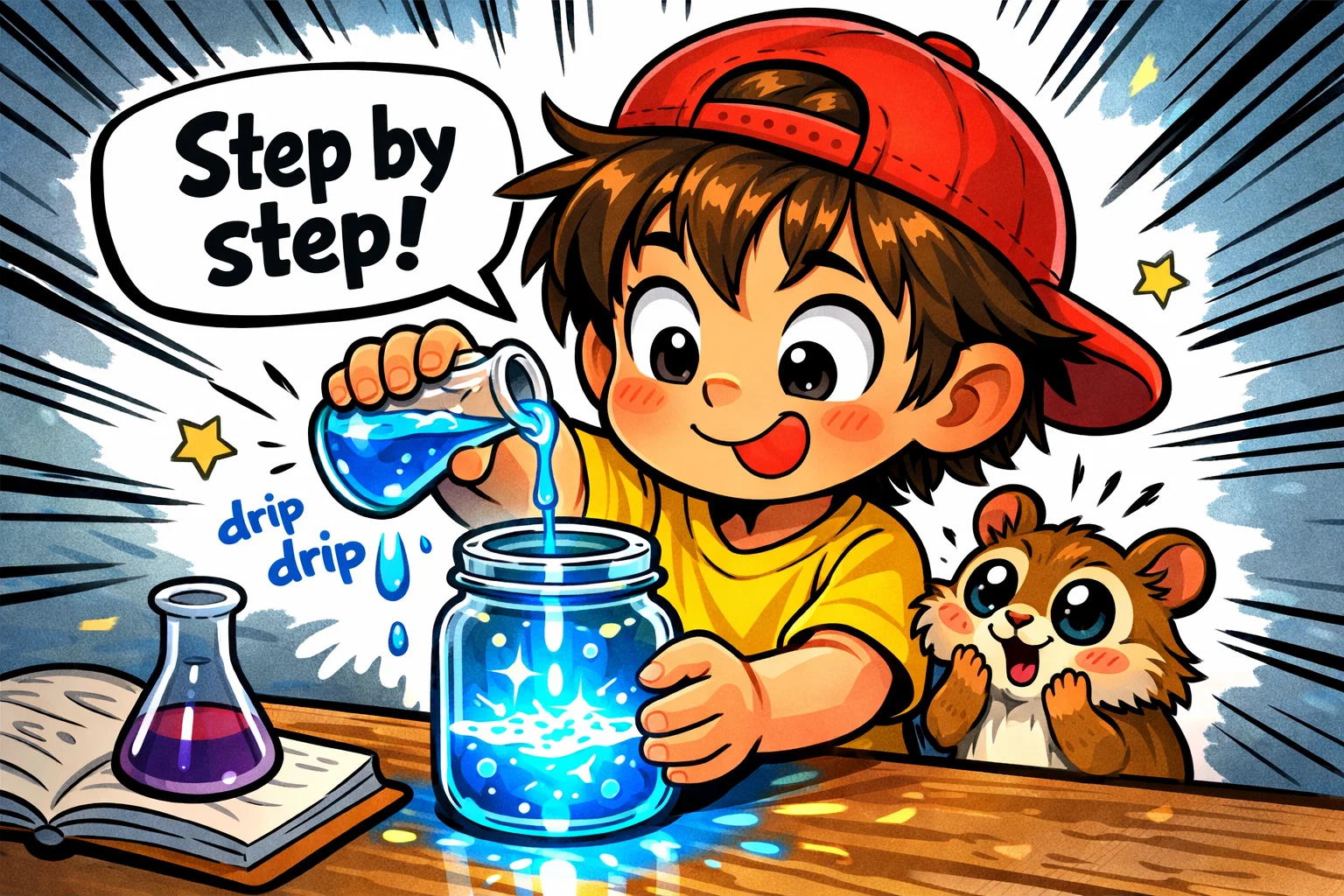
The process of growing crystals requires a blend of culinary-like preparation and scientific rigor. Following a specific sequence ensures that the molecules have the best environment to organize into their signature geometric shapes.
Preparation of Saturated Solution
The foundation of every experiment is the solution. You must heat your solvent (usually water) and stir in your solute (the salt or sugar) until no more can dissolve. This creates a “saturated” state. To go further, you create a “supersaturated” solution by increasing the temperature, allowing the water to hold more particles than it normally could at room temperature.
Seeding Method for Large Formations
If you want a single, impressive crystal rather than a cluster of small ones, the seeding method is your best tool. By tying a small, pre-grown “seed” crystal to a nylon string and suspending it in your solution, you provide a template for other molecules to latch onto. This focuses all the growth energy onto one point, resulting in a much larger and more defined structure.
Cooling and Evaporation Timelines
Patience is a vital part of the experiment. Once your solution is prepared, it must sit undisturbed. Fast cooling usually leads to many tiny, “disordered” crystals, while slow cooling at a consistent room temperature encourages large, clear facets. Depending on the material, this can take anywhere from 24 hours to two weeks.
Scientific Principles of Crystal Formation
The transition from a liquid to a solid crystal is governed by thermodynamics and kinetics. Specifically, the phenomenon of crystallization at home is centered on the concept of chemical potential. For a solute to crystallize, the chemical potential of the species in the solution phase must exceed the chemical potential of the species in the solid crystalline phase. This driving force is only achieved when the solution reaches a state of supersaturation.
Molecular Structures in Liquid Solutions
In a liquid state, molecules move randomly and lack a fixed arrangement. As the solution cools or water evaporates, these molecules begin to lose kinetic energy. They start to bump into each other and stick together in a specific repeating pattern, known as a crystalline lattice. This is the “blueprint” of the crystal that determines whether it will be a cube, a needle, or a diamond shape.
Rate of Crystallization Effects
The speed at which a crystal grows significantly impacts its final appearance. High-speed growth often traps impurities and air bubbles, making the crystal look cloudy. Conversely, slow growth allows the molecules to find their perfect spot in the lattice, resulting in high transparency and sharp edges. This is why professional labs often take months to grow industrial crystals.
Differences Between Salt and Sugar Molecules
Not all crystals are built the same way. Table salt (sodium chloride) forms cubic structures because of the ionic bonds between sodium and chlorine. Sugar (sucrose), however, forms more complex monoclinic crystals. Because sugar molecules are much larger and more irregularly shaped than salt ions, they require a much higher concentration and more time to organize properly.
Expert Insights and Statistical Data
Regarding safety, the American Chemical Society (ACS) recommends the “RAMP” framework:
- Recognize hazards
- Assess risks
- Minimize risks
- Prepare for emergencies
Experts from Poison.org caution that common materials like Borax require rigorous handling. If ingested, Borax can cause nausea or abdominal pain, and even small amounts (less than 5 grams) can be dangerous for infants.
| Experiment | Solute | Precise Ratio (Solute:Solvent) | Critical Temperature | Age Group |
| Rock Candy | Sucrose | 3:1 | 230°F (110°C) | 6+ (with adult) |
| Crystal Snowflake | Borax | 3-4 tbsp / 250 ml | Near-Boiling | 10+ |
| Geode/Octahedral | Alum | 1:4 | Near-Boiling | 8+ |
| Needle Crystals | Epsom salt | 1:1 | Hot Tap (130°F) | 5+ |
Fast Overnight Crystal Garden Project
If you are looking for immediate gratification, the Epsom salt experiment is the perfect choice. This project demonstrates rapid crystallization and is ideal for younger children with shorter attention spans.
Epson Salt Rapid Growth Technique
By mixing equal parts Epsom salt and very hot tap water, you create a solution that reacts quickly to temperature changes. Unlike other crystals that might take a week, these “needle” crystals begin to form within hours when placed in a cool environment.
Creating Multi-Colored Base Layers
You can enhance the “garden” effect by placing a sponge or a piece of charcoal at the bottom of your jar. By adding different drops of food coloring to various areas of the base, the crystals will “wick” the color upward as they grow, creating a rainbow effect.
Observing Morning Results
By placing the jar in the refrigerator overnight, you accelerate the cooling process. In the morning, you will find a dense forest of long, thin, needle-like crystals. This provides an excellent opportunity to discuss how temperature affects the speed of molecular movement.
Sparkly Crystal Ornaments and Shapes

Crystals don’t have to grow in random clusters; you can guide them into specific artistic forms using skeletons or armatures.
Pipe Cleaner Molding Instructions
Using fuzzy pipe cleaners is a classic technique. You can bend them into stars, snowflakes, or hearts. The tiny fibers on the pipe cleaner act as “nucleation points,” providing thousands of microscopic surfaces where the crystals can begin to attach.
Suspension Techniques in Mason Jars
To ensure the ornament doesn’t stick to the sides or bottom of the jar, tie it to a pencil or popsicle stick using a string. Rest the stick across the mouth of the jar so the shape hangs freely in the center of the solution. This allows the crystal to grow evenly on all sides.
Long-Term Preservation Tips
Home-grown crystals are often delicate and susceptible to humidity. To keep your ornaments sparkly for years, you can apply a thin coat of clear nail polish or acrylic spray. This seals the crystal from moisture in the air, preventing it from dissolving or turning “dusty” over time.
Edible Rock Candy Sticks Experiment
This is perhaps the most popular experiment because it ends with a tasty treat. However, it is also the most technically demanding due to the high temperatures involved.
Sugar Saturation Ratios
To grow rock candy, you need a massive amount of sugar—usually a 3:1 ratio of sugar to water. This requires boiling the water to dissolve the crystals fully. Because of the high sugar concentration, the solution becomes thick and syrupy.
Flavoring and Food Coloring Options
Once the syrup is off the heat, you can add extracts like vanilla, peppermint, or strawberry. Adding food coloring at this stage ensures the crystals grow with a deep, vibrant hue.
Monitoring Growth Over Seven Days
Sugar crystals grow much more slowly than salt. You will likely see a thin “crust” form on the surface of the liquid within 48 hours. Break this crust gently to allow the crystals on your stick to continue growing. After a week, you should have large, chunky “gems” ready to eat.
Advanced Science Project Variations
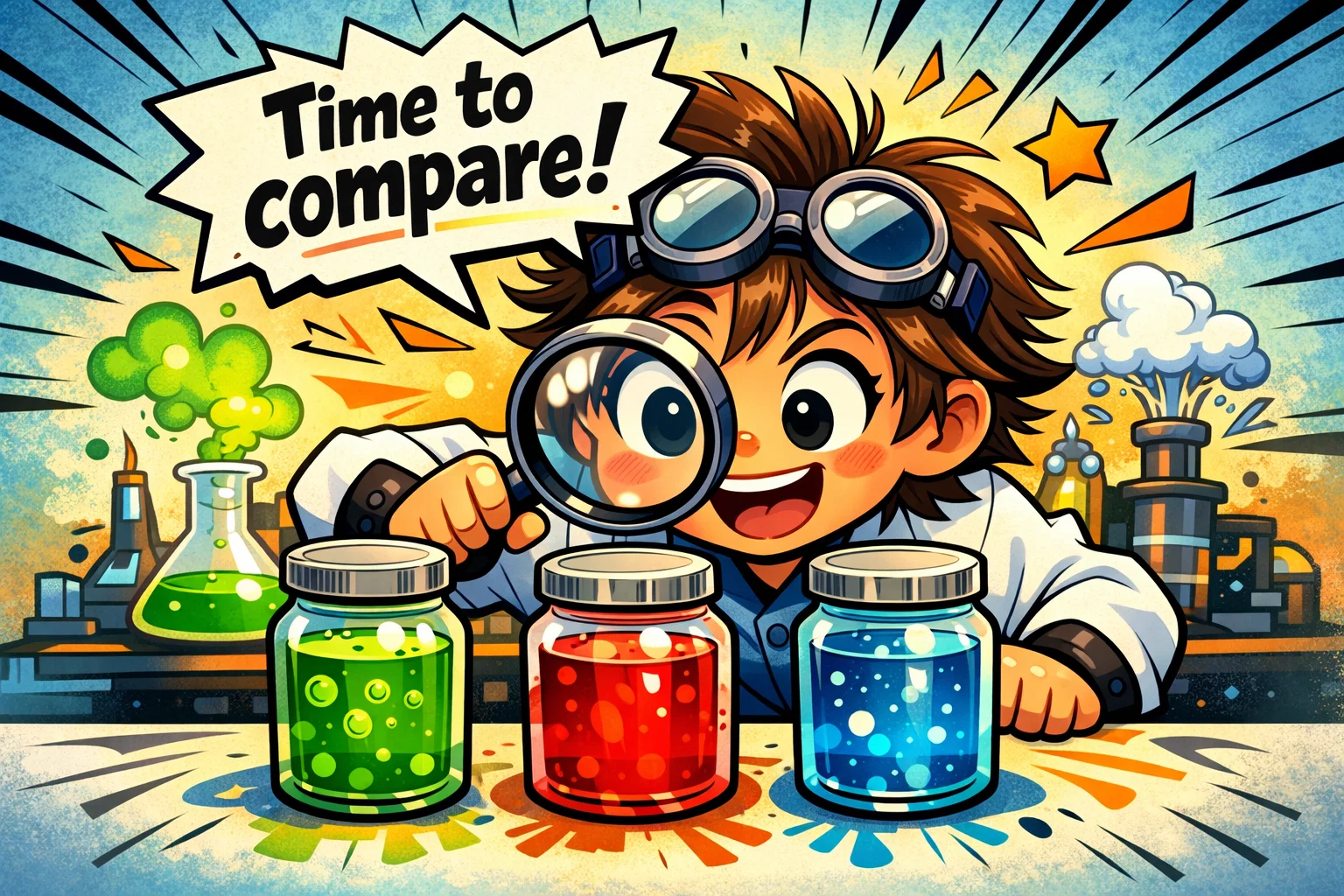
For older students or science fair participants, changing the variables of the experiment can lead to deeper insights and better data collection.
Comparing Growth Rates in Different Temperatures
Try placing one jar in the fridge, one on the counter, and one in a warm sunny window. Documenting the size and clarity of the crystals from each location provides clear evidence of how thermal energy influences molecular organization.
Impact of Impurities on Crystal Clarity
Does using distilled water make a difference compared to tap water? In many cases, the minerals in tap water can act as unintentional nucleation sites, leading to “cloudy” crystals or irregular shapes. Testing different water sources is a classic way to practice the scientific method.
Troubleshooting Common Crystal Problems
Not every experiment goes perfectly the first time. Understanding why a project failed is often more educational than a “perfect” result.
Managing Dust and Contaminants
A common “fail point” is “vibration-induced disordered nucleation.” If you keep your jar on top of a vibrating refrigerator or in a high-traffic hallway, the mechanical energy can disrupt the growth. Instead of a large crystal, you might end up with a “slush” of tiny particles. Always keep your jars in a quiet, still location.
Fixing Slow Growth Issues
If nothing is happening after 48 hours, your solution might not have been truly supersaturated. You can try reheating the liquid and adding a bit more solute, or simply wait longer for more water to evaporate.
Preventing Re-Absorption of Formations
If the room becomes too warm or if the solution is not covered, the liquid can sometimes start to dissolve the crystals you just grew. If you notice your crystal getting smaller or rounded, it is time to remove it from the liquid and let it dry.