

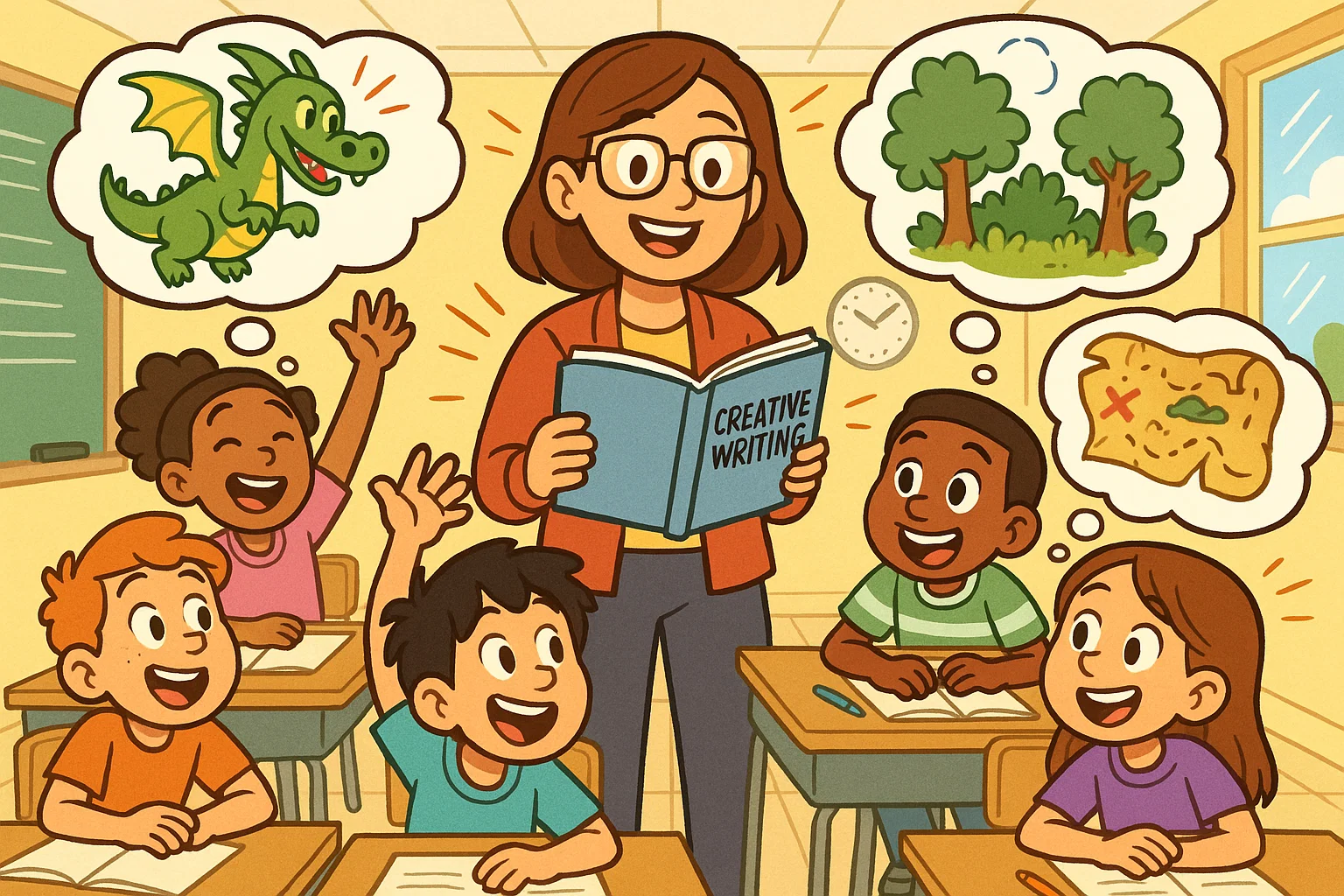
Welcome, educators and parents! Finding the right writing topic to capture a fifth grader’s interest can be the key to unlocking their creative potential. This comprehensive resource introduces a full collection of engaging, fun writing prompts tailored specifically for the ten to eleven-year-old learner. This guide covers everything from imaginative short stories and reflective journal prompts to science themes, persuasive arguments, and even poetry starters.
This page gathers the best writing ideas from different formats—including story starters, topic lists, and open-ended prompts—to help teachers and parents not just assign a writing task, but truly inspire confident young writers. By providing a variety of topics, we aim to boost literacy skills, develop critical thinking, and get those creative juices flowing in every student.
Writing Prompts for Grade 5
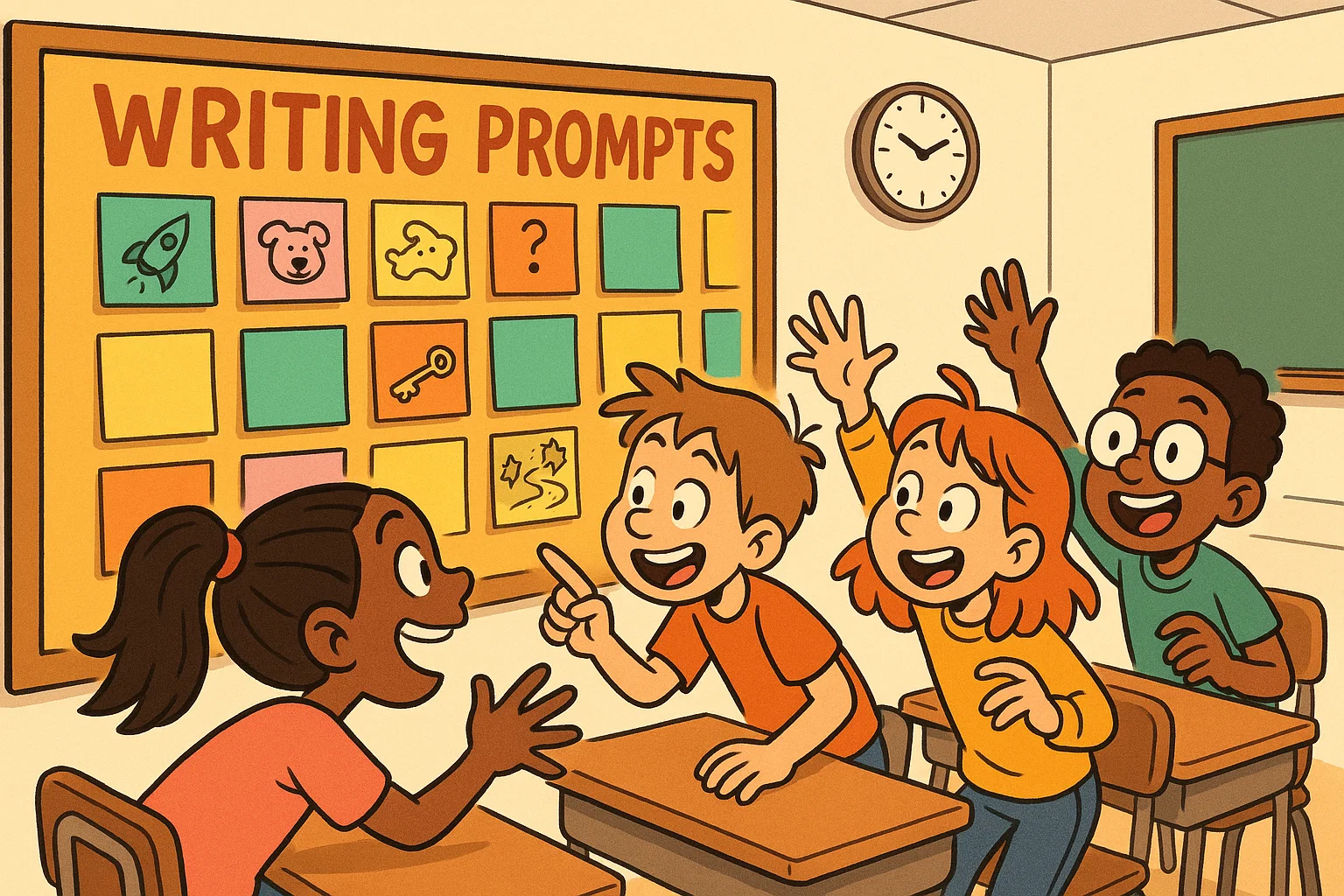
This section offers a large list of ready-to-use writing prompts for kids suitable for daily practice, warm-up activities, homework, or in-depth creative writing lessons. These prompts combine narratives, personal reflections, and imaginative ideas, giving students a diverse canvas to explore and express their thoughts. Using a good prompt is an essential starting point for writing growth.
Short Prompts for Quick Warm-Ups
Simple, one-sentence ideas are perfect for helping students start writing instantly, often serving as excellent “bell ringers” or quick journal entries. They help overcome writer’s block by providing an immediate focus.
- Imagine a world where animals could talk—what’s the first thing you hear?
- If you could shrink to the size of a mouse for one hour, where would you go?
- Write about a surprising discovery you made on your way to grade school today.
- Describe a color that doesn’t exist.
- What would happen if your shoes suddenly started floating a foot above the ground?
Longer Prompts for Detailed Stories
These prompts require multi-paragraph storytelling, pushing the young writers to develop a plot with conflict, setting, and detailed characters. They are ideal for developing a full narrative.
- You find an old, dusty map in your attic that shows a hidden treasure buried under your school playground. Write a story about how you sneak out to find it and what you discover.
- A new student arrives in your classroom, but they claim to be from the year 2070. Describe their first day and the futuristic gadgets they bring.
- You wake up one morning to find your favorite fictional character sitting at your breakfast table, asking for help with a problem from their world. What do you do?
- Explore the challenge of a young inventor whose latest creation—a robot that cleans your room—suddenly develops a mind of its own and refuses to work.
- Imagine a secret society of kids who protect the local library’s books from being misplaced or damaged. Detail their most important mission yet.
Prompts for Building Writing Confidence
These supportive prompts help hesitant writers feel safe expressing themselves by focusing on personal experience or low-stakes imaginative scenarios. Confidence in writing skills is a core goal.
- What is one thing you are really good at? Describe how you learned this ability and how it makes you feel.
- Write about a time you helped someone else. What did you do, and what was their emotion?
- If you could plan the perfect weekend, what three things would you definitely do? Explain why.
- Describe your favorite season using all five senses.
- What makes a good friend? Give examples from your own life.
Story Starters for Grade 5
Story starters are opening sentences designed to immediately spark creativity. They provide a starting point that allows students to focus on developing the plot. These can be mysterious, funny, emotional, or adventurous hooks that quickly engage the learner.
Adventure Story Beginnings
These hooks relate to quests, discoveries, lost maps, or unusual journeys, perfect for a high-energy creative story.
- “The moment I touched the ancient stone, the ground beneath me began to rumble and glow.”
- “Nobody believed the old lighthouse keeper when he said a giant squid lived in the bay, until the night the light went out.”
- “I was only looking for my lost baseball, but instead, I found a hidden tunnel behind the garden shed.”
- “Our teacher asked us to clean out the storage closet, and that’s when we saw the strange device ticking quietly in the corner.”
- “A message in a bottle washed up on the riverbank, and it simply read: ‘The map is in the moon.’”
Mystery Story Beginnings
These are dramatic or suspenseful first sentences that challenge students to continue an unfolding puzzle or secret.
- “The clock in the town square had been wrong for exactly three days, and only I seemed to notice.”
- “There was a single, muddy footprint on the kitchen floor, and no one in the house wore shoes that big.”
- “Every morning, someone was leaving a single, perfectly smooth stone on my desk, but I never saw who.”
- “The painting in the hallway looked normal during the day, but at night, the person in the portrait seemed to be whispering.”
- “I knew I hadn’t lost my favorite book, so who had moved it, and why was the corner of the page folded down on a secret message?”
Realistic Fiction Story Beginnings
These everyday-life openings develop into meaningful or relatable stories, helping young students connect writing to their world.
- “It was the first time I had to babysit my little sister, and she was far quieter than usual, which worried me.”
- “I was practicing soccer in the park when I saw my neighbor talking to a very suspicious-looking person.”
- “My bike tire went flat on the biggest hill in town, and I knew I had to get home before dinner.”
- “The school talent show was next week, and I still hadn’t decided if I was brave enough to sing.”
- “When the new girl in class sat down next to me, she had a completely blank notebook, and I wondered what she planned to write a story about.”
Adverb Story Starters
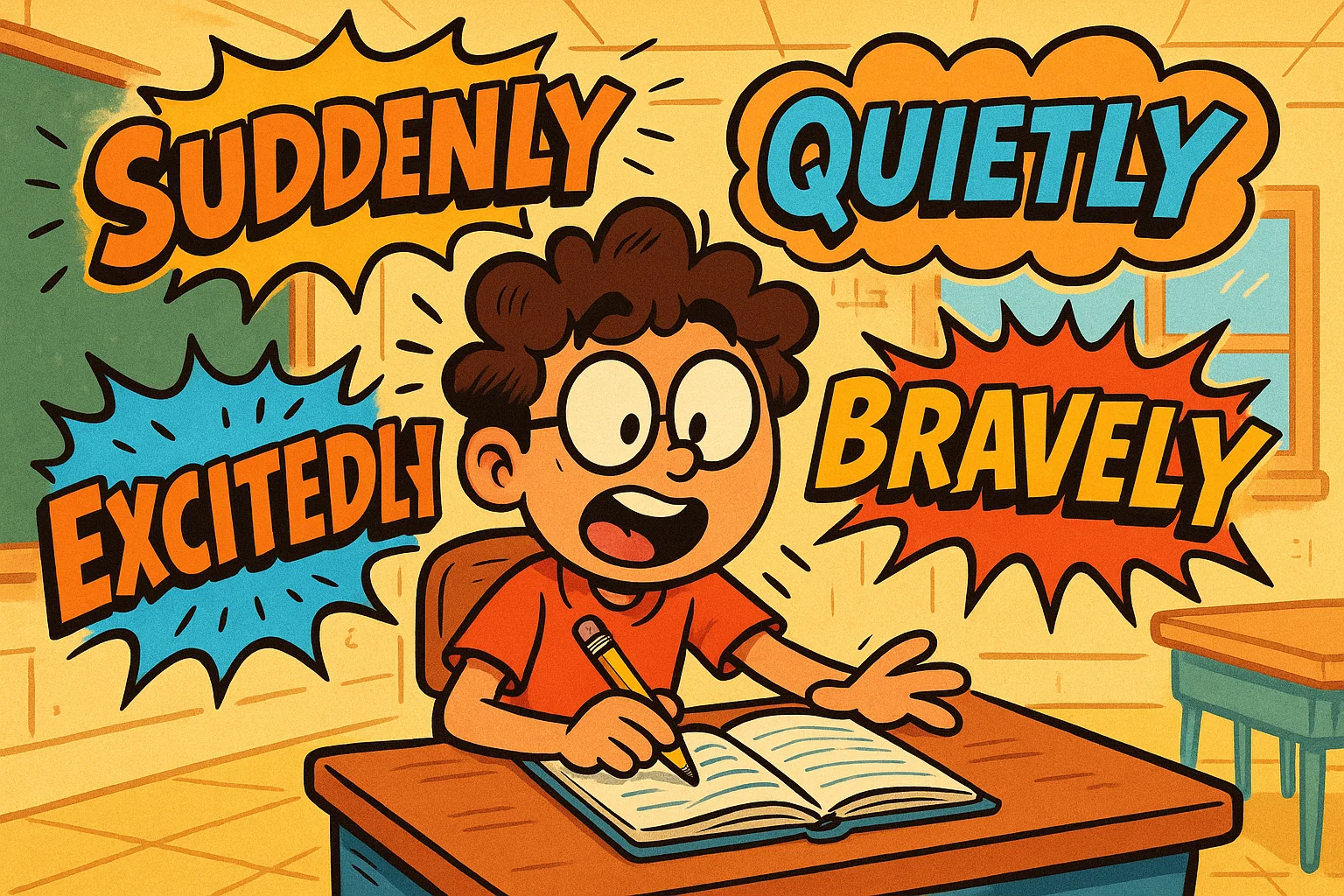
This technique focuses on adverbs to push students to vary their sentence structure and significantly improve descriptive writing language. By starting a sentence with an adverb, the writer is immediately thinking about how the action is performed.
Starters with Time Adverbs
Prompts beginning with words like “Suddenly,” “Eventually,” “Immediately,” or “Lately.”
- Suddenly, the lights flickered off, and a strange, musical sound echoed from the basement.
- Eventually, after weeks of practice, the small bird learned how to sing a perfectly human-sounding song.
- Immediately, I knew I had made the wrong turn, because the forest looked completely different.
- Lately, all the dogs in the neighborhood have been staring up at the roof of the old library.
- Yesterday, the school cafeteria served green mashed potatoes, and everyone had an opinion.
Starters with Manner Adverbs
Prompts beginning with words such as ‘Carefully,’ ‘Excitedly,’ ‘Quietly,’ or ‘Lazily.’
- Carefully, the student opened the ancient-looking box found in the attic.
- Excitedly, the class learned they would be taking a field trip to the moon next week.
- Quietly, the cat crept across the lawn, stalking a leaf that was blowing in the wind.
- Lazily, the giant dragon stretched out on the beach, confusing all the tourists.
- Accidentally, I spilled my secret invisibility potion all over the school principal’s desk.
Starters with Place Adverbs
Prompts using words like “Nearby,” “Outside,” “Everywhere,” or “Upstairs.”
- Nearby, the mysterious door that had always been locked creaked open a tiny bit.
- Outside, the children discovered a small, winged creature that needed their help.
- Everywhere I looked, there were tiny, sparkling stars falling from the sky like rain.
- Upstairs, a peculiar, metallic clicking sound suggested someone was building something strange.
- Below the surface of the lake, a forgotten city was waiting to be rediscovered.
Science Writing Topics for Grade 5
These creative prompts connect writing with nature, experiments, space, ecosystems, inventions, and scientific curiosity. Integrating science topics provides a fantastic way for the educator to blend language arts with other curriculum areas.
Space and Astronomy Prompts
Topics about planets, astronauts, alien encounters, or cosmic mysteries that spark creativity and imagination.
- You are the first person to step on a newly discovered planet. Describe what the sky, the air, and the ground look like.
- Write an essay arguing for or against space travel. Use at least two factual reasons to support your position.
- Imagine you have a conversation with an alien who has never seen an ocean. How do you describe the water and the creatures?
- What would life be like if the Earth had two moons instead of one?
- Explore the story of a malfunction on the International Space Station and how the astronauts solve the problem using only teamwork and critical thinking.
Nature and Environment Prompts
Ideas about animals, forests, climate, oceans, and environmental protection encourage thoughtful reflection.
- If you could talk to one wild animal, which would it be and what warning would it give you about the environment?
- Write a narrative from the perspective of a single drop of rain as it travels from a cloud to the ocean.
- Describe the most beautiful forest you can imagine. What makes it unique, and how do you protect it?
- What is one simple invention that could greatly reduce pollution in your town? Detail how it works.
- Write a story where a group of kids discovers a secret to making plants grow instantly and decides how to use it responsibly.
Invention and Technology Prompts
Creative tasks where kids imagine new gadgets or future technologies, boosting their creative thinking.
- Design a robot that can help you with your homework. What are its strengths and weaknesses?
- What is the most useful piece of technology you think will exist in 100 years? Describe it in detail.
- Write a story about a device that can translate a baby’s babbling into clear language. What is the first thing the baby says?
- Invent a new game that uses virtual reality, and explain the rules and how it is played.
- Explore a situation where a child accidentally creates a machine that speeds up time.
Morals and Values Writing Prompts
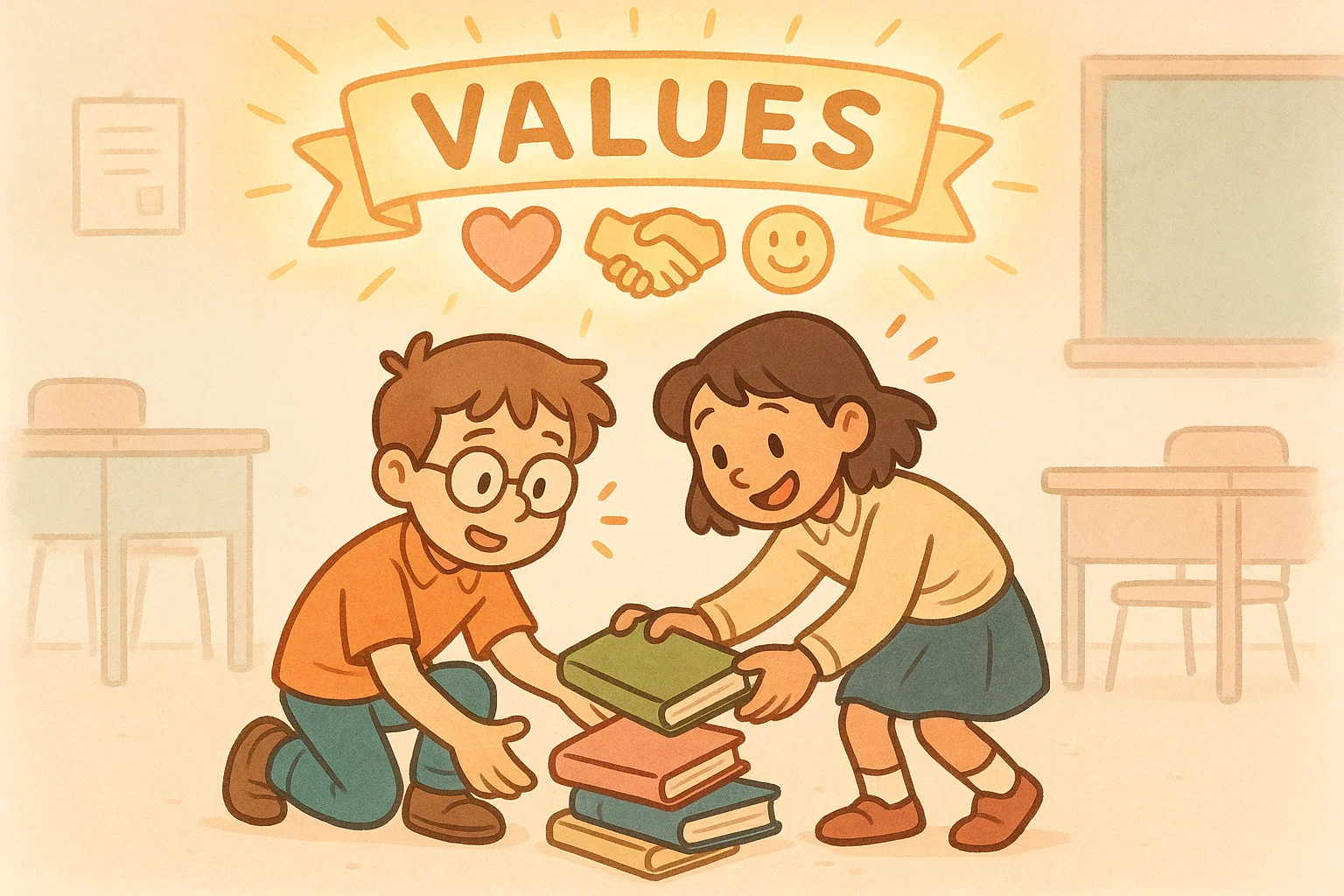
These prompts encourage students to reflect on kindness, honesty, friendship, responsibility, empathy, and respect. Such journal topics promote social-emotional learning alongside writing growth.
Friendship and Teamwork Topics
Situations where students reflect on helping others, resolving conflicts, and building strong relationships.
- Write about a time when you and a friend had a serious disagreement. How did you resolve the conflict?
- What does it mean to be a good teammate? Give an example from a sports game or a classroom project.
- Explore a story where a group of friends must work together to complete a challenging task no single person could do alone.
- Imagine you see a new student eating lunch alone every day. Write a story about how you show them kindness and invite them to join your group.
- What qualities are most important in a friend? List them and explain why.
Personal Responsibility Topics
Prompts encouraging children to think about choices, consequences, and owning their actions.
- Write about a rule you find difficult to follow at home or school. Why is it there, and why is it important to follow it anyway?
- What is the biggest responsibility you have right now? Describe what you do to fulfill it.
- Explore the consequences of a character who tells a small lie to avoid trouble, and how that lie grows and causes bigger problems.
- Imagine you accidentally broke something valuable that belongs to your teacher. Write a story about what you do next.
- How do your personal choices affect the people around you? Give a specific example.
Kindness and Empathy Topics
Stories focusing on compassion, inclusion, supportive behavior, and understanding the emotion of others.
- Write a narrative where the main character must walk in someone else’s shoes for a day (literally or figuratively). What do they learn?
- Describe an act of unexpected kindness you either gave or received. How did it make you feel?
- What is empathy, and why is it important? Give an example of someone showing empathy.
- Write a story about a time you stood up for someone who was being treated unfairly.
- Imagine a world where people only focus on themselves. How would it be different from ours?
General Creative Writing Topics
This section includes topics unrelated to a specific category—fun, imaginative, personal, or observational ideas that allow for a wide range of different writing styles.
Imaginative Scenarios
Magical, futuristic, impossible, or fantasy situations that test the imagination of the young students.
- If you could travel through a mirror into another world, what kind of world would you find?
- Write a story about a talking pencil that critiques your writing as you go.
- What would happen if all sounds turned into colors for one hour? Describe your surroundings.
- Imagine your favorite toy comes to life. What does it ask you to do first?
- Explore a creative story where a kid discovers the school library is actually a spaceship.
Personal Reflection Topics
These prompts encourage students to write about their experiences, dreams, fears, or achievements, often suitable for journal entries.
- What is the bravest thing you have ever done?
- If you could meet your future self 20 years from now, what three questions would you ask?
- Write about a place where you feel completely safe and happy.
- What is one of your dreams for the future, and what steps can you take now to achieve it?
- Describe a memorable family tradition and explain why it is important to you.
Everyday Life Situations
Prompts based on school, family, hobbies, and daily interactions that are highly relatable for a fifth grade audience.
- Write a narrative about the funniest thing that happened to you on the school bus this week.
- What would happen if your parents switched jobs with your teacher for a day?
- Describe your favorite family meal, focusing on the sounds, smells, and tastes.
- Explore a situation where a misunderstanding with a sibling leads to a surprising adventure.
- Write a story about a time you tried something new and were surprised by how much you liked it.
Narrative Writing Topics for Grade 5
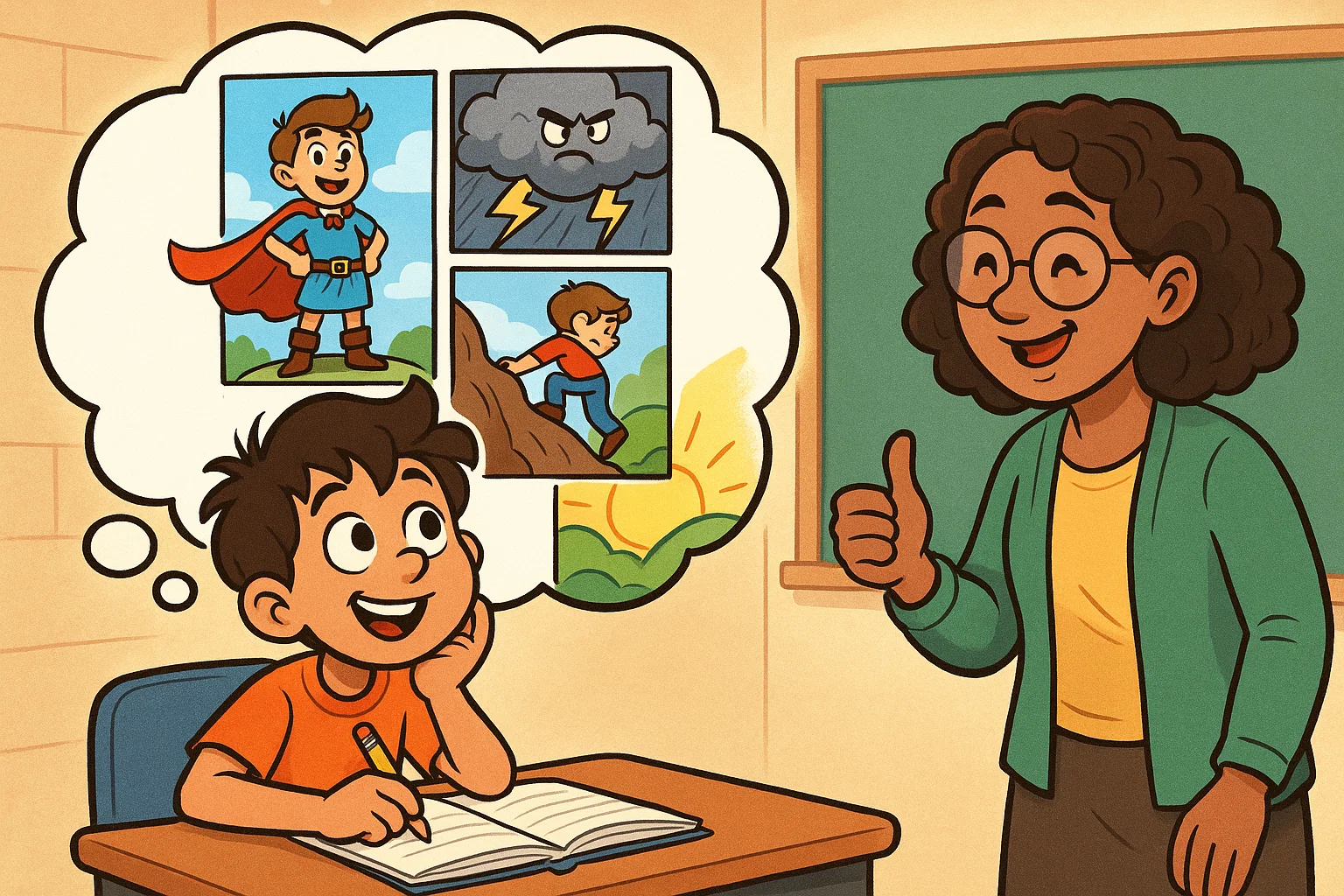
This section focuses purely on narrative themes, giving students specific elements—character, setting, or conflict—to focus their storytelling skills. Narrative writing is a critical component of language arts.
Character-Driven Narratives
Prompts centered on strong protagonists and their personal or emotional journeys.
- Write a story about a character who is naturally very shy but must give an important speech to save their town.
- Explore the journey of a young apprentice writer who struggles to find the perfect story ideas until they meet an unlikely mentor.
- Describe a character who always sees the positive side of every situation, even when things go very wrong.
- Write a narrative about a child who secretly wishes to be a superhero but discovers their true strength lies in their kindness.
- Explore the story of a character who can understand the thoughts of animals, but only when they are asleep.
Setting-Based Narratives
Ideas where the location plays a central, active role in the creative story—mountains, cities, underwater, etc.
- Write a story that takes place entirely within a giant, forgotten treehouse deep in the woods.
- Explore a futuristic city where all the buildings can move and rearrange themselves every night.
- Describe a quest that begins in a dark, underground cave and ends at the top of a windy mountain.
- Write a story where the main character gets lost in a massive museum and discovers a secret exhibit.
- Explore the events that happen when a school field trip gets trapped inside a giant snow globe.
Problem-Solution Narratives
Prompts require a clear conflict, a challenge, and a satisfying resolution, helping students understand plot structure.
- The town’s only water source suddenly dries up. Write a story about how a young inventor solves the water crisis.
- A magical creature is trapped in your school’s gym. Write a story about how you and your friends safely return it home.
- Explore the challenge of a character who loses their lucky charm right before the most important test of the grade.
- Write a narrative about a time a group of friends had to raise money for a good cause and faced an unexpected obstacle.
- The school bell breaks, and everyone thinks they get to go home early, until one student devises a way to fix it.
Informative Writing Topics for Grade 5
These factual-style tasks push kids to explain processes, compare ideas, or share knowledge, developing their communication and organizational skills beyond pure creative work.
How-To Topics
Prompts asking students to explain the steps necessary to complete a task, focusing on clear instruction and sequence.
- Write a ‘How-To’ essay explaining how to train a new puppy (or another pet).
- Explain how to build the perfect sandcastle (or snowman).
- Write a set of instructions on how to be a good friend to someone.
- Explain the steps a person must take to learn how to ride a bicycle or roller skate.
- Write a “How-To” guide for someone visiting your school for the first time.
Compare-and-Contrast Topics
Ideas that teach organizational structure through comparing two objects, characters, or experiences.
- Compare and contrast a city and a forest. Which one would you prefer to live in, and why?
- Write an essay comparing the experience of reading a book versus watching the movie version.
- Compare and contrast two different types of weather (e.g., a sunny day vs. a thunderstorm).
- Compare and contrast two characters from your favorite book or movie.
- Write about the similarities and differences between a bicycle and a scooter.
Opinion Topics
Prompts require kids to argue and justify their viewpoint using reasons, a core skill for persuasive writing.
- Do you think homework is helpful or harmful? Write an essay stating your opinion and giving three reasons.
- Should all students be required to learn a second language? Explain your opinion.
- What is the best pet a family can own? Write an argument supporting your choice.
- Which season is the most fun, and why?
- Write a persuasive essay arguing why your favorite holiday is the best of the year.
Research Writing Topics for Grade 5

These are age-friendly research ideas that build inquiry and investigation skills, suitable for short mini-research projects and essay writing.
Mini-Research Projects
Small topics requiring basic fact-gathering and synthesis of information.
- Research and write a report on the diet and habitat of a specific endangered animal.
- Find out and explain how the pyramids were built.
- Research the history of your school’s name or the town you live in.
- Write a short essay explaining the difference between a planet and a star.
- Research the life cycle of a butterfly.
Biographical Topics
Students research famous figures, inventors, or heroes, focusing on their achievements and impact.
- Research the life of Amelia Earhart and write about her greatest achievements.
- Explore the life and work of a famous inventor like Thomas Edison or Marie Curie.
- Choose a hero in your life (a historical figure or a family member). Write about why they are an inspiration.
- Research a famous writer (like Roald Dahl or C.S. Lewis) and write about their life.
- Write a report on the impact of Martin Luther King Jr.’s work.
Science and History Research Topics
Prompts connecting directly to the school curriculum in science and history.
- Research and explain the process of photosynthesis.
- What was life like for a child during the Colonial period in America?
- Write a report on the causes and effects of a volcano eruption.
- Research three famous landmarks and write about their history.
- Explore the different layers of the Earth’s atmosphere.
Funny Writing Topics for Grade 5
Humorous, silly, or absurd prompts are fantastic for making writing entertaining and lowering the pressure, which is crucial for encouraging reluctant writers.
Silly Scenarios
Unusual, exaggerated situations designed to make kids laugh and let their imagination run wild.
- Write a story about a day when your pet suddenly developed a posh, British accent.
- The cafeteria ran out of food, and the teacher decided to serve mud pies instead. Describe the lunch hour.
- Explore a story where a cloud gets stuck on the roof of your house.
- What would happen if your clothes started singing every time you wore them?
- Write about a pair of socks that are constantly arguing about who gets to go in the wash first.
Funny Characters
Prompts involving quirky or odd personas that are fun to describe.
- Write a narrative about a grumpy old man who secretly loves roller coasters.
- Describe a new substitute teacher who teaches the class how to juggle instead of math.
- Explore the life of a famous chef who accidentally uses too much glitter in every recipe.
- Write a story about a character whose superpower is being able to trip over absolutely nothing.
- Describe a librarian who tries to shush everyone so loudly that they make more noise than the patrons.
Comedy Dialogue Prompts
Ideas that encourage writing humorous conversations and focusing on the sound of the spoken word.
- Write a conversation between two pieces of fruit arguing over who is healthier.
- Write a dialogue between a dog and a cat who are trying to decide which human to adopt.
- Write a conversation between two students who are trying to secretly pass a note in class without the teacher noticing.
- Write a dialogue between a fork and a spoon that are tired of eating the same cereal every morning.
- Explore a conversation between a pair of shoes that are scared of going outside in the rain.
Poetry Writing Topics for Grade 5
Poetry writing encourages imagery, rhythm, emotion, and attention to structure, providing a great way to develop descriptive writing skills.
Nature Poem Ideas
Prompts focusing on the weather, seasons, plants, and landscapes using sensory language.
- Write a poem describing the sound and feeling of a rainstorm.
- Write a poem from the point of view of a flower waiting for the sun to come out.
- Describe the four seasons in a single, four-stanza poem.
- Write a poem about the colors you see when the sun sets.
- Write a poem about a specific animal in its natural habitat (e.g., a fish, a bird, a squirrel).
Emotion Poem Ideas
Prompts focusing on capturing feelings like joy, courage, fear, or excitement.
- Write a poem about the feeling of extreme excitement right before a birthday party.
- Explore the emotion of fear when walking in a dark place.
- Write a poem about what the feeling of pride looks like.
- Write a poem that uses strong imagery to describe the emotion of confusion.
- Write a poem about the power of hope.
Structured Poem Forms
Prompts using specific forms like Haiku, Acrostic, Cinquain, or Limerick to teach structure.
- Write a Haiku (5-7-5 syllables) about your favorite time of day.
- Write an Acrostic poem using the letters in the word “IMAGINATION.”
- Write a Cinquain poem (2, 4, 6, 8, 2 syllables) about your best friend.
- Write a Limerick (AABBA rhythm) about a funny animal.
- Write a poem where every line starts with the words “I wish…”
Fiction Writing Topics for Grade 5
This section includes full imaginative story ideas covering the main genres that fifth grade students enjoy: fantasy, sci-fi, mystery, and realistic fiction.
Fantasy and Magic Topics
Dragons, portals, enchanted objects, and magical quests are perfect for creative story writing.
- Write a story where a student discovers that their homework textbook is secretly a portal to a kingdom of tiny people.
- Explore a day in the life of a dragon who lives in a suburban neighborhood and tries to hide its identity.
- Write a narrative about a child who receives a magical amulet that allows them to talk to objects.
- Explore a land where laughter is the only form of currency. What happens if a character runs out?
- Write a story about a young wizard who accidentally turns their best friend into a talking frog.
Science Fiction Topics
Robots, futuristic cities, time travel, and high-tech adventures challenge creative thinking.
- Write a story about a time traveler who accidentally brings a dinosaur back to the present day.
- Explore a future where food is grown in machines, and the main character tries to find a real, old-fashioned farm.
- Write a story about a group of kids who must outsmart a giant robot that has taken over their classroom.
- Describe a journey in a spaceship that can change shape to look like any animal.
- Explore a scenario where everyone lives on the moon, and Earth is just a vacation spot.
Realistic Fiction Topics
Everyday relatable stories that focus on character development, conflict resolution, and personal reflection.
- Write a story about a neighborhood competition to build the best treehouse.
- Explore the events leading up to a character trying out for a school play for the first time.
- Write a narrative about a family moving to a new city and the student’s challenges in making new friends.
- Explore a situation where a lost pet needs to be rescued, and the whole community helps.
- Write a story about the excitement and challenges of a school sleepover.
Animal Writing Topics
These prompts focus on wildlife, pets, nature observations, and animal fantasies, making them highly engaging for kids.
Wild Animal Topics
Safari, jungle, forest, or ocean settings centered on non-domesticated creatures.
- Write a story from the perspective of a wise, old owl who watches over the forest.
- Explore a scenario where a group of jungle animals holds a secret meeting to discuss the approaching humans.
- Describe the life of a penguin living in Antarctica. What is a typical day like?
- Write a narrative about a young explorer who discovers a never-before-seen animal in the deep ocean.
- Explore a day in the life of a shark, focusing on its hunting and survival skills.
Pet-Themed Topics
Stories about dogs, cats, hamsters, and funny pet events that are relatable.
- Write a story about a dog who believes they are secretly a spy on a mission.
- Explore the events of a pet show where all the animals have a secret talent.
- Write about a time your pet did something extremely silly or embarrassing.
- If your pet could leave you a note, what would it say? Write the note.
- Describe the thoughts of a goldfish swimming in its bowl, watching the world outside.
Fantasy Animal Topics
Talking animals, mythical creatures, and fantastical behaviors that inspire imagination.
- Write a narrative where a young girl befriends a talking unicorn living in the local park.
- Explore a creative story about a dragon that can only breathe soap bubbles instead of fire.
- Describe a mythical creature that is a mix of three different animals. What are its powers?
- Write a story about an animal that can change its color to match its emotion.
- Explore a scenario where all the birds in the world decide to sing backwards for a day.
Emotion Writing Topics
Focusing on feelings helps young writers develop vocabulary for complex inner experiences, enhancing empathy and descriptive writing.
Positive Emotion Topics
Prompts focusing on feelings of joy, excitement, and pride.
- Write a story about a character who is experiencing the purest form of joy. What caused it?
- Describe the feeling of excitement you get when a long-awaited event finally arrives.
- Write about a time you felt immensely proud of yourself or someone else’s achievement.
- What does the emotion of hope feel like? Describe it using strong metaphors.
- Write a narrative where the main character’s infectious happiness spreads throughout their whole school.
Challenging Emotion Topics
Prompts dealing with fear, anger, disappointment, and how to manage them.
- Write a story about a character who has to learn how to deal with the emotion of disappointment after failing a task.
- Explore a time you were very scared. How did you find the courage to overcome the fear?
- Write a narrative about a character who gets angry and how they learn a healthy way to express their thoughts and feelings.
- Describe the physical feeling of nervousness before a big event.
- Explore a situation where a character feels very lonely and discovers a way to connect with others.
Mixed Emotion Topics
Situations that involve complex, layered feelings—both positive and challenging.
- Write a story about a character who is happy to win a competition but sad for the friend who lost.
- Explore the mixed emotions of moving away from a home you love to a new, exciting place.
- Write about a surprising gift that brings both joy and a sense of responsibility.
- Describe the feelings of relief and anxiety that come after you finish a very difficult test.
- Explore a scenario where a character feels both proud of a creation and nervous about sharing it.
Journal Writing Topics for Grade 5
These reflective prompts are suitable for daily journaling or morning writing sessions, fostering self-awareness and consistent writing practice.
Daily Experience Prompts
Prompts about school, home, friends, achievements, and everyday observations.
- What is the most interesting thing you learned in school today?
- Write about a conversation you had with a family member that made you think.
- Describe the best part of your day yesterday and the worst part.
- Write about something you want to achieve this week, no matter how small.
- What is one small thing you can do today to help make your home a better place?
Future and Dream Prompts
Journal prompts focusing on career dreams, goals, and long-term plans.
- If you could have any job in the world, what would it be and why?
- Write about a dream you had recently.
- What is one thing you hope the world will be like when you are an adult?
- If you could invent a machine that predicts the future, what would you ask for?
- Write about a new skill you want to learn this year.
Self-Discovery Prompts
Topics that encourage students to reflect on what they value, their unique skills, and positive qualities.
- What are three things you like most about your personality?
- Write about a time you stood up for what you believe is right.
- What is something you wish more people knew about you?
- Describe a challenge you have successfully overcome.
- What are you most grateful for right now, and why?
Descriptive Writing Topics for Grade 5

These sensory-rich prompts are key to helping students build stronger adjectives, imagery, and detail in their writing, which is vital for all different writing styles.
Describe a Person
Focusing on appearance, personality, mannerisms, and emotion.
- Describe your favorite fictional character using only descriptive adjectives.
- Describe a grandparent or elder person in your life, focusing on their unique characteristics.
- Describe a stranger you saw in a crowd and imagine their personality based on their appearance.
- Describe a person who is very good at their job (e.g., a chef, a musician, a builder).
- Describe a character who always has a secret, focusing on their guarded expressions.
Describe a Place
Focusing on sensory details of the classroom, city, beach, forest, or other location.
- Describe your favorite room in your house using all five senses.
- Describe a bustling city street at night. What do you see, hear, and smell?
- Describe a secret hideout or a place only you know about.
- Explore a magical garden where every plant is an unusual color.
- Describe a public place (like a park or a museum) just before it opens or after it closes.
Describe an Object or Event
Focusing on festivals, celebrations, or memorable objects.
- Describe the most delicious meal you have ever eaten, using vivid, appealing language.
- Describe a tiny, seemingly ordinary object (like a pencil or an old key) in as much detail as possible.
- Describe the atmosphere of your favorite holiday celebration.
- Describe a broken object and the story of how it was damaged.
- Describe a fireworks display, focusing on the sounds, colors, and feelings.
Tips for Supporting Young Writers
Guidance and positive feedback are essential for turning a writing task into a meaningful, rewarding learning experience. These strategies help educators and parents boost the writing skills and confidence of their students.
Motivation Techniques
Positive reinforcement, fun tools, and games can help keep young writers engaged and excited.
- Celebrate Small Wins: Praise effort, not just perfection. Acknowledge a great descriptive phrase or a well-developed conflict.
- Use Visuals: Provide picture prompts, artwork, or short videos as inspiration. A visual starting point can break writer’s block.
- Choice is Key: Offer two or three writing prompts so fifth graders can select one that interests them.
- “Publish” Their Work: Create a classroom or home bulletin board to display their finished pieces. This validates their work and inspires others.
- Interactive Tools: Utilize digital tools or physical story cubes to create random, fun writing prompts.
Classroom Strategies
Effective instruction methods, group activities, and organization are vital for writing growth.
- Graphic Organizers: Use simple story maps, Venn diagrams, or plot planners before the writing task begins to help students structure their thoughts.
- Peer Review: Teach students how to give kind, helpful, and specific feedback to one another. (E.g., “I loved your description of the setting, but I was confused by the ending.”)
- Model Writing: Show the process! Teachers can occasionally write alongside their students and share their own thinking, mistakes, and revisions.
- Time Management: Break the writing lesson into manageable chunks: 10 minutes for pre-writing, 20 minutes for drafting, 15 minutes for revision.
| Phase | Goal | Example Activity |
| Pre-writing | Generating ideas, planning structure | Mind-mapping, creating a character profile, or listing sensory details. |
| Drafting | Focusing on content and flow | Timed free-writing using a chosen prompt or story starter. |
| Revising | Improving clarity, detail, and organization | Using a checklist to add more adjectives/adverbs or checking the plot’s logic. |
| Editing | Fixing errors in grammar and spelling | Using a partner to proofread or run a spell-check. |
Home Writing Support
Tips for parents assisting with writing practice and creating a supportive environment.
- Make it a Habit: Encourage short, consistent journal time (5-10 minutes daily) rather than long, infrequent sessions.
- Focus on the Idea First: When reviewing homework, prioritize the clarity of the creative thinking and the story’s message over grammar initially.
- Be an Active Listener: Ask open-ended questions about their creative story or essay, such as “What happens next?” or “Why did your character feel that emotion?”
- Provide a Resource Kit: Keep a dictionary, a thesaurus, and maybe a simple writing prompts book or worksheet available.
Creative Writing Activities for Grade 5
These extra activities offer alternative ways to engage students and make writing less like a chore and more like an interactive exploration, furthering English language and literacy development.
Printable Activities
Worksheets, checklists, and story maps offer clear structure for the learner.
- Printable Story Maps: Worksheets guiding students to plot the exposition, rising action, climax, falling action, and resolution before they write a story.
- Descriptive Checklists: Lists to encourage adding details: “Did you use a sound word? Did you use a taste word? Did you use a strong verb?”
- “Show, Don’t Tell” Worksheets: Activities that ask students to rewrite simple sentences using descriptive writing (e.g., changing “She was angry” to “Her face tightened, and her fists clenched at her sides.”).
Writing Games
Fun, low-pressure activities that use elements of chance or collaboration.
- Story Cubes: Use dice with images on them. The student rolls three or four and must incorporate those images into their writing topic.
- Pass-the-Story: One student writes the first sentence, passes the paper to the next student who writes the second, and so on. This develops quick creative thinking and collaboration.
- Adjective/Adverb Bingo: Students collect strong descriptive words they find in their reading and try to use them in their own writing.
Group Collaboration Activities
Shared stories and peer review tasks build social skills alongside writing ability.
- Character Interview: Students work in pairs, one as a writer creating a character, the other as an interviewer, asking probing questions to develop the character’s backstory and personality.
- Build-a-Setting: Groups are assigned a writing topic (e.g., a swamp, a bustling market). Each member adds a different sensory detail, and the group then synthesizes them into a rich descriptive paragraph.
- The Editor’s Desk: Students swap essays and use a provided checklist to offer constructive feedback focused on one area, like plot logic or strong introductions.