


The world is a magnificent canvas, and for young minds, color is one of the most powerful tools for exploring it. Colourful activities aren’t just about fun; they are vital tools for early childhood development, boosting imagination, aiding emotional growth, and providing essential sensory exploration. Through the vibrant engagement with paints, dyes, and found objects, children learn critical skills that form the bedrock of future academic success.
This resource gathers a diverse array of colour-themed ideas – inspired by the open-ended possibilities of art rooms, playful kitchen experiments, and core early-years learning principles. These hands-on, interactive activities provide wonderful avenues for every child to discover, create, and connect with the world around them, laying a foundation for a lifelong appreciation for creativity.
Magic of Color Exploration for Kids
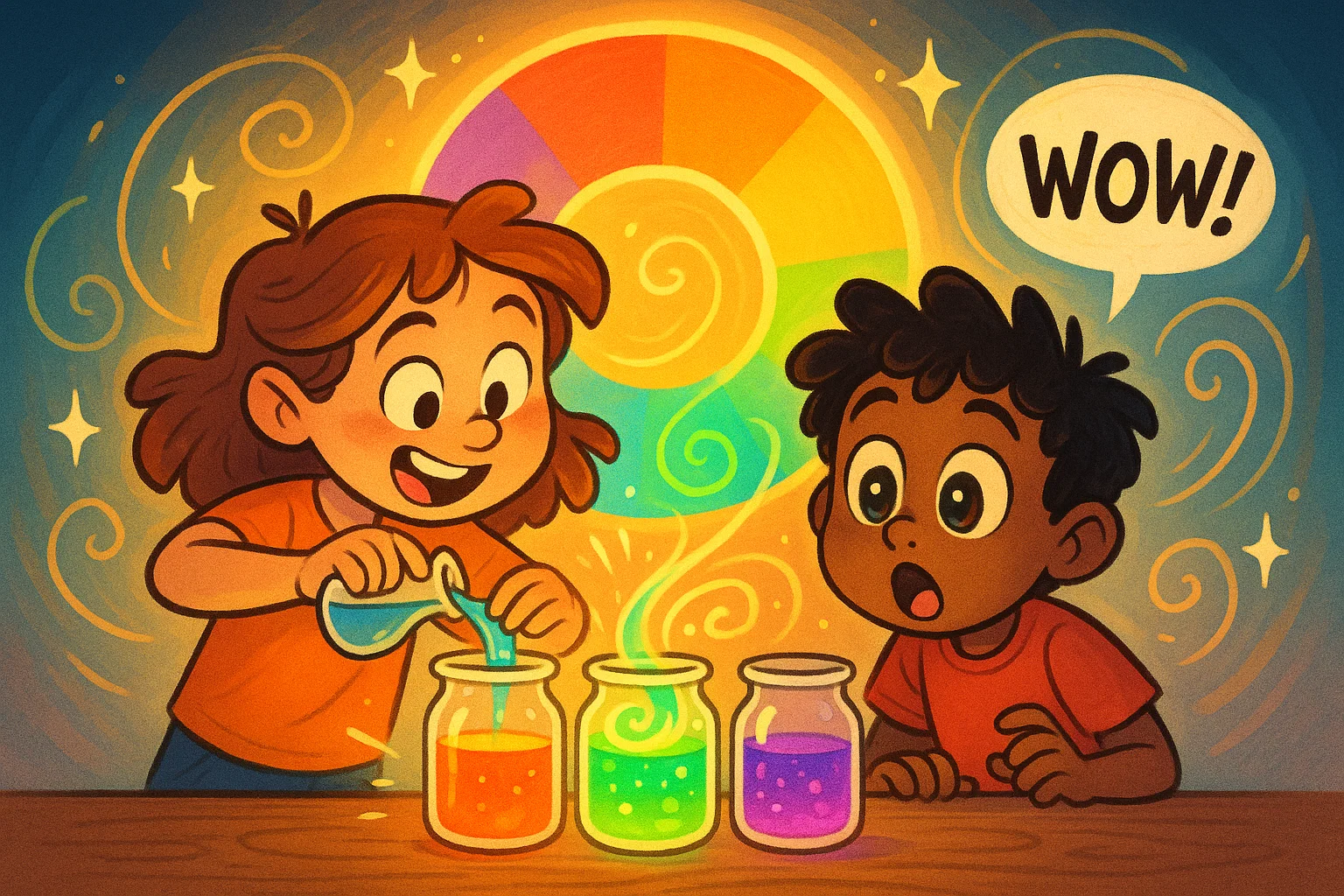
Introducing colour through play is one of the most effective ways to nurture holistic development. These engaging sessions naturally develop fine motor skills as children manipulate tools like paintbrushes and beads, and promote essential problem-solving abilities as they try to mix the perfect shade.
Experience & Inspiration
Colour activities powerfully ignite curiosity and wonder. Watching two different colors blend into a completely new one is a moment of pure discovery that engages both the creative and analytical sides of the child’s brain. This type of hands-on exploration connects a child’s experience to their emotions, allowing them to express feelings non-verbally through their unique choices and strokes. As Vygotsky’s socio-cultural theory suggests, engaging with materials and peers in an experiential way significantly helps children construct knowledge.
Creative activities, particularly those involving color, are a child’s first language of self-expression. They offer a safe space to explore the messy, complex emotions that words cannot yet capture.
Color Wheel Basics for Play
The color wheel provides a simple, systematic way for children to practice and gain an early understanding of color relationships. We can easily introduce these concepts through play:
- Primary Colours: These are the three fundamental colours—red, yellow, and blue. They cannot be created by mixing any other colors.
- Secondary Colors: These are the delightful results when two primary colors are mixed—for example, blue and yellow make green.
- Tertiary Colors: These are created by mixing a primary colour with an adjacent secondary color (e.g., yellow-green). Experimenting with these helps kids explore a wide spectrum of shades.
Light vs Pigment Play
Children often notice a difference between the colours they see on a screen (light) and the colours they mix with physical pigments.
| Color Type | Source & Medium | Experience for Kids |
| Light | Digital devices, colored filters, LEDs | Colors are additive. Different colors of light combine to make white light. |
| Pigment | Paint, crayon, marker, food coloring | Colors are subtractive. Different colors of physical materials absorb light, resulting in darker shades when blended. |
Understanding this distinction helps children develop a deeper awareness of the science behind colour, enhancing early STEAM (Science, Technology, Engineering, Art, Math) learning.
Hands-On Color Activities for Young Minds
These practical, fun activities are fantastic for toddlers and preschoolers, often requiring simple items like common household materials. They promote sensory integration and enhance fine motor skills.
DIY Liquid Color Wheel
This interactive project helps children visualize the results of color mixing instantly.
- Introduce three jars of water, each colored with one of the primary colors (food coloring works well).
- Have the child use a dropper or pipette to transfer and mix equal parts of two primary colors into a new, empty jar.
- Observe the resulting secondary colors.
This experience reinforces scientific observation and cause-and-effect reasoning, and strengthens the pincer grasp—a crucial pre-writing skill.
Play Dough Color Fusion
Encourage your child to explore the tactile satisfaction of color mixing with play dough. Provide portions of primary-colored dough and ask them to choose two to mix. As they squish, roll, and blend the colors, they physically observe the transition from two distinct colors to a new uniform shade. They might create a “rainbow snake” or a colourful “birthday cake”.
Marbled Milk Magic
This classic experiment is an art and science crossover that is visually stunning. Place a shallow layer of whole milk in a dish. Add drops of different food coloring and then a drop of dish soap. The soap breaks the surface tension and causes the fat molecules and pigment to swirl dramatically. This fun educational activity is often met with gasps of awe and provides a gentle, mesmerizing experience that can be quite calming.
Peg Colour Match
This activity is ideal for enhancing fine motor skills and is a great fun educational tool. Prepare a set of cards or a piece of cardboard with blocks of primary and secondary colors. The child’s task is to sort and attach a colored clothespin (peg) to the matching colour block. The resistance of the peg clip is excellent for strengthening hand muscles.
Bubble Wrap Stomp Art
For a large-scale activity, tape a large sheet of paper to the floor. Squirt dollops of bright paint (non-toxic and washable!) onto the paper. Tape a sheet of bubble wrap on top, or secure bubble wrap to the bottoms of your child’s feet. As they stomp, dance, and walk over the paper, they create unique prints and mix the colourful paint. This is a powerful sensory-motor activity that boosts gross motor skills and promotes joyful self-expression.
Creative Art Room Activities for Emotional Growth
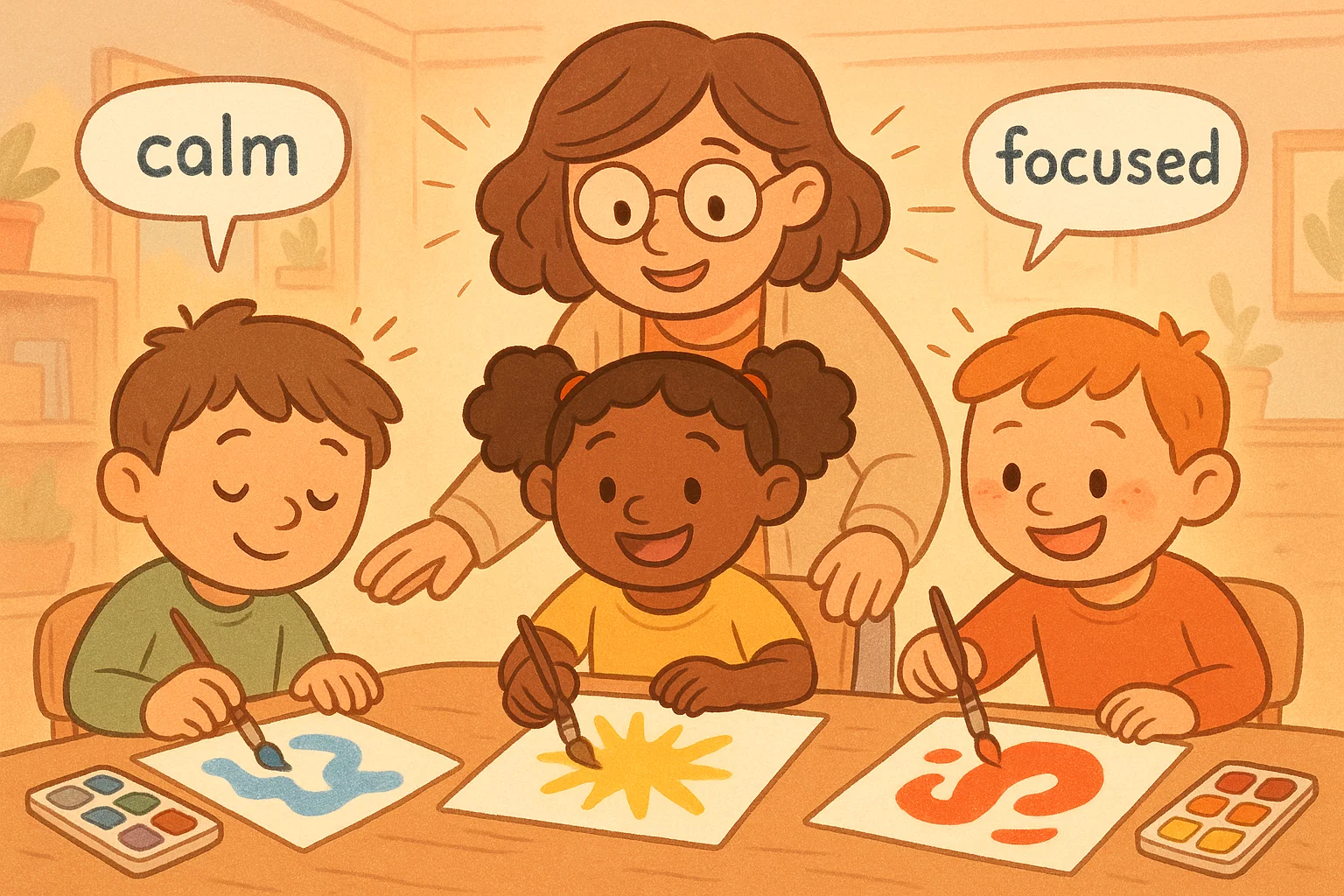
Art is a powerful tool for emotional development, offering a non-verbal outlet for complex feelings. These art activities provide a framework for emotional literacy.
My Colour Palette: Feelings Exploration
Help children connect specific different colors with emotions. Ask your child which colour represents “happy” (often yellow or bright pink) or which shade feels like ‘frustrated’ (perhaps dark red or black). They can then paint their feelings using their identified colour palette. This project helps normalize feelings and provides a language for internal states.
| Emotion | Suggested Color Palette | Actionable Takeaways |
| Joyful | Sunny Yellow, Bright Orange | Encourage drawing a happy memory. |
| Calm | Soft Blue, Mint Green | Introduce rhythmic, gentle strokes with a crayon. |
| Frustrated | Dark Red, Purple | Foster self-expression by scribbling hard on paper. |
| Curious | Lime Green, Electric Pink | Help children create a picture of something they want to learn. |
Playful Patterns: Connecting With Others
Group pattern-making activities, like collaboratively decorating a large-scale paper banner with markers and crayons, naturally build communication and cooperation. Children decide together how to sort the colors, which order to follow, or how to mix to create a uniform pattern. This creative group effort strengthens social skills.
Calm Creations: Soothing Worries
Calm-focused craft activities utilize soft, muted colors and repetitive motions. Think about creating a “worry stone” using gentle watercolors, or using simple tools like cotton buds to make pointillism art with pale pastels. The focused, repetitive application of colour can be profoundly therapeutic and promote emotional wellbeing.
Weather Art: Noticing Feelings
Introduce the idea that feelings can shift like the weather. Create a piece of “Sunny Day” art (using yellows and oranges) and contrast it with a “Rainy Day” artwork (grays and blues). This helps kids see emotions as temporary states, not fixed traits.
Growth Garden Collage
Encourage the child to create a nature-inspired collage representing their own personal growth. The roots might be a grounding shade of brown, the emerging stems vibrant green (for confidence), and the future flowers a full rainbow of bright hopes. This project helps children visualize progress and foster a sense of accomplishment.
Color Mixing Experiments for Play-Based Learning
These experiments leverage a child’s natural curiosity and are excellent for boosting early scientific and problem-solving skills through hands-on engagement.
Rainbow Water Jars Experiment
This simple density experiment shows how liquids with different amounts of salt (or sugar) and food coloring will layer instead of immediately blend. By carefully pouring highly saturated primary-colour water into jars, children see a mini-rainbow form due to varying densities. This helps kids develop fine motor control and scientific observation.
Marbled Paper Creation
Whether using a bath of shaving foam mixed with food coloring or a tray of water with floating oil-based paints, marbling is a thrilling science-meets-art activity. Children learn that oil and water don’t mix, creating wonderful, swirling patterns when paper is pressed onto the surface. The unpredictable patterns boost excitement and creativity.
Transparent Blocks Light Play
Using translucent building blocks or thin colored cellophane over a window or light source allows children to experiment with additive colour mixing (light colour). When they overlap two different colors of blocks, they observe how the light creates a new shade. This fun educational exploration takes learning off the page and into the three-dimensional world, engaging the child’s spatial reasoning.
Sand Tray Colour Exploration
A shallow tray filled with finely colored sand (dyed using food coloring) provides a calming, sensory experience. Children practice pre-writing strokes, letters, or shapes by tracing them with their finger into the sand. This tactile activity supports early literacy skills and strengthens the sense of texture.
Nature-Inspired Color Adventures Indoors
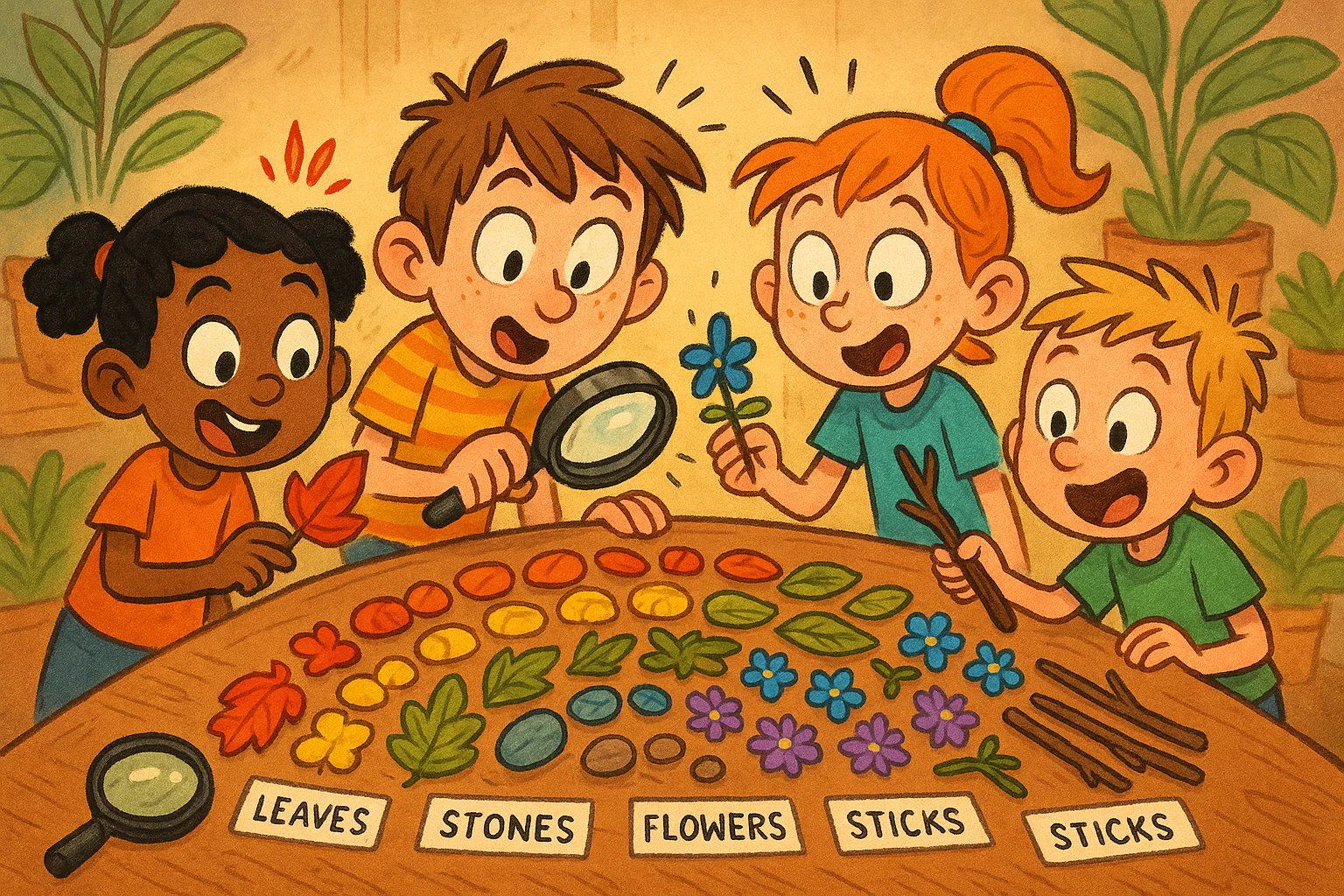
Bringing the colors of nature’s palette inside is a wonderful way to connect children with the world around them, even on a rainy day.
Indoor Nature Colour Hunt
Encourage your child to become a detective. Provide a simple chart listing different colors (red, yellow, brown, green) often found in autumn or the garden. The child then goes on an indoor scavenger hunt to collect items like small toys, beads, or natural elements (if previously collected) that match the designated colour. This sharpens observation and color matching skills.
Fruit & Vegetable Printing
Cut up firm vegetables like potatoes, carrots, or apples to create natural stamps. Dip them in paint to create bold, textured prints. This activity introduces children to the diversity of shapes and texture in seasonal foods, making the experience both artistic and a gentle way to introduce nutrition.
Leaf Rubbing Rainbow
Collect various leaves with strong vein patterns. Place them under a thin piece of paper and use the side of a crayon to rub over them. Use multiple different colors across the same leaf to create a colorful, textured rainbow effect, combining art, creativity, and a study of nature’s structures.
Interactive Elements for Engaging Kids
Making learning dynamic and interactive is key to fostering lifelong curiosity.
Colour Match Quiz
Create a simple visual quiz where children are shown a secondary color (e.g., orange) and ask your child which two primary colors they need to mix to create it. This is a quick assessment of their understanding of color relationships.
Pattern Challenge Cards
Printable cards with sequences of different colors (e.g., Red-Blue-Red-Blue). Challenge the children to replicate the pattern using items like blocks, beads, or markers. This activity promotes sequencing and visual memory.
Mindful Listening with Colours
This interactive activity pairs auditory cues with visual colour association to promote focus and emotional regulation. Play music of a certain tone: a fast, erratic beat might be ‘red’ (excitement), while a slow, gentle melody is ‘blue’ (calm). Ask your child to quickly grab the matching colour bead or marker when the music changes.
Ideas for Connecting Creativity with Learning
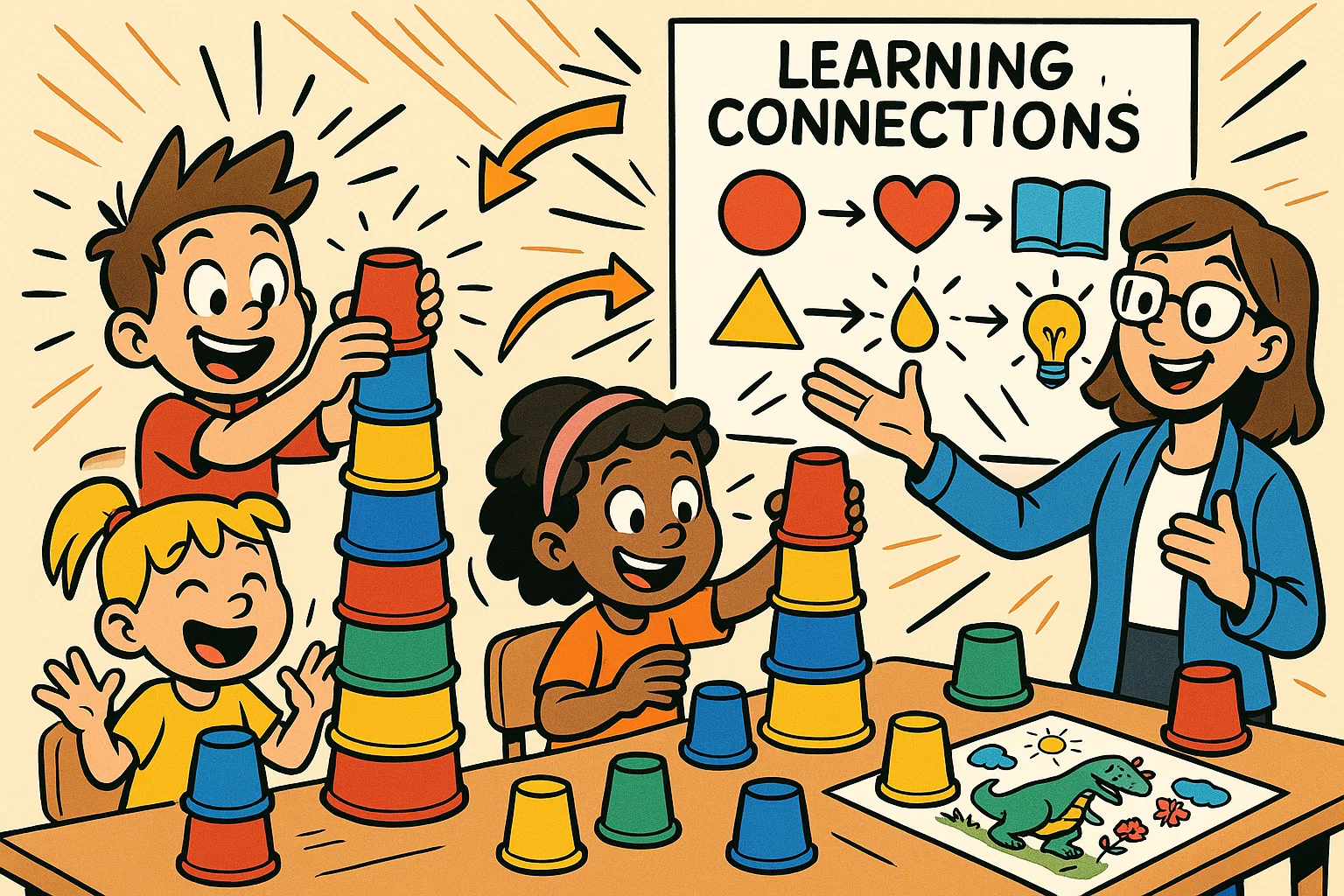
When art and science merge, the learning possibilities extend beyond the current horizon.
Story Time with Colours
While reading a familiar story, assign a specific shade to a character or emotion. For instance, the brave hero is always ‘green’ and a mysterious event is always ‘purple’. Encourage the children to hold up a colour card or a painted puppet every time the assigned event happens. This helps kids with listening comprehension and literacy.
Cup Tower Colour Coding
Using colored plastic cups, introduce a challenge to build a tower, stacking the cups in a pre-determined colour sequence (e.g., three blue, then two yellow, then one red). This activity develops sequencing, planning, and fine motor skills.
Shadow Match Game
Set up a light source and use simple shapes or cutouts covered with transparent colour filters. Challenge kids to match the resulting colored shadow to a colored mat on the wall. This simple interactive game demonstrates how light and shadow interact.