

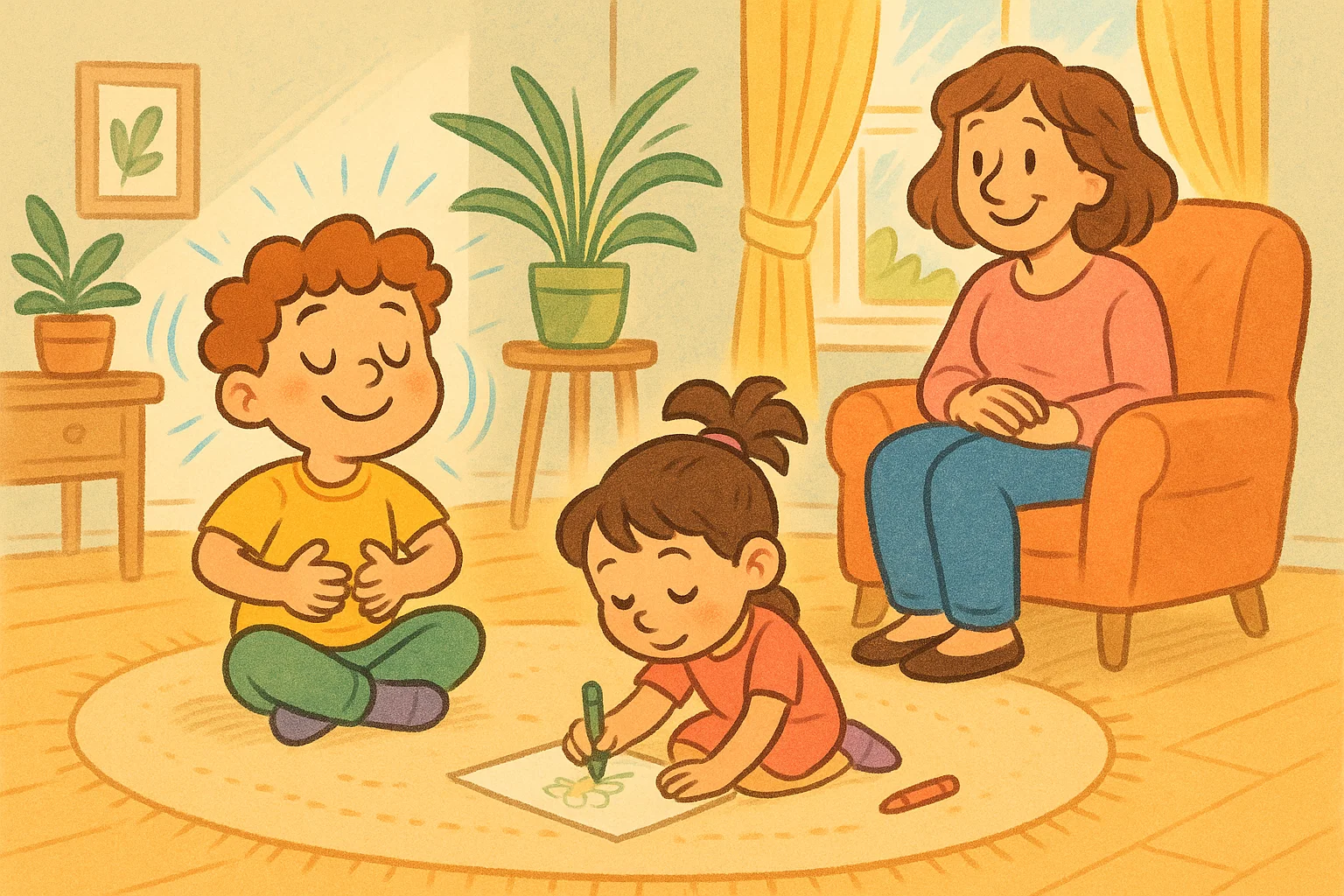
In today’s fast-paced world, it’s increasingly common for children to feel overwhelmed, experiencing heightened levels of stress and anxiety. Creating a calming routine is one of the most powerful gifts you can give your little ones, providing them with the essential skills to feel calm, self-regulate their emotions and improve focus. These structured moments of tranquility are more than just downtime; they are a proactive investment in your child’s emotional resilience, mental health, and ability to navigate the inevitable challenges of growing up.
From reducing bedtime battles to helping a child transition smoothly after a long school day, incorporating calming activities and simple mindfulness practices into daily life offers profound benefits. By introducing these strategies early on, you teach your child that they have the internal power to find peace, even in moments of chaos, setting a foundation for lifelong emotional intelligence and overall wellbeing. This guide will explore practical, expert-backed strategies – from deep breathing exercises to sensory play – that are easy for kids to enjoy and adopt, helping them achieve a greater sense of peace and control.
What Are Calming Routines for Kids?
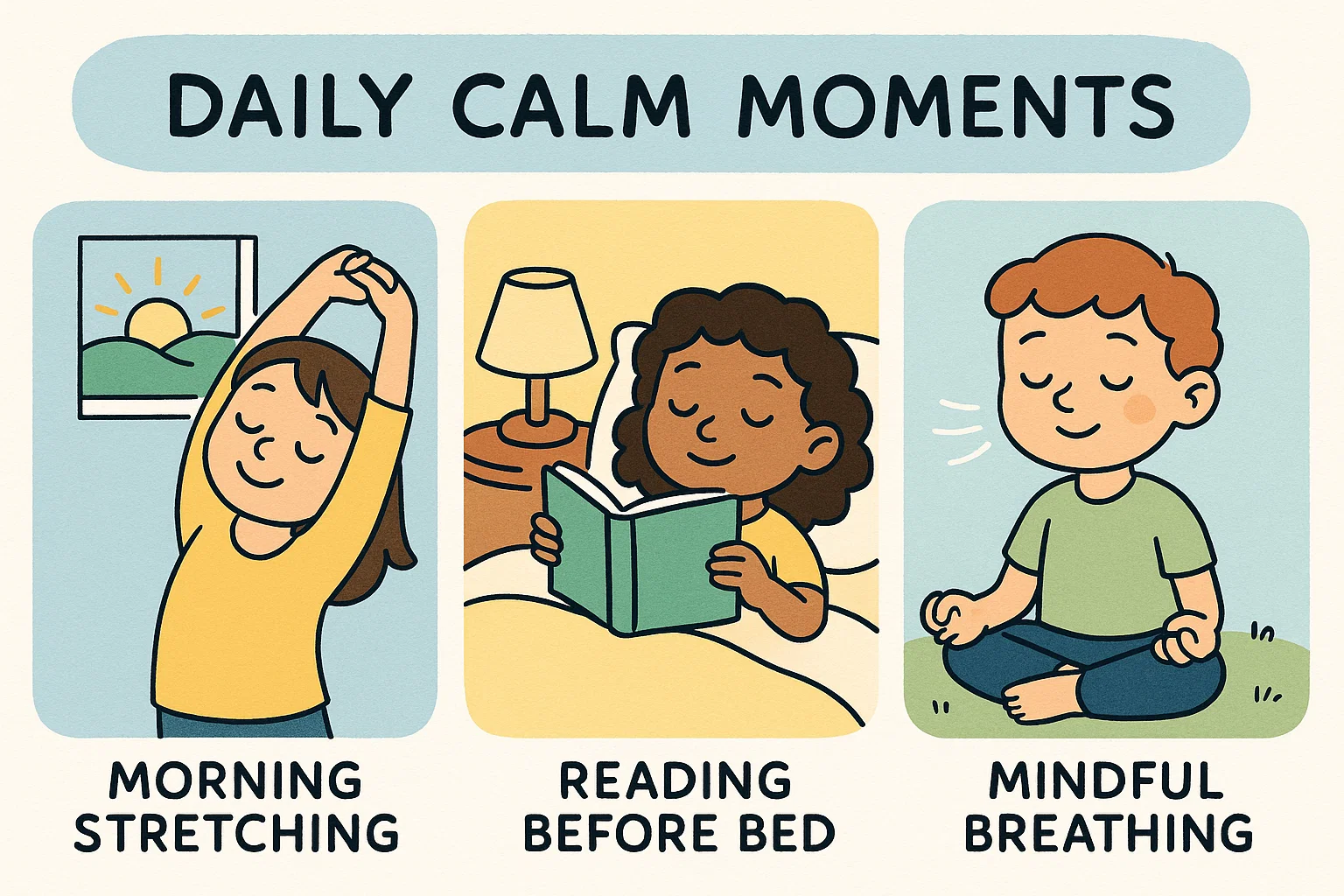
Calming routines are predictable sequences of simple activities designed to intentionally reduce a child’s stress response and promote emotional balance. They are the antithesis of a hurried schedule, acting as a crucial bridge between high-energy or stressful periods and a state of rest or focus. The goal is to establish predictable, comforting patterns that signal to the child’s nervous system that it is safe to relax.
The importance of these routines varies slightly by age:
- Preschoolers (Ages 3–5): Routines center around sensory play, playful breathing techniques (like the bubble activity), and simple physical closeness. They thrive on consistency and clear visual cues.
- School-Aged Children (Ages 6–12): Routines focus on mindfulness activities, problem-solving, and emotional literacy, such as journaling or structured deep breath exercises like square breathing. They begin to internalize these skills.
- Teens (Ages 13+): Routines often incorporate more complex relaxation strategies, such as yoga, guided meditation apps, and connecting with nature. The emphasis is on building independence in emotional self-management.
Why Kids Need Calming Routines
Modern life often exposes every child to a constant barrage of stimulation – from digital screens to busy schedules – leading to overstimulation. When a child’s emotional cup overflows, it often results in emotional outbursts or withdrawal. Calming routines interrupt this cycle. They provide a vital skill set, teaching children that when they feel a moment of intense emotion, acknowledge it, and then use self-soothing techniques to regain composure. This process moves them from a reactive state to a responsive one, promoting better mental health for children.
When to Use Calming Routines
Calming activities are most effective when used proactively, not just reactively. Integrating them at predictable transition points makes them a habit rather than a punishment.
- Bedtime: A non-negotiable routine is essential for preparing the mind and body for sleep. It can involve reading, gentle stretching, or mindful listening.
- After School: A 15-minute “reset” period is critical to decompress from the structured, social, and academic demands of the school day.
- Transitions: Moving from one activity to the next (e.g., playtime to dinner) can be difficult. A brief, structured activity – like a silent walk or three deep breaths – can smooth the transition.
- Anxiety Moments/Sensory Overload: When you ask your child if their body feels “too much” or if they are feeling stressed, these are ideal moments to begin a short calming exercise.
How Parents Can Help Build Calm Habits
The most impactful thing a parent can do is model calmness. Children learn how to respond to stressful situations by observing the adults in their lives.
| Strategy | Description | Example |
| Model Calmness | React to your own stress with the same techniques you teach your child. | When feeling frustrated, say, “Mommy needs to take deep breaths now,” and demonstrate. |
| Maintain Consistency | The routine should happen at the same time and in the same sequence, especially for bedtime. | Always follow bath time with a quiet story and a deep breathing exercise. |
| Use Visual Cues | Visual aids such as a ‘Calm Down Chart’ or breathing cards, make the abstract concept of calmness concrete. | Place a poster in the calm corner showing the steps for “Flower and Candle Breathing.” |
| Offer “Time for Connection” | Routines shouldn’t feel like a chore; they should be a brief moment of non-judgmental connection. | End the day by asking, “What was one thing that made you feel calm today?” |
Breathing and Relaxation Techniques
Breathing exercises are the cornerstone of self-regulation because they directly influence the nervous system. By learning to slow and deepen the breath, kids can learn to slow their heart rate, shift focus away from distress, and actively feel calmer. These are simple mindfulness techniques used extensively in schools and clinical settings to help your child manage anxiety.
Belly Breathing
This is the most fundamental and effective breathing exercise. It’s a great way to engage the diaphragm, which promotes a deeper, more restorative breath.
How to teach it:
- Have your child lie on the floor or sit comfortably.
- Place a small, soft object, like a stuffed animal, on their belly.
- Teach your child to inhale slowly through the nose, making the belly (and the stuffed animal) rise like a balloon filling up.
- Exhale slowly through the mouth, deflating the balloon.
- Use imagery: “Pretend your belly is a bubble you are gently filling with air.”
Bunny Breathing
This short, playful technique is perfect for young children and provides a quick reset, as the rapid, shallow breaths are often followed by a deep exhale.
- How to make it fun: Have your child rapidly inhale three quick, short sniffs through their nose (like a sniffing bunny), followed by a slow, long exhale out of the mouth. This is a delightful, playful way to learn calm breathing.
Flower and Candle Breathing
This technique combines sensory imagination with controlled breathing, making it very accessible.
- Hold an imaginary flower up to your child’s nose. Ask them to slowly inhale through their nose to smell the beautiful flower.
- Hold up an imaginary birthday candle. Ask them to purse their lips and slowly exhale to blow out the candle (like blowing out birthday candles), taking care not to let the candle flicker too much. This control helps them understand the difference between a forceful breath (like shouting) and a slow, calming breath.
Square Breathing
Also known as 4×4 breathing, this is a structured, rhythmic technique that is especially effective for older children’s mental health management and in situations like pre-test jitters. It provides a distinct focus point beyond the stressful thought.
| Step | Action | Duration |
| 1 (Inhale) | Breathe in slowly through the nose. | Count of 4 |
| 2 (Hold) | Hold the breath gently. | Count of 4 |
| 3 (Exhale) | Breathe out slowly through the mouth. | Count of 4 |
| 4 (Hold) | Pause before inhaling again. | Count of 4 |
The Big Squeeze
This progressive muscle relaxation technique helps children understand the sensation of tension and release, a great way to help children physically release stress.
- How to do it: Ask your child to make their mind and body feel like a tight lemon. They should squeeze all their muscles – fists, toes, shoulders – tightly for a count of five. Then, tell them to “let the juice out” and totally relax their muscles (go floppy) for a count of ten. This teaches them how to reduce tension.
Mindfulness and Focus Routines
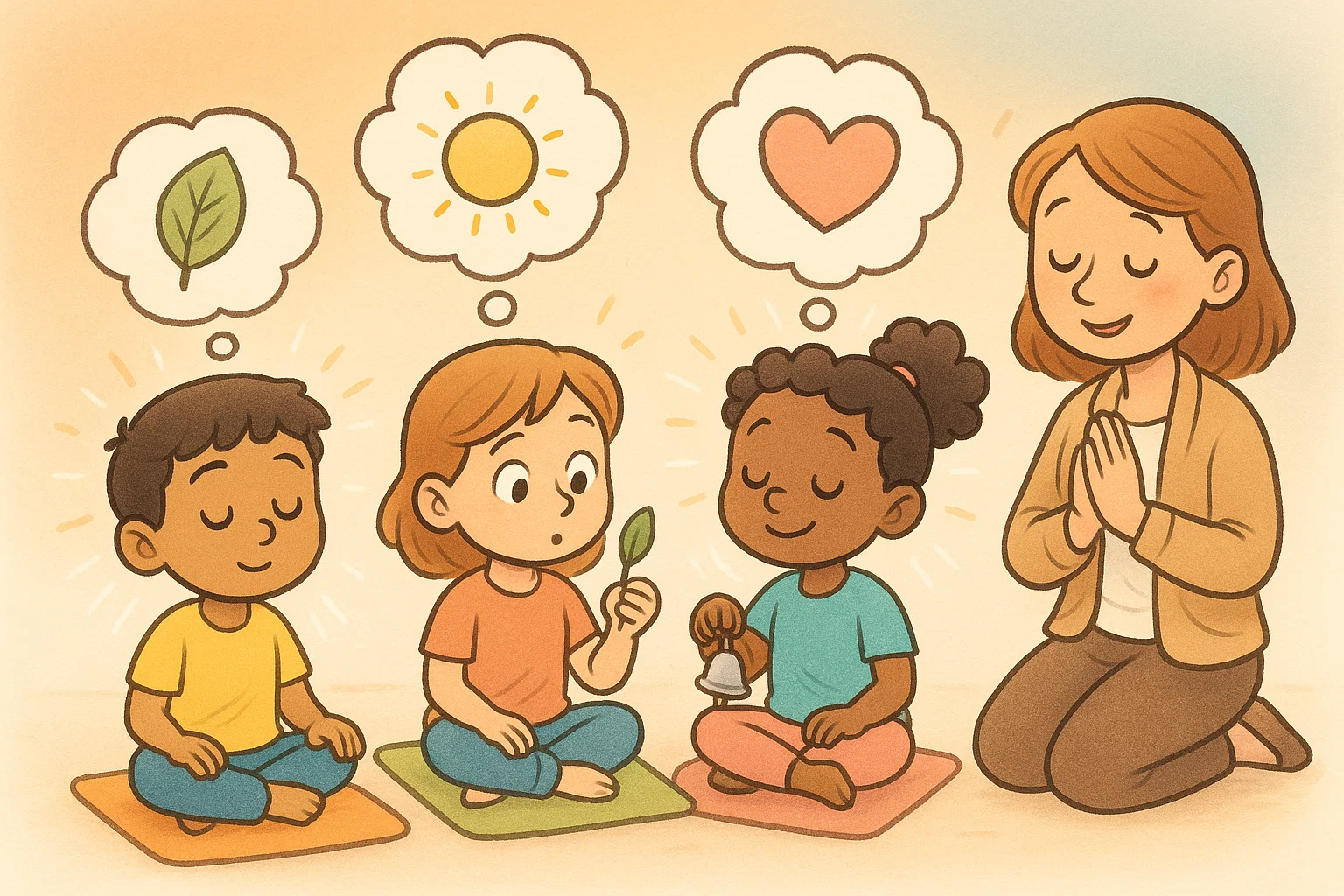
Mindfulness helps to intentionally focus attention on the present moment without judgment. It is a key skill for improving attention and emotional control, proving beneficial for all children, including those with ADHD. These simple mindfulness practices help your child give their brain a rest from worry and overwhelm.
Mindful Movement
This involves performing simple physical actions with complete, slow attention to the movement itself, making it restorative.
- Examples: Walking like a tiptoeing fox, doing a slow stretch, or a simple yoga pose such as “Child’s Pose” while focusing only on the feel of the stretch and the breath.
Mindful Listening
The goal is to focus intensely on auditory input, which pulls the mind away from internal worries.
- The Activity: Sit quietly for 60 seconds. Ask your child to close their eyes and count how many different sounds they can hear (e.g., refrigerator hum, bird chirping, traffic). Afterward, ask your child to describe the sounds.
Gratitude and Positive Thoughts
Shifting focus from what is wrong to what is right is a powerful calming tool that can help reduce feelings of hopelessness or being stuck.
- Practice: At dinner or bedtime, share three things you are grateful for or three positive things that happened today. This simple ritual helps children feel more optimistic.
Guided Imagery
This technique uses the imagination to create a peaceful inner space, offering a mental retreat when feeling stressed or anxious.
- How to practice: Use a soft voice to guide your child through a peaceful scene, such as floating on a cloud, walking in a beautiful forest, or lying on a warm, sandy beach. Focus on the sensory details: the warmth of the sun, the smell of the pine trees, the sound of the ocean.
Sensory and Creative Calming Activities
The sensory system is directly tied to the nervous system. Grounding activities use the senses to reconnect the child with the physical present moment, which is crucial in times of change or high anxiety.
The 5-4-3-2-1 Grounding Technique
This is a phenomenal tool to feel more in control when anxiety spikes, helping to anchor the child in reality.
- 5 Things You See: Ask them to name five things they can visually see right now.
- 4 Things You Feel: Name four things they can touch or feel (e.g., the shirt on their skin, the chair underneath them, the wind).
- 3 Things You Hear: Name three things they can hear (e.g., a fan, a faraway dog, their own breathing).
- 2 Things You Smell: Name two things they can smell (e.g., dinner cooking, soap, their own hair).
- 1 Thing You Taste: Name one thing they can taste (e.g., water, mint, or the lingering taste of a snack).
Nature Walk or Garden Time
Nature provides a calming, multi-sensory environment.
- Activity: Encourage mindfulness in motion. Don’t just walk; focus on observing: the texture of bark, the sound of leaves crunching, the vibrant color of a flower. This simple act of observation is a powerful stress reducer.
Coloring and Art
Creative expression acts as a powerful non-verbal outlet for difficult emotions.
- Activity: Engaging in detailed coloring (like mandalas) or doodling shifts the child’s focus from internal worry to the external task, which can effectively manage anxiety.
Play-Doh or Slime Play
Tactile play is inherently soothing, providing proprioceptive input that helps calm the nervous system.
- Activity: Knead, roll, and squeeze the dough. The resistance and texture are excellent for sensory regulation, especially for little ones who need to discharge internal energy.
Calming Music and Soft Sounds
Auditory input can immediately affect mood.
- Activity: Create a playlist of instrumental music, nature sounds, or soft classical pieces to designate as “Calm Time Music.” This helps cue the mind and body into a relaxed state.
Physical Movement to Release Energy

Calmness isn’t always achieved through stillness; sometimes, a child needs to channel pent-up tension and energy through controlled movement. These active calm routines are especially helpful for children who struggle to sit still.
Animal Walks
Turning movement into a game helps children discharge energy in a structured, fun way.
- Examples: A slow-motion “bear walk” (on all fours, focusing on balance) or a quiet “snake slither.” This is an example of playing games with purpose.
Swinging or Rocking
Vestibular input (sense of movement) is highly regulated.
- Activity: Gentle, rhythmic swinging (in a hammock, swing set, or even rocking in a chair) can be deeply soothing and is often used to calm distress.
Stretching or Gentle Yoga
A brief sequence of simple, held poses is an excellent way to promote body awareness and reduce tension.
- Key Poses: Child’s Pose (a fetal position, deeply comforting) or Mountain Pose (standing tall and steady, focusing on grounding the feet).
Dancing or Slow Movement Games
Allowing for rhythmic movement can be an emotional release.
- Activity: Put on a piece of instrumental music and invite the child to move as slowly as possible, like a leaf falling from a tree. This combines rhythm, movement, and a focus on control.
Building a Calm Corner at Home
A dedicated “Calm Corner” or “Calm Space” is not a time-out area; it is a safe, inviting sanctuary where a child can intentionally go to practice their calming activities and emotional resets.
What to Include
The space should appeal to the senses and promote comfort.
- Comfort Items: A weighted blanket (provides deep pressure, which is very soothing), soft pillows, and a beanbag chair.
- Sensory Tools: A glitter jar (watching the glitter settle is a wonderful visual metaphor for how the mind can settle), a lava lamp, or a small water feature.
- Visuals: Inspirational posters or images of nature.
How Kids Can Use the Calm Corner
The purpose of the Calm Corner is to provide a voluntary, short calm break.
- Routine: Encourage a child to spend 5–10 minutes in the corner after an emotional moment, practicing one of their learned breathing techniques or using a fidget tool. It should be used as a proactive measure when they first feel anxious, not when a meltdown has fully erupted.
Calming Toolkit Ideas
A small box within the Calm Corner can hold essential ideas to help them self-regulate.
- Contents: A small tub of Play-Doh, a water bottle, a small journal and crayon for doodling, emotion cards, and breathing cards with visual instructions for different exercises.
Reflection and Routine Integration
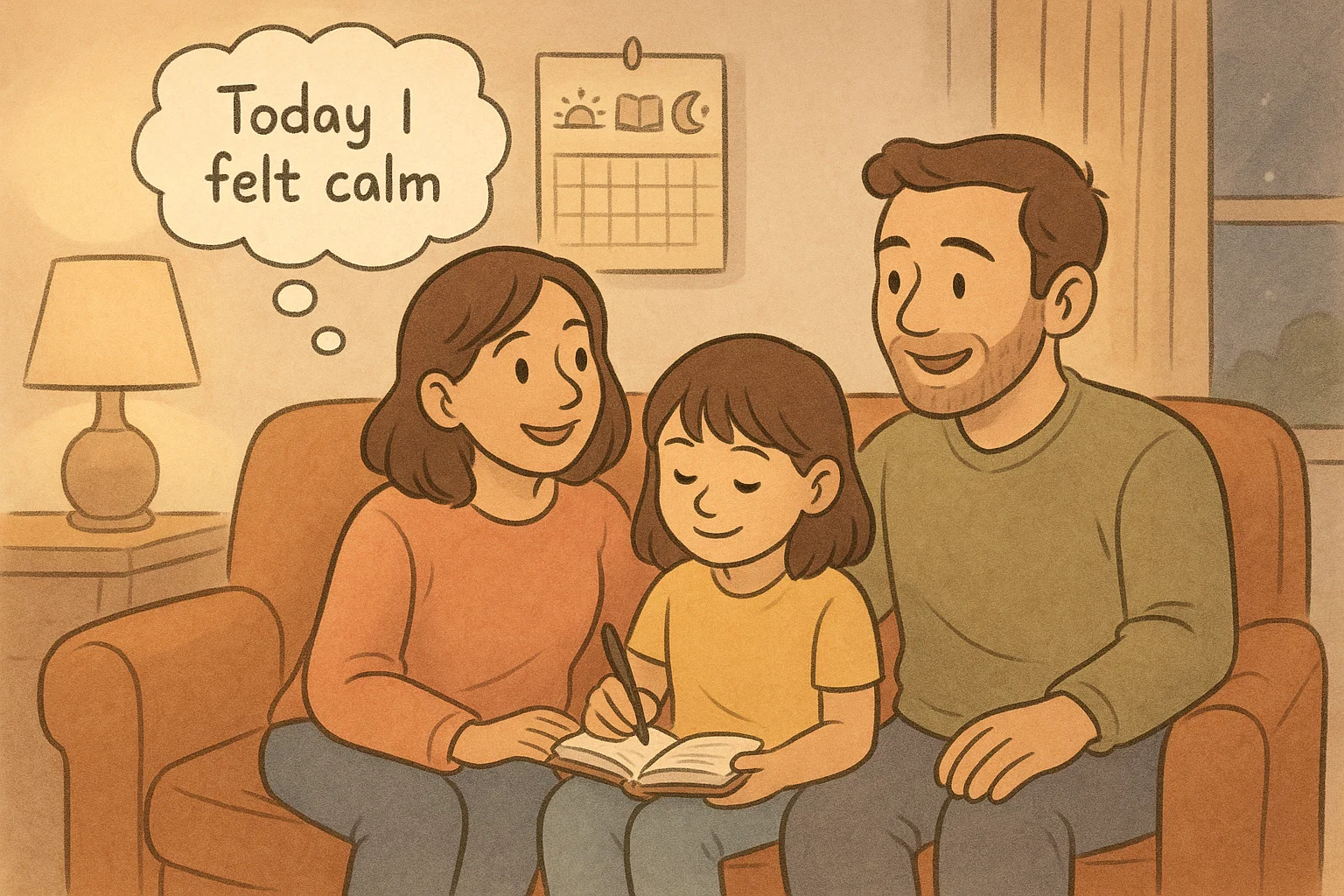
The power of calming activities comes from consistency. They must evolve from occasional exercises to daily calm rituals that are a non-negotiable part of family life.
Creating Daily Calm Rituals
Small, consistent breaks are more effective than infrequent, long sessions.
- Integration: Institute a bedtime “Five Finger Breathing” exercise, where the child traces their fingers while breathing in and out. Commit to 5 minutes of quiet time immediately after the child gets home from school to allow their mind and body to settle.
Reflecting on Emotions
Calming activities are most effective when paired with emotional awareness.
- Practice: After the exercise, ask your child to describe how their body feels now versus before the activity. This helps them connect the action (deep breathing) with the result (feel calmer). Older children can use a journal to reflect.
Involving Family
When parents participate, the routine becomes a shared moment of connection rather than a solo task for the child.
- Shared Calm Time: Have a “Family Wind-Down” where everyone practices mindful stretching or listens to the same restorative music together. This promotes shared well-being and is a valuable time for connection.