

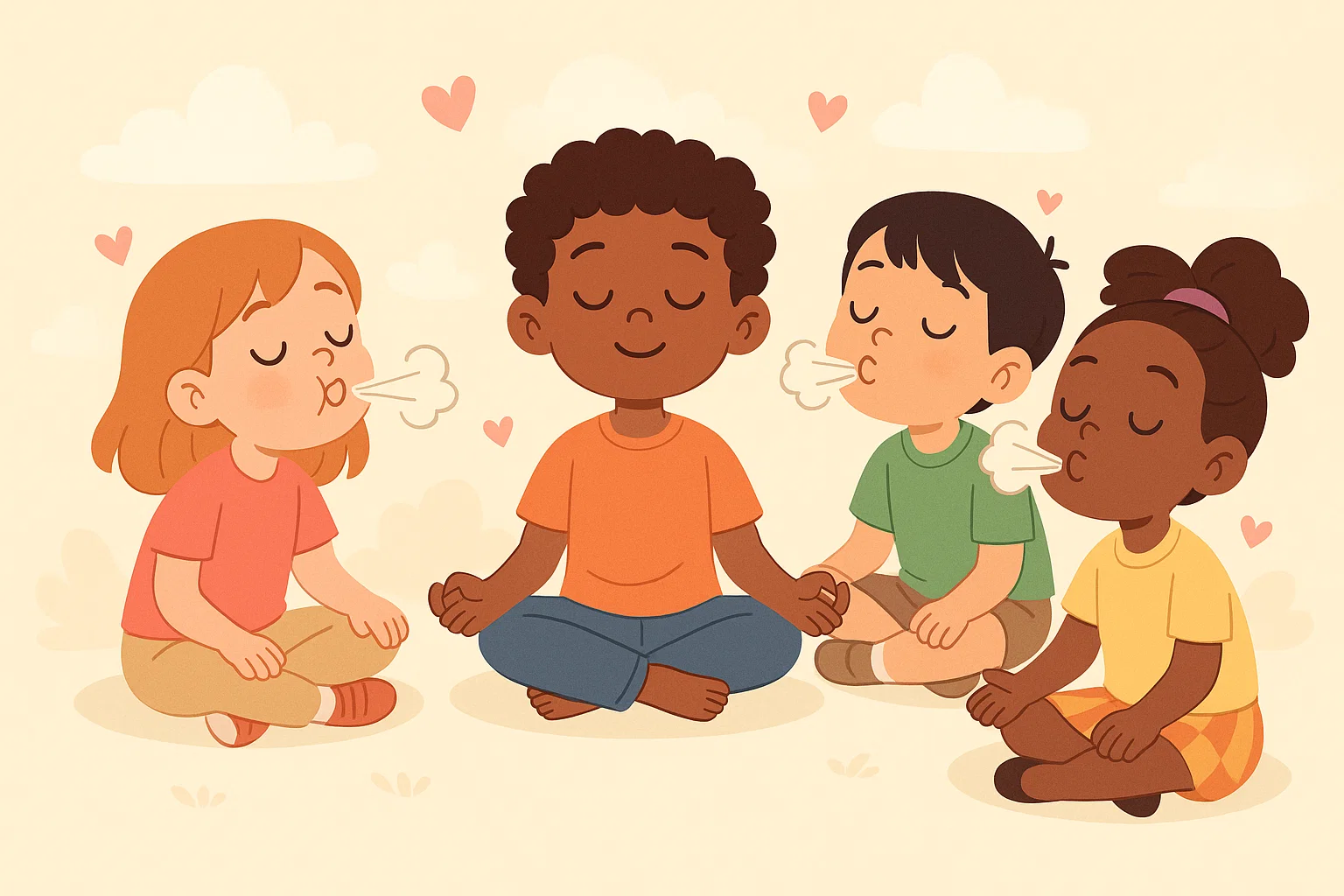
Children today grow up in a fast-paced, often overwhelming world. Like adults, they experience stress and anxiety – from school pressure, social challenges, and technology overload to big feelings like anger or frustration they’re still learning to manage. These pressures can lead to outbursts, trouble focusing, or difficulty falling asleep.
The good news is that children can learn a simple, powerful tool for emotional regulation: calming breathing exercises. Deep, mindful breathing helps reset the nervous system, shifting the body from a high-alert state into relaxation. With regular practice, kids can manage emotions more effectively, improve focus, and enjoy more restful sleep. Parents and teachers can use these techniques anytime – before studying, after conflict, or as a peaceful bedtime routine.
Benefits of Calming Breathing for Children
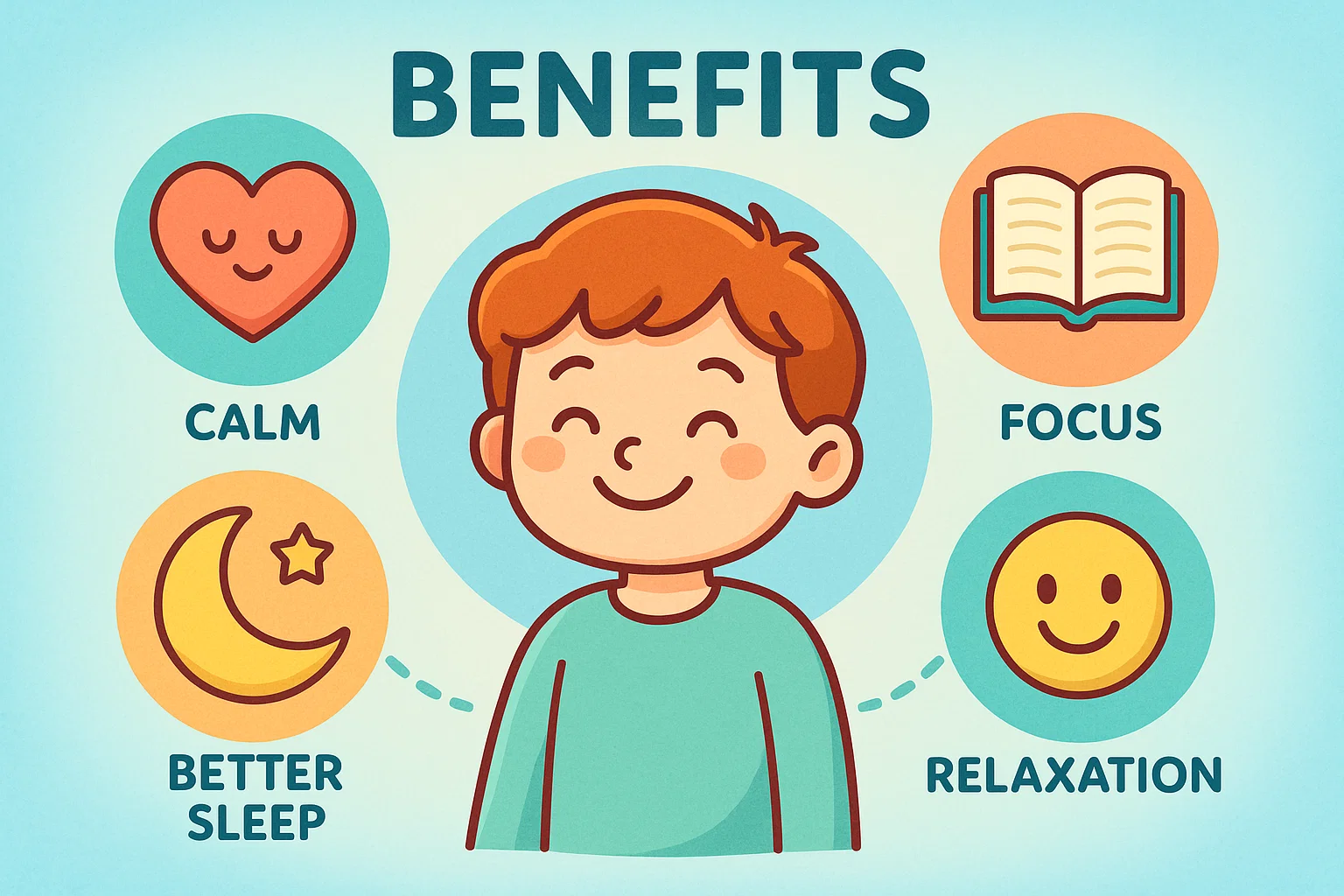
Teaching children to control their breathing is much more than just a momentary distraction; it’s a foundational life skill that supports children’s mental health and overall well-being. When a child consciously chooses to take deep breaths, they activate the parasympathetic nervous system, triggering the body’s natural relaxation response. This intentional slowdown can lower stress hormones like cortisol.
The Science Behind the Deep Breath
When we inhale deeply and exhale slowly, we change the balance of oxygen and carbon dioxide in the blood, which sends a direct signal to the brain that the body is safe and can relax. Experts in child psychology emphasize that the simplicity of deep breathing helps kids ground themselves in the present moment. It shifts their focus from the distress of big feelings to the steady rhythm of their breath – the first step toward emotional self-regulation.
Regular practice of deep breathing yields numerous benefits:
- Emotional Stability: Kids learn to respond to stress in a healthy way, reducing the frequency and intensity of emotional outbursts.
- Reduced Anxiety: Mindful breathing directly interrupts the spiral of anxious thoughts.
- Improved Concentration: A calmer mind is a more focused mind, leading to better attention spans in school.
- Better Self-Control: Having a go-to strategy helps children pause before reacting, enhancing self-regulation skills.
Emotional and Behavioral Regulation
Deep breathing exercises for kids are invaluable when they are experiencing difficult emotions. Whether it’s the frustration of a failed attempt or the fear of a new situation, guiding a child to breathe deeply provides an immediate, portable anchor. For example, instead of yelling when a tower crashes, a child who has practiced breathing can use a tool like square breathing to pause, breathe through the initial surge of anger, and feel calmer quickly. A long exhale is particularly important, as it helps release physical tension associated with stress.
Case Example: A fifth-grade teacher observed that students often fidgeted or complained when feeling overwhelmed by a pop quiz. By introducing a quick, three-minute “calm down breath” before the test, she noticed a visible reduction in stress behaviors and an increase in focused engagement.
Focus and Mindfulness in Learning
In the classroom, attention spans are constantly tested. Incorporating short breathing exercise breaks can significantly enhance student focus. When children focus mindfully on their breath, they’re training their brains to stay present.
Tips for Educators and Parents:
| Setting | Activity Suggestion | Primary Benefit |
| Morning Routine | Two minutes of belly breathing while sitting quietly. | Sets a calm tone for the day, improves emotional baseline. |
| Classroom Transition | Rainbow breathing between subjects or tasks. | Re-focuses the group, releases residual energy. |
| Homework Time | Bumblebee or Darth Vader breathing before starting a difficult subject. | Reduces overwhelm, enhances concentration. |
| Before a Test | Square breathing or simply counting to ten while inhaling deeply and exhaling slowly. | Lowers test anxiety, promotes clarity. |
Physical Relaxation and Better Sleep
Calming breathing techniques activate the body’s natural sleep response. When a child learns to slow down their breath, their heart rate decreases, and their muscles relax. Using techniques like Ocean Wave Breathing as a pre-sleep ritual can signal to the body that it’s time to rest. Belly breathing (also known as diaphragmatic breathing) is especially effective, as it promotes the deepest form of relaxation. Before lights out, invite the child to imagine a hot air balloon (balloon breathing) slowly rising and falling in their tummy can become a soothing anchor that aids the transition into a deep sleep.
Fun and Easy Breathing Techniques for Kids
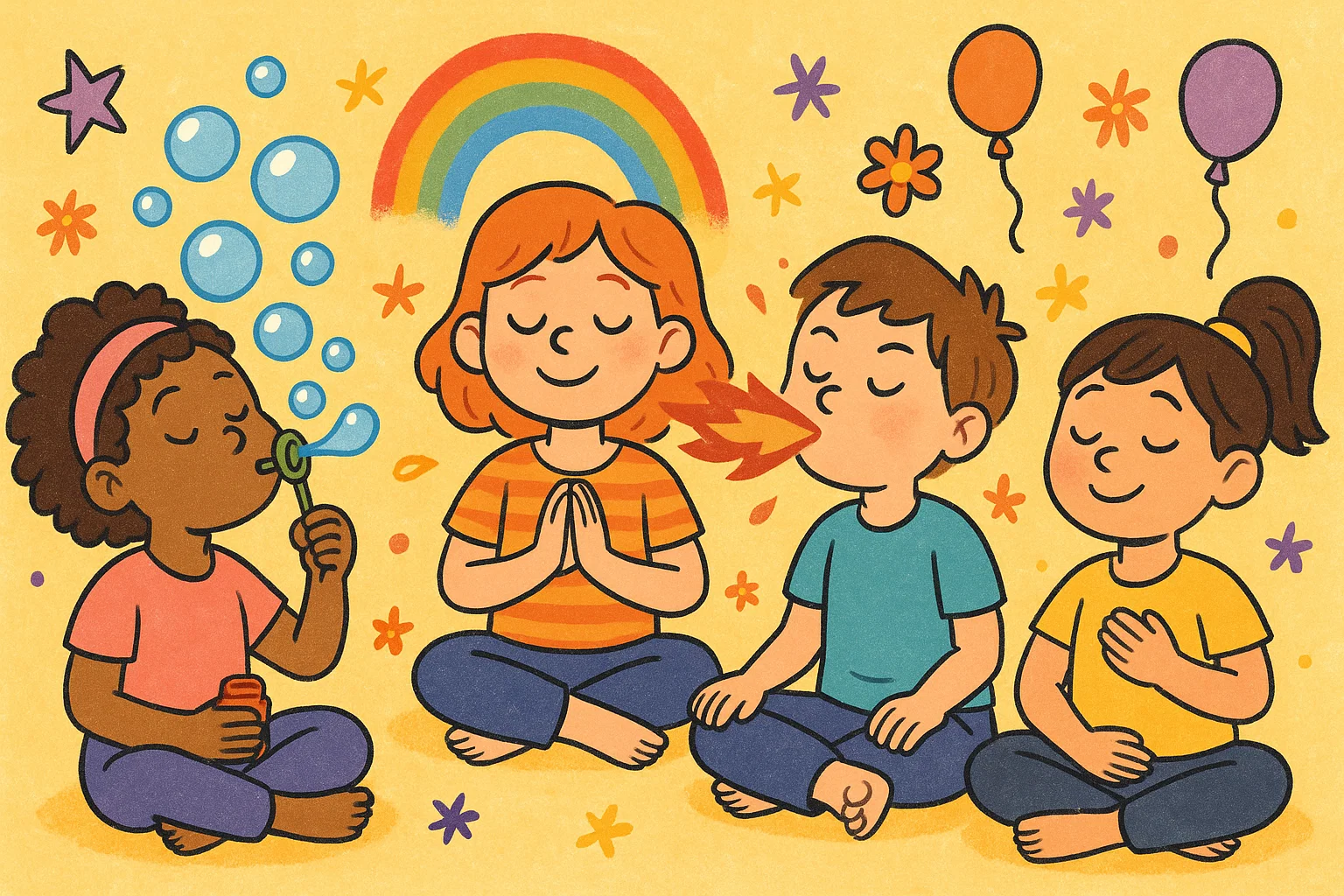
To help children master this vital skill, breathing exercises need to be playful, imaginative, and easy to remember. Using visualization and memorable names makes practicing breathing a fun activity rather than a chore. These methods are designed to engage all ages, transforming the simple act of taking a deep breath into an engaging, interactive game.
Balloon Breathing
This technique is excellent for introducing the concept of deep, belly-centered breathing.
How to do it:
- Ask your child to sit comfortably or lie down.
- Have them place one hand on their chest and the other on their tummy.
- Instruct them to imagine their tummy is a balloon they are about to fill up.
- Inhale deeply through the nose, making the “balloon” (tummy) swell with air. “Let’s fill up your tummy balloon!”
- Exhale slowly through the mouth, deflating the balloon until the tummy is flat again.
- Repeat for 5-10 cycles. This is a foundational technique to help young children feel calm.
Bunny Breath
A quick, energetic method that can help shift a child’s focus and bring a sense of lighthearted playfulness.
How to do it:
- Have your child sit comfortably with their back straight.
- Tell them to pretend to be a playful bunny sniffing the air.
- Instruct them to take three quick sniffs (breathing in through the nose) in rapid succession.
- Follow the sniffs with one long exhale through the mouth, breathe out slowly, like letting out a sigh.
- Repeat this cycle several times. Bunny breath is great for a quick energy shift and for kids who need to lower stress quickly.
Rainbow Breathing
This is a beautiful, visual technique that combines movement with mindful breathing, perfect for a group setting or a classroom break.
How to do it:
- The child starts with their hands clasped low in front of them.
- As they inhale deeply (about 4 seconds), they slowly lift their arms overhead, tracing a large, colorful rainbow arching from one side of their body to the other.
- As they exhale slowly (about 6 seconds), they lower their arms back down to the starting position.
- Repeat, maybe choosing a different color for the rainbow each time. This helps integrate the breath with a physical, calming motion.
Flower Breathing (Smelling a Flower)
This simple, gentle technique is ideal for helping kids learn to inhale properly through their nose and focus on the calm sensation of the in-breath.
How to do it:
- Ask the child to cup their hands together and pretend they are holding a beautiful flower.
- Tell them to inhale deeply through their nose, smelling a flower slowly and deeply, filling their lungs with the lovely scent.
- They then exhale slowly through slightly pursed lips, like gently blowing away a small, unwanted bug on the flower (or gently blow out the candle if they want a different visual).
- Repeat several times, focusing on the gentle, slow nature of the inhale.
Star Breathing
A structured, visual method that gives children a clear pathway for controlling the rhythm of their breath. It can be done by drawing a star on paper or tracing one with their index finger.
How to do it:
- The child holds up one hand and uses the index finger of the other hand to trace the points of their star-shaped hand.
- Inhale while tracing up the first point.
- Exhale while tracing down the first point.
- Continue around the hand until all five points of the star have been traced, resulting in five slow, mindful breaths. This is a powerful, self-guided tool for mindful breathing exercises.
Square Breathing (Box Breathing)
A popular technique for adults, adapted for older children and teens to promote intense focus and relaxation.
How to do it:
- Imagine tracing a perfect square with your eyes or finger while breathing.
- Inhale through the nose for a count of four (tracing the first side up).
- Hold the breath for a count of four (tracing the second side across).
- Exhale slowly through the mouth for a count of four (tracing the third side down).
- Pause or hold the breath out for a count of four (tracing the fourth side back).
- Repeat for several cycles. This structured approach helps kids channel overwhelming thoughts into a focused pattern.
Dragon Fire Breaths
This is a wonderful way for a child to safely channel and release pent-up energy or aggression and respond to stress in a healthy way.
How to do it:
- Ask the child to sit or stand tall, embodying a strong dragon.
- Inhale deeply through the nose.
- Tell them to open their mouth and release a strong, audible exhale – maybe even a gentle roar or a “Hah!” sound, imagining they are breathing out fiery steam.
- The emphasis is on a complete, energetic exhale to release tension. This helps kids manage big feelings like anger.
Bumblebee Breathing
Also known as Bhramari Pranayama, this technique uses sound vibration to create a soothing, sensory experience that can be highly effective for helping anxious children feel calmer.
How to do it:
- Ask the child to close their eyes and cover their ears gently with their hands (or just the index finger).
- Inhale deeply through the nose.
- As they exhale slowly (a long exhale), they make a steady, low-pitched hum sound – like a gentle bumblebee.
- The sound should be soft and sustained throughout the breath. The gentle vibration is incredibly grounding and helps shift attention away from worries.
Volcano Breathing
Combines a physical stretch and release with a powerful exhale – excellent for hyperactivity or moments of intense frustration.
How to do it:
- The child starts in a squat or a relaxed standing position, hands clasped low.
- Inhale deeply while slowly rising to a stand and raising their arms up high overhead, symbolizing the volcano preparing to erupt.
- As they exhale audibly and forcefully, they quickly drop their arms down and slightly bend their knees, letting the air “explode” out.
- Repeat a few times. This helps kids physically release stress in a healthier way.
Ocean Wave Breathing
This technique, also known as Ujjayi breath, uses the slight constriction in the back of the throat to create a gentle, audible “ocean sound” during the inhale and exhale.
How to do it:
- Tell the child to sit comfortably or lie down.
- Inhale deeply through the nose, imagining the sound of a wave rushing onto the shore.
- Exhale slowly through the nose (or the mouth, to start), making a gentle, whisper-like sound in the back of the throat, like the wave drawing back out to sea.
- This rhythmic, gentle sound is incredibly effective for promoting relaxation and helping children fall asleep or concentrate.
Creative Ways to Practice Calming Breathing
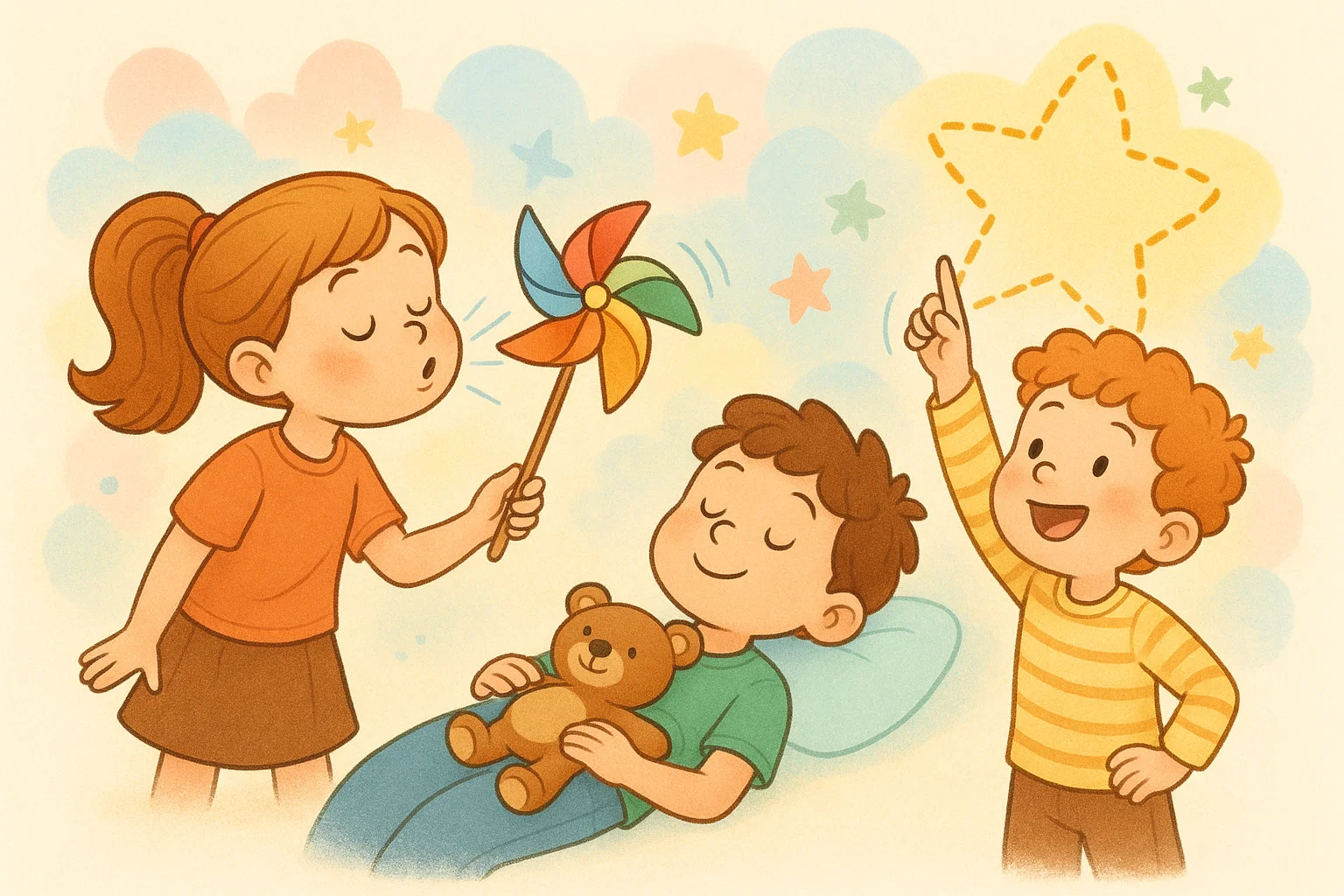
The key to long-term success is making the breathing exercise a tangible, exciting part of a child’s world. Children learn best through play, so incorporating props and imaginative scenarios is vital for young ages.
Using Props and Toys
Props make invisible breath visible and tangible for young children.
| Prop/Tool | Technique | Instruction for Parents |
| Soft Stuffed Animal | Belly breathing (Teddy Bear Breath) | Place the toy on the child’s tummy while they lie down. Remind them to breathe deeply enough to make the toy rise and fall like a wave. |
| Pinwheel | Long, slow exhale | Inhale deeply through the nose, then breathe out slowly (like a soft breeze) through the mouth to make the pinwheel spin gently, not aggressively. |
| Bubbles | Pursed-lip exhale slowly | Perfect for encouraging a long, gentle exhale. The goal is a long, steady stream of air to create one large bubble. |
Shape Breathing
Visual tracing is a phenomenal tool for combining concentration with breath control. This is a simplified form of mindful breathing exercises that can be adapted for a quick brain break.
- Triangle Breathing: Inhale for three, hold for three, exhale for three. Trace the sides of a triangle.
- Lazy 8 Breathing: Trace the figure eight shape on its side (like the infinity symbol) with a finger. Inhale on one loop, exhale on the other. This smooth, continuous motion is excellent for restoring balance.
Imaginative Breathing Games
Using the child’s imagination makes the breathing exercise more engaging than just saying, “take a deep breath.”
- Blowing out the Candle: Pretend to light a row of candles (use fingers). The child inhales deeply then tries to blow out the candle slowly, one by one, with a soft, steady stream of air.
- Smelling Cookies: Ask the child to pretend they are smelling a tray of warm, freshly baked cookies (smelling a flower is similar, but sometimes cookies are more motivating!).
- Heavy Lifting: Pretend to lift something heavy like a hot air balloon. Inhale as you prepare to lift, and let out a forceful “Hup!” sound as you exhale and lift the imaginary weight.
Tips for Parents and Teachers

Your role in introducing and sustaining breathing practice is crucial. Children look to adults for cues on how to respond to stress, so your calm modeling is the most powerful tool.
Modeling Calm Breathing First
If you want kids to take control of their breath, you must demonstrate it. When you face frustration, verbalize your strategy: “Wow, I’m feeling stressed about this, so I’m going to take three deep breaths right now.” Then, openly inhale deeply and exhale slowly. This shows children that breathing helps everyone – kids and adults alike.
Integrating Breathing into Daily Routine
Consistency is key to transforming an occasional trick into a reliable coping skill.
- Morning Start: A two-minute routine of belly breathing immediately after waking up.
- The Transition Rule: Always remind them to breathe when moving from a high-energy activity (like running outside) to a low-energy one (like reading a book).
- Car Ride Calm: Use the following breathing exercises to diffuse road rage frustration or pre-arrival anxiety.
- Bedtime Anchor: Always end the day with 5-10 minutes of a calming breathing technique, like Ocean Wave Breathing.
Creating a Calm Environment
The setting should support the goal of relaxation. Find a quiet space free from screens and excessive noise.
- Lighting and Sound: Use low, warm lighting. Soft, gentle background music or nature sounds can enhance the calm atmosphere.
- Gentle Tones: Encourage gentle tones and avoid using a stern voice when reminding them to breathe. It should feel like an invitation, not a command.
- Patience: Remember that mastering self-regulation takes time. If a child resists or can’t focus, drop the activity and try again later. Focus on the effort, not on perfecting the breath itself.
Encouraging Self-Expression
True mastery comes when the child takes ownership of the skill.
- Let children name their favorite technique (e.g., “My Big Hot Air Balloon Breath”).
- Encourage them to draw their own breathing character or create a poster of their favorite method. This helps cement the memory and utility of the breathing techniques.
By framing deep breathing exercises as fun, imaginative, and simple games, we help young children learn how to navigate big feelings and respond to stress in a healthier way. This foundation of mindful practice ensures that as they grow, they will have the most accessible and effective tool available: their own breath.