

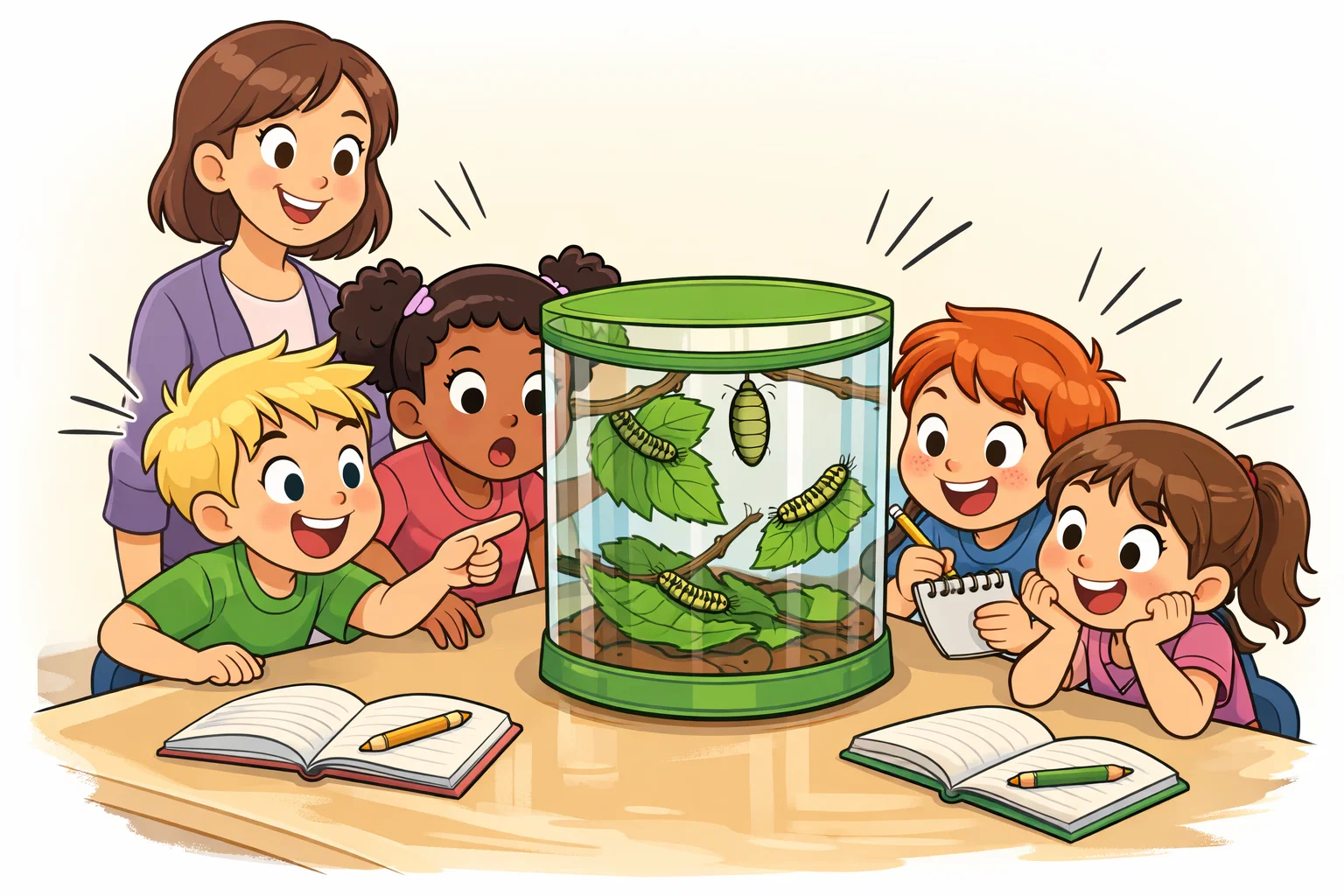
There is a unique kind of magic when a child leans in close to a mesh container and sees a tiny creature move for the first time. While worksheets and videos have their place in the classroom, nothing quite captures the imagination like a hands-on butterfly life cycle experiment. By bringing a living habitat into your home or classroom, you provide children with a front-row seat to one of nature’s most spectacular processes: metamorphosis. This isn’t just about memorizing facts; it is about fostering a lifelong love of learning and a deep respect for the natural world.
This guide is designed for parents and educators looking to facilitate a meaningful exploration of biology. Typically geared toward children ages 3 to 10, this experiment moves beyond passive reading to active observation. Through the life cycle of a butterfly, kids develop critical thinking skills as they predict, record, and nurture their tiny subjects from a microscopic egg to a soaring adult butterfly.
Butterfly Life Cycle Overview
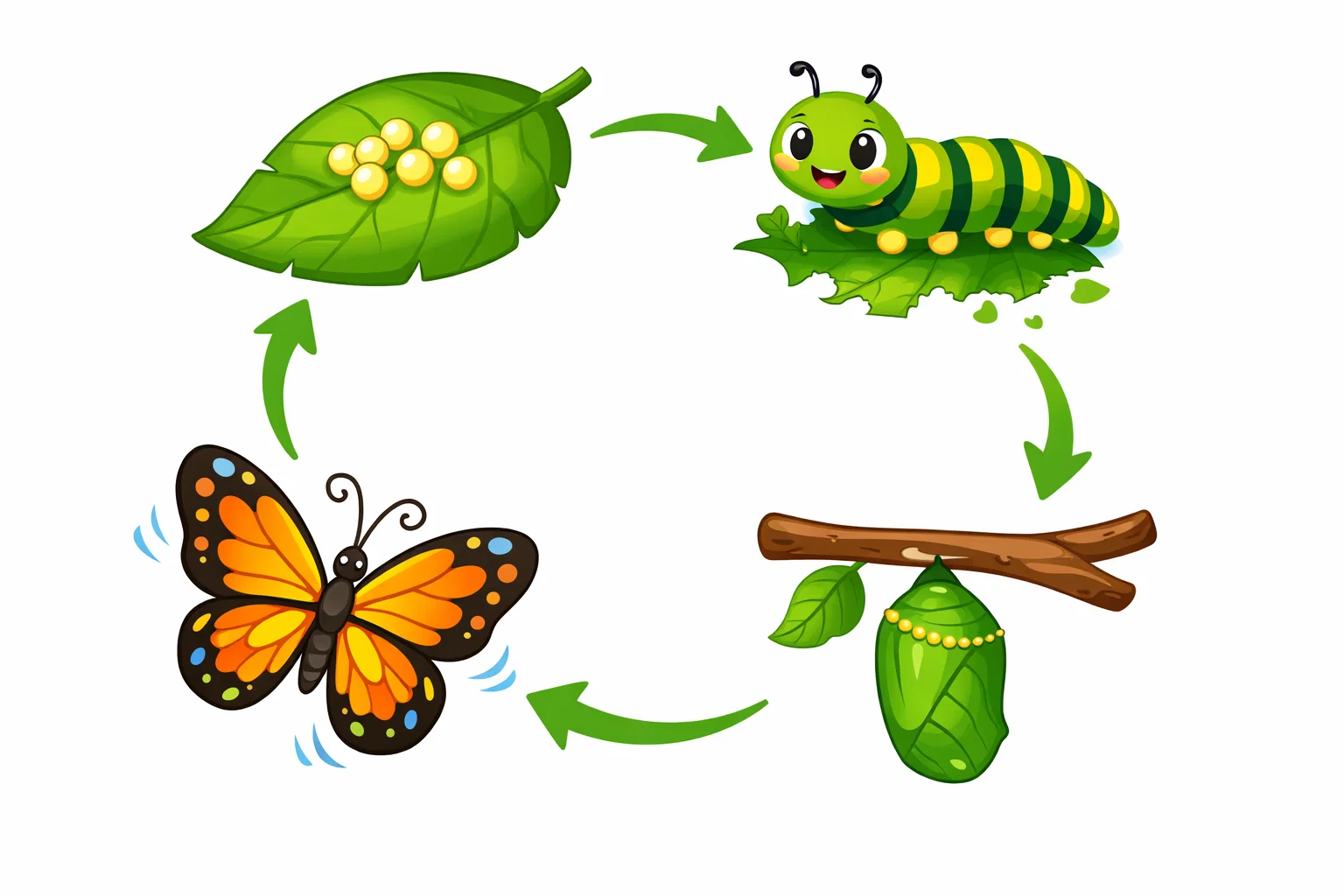
To truly learn about the butterfly life cycle, it is important to understand that these creatures are masters of transformation. Unlike humans, who simply get larger as they grow, the butterfly undergoes complete metamorphosis. This means the insect exists in four distinct forms that look nothing like one another.
This process allows different life stages of the same species to use different food sources, reducing competition between parents and offspring. In a home habitat, the Painted Lady or the Monarch butterfly are commonly observed, both of which are common for science studies due to their resilience and vibrant colors.
The Four Stages of Metamorphosis
Egg Stage
The journey begins when a female butterfly carefully selects a specific leaf to act as a nursery. The female butterfly typically lays her eggs on a host plant – the only type of plant the future caterpillar will eat.
- Appearance: These eggs are tiny, often the size of a pinhead, and can be round, oval, or ribbed depending on the species.
- Observation: In some commercial butterfly kits, eggs or young larvae may be included. If you have eggs, look for them to darken just before they hatch.
- Duration: This stage usually lasts about 3 to 5 days.
Caterpillar Stage
Once the larva makes its way out of the egg, it becomes a caterpillar. This stage is all about one thing: feeding.
- Growth: A caterpillar grows at an incredible rate. Some sources note that if a human baby grew at the same rate, it would weigh 8 tons in just two weeks!
- Molting: Because its outer covering does not stretch, the caterpillar must shed its exoskeleton multiple times.
- Silk: You might see your caterpillar spinning silk to help it stay attached to the leaf or the lid of its habitat.
Chrysalis Stage
After the caterpillar reaches its full size, it enters the pupa stage. It finds a safe spot, often hanging in a “J” shape, and its skin splits for the last time to reveal the chrysalis.
- Transformation: Inside this protective shell, the body of the caterpillar is breaking down and rebuilding into a butterfly. It is fascinating to watch, but it requires a “no touching” policy.
- Safety: Vibration or poking can harm the developing insect during this delicate pupal stage.
- Duration: This stage may last several weeks, though 10 to 14 days is common for Painted Lady butterflies.
Adult Butterfly Stage
The final stage is when the adult butterfly begins to emerge.
- The Exit: The chrysalis becomes transparent, and the butterfly pulls itself out.
- Wing Expansion: Initially, the wings look crumpled and wet. The butterfly must pump fluid into them to spread their wings.
- First Meal: Once dry, the butterfly will seek nectar or sugar water. This is a great time to check out our butterfly life observation charts to record their first flight!
Setup for Experiment
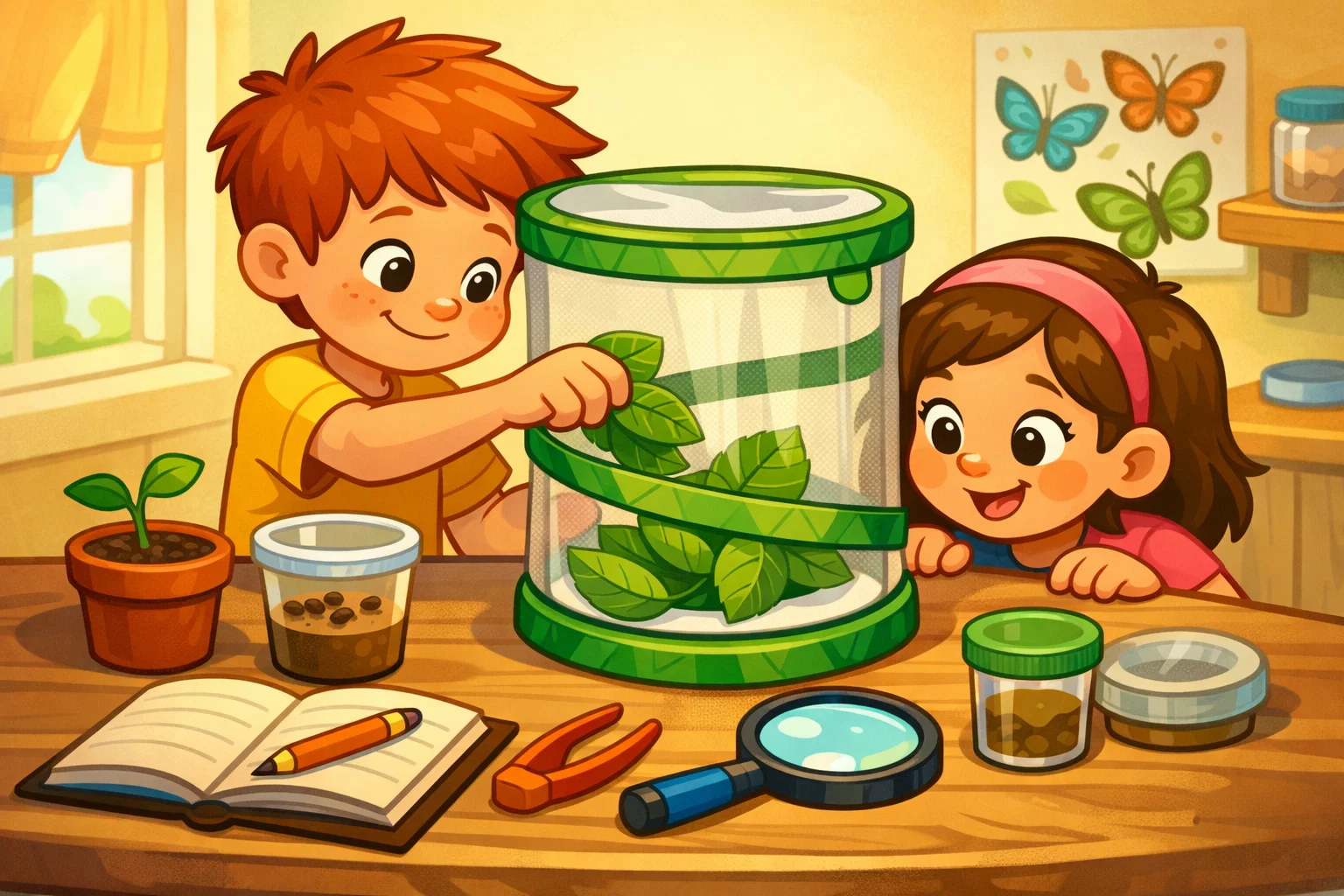
Creating a successful butterfly habitat is the foundation of your science experiment. You want to mimic the natural environment as closely as possible to ensure the health of your species.
| Feature | Requirement | Why it Matters |
| Container | Breathable mesh or a large jar with a screen lid | Prevents mold and ensures fresh airflow |
| Placement | Indirect sunlight, away from drafts | Prevents overheating or chilling the larvae |
| Hydration | Sugar water or fresh fruit (for adults) | Provides energy for flight and mating |
| Host Plant | Milkweed (Monarch) or Mallow (Painted Lady) | Essential for the caterpillar to survive |
Habitat Container Selection
While you can make a DIY backyard container, many families prefer insect lore mesh habitats. These are collapsible, easy to clean, and provide 360-degree observation opportunities. Ensure the container is at least 12 inches tall to allow the butterfly enough room to spread its wings without hitting the sides.
Food Sources and Plant Care
If you are raising caterpillars from the egg, you must provide the correct host plant.
- Monarchs: Strictly require Milkweed.
- Painted Ladies: Prefer Mallow, Hollyhock, or Thistle.
- Adults: Once they transform, they need a shallow dish with cotton balls soaked in sugar water or slices of oranges and watermelon.
Environmental Conditions
Butterflies are cold-blooded insects. They require a stable room temperature between 70°F and 80°F. If the room is too dark, they may become sluggish. Place them in a brightly lit room but never in direct midday sun, which can act like a greenhouse and overheat the pupa.
Butterfly Life Cycle Observation Experiment
To turn this into a true science project, the child can act like a field biologist. This involves a recording process that tracks the time it takes for each change to occur.
Daily Observation Routine
Set a specific time each day for your exploration. Ask your child:
- How many caterpillars are moving today?
- Has the color of the pupa changed?
- Are there any shed skins at the bottom of the habitat?
Recording Changes and Growth
Encourage the use of a butterfly life cycle printable or a simple notebook.
- Drawings: Encourage the child to draw the caterpillar and its current size relative to a coin.
- Photography: Take a photo every 48 hours to create a time-lapse visual of the transformation.
- Charts: Note the date the first caterpillar moved to the top of the cage to begin the next stage.
Simple Experiment Questions
Prompt deeper thinking with these questions:
- “Why do you think the caterpillar is a different color than the adult butterfly?” (Discuss predator camouflage).
- “How many times did the caterpillar grow out of its skin?”
- “What happens if the temperature gets colder? Does the life cycle slow down?”
Butterfly Life Cycle Model Activities
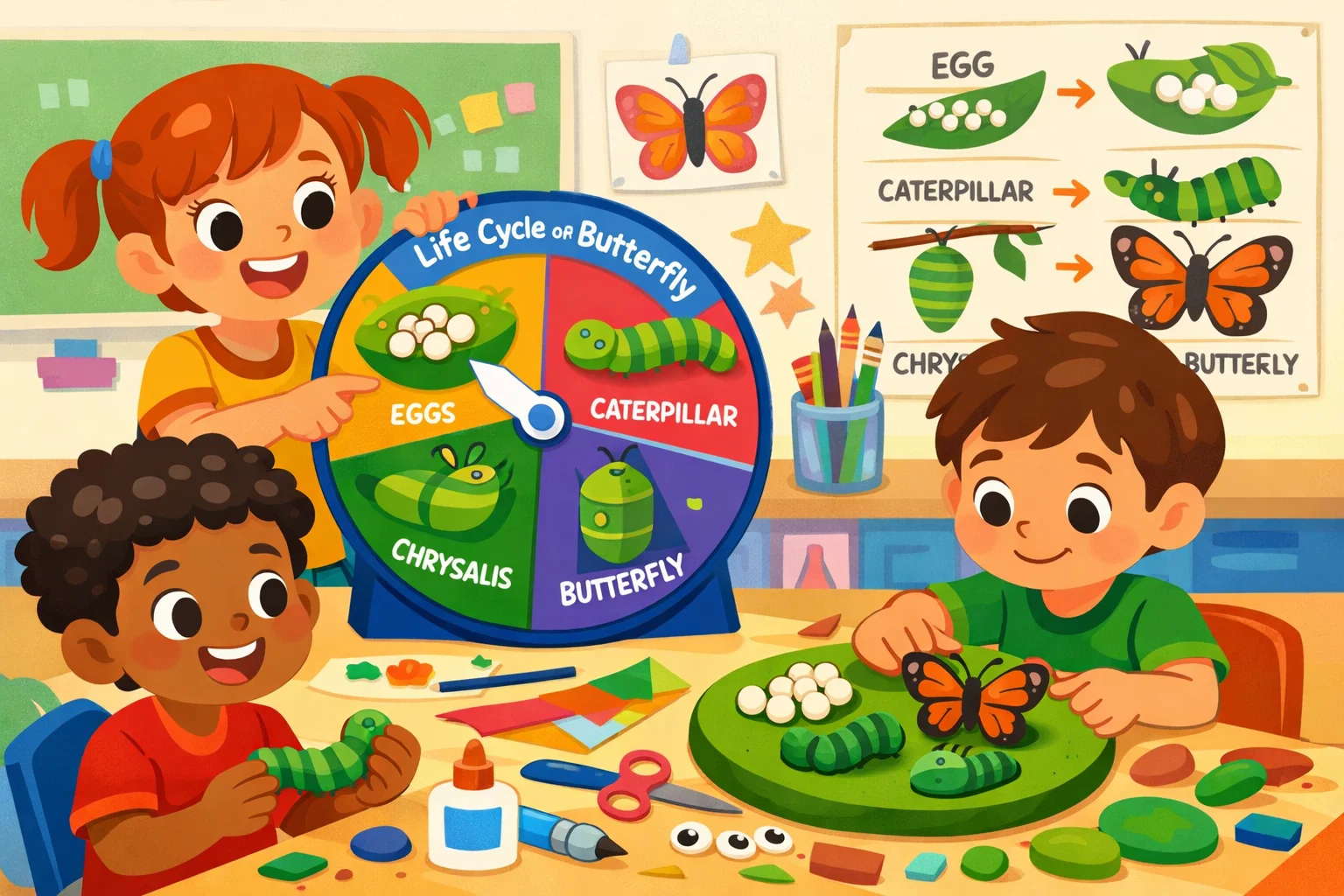
While the observation is happening, hands-on crafts can reinforce the terminology.
Life Cycle Wheel or Spinner Model
Use two paper plates. On the bottom plate, divide it into four sections for the egg, larva, pupa, and adult. Cut a “pizza slice” window out of the top plate. As the child spins the top plate, they can explore the butterfly life cycle in sequence.
3D Butterfly Life Cycle Craft
Use household items to represent the four stages:
- Egg: A small white bead or a grain of rice glued to a leaf.
- Caterpillar: A fusilli pasta noodle or a pipe cleaner.
- Chrysalis: Shell pasta or a small cocoon made of tissue paper.
- Butterfly: A bow-tie pasta noodle or a coffee filter with a clothespin body.
Educational Value for Kids
Participating in a butterfly life cycle activity for kids offers more than just biological facts. It builds “soft skills” that are essential for cognitive development.
Science Skills Development
Children learn the scientific method in its simplest form. They make a hypothesis (e.g., “I think it will become a butterfly tomorrow”), observe the reality, and adjust their understanding based on evidence. They also learn about data collection through their recording journals.
Age-Appropriate Learning Outcomes
- Preschoolers (Ages 3-5): Focus on vocabulary (words like caterpillar, wing, and fly) and the concept of growth.
- Elementary (Ages 6-10): Focus on the anatomy of the insect, the mechanics of metamorphosis, and the environmental impact of habitat loss.
Connection to STEM and Nature Studies
This experiment links to larger ecological themes. By learning about the host plant, children understand the interdependence of animals and plants. It’s an early introduction to the concept of an ecosystem and why we must protect the butterfly habitat in our own communities.
Butterfly Release Process
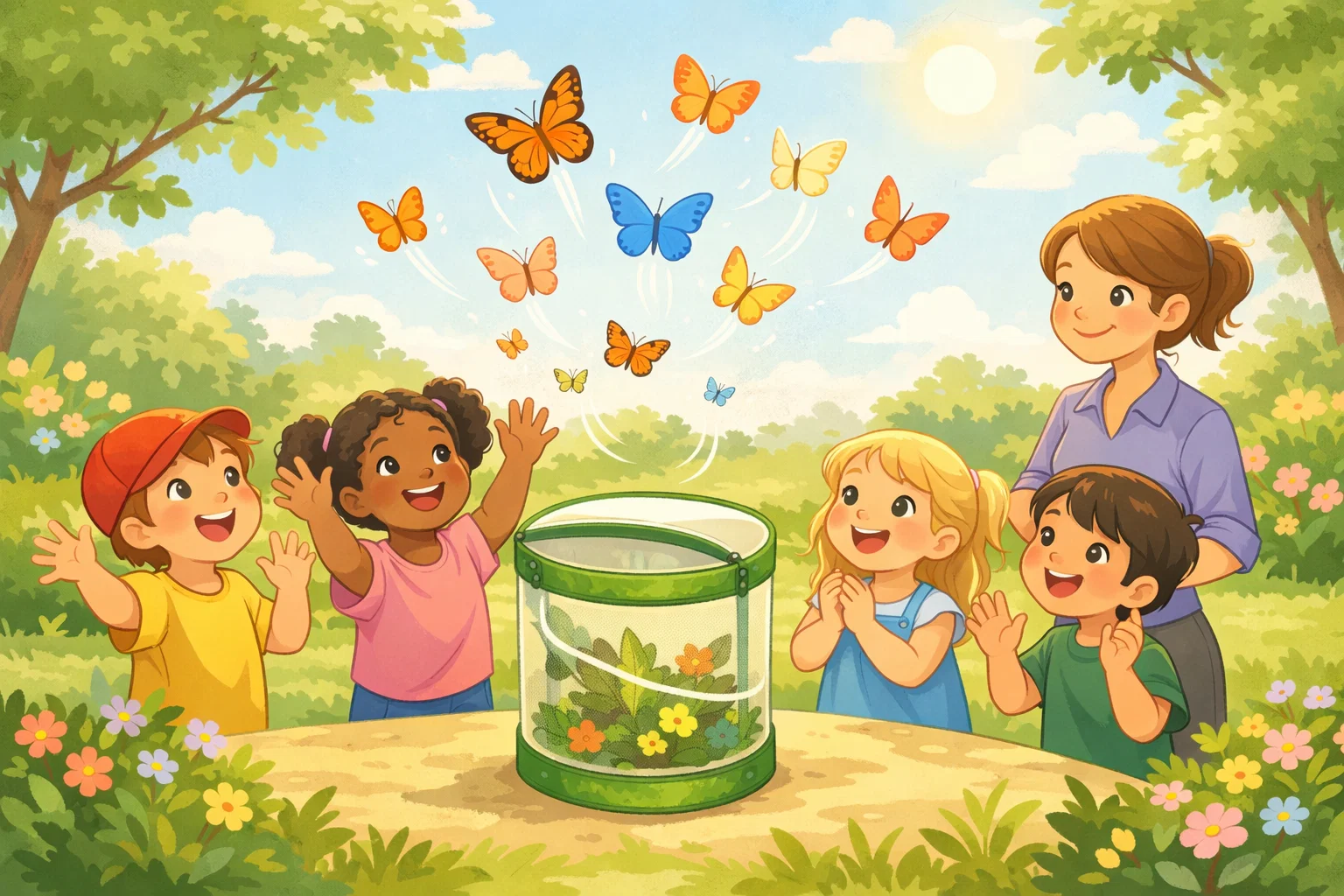
The most emotional and rewarding part of the project is the release. It’s the culmination of several weeks of care.
Timing for Safe Release
Wait at least 24 hours after the butterfly has emerged. Its wings must be completely dry and hardened. If the butterfly is fluttering actively against the mesh, it is likely ready to mate and find a natural habitat.
Outdoor Release Guidelines
- Weather: Ensure the temperature is above 55°F (13°C) and it is not raining or excessively windy.
- Location: Choose an area with plenty of flowers (for nectar) and shelter from predators, such as bushes or tall grass.
- Handling: Encourage the child to let the butterfly crawl onto their finger rather than grabbing the wings, which are very fragile.
Post-Release Reflection Activity
After the butterflies have flown away, sit down for a final discussion.
“How did it feel to see them fly? Why was it important that we didn’t keep them in the cage forever?”
This helps children understand the ethics of wildlife observation – that we are guests in their world.
Fun Facts for Kids
- Taste Buds: Butterflies taste with their feet to find the perfect leaf for their eggs!
- Solar Power: Many species cannot fly if their body temperature is below 86°F. They often bask in the sun to warm their wing muscles.
- Transparent Wings: A butterfly’s wings are actually made of tiny scales, and the base material is transparent like glass.
- Short but Sweet: While many species live only several weeks, some migratory Monarchs can live for several months.
Additional Butterfly Activities and Resources
Related Insect Life Cycle Experiments
If your child enjoyed the butterfly, consider looking into a moth (like the Silkworm) or ladybugs. These offer a great “compare and contrast” opportunity regarding how different insects undergo metamorphosis.
Books and Visual Resources for Kids
- The Very Hungry Caterpillar by Eric Carle (Classic for younger kids).
- A Butterfly Is Patient by Dianna Hutts Aston (Beautifully illustrated for older kids).
- National Geographic Kids: Butterfly videos on YouTube.
Classroom and Homeschool Extensions
For a larger group, you can create a “Butterfly Garden” in the corner of the room. Assign roles like “Habitat Manager” or “Lead Observer” to give children a sense of responsibility and nurture their interest.