

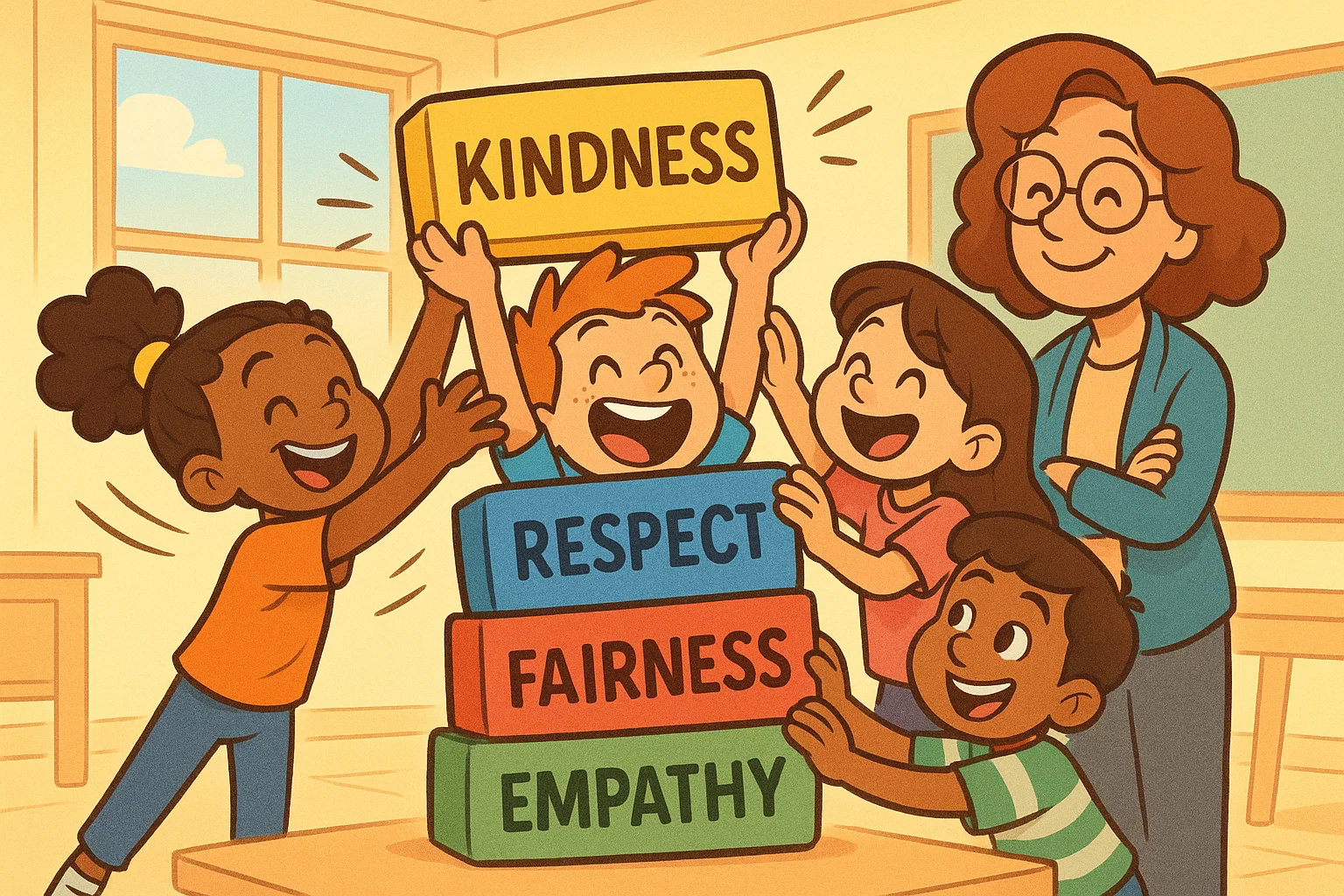
Teaching children decency, kindness, and respect is one of the most important jobs we have as parents and educators. It goes beyond simply teaching good manners; it’s about nurturing the essential life skills and moral compass that will guide them throughout their lives. When children learn these core values early, they develop the capacity for empathy, responsibility, and strong social relationships, setting a solid foundation for academic achievement and lifelong success.
This guide provides you with a wealth of age-appropriate activities for kids designed to be the building blocks of strong character. These engaging, hands-on activities are designed to help children build character by providing real-world opportunities to practice kindness, respecting others, and thoughtful decision-making. Through play, discussion, and cooperation, you can help kids understand how their actions affect others and reinforce the positive traits necessary to navigate an increasingly complex world.
Materials Needed
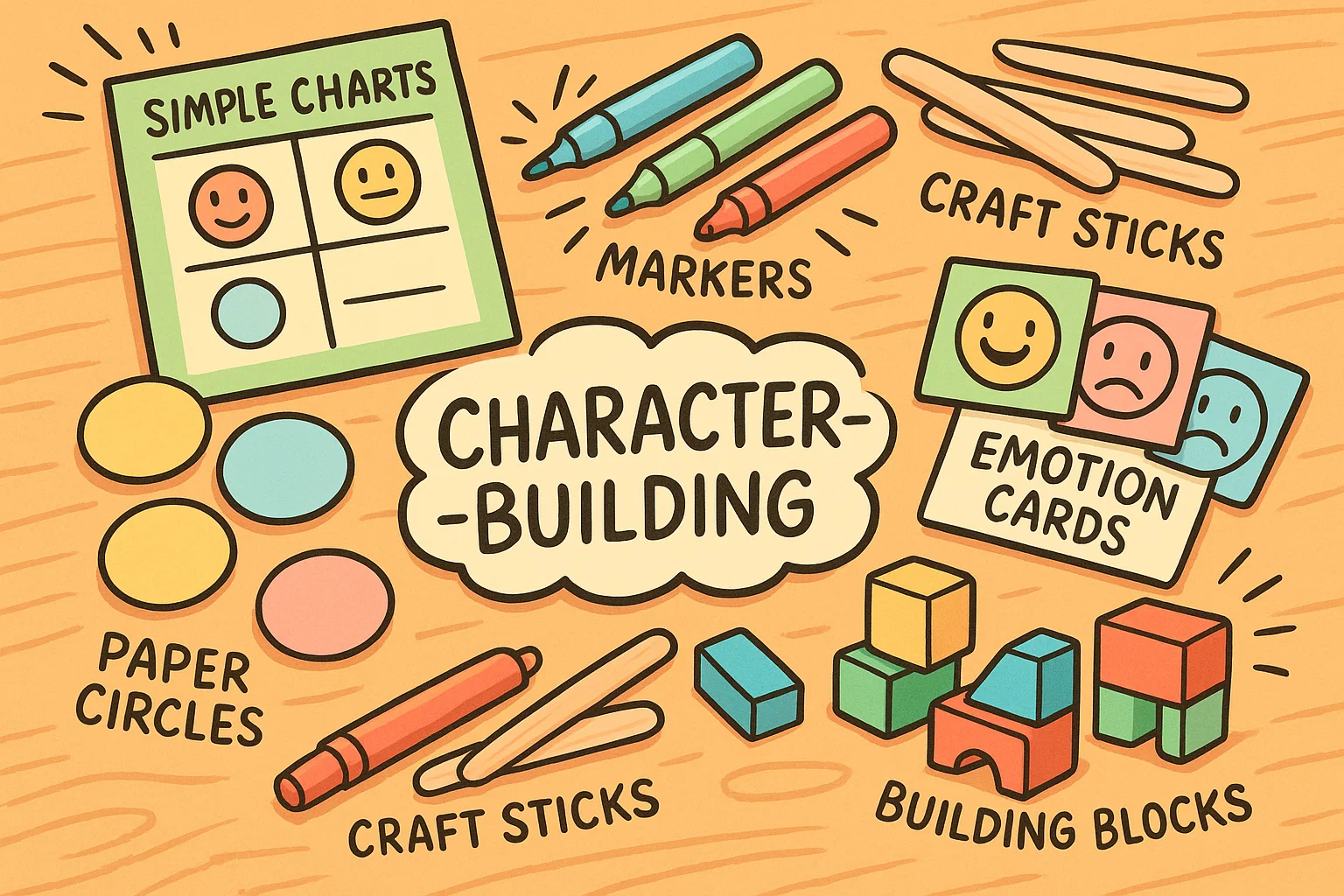
Preparation is key to structuring effective learning experiences. Having a few simple materials on hand can transform a spontaneous moment into a powerful character-building activity for kids.
Core Supplies for Daily Activities
These are the basic items you’ll use repeatedly across many character-building lessons:
- Building blocks or small construction toys: Excellent for teamwork tasks where kids work together to create a shared vision.
- Art supplies: Paper, crayons, markers, and paint for creative expression activities where kids create and draw pictures to explore feelings and values.
- Emotion Cards/Flashcards: Simple visuals depicting different feelings (happy, sad, angry, scared) to help children develop emotional literacy.
- Small piece of paper or index cards: For writing or drawing “Caught You Being Kind” notes or simple behavior sorting.
- Role-playing items: Simple dress-up clothes, dolls, or puppets to practice communication and conflict resolution.
Optional Resources for Enhanced Engagement
These resources can deepen the learning and make the activities like role-playing even more enriching:
- Storytelling Props: Simple scarves, hats, or character masks to act out stories illustrating kindness and fairness.
- Sensory Tools: Fidget toys, stress balls, or glitter jars to help children feel safe and develop coping strategies, especially when discussing difficult emotions.
- Posters or Charts: Visual aids that show family rules, steps for resolving conflicts, or a visual reminder of expected behaviors.
Digital Tools for Interactive Lessons
While hands-on activities are crucial, selective use of digital tools can introduce complex concepts in an accessible way.
- Educational Apps: Look for social-emotional learning (SEL) apps that offer interactive games focused on empathy, sharing, and communication skills.
- Short Videos: Curated videos that illustrate concepts like respect or perseverance through engaging stories. Videos can show kids how to treat others respectfully.
- Printable Worksheets: Easy-to-find online resources for coloring pages or simple sorting activities that help children recognize different values.
Activities for Building Decency Skills
This collection of activities to help children practice respect, responsibility, and emotional awareness provides concrete ways to translate abstract values into tangible actions that affect outcomes.
Respect Activities for Kids
These activities for kids focus on teaching active listening, polite interactions, and valuing the opinions of others.
- The Talking Stick: Use a decorative item as a “talking stick.” The rule is that only the person holding the stick is allowed to talk, and everyone else must listen quietly. This simple game shows kids the importance of respecting others and active listening.
- Manners Match-Up: Create pairs of cards: one with a polite phrase (“Please,” “Thank you,” “Excuse me”) and one with a scenario where that phrase is needed (asking for a toy, receiving a gift, interrupting). Younger children enjoy matching them up, which reinforces good manners.
- What Makes Me Special?: Have kids aged 4 and up share one thing they love about themselves and one thing they love about another person in the group. This helps foster self-worth and appreciation for others’ unique qualities.
Role-Play Scenarios
Role-playing is a powerful tool to help kids think through social challenges in a safe space.
| Scenario | Focus Skill | How to Play |
| Toy Trouble | Sharing & Problem-Solving | One child wants the toy the other is using. Kids work out how to share or take turns. |
| Hurt Feelings | Empathy & Apology | One child accidentally knocks over the other’s tower. They practice apologizing sincerely and offering help. |
| New Friend | Inclusion & Kindness | A new child joins the group. Kids act out inviting them to play and explaining the rules. |
| Different Opinions | Respect & Compromise | Two children want to play different games. They must negotiate a way to play both or choose one respectfully. |
Creative Expression Activities for Values
Art and storytelling allow kids to think deeply about values and express themselves constructively.
- Empathy Drawings: Ask kids to draw a picture of a time when they felt happy, sad, or frustrated. Then, have them look at another child’s drawing and guess what the feeling was. This helps children identify emotions and understand how their actions influence the feelings of others.
- Cooperation Mural: Give a large piece of paper to a group of children to develop a mural on a theme like “Community” or “Kindness.” They must work together and agree on what to draw, fostering kindness and teamwork.
Social Games for Positive Communication
These activities for kids model and reinforce positive social behavior.
- Compliment Circle Exercise: Have children sit in a circle. Each child takes a turn giving a genuine, specific compliment to the person next to them. This simple exercise builds positive traits and positive communication skills.
- Mirroring Game: Have one child make a facial expression or body posture, and the other child must “mirror” it exactly. This sharpens observation skills, which are fundamental to developing empathy.
Responsibility-Building Challenges
Giving age-appropriate tasks helps children develop a sense of competence and responsibility.
- The Daily Helper: Assign a rotating “Helper of the Day” who is responsible for one small task, such as setting the table, watering a plant, or organizing the toy shelf. This helps kids feel valued and learn to contribute.
- “My Goals” Tracker: For kids aged 6 and up, use a simple chart to track a behavioral goal, such as “Remember to say thank you” or “Tidy up my art supplies.” Checking off the goal provides a visual reminder of their success and builds resilience.
Value-Based Learning Resources
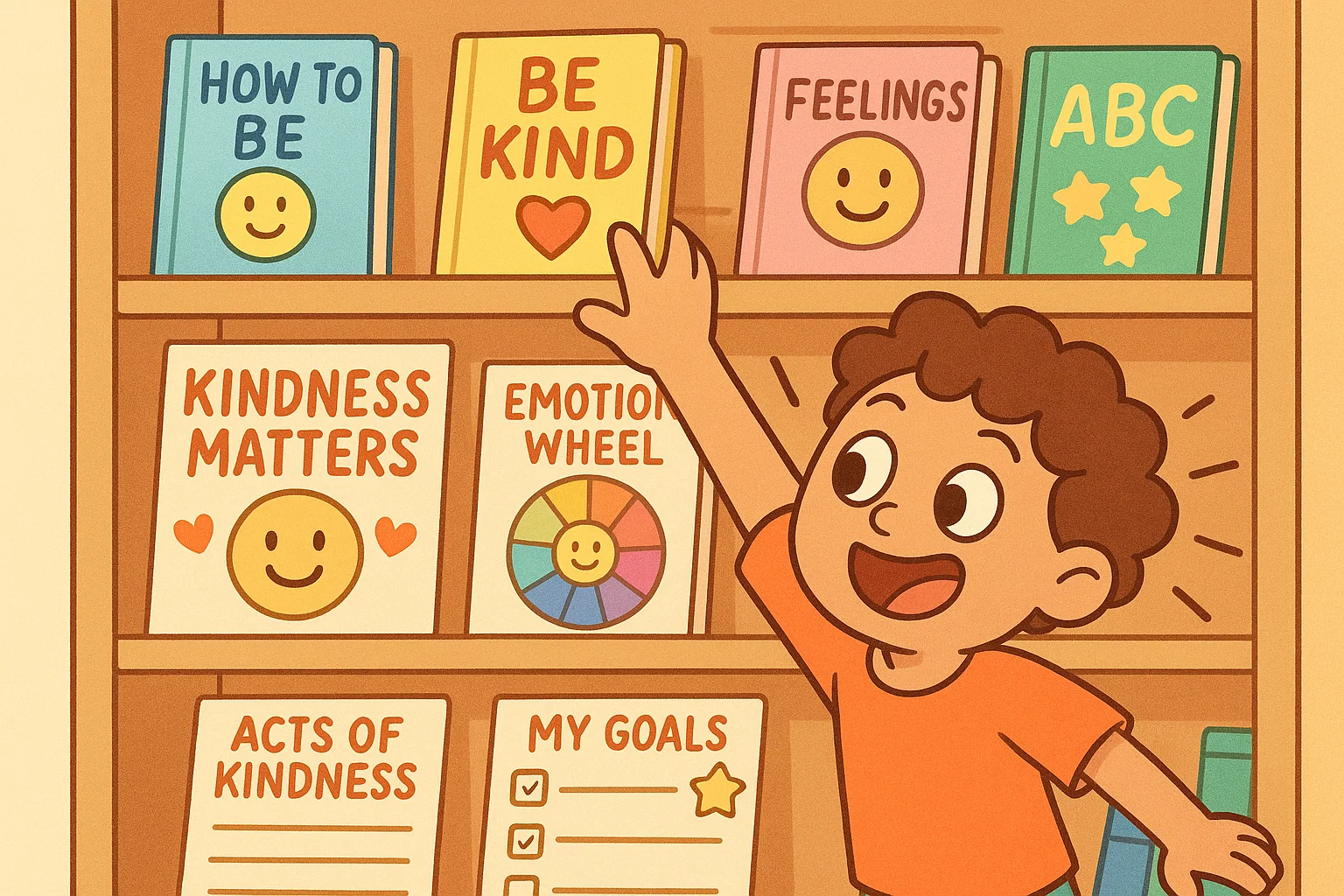
These resources enhance learning experiences by providing structure and visual support for the concepts you are teaching.
Printable Worksheets for Behavior Practice
Printable materials offer visual, focused practice that helps children build understanding.
- “Respect vs. Disrespect” Sort: Worksheets with pictures or words describing different actions (e.g., “Sharing a toy,” “Yelling at a friend”). Kids may cut them out and sort them into the “Respectful” and “Disrespectful” columns.
- Daily Habits Checklist: A printable chart with spaces for checking off positive habits like “Used kind words,” “Helped a family member,” and “Cleaned up my mess.”
Classroom and Home Tools for Character Building
These tools are great for promoting consistent behavior and reflection.
- Reflection Prompts: Cards with questions like, “How did your words and actions make your friend feel?” or “What could you have done differently when you felt angry?” These encourage kids to think about their behavior.
- Behavior Charts/Stickers: Simple charts that recognize positive behaviors. The focus should be on positive reinforcement and rewarding effort, not just outcomes.
Recommended Storybooks and Videos
Narrative storytelling is a powerful way to make abstract concepts relatable. Look for stories that feature characters who show perseverance, fairness, and empathy.
Recent research on children’s storybook reading suggests that regularly engaging with narrative fiction can support the development of empathy-related skills in young readers, including perspective-taking, emotional understanding, and prosocial behaviour.
Key Concepts Behind Decency Skills
Understanding the why behind teaching respect and kindness helps you better foster these traits.
What Decency Means for Kids
For younger children, decency can be explained simply as being fair, kind, polite, and responsible. It’s about being a thoughtful friend and family member who understands how their actions affect others.
- Fairness: Giving everyone a turn and following the rules.
- Empathy: Understanding that others have feelings that matter, just like theirs.
- Politeness: Using good manners and showing respect for grown-ups and peers.
- Cooperation: Knowing how to work together to create or achieve a shared goal.
- Responsibility: Taking care of their things and being accountable for their choices.
Importance of Teaching Decency Early
Teaching values is an investment in your child’s future. By integrating character education early, you help children develop essential skills that extend far beyond the playground:
- Stronger Relationships: Kids learn how to interact respectfully, leading to deeper friendships.
- Conflict Resolution Skills: They become better equipped to resolve conflicts peacefully and constructively.
- Emotional Growth: They develop confidence and the ability to manage big feelings.
- Academic Success: SEL skills are strongly linked to improved focus and better performance in school.
Signs Kids Need Extra Support
While all children develop at their own pace, consistent behaviors may indicate a need for more focused character-building lessons:
- Frequent outbursts or difficulty staying calm.
- Inability to share or take turns, even with guidance.
- Regularly ignoring the feelings or wishes of others.
- Struggling to admit when they’ve made a mistake or apologize sincerely.
Emotional and Social Development Activities
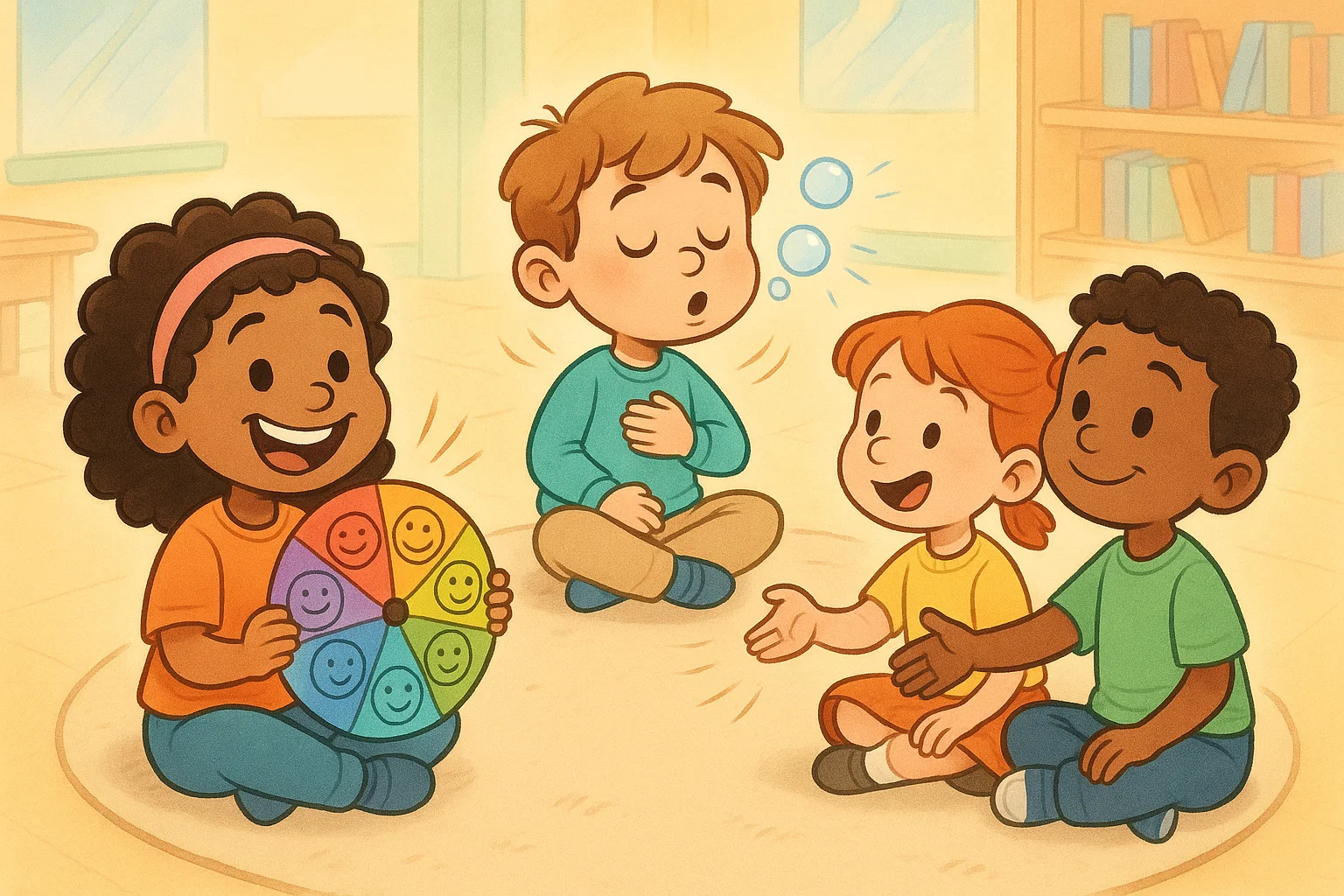
These activities for kids are the foundation for empathy and kind behavior, as it’s hard to be kind if you can’t understand feelings.
Emotion Identification Games
These games help children put names to their internal experiences.
- Feeling Charades: Kids take turns acting out an emotion, and others guess what it is. This is a powerful way to encourage children to read non-verbal cues.
- Matching Faces: Use the emotion cards to match the picture to the name of the emotion. For older kids aged 7 and up, discuss scenarios like “How would you feel if a friend forgot your birthday?” and have them hold up the corresponding card.
Breathing and Calming Exercises
Teaching self-regulation is key to helping children stay calm when big emotions arise.
- Bubble Breathing: Pretend to blow bubbles. Take a deep breath in through the nose, and slowly exhale through pursed lips, imagining they are blowing a giant, beautiful bubble. This is very effective for younger children.
- The Five-Finger Breath: Trace a finger up and down the fingers of the opposite hand. Inhale while tracing up, and exhale while tracing down. This provides a visual and tactile way to practice mindful breathing.
Peer Interaction Practices
Guided practice helps kids learn how to navigate social settings respectfully.
- Turn-Taking Tasks: Use timers during playtime to provide a visual reminder of when a turn is over. This structured approach helps prevent frustration and reinforce fairness.
- Joining the Group: Role-play asking to join a game and what to do if the group says no (e.g., asking again later, offering a new idea, or finding something else to do).
Problem-Solving Challenges
Problem-solving is a critical, essential skill for character building and managing conflict resolution.
- Building Challenges: Give a small group of kids working together a specific goal (e.g., “Build a tower that can hold an apple”). They must work together to decide on a design, share the building blocks, and manage disagreements.
- “What If” Scenarios: Present real-life situations (e.g., “What if you accidentally broke a friend’s toy?”). Have kids think of three possible solutions and discuss the natural consequences of each.
Family and Classroom Support Strategies
Consistency between home and school or other environments is crucial for character building.
Home Routines That Promote Respect
- Shared Chores: Assign age-appropriate tasks that benefit the whole family (e.g., wiping the table, sorting socks). These help children build a sense of responsibility and belonging.
- Gratitude Moments: Take one minute during dinner or before bed to share one thing you are grateful for and one kind thing you saw or did that day. This fosters kindness and appreciation.
- Meaningful Conversations: Ask open-ended questions about their day that encourage reflection, such as, “Tell me about a time you helped someone today.”
Classroom Systems for Positive Behavior
- Helper Roles: Giving students specific, important jobs helps children feel significant and responsible.
- Positive Reinforcement: Focus more on what the children are doing right than what they are doing wrong. Specific praise, like “I love how you waited patiently for your turn,” is more effective than general praise like “Good job.”
Encouraging Effort and Cooperation
- Praising Process, Not Outcome: Instead of saying, “You’re so smart,” try, “You worked really hard on that, and I saw you didn’t give up!” This encourages kids to embrace perseverance.
- Group Challenges: Set up tasks where success depends on the entire group’s ability to work together to create a solution, emphasizing that everyone wins when they cooperate.
Safe Spaces for Mistakes
A supportive reaction to mistakes is how children develop confidence and build resilience.
- The “Oops, I Learned!” Attitude: When a child makes a mistake, treat it as a learning experience. Say, “Oops! That didn’t go as planned. What did you learn from that?”
- Let Them Experience Natural Consequences: When possible and safe, allow the child to experience the natural result of their choices (e.g., forgetting their homework means dealing with the teacher, not a parent rushing to deliver it). This is a crucial real-world experience and a stepping stone to responsibility.
Activity Examples Based on Real-Life Scenarios
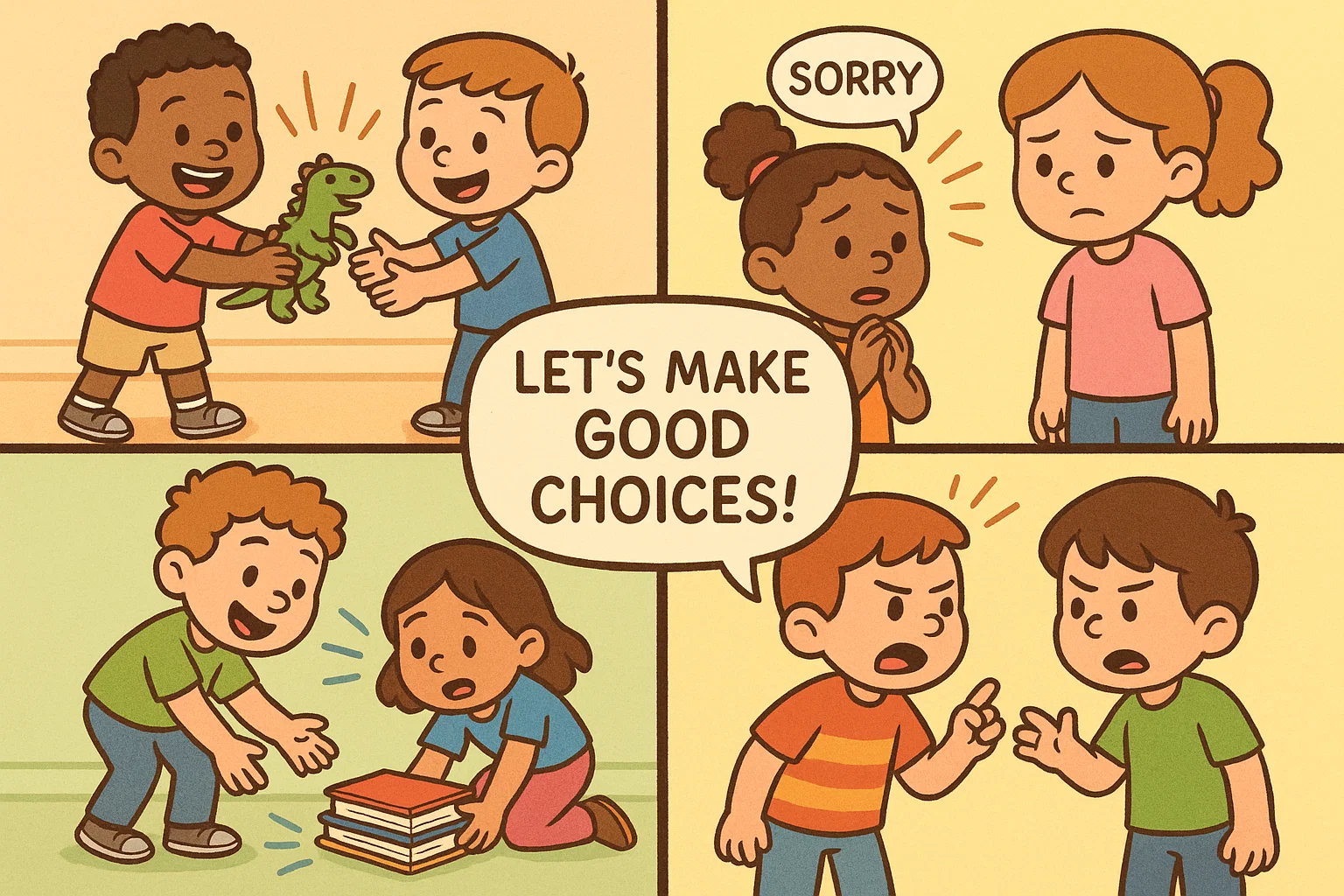
These structured hands-on activities provide clear practice opportunities for core values.
Respectful vs. Disrespectful Behavior Sort
- Preparation: Write or draw simple examples of behaviors on index cards (small piece of paper), such as: Respectful: “Sharing a toy,” “Waiting for a friend to finish talking,” “Using a quiet voice indoors.” Disrespectful: “Interrupting,” “Making fun of a friend,” “Throwing a tantrum.”
- Activity: Kids take turns reading or viewing the card and sorting it into two designated piles: “Shows Respect” or “Does Not Show Respect.”
- Discussion: Talk about why each action fits its category and how their actions affect others.
Compliment Circle Exercise
- Set-Up: Have the children sit in a circle. Introduce the idea of giving genuine compliments that focus on the person’s words and actions or positive traits.
- Activity: The leader starts by giving a compliment to the person next to them (“I appreciate how you shared the markers with me today, Liam.”)
- Goal: Continue around the circle until everyone has both given and received a compliment. This helps children feel valued and practice fostering kindness.
“Caught You Being Kind” Notes
- Preparation: Have a designated “Kindness Box” and plenty of small piece of paper nearby.
- System: Throughout the day, when you or another child notices a kind or respectful action, quickly write it down (e.g., “Sarah helped Ben pick up the blocks”) and drop it in the box.
- Reinforcement: At the end of the day or week, read the notes aloud, providing a strong sense of positive reinforcement and a public recognition of character building.
Team Problem-Solving Missions
- The Mission: Present a challenge that requires every member’s contribution, such as moving a pile of objects from one side of the room to the other using only a sheet and no hands.
- Collaboration: Kids must work together to strategize, communicate, and assign roles.
- Reflection: Discuss the challenge afterward. Ask, “Who had an idea that helped the team? How did you resolve conflicts when you disagreed?” This builds leadership skills and teamwork.
Community and Service Activities for Character Growth
Moving beyond the home and classroom helps children see themselves as part of a larger community and understand the concept of giving back.
Simple Service Projects
These projects demonstrate respect for the community and teach civic responsibility.
- Collection Drives: Have kids help collect gently used books or canned goods for a local shelter. This helps kids learn the value of helping those in need.
- Thank-You Cards: Kids create cards for first responders, postal workers, or nursing home residents. This teaches appreciation and respecting others.
Cooperative Group Projects
- Community Clean-Up: Organize a short park or playground clean-up. This helps children actively take care of shared spaces.
- Garden Project: If space allows, let kids work together to plant and maintain a small vegetable or flower garden. They learn responsibility and patience as they nurture growing plants.
Kindness Campaign Posters
- Brainstorming: Discuss important values like being a good sport, being a helper, and using kind words and actions.
- Design: Kids design vibrant posters using markers and paper. The posters should be a visual reminder of positive behavior.
- Display: Post the finished posters in a public space (hallway, window, refrigerator).
Peace-Building Activities for Different Ages
These projects focus on tolerance and conflict resolution.
- Younger Children (3-6): Use puppet shows to act out scenarios like a disagreement over a toy and demonstrate how to ask for help or share.
- Older Children (7-10): Start a “Feelings Check-In” journal where they can write or draw about times they felt misunderstood and what they did to resolve conflicts.
Putting It All Together: Decency Development Approach
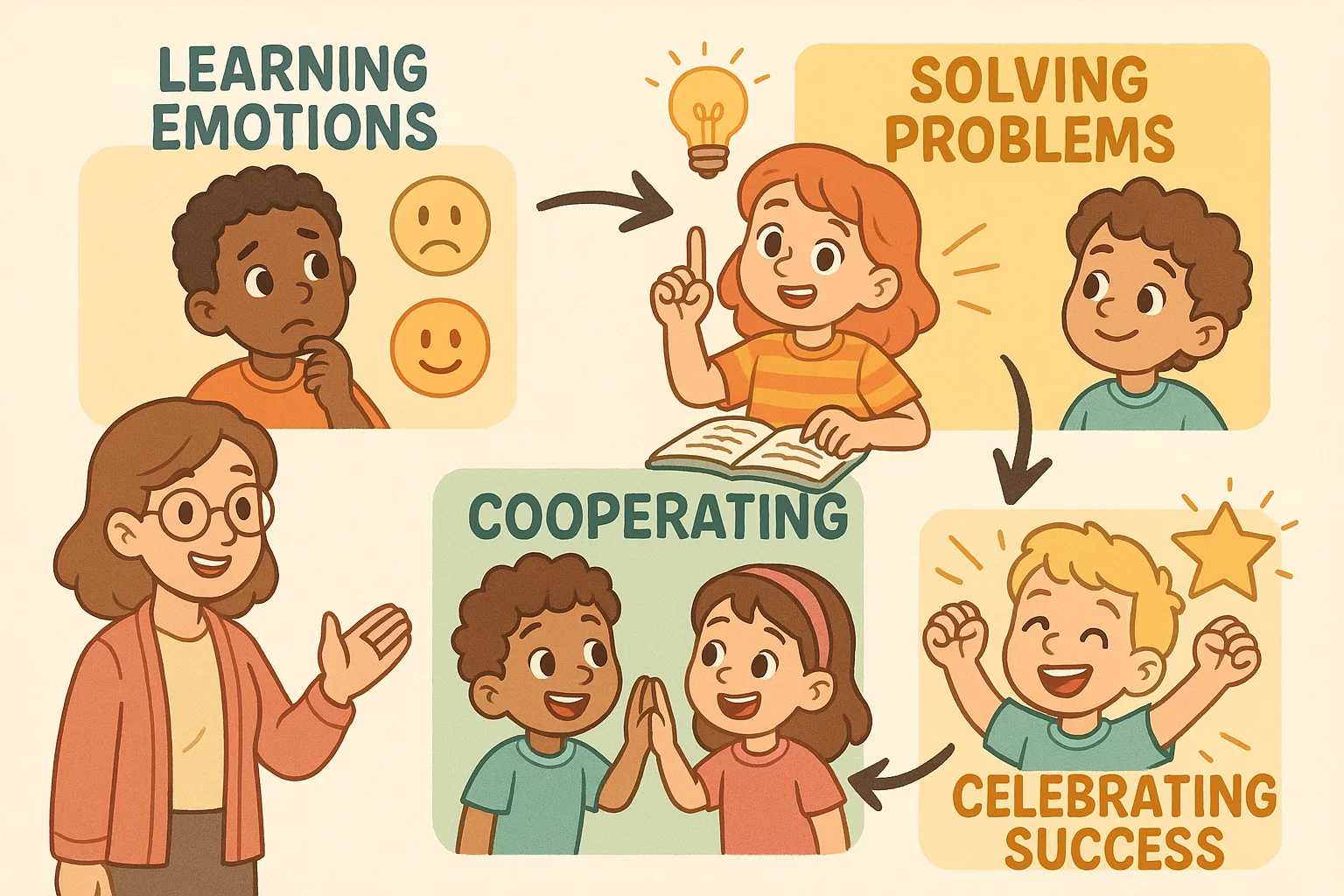
Skills Children Develop Through These Activities
By engaging in these hands-on activities, children develop a robust set of essential life skills:
- Empathy and Kindness: Through role-playing and discussion, kids understand others’ feelings.
- Fairness and Respect: Practiced in turn-taking, sharing, and listening games.
- Responsibility and Initiative: Built through chores, helper roles, and service projects.
- Resilience and Perseverance: Kids take calculated risks and face challenges, learning to get back up after making a mistake.
- Positive Communication and Teamwork: Developed in group problem-solving and compliment exercises.
How Consistency Strengthens Values
Decency is not taught in one lesson; it is a lifelong process. Repetition and routine are the keys to lasting behavioral habits. Consistent daily practice, such as having a family gratitude moment or a daily helper chore, turns single events into entrenched values.
- Daily Habits: Small, repeated actions have a compounding effect.
- Modeling: Children learn what they live. Your consistent kindness and respect are their best teachers.
Ways to Track Progress
Tracking progress helps provide each child with a clear sense of their growth and reinforce positive change.
| Tracking Method | Age Group | Focus |
| Kindness Journal | 7+ | Self-reflection on own words and actions. |
| Sticker Chart | 3-6 | Positive reinforcement for specific behaviors. |
| Peer Notes | 5+ (Group) | Recognition of positive traits by others. |
| Weekly Reflection | All | Reviewing scenarios like conflicts and successful cooperation. |
Getting Started with Building Blocks of Decency
Choosing Activities for Your Child’s Personality
There’s no one-size-fits-all approach. Consider your child’s temperament:
- The Shy Child: Focus on quiet, one-on-one activities for kids like role-playing with puppets, which provides a layer of emotional distance, and simple problem-solving games.
- The Energetic Child: Choose active, physical tasks like cooperative relay races or team problem-solving missions.
- The Expressive Child: Lean into creative expression activities for values like drawing, storytelling, and designing kindness posters.
Setting Goals for Value-Based Learning
Start small and make the goals achievable and observable.
Achievable Goal Example: “This week, we will work on using the talking stick during family discussions,” rather than “This week, we will never interrupt.”
Tips for Long-Term Success
- Keep it Fun and Varied: Rotate activities like role-playing and creative projects to maintain interest.
- Talk, Talk, Talk: Have meaningful conversations about why values matter. Ask open-ended questions that encourage kids to think critically.
- Be Patient: Character building takes time. Children believe in their ability to improve when they are met with guidance and love, not frustration.