

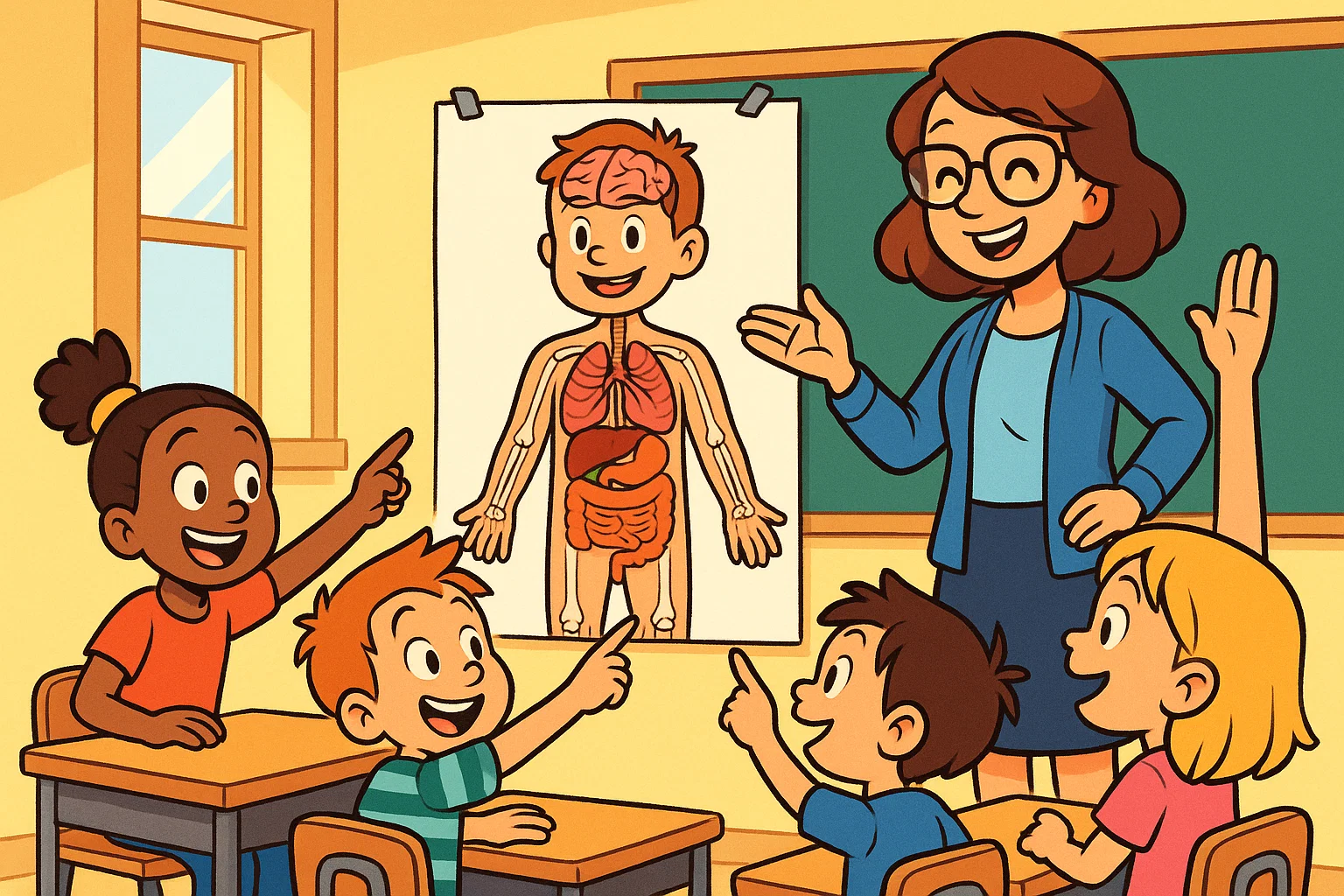
Understanding the human body is one of the most important things children can learn early on. Whether you’re a parent, teacher, or caregiver, helping kids learn the names of body parts in English supports language development, builds confidence, and improves personal safety.
In this guide, you’ll find clear, engaging, and age-appropriate ways to teach kids the names and functions of anatomical zones—from head to toe, inside and out. With charts, activities, songs, and expert tips, it’s time to make learning anatomy fun and meaningful.
Why Teach Children the Names of Human Body Parts
Learning the names of body zones is more than a vocabulary lesson. It lays the foundation for communication, health awareness, and emotional intelligence. From everyday interactions to safety education, knowing different parts empowers children.
Body Parts Can Help Boost Self-Esteem and Confidence
When kids understand their physical selves, they start feeling a sense of ownership and pride. They can describe what hurts, express themselves more clearly, and participate more confidently in physical activities like dance, yoga, and sports. This understanding builds not just language skills but also emotional intelligence. A child who knows how to describe their physical feelings can often express emotional ones better, too.
“Understanding their own physical self helps children feel grounded and secure in themselves.” — Dr. Anita Sharma, Pediatric Developmental Expert
Teach Kids Correct Body Parts for Communication and Safety
Teaching children the anatomically correct terms for private areas and other areas plays a vital role in body safety. It helps kids communicate clearly in medical settings and report inappropriate behavior if needed. Instead of feeling confused or ashamed, they can use the right language with confidence.
Start small: use terms like “elbow” and “knees,” and gradually introduce names like “genitals” or “chest” in age-appropriate ways. Be consistent and calm. Reinforce that every part they have is important and that they should never feel ashamed for naming them.
External Body Parts Names in English for Kids
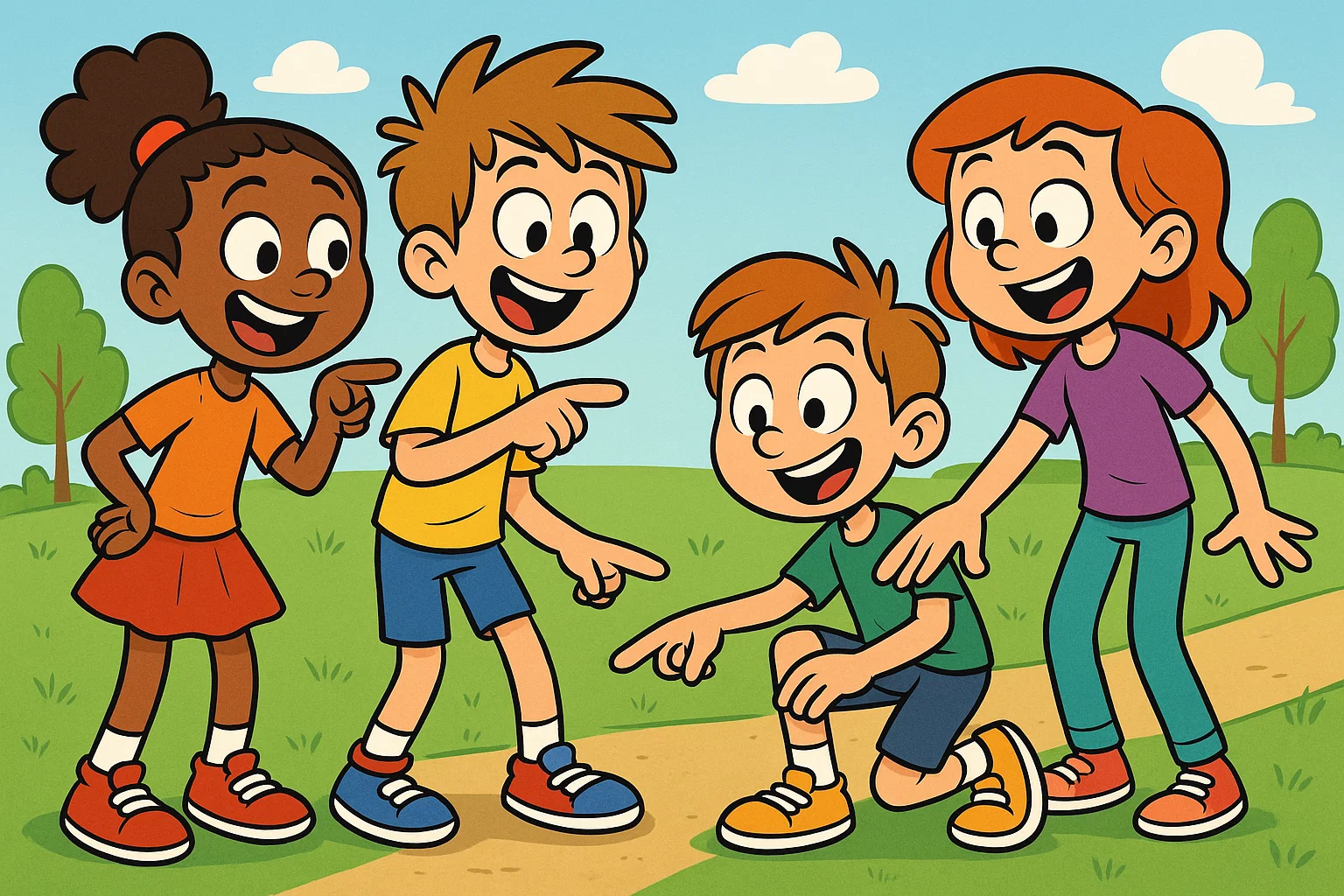
External parts are the ones we can see. Kids use these every day—to smile, run, hug, and draw. Teaching them these names helps connect daily actions to language.
Face Parts with Names and Functions
The face is full of essential tools for experiencing the world. Eyes, ears, mouth—each one has a unique function that kids can relate to easily. Try having them make funny faces while naming each feature.
| Part | Function |
| Eyes | Seeing |
| Nose | Smelling |
| Ears | Hearing |
| Mouth | Talking, eating |
| Tongue | Tasting |
| Teeth | Chewing |
| Eyebrows | Protect eyes from sweat |
| Eyelashes | Keep dust out of eyes |
Upper Body Parts: Arms, Chest, and Torso
The upper body includes several essential structures that support movement, posture, and protection. This central region connects the head to the rest of the body and allows children to lift, hold, push, and hug. Learning related vocabulary helps children understand how the body works through everyday movement.
Arms and hands are constantly active, while the chest and back protect vital organs we can’t see. Teaching these different sections clearly supports a better understanding of key functions in a fun and engaging way.
| Body Part | Short Definition | Function Explanation |
|---|---|---|
| Neck | The part that connects the head to the torso. | Supports the head and allows it to move in different directions. |
| Shoulder | The joint where the arm connects to the torso. | Allows wide arm movement such as lifting and rotating. |
| Arm | The upper limb between the shoulder and the elbow. | Helps with lifting, carrying, and throwing. |
| Elbow | The joint in the middle of the arm. | Allows the arm to bend and straighten. |
| Forearm | The lower part of the arm between elbow and wrist. | Helps control hand and wrist movement. |
| Wrist | The joint connecting the hand to the forearm. | Allows the hand to bend and rotate. |
| Hand | The part at the end of the arm. | Used for holding, touching, and fine motor skills. |
| Palm | The inner surface of the hand. | Helps grip and hold objects. |
| Fingers | The five digits of the hand. | Allow grasping, pointing, and detailed movements. |
| Thumb | The short, strong finger on the side of the hand. | Helps with gripping and picking up objects. |
| Fingernails | Hard coverings at the tips of the fingers. | Protect the fingertips and support touch. |
| Chest | The front upper central part of the torso. | Protects the heart and lungs and supports breathing. |
| Back | The rear part of the torso. | Supports posture and protects the spine. |
| Spine | The column of bones along the back. | Supports the body and protects the spinal cord. |
| Rib | Curved bones forming the rib cage. | Protect the heart and lungs. |
| Abdomen | The area below the chest and above the hips. | Contains digestive organs that help process food. |
| Waist | The narrower area between chest and hips. | Supports bending and body balance. |
| Hip | The joint connecting the torso to the legs. | Supports standing, walking, and balance. |
| Skin | The outer covering of the body. | Protects the body and helps regulate temperature. |
Learning these important body parts in context helps children match movement to structure. For example, arms lift, legs support, and the torso protects internal organs. Using printable charts, matching games, or colouring activities makes learning fun and helps children learn and remember essential words more effectively.
Lower Body Parts: Legs, Knees, and Feet
The lower body supports standing, walking, running, and jumping. Legs carry total weight and help maintain balance and posture. Learning these essential structures gives children a clearer understanding of how the body works during movement and physical activity.
| Body Part | Short Definition | Function Explanation |
|---|---|---|
| Leg | The lower limb from hip to foot. | Supports body weight and allows walking, running, and jumping. |
| Thigh | The upper part of the leg between hip and knee. | Provides strength for standing and movement. |
| Knee | The joint in the middle of the leg. | Allows the leg to bend and straighten. |
| Shin | The front lower part of the leg below the knee. | Supports movement and protects the bone underneath. |
| Calf | The back lower part of the leg. | Helps with walking, running, and balance. |
| Ankle | The joint connecting the leg to the foot. | Allows the foot to move up and down. |
| Foot | The part at the end of the leg. | Supports balance and movement. |
| Heel | The back part of the foot. | Helps absorb impact while walking or running. |
| Sole | The bottom surface of the foot. | Supports standing and protects the foot. |
| Toes | The five digits on the foot. | Help with balance and stability. |
| Toenails | Hard coverings at the tips of the toes. | Protect the ends of the toes. |
Understanding how legs support the body and how each part contributes to movement improves coordination and safety awareness. Activities such as jumping games, balance exercises, and printable matching charts help children match each name to its function and strengthen body part vocabulary naturally.
The next logical addition to complete the structure would be a comprehensive table for Internal Organs and Systems, including organs that children can’t see but that perform essential body functions.
Internal Human Body Parts and Organs
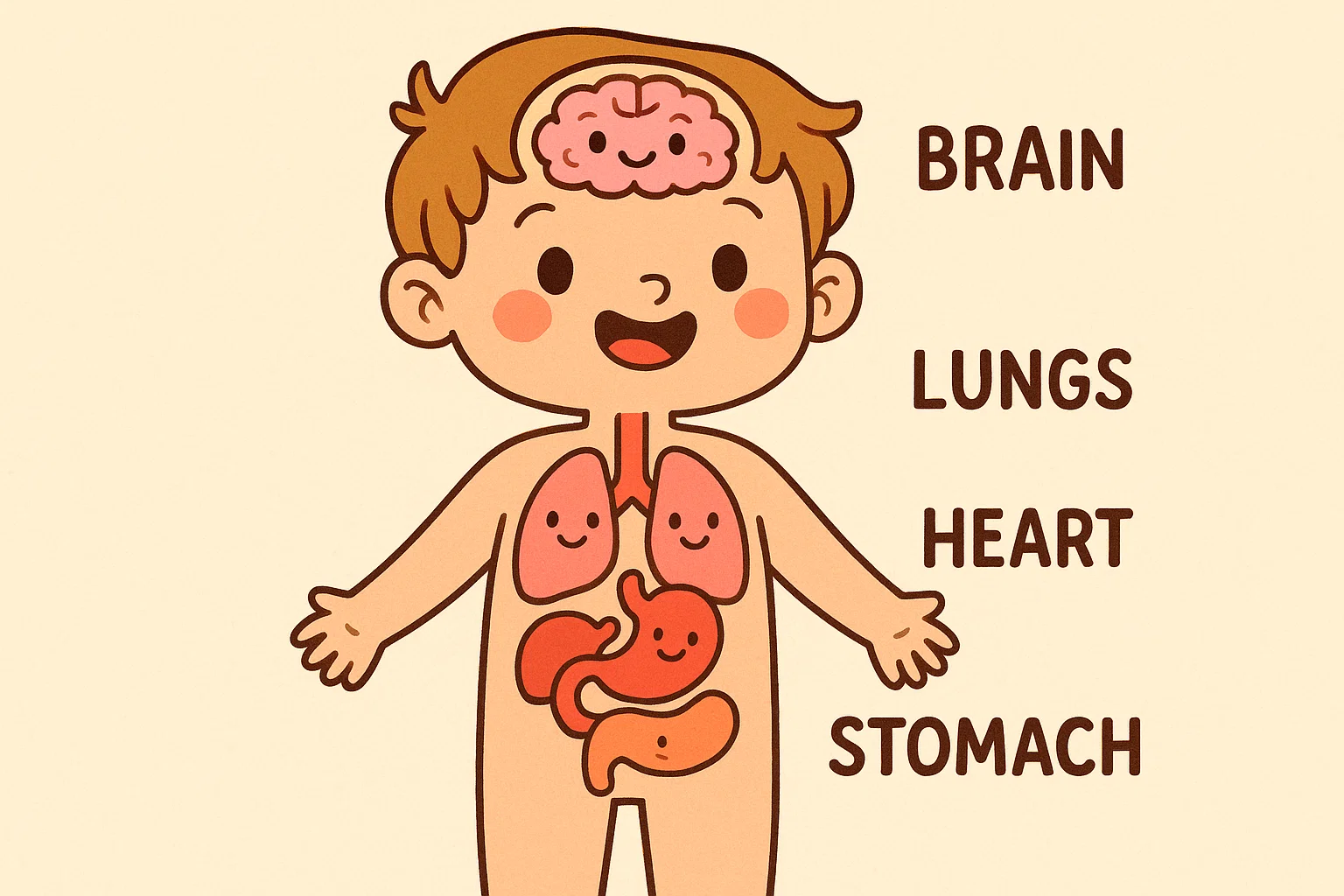
Once kids grasp what’s on the outside, you can begin to introduce what’s happening inside our body. Although not visible, these internal organs carry out important functions that keep us healthy. Keep explanations simple and visual.
Important Internal Organs and Systems for Kids
Internal organs are vital structures that children can’t see, yet they perform essential functions every day. These elements work together to keep the body healthy, provide energy, transport oxygen, and regulate thoughts and emotions. Learning about them helps children gain a clearer understanding of how the body works inside.
Although these organs are not visible, simple explanations and clear anatomical vocabulary allow step-by-step learning. Dividing content into logical sections improves clarity and helps little ones remember information more effectively.
| Body Part | Short Definition | Function Explanation |
|---|---|---|
| Brain | The control center inside the head. | Controls thinking, emotions, movement, and signals throughout the body. |
| Heart | A strong muscle in the chest. | Pumps blood through arteries and veins. |
| Lungs | Two organs inside the chest. | Help the body breathe and bring in oxygen. |
| Stomach | An organ in the abdomen. | Breaks down food after eating. |
| Intestines | Long tubes in the abdomen. | Absorb nutrients and remove waste. |
| Liver | A large organ in the upper abdomen. | Helps clean the blood and supports digestion. |
| Kidneys | Two organs in the lower back area. | Filter blood and produce urine. |
| Bladder | A small storage organ in the lower abdomen. | Stores urine until it leaves the body. |
| Esophagus | A tube connecting mouth to stomach. | Carries food to the stomach. |
| Pancreas | A small organ behind the stomach. | Helps control blood sugar and supports digestion. |
| Spleen | An organ near the stomach. | Supports the immune system and filters blood. |
| Artery | A blood vessel carrying blood away from the heart. | Delivers oxygen and nutrients to the body. |
| Vein | A blood vessel carrying blood to the heart. | Returns blood back to the heart. |
| Blood | A red liquid moving through vessels. | Transports oxygen and nutrients. |
| Muscle | Soft tissue that contracts to create movement. | Helps move different body parts. |
| Bone | Hard structure forming the skeleton. | Supports and protects the body. |
| Nerve | A thin fiber that carries signals. | Sends messages between brain and body. |
Teaching internal structures in a fun and engaging way helps children understand that important body functions continue even when we can’t see them. Printable diagrams, coloring activities, and simple explanations of how the body works strengthen overall comprehension.
Lesser-Known Internal Parts of the Body to Learn
For older kids or curious learners, introducing lesser-known anatomical names keeps learning engaging. It’s okay to keep definitions simple but accurate.
- Esophagus: Carries food to the stomach.
- Bladder: Stores urine.
- Pancreas: Helps with digestion and blood sugar.
- Gallbladder: Stores bile.
- Spleen: Part of the immune system.
These may be harder to see in illustrations, but they’re a valuable part of any complete list of names to teach.
How do all body systems work together?
Learning separate names is only the first step. A complete understanding develops when children see how essential structures cooperate to keep the body healthy and active. No system works alone. Each internal network depends on another to perform daily functions.
Explaining how the body operates as one coordinated system helps children move from memorizing essential words to building a clearer understanding of living processes. This method supports deeper learning and strengthens connections between different sections.
How Systems Support Each Other
- The brain sends signals through nerves so muscles can move.
- Muscles pull on bones so legs support standing and walking.
- The heart pumps blood so lungs can distribute oxygen.
- The stomach and intestines process food to provide energy for movement.
- Kidneys and liver help clean the blood to keep the body balanced.
Each organ is an important part of a larger network. When one system works properly, others function more efficiently. This interconnected structure explains why exercise, nutrition, and posture all influence overall health.
Simple Example for Children
When a child runs:
- Brain sends a signal.
- Muscles in legs contract.
- Heart beats faster.
- Lungs bring in more oxygen.
All these parts help the body respond in a coordinated way. Even though some organs can’t see the outside world, they work continuously to support movement, growth, and thinking.
Activities to Teach Kids Human Body Parts
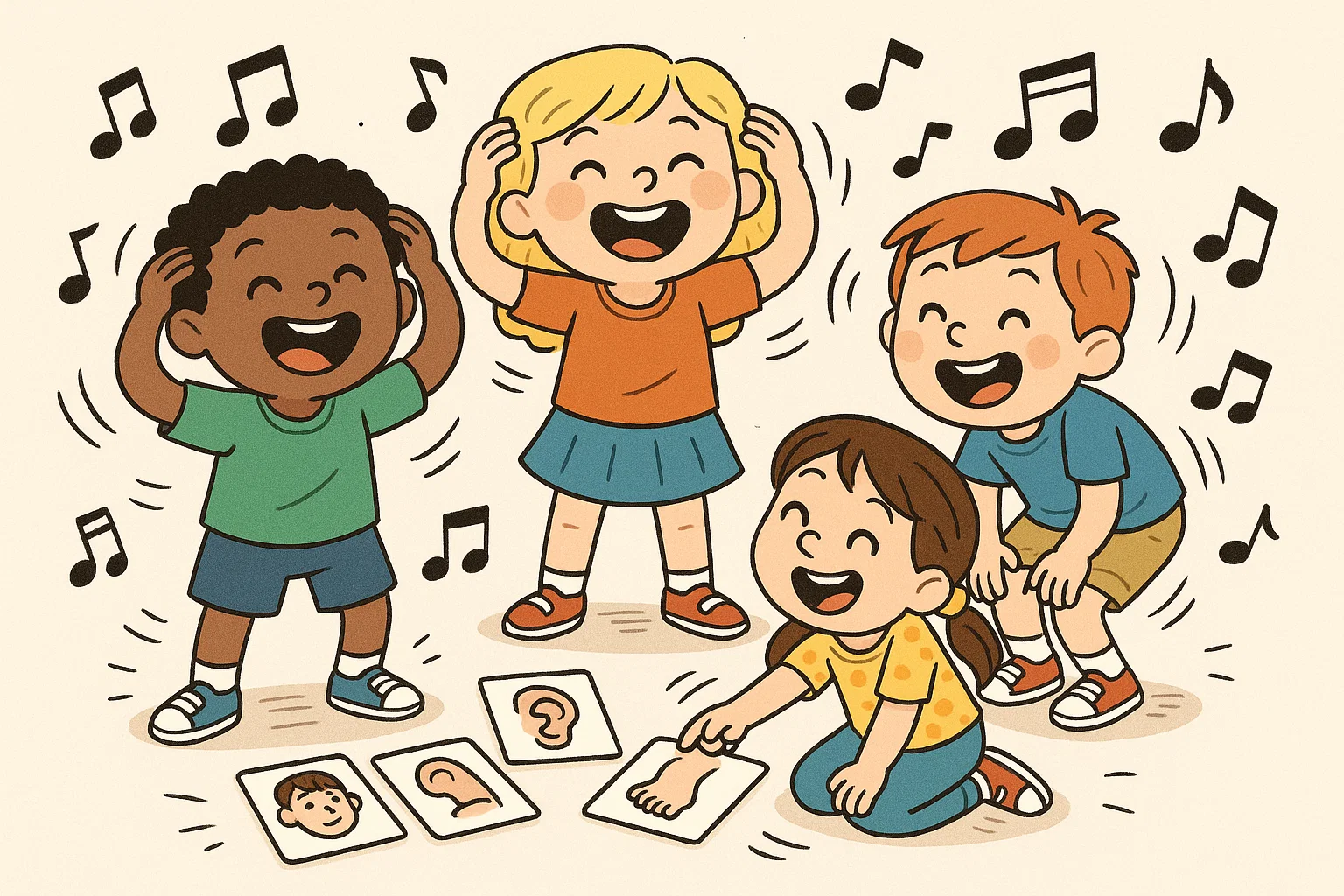
Passive learning doesn’t stick. To truly help kids understand themselves, you need to get them moving, singing, drawing, and imagining.
Learn the Names with Body Parts Songs and Rhymes
Music is a great way to teach names for body parts. Rhymes like “Head, Shoulders, Knees, and Toes” make it easy to remember basic body parts and their functions. Add more verses over time to include words like “wrists,” “ankles,” or “hips.”
This also helps with rhythm, pronunciation, and memory—perfect for teaching English for kids.
Fun Activities to Teach Children Body Part Names
Interactive play is where learning really comes alive. Classic activities like “Simon Says” or sticker match games work wonders. Children love turning learning into play.
Real-life moments like bath time or getting dressed can also be teaching opportunities. Say the name of each part as you help them zip a coat or tie shoes.
Stories and Drawing to Help Kids Learn Human Body Parts
Books and drawing help older kids connect ideas with visuals. Ask them to draw a picture of themselves and label parts from the list of body parts you’ve introduced. Or let them invent characters with unique anatomical features and describe them.
Storytelling also helps kids connect each part to its job. “Your stomach tells you it’s hungry!” is both fun and informative.
Creative Ideas to Teach Body Parts Names in English
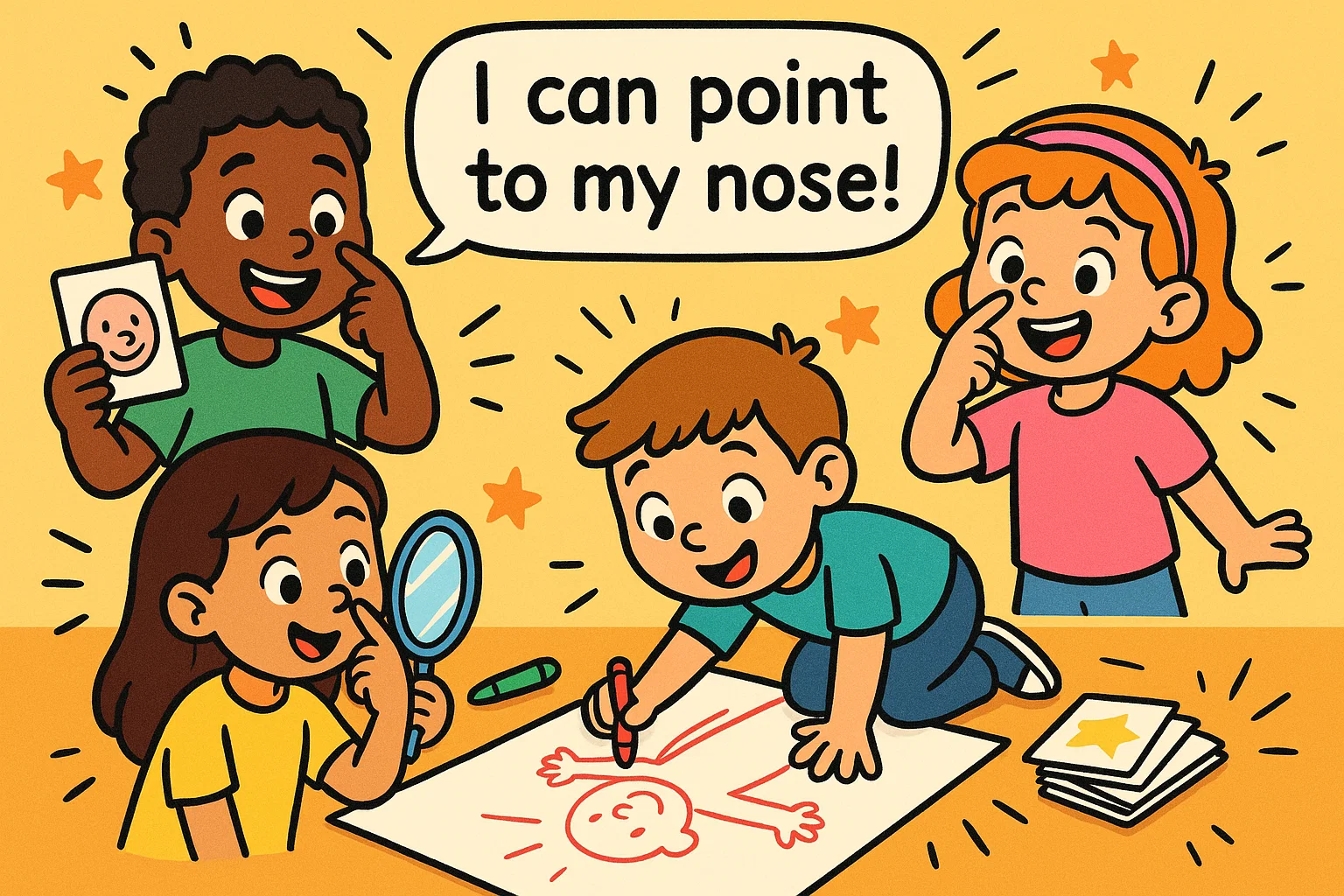
If your child learns best through movement or visuals, these methods will work wonders.
Flashcards and Visual Aids for External and Internal Body Parts
Flashcards can be used in memory games, matching challenges, or scavenger hunts. Mix and match visible features with internal organs to build a strong overall understanding of the human form.
Try including lesser-known labels from anatomical charts for advanced learners.
Mirror Play and Role Play to Teach Your Child Parts of the Body
Let your child look in the mirror and identify each feature. Turn it into a game: “What helps you chew?” or “Can you find what helps you smell?”
Role-playing with dolls or plushies can also reinforce the names and uses of parts of the human body, including private areas in a safe, age-appropriate way.
Yoga and Physical Activities for Kids to Memorize Body Parts
Yoga poses help kids feel and name different parts while they move. Breathing exercises introduce how the heart and lungs work together. Tree Pose can focus on arms and legs, while Cat-Cow helps explain how the spine works.
This is a fun and interactive way to reinforce the function and names of different body parts or organs.
Learn the Names of Body Parts for Kids in English
Every part of the human body is important. Teaching both external features and internal organs—using correct terms and fun techniques—can strengthen language, self-awareness, and health understanding.
By making the process fun and consistent, you’re giving your child the tools they need to grow up safe, informed, and confident. It’s time to teach with creativity, clarity, and care.