

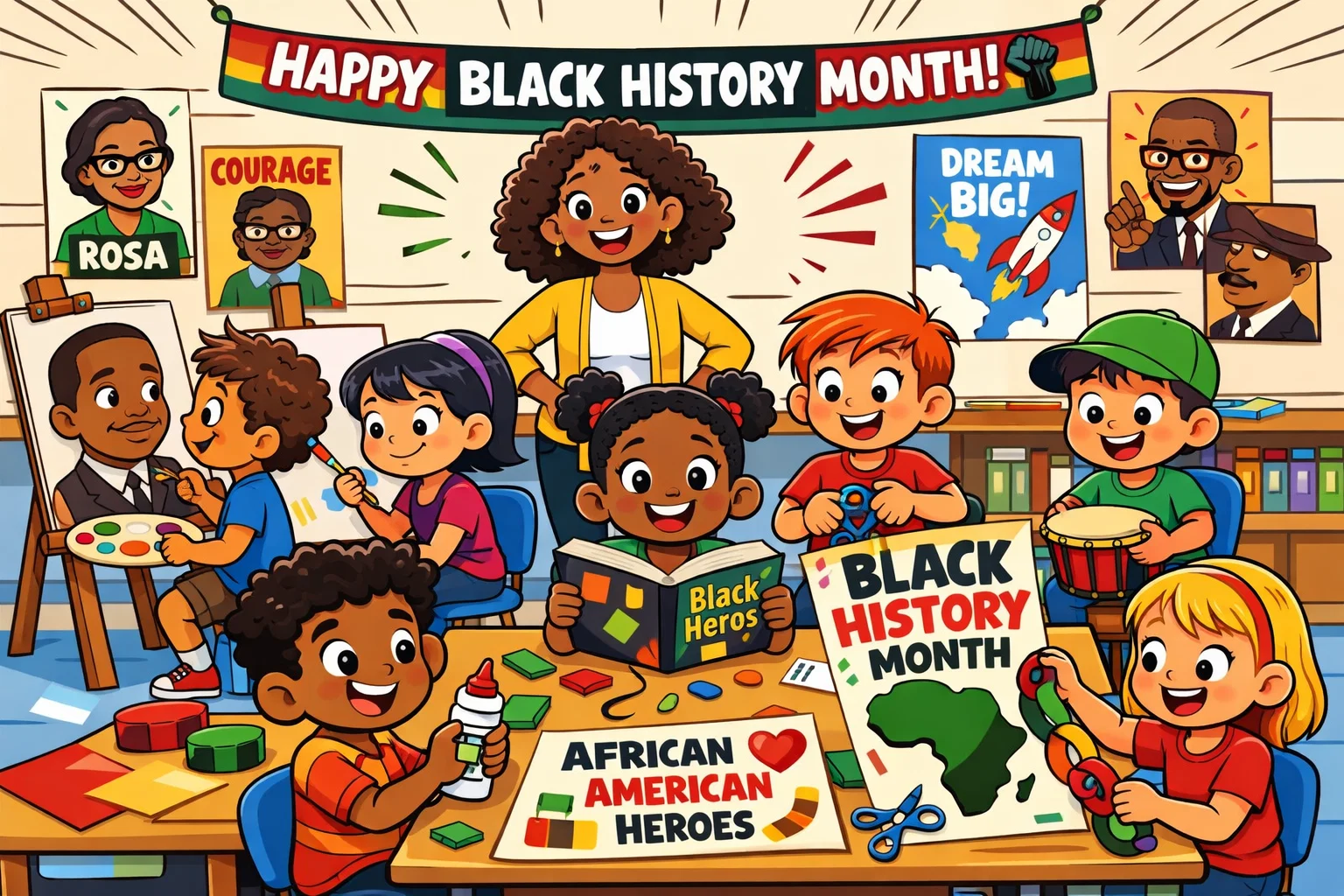
Black History Month is a vibrant opportunity for parents, teachers, and caregivers to introduce children to the profound impact of Black individuals throughout history. For children in preschool through elementary school, these lessons shouldn’t just be about dates and facts; they should be immersive experiences that spark curiosity and empathy. By blending creative expression with age-appropriate learning, children can build a foundation of respect and understanding that lasts a lifetime.
The goal of this guide is to provide a comprehensive roadmap for celebrating Black history in a way that feels natural and engaging. Whether you are a teacher looking for diversity and inclusion resources or a parent wanting to help your child become a more globally-conscious citizen, these activities are designed to be accessible and impactful. This guide explores how hands-on projects and storytelling can help children develop a sense of belonging and a deeper appreciation for the contributions of Black leaders, artists, and scientists.
Black History Month Activity Ideas
When Black History Month is celebrated, learning can move beyond textbooks to make history feel “alive.” Many children learn more effectively through a multi-sensory approach. This means incorporating visual arts, auditory storytelling, and kinesthetic projects. By offering a variety of formats—ranging from STEM experiments to role-play—we cater to different learning styles and ensure that every child finds a way to connect with the material.
Hands-on activities
Hands-on activities allow kids to learn by doing, which often leads to better retention of information. Instead of passive reading, children might engage in building models of inventions created by Black engineers or participating in “living history” projects. These activities allow students to see the tangible results of their efforts, which can help build confidence, fostering a sense of competence and pride.
Creative learning formats
Art, music, and role-play are powerful tools for exploring complex themes. For example, listening to jazz or blues and then painting how the music feels can introduce children to the cultural contributions of Black musicians. Role-playing significant moments in the civil rights movement, such as the courage shown during the civil rights movement, helps children practice empathy and understand the importance of standing up for fairness.
At-home and classroom use
The beauty of these activities is their flexibility. At home, you can integrate learning into daily routines through bedtime stories or weekend crafts. In the classroom, these projects can become collaborative murals or group discussions that promote a growth-oriented environment. Adaptation is key: a more detailed project for a fifth-grader can become a simple “picture matching” game for a preschooler.
Black History Month Activities for Preschoolers
For younger children (ages 2–5), the focus should be on “the Three Cs”: Color, Community, and Courage. At this stage, children are developing their self-esteem and confidence by observing the world around them. Introducing diverse faces and stories early on helps them form a positive self-image and a natural acceptance of others.
Sensory play ideas
Sensory play is a cornerstone of early childhood development. To celebrate Black history, consider these ideas:
- Musical Textures: Play recordings of traditional African drums or gospel music. Encourage children to move their bodies to the rhythm, feeling the vibration and beat.
- The “Skin Tone” Palette: Provide playdough or paints in various shades of brown, tan, and cream. This activity helps children notice and appreciate the beauty in different skin tones, promoting healthy self-esteem and a sense of belonging.
Simple crafts and art projects
Art for preschoolers should be process-oriented. You might guide them in creating a “Handprint Unity Wreath,” where they use various skin-tone papers to create a circle of hands. Another great project is guided art inspired by Alma Thomas, a well-known Black artist for her bright, mosaic-like patterns. Her style is easy for small hands to mimic using sponges or finger paints.
Storytime and picture books
At this age, illustrations are just as important as the text. Choose books that feature Black protagonists in everyday situations, as well as those that highlight historical figures. Reading about figures such as Mary Seacole or important historical firsts can be done through simple narrative arcs that emphasize kindness and bravery.
Black History Month Activities for Elementary and Grade School Kids
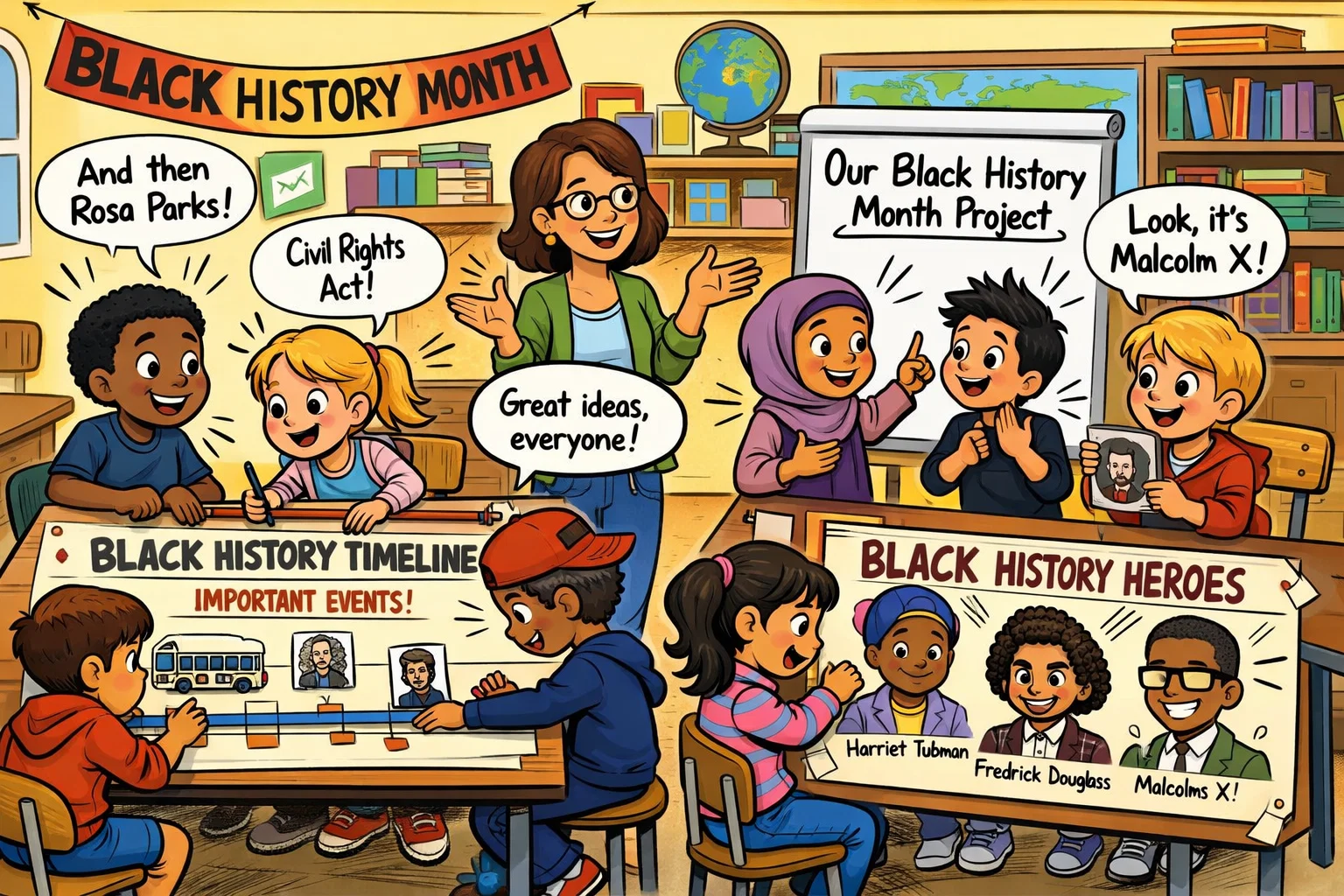
Elementary-aged children are ready for more nuanced discussions and independent exploration. This is an ideal time to introduce guided activities that promote self-reflection and help children develop a growth mindset.
History-based projects
- Interactive Timelines: Create a long timeline on a hallway wall. Assign each student a specific year or figure to research and add to the wall with a drawing and a “fun fact.”
- Mini-Biographies: Have students choose one of many notable Black figures and create a “Bio-Bottle” (decorating a recycled bottle to look like the person) accompanied by a short speech.
Discussion and reflection activities
Journaling can be a helpful self-esteem activity for children. You might ask students to write about a time they had to be brave, relating it to the struggles of leaders in the civil rights movement. These conversations help children build self-confidence by identifying their own positive qualities in the context of historical resilience.
Interactive games and challenges
Scavenger hunts are a fantastic way to boost engagement. Hide “clues” around the room that lead to information about various contributions of Black scientists or writers. You can also use board games that focus on geography or history to make the learning process feel like a reward rather than a chore.
Black History Month Crafts and Art Projects
Creative expression allows children to process history emotionally. It moves the lesson from the “head” to the “heart.”
Artist-inspired art activities
Introduce children to the quilt-making traditions of Faith Ringgold. Kids can create their own “story quilts” using paper squares, drawing a different part of their family history on each square. This activity helps boost a child’s self-esteem by celebrating their own heritage alongside Black history.
Collage and mixed-media projects
Collages are excellent for older children who can synthesize different ideas. Using magazines, printables, and fabric scraps, students can create a tribute to Black women who changed the world. This multi-layered approach encourages self-expression and allows for deep self-reflection on what it means to be a leader.
Classroom display ideas
Collaborative murals are a powerful way to foster a sense of community.
| Display Idea | Description | Learning Objective |
| The Dream Wall | Students write their hopes for the future on paper “clouds” and add them to a shared wall display. | Visionary thinking and self-belief |
| Ancestry Tree | A classroom tree where each leaf represents an important historical figure. | Awareness of lineage and historical impact |
| Unity Chain | A paper chain where each link highlights an act of kindness or inclusion. | Developing self-compassion and social bonds |
Black History Month STEM Activities
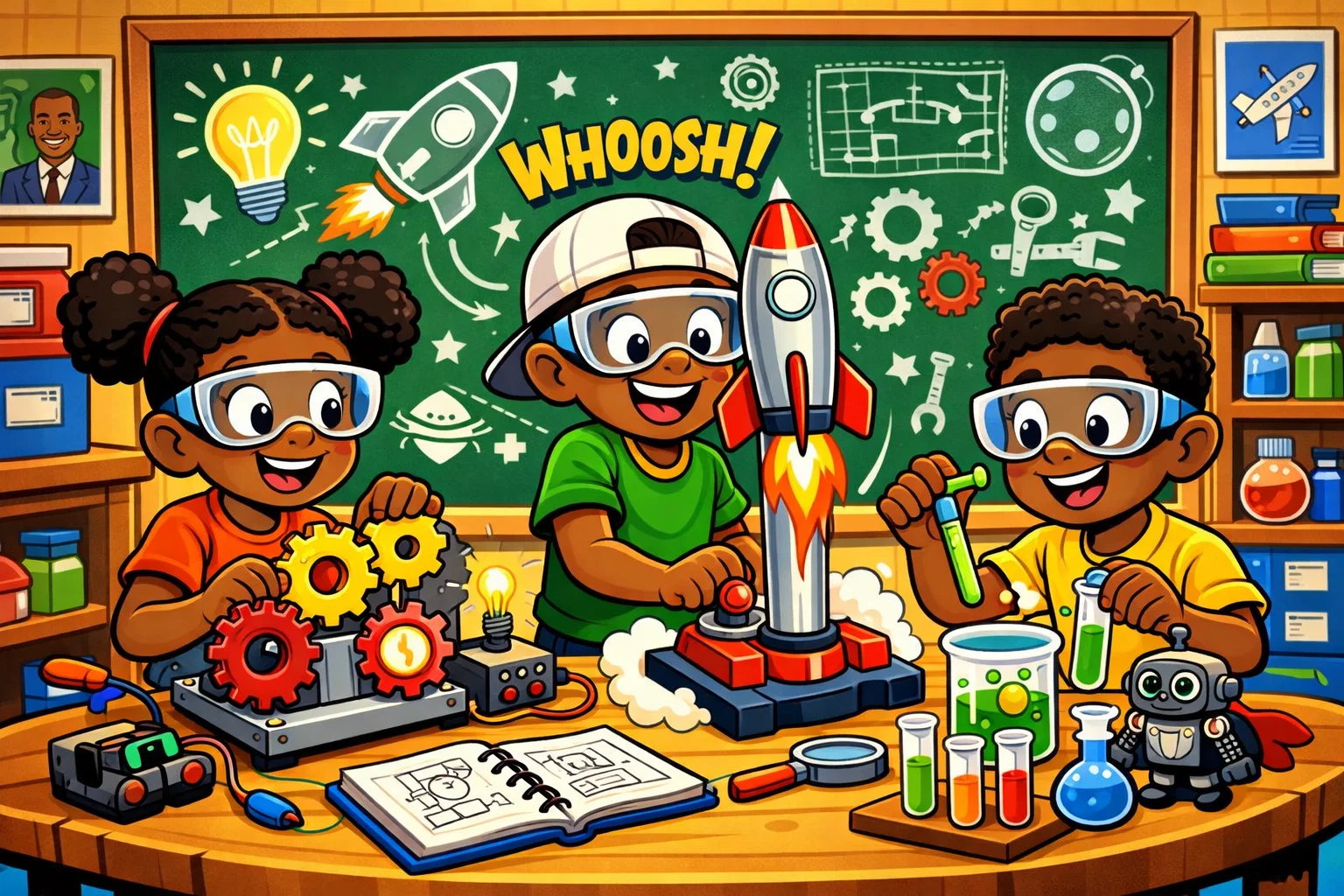
Black History Month is the perfect time to highlight that innovation has no boundaries. Highlighting Black inventors helps children realize that they, too, can solve world problems through science and math.
Inventor-focused STEM projects
Did you know that Garrett Morgan invented the three-light traffic signal? A simple STEM activity involves building a working circuit with red, yellow, and green LEDs. This activity helps children feel more confident as they practice technical skills while learning about a revolutionary inventor.
Space and science exploration
The story of the “Hidden Figures” at NASA (like Katherine Johnson) provides a great backdrop for math-based challenges. Have children practice “manual calculations” for a toy rocket’s flight path, emphasizing how precision and persistence can overcome challenges.
Simple experiments for kids
Alice Ball was a chemist who developed an effective treatment for leprosy. You can honor her work with simple “kitchen chemistry” experiments, like testing pH levels with cabbage juice. These hands-on tasks make challenging subjects feel more approachable and help children develop a sense of competence.
Black History Month Activities by Historical Figures
Focusing on specific individuals makes history personal. It allows children to see themselves in the stories of others.
Civil rights leaders
When discussing the civil rights movement, focus on the concept of “peaceful strength.” Activities like writing “Letters to the Future” about fairness can help children understand the long-term impact of figures like Dr. Martin Luther King Jr. and John Lewis.
Scientists and inventors
Focus on Dr. Charles Drew (blood bank pioneer) or Dr. Patricia Bath (laserphaco probe). For older children, a mini-research task on how these inventions saved lives can be a powerful way to boost their appreciation for the medical field and the contributions of Black professionals.
Artists and cultural leaders
Explore the poetry of Maya Angelou or the music of Duke Ellington. Have children write their own “I Am” poems, which is a classic positive self-esteem activity. By using Angelou’s work as a template, children can articulate their own strengths and positive messages.
Black History Month Books for Kids
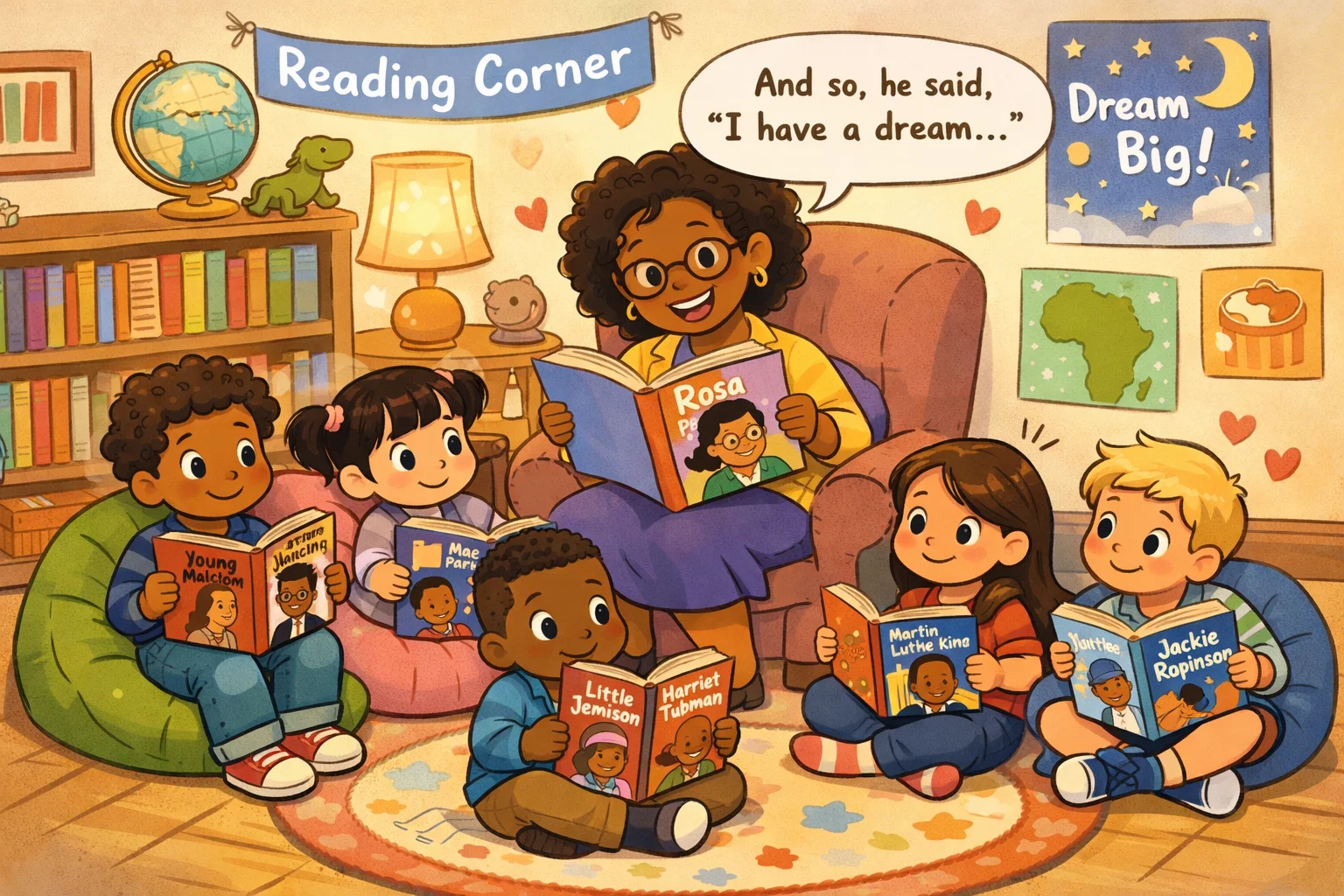
Reading is a gateway to empathy. Many educators note that diverse literature helps children see themselves as part of a larger story.
Picture books for young children
Look for titles like The Snowy Day by Ezra Jack Keats, which features a Black child as the main character or Mae Among the Stars. These books provide positive self-images and encourage your child to dream big.
Chapter books for older kids
For children and teens, chapter books like The Watson’s Go to Birmingham or biographies of Black women in the military or government offer deeper insights into the complexities of history.
Book-based activity ideas
After reading a book about a historical figure, use worksheets and activities to reinforce the message. A “Character Strength” worksheet where the child identifies the figure’s best traits—and then identifies those same traits in themselves—is an excellent way to foster self-esteem.
28 Days of Black History Month Activities
A month-long plan keeps the momentum going and prevents “tokenism.” Here is a suggested structure:
- Week 1: Foundations & Civil Rights. Focus on pioneers like Rosa Parks and the importance of fairness.
- Week 2: Innovation & STEM. Explore inventors and scientists who changed how we live.
- Week 3: Arts & Culture. Celebrate the music, literature, and visual arts of the Black community.
- Week 4: Future & Self. Focus on how children can use these lessons to build a better future and develop their own positive qualities.
Flexible scheduling tips
Don’t feel pressured to do a big project every day. Some days might just involve a 5-minute video or a daily “fact of the day” during breakfast. The goal is consistent, positive messages throughout history.
Black History Month Resources for Kids
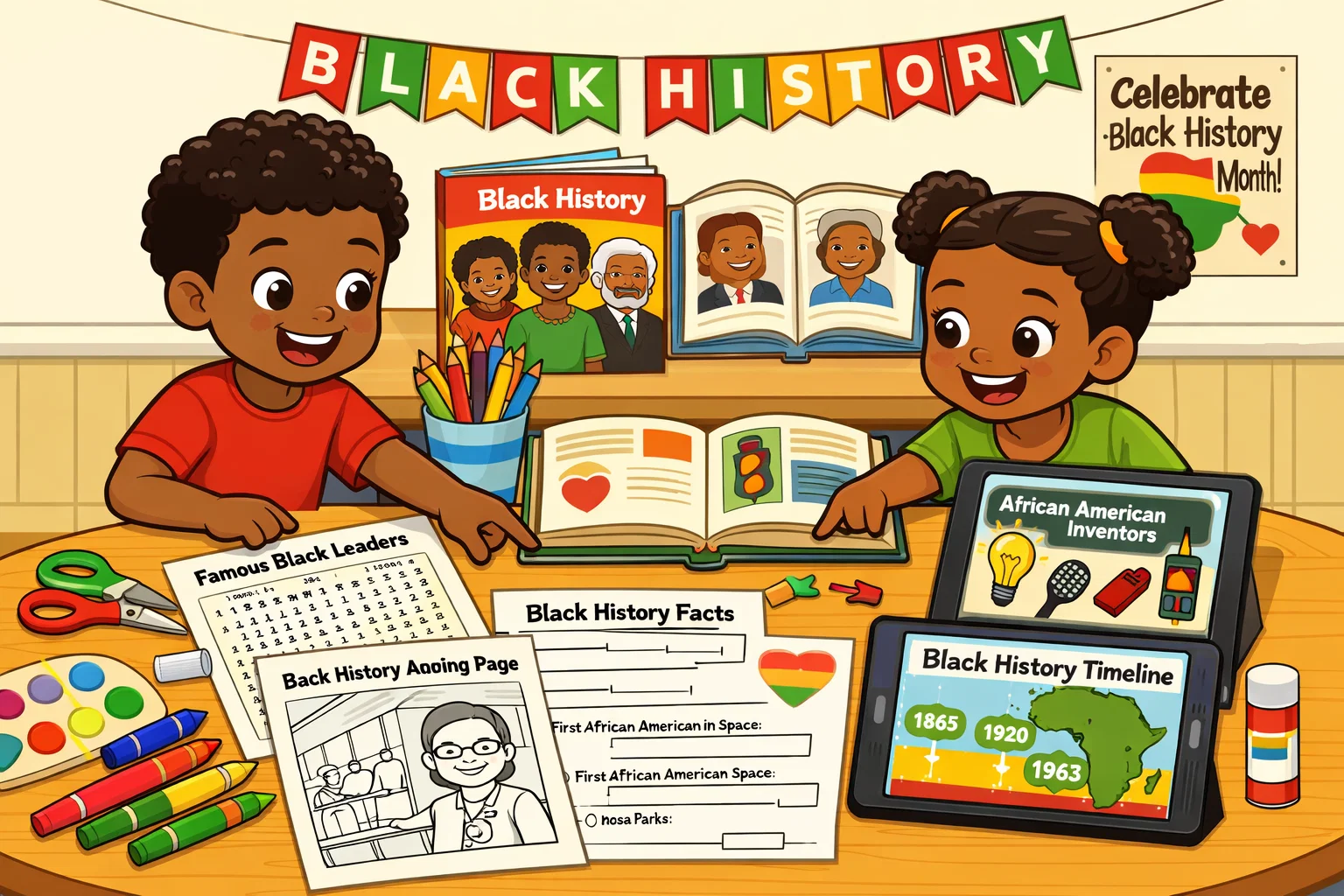
To extend the learning, utilize the wealth of digital tools available today.
Online learning tools
Many museums, such as the National Museum of African American History and Culture, offer virtual tours. These are excellent for older children to see artifacts and photos that bring the lessons to life.
Family and educator guides
Look for guides that offer practical activities and discussion tools for promoting diversity and inclusion. These resources often provide the “language” adults need to handle tough questions about history with grace and honesty.