

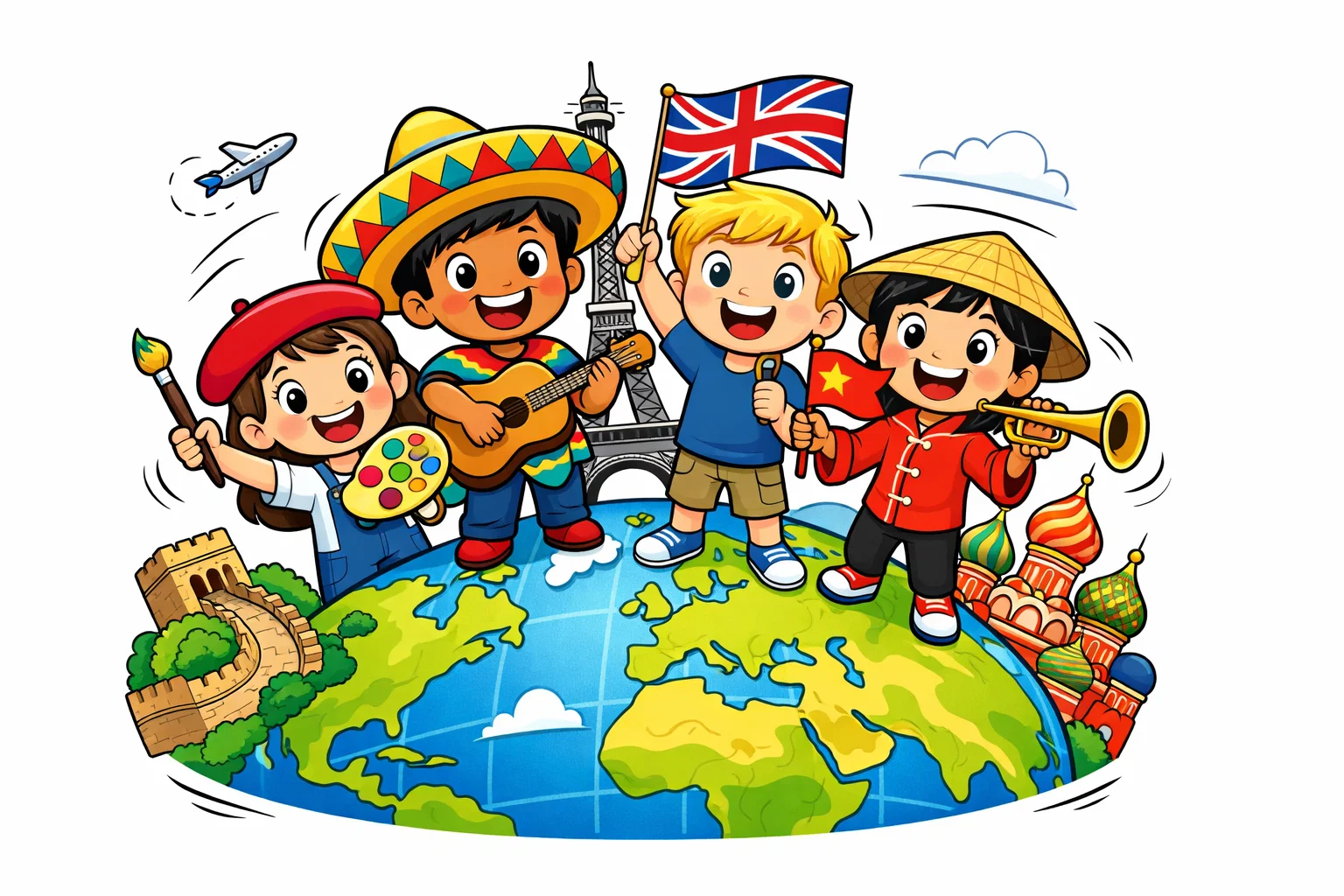
In an increasingly interconnected world, fostering global citizenship starts at home and in the classroom. Around the world activities offer a vibrant gateway for children to understand the vast tapestry of human experience, moving beyond mere facts to develop genuine empathy and curiosity. By integrating sensory play, storytelling, and hands-on projects, children can be introduced to the beauty of different cultures in a way that feels like an adventure rather than a chore.
Whether you are a parent looking to fill a rainy afternoon or an educator seeking primary-level world activities resources, the goal is to create immersive experiences. Using a variety of materials – from simple colouring pages to traditional food from around the world – allows children to learn about the similarities and differences that make our planet unique. This journey around the world requires no luggage – just a sense of wonder and imagination.
World Travel Activities Without Leaving Home
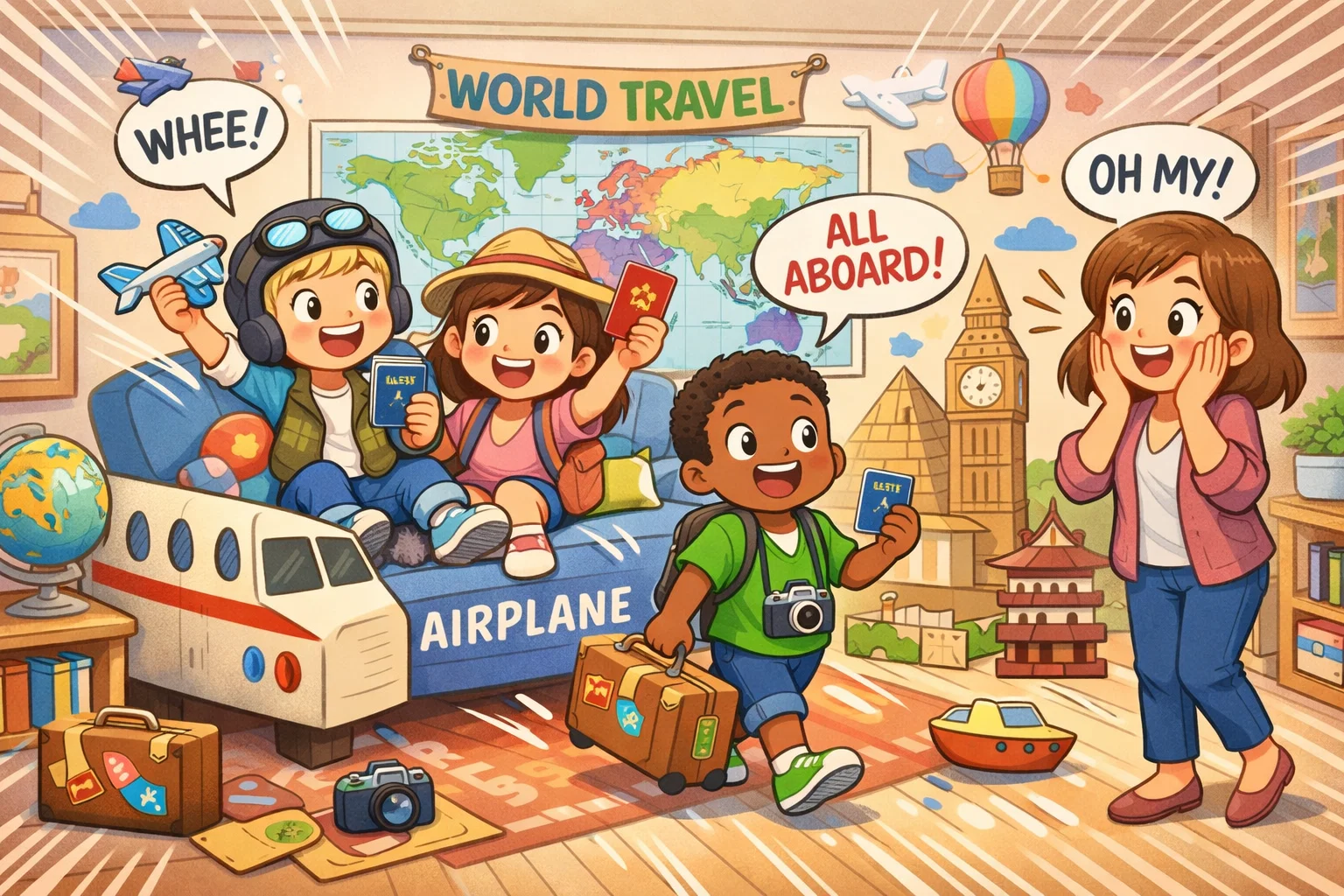
A plane ticket is not required to explore the world. With a few geography resources and a creative mindset, you can help take your kids on a journey across every continent. The concept of a “living room safari” or “kitchen classroom” allows children around the world to connect through shared experiences like music, art, and play.
- Create a Home “Airport”: Set up a check-in desk where children will love getting their passport stamped.
- Virtual Field Trips: Use high-definition videos to view famous landmarks from the comfort of your sofa.
- Sensory Bins: Fill a bin with rice (Asia), sand (Africa), or dried pasta (Europe) to represent different regions.
Week-long around world activity plan
A structured approach helps engage children without overwhelming them. A “Seven Days, Seven Continents” theme is a classic around the world theme that provides a clear roadmap.
| Day | Region | Key Activity | Resource Type |
| Monday | Europe | Build the Eiffel Tower with blocks | Engineering Play |
| Tuesday | Asia | Practice using a chopstick with pom-poms | Fine Motor Skills |
| Wednesday | Africa | Make maracas using recycled bottles | Musical Craft |
| Thursday | North America | Design a sombrero or create a model of a totem pole | Artistic Expression |
| Friday | South America | Rainforest “I Spy” game | Observation |
| Saturday | Australia | Dot painting inspired by Indigenous art | Cultural Art |
| Sunday | Antarctica | Ice cube “Penguin” rescue | Sensory Play |
Home-based global learning ideas
For busy parents, focusing on low-prep ideas helps keep activities manageable. Use a world map as a placemat during dinner to spark conversation. Printable activities such as country fact sheets can also be used such as a country fact sheet to learn one new thing together each day. Older children might enjoy a matching game where they pair a landmark with its corresponding country.
Classroom-friendly international activities
In a school setting, around the world activities at the primary level often focus on collaboration. Educators can set up dramatic play centers—a French bakery, a Chinese tea house, or a Mexican market. This encourages ESL students to share their heritage while helping all children to learn social cues from different countries.
Theme and Activity Planning
Building a cohesive around the world theme ensures that the learning sticks. Children often retain information more effectively when learning engages multiple senses when it is presented through multiple “languages of learning”—visual, auditory, and kinesthetic.
Culture-based learning themes
Instead of just looking at maps, dive into the “why” behind cultures around the world.
- Clothing: Discuss why people wear different garments (e.g., climate or tradition).
- Celebrations: Compare Diwali, Lunar New Year, and Carnival.
- Nursery rhymes: Listen to music and lyrics from other lands to hear different linguistic rhythms.
Geography and map activities
A world map is a powerful learning tool for children. Don’t just hang it on the wall; make it interactive!
- Map Puzzles: Great for preschoolers to understand how continents around the globe fit together.
- Landmark Pins: Use a free printable of world landmarks and have kids pin them to the correct location.
- Animal Mapping: Place toy animals in the regions they are native to.
Art and craft activities by country
Arts and crafts provide a tangible connection to a landmark or tradition. When children create something with their hands, they form a “memory anchor.” Whether it’s a postcard from a fictional trip or a complex 3D model, these fun activities bridge the gap between abstract geography and reality.
Country-Specific Activities for Kids
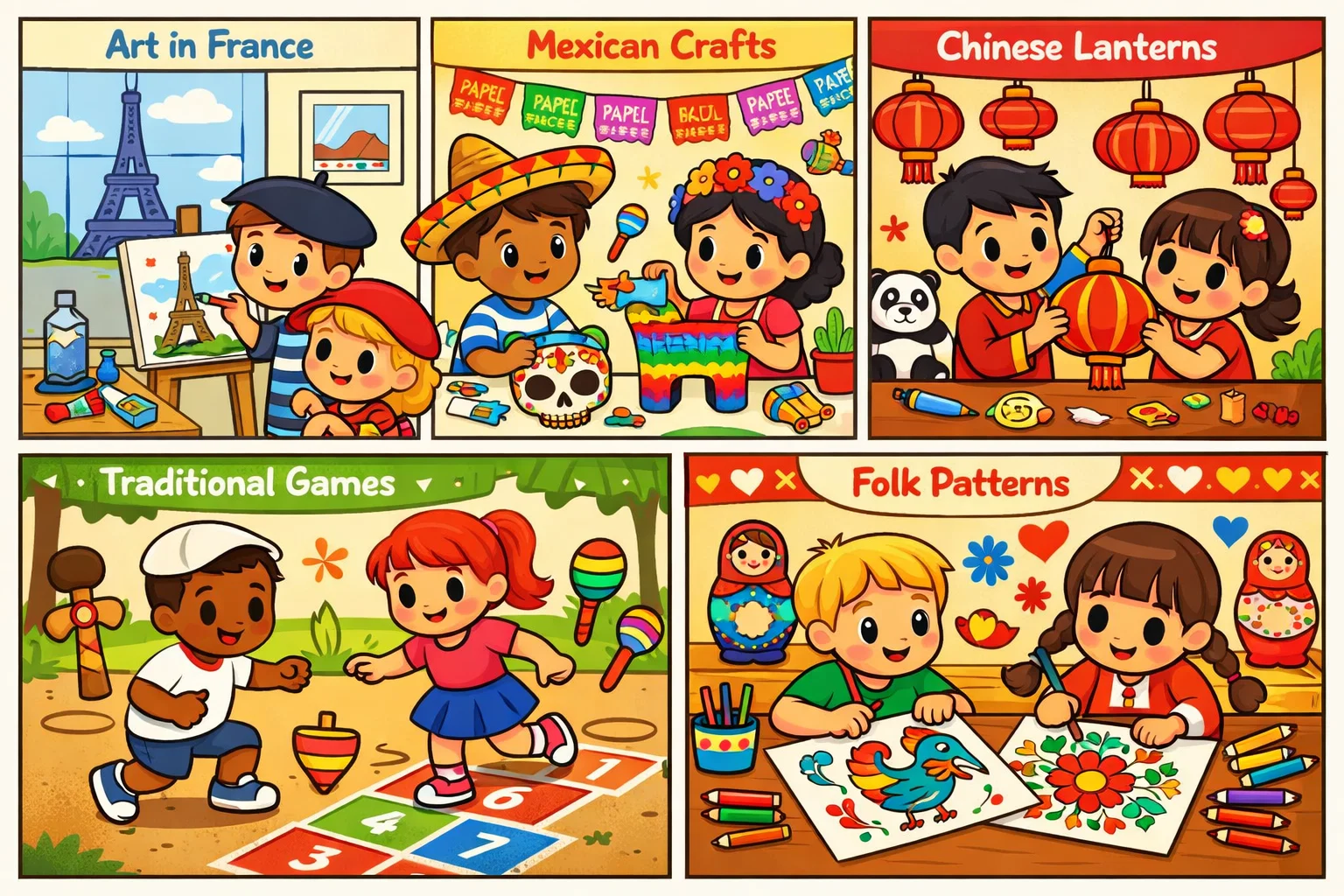
Focusing on specific places around the world allows for deeper exploration. Here are five mini-itineraries for your trip around the world.
France activities for kids 🇫🇷
France is more than just the Eiffel Tower. Introduce the concept of Impressionism by letting children paint “en plein air” (outdoors).
- Food: A simple “taste test” of cheeses or croissants.
- Language: Learn “Bonjour” and “Merci.”
- Craft: Use cardboard to build a 3D landmark like the Arc de Triomphe.
Mexico activities for kids 🇲🇽
Mexico offers a riot of color and sound. It’s a fantastic country for outdoor activities and high-energy play.
- Music: Make maracas and dance to folk songs.
- Art: Create “Papel Picado” (cut paper banners) to decorate your learning space.
- Games: Learn about the history of chocolate—originally a spicy drink for the Aztecs!
England activities for kids
England provides a wealth of storytelling opportunities, from knights to modern-day royalty.
- Tea Party: A great dramatic play activity to practice manners and conversation.
- History: Build a “Stonehenge” using sugar cubes or grey playdough.
- Literature: Read stories about Paddington Bear or Winnie the Pooh.
China activities for kids 🇨🇳
China’s rich history offers many new activities for the classroom.
- Fine Motor: Use chopsticks to move “dragon eggs” (marbles) from one bowl to another.
- Writing: Try basic calligraphy using a brush and black paint.
- Festival: Create red paper lanterns to celebrate the Lunar New Year.
Russia activities for kids 🇷🇺
Russia’s vast landscape and unique folk art provide excellent world resources for study.
- Art: Draw “Matryoshka” (nesting dolls) and discuss how they fit inside one another.
- Science: Discuss the Arctic climate and how people and animals stay warm.
- Architecture: Color the swirling domes of St. Basil’s Cathedral.
Children Around World Learning Activities
One of the most powerful ways to engage children is to show them how their peers live in different countries. This builds a bridge of “sameness” while celebrating “difference.”
Daily life comparisons for kids
Create a T-chart (a worksheet can be useful here) comparing a typical day.
- What’s for Breakfast? Compare cereal in the UK to miso soup in Japan or gallo pinto in Costa Rica.
- School Commute: Some kids walk, some take a bus, and some go by boat!
- Bedtime Stories: Share a nursery rhyme or folk tale from a different continent.
Traditional games from different cultures
Kids enjoy movement. Playing a traditional game from another country is an instant hit.
- Otedama (Japan): A juggling game similar to bean bags.
- Luta de Galo (Brazil): A “rooster fight” game that improves balance (without actual fighting!).
- Ampe (Ghana): A rhythmic jumping and clapping game.
Music and movement activities from world cultures
Music is a universal language. You can listen to music from every corner of the globe to identify different instruments.
- African Drums: Use buckets to mimic the Djembe.
- Didgeridoo: Use a wrapping paper tube to explore the sounds of Australia.
- Samba: A great way to incorporate outdoor activities and movement.
Educational Value of Global Activities
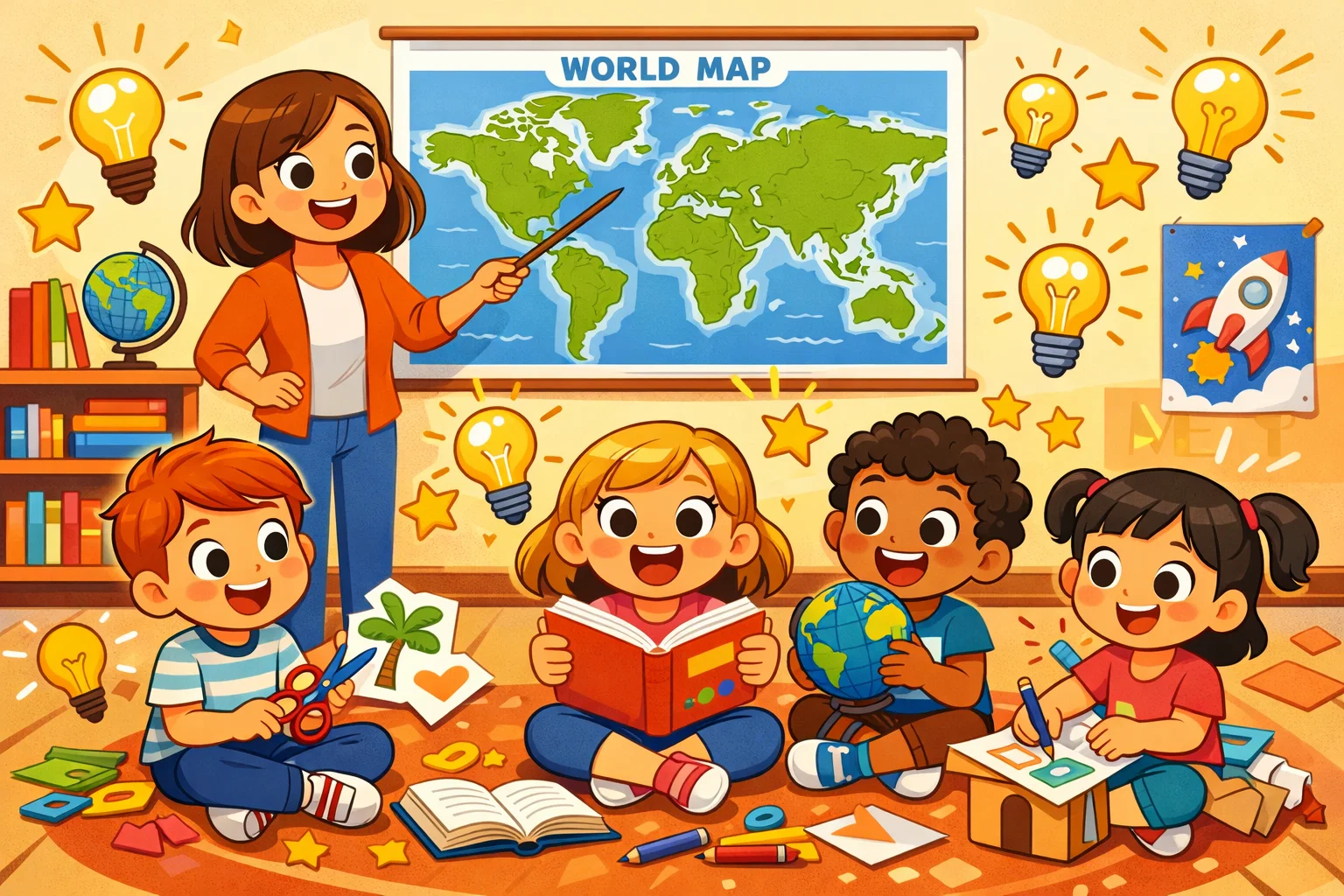
Why invest time in an around the world theme? Early childhood education places strong value on cultural competence, cultural competence is a core component of early childhood development.
Cultural awareness through play
When children engage in world activities for kids, they learn that “different” does not mean “strange”. Using printables that show children of the world in various traditional outfits helps normalize diversity.
Social and communication skill development
Global activities often require teamwork. Whether it’s a group project to build a world map or a matching game played with a partner, these tasks require children to negotiate, share, and communicate.
Creativity and critical thinking growth
Designing a postcard from a “trip” to the moon or Mars (extending the world theme!) or figuring out how to eat with a chopstick challenges the brain. It forces children to step out of their comfort zone and solve problems in new activities.
Family and Group Engagement Ideas
Global learning shouldn’t be a solitary task. It’s an opportunity for family participation activities that create lasting memories.
Family participation activities
- Themed Dinners: Pick a country, cook a meal together, and put on some traditional music.
- Travel Journals: To preserve memories, create a family scrapbook of your “pretend” travels.
- Language Learning: Use apps to learn five basic words in a new language every month.
Group and party-style world activities
If you are hosting a birthday or a school event, an around the world primary party is fantastic.
- Station Rotation: Each table represents a continent with a specific craft or snack.
- Passport Control: Kids get a sticker in their passport after completing a station.
- Photo Booth: Use props like a sombrero, a beret, or a cardboard landmark.
Printable and reusable activity resources
To keep things organized, use a variety of topics in your printable library.
- World Map tracking sheets.
- Country fact templates.
- Free printable colouring pages.
Community and Interaction Sections
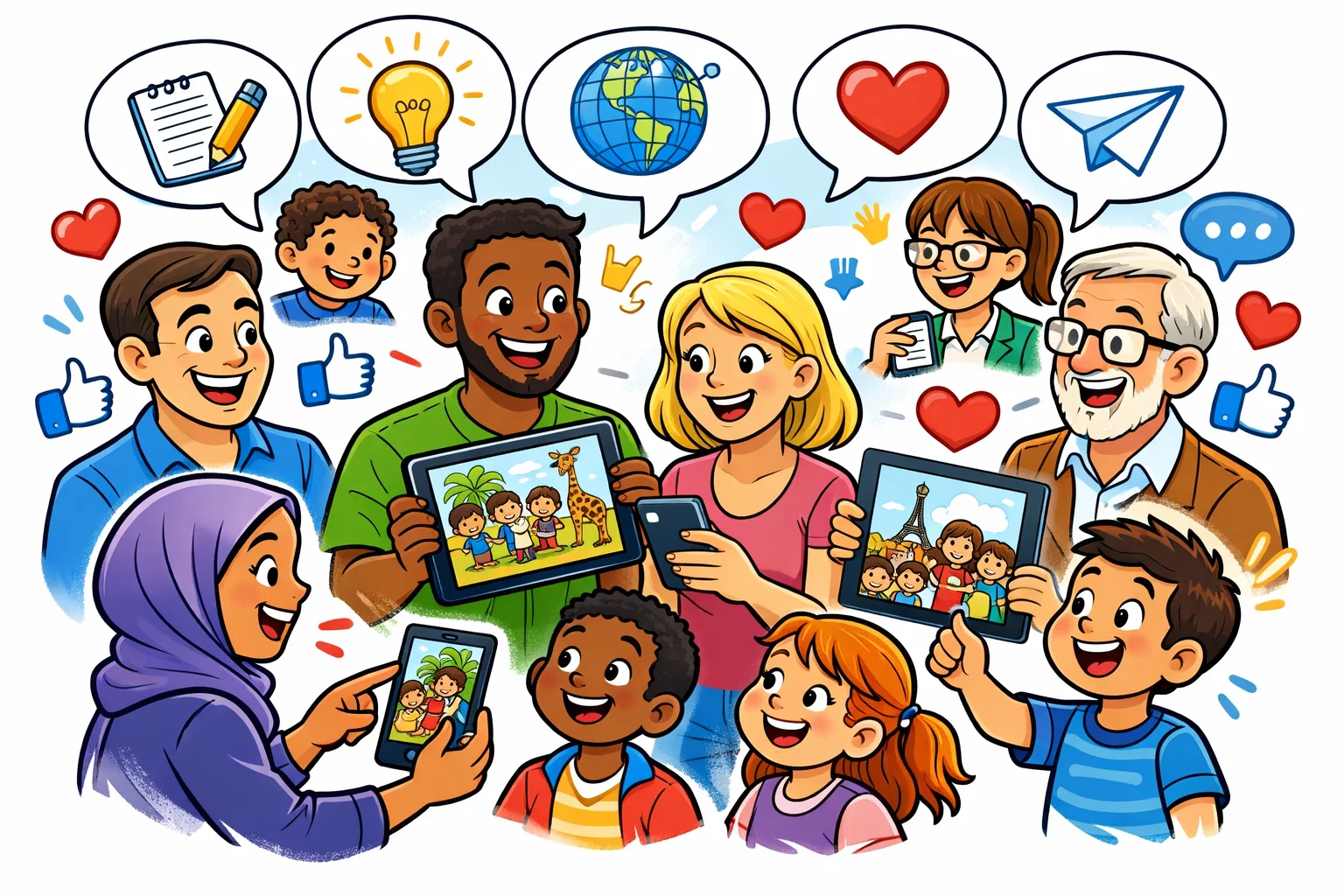
The best world resources often come from communities of parents and teachers come from a community of parents and teachers sharing what works.
Activity feedback and experience sharing
Did your preschoolers love the maracas? Did your older children find a specific worksheet challenging? Sharing experiences and adaptations helps inspire others with your “travel stories” with us. Seeing how different families adapt these fun activities is incredibly inspiring.
Social sharing and inspiration ideas
Join the conversation! Use hashtags like #GlobalKids or #AroundTheWorldAtHome to share photos of your crafts. Whether it’s a beautifully decorated postcard or a messy kitchen after a trip around the world cooking session, your journey can inspire others to explore the world from their own homes.
About Project and Educational Mission
The project mission is to provide high-quality, accessible world activities for kids that promote peace, understanding, and a lifelong love of geography.
Educational goals and values
Key priorities include:
- Inclusivity: Representing different cultures accurately and respectfully.
- Engagement: Making sure kids like the activities we propose.
- Accessibility: Using free printable materials and household items.
Audience and age suitability
Our resources are designed for a wide range:
- Toddlers/Preschoolers: Focus on sensory play and basic colouring pages.
- Primary Age: Focus on world landmarks, maps, and simple country fact research.
- ESL Learners: Using visual aids and dramatic play to build vocabulary.
Related Topics and Activity Categories
If you enjoyed these around the world activities, you might want to delve deeper into these specific areas:
Cultural crafts and art projects
Explore the specific techniques used in different countries, such as Japanese Origami, Mexican Tin Art, or Australian Aboriginal Dot Painting. This allows children to appreciate the skill and history behind global art.
Holiday and celebration activities worldwide
The world without leaving your house is full of festivals! From the lantern-lit streets of Diwali to the colorful masks of Carnival, learning through celebrations is a joyful way to introduce children to global traditions.
Geography and social studies extensions
For older children, consider looking at global issues like sustainability, climate across continents, and how famous landmarks are preserved. This turns a simple around the world theme into a comprehensive social studies curriculum.