30+ Airplane Activities for Kids: Screen-Free Games and Travel Tips

 Discover a Free Education Video App for Kids
Pastory uses AI to personalize educational video content based on your child’s interests and personality. Safe, engaging, and built for curious young minds. Sign up now to stay updated and enjoy early access with a free trial
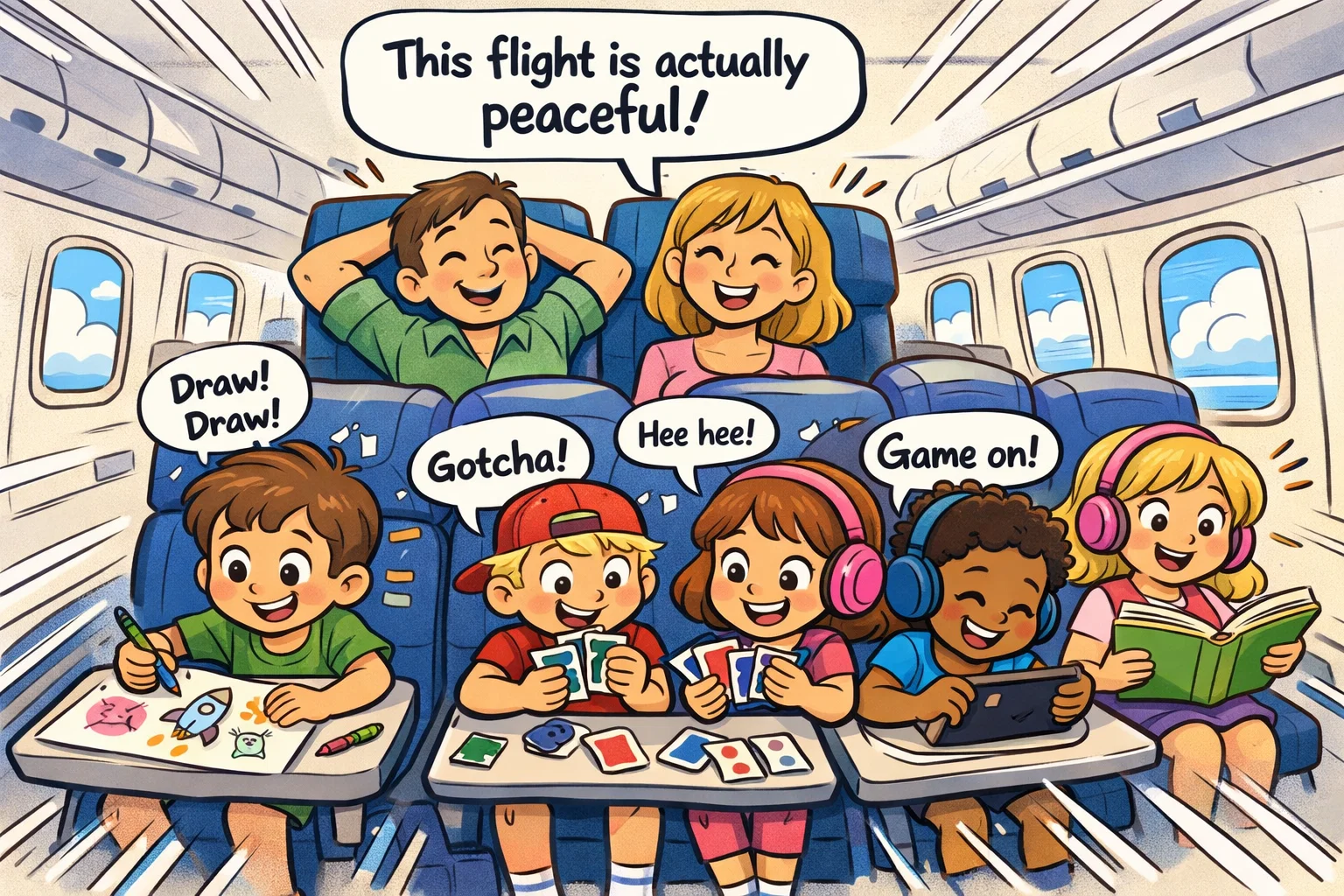
Flying with young children is easier when you have a flexible plan, whether you are taking a two-hour domestic flight, a long-haul international trip, or a child’s first flight. Keeping a toddler or school-age child comfortable in a small seat for several hours can be challenging. This guide brings together more than 30 practical, age-appropriate airplane activities for kids. The ideas are organized by age and activity type and include both screen-free options and a few purposeful digital choices.
Key Takeaways
- Prioritize Reusable Formats: Choose low-mess, durable items such as water-reveal books, magnetic games for older children, and dry-erase activities.
- Use a Flexible Rotation: Offer a new activity, snack, or quiet break when your child begins to lose interest rather than following a rigid timetable.
- Pack Light but Strategically: Organize activities in clear zippered pouches so you can reach them easily from under the seat.
- Prepare for Transitions: Practice the airport routine before the trip and encourage age-appropriate swallowing or chewing during takeoff and descent to help with ear pressure.
Best Activity Mix by Age
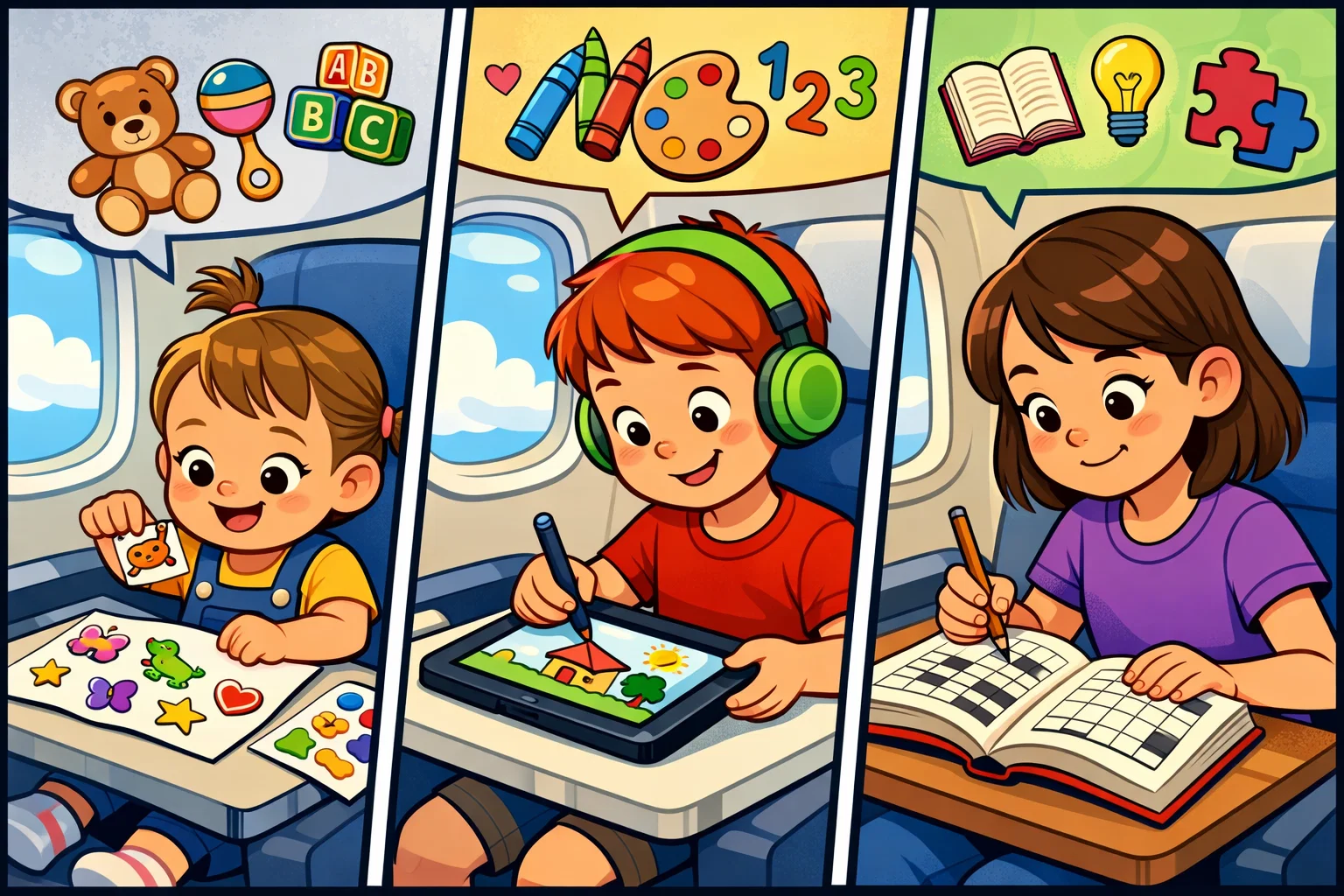
Children’s attention spans vary widely, especially in an unfamiliar environment, so use age ranges as a guide rather than a rule. An effective travel kit should reflect the child’s current interests and abilities. For children ages 1 to 2, focus on tactile, repetitive activities with large, securely attached pieces and close adult supervision. Preschoolers ages 3 to 5 often enjoy simple stories, matching games, sticker books, and other fine-motor activities. Children ages 6 to 7 may be ready for independent workbooks, travel games, and small building challenges. Many children aged 8 and older can spend longer periods on strategy games, logic puzzles, reading, or travel journaling.
Screen-Free Entertainment Priorities
Digital media can be useful during a long journey, and an occasional travel-day exception is unlikely to undo a family’s usual routines. The American Academy of Pediatrics recommends evaluating media use through its “5 C’s” framework: Child, Content, Calm, Crowding Out, and Communication. A balanced kit gives children other ways to play, create, and interact with a parent or sibling. Quiet, reusable materials such as cling-sticker books, drawing supplies, and self-contained puzzles work especially well in a cabin. Pack a mix of familiar favorites and one or two new activities, then introduce the new items gradually.
Smart Carry-On Packing
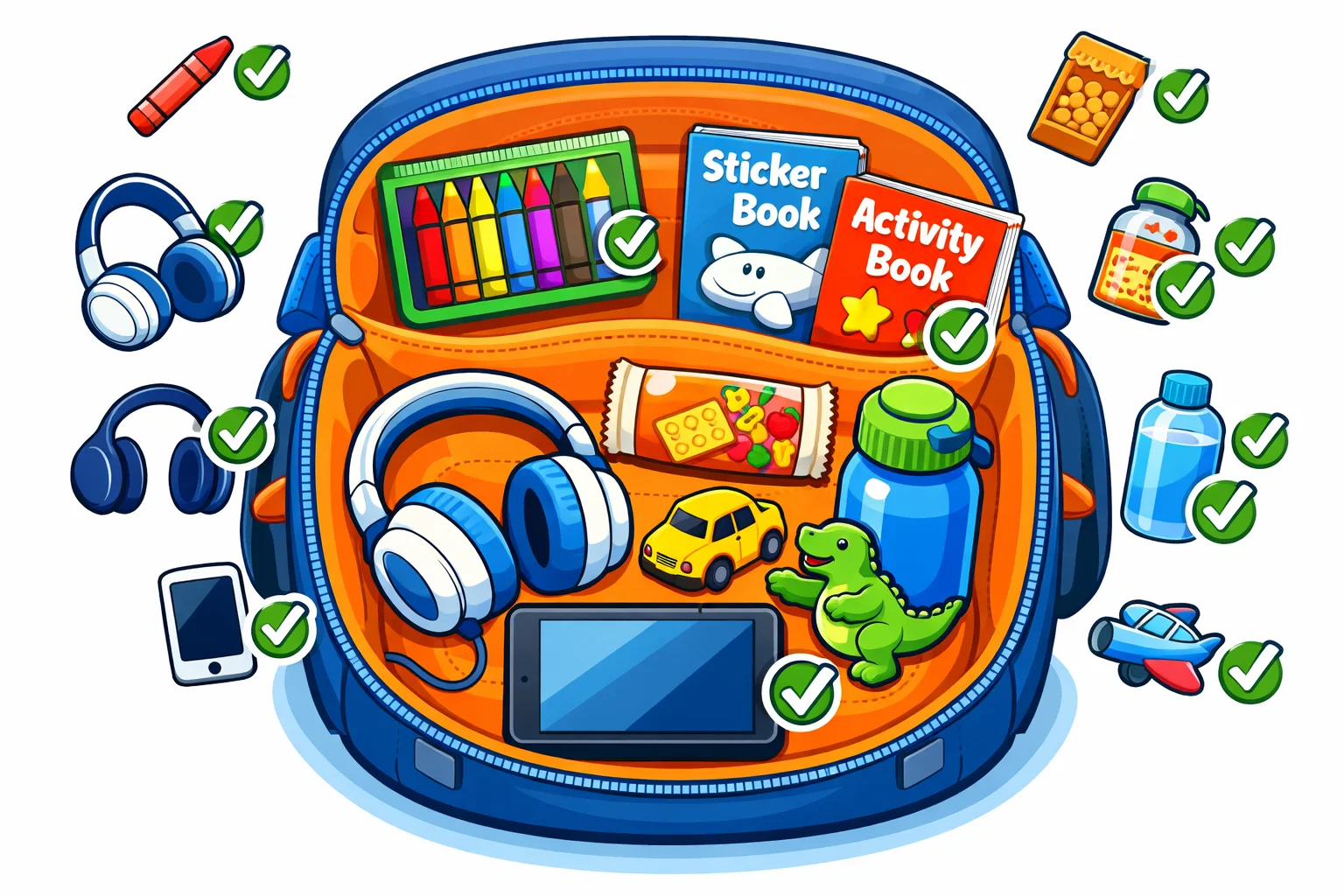
A disorganized diaper bag or backpack makes activity changes harder in a cramped row. Lightweight pouches or pencil cases can make the bag easier to manage. Remove bulky retail packaging whenever practical to save space. Group drawing supplies, crafts, games, and snacks separately so you can find what you need quickly. Keep a change of clothes for the child and, if possible, a separate change for the accompanying adult, along with wipes and suitable shelf-stable snacks, within easy reach.
Calm Flight Routine
A predictable but flexible rhythm can make a flight feel more manageable for children. Alternate focused activities with snacks, conversation, reading, and rest. For example, a drawing session might be followed by a snack and, when the seat-belt sign is off and the crew permits it, a brief walk or stretch. Save audiobooks, downloaded shows, or games for moments when they are most useful, such as a long delay or the later part of the flight.
How to Pack Travel Activities for Toddlers and Kids
Backpack Kids Can Carry
An appropriately sized backpack can help a child feel involved in the trip. The American Academy of Pediatrics advises keeping a child’s backpack at no more than about 15% of body weight, and a travel backpack can usually be much lighter. Choose a lightweight bag with adjustable padded straps, an optional chest strap, and easy-to-use zippers. Pack only light items, such as a small comfort toy, an empty water bottle, and one activity book.
Pencil Case for Drawing Supplies
Loose crayons and markers can roll off an airplane tray table. Keep them in one zippered pencil case, and choose short triangular crayons or washable markers when possible. Six to eight colors are usually enough for a compact travel kit. A smaller selection also makes cleanup easier and reduces the chance of losing pieces under the seats.
Organizing Pouches by Activity Type
Transparent or color-coded pouches make it easier to manage activities during a flight. You might use one pouch for drawing, one for games, one for snacks, and a separate pouch for wipes or medication. The categories should be intuitive to the adult who will be reaching for them. Keeping activities in separate pouches also prevents every option from appearing at once.
Individual Activity Packs
Small, self-contained activity packs can make each new option feel special. Place a sticker scene, a few age-appropriate building pieces, or a mini puzzle in a simple paper envelope or reusable bag. Introduce the packs one at a time as the flight progresses. This approach reduces clutter and makes it less likely that pieces from different sets will become mixed together.
Activity Rotation System
Activity rotation works best as a flexible response to the child rather than a fixed schedule. Offer one main activity at a time, and switch when the child becomes restless or frustrated. The example below provides starting points, but some children will want to change sooner and others will stay engaged for longer.
| Age group | Suggested starting point | Transition idea |
| Toddler (1–2 years) | 5–15 minutes | Snack, song, simple book, or supervised sensory toy |
| Preschooler (3–5 years) | 10–25 minutes | Verbal game, snack, story, or seated stretch |
| School-age (6+ years) | 20–45 minutes | Drink break, audio activity, or brief walk when permitted |
Carry-On Space and Weight Limits
Under-seat space varies by airline, aircraft, and seat location, so check your airline’s personal-item limits before packing; the FAA likewise advises travelers to confirm baggage limits with their airline. Prioritize flat, collapsible, or multipurpose items over bulky plastic sets. Remove unnecessary retail packaging, and choose activities that fit comfortably on a standard tray table or a child’s lap. Follow the crew’s instructions for any item that cannot be safely stowed.
Backup Supplies for Spills and Delays
Delays and missed connections can quickly use up a child’s regular activities and snacks. Keep a small backup kit with extra shelf-stable food, wipes, one new high-interest activity kept in reserve, and a power bank that complies with the airline’s limits. Carry the power bank in carry-on baggage only, protect it from damage and short circuit, and remove it if the bag is checked at the gate. The goal is not to overpack, but to preserve one or two options for the most difficult part of the journey.
Airplane Activities by Age
Activities for Toddlers on Planes
Toddlers often respond well to tactile, repetitive, low-complexity play. Choose activities with large pieces that are securely attached or too large to swallow. Close adult supervision is essential, especially when an activity includes cords, fasteners, food, or removable parts. Stop using any item that becomes damaged during the trip.
Airplane Activities for 1-Year-Olds
- Sensory Zipper Boards: Choose a compact fabric board with large zippers, buckles, and hook-and-loop flaps that are securely attached to the base.
- Soft Finger Puppets: Use washable plush or silicone puppets for parent-led stories and peekaboo, and follow the manufacturer’s age and safety guidance.
- Soft Crinkle Books: Washable fabric books with crinkle material provide gentle sensory play without loose paper or small pieces.
Airplane Activities for 2-Year-Olds
- Reusable Sticker Play: Let a 2-year-old place large reusable stickers on the set’s own glossy background or on a personal reusable mat rather than directly on aircraft surfaces.
- Snack Sorting: Use a clean, food-safe divided container or silicone snack cup for sorting age-appropriate foods by color or shape while supervising closely.
- Lift-the-Flap Board Books: Sturdy board books with flaps offer predictable, repetitive play and simple opportunities to name objects and tell stories.
Airplane Activities for 3-Year-Olds
- Lacing Cards: Large cards with wide holes and a thick, blunt-ended lace can help a 3-year-old practice hand-eye coordination under adult supervision.
- Craft-Stem Sculpting: Soft craft stems with protected ends can be bent into simple shapes, bracelets, or chains, but an adult should check them for exposed wire.
- Preschool Sticker Scenes: Themed books that ask children to match animals, vehicles, or shapes to the correct places support visual matching and storytelling.
Airplane Activities for 4-Year-Olds and Preschoolers
- Dry-Erase Activity Books: Laminated pages with tracing lines, letters, and simple mazes let a 4-year-old draw, erase, and repeat.
- Beginner Card Games: Matching or sorting card games designed for small hands can be played on a tray table, although a card holder may help keep the deck contained.
- Contained Letter Magnets: Older preschoolers can sort letters and build simple words in a metal tin with a secure lid, but magnetic toys require close supervision and should not be used if any magnet is loose or exposed.
Airplane Activities for 6-Year-Olds and Older
- Travel Building Challenges: Pack a small set of age-appropriate building bricks in a shallow container with a secure lid and offer prompts such as building a plane, bridge, or animal.
- Logic and Puzzle Workbooks: Age-appropriate mazes, word searches, dot-to-dot pages, and logic puzzles encourage independent concentration.
- Flight-Map Activities: With the seatback map or a printed route, children can estimate time remaining, identify places along the route, or record changes in altitude when that information is available.
Airplane Activities for 8-Year-Olds and Older
- Compact Strategy Games: Low-footprint card or puzzle games can keep older children and siblings engaged without taking over the seating area.
- Travel Journaling: A sketchbook and pen give children space to record airport observations, draw the view, or write about what they expect at the destination.
- Offline Educational Apps: Downloaded coding, geography, language, or puzzle apps can provide structured screen time without relying on in-flight Wi-Fi.
Screen-Free Airplane Activities for Kids and Toddlers
Best Screen-Free Formats
The best screen-free travel activities are compact, quiet, reusable, and easy to contain. Choose formats that still work when the tray table is unavailable and that do not create loose pieces in the aisle.
The table below compares common screen-free formats; the time ranges are rough estimates and will vary by child.
| Activity format | Typical play time | Mess level | Main skill or benefit |
| Water-Reveal Books | 10–30 minutes | Very Low | Fine-motor practice and cause-and-effect play |
| Contained Magnetic Puzzle Sets | 15–40 minutes | Low | Spatial reasoning and problem-solving |
| Reusable Cling-Sticker Books | 10–25 minutes | Low | Storytelling and fine-motor practice |
| Wax-Coated Craft Strands | 10–30 minutes | Very Low | Tactile and open-ended creative play |
Screen-Free Activity Rotation
For a longer screen-free stretch, alternate creative, interactive, and quiet activities rather than expecting one item to last for a set period. Begin with drawing or a water-reveal book. Then offer a snack and a verbal game such as I Spy. Finish with a story or rest, shortening or extending each step according to the child’s response. Repeat the sequence with different materials as needed.
Screen-Free Backup Kit
Keep one small backup pouch out of sight until the usual activities stop working or a delay runs long. Include two or three compact, age-appropriate options, such as a new sticker sheet, a mini puzzle, or a quiet sensory toy with no loose parts. Introduce them one at a time, and avoid adhesive or glow-in-the-dark products unless they are designed for children and used only on the product’s own surface.
Screen-Free Safety Checks
Before the trip, inspect every toy for loose parts, exposed magnets, sharp edges, leaking liquid, damaged batteries, or strong odors. Follow the manufacturer’s age rating and remove any item that could roll into the aisle, create a choking hazard, or damage aircraft surfaces. Magnetic toys should have fully enclosed magnets and remain under close supervision because, as the U.S. Consumer Product Safety Commission warns, swallowed magnets can cause severe internal injuries. Ask the cabin crew before using any activity that could affect shared surfaces or other passengers.
Activity Books and Drawing Supplies
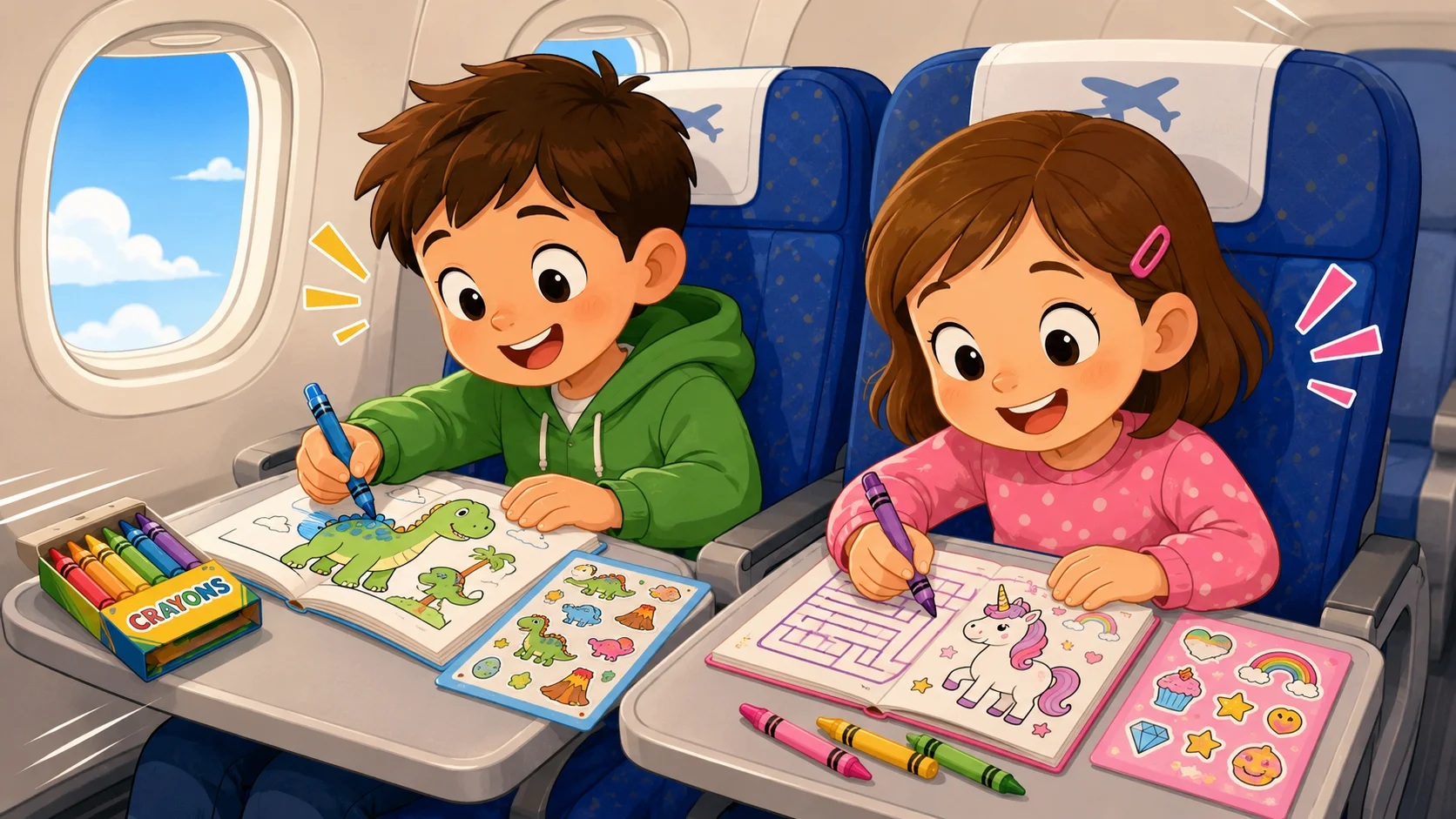
1. Highlights Activity Books
Highlights Hidden Pictures books can hold the attention of older preschoolers and school-age children. Searching for small objects hidden in detailed scenes helps children practice visual discrimination and sustain their attention. Choose a level that the child can complete with little help so the activity feels satisfying rather than frustrating.
2. Sticker and Activity Books
Themed activity books combine pictures, stories, and stickers in one compact format. Choose a subject the child already enjoys, such as construction vehicles, ocean animals, space, or the destination. A familiar theme can make it easier for the child to begin playing independently.
3. Inexpensive Sticker Sheets
Low-cost sticker sheets are an easy way to add variety to a travel kit. Choose large, easy-to-peel stickers for younger children and avoid loose glitter or tiny foam pieces. Pair the stickers with a notebook or the set’s own background rather than applying them to aircraft surfaces.
4. Reusable Sticker Sets
Reusable cling-sticker sets are a lower-mess alternative to single-use paper stickers. The pieces attach to the set’s glossy background and can be moved repeatedly. Store them in a resealable pouch, and keep small pieces away from children who may put them in their mouths.
5. Reusable Water-Reveal Books
Water-reveal books use pages that display colors when brushed with a small amount of water and fade as they dry. They can be reused several times during a trip. For travel through U.S. security, an empty water pen is the simplest option; fill it after screening, consult the TSA’s current liquid guidance, and check local rules when traveling elsewhere.
6. Dry-Erase Busy Book
A dry-erase busy book can include tracing, matching, counting, and drawing activities. Attach the marker to the book with a short, secure tether that cannot wrap around the child’s neck, or store it in the same pouch. Include a small cloth for wiping the pages, and supervise younger children with the marker.
7. LCD Drawing Tablet or Electronic Sketch Pad
An LCD writing tablet offers a lightweight, low-mess surface for drawing and practicing letters. Many models use reflected ambient light rather than a backlit display, but they still contain a battery and should be checked for damage before travel. Choose a model with a securely attached stylus and a screen-lock switch.
8. Washable Pens and Crayons
Choose short, thick washable markers or triangular crayons that are easy for small hands to grip. Triangular crayons are less likely to roll off a tray table, and washable supplies make cleanup easier if marks end up on hands or clothing.
9. Stabilo Cappi Pens
Stabilo Cappi pens use a ring that keeps the caps together, which can reduce the number of loose pieces in the cabin. The design is one example of a travel-friendly marker set rather than the only suitable option. Check the product’s age guidance and keep the ring and pens contained when they are not in use.
10. Journal or Scrapbook
For children aged 6 and older, a travel journal can turn the flight into a writing and drawing project. They can sketch the view, note the route, record flight details shown on the seatback display, or write first impressions of the destination. Use a copy or a redacted keepsake instead of attaching a boarding pass that displays personal information.
Simple Craft Supplies and Sensory Activities
11. Wikki Stix
Wikki Stix are wax-coated yarn strands that can be bent and pressed onto the activity’s own card or another personal surface. Children can form letters, animals, and simple three-dimensional shapes without glue. Follow the age guidance, supervise younger children, and do not allow the strands to be chewed or placed in the mouth.
12. Wooden Lacing Cards
Travel-size lacing cards can support fine-motor practice and concentration. Threading a thick lace through large holes requires hand-eye coordination and use of both hands. Choose a short, blunt-ended lace and supervise young children because any cord can present a safety risk.
13. Colorful Craft Tape
Low-tack painter’s tape or children’s craft tape can be used on paper, a notebook, or a personal reusable mat to make roads, mazes, and shapes. Do not apply tape directly to tray tables, windows, seats, or other aircraft surfaces without crew permission. Keep the roll small and remove all scraps before leaving the row.
14. Colorforms
Colorforms and similar cling-shape sets use flexible pieces that attach to a glossy background without adhesive. Children can rearrange characters and objects to create new scenes. Choose a folder-style set that closes securely so the pieces remain contained.
15. Craft Stems
Soft craft stems are inexpensive and flexible enough for making simple shapes, chains, or pretend glasses. Select versions with well-covered ends and inspect them frequently for exposed wire. They are better suited to preschoolers and older children who can follow safety instructions.
16. Sensory Board
A compact fabric busy board may include buckles, snaps, laces, and other securely attached fasteners. It lets toddlers explore different textures and movements without many loose pieces, but every component should be firmly attached and any cords should be short enough to avoid entanglement.
17. Fidget Toy Set
One or two quiet fidget toys, such as a silicone popper or a sealed marble mesh, may help a restless child stay seated. Choose age-appropriate products and avoid toys with flashing lights, loud clicks, weak seams, small detachable pieces, or accessible button batteries.
18. Alphabet Magnets
Magnetic letters can support spelling and letter recognition when used in a metal tin with a secure lid. Choose large pieces with magnets that are fully enclosed, and count the pieces before and after use. Do not use the set with a child who mouths toys, and discard it immediately if a magnet becomes exposed or detached.
19. Mini Magnetic Building Tiles
A small set of age-appropriate magnetic building tiles can be used for flat mosaics or simple three-dimensional shapes. Use only intact products from a reputable manufacturer, supervise play closely, and stop using any tile that cracks or exposes a magnet. Store the tiles in a zippered pouch when the activity is finished.
20. Travel LEGO Builds
Pack a small selection of age-appropriate LEGO bricks or similar building pieces in a shallow container with a secure lid. Offer specific challenges, such as building a small plane, bridge, or animal with the available pieces, and do not use this activity with children who still put small objects in their mouths.
Quiet Games and Puzzles
21. Dobble Travel Game
Dobble, sold as Spot It! in some markets, uses round cards with matching symbols and usually comes in a compact tin. Players race to find the one symbol shared by two cards. It works best for children who can manage the cards without scattering them across the row.
22. Card Games
Games such as Uno, Go Fish, or a standard deck offer a lot of play in a small package. A freestanding card holder can help children with smaller hands. Keep the draw pile in a shallow pouch or on a non-slip mat so cards do not slide into the aisle.
23. I Spy
I Spy is a no-equipment verbal game that can be adapted to many ages. Use colors, shapes, or letters visible from the child’s seat, such as details on the safety card or objects outside the window. Do not encourage children to touch emergency equipment or repeatedly press call buttons.
24. 20 Questions
Twenty Questions is a simple guessing game for older children and requires no equipment. One player thinks of an animal, place, person, or object, and the others ask up to 20 yes-or-no questions. For younger children, narrow the choices to a familiar category.
25. Would You Rather?
A travel-themed game of “Would You Rather?” can start conversations and pass the time on a long flight. Questions such as “Would you rather fly like a bird or swim like a dolphin?” encourage imagination and work well when the tray table must remain stowed.
26. Magnetic Puzzle Game
Contained magnetic puzzles can help prevent pieces from sliding during travel. Many come in book-style folders with a magnetic board for tangrams or puzzle pieces. Choose a set with securely enclosed magnets, follow the age rating, and check for damage before use.
27. Travel Activity Pack
A premade travel pack may combine coloring pages, puzzles, crayons, and stickers in one pouch. Check the age recommendation and review the contents before the trip, removing duplicate, messy, sharp, or very small items that do not suit the child or the cabin.
28. Multi-Game Activity Pack
Reusable game books can combine Tic-Tac-Toe, Hangman, Dots and Boxes, and other pencil-and-paper games on laminated pages. An erasable marker keeps the kit compact, but choose one with a secure cap and store it immediately after each game.
29. Sticker Search Challenge
Turn a sticker book into a search game by asking the child to find items with a certain color, shape, or theme before placing them. The extra step adds a simple matching challenge. Adjust the prompts so the child can succeed without becoming frustrated.
30. Seatback Scavenger Hunt
A seat-based scavenger hunt can focus attention on safe objects visible from the child’s seat. Ask the child to spot a reading light, window shade, seat number, or picture on the safety card. Make clear that emergency equipment and the flight-attendant call button should not be touched as part of the game.
Travel Tips: How to Prepare Kids for a First Flight
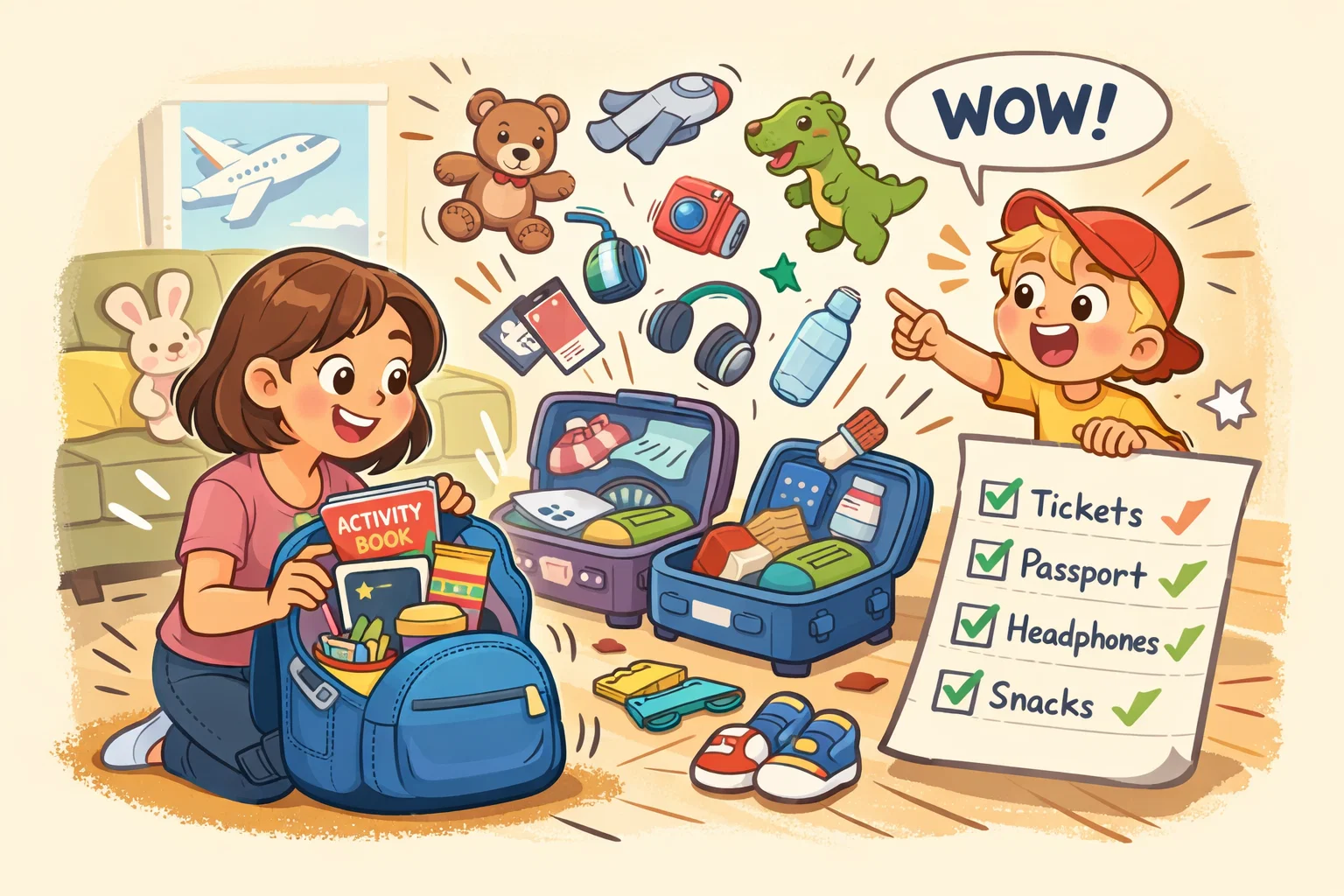
First-Flight Preview
Explaining the trip in advance can reduce uncertainty for a child. Describe the main steps in simple language – arriving at the airport, checking bags, going through security, waiting at the gate, boarding, taking off, spending time in the air, landing, and collecting luggage – while noting that plans can change and adults will explain what happens next.
Airport Role-Play
Pretend play at home can make airport routines feel more familiar. Set up a mock security line with chairs or boxes, practice placing a backpack in a bin, and rehearse sitting with a seat belt fastened. Keep the activity light and avoid promising that every airport will follow exactly the same sequence.
Boarding and Seat Routine
A simple routine can help a child settle after boarding. Stow the main bag as directed, fasten the child’s seat belt or secure the child in an airline-approved restraint, as applicable, and keep the aisle clear while following the crew’s instructions. For flights governed by U.S. rules, the FAA states that the safest place for a child under 2 is in an approved child restraint system in a purchased seat.
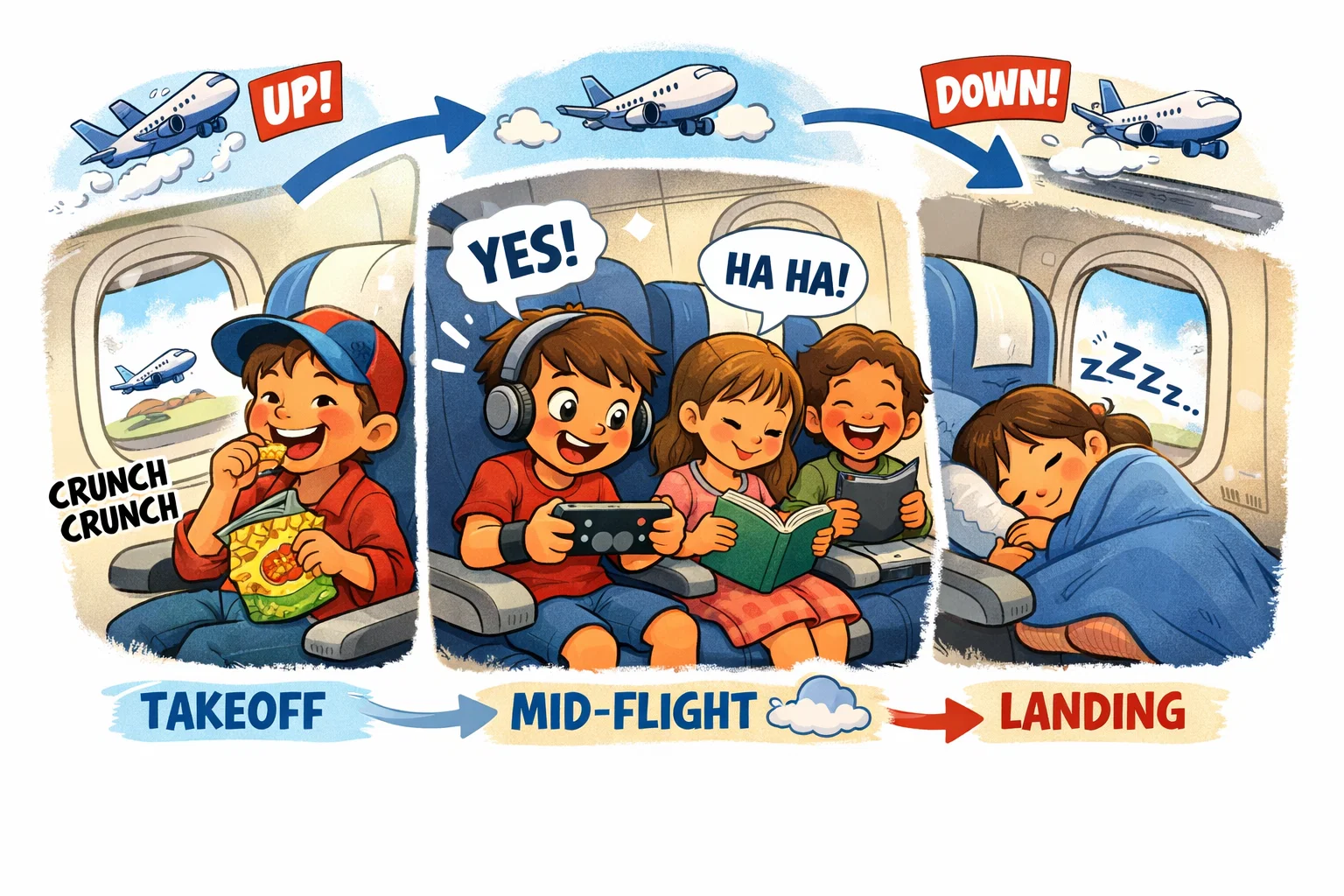
Takeoff and Landing Comfort
Changes in cabin pressure, especially during descent, can cause ear discomfort. During descent, encourage younger children to swallow by offering a drink or pacifier. Older children who can safely chew gum may use it, and yawning can also help equalize ear pressure. Seek medical advice before flying if the child has severe ear pain, recent ear surgery, or another relevant condition.
Flight Activity Schedule
A loose schedule can help you remember to alternate activities, snacks, rest, and bathroom visits. Plan around predictable events such as meal service, naps, and takeoff or landing, but expect the timing to change. Reserve one favorite activity or a short screen-time window for the period when the child is usually most restless.
Sleep and Meal Timing
Try to preserve familiar cues, but allow for delays, time-zone changes, and unusual cabin schedules. Offer food and drinks at reasonable intervals and watch for signs of fatigue. Comfort and hydration are usually more useful goals than forcing a strict home routine during the flight.
Behavior Expectations
Before boarding, explain a few simple rules in positive language. Ask children to keep their seat belts fastened whenever they are seated, use quiet voices, keep their feet away from the seat in front, and listen to the crew. During the flight, notice and praise specific helpful behavior.
Delay and Layover Backup Plan
A long gate delay or missed connection can exhaust the regular travel kit. Keep extra snacks, wipes, a compliant portable charger, and one or two new activities in reserve. Identify a quiet gate area or a safe place where the child can move around, and locate a family restroom if needed. Use the layover to refill water and recharge devices.
Flight Entertainment Plans by Trip Length
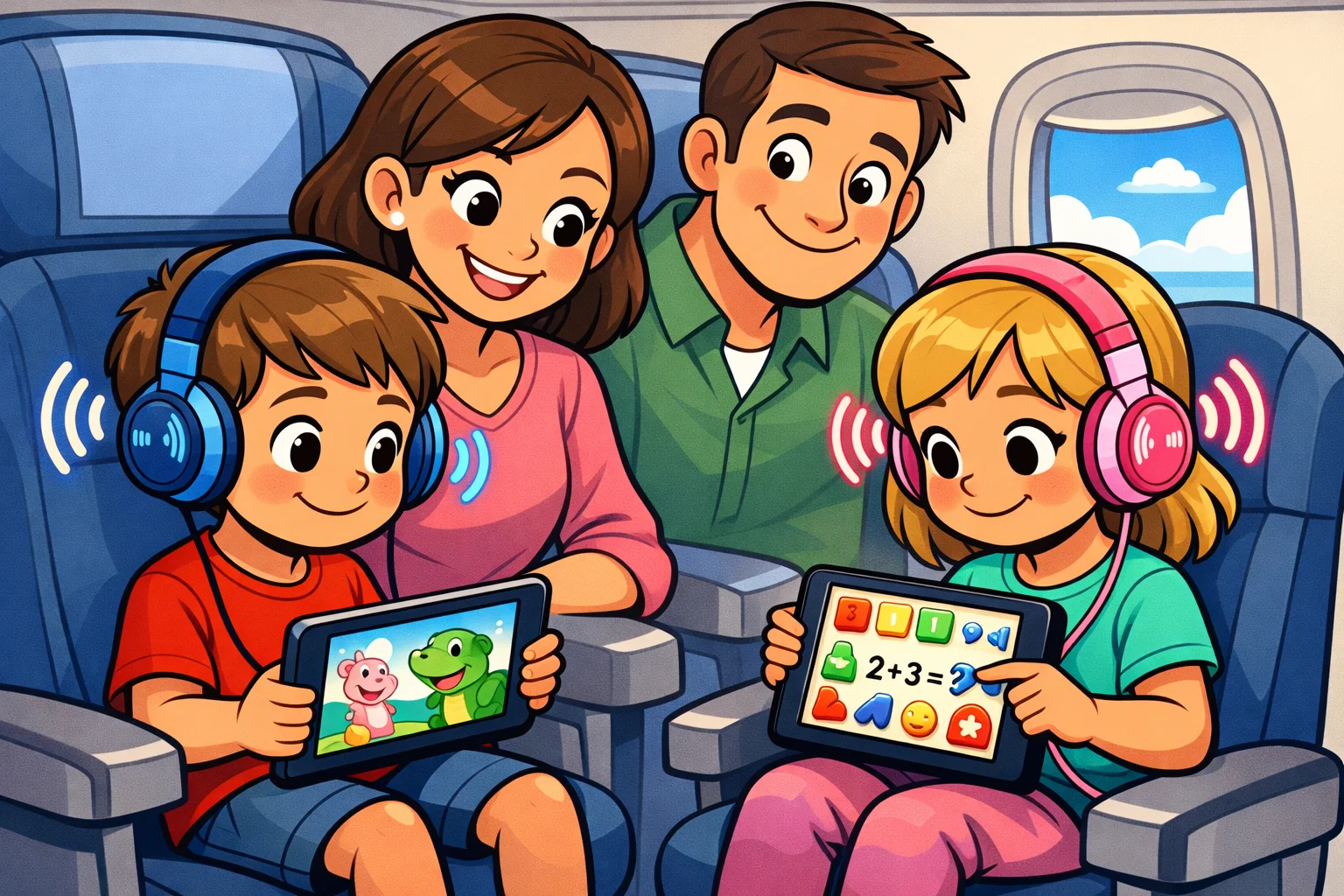
1–2-Hour Flight Plan
A short flight leaves limited activity time after boarding, takeoff, and landing. Pack two compact activities, such as a water-reveal book and a sticker set, plus one familiar book and a snack. Keep one activity that does not require a tray table available during taxiing, takeoff, and descent.
3–5-Hour Flight Plan
For a medium-length flight, pack four to six different options, although you may not use them all. Begin with drawing or a puzzle, move to a tactile activity or simple game, and include snacks and quiet time. Save an audiobook, downloaded show, or favorite app for a period when attention is fading.
6–9-Hour Flight Plan
For a longer flight, divide supplies into a few separate pouches and alternate activities with meals, rest, and movement when permitted. Introduce a new book or small surprise item later in the journey. Do not try to fill every minute; looking out the window, talking, and resting are also useful parts of the routine.
Long-Haul Flight Plan
On an ultra-long flight, pace the activities and keep several high-interest options for the later hours. Combine sleep or rest with crafts, games, reading, downloaded media, and simple destination-themed prompts. Expect some activities not to hold the child’s interest, and be ready to switch to another option without treating the schedule as a test.
Overnight Flight Plan
For an overnight flight, prioritize familiar sleep cues rather than constant entertainment. Change the child into comfortable clothes, brush their teeth, and read a familiar book together. A quiet audiobook or white noise at a safe volume may also help. Use only child-restraint systems and sleep accessories permitted by the airline, and follow the crew’s seat-belt instructions.
Return Flight Plan
Refresh the kit for the trip home by replacing used sticker sheets, adding printable puzzles, or introducing drawing prompts based on the vacation. Reset reusable games with new challenges. A small change in presentation can make familiar materials feel new again.
Airplane Activities FAQ
What Are the Best Airplane Activities for Toddlers?
The best airplane activities for toddlers are simple, quiet, and easy to manage in a small space. Water-reveal pages, reusable stickers, soft busy boards, and large-piece matching games can keep a toddler’s hands busy without creating much clutter. Choose age-appropriate items with no loose magnets or small parts, especially when traveling with toddlers under 3.
How Can You Entertain a Toddler on a Plane?
To entertain a toddler on a plane, rotate between short activities instead of offering everything at once. Start with a familiar book or comfort toy, then introduce a new travel toy, a snack, or a simple verbal game when attention begins to fade. Keeping one or two surprises in the travel bag can help your little one stay interested during the later part of the flight.
What Should You Bring on a Flight With Kids?
Useful travel essentials for a flight with kids include wipes, a change of clothes, age-appropriate snacks, headphones, and several compact activities. Bring along a mix of familiar favorites and new options, but avoid packing too many toys. A small, well-organized selection is usually easier to manage during airplane travel.
Which Plane Activities Are Mess-Free?
Good mess-free plane activities include reusable sticker books, magnetic puzzles with securely enclosed magnets, dry-erase books, LCD drawing tablets, and water-reveal books. Water Wow books and similar products are particularly convenient because they use a refillable water pen instead of paint, ink, or loose craft materials.
How Do You Keep Kids Busy on a Long-Haul Flight?
For long-haul flights, divide travel entertainment into several activity blocks. Alternate between drawing, reading, snacks, quiet games, rest, and limited screen time. Older kids may enjoy logic puzzles, travel journals, connect-the-dots books, or educational activities that build problem-solving skills. Saving a high-interest activity for the final hours can also help keep kids busy on a flight when they are tired.
What Are Good Airplane Activities for a 2-Year-Old?
For a 2-year-old, choose activities with large pieces and simple cause-and-effect play. Reusable stickers, lift-the-flap books, soft sensory boards, and snack sorting with close supervision can work well. Toddler travel activities should be easy to stop and pack away when the seat-belt sign comes on or a flight attendant needs the aisle cleared.
Take a short quiz to find out what your everyday choices say about your parenting style
When your child is curious about something new, what’s your instinct?
Take a short quiz to find out what your everyday choices say about your parenting style
“Can I download this app?” What happens next?
Take a short quiz to find out what your everyday choices say about your parenting style
When it comes to rules at home, which sounds most like you?
Take a short quiz to find out what your everyday choices say about your parenting style
If you could give your child one life skill today, what would you pick?
Take a short quiz to find out what your everyday choices say about your parenting style
Your child gets to choose what to watch. What would your ideal setup look like?
Take a short quiz to find out what your everyday choices say about your parenting style
Pick your parenting superpower ✨