

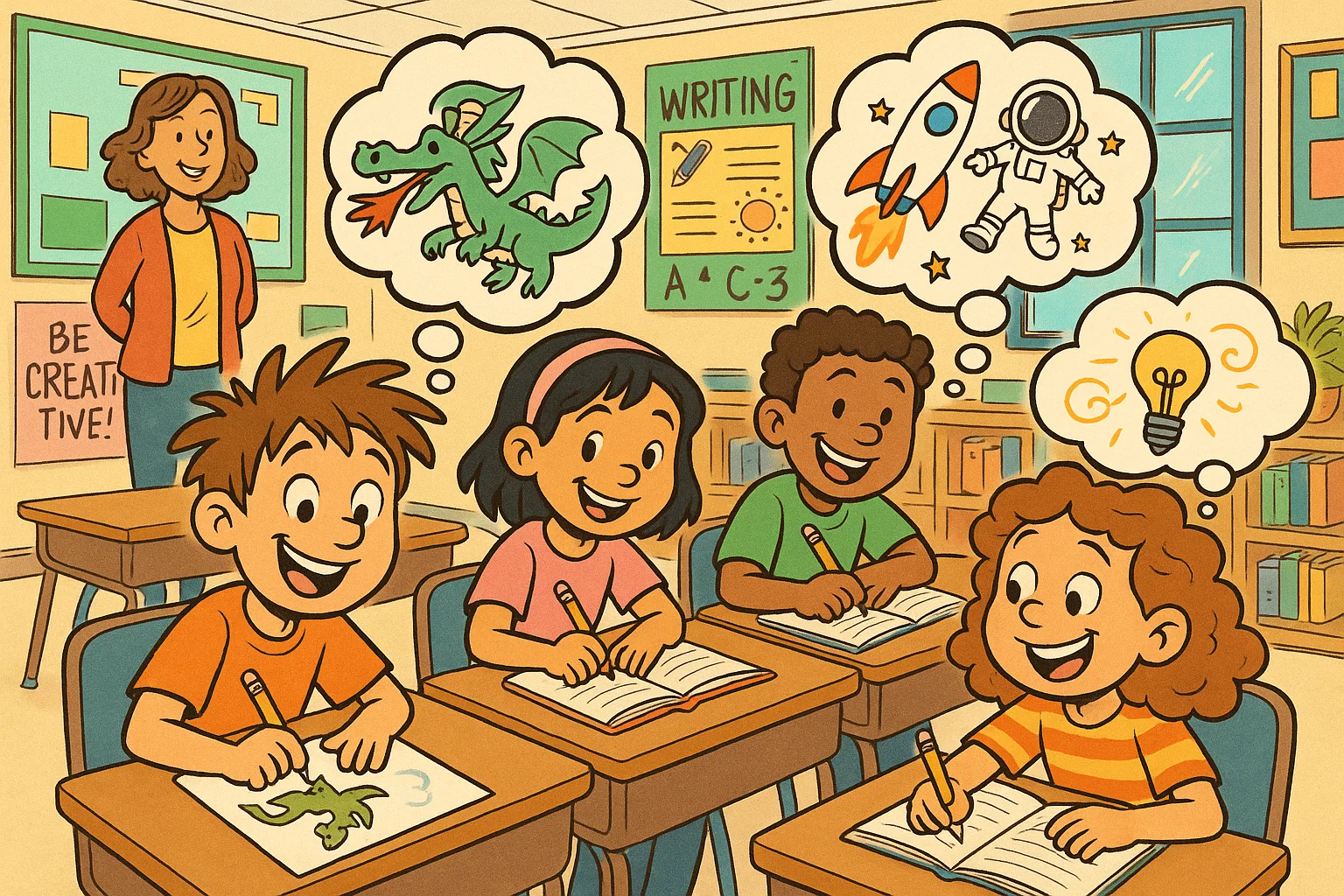
Fourth grade marks a key stage in a child’s learning journey. At this point, students move from simply learning to write to using writing as a tool for thinking, exploring, and expressing ideas. Writing prompts play a vital role in this transition – helping young learners overcome the “blank page” fear and sparking creativity, confidence, and clarity in their writing.
This guide brings together a wide variety of engaging prompts – from narrative and journal ideas to persuasive and funny exercises. Perfect for classrooms or at-home learning, these prompts help students build stronger writing skills while making the process genuinely enjoyable.
Benefits of 4th Grade Composition Starters
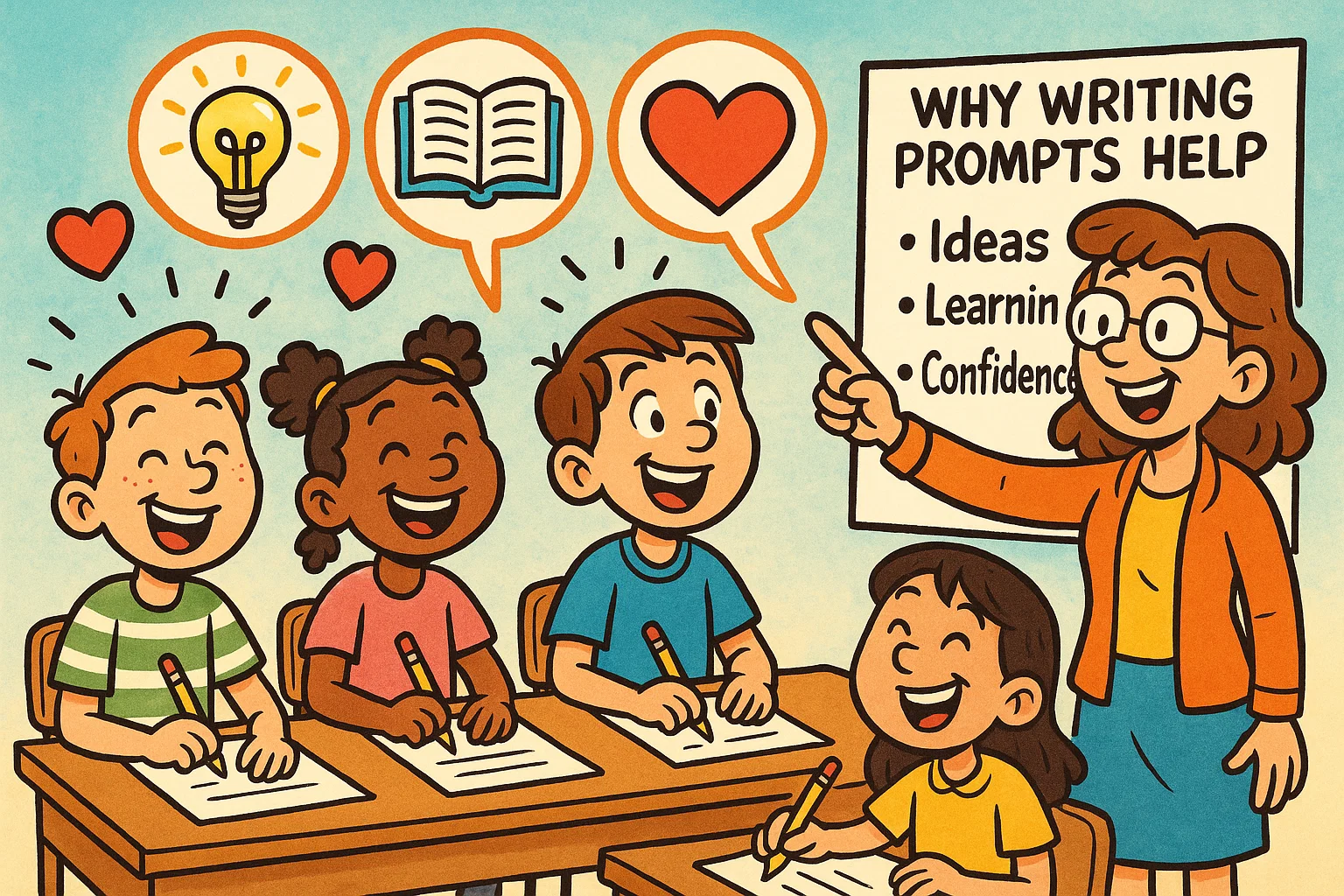
Writing prompts are a great foundation for holistic language development. They are powerful tools that go beyond simple practice, fostering creative writing, critical thinking, and emotional exploration. When young students engage in regular composition practice, they naturally support their reading comprehension and set a strong foundation for future academic success.
Building Imagination and Creativity
Prompts are like keys that unlock the vast inner world of students’ imaginations. By offering a simple premise – like a talking animal or a new superpower – prompts encourage kids to think both critically and creatively. They learn to expand on simple ideas, create original plots, develop compelling characters, and build descriptive settings. This focus on imaginative scenarios helps them see the process of writing not as a chore but as a dynamic, personal means of self-expression.
Improving Composition Confidence
The fear of a blank page can be paralyzing, even for eager young minds. Creative writing prompts help mitigate this anxiety by providing a starting point – a little story starter or a specific question to answer. Frequent, low-stakes composition practice, perhaps through a daily 4th grade journal, helps students overcome this initial hurdle. As they successfully complete a few lines or a full paragraph, their writing confidence soars, encouraging them to take greater risks with their ideas and style. Research on elementary-aged writers shows that students who report stronger writing self-efficacy tend to perform better on writing tasks – for example, a path-analysis study of 218 Fifth-grade students found self-efficacy made an independent contribution to writing performance.
Strengthening Grammar and Vocabulary
While the primary goal of these exercises is expression, structured 4th-grade writing prompts are a subtle way to strengthen grammar and introduce new vocabulary. When students are focused on crafting a story, they naturally experiment with new sentence structures and words to capture their ideas precisely. For example, a descriptive prompt forces the use of strong adjectives and adverbs. Teachers and parents can use these naturally-occurring opportunities to introduce editing concepts and more complex sentence patterns, helping kids practice these skills organically within their own creative work.
Narrative Writing Prompts for 4th Grade
Narrative writing prompts ask students to tell a story – to invent, connect, and entertain. This is often the most enjoyable type of prompt for young learners as it taps directly into their love of make-believe and adventure.
Adventure and Fantasy Stories
These story starters often feature high-stakes scenarios or unexpected events that are perfect for exciting 4th grade writing prompts:
- You found a mysterious map in your backpack that only you can read. Where does it lead, and what challenges do you face to get there?
- Imagine you woke up to discover you have the superpower to talk to inanimate objects. What is the first object you speak to, and what surprising secret does it share?
- A mad scientist shrunk your family down to the size of a mouse. How do you, as the only normal-sized person, save them and reverse the process?
- A strange visitor from a distant planet lands in your backyard, but they can only communicate through drawing pictures. What do you show them, and what do they show you? Compose your interaction.
Real-Life Experience Stories
Encouraging students to draw from their own lives helps them find the extraordinary in the ordinary and practice making personal connections:
- Describe a time you worked hard to achieve a goal, like learning a new skill or winning a game. What obstacles did you overcome?
- Write a letter to your future self about your current favorite things, your biggest worries, and your hopes for the next five years.
- Compose the story of a memorable school event, like a field trip or a talent show. Focus on one funny or surprising thing that happened.
Animal and Nature Adventures
Animals are a reliable topic for sparking students’ imaginations:
- A stray cat follows you home, but you realize it’s actually a famous detective in disguise. What mystery do you solve together?
- Imagine you can trade places with any wild animal for a day. Which animal do you choose, and what do you learn about its life in the forest or ocean? Record your experience.
Journal Writing Prompts for 4th Grade
Journal writing prompts offer a low-pressure space for personal reflection and emotional processing. This practice helps young minds organize their feelings and share their ideas without the pressure of a formal assignment.
Everyday Reflections
These short, reflective prompts are perfect for a quick, daily warm-up:
- What was the best or funniest thing that happened to you this week? Why?
- Record a moment that made you laugh out loud recently. What made it so hilarious?
- What is one thing you learned outside of school recently (e.g., from a friend, a book, or watching TV)?
Goal Setting and Self-Discovery
Journal prompts that focus on personal aspirations encourage students to think about their growth:
- If you could invent one thing to make your life or the world easier, what would it be? Draw a sketch and compose an explanation of how it works.
- What is one new skill you want to develop this year? What steps will you take to master it? Write down your plan.
- Draft what you imagine your life will be like when you are 20 years old.
Family and Friendship Topics
Relationships are key to the fourth grade experience, making them excellent sources for heartfelt composition:
- What is one tradition or special celebration your family has? Why is it important to you? Tell us about it.
- Describe a time a friend helped you with a problem. How did you feel afterward?
Descriptive Writing Prompts for 4th Grade
Descriptive writing is crucial for developing strong writing skills because it teaches the power of sensory details, strong adjectives, and emotional tone. Writing prompts in this category help young learners bring their settings and characters to life.
Describe a Favorite Place
Asking students to write about a familiar location helps them focus on the details they often overlook:
- Describe your favorite room in your house or your school playground using all five senses. What do you see, hear, smell, feel, and even taste there?
- If you could design a secret reading spot just for yourself, what would it look like? Use at least five strong adjectives to describe it.
Describe an Object in Detail
By focusing on a single item, students learn to drill down into specifics:
- Compose an account of your favorite toy or stuffed animal as if it were a character in a movie. What are its unique features and its personality?
- If you could change the color of the sky for one day, what color would it be and how would it make everyone feel?
Describe a Moment in Time
These prompts focus on capturing specific feelings:
- Describe how you feel right before opening a wrapped present. Use words that describe your excitement and anticipation.
- Draft a passage about the feeling of being surprised by a sudden storm. Focus on the sights and sounds of the change in weather.
Opinion and Persuasive Writing Prompts
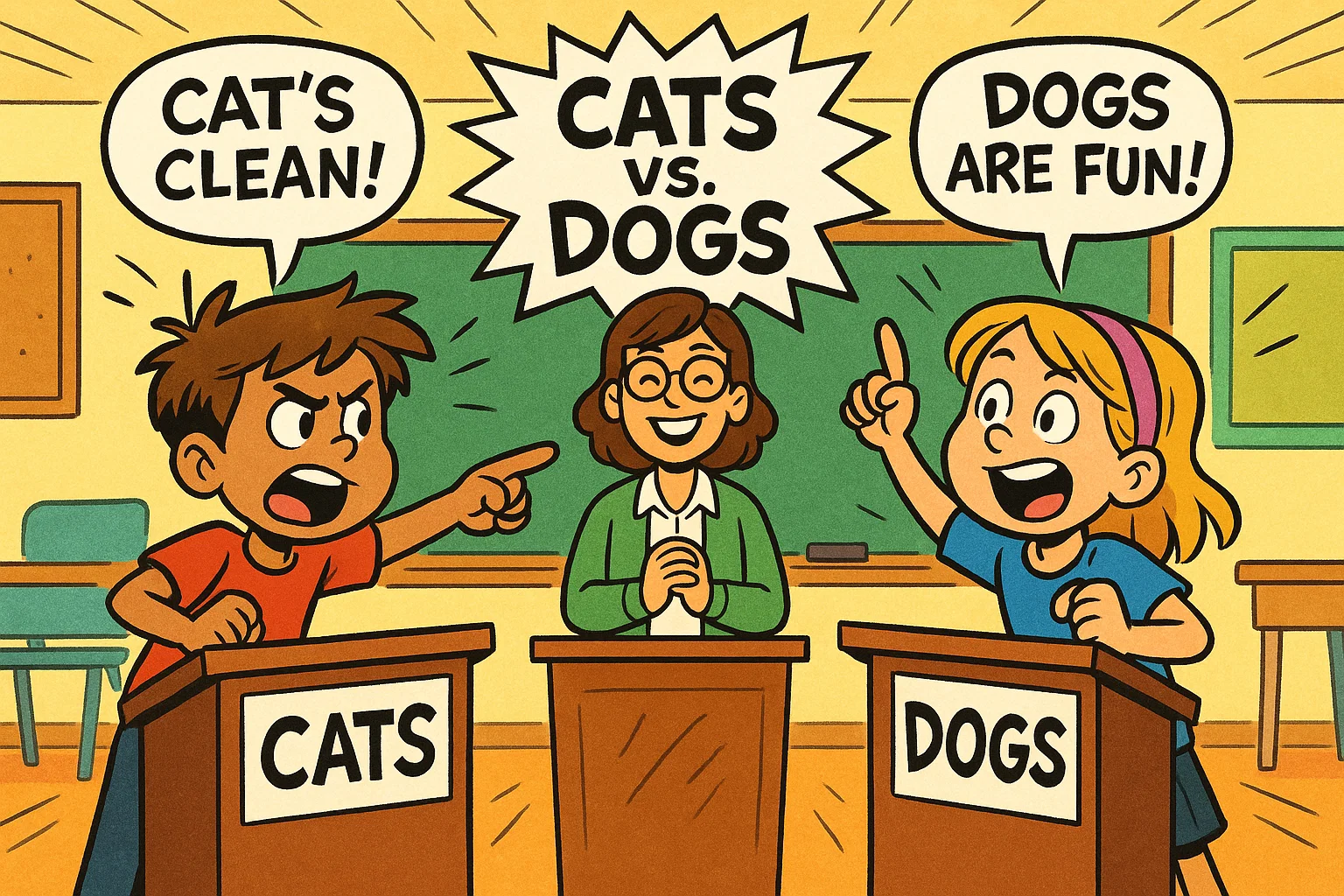
This type of writing prompt is vital for teaching critical thinking and structured argumentation. Persuasive composition requires students to express their thoughts and opinions clearly and support them with reasons and examples.
School-Related Opinions
These topics are immediately relevant to a 4th grader’s daily life:
- Should kids wear uniforms? Write a paragraph persuading your teacher to agree with your opinion.
- Should recess be longer, shorter, or stay the same? Give three strong reasons to support your opinion.
Lifestyle and Hobbies
- Which is better: reading a book or watching the movie version? Use specific examples from a book you’ve read to support your view. Set down your argument.
- Should children have limits on how much time they can spend playing video games? Explain your opinion to a parent.
Ethical and Social Topics
Simple debates stimulate ethical reasoning:
- Is it okay to keep secrets from your parents? Explain when it might be okay and when it is definitely not.
- Should kids have to help with chores around the house? Why or why not? Explain your view.
Creative and Funny Writing Prompts
Laughter is a powerful motivator. Funny writing prompts make creative writing less intimidating and more of an adventure, perfect for exciting 4th grade writing prompts.
Magic and Make-Believe Stories
- Compose a tale about a talking backpack that constantly gives you bad advice. What kind of trouble does it get you into at school?
- Describe a world where adults act like kids and kids act like adults.
- Imagine you became a superhero for 24 hours. What is your name, your costume, and what hilarious, minor problems do you choose to solve first?
Funny Scenarios
- Invent a new type of candy that has a bizarre and unexpected side effect. Draft the advertisement for this candy.
- Tell a funny story about a day where everything you ate tasted like stinky socks.
Expository and Informative Writing Prompts
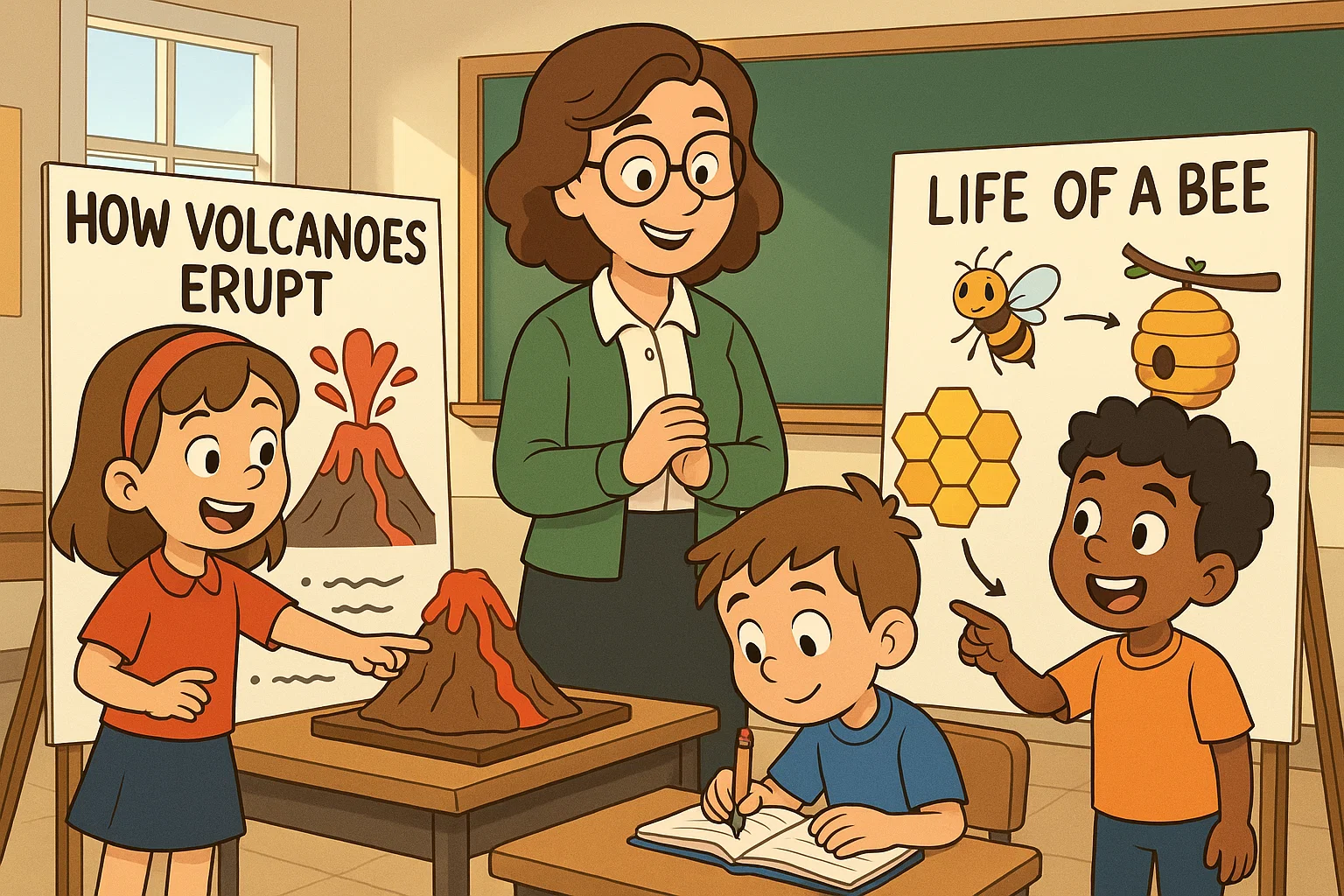
Informative composition focuses on teaching children to explain processes, present facts, or share how-to guides – skills essential for fourth grade academic success.
How-To Writing Prompts
- Compose a clear, step-by-step guide on “How to make a perfect sandwich.”
- Explain “How to take care of a pet” you might have. Note down the steps.
Informative Essay Topics
These topics are great for incorporating a short research component:
- Choose a planet in our solar system and write three fascinating facts about it. Compose a report.
- Explain the process of a caterpillar turning into a butterfly. Use strong transitional words.
Current Events and Real-World Writing Prompts
These prompts connect composition practice with the world around the students, helping them apply their writing skills to real-life situations.
Local and School News Reflections
- Draft a persuasive letter to your school principal suggesting one change that would make the school better for students.
- Describe a recent event in your town (a festival, a local fair, etc.) and compose a short newspaper article about it.
Environmental and Global Topics
- Set down ways to protect animals that live near your home.
- Why does recycling matter? Explain your answer to a younger child using simple, clear terms.
Future and Technology Topics
- What invention from a science fiction movie would you most want to exist today, and why? Compose your thoughts.
- Imagine the year 2050. What will schools look like, and how will young learners be taught?
Seasonal and Holiday Writing Prompts
Using seasonal writing topics keeps the content fresh, fun, and relevant throughout the school year.
Fall and Winter Prompts
- Journal about your favorite holiday tradition and why it brings you joy.
- Tell a story about a mischievous talking scarecrow that comes to life on Halloween night.
Spring and Summer Prompts
- If you could plan the perfect summer vacation, where would you go, and what three things would you make sure to do? Draft your itinerary.
- Describe your favorite memory from this past spring using vivid, descriptive language.
Special Occasions
- Compose a detailed letter of thanks to someone who did something kind for you recently.
- Describe a great birthday party you attended and what made it so much fun.
Tips for Teachers and Parents
For writing prompts to be truly effective, they must be implemented with intention. The following strategies can help 4th graders succeed on their writing journey.
Turning Prompts into Daily Practice
Consistency is key to skill development. Set a manageable routine – even 10–15 minutes a day is effective.
| Time Commitment | Suggested Activity | Focus Area |
| 5-7 Minutes Daily | Journal prompts for kids or quick “freewriting” exercises. | Building fluency and overcoming writer’s block. |
| 15-20 Minutes, 3x/Week | Longer narrative writing prompts or opinion pieces. | Developing plot, structure, and supporting arguments. |
| Weekly | Focused worksheet activity on a single skill (e.g., using new vocabulary or complex sentences). | Strengthening grammar and technical writing. |
Making Composition Fun and Engaging
To encourage students, focus on engagement over perfection.
- Read-Aloud Sharing: Create a “Poet’s Corner” or “Story Hour” where students can volunteer to share their work. Creative writing thrives when it’s celebrated.
- Focus on Idea, Not Grammar: In the initial drafting stage, tell students to focus on getting their great writing ideas down. Editing for grammar and spelling should be a separate, later step.
- Visual Aids: Use story starters that incorporate pictures, videos, or objects. A picture of a mad scientist can be far more stimulating than just the written prompt.
Tracking Student Progress
There’s no need for complicated metrics. Simple, periodic check-ins can show major improvements.
- Word Count Growth: A gradual increase in the number of words produced in a set time (e.g., 10 minutes) is an easy way to measure fluency.
- Quality of Description: Look for the use of more detailed adjectives and adverbs in their descriptive passages.
- Structural Clarity: Notice if their persuasive arguments now clearly contain a topic sentence, supporting reasons, and a conclusion.