

Guiding a first-grade student toward literacy requires more than just phonics and handwriting drills. The real goal is to ignite a passion for communicating ideas, fostering creativity, and building confidence with the written word. Writing prompts are a powerful, expertly designed tool to achieve this. They act as gentle nudges that transform a blank page from an intimidating barrier into an exciting canvas of possibilities, helping young learners transition from forming simple letters to constructing complete sentences and even short stories.
This comprehensive guide offers a treasure trove of fun writing prompts designed specifically to help your first grade students develop strong foundational writing skills. The guide explores a variety of writing types, including narrative prompts, opinion pieces, and informative exercises, all while offering practical, authoritative tips for both teachers and homeschool parents on how to make the writing activity engaging and effective, turning every lesson into a meaningful step toward literacy mastery.
Why Writing Prompts Inspire 1st Grade Students
Writing prompts are far more than just busy work; they are essential teaching tools that bridge the gap between spoken thought and written communication for young students. By giving students a clear starting point – a sentence starter or a compelling scenario – prompts can help students overcome the initial hurdle of idea generation. This focused approach allows them to concentrate on the mechanics of composition, such as forming letters, spacing words, and structuring a sentence, rather than grappling with topic selection.
Through engaging writing exercises, children are encouraged to organize their thoughts, which in turn improves critical thinking and problem-solving skills. When a student reads a writing prompt like, “Imagine you can fly for one hour. Where would you go and what would you do?” They are immediately asked to tap into their imagination and tell stories, transforming abstract ideas into concrete words. This process is fundamental to developing strong writing abilities. Child development experts note that using first-grade writing prompts helps build analytical thinking skills by asking students to express their opinions and reasoning through composition.
Benefits of Daily Composition Practice
Consistency is key to skill acquisition, and incorporating short, fun writing tasks or journal prompts each day is perhaps the single most effective strategy for first-grade educators and parents. Daily short sessions, perhaps just 5–10 minutes during morning work or a quiet afternoon time, build what experts call “composition fluency.”
| Benefit | Description and Impact |
| Increased Confidence | Students become more comfortable with the composition process, reducing anxiety when faced with larger tasks. They learn that their ideas matter. |
| Vocabulary Expansion | Prompts can help introduce new words required to describe a scene or feeling, naturally expanding a student’s active vocabulary. |
| Habit Formation | Regular practice turns composition from a chore into a natural, expected part of the day, forming a lasting academic habit. |
| Improved Mechanics | Daily repetition reinforces correct spelling, punctuation, and handwriting, making mechanical skills more automatic. |
Research shows that children who regularly engage in low-pressure writing tasks during early elementary years, such as responding to a simple writing prompt, tend to show significantly higher reading comprehension and academic success later on. Early literacy skills are considered the bedrock for a child’s educational journey, impacting all subject areas.
How Teachers and Parents Can Utilize Prompts
Writing prompts are incredibly versatile and can be seamlessly integrated into various settings, whether in a bustling writing center in the classroom or a cozy corner at home.
For Teachers:
- Morning Work: A simple prompt on the board serves as a quiet, productive start-of-day writing activity.
- Writing Center: Create a “Prompt Jar” filled with folded prompt ideas for independent practice.
- Whole Group Sharing: Dedicate a few minutes for students to share their responses, building community and peer learning.
- Differentiation: Use tiered prompts – some requiring a single sentence, others requiring multiple – to differentiate instruction based on student need.
For Parents:
- Journaling Time: Give students a small notebook specifically for personal responses to first grade journal prompts.
- Creative Storytime: Before bedtime, use a prompt to start a story together, with the child generating the first few lines and the parent helping complete the tale.
- Travel and Wait Times: Keep a small notepad handy; simple prompts about their surroundings can make waiting in line or riding in the car a productive learning time.
Narrative Writing Prompts for 1st Grade
Narrative writing is the foundation of storytelling. For a first-grade student, this means learning sequencing and creating a simple arc: a beginning, a middle, and an end. Narrative writing prompts help your first grade students organize their thoughts to tell stories logically and creatively.
Adventure Story Ideas
These fun writing ideas encourage pure, uninhibited imagination:
- If I found a secret map in my backyard, the first place I would explore is…
- A day I turned invisible, I spent my time…
- I woke up and realized my dog could talk. The first thing he requested was…
- My family and I took a trip to the moon. Describe what we saw there.
- Tell the tale of a very brave ladybug who had to rescue her friend.
Everyday Experience Prompts
Sometimes the best stories come from the familiar. These prompts focus on recounting events and emotions from daily life:
- The best day at school this year was when…
- Relate a time I helped someone who needed it. How did I feel?
- What happened when I lost my first tooth?
- Describe your favorite family tradition and why you cherish it.
- Recount the time I learned how to ride my bike (or another skill).
Opinion Writing Prompts for 1st Grade
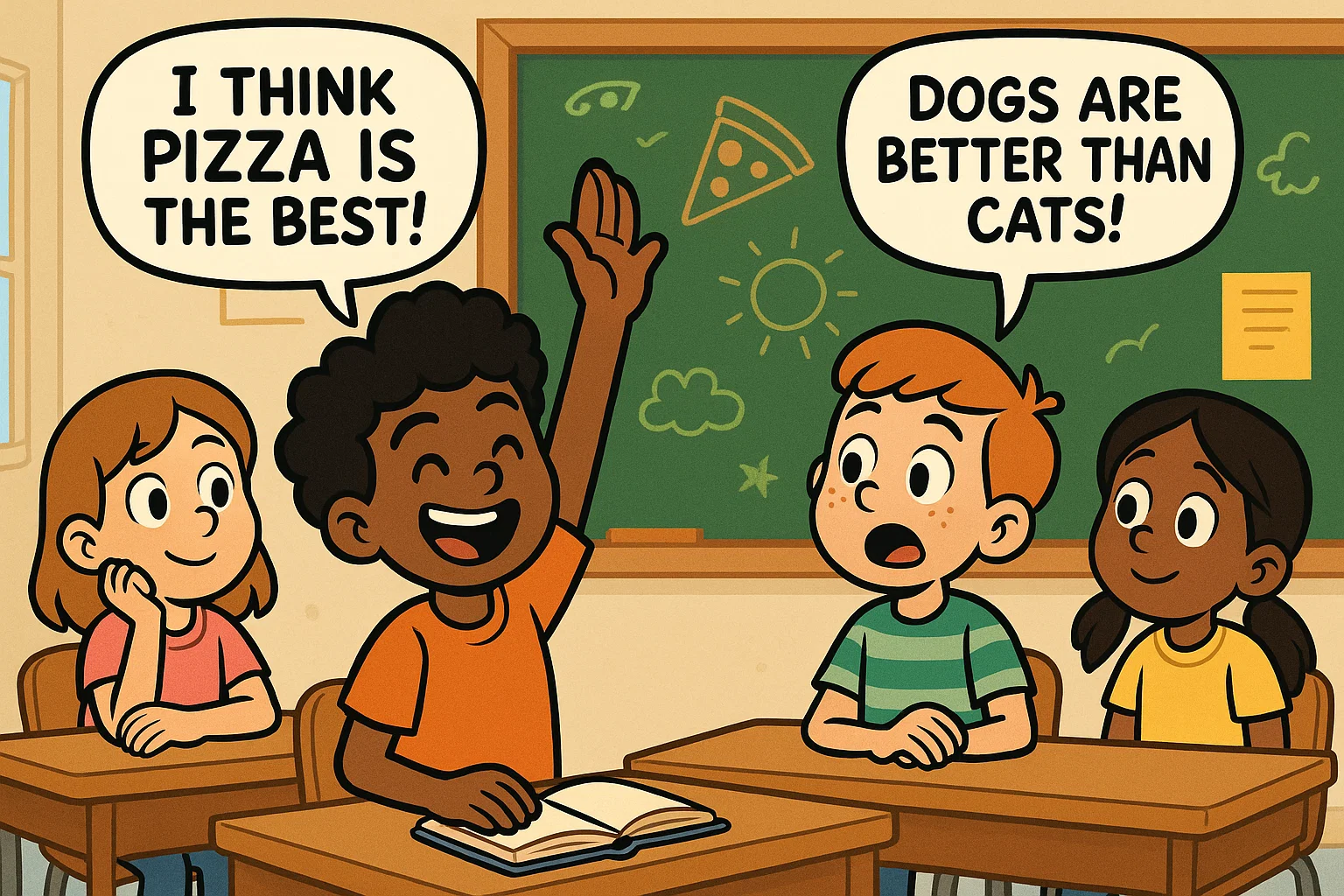
Opinion writing is a key component of literacy development, teaching students to form a viewpoint and support it with simple reasons. This helps students express themselves clearly and logically. The goal is to move from “I like it” to “I like it because…”
“I Think” Sentence Starters
Using sentence starters is an effective way to help students articulate their opinions:
- I think recess is the best part of school because…
- The color blue is better than red because…
- I think dogs are the best pets because…
- The best way to save money is to…
- I think learning to read is important because…
Prompts for Sharing Preferences
These prompts are a great way to practice opinion-based composition and are highly personal, making them low-stress starting points for young grade writing prompts:
- What is your favorite food and why do you think it tastes so good?
- If you could only eat one snack for a whole week, what would it be and why?
- What is the best rainy day activity? Describe what you do.
- Which season is the most enjoyable for playing outside? Why?
- What is the best book in our classroom library? Provide your reasons.
Informative and Expository Writing Prompts
Informative (expository) composition encourages kids to convey facts, explain processes, and share knowledge about a topic. This builds foundational research and sequencing skills.
Composition About Animals
First grade students often have a natural curiosity about the animal kingdom, making it an ideal subject for fact-based expository tasks:
- What do dogs need to stay healthy and happy? (Fact: They need food, water, walks, and affection.)
- Explain why some birds fly south in winter.
- List three facts you know about sharks or dolphins.
- Describe how a caterpillar turns into a butterfly.
- What is the funniest animal you know, and what special thing can it do?
Composition About Places
Explaining what happens at different locations helps students build understanding and categorize information:
- What are all the things you see at the library? What activities can you do there?
- Describe what happens at the zoo and explain why people visit.
- How do you stay safe when you are at the park?
- If you could visit a fire station, what questions would you ask the firefighters?
- Describe how the post office assists people in our community.
Descriptive Writing Prompts
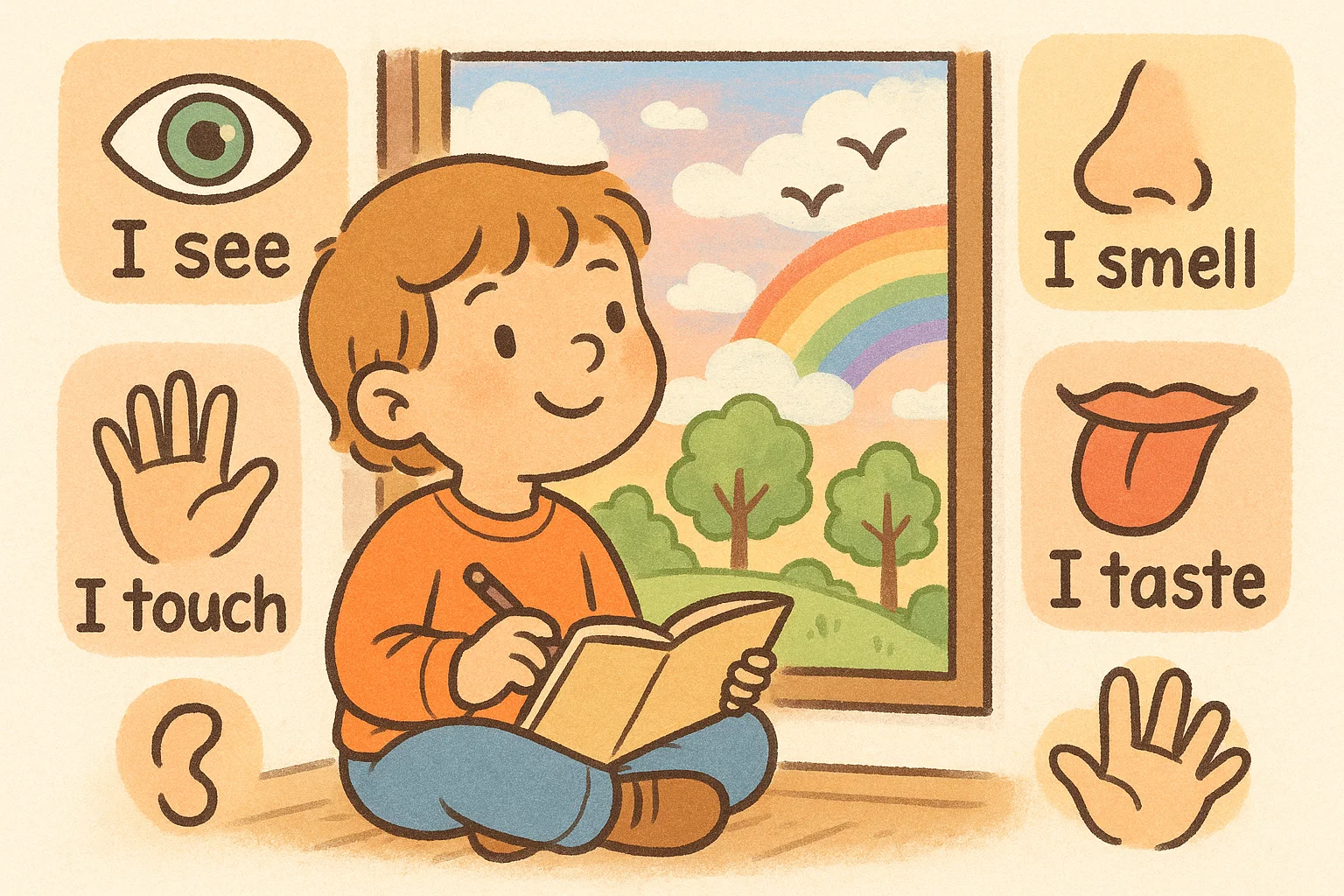
Descriptive writing focuses on using sensory language – what students can use to describe what they see, hear, smell, or feel. This genre directly enhances creative writing prompts and deepens a student’s connection to language.
Using Senses in Descriptions
These prompts encourage observation and help children translate what they sense into writing:
- Describe your favorite blanket. What does it look like (color, pattern), what does it feel like (soft, fuzzy), and what does it smell like?
- Relate the sounds and sights of a busy street (or a quiet forest).
- Imagine savoring a slice of pizza. Describe how it smells, how it tastes, and how the crust feels in your hand.
- Describe a thunderstorm. What do you hear? What do you see? How does the air smell?
- If you could design a new kind of candy, how would you describe its look, taste, and texture?
Picture-Based Prompts
A visual stimulus can be an incredible aid for descriptive writing, especially for young learners. Use a visual prompt for this exercise.
- Look at the picture of the hot air balloon. Describe all the colors you see and what it would feel like to be up high in the air.
- Describe the silly monster in the picture. What does it look like? What kind of noise do you think it makes?
Journal Writing Prompts for 1st Grade
Journaling provides a safe, personal space for students to express their emotions and thoughts without the pressure of perfect mechanics. First grade journal prompts are designed to foster emotional intelligence and self-reflection.
Gratitude and Positivity Prompts
These prompts will help encourage positive reflection and are great for morning work:
- List three things that make me happy today.
- Tell me about someone I am thankful for and what they did for me.
- What is the kindest thing someone did for you this week?
- Reflect on a talent or skill you’re proud of having.
- What is something you are excited about for this weekend?
Reflection Prompts
Prompts can help students process new information and reflect on their learning journey:
- How I felt when I learned something new today (or this week).
- Describe something kind I did this week and how it made the other person feel.
- What is one thing that made you feel silly or laugh out loud today?
- If you could change one thing about your day, what would it be and why?
- Share about a challenge you overcame this week and how you solved the problem.
Seasonal and Holiday Writing Prompts
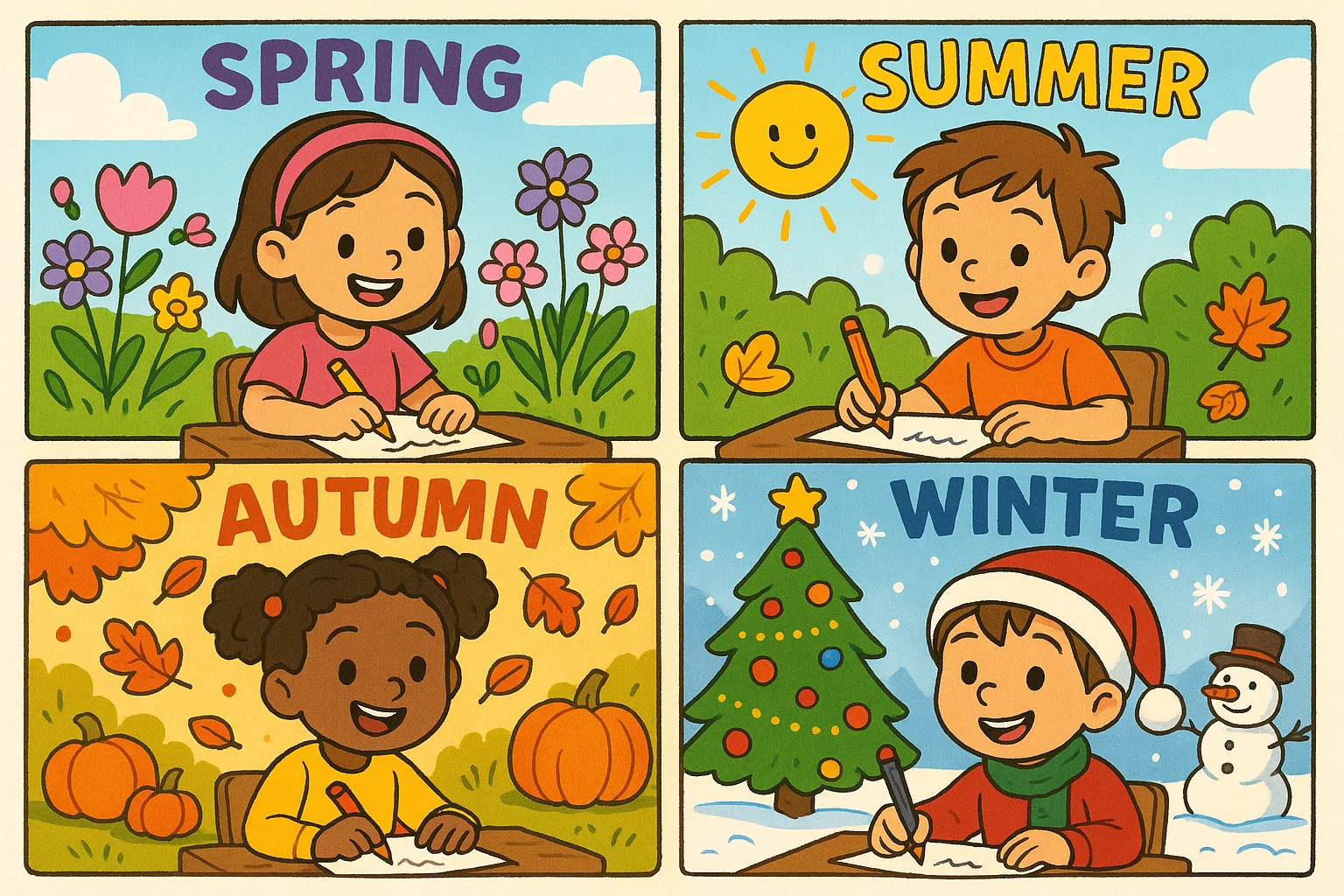
Linking a writing activity to the time of year or a special celebration adds immediate relevance and excitement. These fun writing prompts make grade writing feel less like a lesson and more like a celebration.
Composition About Seasons
- My favorite thing about spring is… What does it smell like outside?
- How I like to play in the snow (or on a hot beach).
- What are three colors you see the most in the fall?
- Describe a day spent outdoors in the summer.
- If you were a leaf falling from a tree, what would your journey be like?
Composition About Holidays
- What I love most about Christmas (or Hanukkah, Diwali, etc.).
- Relate how I celebrate my birthday. What is the best part?
- If you had to plan the menu for Thanksgiving, what would you choose?
- Tell a story about a very happy Easter egg hunt.
- If you could invent a new holiday, what would it be about and how would people celebrate?
Funny and Creative Writing Prompts
Humor and fantasy are essential drivers of creative writing prompts. When students share a laugh, they drop their guard and become more comfortable with the writing process, improving their writing abilities.
Silly Story Ideas
- If my pet could talk, the first thing he would request is…
- What happened the day my teacher turned into a robot?
- Imagine your shoes suddenly came alive and ran away. Where did they travel?
- Relate a tale about a giant, talking pickle who tries to become president.
- If clouds were made of Jell-O, how would you catch a piece to eat?
Fantasy and Make-Believe Scenarios
These prompts are a great way to encourage world-building and thinking abilities:
- Describe my life as a superhero (What is your name? What is your power?).
- A day at the magic castle where everything is made of candy.
- If I could shrink down to the size of a mouse, I would explore…
- Tell a story about the time you met a friendly alien from space.
- Relate the story of a dragon who loves to read books instead of breathing fire.
Research Writing Prompts

For first grade students, “research” means simple fact recall or basic inquiry. These different types of writing introduce the concept of informative composition and fact-finding.
Animal Facts
- Record one fact each about lions, dolphins, and pandas.
- Choose a wild animal and state three things you know about it.
- What does a polar bear eat? Where does it live?
- Relate a time you visited an aquarium or zoo and what you discovered.
Nature and Science Prompts
- Explain what happens when it rains. Where does the water go?
- Describe how plants grow. List the steps. (Seeds, sun, water, soil.)
- What is a volcano, and what happens when it erupts?
- Describe the difference between the sun and the moon.
- What are three things we can do to help keep our Earth clean?
Picture and Visual Writing Prompts
Visual aids are powerful teaching tools for early literacy. They provide a scaffolding structure that allows children to focus on word choice and sentence construction rather than topic invention.
Describing What You See
- Show a detailed image of a busy construction site. Guide children to compose what they observe: a crane, workers, big yellow trucks.
- Show a picture of a smiling child holding a balloon. Describe their clothes, the balloon, and how you think they feel.
Telling a Story from an Image
- Display a picture of a small boat on a big, calm ocean. Encourage predicting what happened before the picture moment (Did they catch a fish?) or after (Where are they going?).
Tips for Helping Kids Improve Writing Skills
The most effective way to help children develop writing skills is through positive, low-pressure interaction. Prompts are a great way to practice, but your attitude is the key to motivation.
Encourage Without Correcting Too Much
It’s tempting to focus on every misspelled word or missing comma, but this can crush a young composer’s spirit.
- Prioritize flow over flaws: First, celebrate the ideas and effort. Read the piece aloud together and praise the storytelling.
- The “Two Stars and a Wish” method: Point out two things they did well (a great idea, neat handwriting) and one small goal for next time (a few words to practice spelling).
- Help Young Learners Understand Foundational Skills: Use a quick mini-lesson on one specific skill after they finish their fun writing (e.g., “Let’s review the letter ‘P’ today”).
Create a Routine
Regular short composition sessions form lasting habits and help students become confident communicators.
- Model the Behavior: Show your child or class that you compose, too (a shopping list, a thank-you note). Teach your students that composition is a part of everyday life.
- Choose the Right Time: For many first-grade students, a brief session right after a snack or before reading time works best – a time when they are relaxed but not overly tired.
Thematic Writing Prompts for 1st Grade
Grouping writing prompts by theme provides a cohesive structure that can support a classroom lesson plan or a homeschool unit study.
Composition About People and Family
- Describe your best friend. What do you like to do together?
- Explain why I love my family and what makes them special.
- If I could spend one whole day with my favorite grandparent, what would we do?
- What is the most important rule in your home, and why is it important?
- Describe a new baby or a new person who joined your family.
Composition About Activities and Hobbies
- Relate playing my favorite game. What are the rules?
- What is a fun thing to do after school or on the weekends?
- Describe how you build with your favorite toy (e.g., LEGO, blocks).
- Tell a story about a time you tried a new sport or hobby.
Using Picture Prompts for Independent Composition
Picture prompts are powerful tools that offer a level of independence even for early age composers. They provide the context needed for a student to craft a complete sentence or even a short narrative writing piece without constant adult supervision. This is where printable worksheets with simple, high-quality images can be invaluable.
Visual Prompts for Storytelling
A carefully chosen image can be the ultimate writing prompt for grade writing:
- Example 1: An image of a cat on a skateboard → Prompt: Compose what happens next. (This encourages sequencing and creative plot development).
- Example 2: A picture of a small, bright red car driving through a giant mud puddle. Ask students to describe the beginning (who is driving?) and the end (where does the car go?).
Visual Prompts for Learning Emotions
Using images of faces or scenes can help young learners connect abstract feelings to concrete composition:
- Show an image of a child with a surprised face. Ask students to compose about what might have surprised them.
- Show a picture of a proud-looking student holding a test paper. Prompts will help them describe a time they felt proud.
By thoughtfully integrating diverse, high-quality writing prompts into the daily routine, educators and parents can effectively help young learners navigate the transition from pre-literacy to becoming confident, capable, and enthusiastic communicators.