60+ 4th Grade Art Project Ideas for Classroom, Home, and Every Skill Level

 Discover a Free Education Video App for Kids
Pastory uses AI to personalize educational video content based on your child’s interests and personality. Safe, engaging, and built for curious young minds. Sign up now to stay updated and enjoy early access with a free trial
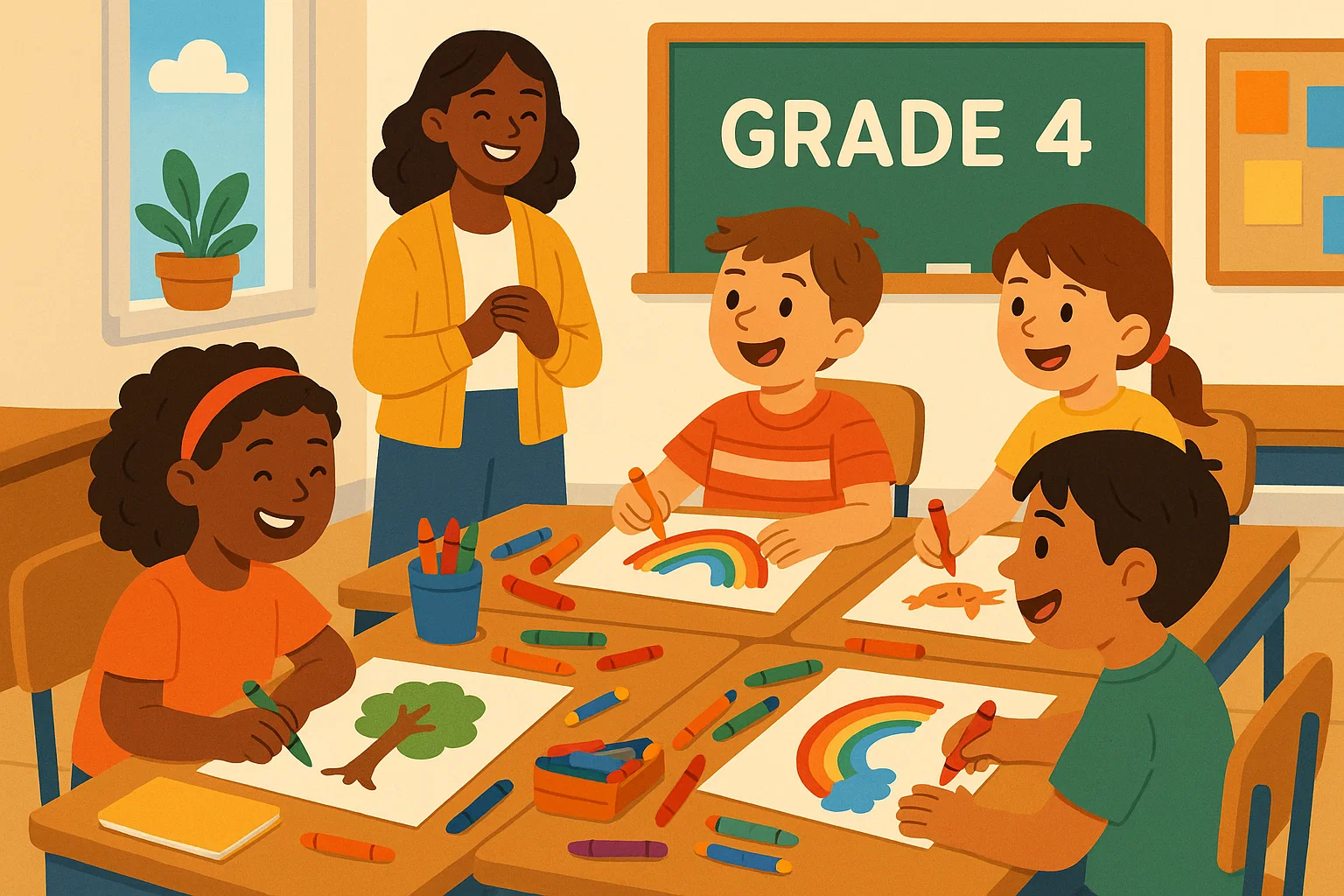
Creating an engaging art experience for fourth graders requires a balance of structure and creative freedom. This collection of more than 60 art project ideas serves as a comprehensive resource for art teachers, classroom educators, and parents looking to foster artistic growth. The following sections offer a wide range of ideas, from animals and nature to self-portraits and cross-curricular projects, ensuring that every learner finds a fourth-grade art project suited to their current skill level.
Animal Drawing Ideas
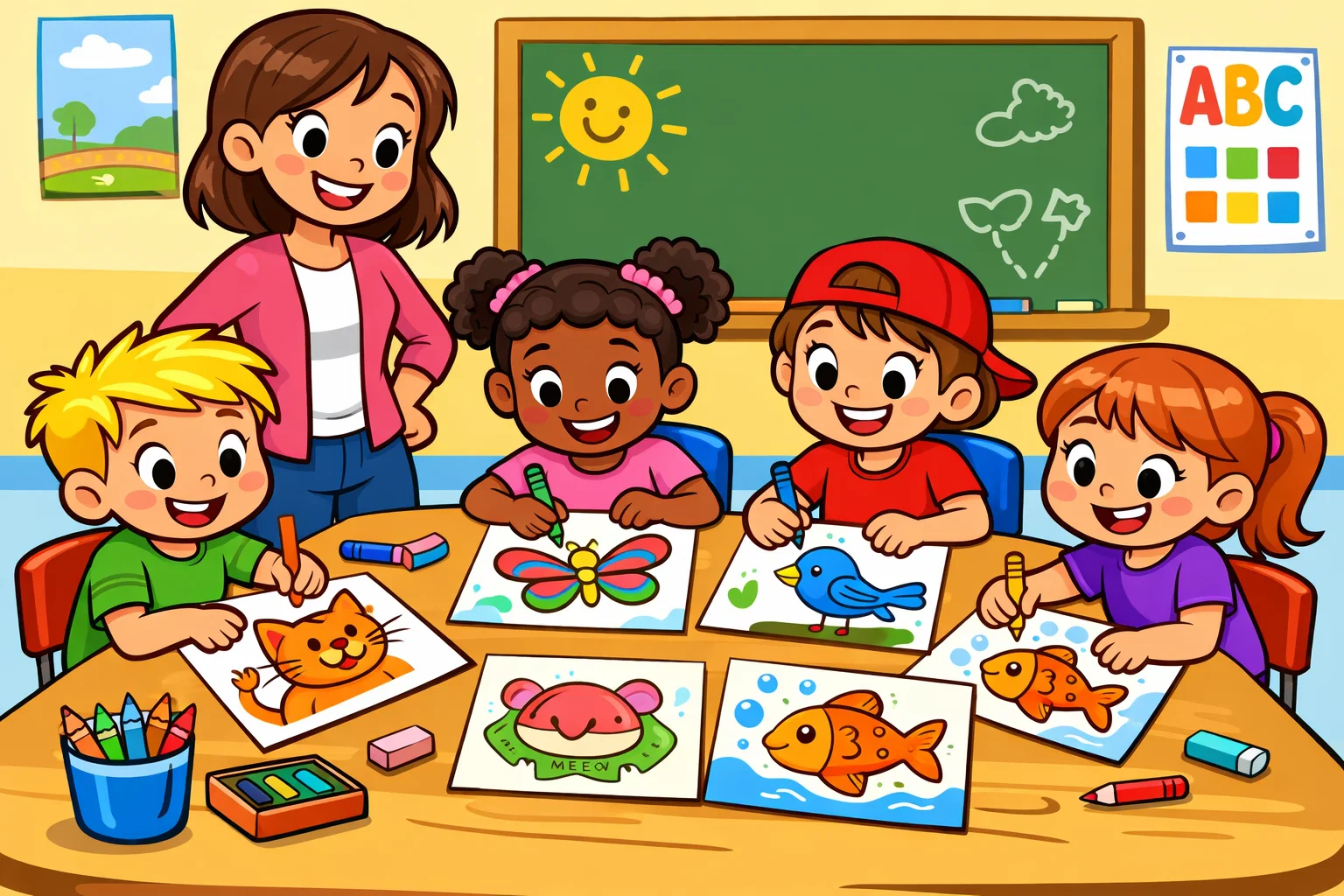
Animal drawing ideas provide an accessible entry point for 4th graders, as these subjects naturally encourage curiosity and observation. Young artists often feel more confident when they can relate to a subject, and animals lend themselves to a range of technical exercises, including line weight, texture, and color theory.
Silhouette Birds
Silhouette birds offer a high-contrast project that helps kids explore composition and create a sense of depth in the background. Educators should instruct the class to use a black marker or black construction paper to create sharp, recognizable outlines against a bright, painted, or pastel-blended sky. Advanced learners may incorporate intricate feather detailing or multiple birds at varying distances to create a sense of atmospheric perspective.
Oil Pastel Animals
Oil pastels allow 4th graders to experiment with rich, vibrant color layering and blending techniques. Children often find success drawing animals like foxes, owls, tigers, or dogs by using directional strokes that mimic fur or feathers. The medium offers a tactile experience that helps 4th graders understand how pressure affects color intensity on art paper.
Directed Drawing Toucans
Directed drawing projects offer a structured pathway for 4th graders to produce recognizable outcomes while building technical confidence. A toucan serves as an excellent subject because its large beak and distinctive profile are composed of simple, repeatable geometric shapes. Teachers can guide the art class through a step-by-step process, ensuring the group understands how to balance the composition on the page.
Cat Expression Drawings
Cat expression drawing functions as a practical lesson in character design and facial features. Participants can practice drawing cats with varied expressions such as happy, sleepy, surprised, or curious, which helps them understand how subtle changes in eye shape and mouth position alter emotion. This activity builds foundational skills for more complex portrait work.
Puppy Pose Drawing
Puppy pose drawing introduces kids to the idea of movement in art by depicting subjects in motion. 4th graders can practice drawing puppies in various poses, including sitting, running, or looking up, which requires an understanding of how body parts connect in different physical configurations. This variety keeps everyone engaged and challenges them to think about anatomy beyond a static front-facing view.
Butterfly Wing Patterns
Butterfly wing patterns provide a unique opportunity to teach symmetry alongside creative design. 4th graders begin by drawing a central body and then mirror the wing shapes on both sides of the paper, using colors and patterns to fill the interior spaces. This activity effectively bridges drawing practice with decorative patterns, allowing everyone to explore complex designs within simple boundaries.
Nature Drawing Ideas
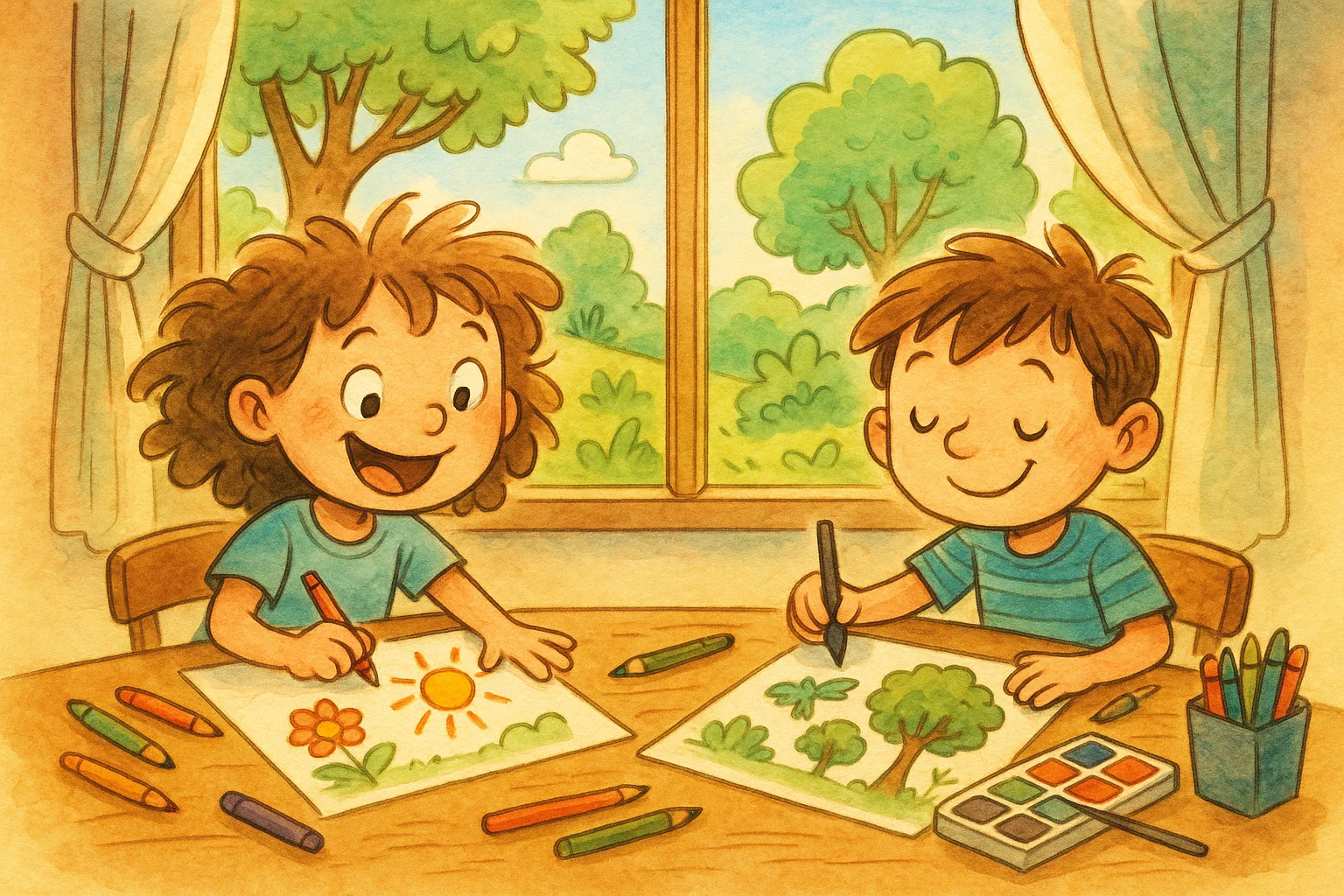
Nature-based art lessons work well with seasonal themes and offer plenty of inspiration for classroom displays. These projects encourage 4th graders to observe the environment closely, helping them translate complex organic shapes into manageable line drawings.
Spring Blossom Branches
Spring blossom branches utilize soft, organic lines and clusters of small shapes to represent flowers in bloom. Kids can practice using simple strokes or pastel marks to create depth, effectively teaching them how to arrange visual elements in a balanced, natural-looking way across a branch. This project is especially effective for brightening a classroom wall during the spring season.
Snowy Evergreens
Snowy evergreens provide a lesson in layering and the use of white space to represent snow accumulation. 4th graders can create deep, moody scenes by drawing pine trees against a winter art background, using chalk pastels to add highlights that mimic moonlight. This approach teaches how to use background contrast to make foreground objects stand out.
Tree in Four Seasons
The tree in four seasons project employs a four-panel drawing format to help 4th graders visualize seasonal change. By dividing a sheet of paper into four quadrants, kids can illustrate how the same subject – a tree – changes through spring, summer, fall, and winter. This exercise is particularly useful for teachers integrating art with science, as it encourages comparison of seasonal characteristics.
Foil-Print Leaves
Foil-print leaves combine natural observation with mixed media techniques to add dimension to a standard drawing. 4th graders first observe real leaf shapes and vein structures, then use heavy-duty aluminum foil to create a textured print that serves as a backdrop or an overlay for their drawings. This project highlights the importance of organic detail and texture in finished artwork.
Paper Acorn Sketches
Paper acorn sketches provide an easy fall drawing idea that focuses on elliptical shapes and shading. Participants can use colored pencils to define the texture of the cap and the smoothness of the nut, experimenting with how light hits a curved surface. Adding background patterns helps 4th graders understand how to integrate an object into a wider composition.
Boat on Water Scene
A boat-on-the-water scene introduces the concept of a horizon line and object reflections in a landscape. Kids draw a boat and its reflection on the water, learning how to distinguish between the object itself and its visual counterpart. This project bridges a simple object study and a more narrative composition, helping fourth graders develop spatial awareness.
Self-Portrait and People Drawing Ideas
Self-portrait and figure-drawing ideas are essential for personal expression and allow fourth graders to explore their identities. These projects support the development of observational skills as kids learn to map out facial proportions and translate personal features onto the page.
Self-Portrait
The standard self-portrait requires participants to focus on the placement of eyes, nose, mouth, and ears relative to the center of the face. By encouraging kids to look in a mirror, they gain practice in capturing individual characteristics and translating them into simplified lines and shapes using black marker or pencil. This project can be personalized with clothing choices or background elements that reflect the creator’s personality.
Astronaut Selfies
Astronaut selfies add a fun, imaginative hook to the self-portrait process by placing the artist’s face inside a helmet. This creative constraint encourages kids to focus on their facial expression while learning how to render technical accessories like space suits and visors. The theme is highly engaging for 4th graders and often results in more enthusiastic participation than traditional portrait lessons.
Left Brain Right Brain Faces
This split-portrait project uses a divided composition to contrast realistic and imaginative visual styles. Kids draw one half of a face with realistic colors and textures, and the other half with abstract patterns or bold, non-naturalistic colors. This exercise effectively teaches participants about color theory and the balance of different artistic styles within a single piece.
Mini Van Gogh Studies
Mini Van Gogh studies teach 4th graders about movement and rhythm through the use of expressive lines. By studying the short, directional marks characteristic of the artist’s style, learners can apply these techniques to their own drawings of landscapes or personal portraits. This exercise increases cultural awareness and provides a clear technique to emulate.
Air-Dry Clay Self-Portrait Planning Sketches
Air-dry clay self-portrait sketches serve as an essential planning phase for a clay project. By sketching their faces first, 4th graders learn to simplify complex features into shapes that can later be molded. This pre-planning stage ensures that everyone has a clear roadmap for their physical sculpture, even if the drawing remains a standalone piece of art.
Fantasy and Character Drawing Ideas
Fantasy and character drawing ideas provide an outlet for imagination, making art class feel dynamic and playful. These projects allow 4th graders to apply core artistic concepts like shading and texture to subjects that are not bound by reality.
Guided-Drawing Castles
Guided-drawing castles allow kids to build complex structures through a step-by-step process involving towers, flags, and stone textures. This activity is ideal for 4th graders as it reinforces the use of geometric forms while encouraging the addition of creative details like drawbridges or banners. The modular nature of the castle design allows the class to customize their work easily.
Rocket Ship Launch Scene
A rocket ship launch scene provides an exciting opportunity to explore composition using flame, smoke, and space backgrounds. Kids practice drawing the ship as the focal point, then expand the composition by adding stars, planets, and motion lines to imply speed. This project is simple to build step by step but looks visually impressive when finished.
Unicorn Motion Drawing
Unicorn motion drawing focuses on capturing the energy of a creature through a flowing mane, stars, and a magical background. Participants can integrate rainbow elements into the design to enhance the theme, using warm colors to define the creature’s personality. This subject has high emotional appeal and encourages 4th graders to practice drawing fluid, curved lines.
Dragon Texture Study
A dragon texture study challenges 4th graders to focus on intricate details like scales, claws, and leathery wings. Teachers can help the class succeed by breaking the dragon down into simple geometric shapes (such as triangles for spikes and circles for eyes) before adding the finer texture work. This approach makes a complex mythical subject feel achievable for 4th graders.
Mermaid Underwater Scene
A mermaid underwater scene allows kids to combine character design with a detailed environmental background. By including elements like plants, bubbles, shells, and fish, learners practice drawing varied textures and overlapping objects to create depth. This project is an excellent way to practice both organic creature design and the atmospheric rules of an underwater environment.
Baby Groot Character Drawing
Baby Groot is a popular character with a small, simple body and large, expressive eyes, making it an ideal subject for character drawing. Kids can experiment with wooden textures and simple, sturdy poses, which helps them understand how to adapt a pop-culture icon into their own art style. This project is a quick, engaging activity that helps build confidence.
Minion Emotion Drawing
Minion emotion drawing focuses on using simple, iconic shapes to convey distinct moods. Because the character design is minimal, 4th graders can easily manipulate the eyes and mouth to show a range of emotions, which is a useful skill for any budding artist. This activity serves as a perfect short-term exercise for practicing facial mapping and character consistency.
Food, Home, and Still Life Drawing Ideas
Still life drawing ideas are fundamental in the 4th grade curriculum as they teach kids to observe and represent the objects around them. These ideas help students move from simple object studies to more complex compositions.
Still Life with Fruit
Drawing fruit remains a classic, effective way to teach form, shading, and object placement on a tabletop. Participants practice arranging objects in a way that creates a balanced composition, then apply shading to show volume and light source. This exercise provides tangible feedback on how to make 2D drawings look 3D.
Fruit Mosaic Drawings
Fruit mosaic drawings allow 4th graders to explore color and geometry by breaking a fruit image into segments. By coloring each segment differently, kids create a vibrant, patterned look that transforms simple objects like bananas, apples, oranges, or watermelons into abstract works of art. This project encourages experimentation with color palettes and geometric division.
Gingerbread House Design
Gingerbread house design is a highly popular seasonal drawing task that emphasizes pattern work and architectural detail. Kids can invent their own candy details, roof patterns, and window styles, which tests their ability to maintain visual consistency across a complex structure. This project is highly shareable and effective for creative expression during the holidays.
3D Pop Art Mugs
3D pop art mugs teach 4th graders to manipulate line and shading to create the illusion of volume. By drawing simple mugs and filling them with high-contrast pop art style patterns and bright colors, learners discover the fundamentals of design. Simple shading tricks, such as curving the lines of a pattern around the mug’s surface, help solidify the 3D effect.
Mixed-Media Donuts
Mixed-media donuts start with a simple circle drawing and expand into a lesson on texture and color. Kids can use colored pencils, markers, and tempera paint to create the illusion of icing and colorful sprinkles. The bold outlines and vibrant colors typical of this project help participants practice creating a polished, finished artwork from a simple starting shape.
Cupcake Design Sketches
Cupcake design sketches allow for a series of small, manageable drawings that focus on different toppings, wrappers, and decorations. This series-based approach keeps fourth graders engaged through variety, and because each cupcake is small, it reduces the pressure to make every line perfect. It is an excellent way to practice fine motor control and decorative detailing.
House Design Drawing
House design drawing covers the basics of perspective by incorporating a roof, a door, windows, and a garden. This exercise is foundational and can be easily adjusted; beginners might focus on a simple square house, while advanced learners can add brick patterns, landscaping, or neighborhood details. It provides a clear, logical structure to follow.
Origami Pencil Observation Drawing
An origami pencil observation drawing uses an interesting, non-traditional object to challenge observational skills. By drawing an origami pencil in an unusual pose, kids must look past their assumptions about what a pencil “should” look like and focus on the actual lines and shadows. This exercise strengthens students’ ability to observe objects objectively.
Pattern, Shape, and Space Drawing Ideas
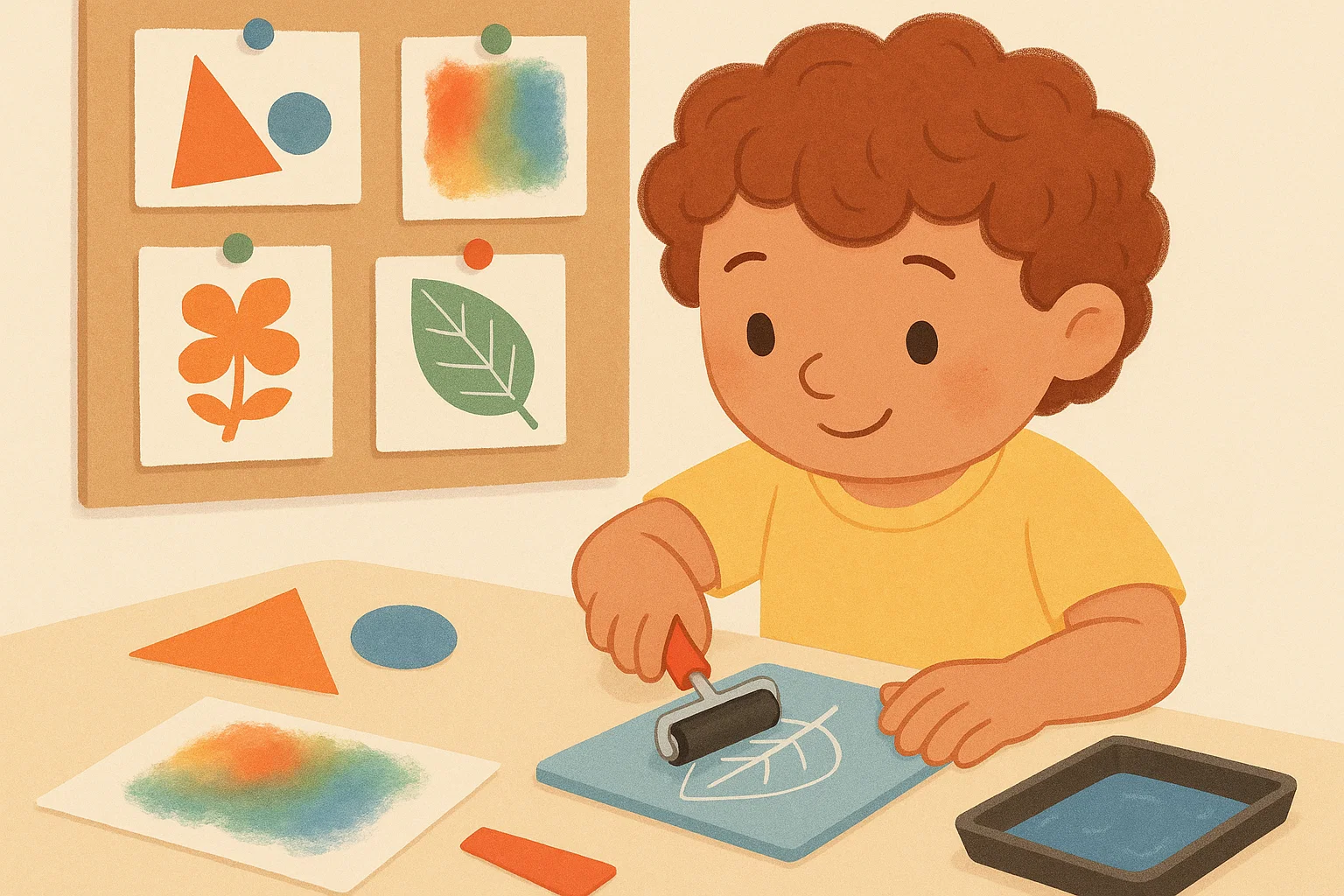
Pattern, shape, and space drawing ideas move beyond drawing specific objects and into the realm of abstract thinking and composition. These lessons are highly valued by art teachers for their ability to promote calm, focused work.
NOTAN Dark and Light Balance
Notan is a Japanese design concept centered on the balance of light and dark. 4th graders cut shapes from one side of a paper and flip them to the other, creating a mirrored, harmonious composition that relies entirely on contrast. This exercise is perfect for teaching that the background is as important as the subject.
Zentangle Hearts
Zentangle hearts focus on meditative, repetitive line work to fill a shape. Participants divide a heart into sections and fill each with a different pattern, which encourages patience and precise motor control. This quiet, calming project leaves students with an intricate final result.
Spider Symmetry
Spider symmetry projects use a spider and its web as a vehicle to teach 4th graders about dividing a page into equal halves. By drawing the spider’s body along a center line, kids learn to mirror the legs and web patterns on either side, which is a concrete way to practice mathematical symmetry in an art context.
Stained-Glass Butterflies
Stained-glass butterflies use bold, black marker lines to create segments that mimic leaded glass. Participants then fill these sections with bright, saturated colors, creating a vibrant effect that mimics light passing through a window. This project is visually striking and very popular for classroom window displays.
Color Theory Boxes
Color theory boxes use a grid layout to teach 4th graders about warm colors, cool colors, and complementary pairs. By filling individual boxes with specific color groupings, kids learn to manage their color choices intentionally rather than picking colors at random. This activity gives students a clear visual reference they can use in future art lessons.
Negative-Space Shamrocks
Negative-space shamrocks teach 4th graders to draw the space around an object rather than the object itself. By coloring the area surrounding a shamrock shape, the shamrock appears white in the center, demonstrating the power of the “empty” space. This is a foundational concept in composition that helps participants see beyond their initial focus.
Circle Weaving Silhouettes
Circle weaving silhouettes combine drawing with textile art by using a circular layout as the base. 4th graders draw a simple silhouette inside a circle, then create holes to weave thread or paper strips through the design. This cross-disciplinary approach creates a tactile, multi-dimensional project that feels more advanced than a standard drawing activity.
Seasonal and Cultural Drawing Ideas
Seasonal and cultural drawing ideas provide vital context for classroom learning and are perfect for thematic weeks or holiday exhibits. These activities allow 4th graders to explore traditions while honing their drawing skills.
Lunar New Year Zodiac Animal Art
Chinese New Year tiger art encourages 4th graders to use bold stripes and expressive facial features to capture the power of the zodiac animal. By incorporating cultural symbolism and a specific color palette (often red and gold), kids can learn about the history behind the art while focusing on line weight and composition.
Lunar New Year Posters
Chinese New Year posters provide an opportunity to explore lettering and graphic design. Participants can integrate symbols like lanterns, zodiac motifs, and calligraphy to create a cohesive message. This project is highly effective for practicing layout skills and teaching how to communicate themes visually in a poster format.
Yayoi Kusama Pumpkins
Yayoi Kusama-inspired pumpkin drawings introduce 4th graders to the concept of dots and repetition as a stylistic signature. By drawing pumpkins and filling them with varied dot patterns, kids learn how an artist’s personal style can transform an ordinary object. This project is excellent for connecting well-known artists to students’ own work.
Pumpkin Pattern Drawing
Pumpkin pattern drawings are a versatile option for both fall and Halloween. 4th graders draw the form of a pumpkin and then embellish the surface with intricate patterns, which reinforces the connection between 3D form and 2D surface decoration. It is an easy-to-implement project that allows for a wide range of skill levels.
Ghost Character Sketches
Ghost character sketches are a simple, fun activity for the Halloween season. 4th graders start with a simple ghost shape and add facial expressions, accessories, and background elements to create a unique character. This helps everyone practice character development in a low-pressure, high-fun setting.
Holiday House Windows
Holiday house window sketches focus on the contrast between an interior and exterior scene. 4th graders draw a window frame and fill it with festive details like lights, wreaths, and snowy landscapes, allowing them to practice indoor-vs-outdoor perspectives. This subject adds a sense of warmth and narrative to an artist’s portfolio.
Drawing Ideas by School Subject
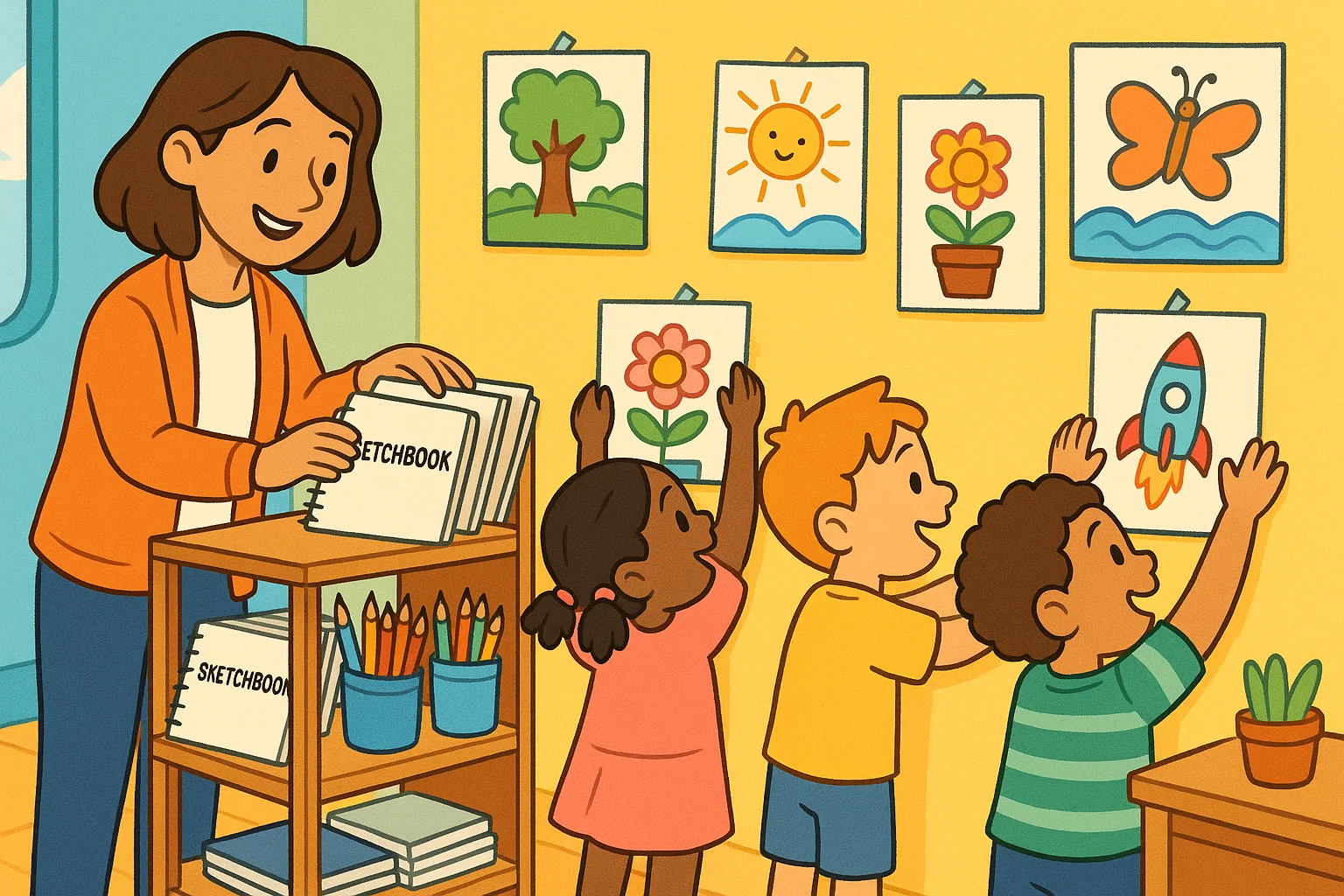
Drawing ideas by school subject help 4th graders see that art is a practical tool for communication and inquiry in every area. These ideas help teachers integrate curriculum goals into the art room.
Science Drawing Ideas
Science-based drawing activities involve observational work that aids in understanding life cycles, plant anatomy, and habitats. 4th graders can use drawing to document weather patterns or map out ecological systems, which requires them to look closely at the natural world and translate their findings into clear, labeled diagrams.
Trout Observation Drawing
A trout observation drawing is a specific, rigorous exercise in texture and form. By drawing a fish, kids must pay attention to the scale patterns, fin structures, and body shapes that characterize freshwater species. This connects directly to biology units, allowing fourth graders to use art as a tool for scientific observation and recording.
River Rock Texture Drawing
River rock texture drawing focuses on the physical properties of natural objects: cracks, shadows, and color variations. This project helps 4th graders observe how texture adds realism to a simple object, providing a practical way to explore geological features while sharpening pencil shading skills.
Language Arts Drawing Ideas
Language arts drawing ideas include character sketches of book protagonists, setting illustrations based on descriptions, or cover redesigns. These activities help 4th graders internalize a story’s narrative elements and visualize the setting, which is a powerful reading comprehension strategy that results in creative, literature-focused art.
Poetry Drawing Ideas
Poetry drawing ideas involve translating the mood and symbols of a poem into a visual work. By analyzing the imagery used in a verse, 4th graders can create original drawings that reflect the emotional weight of the text. This task encourages critical thinking as kids determine which symbols best represent abstract literary ideas.
Social Studies Drawing Ideas
Social studies drawing ideas include creating historical scenes, map-making, or posters representing cultural landmarks. These activities give 4th graders a creative way to engage with the past and present, helping them visualize geographical locations or historical events in a way that plain text cannot.
Math Drawing Ideas
Math drawing ideas explore symmetry, shape art, tessellation-style patterns, and grids. By drawing patterns that require precise measurement and division, 4th graders see the mathematical foundation of beauty and design. This is an excellent way for teachers to make abstract math concepts more concrete through art.
Community Poster Drawing Ideas
Community poster drawing ideas focus on themes of kindness, neighborhood, helpers, recycling, or school events. These tasks teach 4th graders how to organize information on a poster and use visual cues to communicate a clear, persuasive message. This type of project applies artistic skills to real-world social responsibilities.
Mixed-Media Drawing Ideas
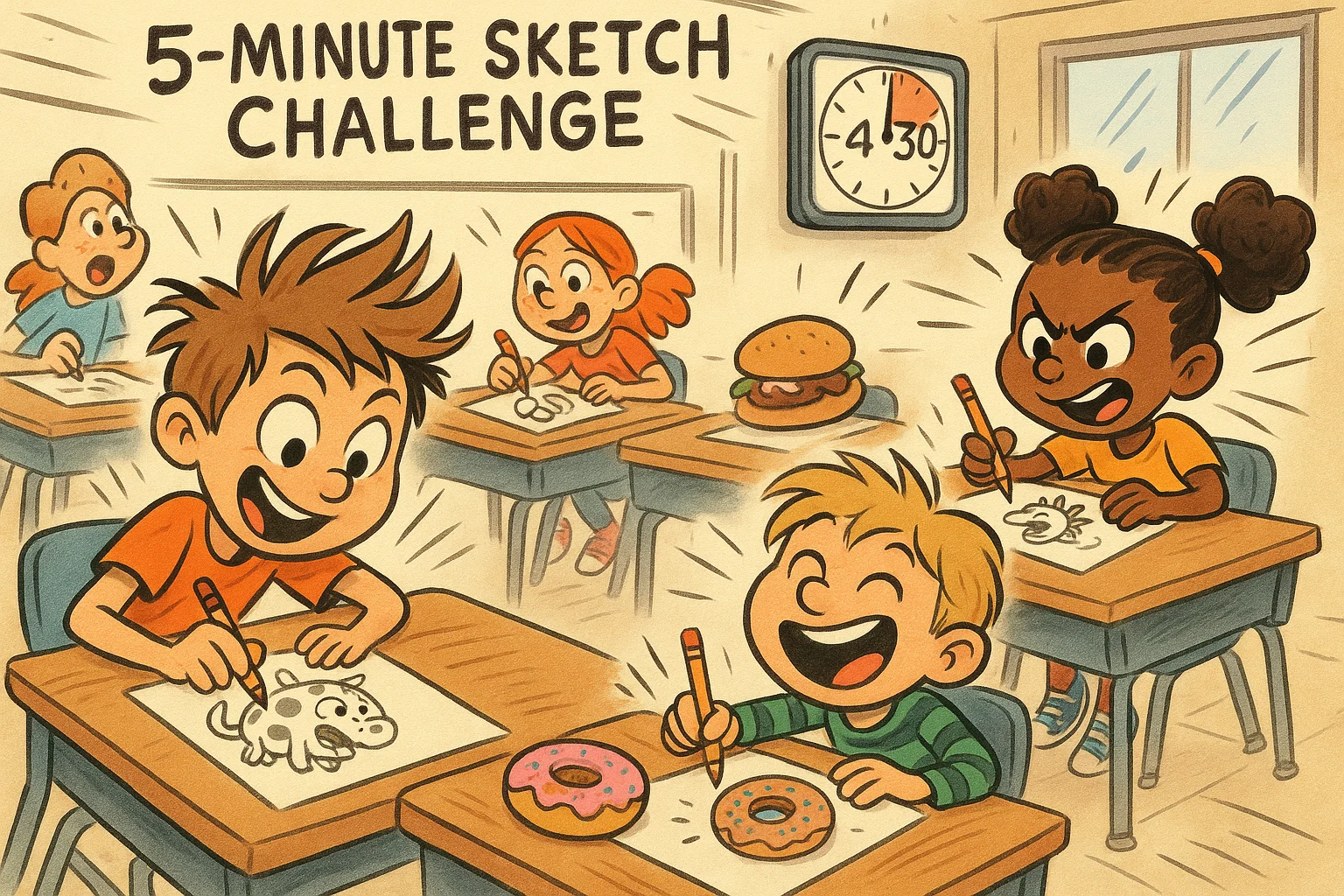
Mixed-media drawing ideas broaden the definition of “drawing” by incorporating other techniques, resulting in rich, textured outcomes. These ideas are highly effective for keeping advanced 4th graders engaged and showing that a single project can evolve through multiple phases.
Printmaking with Styrofoam
Printmaking with Styrofoam begins with a detailed line drawing that is transferred onto a foam sheet. Fourth graders press the lines into the foam, ink the surface, and print it onto paper to create multiple copies of their original design. This project highlights the transition from a simple sketch to a complex, multi-step artistic process.
Quilled Paper Hearts
Quilled paper hearts start with a drawing composition that acts as a blueprint for rolled paper strips. 4th graders arrange their quilled shapes along their drawn lines to create a 3D effect that mimics a delicate, lace-like appearance. This project is excellent for practicing patience and hand-eye coordination.
Cardboard Sandcastle
A cardboard sandcastle project begins with a sketch and is later built up using layered cardboard and textures. By drawing the castle first, 4th graders establish their plan, then use the cardboard to add weight and realism to their composition. It is a fantastic summer art project that emphasizes the planning phase of construction.
Foil Print Gingerbread Houses
Foil print gingerbread houses build upon a line drawing by applying metallic foil to the surface to create a shimmering, embossed effect. After drawing the house, 4th graders place foil over the lines and rub the surface to highlight the details. This adds a level of sophistication and festive flair to a standard house project.
Clay Cupcake Planning Sketches
Clay cupcake planning sketches are a vital pre-sculpting activity. By drawing their cupcakes first, 4th graders can decide on their shapes, layers, toppings, and color plan. Having a sketch as a guide helps kids manage their time and resources during the clay project phase, leading to higher-quality results.
Clay Pumpkin Planning Sketches
Similar to the cupcake project, clay pumpkin sketches allow 4th graders to define the pumpkin shape, stem, patterns, and section lines. Having a finished drawing as a guide helps participants plan their clay project effectively, ensuring the final work is well-thought-out.
Easy Drawing Ideas for Beginners
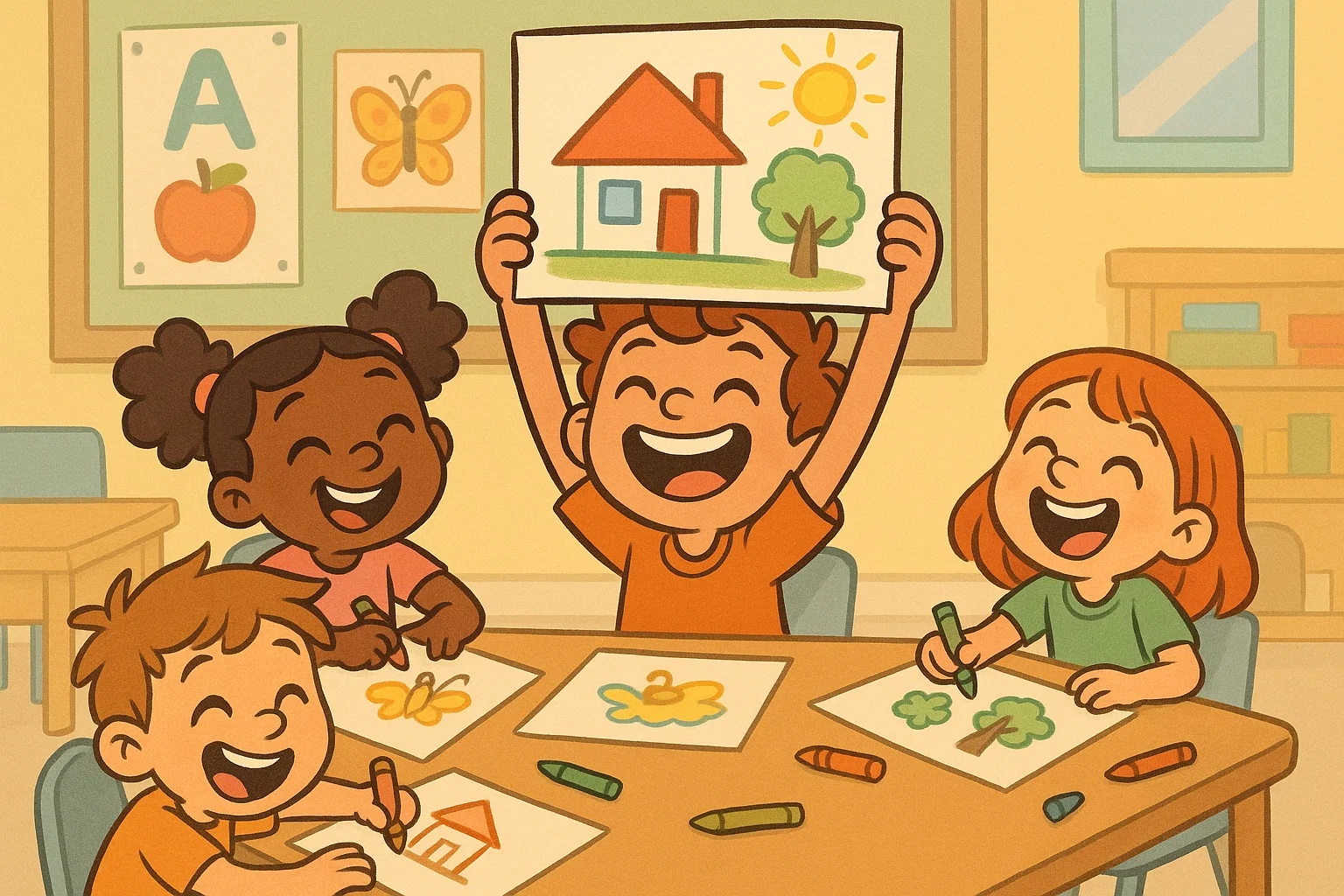
For 4th graders who may lack confidence or for quick art room warm-ups, easy drawing ideas for beginners provide an essential foundation. These projects are designed to be completed in a single session, ensuring a sense of accomplishment for every child.
House Drawing
A basic house drawing is the ultimate beginner’s task, utilizing simple geometric shapes to teach spatial structure. Teachers can encourage 4th graders to add elements like a garden, pets, clouds, and brick patterns once the core shape is established, which helps build confidence through iterative improvement.
Boat Drawing
A boat drawing is an excellent beginner’s scene that focuses on horizontal lines and simple curved shapes. By combining a few lines for the hull, waves, and sky, fourth graders can create a recognizable scene that is visually satisfying and easy to complete in minutes.
Rainbow Sky Scene
A rainbow sky scene combines arcs, clouds, a sun, and a simple landscape. This project is especially helpful for building confidence in younger learners or fourth graders who need a low-pressure starting point, since the subject matter is naturally cheerful and accessible.
Tree Drawing
Tree drawing breaks the subject down into a trunk, branches, leaves, and seasonal variations. This project is a foundational study in natural form, allowing 4th graders to explore how to build a tree from the ground up. It serves as a perfect starting point for more complex seasonal landscapes.
Rocket Ship Doodle
A rocket ship doodle provides a very fast, low-pressure way to encourage creativity. With a simple tube shape, a nose cone, and some fins, 4th graders can quickly sketch a space-themed doodle. Adding optional extras like stars, flames, and planet rings makes the simple shape look like a finished project.
Frequently Asked Questions About 4th Grade Art Lessons
What can fourth graders draw easily?
4th grade children can easily draw subjects composed of basic geometric shapes, such as houses, trees, cats, rainbows, boats, and self-portraits. These subjects provide a clear structure that helps 4th graders build confidence in their ability to translate what they see into art.
How do you teach drawing to fourth-grade beginners?
The most effective way to teach drawing to 4th grade beginners is through simple, step-by-step demos, the use of clear reference images, and a low-pressure practice environment. Educators should break complex subjects down into simple shapes to make the task feel achievable.
Which supplies work best for fourth-grade drawing lessons?
The most reliable supplies include pencils, erasers, black markers, colored pencils, crayons, and oil pastels. Each material offers different benefits, and choosing the right art paper can significantly improve the quality of the final piece.
How can you adapt one idea for mixed skill levels?
To adapt a lesson for mixed skill levels, provide a simple outline for beginners, require extra texture and complex background details for advanced learners, and offer a color challenge for fast finishers. This ensures every child is challenged without needing separate projects.
How can you connect drawing lessons with science, math, and language arts?
Art lessons connect naturally by using the art room as a lab: draw habitats in science, explore symmetry in math, illustrate scenes in language arts, or create posters in social studies. These connections reinforce learning by requiring 4th graders to synthesize information through a visual medium.
How do I structure 4th grade art lessons for different levels?
Effective fourth-grade art lessons should include built-in differentiation. For example, while some students may use simple outlines, others can focus on drawing 3D forms or adding more complex shapes and details. You can also provide a printable worksheet for quick practice, which helps maintain engagement across various skill sets.
Can I adapt these ideas for 2nd, 3rd, or 5th grade art lessons?
Absolutely. Many of these art lessons can be scaled for second, third, or fifth grade. For younger learners, focus on simpler shapes, scribble-based warm-ups, and high-contrast materials such as white crayon on black paper, while fifth graders can take on more detailed technical challenges and advanced media exploration. You can also supplement these activities with video tutorials for visual support.
How can I plan my art lessons for the whole year?
When teaching art, it is helpful to start the beginning of the year with foundational activities. You can find ready-made lesson plans on Teachers Pay Teachers (TPT) that help you scale projects for any grade level. Whether you are planning art lessons for a specific unit or a semester-long course, focus on techniques like watercolor painting or tracing shapes to keep kids engaged.
Take a short quiz to find out what your everyday choices say about your parenting style
When your child is curious about something new, what’s your instinct?
Take a short quiz to find out what your everyday choices say about your parenting style
“Can I download this app?” What happens next?
Take a short quiz to find out what your everyday choices say about your parenting style
When it comes to rules at home, which sounds most like you?
Take a short quiz to find out what your everyday choices say about your parenting style
If you could give your child one life skill today, what would you pick?
Take a short quiz to find out what your everyday choices say about your parenting style
Your child gets to choose what to watch. What would your ideal setup look like?
Take a short quiz to find out what your everyday choices say about your parenting style
Pick your parenting superpower ✨