Top 10 Classroom Etiquette Rules for Students

 Discover a Free Education Video App for Kids
Pastory uses AI to personalize educational video content based on your child’s interests and personality. Safe, engaging, and built for curious young minds. Sign up now to stay updated and enjoy early access with a free trial
Teachers, families, and school leaders often look for clear guidance on classroom etiquette that improves behavior, focus, respect, and learning. A well-managed classroom is not only about discipline; it is about creating an environment where every learner feels safe, heard, and ready to succeed. This guide explains ten practical classroom rules, why they matter, and how educators can introduce, display, and reinforce them throughout the year.
Classroom etiquette is connected to broader school rules, but it focuses on the everyday learning experience within a shared classroom. When students clearly understand what is expected, they are more likely to follow the rules because they know how those expectations apply and why they help create a safe environment where everyone can thrive.
Key Takeaways
- Respect comes first: A strong classroom culture depends on mutual respect between teachers and students.
- Clarity builds trust: Expectations should be easy to understand, visible, and applied consistently.
- Learning improves: Good etiquette supports student learning, more active participation, and stronger academic outcomes.
- Visual reminders help: A clear chart or poster keeps expectations present throughout the school day.
- Life skills matter: Classroom etiquette develops essential life skills like communication, responsibility, organization, and self-control.
- Teachers matter too: Effective classroom etiquette is a two-way commitment — teachers who model respect, enforce rules consistently, and maintain a professional tone set the standard for the whole room.
- Etiquette differs from rules: Classroom rules define what to do; etiquette shapes how students and teachers treat one another while doing it — adding the interpersonal layer of manners, tone, and mutual consideration.
Teacher Setup Summary
Classroom etiquette works best when expectations are clear, visible, practiced, and reinforced. At the beginning of the school year, educators should explain what each rule looks like, model the desired behavior, and use a balanced system of reminders, consequences, and positive reinforcement.
Creating effective classroom rules also requires regular communication. Teachers need to communicate the rules clearly, revisit them during key moments, and make sure their students understand how each expectation works during real lessons, group tasks, transitions, and assessments.
Student Success Focus
Etiquette helps students navigate the classroom community with confidence. Clear routines show how to participate fairly, respect different opinions, and stay emotionally and physically safe.
Well-designed expectations guide student behavior and protect instructional time. Many teachers find that even the best lesson plan can fail without effective rules, because predictable routines reduce conflict, protect focus, and support academic progress.
What Is Classroom Etiquette?
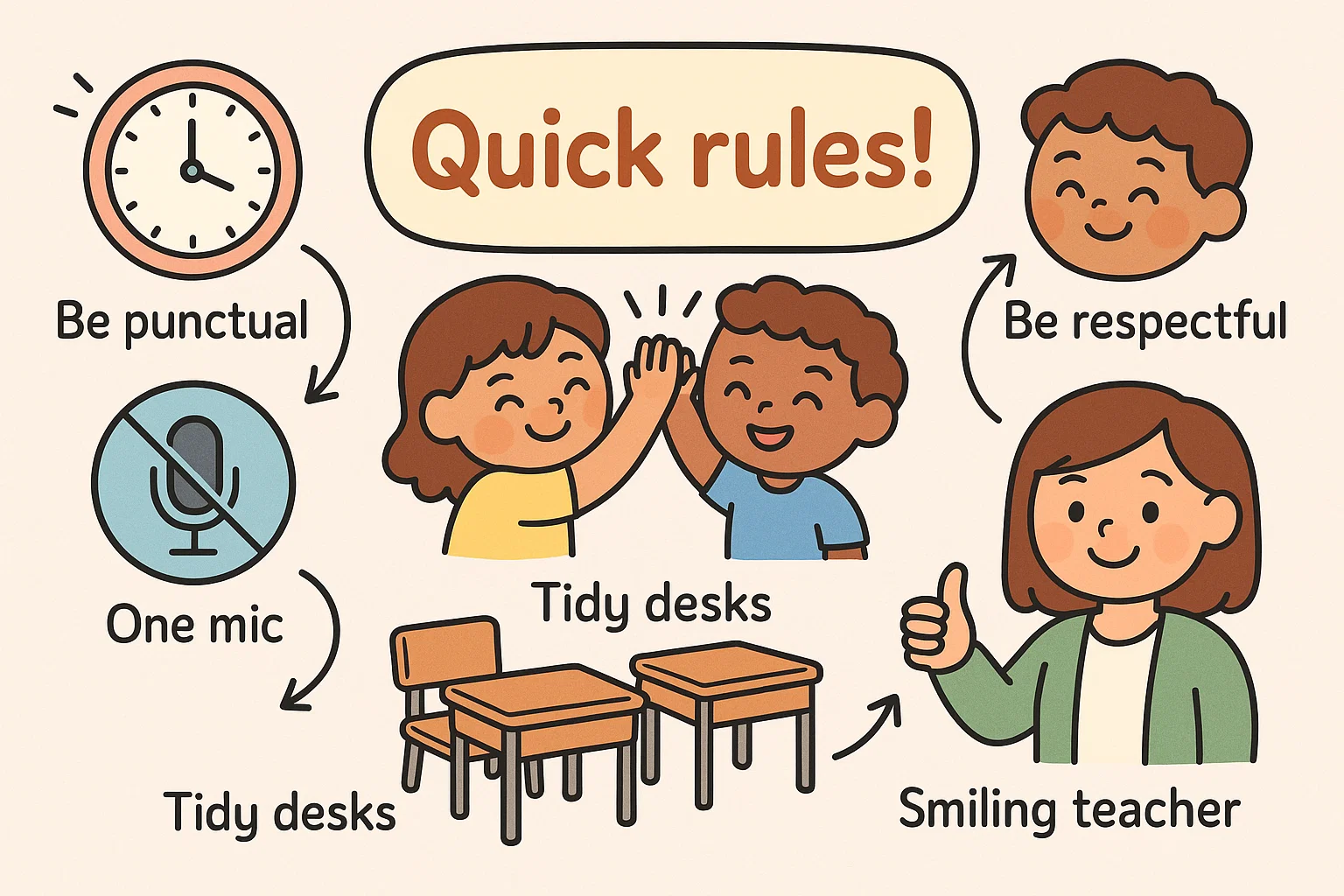
Classroom etiquette is a set of classroom rules and behavior expectations that guide how students speak, listen, move, use materials, and interact with others. Unlike broader administrative policies, etiquette focuses on the social habits that allow a diverse group to work together in a shared space.
These rules are not simply about obedience. They help young people understand how their actions affect others. When students see that expectations protect fairness, safety, and learning time, they are more likely to treat them as supportive rather than restrictive.
Classroom Rules Definition
Classroom rules are clear behavior guidelines that help young people understand what is expected during different parts of the day. These guidelines may cover direct instruction, group work, quiet tasks, technology use, testing, and transitions.
Classroom rules should be specific enough to guide behavior but broad enough to apply in many situations. For example, “respect others” can guide discussion, teamwork, hallway movement, and digital communication.
Etiquette Versus General Expectations
General classroom management often covers safety and logistics. Etiquette adds the interpersonal layer: polite language, active listening, personal space, professional tone, and fair participation.
In other words, a procedure may tell students to raise a hand, while etiquette teaches them to wait patiently, listen to peers, and respond respectfully when it is their turn.
Behavior Goals
The goal is to create a positive classroom environment with fewer interruptions and more active participation. With shared classroom rules, students gain better focus, safer routines, and more respectful communication.
Good etiquette also supports habits beyond school. Punctuality, responsible preparation, calm disagreement, and self-control are useful at school, at home, and in future workplaces.
Why Classroom Etiquette Matters
Effective classroom management is the backbone of successful teaching. Clear classroom rules reduce uncertainty, protect teaching time, and help every learner understand how to succeed.
Sets Expectations and Consequences
Clear rules reduce confusion by showing what behavior is expected of students and what outcomes may follow when expectations are not met. When students understand “Action A leads to Result B,” the environment feels more predictable.
Teachers should avoid presenting expectations as tools for control. Instead, they should explain that they protect learning time, promote fairness, and help everyone feel safe and respected.
Reduces Behavior Problems
Consistent routines prevent common interruptions such as side conversations, arguments, wandering around the room, and off-task behavior. Addressing small disruptions early keeps them from becoming larger problems.
Simple rules work best when they are taught, practiced, and reinforced. Students need to know not only what to avoid, but also what positive action should replace the problem behavior.
Increases Productivity and Focus
Lessons move faster when students know how to ask questions, shift between activities, use materials, and work independently. Predictable routines reduce wasted minutes and help students stay engaged.
When students are aware of the daily flow, they spend less time guessing what comes next and more time doing meaningful work.
Improves Discipline
Discipline becomes more effective when expectations are fair, predictable, and consistently applied. This helps maintain teacher authority while making corrections feel less personal or arbitrary.
Common school rules such as being respectful, being prepared, and keeping hands and objects to yourself are easier to uphold when students understand the purpose behind them.
Creates a Safe Learning Environment
Etiquette protects physical and emotional safety by requiring respectful speech, personal boundaries, and responsible movement. A strong classroom culture makes bullying, intimidation, and careless behavior unacceptable.
To create a safe environment, educators should model expectations, make them visible, and respond quickly when boundaries are crossed.
Encourages Positive Behavior
Etiquette highlights prosocial behavior such as kindness, inclusion, responsibility, and patience. Recognizing these actions builds a culture where students support one another.
When someone listens carefully, uses polite language, or helps a peer, that behavior shows respect for the teacher, classmates, and the learning process.
Supports Academic Performance
Order and respect improve academic engagement. Students who understand expectations are more likely to complete assignments, join discussions, and focus during independent work.
A calm, predictable setting gives the brain more space for reading, problem solving, discussion, and long-term retention.
Top 10 Classroom Etiquette Guidelines
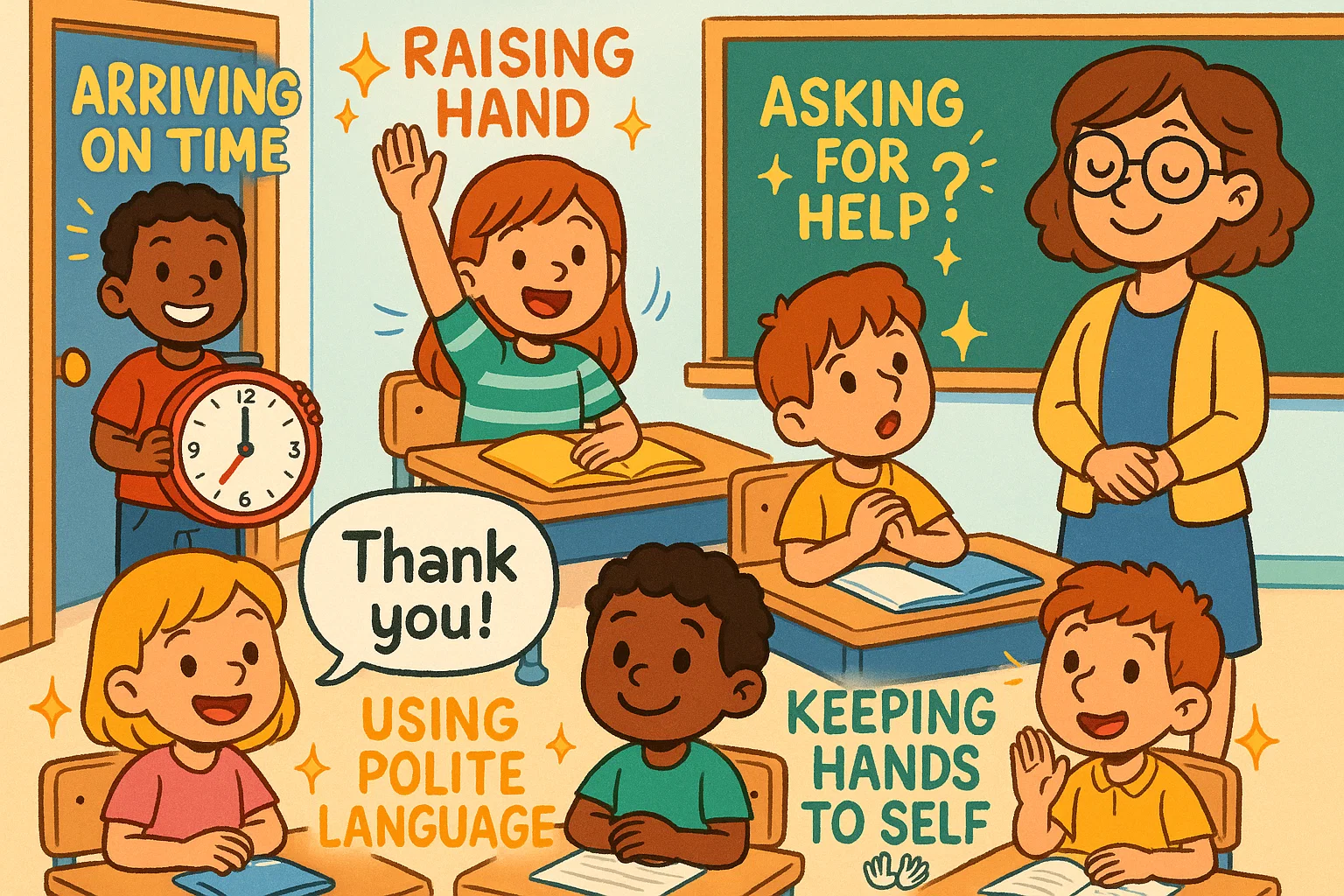
The following ten expectations address the most common behavioral needs. They can be adapted for elementary, middle, and high school classes, as well as for different subject areas.
1. Arrive on Time
Punctuality shows respect for the teacher’s time and the learning process. Students should enter quietly, take their seats before instruction begins, and have their materials ready when the lesson starts.
Being on time also prevents missed directions and avoids interrupting peers.
Student-friendly wording: “I am in my seat and ready to learn when class begins.”
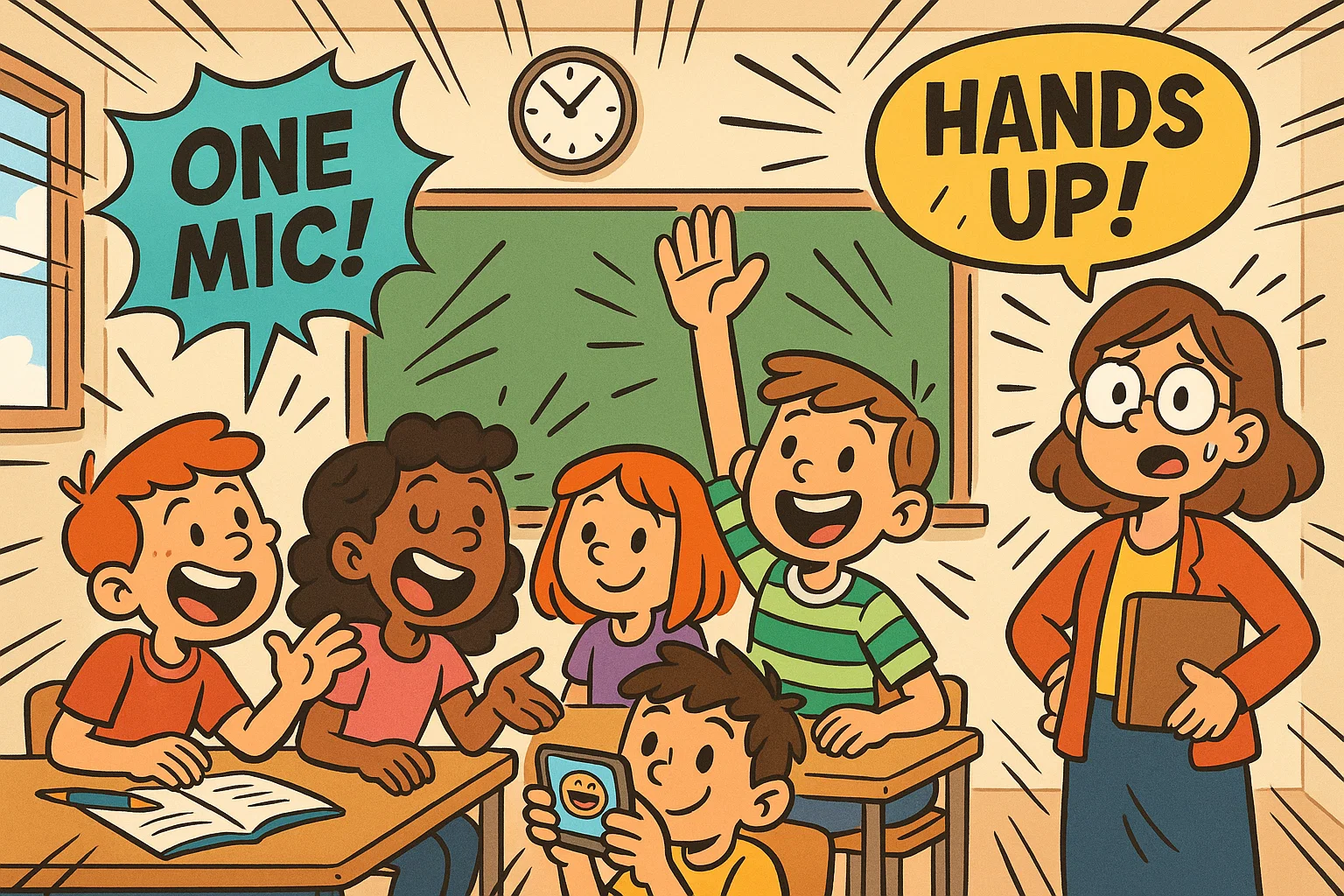
2. Raise Your Hand Before Speaking
Raising a hand supports fair turn-taking and prevents interruptions. It gives quieter students a chance to participate without being overpowered by louder voices.
This habit also builds patience and self-control. Everyone’s ideas matter, but so does the right of others to think and speak.
Teacher tip: Use a short wait time of 3–5 seconds after asking a question so more students can prepare an answer.
3. Follow the One Mic Expectation
“One mic” means only one person speaks at a time. It may be the teacher, a classmate, or a presenter. This rule improves listening and makes discussions more respectful.
It is especially useful during debates, presentations, group sharing, and whole-class conversations.
Example behavior: Look toward the speaker, stay silent, and listen for the main idea.
4. Respect the Teacher and Classmates
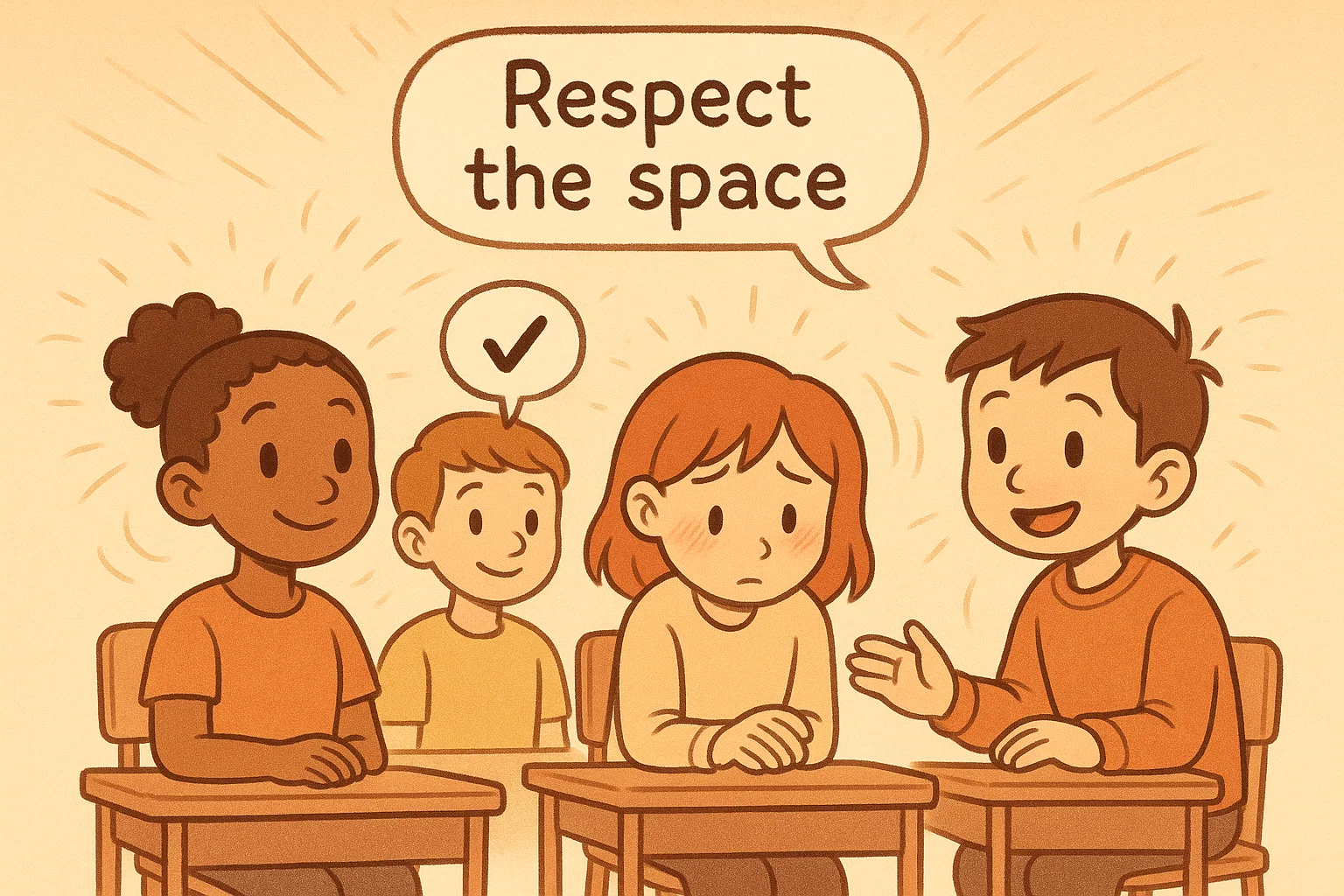
Respect is the foundation of classroom etiquette. It includes a polite tone, active listening, patience, and respect for people with different opinions or backgrounds.
Respect is shown through words and actions: listening when others speak, disagreeing calmly, and avoiding sarcasm or insults. Teachers can remind students that respect is not just about obeying adults; it is about helping everyone feel valued.
Example behavior: “I can disagree with an idea without disrespecting the person.”
5. Care for Classroom Space and Materials
Students should take care of school supplies, keep their desks tidy, and return borrowed items to the correct place. This teaches responsibility and protects shared resources.
It also includes using technology appropriately, cleaning up after activities, and reporting damage honestly.
Student-friendly wording: “I treat school property with care so others can use it too.”
6. Keep Hands, Feet, and Objects to Yourself
Personal space is essential for physical safety and emotional comfort. This rule prevents accidental injuries and helps everyone feel secure.
Students should not touch other people, their belongings, or classroom materials without permission. This boundary is essential for creating trust and safety.
Teacher note: Use this expectation to explain body boundaries during transitions, lining up, and group activities.
7. Use Polite and Appropriate Language
Respectful words and calm voices create a welcoming environment. This includes saying “please” and “thank you” while avoiding insults, profanity, and hurtful labels.
Polite language also supports conflict resolution. When students express frustration respectfully, disagreements are less likely to escalate.
Example behavior: “I can ask for what I need without hurting someone else.”
8. Come Prepared and Organized
Students should arrive with the necessary materials, such as books, notebooks, pencils, charged devices, and completed homework. Preparation allows instruction to begin without delays.
Organization also builds confidence because students know they have what they need to participate.
Example behavior: Check your bag each evening for supplies, planner, books, and assignments.
9. Ask for Help When Needed
Asking for help is a sign of self-awareness, not weakness. Students should use the classroom support routines available to them, such as asking a peer, checking the directions, or using a help signal.
This habit prevents frustration and teaches self-advocacy.
Teacher tip: Use a colored card, sticky note, or digital signal so students can request help without interrupting the whole class.
10. Give Your Best Effort and Stay on Task
This expectation focuses on effort, focus, and academic integrity. Students should focus on the task, avoid distractions, and take pride in the quality of their work.
Staying on task protects the learning environment for everyone and reinforces the value of persistence.
Student-friendly wording: “I focus on my work and try my best on every task.”
Etiquette by Learning Situation
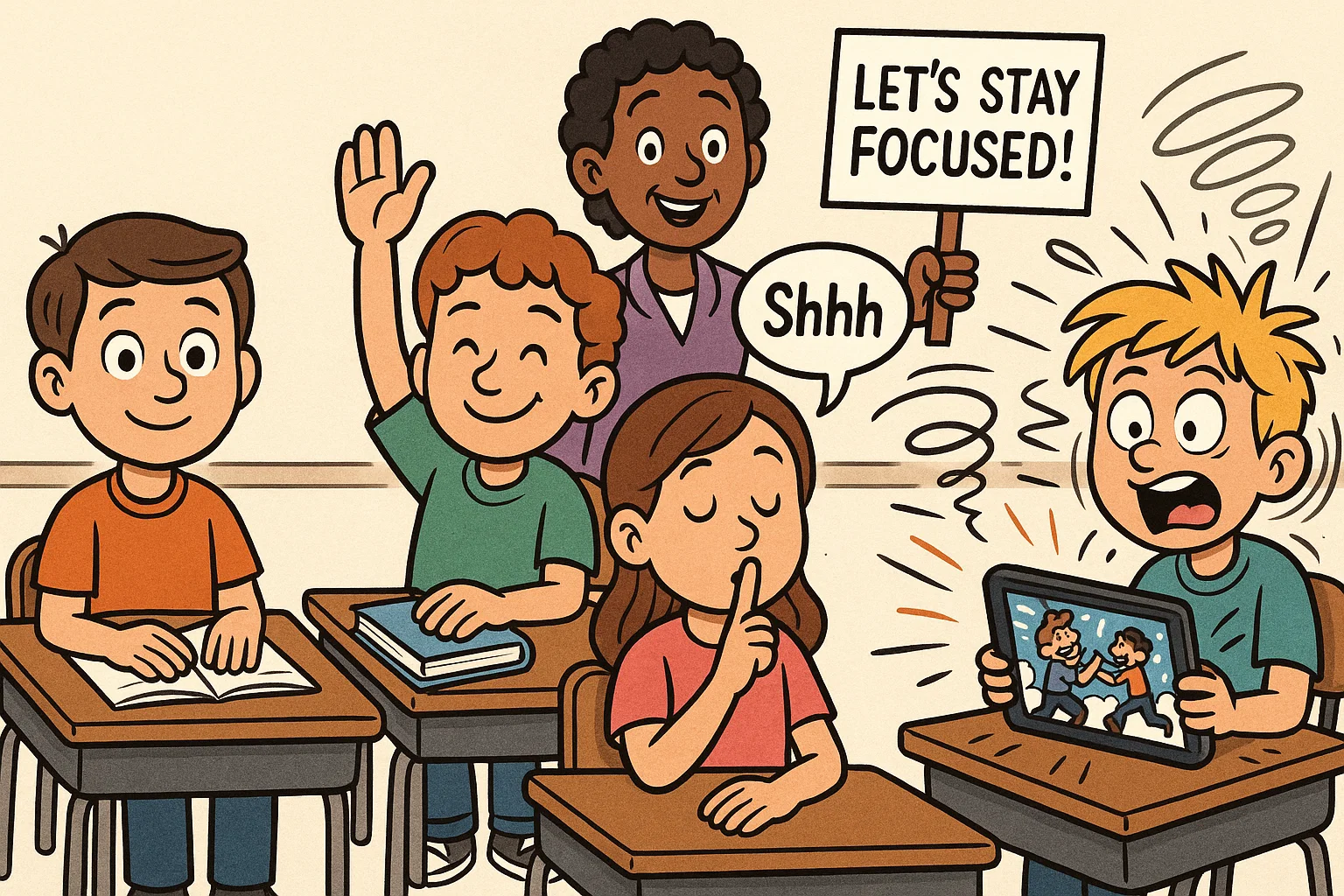
Expectations may change slightly depending on the activity. Tailoring behavior to the context helps students understand what appropriate conduct looks like in different situations.
| Situation | Key Expectation |
| Teacher is talking | Attention to the speaker, quiet listening, and no side conversations. |
| Small groups | Shared roles, turn-taking, and focus on the task. |
| Tests | Silence, eyes on own paper, and following directions. |
| Hallway or lining up | Calm walking, low voices, and staying with the group. |
| Technology use | Approved websites and responsible screen use. |
While the Teacher Is Talking
During direct instruction, students should listen quietly, look toward the speaker, and avoid side conversations. Questions can be saved for an appropriate pause so instruction continues smoothly.
When a Question Comes Up
Raising a hand and waiting for a turn are usually the fairest ways to participate. Students should also listen respectfully to answers, even when a response is incomplete or incorrect.
During Quiet Work
Independent work time requires low noise, focus, and responsible use of materials. This is when self-management matters most.
During Small Groups
Teamwork requires shared responsibility, calm problem-solving, and active listening. Each member should have a chance to contribute.
Teachers can review the rules and use short role-play examples to show what respectful teamwork looks like.
During Presentations
When a peer presents, the audience should give the speaker their full attention. That means no laughing at mistakes, no side comments, and thoughtful questions at the end.
During Technology Use
Expectations for device use are essential in modern classrooms. Approved websites, digital citizenship, and responsible screen use should be explained before devices are used.
Educators should teach technology routines clearly so students understand when screens support learning and when they become distractions.
How to Establish Classroom Expectations
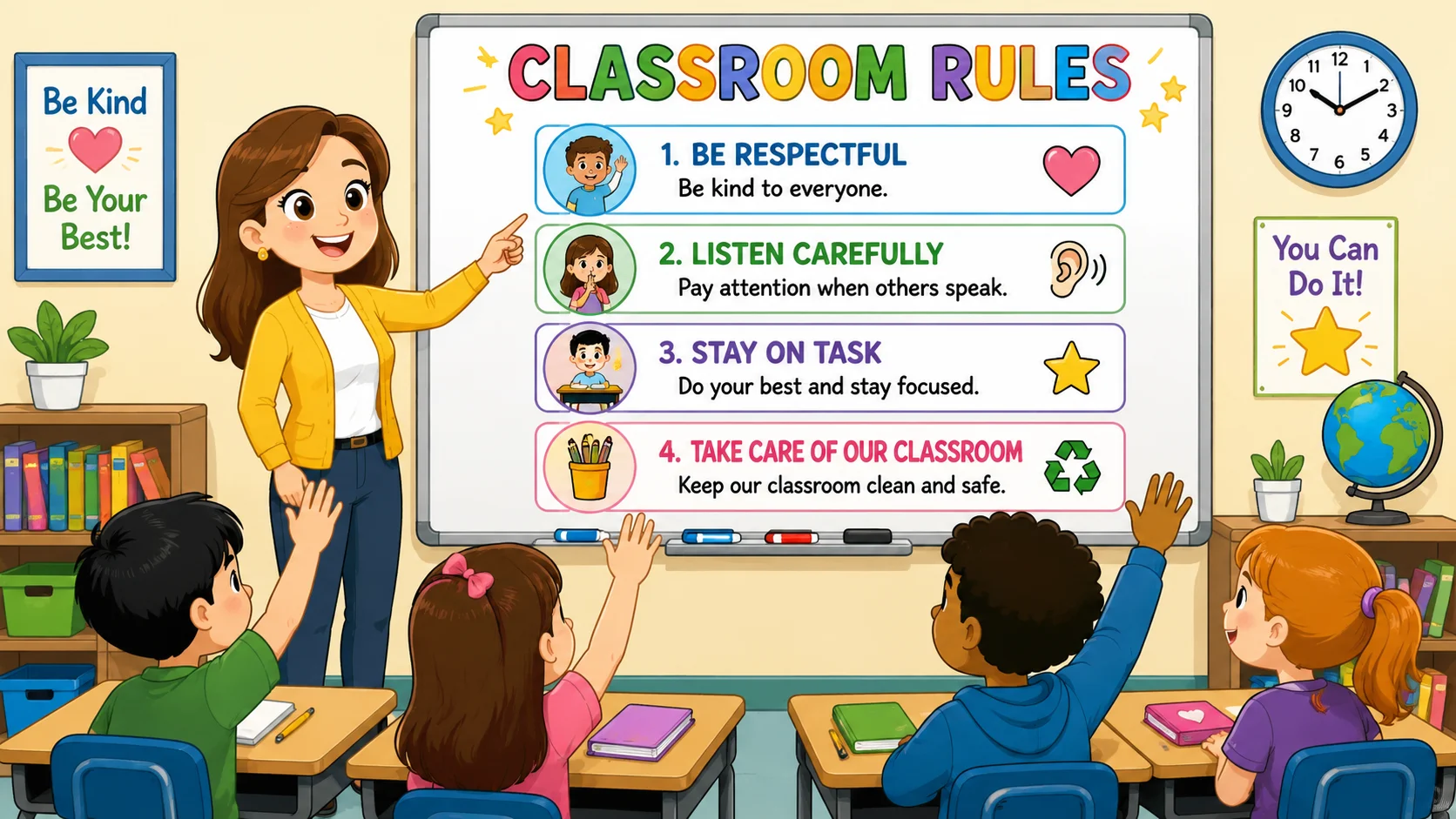
Establishing rules requires planning before the school year begins. The aim is not to create a rigid atmosphere, but to build a predictable space where rules are understood and practiced.
Build the Foundation
Start with the core values you want the room to represent: respect, safety, focus, responsibility, and kindness. These values become the “why” behind each expectation.
Reflect on Teaching Goals
Rules should match the subject, age group, and teaching style. A science lab may need more safety procedures, while an art room may need clearer routines for caring for materials.
Whether students are in elementary, middle, or high school, rules should match their maturity and independence.
Identify Behaviors That Support Learning
Focus on student behaviors that directly affect teaching and learning: listening, preparation, participation, respectful language, and responsible movement.
Keep Language Positive and Clear
Positive rule wording is easier to teach. “Use respectful words” is more helpful than “Do not be rude,” because it tells students what to do.
Students should know the desired action, not only the behavior to avoid.
Customize for Your Classroom
Avoid copying the same rules for every classroom. Consider class size, age, subject area, space, schedule, and common behavior challenges.
A group with frequent transitions may need detailed movement procedures. A discussion-heavy course may need clearer conversation norms.
Communicate and Practice
Creating effective classroom rules begins with deciding what kind of learning environment you want to build. At the beginning of the school year, communicate the rules clearly, model them often, and make sure students understand what each one looks like in real classroom situations.
Students are more likely to meet expectations after they have seen examples, practiced routines, and received clear feedback.
Student Involvement in Rule-Making
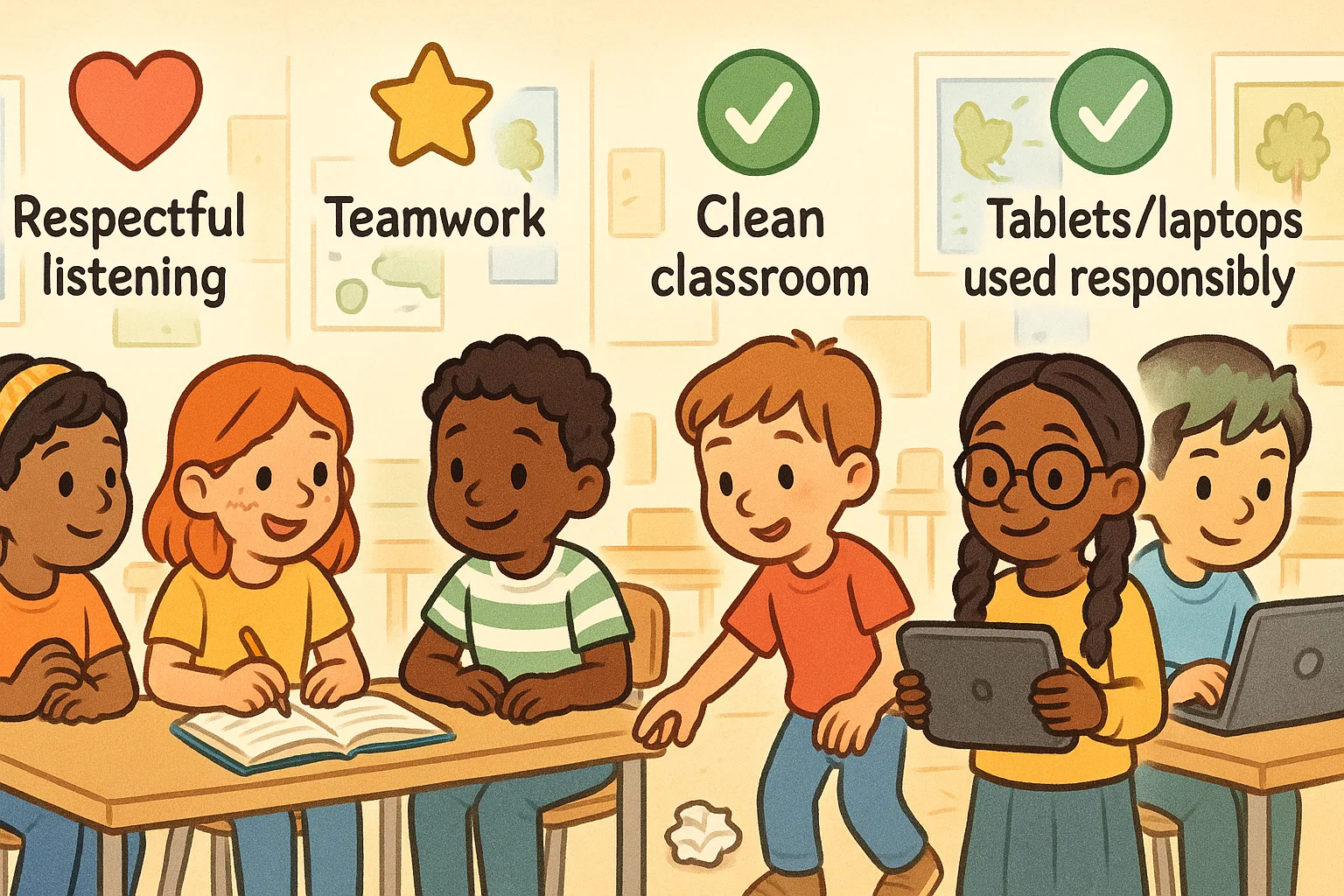
When young people help shape classroom rules, they are more likely to accept them. Ownership increases buy-in and commitment.
- Brainstorm together: Ask what behaviors help people feel safe, respected, and ready to learn.
- Revisit after the first month: Adjust wording if daily routines show that something is unclear.
- Gather feedback: Use exit tickets or quick surveys to check whether expectations feel fair.
- Teach accountability: If a rule is broken or harm is caused, discuss how to repair the situation and rebuild trust.
When you create rules with your students, they know you want them to be part of a respectful classroom community rather than passive followers of directions. Regular communication helps students stay aware of expectations and reflect on what is working.
This collaborative process is especially useful for older students, who often respond better when they understand the reasoning behind classroom systems.
How to Display Classroom Rules
Visual reminders help students internalize expectations. What is out of sight is often out of mind.
A classroom rules poster is one of the easiest ways to keep key rules visible. For younger students, icons and short phrases work well. Older students may prefer a more age-appropriate chart that connects each rule to responsibility, academic success, and essential life skills like communication and self-control.
Visual Chart
Use short phrases and icons. This is especially helpful for younger students and English language learners who benefit from visual cues.
Student-Created Poster
When students design the poster, commitment increases. The final display becomes a reminder of the agreement made with the teacher and peers.
Digital Expectations Chart
In a technology-rich classroom, include a digital version on the learning platform. Brief reminders on the interactive whiteboard can keep etiquette visible during daily routines.
Weekly Focus Board
Highlight one rule at a time, such as punctuality, respectful listening, or preparation. This prevents overload and gives the teacher a clear target to reinforce.
How to Uphold Classroom Rules
Rules are only useful when they are reinforced consistently. Fairness is one of the most important parts of any classroom management plan.
Be Clear About Consequences
Predictable consequences may include a reminder, a seat change, a reflection sheet, a private conversation, or contact with families. The goal is correction, not punishment.
Apply Consequences Consistently
If two students show the same behavior, the response should be consistent and proportionate. Consistency prevents perceptions of favoritism.
Use Positive Reinforcement
Highlighting good behavior is often more effective than correcting negative behavior. Praise, class points, or a positive note to the family can encourage continued effort.
Positive reinforcement also helps students connect expectations with success, not just consequences.
Balance Discipline With Compassion
Educators should consider individual context, including stress, anxiety, trauma, neurodivergence, or disability-related needs. Correction can be firm while still protecting dignity.
Compassion does not mean ignoring behavior. It means responding in a way that protects the learning community and supports growth.
Teacher Tips for Implementing Classroom Rules
Implementing rules requires more than posting a chart. Educators need to teach, model, practice, and reinforce rules throughout the year.
Model the Behavior
Students need to see respectful behavior in action. The teacher can model polite disagreement, active listening, calm redirection, and responsible use of materials.
Practice Routines Early
During the first few weeks, rehearse how to enter the classroom, ask for help, move between activities, use devices, and clean up. Practice turns abstract rules into habits.
Keep the System Short
A short system is easier to remember and enforce. Most classrooms do not need a complicated rule structure. Five to ten clear expectations are usually enough.
Reinforce Before Problems Happen
Short reminders before group work, tests, presentations, or transitions help students apply the appropriate behavior at the right time.
Revisit After Breaks
Review rules after long weekends, holidays, and school breaks. Routines often need a refresh after interruptions.
Classroom Etiquette Chart Ideas
Charts provide a structured way to display and reinforce behavior goals.
| Chart Type | Purpose | Best Use Case |
| Poster with icons | Visual recall | Elementary and inclusive classrooms. |
| Class agreement | Commitment | Middle and high school courses. |
| Weekly focus board | Targeted improvement | One skill at a time, such as punctuality. |
| Reflection chart | Accountability | Connecting choices to outcomes. |
| Digital reminder slide | Quick review | Morning meetings or lesson openings. |
A good chart should be easy to read, visually clear, and connected to real behavior. It should not simply decorate the wall; it should support daily management.
Classroom Rules Examples by Grade Level
Elementary Classroom
For younger children, use simple language and strong visuals. Focus on routines such as walking feet, quiet voices, kind words, and hands to yourself. Frequent praise and reminders are important for developing self-control.
A visual poster with icons can be especially effective at this age. Here are three concrete examples of classroom etiquette for kids at the elementary level:
- Walk quietly to your seat and sit down before the bell rings.
- Use an inside voice and raise your hand before speaking.
- Keep your hands and feet to yourself during transitions and group time.
Middle School Classroom
At this stage, focus on transitions, independence, respectful discussion, and responsible use of technology. Explain the “why” behind each expectation, because this age group often responds well to explanations rooted in fairness and logic.
High School Classroom
Teenagers should be treated as young adults. Focus on academic honesty, mature conversation, punctuality, and professional communication. Etiquette should mirror expectations in college, career training, and the workplace. The following are three top classroom rules for high school students:
- Arrive on time, sit down promptly, and begin the warm-up activity without being asked.
- Disagree with ideas respectfully during discussions — challenge the argument, not the person.
- Submit your own work and cite sources honestly; academic integrity is non-negotiable.
Older students can take more responsibility for self-monitoring, discussion norms, and academic integrity.
Classroom Etiquette for Teachers
Classroom etiquette is not only a student responsibility. Teachers play an equally important role in shaping the tone, culture, and daily habits of the learning environment. When educators model the behavior they expect, students are far more likely to follow through consistently.
Model Respect Every Day
Teacher etiquette begins with modeling. Greeting students at the door, using polite language, listening without interrupting, and acknowledging mistakes openly all demonstrate the same respect teachers ask students to show. When the teacher sets this standard, it becomes the norm for the whole room.
Enforce Rules Consistently and Fairly
Students notice when rules are applied unevenly. Consistent enforcement — regardless of which student is involved — builds trust and reinforces that expectations are about fairness, not favoritism. Teachers should apply the same calm, proportionate response to similar behaviors across the class.
Maintain a Professional and Supportive Tone
A professional tone does not mean being cold or distant. It means communicating clearly, avoiding sarcasm, and addressing behavior privately when possible. Correcting a student in front of peers can damage trust; a calm, private conversation is usually more effective and more respectful.
Be Prepared and Punctual
Teachers who arrive prepared, start lessons on time, and follow through on commitments model the same habits they ask of students. Preparation signals that the teacher values the class time as much as the students are expected to.
Invite Feedback and Reflect
Good classroom etiquette for teachers also includes a willingness to reflect and improve. Inviting student feedback on classroom norms, acknowledging when a rule needs adjustment, and staying open to different learning needs all contribute to a healthier classroom culture for everyone.
School and Home Connection
Classroom etiquette becomes stronger when rules are supported both at school and home. Families do not need to use the same language, but they can reinforce the same values: respect, responsibility, preparation, and self-control.
For example, preparing a backpack the night before supports organization. Practicing calm disagreement at home supports respectful discussion in the classroom.
Regular communication between school and home helps students see that expectations are consistent and meaningful.
Frequently Asked Questions
Why Are Class Rules Essential?
Class rules are essential because they help create a productive learning environment where students feel safe and comfortable. Clear expectations protect class time, support classroom discipline, and help every student understand how to participate respectfully.
What Are the Top 10 Rules for Classroom Etiquette?
The top 10 rules usually include arriving on time, raising a hand before speaking, listening when others talk, showing respect, using polite language, coming prepared, staying focused, caring for materials, asking for help, and giving your best effort. These rules work best when they are simple, visible, and practiced during class discussions, independent work, group activities, and transitions.
How Do Classroom Procedures Help Students Follow the Rules?
Classroom procedures show students how the rules apply during real moments of the school day, such as entering the room, starting a task, using classroom materials, asking for help, or ending a class period. When procedures are clear, teachers often spend less time correcting behavior and more time protecting learning outcomes.
Should Students Help With Making the Rules?
Yes. Making the rules with students can encourage ownership and responsibility. When teachers ask students what helps them feel safe, respected, and ready to learn, students are more likely to understand why the rules are meant to support everyone. This process also encourages students to think about fairness, respect among students, and positive classroom culture.

Take a short quiz to find out what your everyday choices say about your parenting style
When your child is curious about something new, what’s your instinct?
Take a short quiz to find out what your everyday choices say about your parenting style
“Can I download this app?” What happens next?
Take a short quiz to find out what your everyday choices say about your parenting style
When it comes to rules at home, which sounds most like you?
Take a short quiz to find out what your everyday choices say about your parenting style
If you could give your child one life skill today, what would you pick?
Take a short quiz to find out what your everyday choices say about your parenting style
Your child gets to choose what to watch. What would your ideal setup look like?
Take a short quiz to find out what your everyday choices say about your parenting style
Pick your parenting superpower ✨