What Children Learn in Year 4: UK Primary School Guide

 Discover a Free Education Video App for Kids
Pastory uses AI to personalize educational video content based on your child’s interests and personality. Safe, engaging, and built for curious young minds. Sign up now to stay updated and enjoy early access with a free trial
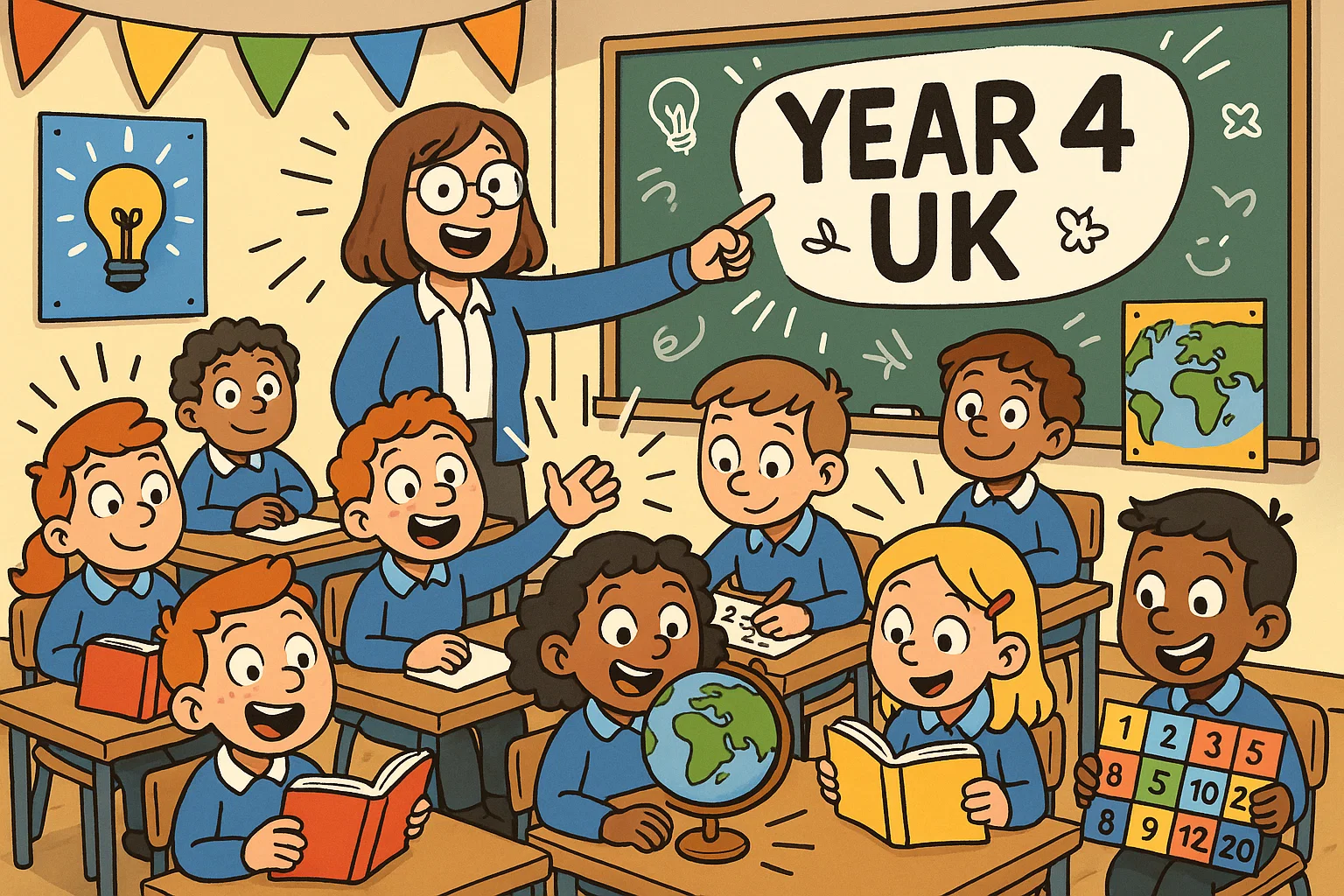
Year 4 is the second year of Key Stage 2 in UK primary school, covering children aged 8 to 9. Pupils build on earlier foundations in maths, English, and science while developing greater independence in their learning. The national curriculum sets clear expectations for what children should know and be able to do by the end of the year.
This guide covers the Year 4 curriculum in detail — from core subjects and the wider curriculum to daily school life, parent support strategies, and useful learning resources. Whether your child is working on times tables, reading comprehension, or grammar skills, you will find practical information here to support their progress.
Key Takeaways
- Year 4 is part of Key Stage 2 and covers children aged 8 to 9 in UK primary school.
- Core subjects include maths, English, and science, with a strong focus on times tables and literacy skills.
- The wider curriculum covers PE, creative arts, digital skills, social studies, and outdoor learning.
- Parents can support learning at home through shared reading, times tables practice, and spelling activities.
- The article also covers daily school routines, national curriculum references, and Year 4 learning resources.
Year 4 Curriculum Overview
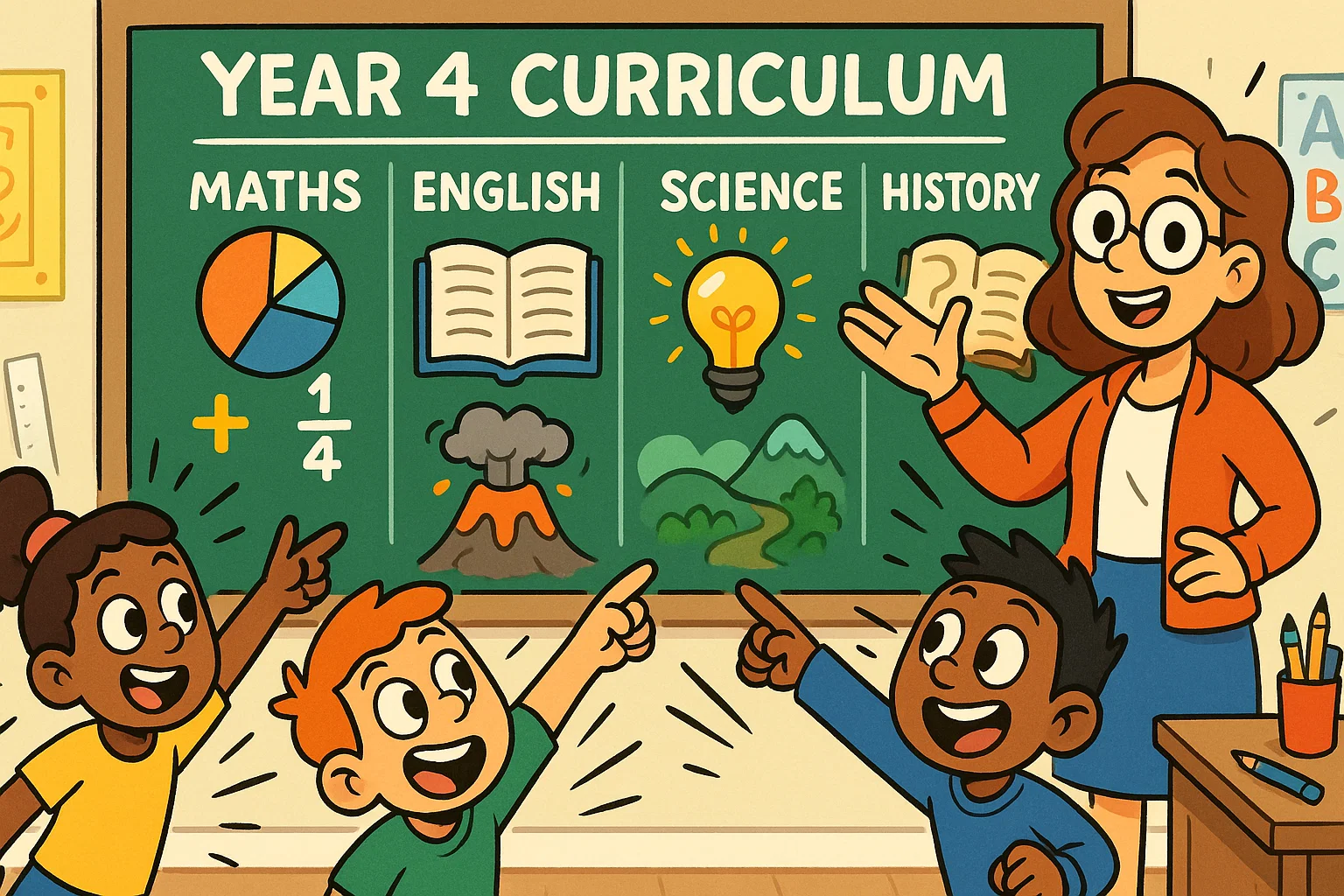
Year 4 at primary school is often described as the “sweet spot” of Key Stage 2. Students are past the initial transitions of Key Stage 1 (KS1) and are building strong foundational skills before tackling the more intense demands of Years 5 and 6. This is a year focused on deepening knowledge and skills in core subjects while broadening horizons across the wider curriculum.
Key Stage 2 Position
Year 4 is the second year of Key Stage 2, which covers Years 3 to 6 (ages 7 to 11). The curriculum structure builds systematically on the knowledge pupils gained in Year 3. Core goals include:
- Mastery of Fundamentals: Securing multiplication facts up to 12 times tables and developing strong reading and writing skills.
- Structured Learning: Introducing more complex concepts in maths and English, such as formal column addition and subtraction with larger numbers (four-digit numbers) and advanced grammatical structures.
- Assessment Benchmark: Students are assessed informally throughout the year, but the formal, statutory Year 4 Multiplication Tables Check (MTC) takes place towards the end of year.
Age Expectations for Year 4
At age 8–9, pupils typically demonstrate increased cognitive readiness for abstract thought. Socially and emotionally, they are developing a stronger sense of self and peer relationships.
- Academic Milestones: They can sustain focus for longer lessons, follow multi-step instructions, and engage in more sophisticated reasoning, such as using inferential comprehension skills to infer meaning from texts.
- Social Milestones: Pupils begin showing greater independence in learning, taking responsibility for homework, organising their belongings, and confidently ask questions to clarify understanding.
Wider Curriculum Role in Year 4
While maths and English are core subjects, the wider curriculum provides essential balance and context. They’ll also learn through:
- Humanities: Deeper dives into history and geography, expanding beyond local contexts to include ancient civilisations and global map skills.
- Science: Hands-on investigations and experiments, applying scientific skills to explore topics like energy and living things.
- Arts & PE: Developing creative writing skills, mastering specific art techniques, and improving physical literacy and teamwork in PE.
Daily School Experience in Year 4
A typical school day in Year 4 is dynamic and structured to build stamina and independence.
- Routines: Mornings are generally dedicated to core subjects.
- Independence Building: Children will learn to manage personal resources, transition between subjects efficiently, and contribute more confidently to class discussions and group work.
Year 4 Core Subjects
The year 4 curriculum demands a solid grasp of fundamental concepts in the core subjects of Maths, English, and Science.
Year 4 Maths
Maths in Year 4 shifts from basic operations to mastery and application. The key areas of focus include:
- Multiplication and Division: Absolute fluency in times tables up to 12 × 12 is the benchmark. This is supported by learning formal methods for multiplying and dividing larger numbers by a one-digit number.
- Place Value and Number: Working with four-digit numbers, understanding place value up to thousands, and rounding numbers. They learn to add and subtract larger numbers using efficient formal methods.
- Fractions and Decimals: Pupils learn to recognise and show families of equivalent fractions, and compare and order fractions. They also begin to understand the relationship between fractions and decimals, particularly tenths and hundredths.
- Measurement and Geometry: Calculating the perimeter of rectilinear shapes and converting between different units of measure.
- Problem-Solving: Applying all learned skills to solve complex word problems and develop mathematical reasoning.
| Subject Area | Key Skills Learned (Year 4) | Example Activity |
| Number & Place Value | Work with numbers up to 10,000 | Using worksheets or hands-on resources to partition four-digit numbers. |
| Multiplication | Master 12 × 12 times tables | Completing the MTC check, or playing multiplication speed games. |
| Fractions & Decimals | Recognise equivalent fractions, introduce tenths/hundredths | Using a number line to compare ½ and 2/4. |
Year 4 English
English focuses on consolidating reading skills and structuring writing effectively.
- Reading Skills: Moving from simply decoding to deep comprehension. Pupils are expected to summarise and discuss increasingly challenging chapter books, demonstrating the ability to infer a character’s feelings or predict events.
- Structured Writing: Learning to structure writing into coherent paragraphs and different text types (e.g., reports, narratives, poems). They begin to plan and draft their work more independently.
- Vocabulary Expansion: They’ll learn new words and correctly use ambitious vocabulary in their own effective writing, supported by dedicated teaching.
Year 4 Science
Science involves structured, practical investigations where pupils learn to plan, predict, and draw conclusions. They’ll learn about:
- States of Matter: Solids, liquids, and gases, and how materials change state (e.g., melting, freezing).
- Electricity: Constructing simple series electrical circuits and identifying common components.
- Living Things: Understanding classification, life cycles, and the importance of habitats.
Grammar and Literacy Skills
This year introduces complex grammatical tools that dramatically improve writing quality.
- Punctuation Mastery: Consolidating the use of inverted commas (speech marks), correctly using the apostrophe for possession and contraction, and accurately using commas to separate clauses or items in a list.
- Grammar: Introducing fronted adverbials (e.g., “Suddenly, the dog barked”), conjunctions, and using different sentence types effectively.
- Key Spellings: Working through a specific list of key spellings and learning spelling patterns, such as prefixes and suffixes.
Reading and Writing Development
This is where pupils transition to being truly independent readers and writers.
- Reading: Focussing heavily on comprehension skills, including retrieving information and making justified inferences.
- Writing: Refining joined handwriting, producing longer pieces of narrative and non-fiction, and using technical language accurately, which enhances their overall literacy. Creative writing tasks become a fun and expressive outlet.
Year 4 Wider Curriculum

A well-rounded education in Year 4 at primary school includes a rich exploration of foundation subjects, often integrated into thematic projects.
Outdoor Learning Activities
Many schools embrace outdoor learning as a means of contextualising science and humanities. This can involve:
- Nature Study: Collecting and classifying leaves or minibeasts.
- Environmental Tasks: Local field trips to study geographical features or ecosystems.
- Problem-Solving: Team challenges and physical tasks that encourage communication and collaboration outside the classroom.
Year 4 Social Studies and Humanities
The curriculum expands the pupil’s world view.
- History: Topics often include ancient early civilisations (e.g., Ancient Greeks or Romans), providing context for world history.
- Geography: Developing sophisticated map skills, studying human and physical geography, and comparing the different types of settlements.
Year 4 Digital Skills
Pupils continue to build essential technical skills.
- Basic Coding: Learning introductory concepts through visual programming languages.
- Safe Internet Use: Understanding digital citizenship and the importance of privacy and online safety.
- Digital Tools: Using word processors and spreadsheets to organise information and create presentations.
PE and Creative Arts
These subjects foster physical health, emotional wellbeing, and self-expression.
- PE: Developing core sports skills, tactics, and an understanding of fair play and teamwork.
- Creative arts: Exploring musical notation, instruments, and art techniques, and using different types of media to create artwork.
Year 4 Learning Skills Development
A key goal of Year 4 at primary school is to develop crucial cognitive and behavioural skills that will serve the pupil well in primary and secondary schools.
Building Independence in Learning
Pupils are increasingly expected to take ownership of their education. This includes:
- Task Management: Learning to break down large tasks into smaller, manageable steps.
- Organisation: Keeping work folders tidy, remembering necessary equipment, and following up on missed work.
- Self-Correction: Identifying and fixing mistakes independently in their worksheets or written work.
Developing Critical Thinking
In Year 4, the ability to reason and analyse is honed across all subjects.
- Reasoning: Justifying answers in maths word problems (“Show me how you know”).
- Analysing Results: Interpreting data in science experiments and drawing supported conclusions.
- Questioning Techniques: Moving beyond simple factual recall to ask questions that require deeper thought (e.g., “What if…”).
Confidence Growth Through Projects
Projects provide essential opportunities for self-expression and building confidence.
- Group Tasks: Collaborating effectively and taking on different roles in a team.
- Presentations: Developing public speaking skills by sharing research or creative work with the class.
- Creative Writing: Giving pupils the space to express their imagination and unique voice.
What Pupils Do Daily in Year 4
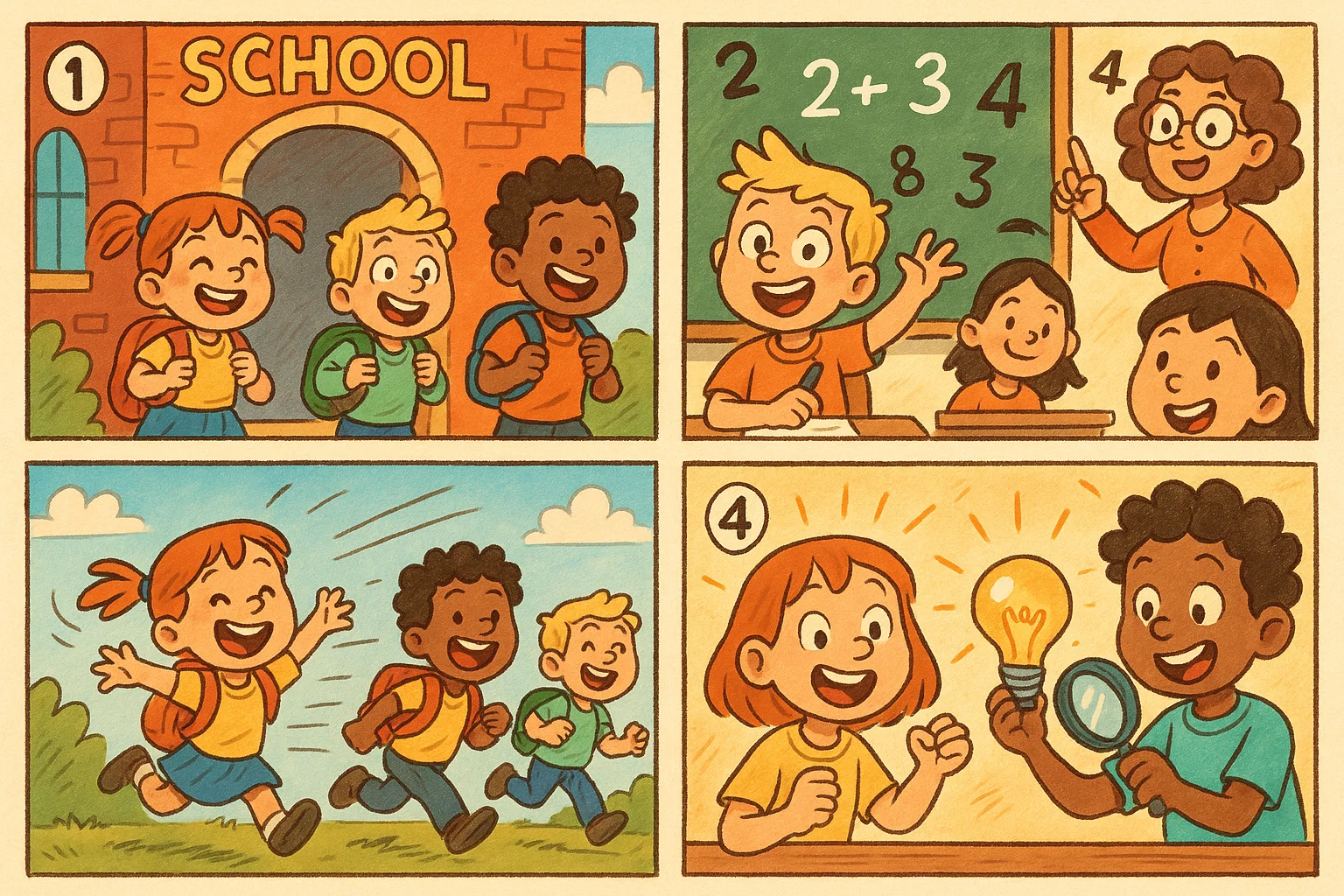
The daily routine is designed to maintain focus and vary activities, preventing burnout and ensuring comprehensive coverage of the Year 4 curriculum.
Morning Lessons and Core Subjects
The morning is typically dedicated to the core subjects when attention levels are highest.
- Literacy Blocks: Focussing on reading skills through guided reading, shared reading, and specific sessions on grammar and punctuation.
- Maths Sessions: Daily practice of core skills, often starting with a times tables or mental arithmetic warm-up, followed by teaching new concepts like multiplication and division or working with fractions.
Midday Activities and Breaks
Breaks are essential for social and physical wellbeing.
- Outdoor Play: Crucial for physical development and emotional regulation.
- Lunchtime Responsibilities: Many schools also learn through responsibilities, like being a helper or setting up activities, fostering social maturity.
Afternoon Curriculum Blocks
The afternoon typically covers the wider curriculum.
- Science and Humanities: Extended sessions for hands-on experiments, art projects, or research using digital tools.
- PE/Arts: Practical subjects that provide a shift in activity and encourage creativity.
Parent Support for Year 4
You play an invaluable role in your child’s progress. Consistent, low-pressure support at home greatly enhances their classroom learning.
Carry On Reading Together
Even at age 8–9, reading with your child remains vital.
- Tips for Reading: Encourage them to choose books from an Oxford Owl library or similar platform. Ask them to summarise what they’ve read and discuss characters or plot twists.
- Questioning Strategies: Instead of “What happened?”, try: “Why do you think the character did that?” (encouraging inference).
Learn Times Tables
Fluency in times tables is non-negotiable for Year 4 success.
- Fun Activities: Use apps, songs, or games. Practising in short, frequent bursts is more effective than long sessions. For instance, turn multiplication facts into quick-fire questions during car journeys.
Spelling and Grammar Activities
Reinforce literacy concepts in everyday life.
- Home Exercises: Practice the key spellings from school. Write short notes to each other, deliberately using a contraction and asking them to correct it and explain the use of the apostrophe.
- Writing Prompts: Encourage creative writing or journaling to naturally embed the vocabulary and grammar they’re learning.
Making Learning Engaging
- Real-life maths practice: Use money in shops or cooking to practise addition and subtraction and understanding decimals.
- Home Projects: If they are studying ancient history, research a topic together and create a presentation or model. This supports both their learning and wider development.
National Curriculum Reference
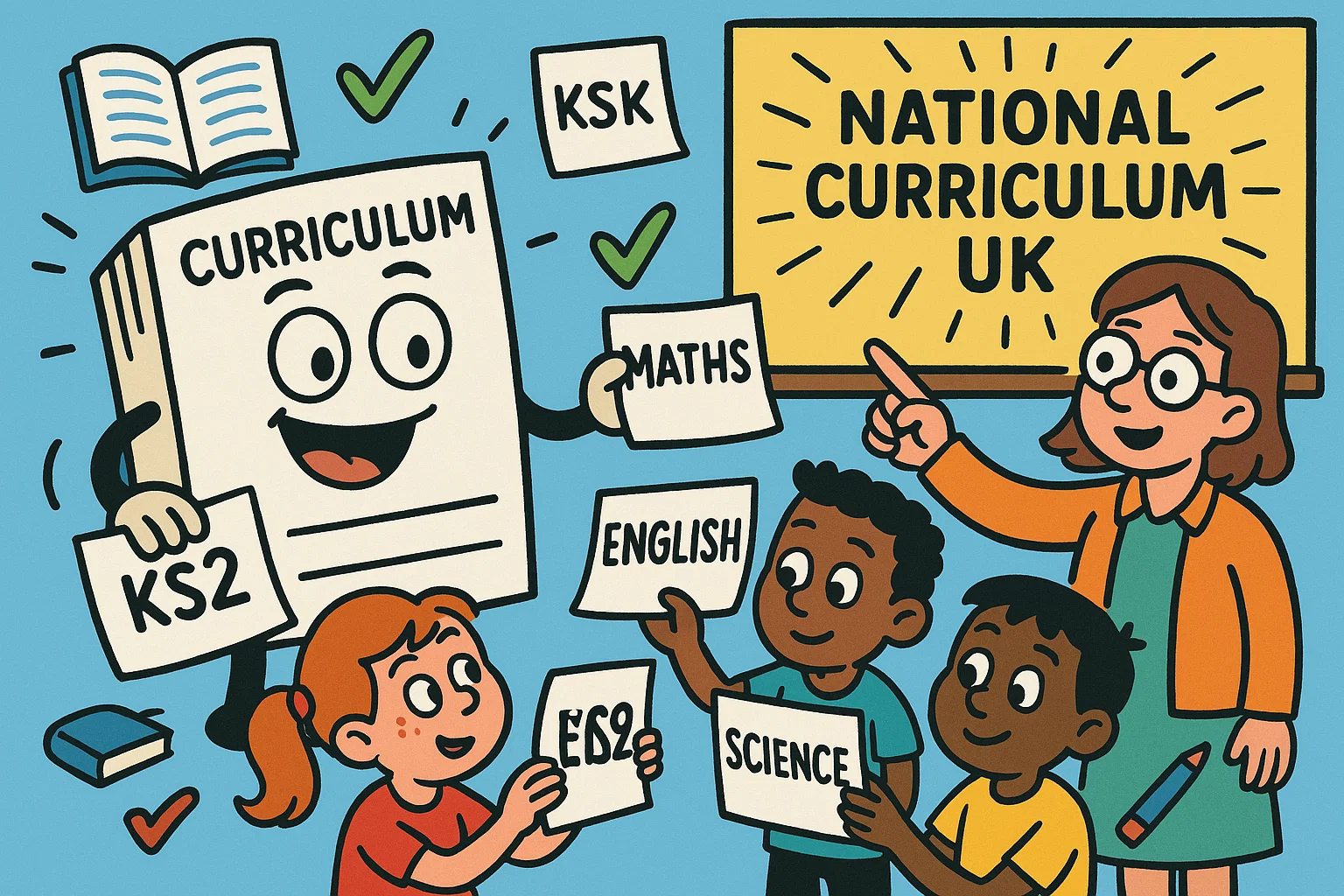
The UK National Curriculum acts as the framework for all state UK primary schools, ensuring consistency in standards and content.
Key Stage Structure
Understanding the structure provides context for Year 4 requirements.
- Key Stage 1 (KS1): Years 1 and 2 (Ages 5-7). Focus on foundational literacy and numeracy.
- Key Stage 2 (KS2): Years 3 to 6 (Ages 7-11). Year 4 is here. Focus on embedding skills and broader subjects.
- Key Stage 3 (KS3): Years 7 to 9 (Ages 11-14, Secondary School).
- Key Stage 4 (KS4): Years 10 and 11 (Ages 14-16, Secondary School – leading to GCSEs).
Government Curriculum Sections
The curriculum details specific attainment targets across specific subjects, setting the bar for the end of the year.
- Maths: Specific requirements on multiplication and division, working with four-digit numbers, and manipulating fractions.
- English: Clearly defined objectives for reading and writing and the mandatory grammar and punctuation to be taught (e.g., using the comma).
Assessments in Primary School
- Year 4 Multiplication Tables Check (MTC): A statutory, online assessment of times tables fluency up to 12 × 12. This provides an important benchmark for pupils’ foundational arithmetic skills.
- Informal Assessment: Teachers continuously assess pupil performance through marked work, classroom discussions, and specific tests aligned with lesson plans to track the child’s progress.
Year 4 Learning Resources
Utilising high-quality resources can make practising skills fun and productive.
Free eBook Library
Platforms like Oxford Owl offer excellent free eBook library access, providing texts aligned with different reading skills levels. This is a great way to access quality reading material without cost.
Useful School Resources
- Workbooks: Look for workbooks aligned with the National Curriculum to practise areas like addition and subtraction and decimal conversion.
- Websites: Educational websites often provide interactive games for practising key spellings or multiplication facts. You can find printable worksheets for specific concepts.
Literacy and Grammar Glossary
Familiarise yourself with the terms your child is using:
| Term | Simple Definition | Example |
| Apostrophe | Shows possession or contraction. | Child’s (possession), Isn’t (contraction). |
| Comma | Separates items in a list or clauses in a sentence. | I like apples, pears, and grapes. |
| Infer | Working out what the author is suggesting, not stating directly. | Inferring a character is sad from their actions. |
| Paragraph | A distinct section of text dealing with a single point. | Starting a new paragraph for a new speaker in dialogue. |
Admissions, Fees and Entry Requirements (For Private/Online Schools)
While the National Curriculum provides the framework for most UK primary schools, private and online schools may have distinct entry procedures for Year 4 at primary school.
Admissions and Assessment
- Basic Placement: Entry into Year 4 is usually based on age, ensuring the child is age 8–9 before the relevant date.
- Assessment Expectations: Many private schools conduct their own placement tests or request reports to check the child is working at or above the expected Key Stage 2 level, particularly in core maths and english skills.
Entry Requirements
- Age: Must meet the age requirement (typically turning 9 during the academic year).
- Prior Progression: Evidence of satisfactory completion of Year 3 (or equivalent).
- Language: For non-native speakers, a suitable English language level is often required to ensure the pupil can access the demanding year 4 curriculum.
Main Information for Parents
- Curriculum Format: Private schools often follow a similar framework but may enrich it with additional subjects (like extra maths and science projects) or use resources from publishers like Cambridge or Oxford.
- Tutor Support: Some parents opt for a tutor for targeted support in areas like multiplication or comprehension, whether in private or state education.

Take a short quiz to find out what your everyday choices say about your parenting style
When your child is curious about something new, what’s your instinct?
Take a short quiz to find out what your everyday choices say about your parenting style
“Can I download this app?” What happens next?
Take a short quiz to find out what your everyday choices say about your parenting style
When it comes to rules at home, which sounds most like you?
Take a short quiz to find out what your everyday choices say about your parenting style
If you could give your child one life skill today, what would you pick?
Take a short quiz to find out what your everyday choices say about your parenting style
Your child gets to choose what to watch. What would your ideal setup look like?
Take a short quiz to find out what your everyday choices say about your parenting style
Pick your parenting superpower ✨