National Curriculum Year 6: A Parent’s Guide to the Final Primary School Year

 Discover a Free Education Video App for Kids
Pastory uses AI to personalize educational video content based on your child’s interests and personality. Safe, engaging, and built for curious young minds. Sign up now to stay updated and enjoy early access with a free trial
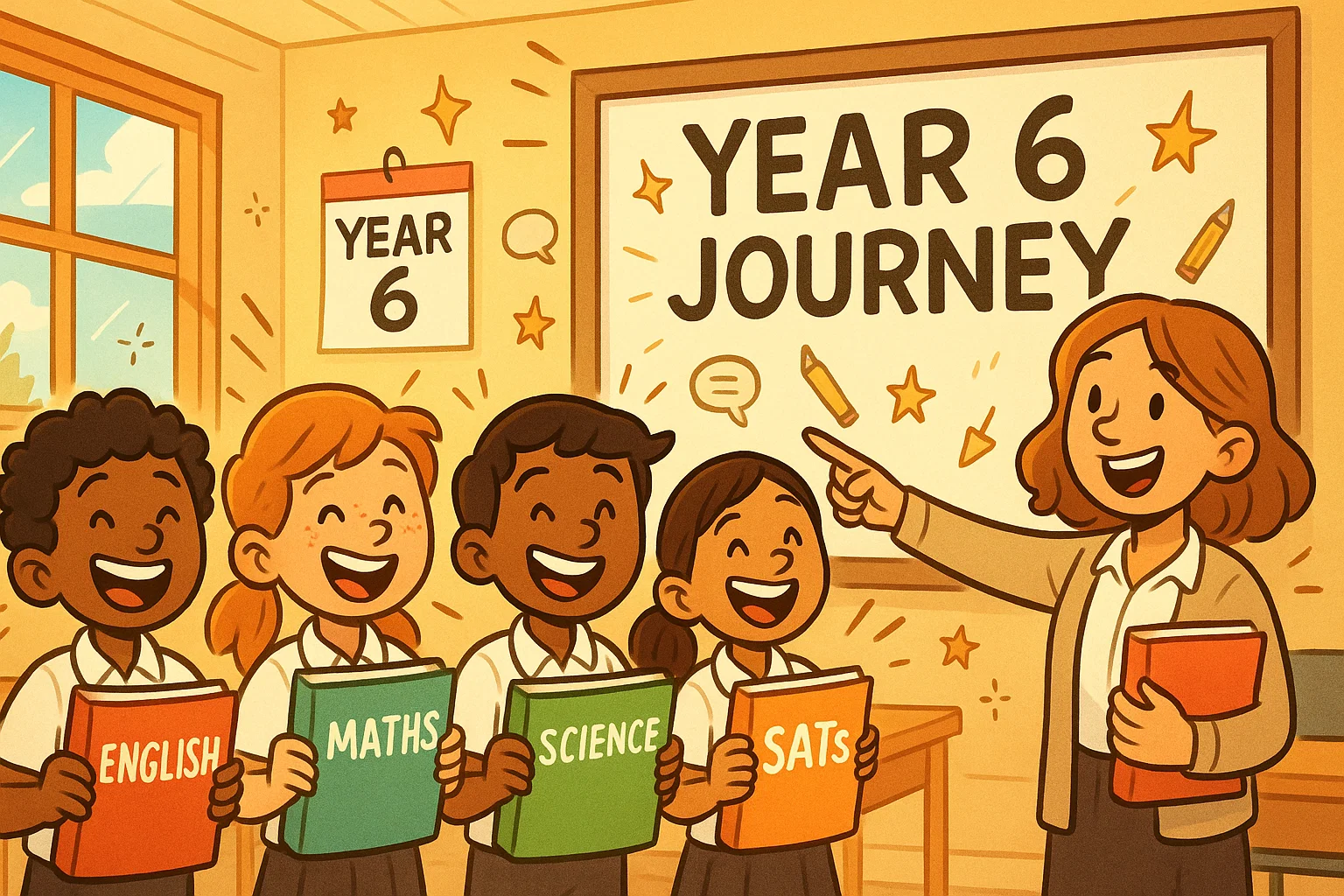
Year 6 is a pivotal and exciting year for your child, marking the grand finale of their primary education journey. For children typically aged 10-11, this year is dedicated to consolidating the knowledge and skills they’ve built throughout Key Stage 2 (KS2) to prepare them not just for the statutory end-of-Key-Stage 2 national curriculum assessments (commonly known as SATs), but crucially, for the transition to secondary school. The curriculum focuses on deepening understanding in core subjects such as English, maths and science, while also nurturing the independence, critical thinking, and social and emotional maturity needed for the next phase.
Understanding the Year 6 curriculum will empower you to provide the most effective support at home. This guide, based on the National Curriculum framework, breaks down the key learning aims, the structure of assessment, and actionable ways you can help your child’s academic and personal growth throughout the year.
Key Stages
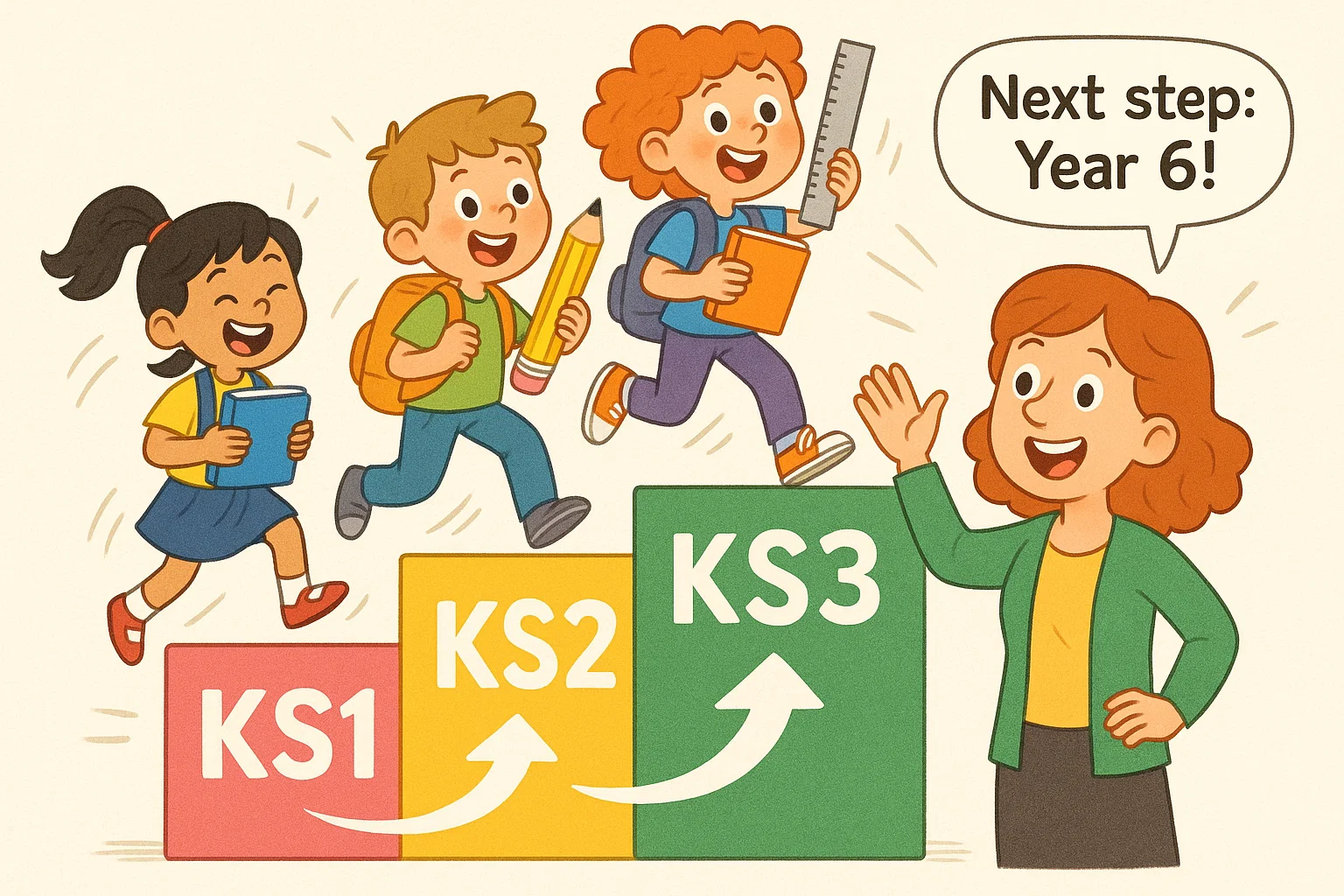
Year 6 is the final year of Key Stage 2 (KS2) in the English education system, which covers pupils from Year 3 to Year 6. It sits directly before Key Stage 3 (KS3), which begins in Year 7 at secondary school.
Key Stage 2 (KS2) Focus
One of the main aims of KS2 is for pupils to reach the expected standard across a broad and balanced curriculum. The Year 6 curriculum is the culmination of this four-year effort, requiring pupils to demonstrate fluency and application of knowledge.
- Core Subjects Mastery: This includes a high level of literacy (reading and writing) and mathematics. Pupils work with complex concepts, such as more complex grammar, multi-step problem-solving in maths, and scientific reasoning.
- Wider Subject Exploration: The programme of study also reinforces learning in geography, history, computing, art and design, music, and physical education, ensuring a holistic educational experience.
- Personal Development: Significant attention is paid to fostering self-confidence, organizational skills, and independence—essential traits for secondary school.
Key Stage 3 (KS3) Transition
Year 6 acts as the bridge to secondary education. The focus shifts from simply learning facts to applying them, preparing children for the structure and content of the KS3 syllabus.
- Subject-Specific Depth: Pupils begin encountering subject-specific approaches in science (biology, chemistry and physics) and modern foreign languages that are taught as distinct subjects in secondary.
- Study Skills: Emphasis is placed on managing homework, long-term projects, and revision techniques to succeed in the more demanding environment of secondary school.
- RSE/RSHE: The Relationships and Sex Education (RSE) or Relationships, Sex and Health Education (RSHE) aspect of the curriculum helps children navigate the social and emotional changes associated with adolescence and transition.
Assessments in Year 6
The end-of-KS2 assessment is a key focus. These Standard Assessment Tests (SATs) take place in May and are a statutory part of the national curriculum.
| Assessment Type | Subjects Covered | Purpose |
| External Tests (SATs) | English Reading, English grammar, punctuation and spelling (GPS or SPaG), Mathematics (Arithmetic and Reasoning) | To measure a child’s attainment against the national standard and to track school performance. Results are shared as scaled scores. |
| Teacher Assessment | English Writing, Science | Teachers evaluate a child’s work and performance throughout the year to provide a final judgment on whether the child is working towards, meeting or exceeding the expected standard. |
| School Readiness | All Subjects | Informal indicators of a child’s academic performance, social and emotional maturity, and independence for secondary school life. |
Teacher Assessment in English Writing and Science is highly important as it is based on a pupil’s work over a prolonged period, offering a more comprehensive view of their ability.
Year 6 Curriculum: Subject by Subject
The national curriculum provides a comprehensive programme of study. Year 6 is about mastering the final, challenging aspect of the curriculum to ensure a high level of progression.
English Year 6
The English subject demands high levels of literacy. Pupils need to be fluent readers and confident writers, able to adapt their style for different purposes.
- Reading Comprehension: Engaging with an increasingly wide range of subjects and texts, including classic fiction, poetry, and challenging non-fiction. Pupils must be able to draw inferences, justify them with text evidence, and summarize complex ideas.
- Grammar and Punctuation: Mastering complex sentence structures, including the use of semicolons, colons, dashes, and hyphens. Understanding and applying active and passive voice, and perfect tenses.
- Spelling: Learning a set list of challenging words, applying knowledge of root words (etymology) and prefixes/suffixes (morphology) to spell unfamiliar words.
- Creative Writing: Producing well-structured, coherent, and cohesive writing in various forms (e.g., balanced arguments, persuasive letters, narratives, and reports), maintaining consistent tense use throughout longer pieces of writing.
Maths Year 6
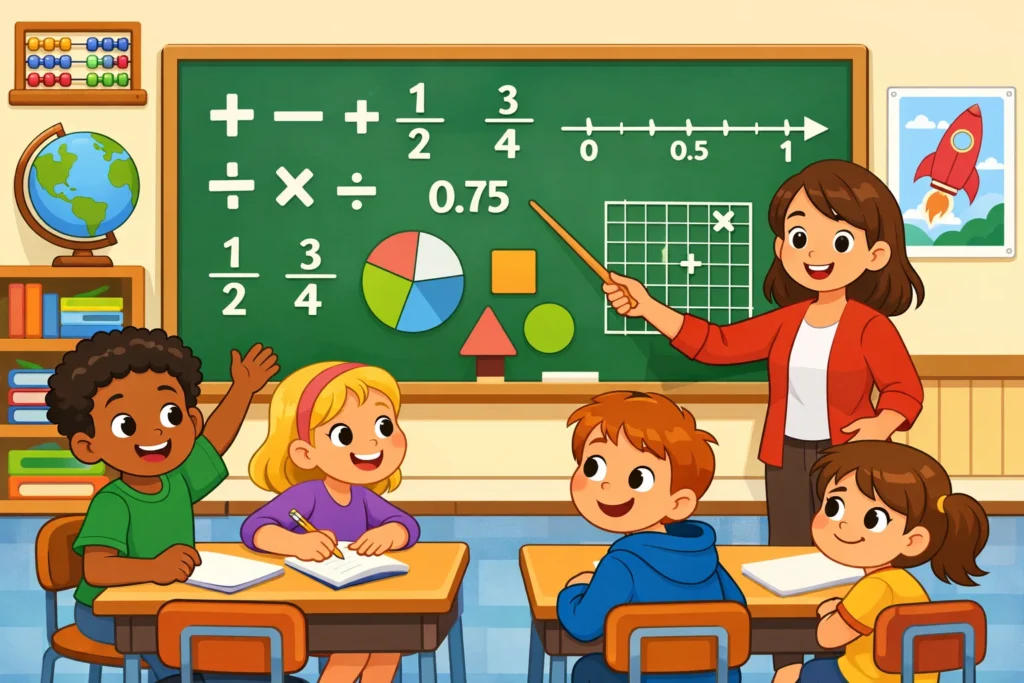
The math curriculum ensures pupils have a solid foundation for more abstract mathematics in KS3. The emphasis is on reasoning and problem-solving, not just arithmetic speed.
Number and Place Value: Working with numbers up to 10,000,000 and rounding to a required degree of accuracy. Using negative numbers in context.
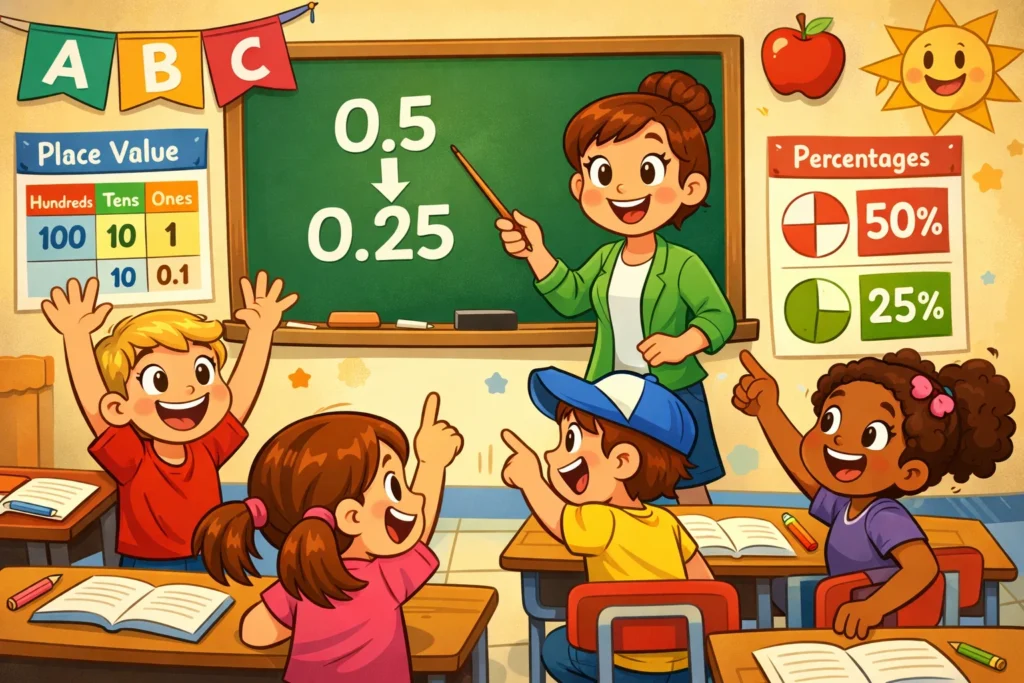
Fractions, Decimals, and Percentages: This is a crucial area. Pupils must be able to:
- Add, subtract, multiply, and divide fractions.
- Find decimal and percentage equivalents.
- Solve problems involving unequal sharing and grouping, and use ratio and proportion to compare quantities.
Algebra Basics: Introducing simple formulae, expressing missing number problems algebraically, and generating and describing linear number sequences.
Geometry and Measurement: Calculating area and perimeter of complex shapes like parallelograms and triangles. Understanding and calculating the volume of a cuboid. Plotting coordinates on all four quadrants.
Science Year 6
Science in Year 6 moves towards more abstract concepts and focuses heavily on fair testing and drawing evidence-based conclusions.
- Biology: Studying living things, including classification of animals and plants, life cycles, and the concept of evolution and inheritance.
- Physics: Topics include light (how light appears to travel in straight lines and how we see objects) and electricity (circuit diagrams, components, and conductors/insulators).
- Chemistry: Exploring properties of materials, including dissolving, separating mixtures, and changes of state and reversible and irreversible changes.
- Enquiry Skills: Designing, carrying out, and evaluating practical experiments to answer a question.
Humanities Year 6
Geography and history broaden the pupil’s understanding of the world.
- Geography: Deepening knowledge of globally significant places, focusing on human and physical geography (e.g., climate zones, biomes, trade links). Developing advanced map skills, including using different scales and identifying key features.
- History: Often focuses on a significant turning point in global history, such as World War II or a deep dive into ancient civilizations, encouraging critical thinking about cause, consequence and historical significance.
- Religious Education (RE) and RSE/PSHE: All schools must teach RE (though parents can withdraw their children) and the statutory RSHE. These lessons promote mutual respect, understanding of diverse beliefs, and safe relationships.
Creative Arts Year 6
The broad curriculum includes Art and Design and music to foster creativity and expression.
- Art and Design: Children explore different techniques in drawing, painting, and sculpture, often focusing on a specific artist or movement to inform their art and design tasks.
- Music: Developing instrumental skills, understanding musical notation, and composing and performing pieces.
- Computing: Learning to write and debug code, create simple programmes and understand how systems and networks operate. Understanding computer networks, including the internet, and the opportunities and risks they offer.
What Child Learns in Year 6
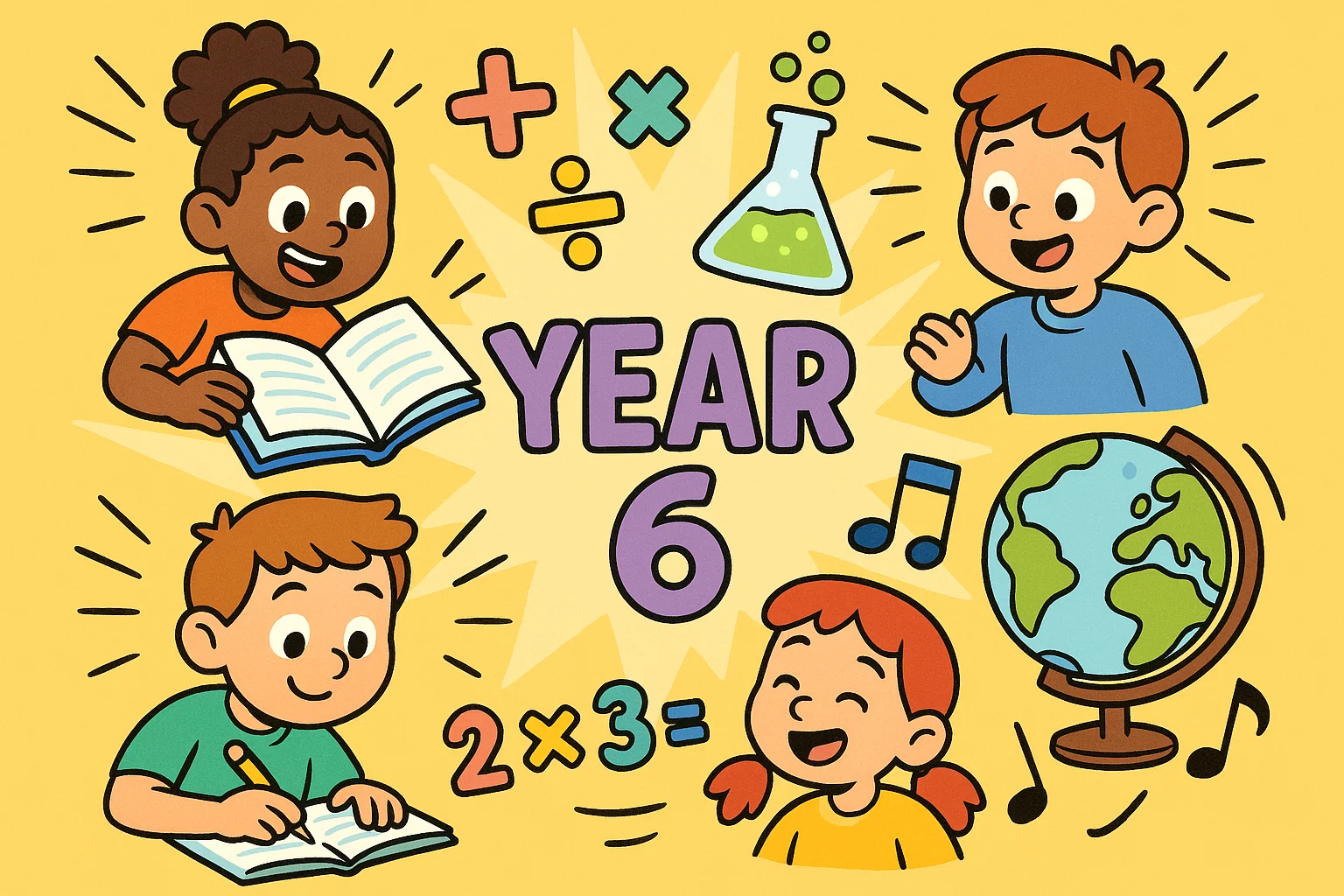
The major learning outcomes of Year 6 go beyond subject knowledge, focusing on a skillset that helps children prepare for the rigorous demands of secondary school.
Reading and Writing Skills
- Fluent Communication: Achieving a level of literacy where pupils can read more complex texts and write extended, well-argued pieces. This includes mastering the grammar and punctuation necessary for sophisticated academic writing.
- Advanced Comprehension: Moving past literal understanding to drawing inferences and analyzing an author’s purpose and style.
- Long-Form Writing: Being able to plan, draft, edit, and proofread extended writing tasks—a key skill for KS3.
Logical and Problem-Solving Skills
- Analytical Thinking: Using mathematics and science to develop logical and problem-solving skills. This is evident in applying multiple steps to solve complex reasoning problems in math or interpreting data in science.
- Algebraic Thought: The introduction of algebra encourages children to think about unknown quantities and patterns, which is fundamental to higher-level mathematics.
Personal and Social Development
- Independence: Pupils are expected to take increasing responsibility for their learning, homework, and organization, preparing them for the greater independence of secondary school.
- Communication and Teamwork: Engaging in more formal debates and discussion, both in English and across the programme of study. Project work emphasizes teamwork and leadership, which is critical for future success.
How to Help at Home
Your support at home can significantly boost your child’s confidence and ability to practise and apply the curriculum subjects they learn in lesson time.
English Practice at Home
- Reading Aloud: Encourage your child to read a diverse range of books, but also read aloud to them. This helps them access more complex vocabulary and narrative structures.
- Vocabulary Expansion: Keep a shared ‘new word’ journal. Whenever you encounter a new vocabulary word, look it up together.
- Spelling and Grammar: Practice the Year 6 statutory spelling list. Use a grammar workbook or engage in playful ‘Spot the Mistake’ activities in newspaper articles.
Maths Practice at Home
- Quick Arithmetic: Spend 10 minutes a few times a week doing quick-fire mental arithmetic practice (e.g., times tables, division, fraction conversions).
- Real-World Problems: Involve your child in real-world math problems like budgeting, calculating percentages in sales, or figuring out the ratio of ingredients in recipes.
- Online Tools: Utilize reputable online learning tools or apps that offer targeted practice aligned with the national curriculum standards, such as those published by reputable providers like Oxford or Cambridge.
Study Habits for SATs
It’s important to create a low-stress, structured environment for preparation.
- Establish a Revision Schedule: Help your child create a simple, realistic revision timetable that includes breaks and fun time. Consistency is better than cramming.
- Use Past Papers: Use official SATs past papers for practice for mock tests to familiarize them with the format and timing.
- Positive Reinforcement: Focus on effort and progression, not just results. Acknowledge the difficulty of this assessment phase and help them to manage stress. A well-rested child performs better.
Activities for Age 10–11
Activities that support your child’s cognitive and creative development should encompass a wide range of subjects.
Creative Tasks
- Project Ideas: Encourage a sustained, in-depth project on a topic of interest, such as researching a specific historical period or designing a miniature city. This helps them with long-term organization and research skills.
- Artistic Exploration: Provide materials for sketching, painting, or model making. Creative outlets are essential for reducing academic pressure.
Literacy Activities
- Discussion and Debate: Encourage reasoned discussion at home on age-appropriate current affairs. This enables them to articulate and justify their opinions fluently.
- Reading Challenges: Set a goal to read a certain number of books from different genres. Consider classics or recommended reads from a reputable Oxford or Cambridge reading programme.
Online Learning Tools
Many schools subscribe to or recommend online learning tools that complement the curriculum.
- BBC Bitesize
- Maths-focused apps (for arithmetic and reasoning practice)
- Interactive geography or history simulation games that encourage learning about different cultures and environments.
Books for Age 10–11
A well-chosen book or workbook can be an invaluable part of the Year 6 package of support.
Grammar and Punctuation Guides
- Look for workbooks that clearly explain and reinforce the grammar and punctuation conventions listed in the National Curriculum Appendix 2, which are the specific areas tested in the GPS SATs paper.
Spelling Resources
- The statutory spelling list for Years 5 and 6 is an essential resource. Spelling books based on this list, often published by companies like Oxford, are excellent for targeted practice.
SATs Preparation Books
- Choose SATs preparation books that include full-length mock papers and clear mark schemes. This allows you to provide precise feedback and identify areas needing further revision.
Year 6 School Pathway
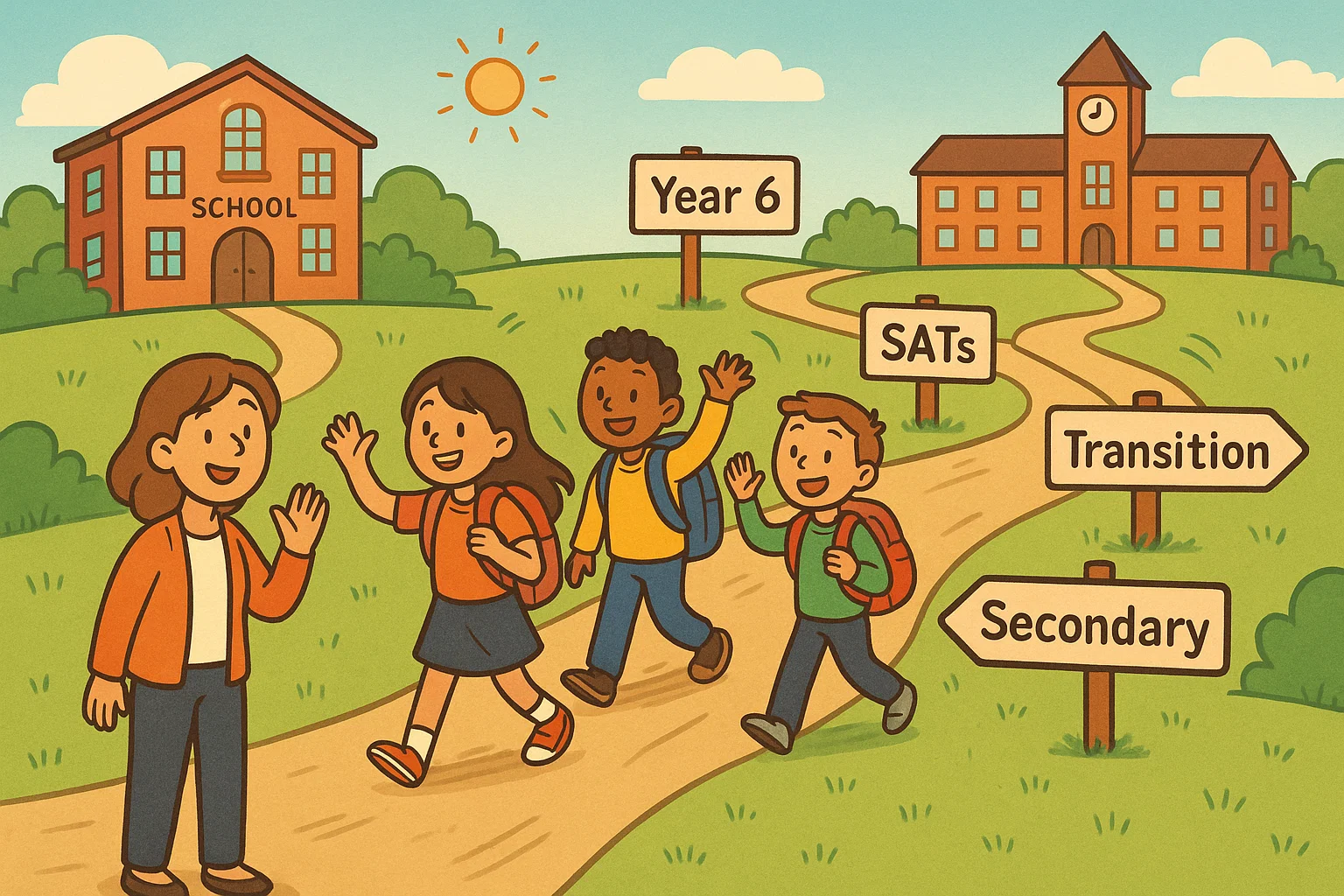
Year 6 is the final stage of primary school curriculum and directly feeds into secondary school admissions.
Entry Requirements for Year 7
For state schools, admission is typically based on catchment area or specific criteria. For independent (private) schools or some selective grammar schools, some schools have formal entry requirements for Year 7.
- Entrance Exams: Many selective schools conduct their own entrance assessment in English, mathematics, and sometimes verbal and non-verbal reasoning. These exams can take place early in the Year 6 programme.
- Interviews: Some schools include an interview as part of the process to gauge the pupil’s social and emotional maturity, enthusiasm, and ability to engage in discussion.
Admissions and Assessment
The process of applying for a secondary school place usually begins at the start of Year 6.
| Month | Key Action |
| September/October | Secondary school Open Days. Application deadlines for grammar/independent school entrance exams. |
| October | Submit the official Common Application Form (CAF) to the Local Authority. |
| May | Key Stage 2 SATs. |
| July | Pupil receives KS2 assessment results and end-of-year reports. |
Reports and Feedback
At the end of Year 6, you’ll receive a detailed report outlining your child’s attainment.
- Scaled Scores: The SATs results for English (Reading and GPS) and Mathematics are reported as scaled scores, with 100 representing the expected standard. Scores above or below 100 indicate attainment in relation to the national standard.
- Teacher Judgments: You will also receive an assessment judgment for English Writing and Science (e.g., ‘Working at the Expected Standard’).
- Secondary School Sharing: Crucially, these results and teacher judgments are passed to the receiving secondary school to enable them to tailor the Year 7 curriculum and provide the correct level of input and support from day one.

Take a short quiz to find out what your everyday choices say about your parenting style
When your child is curious about something new, what’s your instinct?
Take a short quiz to find out what your everyday choices say about your parenting style
“Can I download this app?” What happens next?
Take a short quiz to find out what your everyday choices say about your parenting style
When it comes to rules at home, which sounds most like you?
Take a short quiz to find out what your everyday choices say about your parenting style
If you could give your child one life skill today, what would you pick?
Take a short quiz to find out what your everyday choices say about your parenting style
Your child gets to choose what to watch. What would your ideal setup look like?
Take a short quiz to find out what your everyday choices say about your parenting style
Pick your parenting superpower ✨