4 Steps to Create Riddles for Middle Schoolers and Kids

 Discover a Free Education Video App for Kids
Pastory uses AI to personalize educational video content based on your child’s interests and personality. Safe, engaging, and built for curious young minds. Sign up now to stay updated and enjoy early access with a free trial
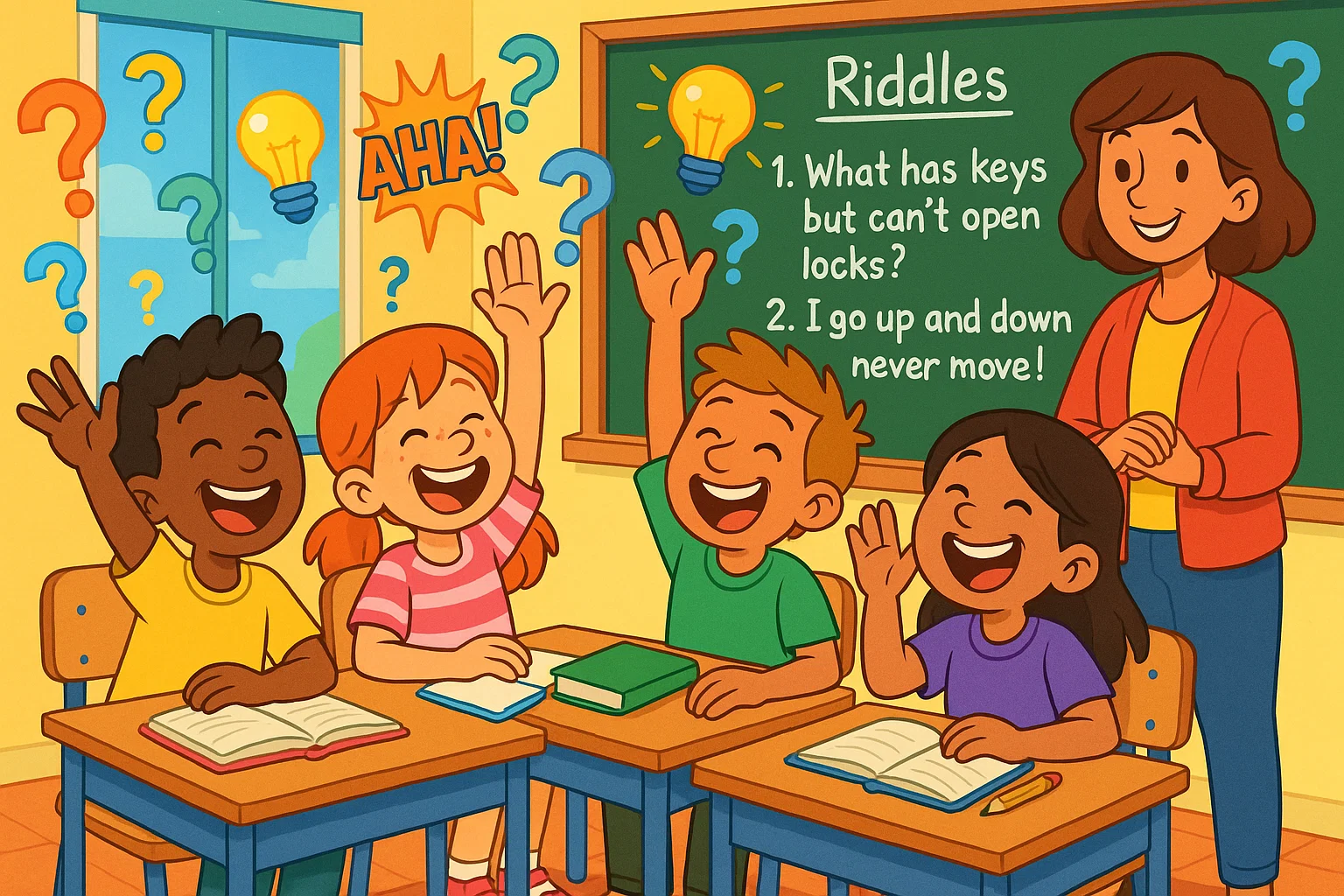
Riddles for middle schoolers and kids at every grade level build critical thinking, sharpen vocabulary, and make learning genuinely engaging. Whether you need simple puzzles for early readers, logic brain teasers for grades 7 and up, or funny classroom riddles sorted by theme, this guide covers every level and style in one place.
You will find riddles organized by grade, topic, and difficulty, along with 4 clear steps to help kids write their own riddles, classroom teaching ideas, and a look at the best online riddle games and apps available today.
Key Takeaways
- This guide covers riddles for every grade level, from kindergarten through middle school and beyond.
- Riddles are organized by difficulty, theme, and grade so you can find the right fit quickly.
- A 4-step process helps kids create their own riddles, from choosing an idea to testing it with an audience.
- Themed sections include animal, science, nature, holiday, and technology riddles for home or classroom use.
- The guide also covers the best online riddle games and apps available for students today.
What Riddles Are and Why Kids Love Them
A riddle is a statement or question that poses a problem to be solved, often presented as a puzzle or an ambiguous description. Historically, riddles have been a cross-cultural form of oral tradition, entertainment, and mental testing. For children, riddles tap into an innate love of mystery and discovery. Kids love them because they offer a safe, low-pressure intellectual challenge that rewards clever thinking. When a child solves a fun riddle, they experience an immediate, positive burst of success that encourages them to seek out the next challenge. This playful engagement is key to getting their brains working without the stress of formal testing.
Riddles help develop a child’s imagination and reasoning skills. They require kids to step away from literal interpretations and consider possibilities, analogies, and wordplay. This mental flexibility is the hallmark of a strong, curious mind.
Benefits of Solving Riddles for Children
Integrating riddles with answers into a child’s day provides documented cognitive and emotional advantages. The act of decoding a puzzle activates multiple parts of the brain, leading to significant educational and developmental gains.
- Mental Stimulation and Cognitive Flexibility: Riddles force the brain to make connections between seemingly unrelated concepts. This constant “switching” is powerful mental stimulation that improves overall cognitive flexibility—the ability to adapt quickly to new problems.
- Improved Focus and Sustained Attention: To solve a complex brain teaser, a child must listen carefully to every clue, process the information, and resist distraction. This repetitive practice naturally enhances focus and attention span — both crucial for success in school.
- Vocabulary Growth and Language Development: Riddles often use descriptive, metaphorical, or specialized language. A child may encounter new words or be forced to think about familiar words in a new context, leading to significant vocabulary growth. They learn to appreciate English riddles for their nuance and clever construction.
- Boost in Confidence and Self-Efficacy: Successfully figuring out a tricky riddle gives a child a tangible sense of accomplishment. This builds confidence in their ability to handle tough problems and encourages a “growth mindset,” where challenges are seen as opportunities.
Why Students Should Practice with Riddles
Beyond individual benefits, riddles are a powerful tool for educators looking to engage students and foster a positive learning environment.
| Benefit for Students | Description and Application |
| Classroom Engagement | Using a daily riddle as a quick “Do Now” activity instantly captures attention and makes the lesson transition smoother. It’s a great way to engage every student. |
| Teamwork and Social Skills | Grouping students to solve riddles encourages communication, respectful debate, and collaborative teamwork. Students learn to combine different perspectives to find a solution. |
| Memory Development | Rhyming and poetic short riddles are excellent for strengthening auditory memory. Trying to recall similar puzzles or past clues actively exercises the brain’s memory center. |
| Critical Thinking & Logic | The core requirement of a riddle is to use deductive reasoning. Students must analyze clues, rule out incorrect options, and synthesize information—essential for developing strong critical thinking skills. |
Using Riddles at Home and School
Riddles are incredibly versatile and can be seamlessly woven into daily life, making the process of learning continuous and natural.
For Parents:
- Family Game Nights: Dedicate a portion of game night to a list of riddles. Keep score for bragging rights or work together to solve a series of hard riddles.
- Car Rides or Waiting Rooms: Instead of screens, use a stack of printed riddles or create a quick verbal challenge to pass the time. This is especially useful for making travel time educational.
- Bedtime Riddles: A gentle, easy riddle can be a perfect brain cool-down before sleep.
For Teachers (Perfect for the Classroom):
- Morning Warm-ups: Start the day with a “Riddle of the Day” on the board to get their brains working as they settle in.
- Creative Learning Breaks: Use a funny riddle or two between subjects to reset concentration and inject some laughter into the day.
- Thematic Introductions: Use a science riddle or an animal riddle to introduce a new unit, piquing curiosity about the topic before the formal lesson begins.
- Exit Tickets: A simple riddle related to the day’s topic can serve as a fun, informal assessment.
Easy Riddles for Kids
These simple, short, and often rhyming riddles are the perfect starting point for younger kids (ages 4–7) and early readers. They focus on common objects and familiar concepts, making them an excellent way to introduce basic logical thinking and word association.
Simple Riddles for Kindergarten
These are very basic, direct-clue riddles designed to introduce the concept of logical thinking to the youngest learners.
- I am an animal that barks and wags my tail. I like to play fetch. What am I? (A dog)
- I am a color that you see on grass and leaves. What am I? (Green)
- I have two hands, but I can’t clap. I tell you the time. What am I? (A clock)
- I am round and you bounce me. You play with me in a game. What am I? (A ball)
- I keep you warm when it’s cold. You wear me on your head. What am I? (A hat)
- I have keys, but open no doors. I have a space, but no room. You can enter, but can’t go outside. What am I? (A keyboard)
- I am something you drink when you are thirsty. What am I? (Water)
First Grade Riddles
These playful, word-based riddles often involve common household items or kids love animals they see daily. They are great for students starting to connect words with their meanings.
- I have a neck but no head. I have a body but no legs. What am I? (A shirt)
- What has to be broken before you can use it? (An egg)
- I have cities, but no houses. I have mountains, but no trees. I have water, but no fish. What am I? (A map)
- I have four legs but can’t walk. I have a surface for your work. What am I? (A table)
- What can run but never walks, has a mouth but never talks, has a head but never weeps, has a bed but never sleeps? (A river)
- I am tall when I am young, and I am short when I am old. What am I? (A candle)
- I fly all day, but I never go anywhere. What am I? (A flag)
Riddles for Early Readers
These puzzles reinforce reading comprehension and challenge young minds to visualize the object based on the description.
- What is full of holes but still holds water? (A sponge)
- What is always in front of you but can’t be seen? (The future)
- I am not alive, but I can grow. I don’t have lungs, but I need air. What am I? (Fire)
- What has an eye but cannot see? (A needle)
- What can you catch, but not throw? (A cold)
- What question can you never answer yes to? (Are you asleep yet?)
- What kind of tree can you carry in your hand? (A palm)
Riddles by Grade Level
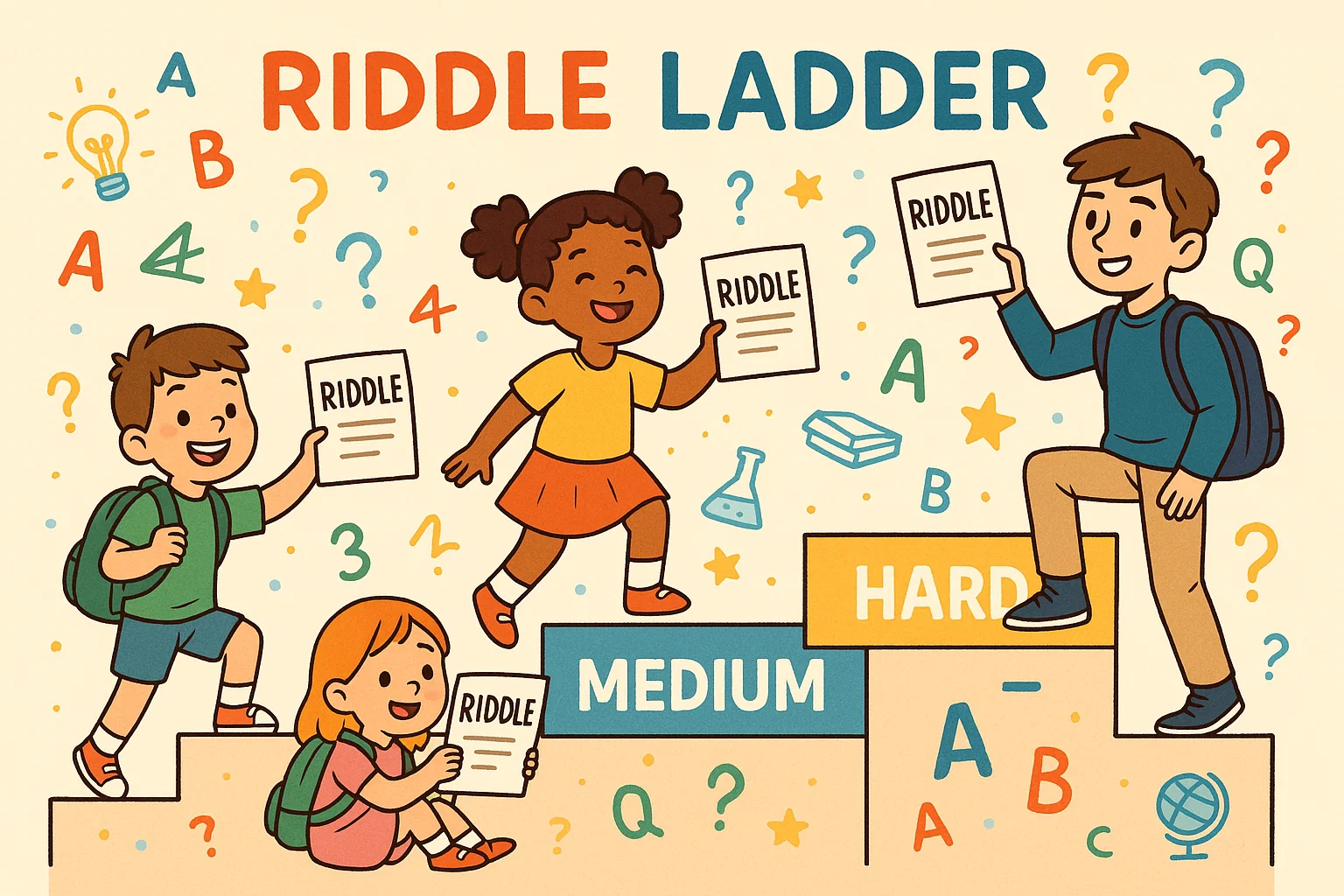
Targeting the difficulty of a riddle to a student’s age is crucial for maximizing engagement and learning. These categories are designed to be perfect for classroom use, providing challenges that match specific developmental stages.
Riddles for Primary School (Grades 1–3)
These are engaging and slightly tricky riddles that often use rhyme or simple wordplay to encourage deeper thinking than the basic kindergarten-level puzzles.
- What has a tongue but cannot eat? (A shoe)
- What has a lot of teeth but can’t bite? (A comb or a saw)
- What has a thumb and four fingers, but is not alive? (A glove)
- What is as light as a feather, yet even the strongest person can’t hold it for five minutes? (Breath)
- What is always coming, but never arrives? (Tomorrow)
- What belongs to you, but other people use it more than you do? (Your name)
- What has one voice, but always speaks the same to everyone? (An echo)
- I am always hungry, I must always be fed, The finger I touch, will soon turn red. What am I? (Fire)
Riddles for Elementary School (Grades 4–6)
As children mature, their capacity for abstract thought increases. These riddles include more logic and math-related riddles to promote advanced reasoning and problem-solving skills.
- Three eyes have I, all in a row; when the red one opens, all others go. What am I? (A traffic light)
- What 4-letter word can be written forward, backward, or upside down and can still be read from left to right? (NOON)
- When do most people stop at a green light? (When it turns red)
- A boy was rushed to the hospital after falling from a 20-foot ladder. He was not injured. How? (He fell from the bottom rung/step)
- I have no voice, but I can tell you all the secrets of the world. What am I? (A book)
- What is always wet? (A tongue)
- What has to be broken before you can use it? (An egg)
- I have oceans but no water, cities but no buildings, and mountains but no trees. What am I? (A map)
- Mr. Smith has four daughters. Each of his daughters has a brother. How many children does Mr. Smith have? (Five: four daughters and one son)
Riddles for Middle School Students (Grades 7+)
These are hard riddles for kids that introduce complexity through abstract concepts, complex language structures, and often multiple layers of deduction. These are designed to truly challenge kids and encourage lateral thinking.
- A man went to a bar and asked for a glass of water. The bartender pulled out a gun and pointed it at the man. The man said, “Thank you,” and walked out. Why? (The man had hiccups, and the shock cured them)
- What is always in front of you but can’t be seen? (The future)
- I am an odd number. Take away one letter and I become even. What number am I? (Seven)
- What invention lets you see through walls? (A window)
- What has a beginning, an end, and only one letter? (The envelope)
- Feed me and I live, yet give me a drink and I die. What am I? (Fire)
- I am full of keys, but I cannot open any doors. What am I? (A piano)
- You see me once in June, twice in November, but not at all in May. What am I? (The letter E)
Funny and Silly Riddles for Kids
Humor is a fantastic motivator! These funny riddles and silly brain teasers are designed to make children laugh while still flexing their mental muscles. Laughter enhances memory and makes the learning experience more enjoyable.
Animal Joke Riddles
Kids love animals, so combining them with wordplay makes for a guaranteed giggle. These simple animal riddles often rely on puns.
- What animal is always ready for a party? (A cow, because it’s always in the mooood!)
- Why did the giraffe get bad grades? (Because its head was always in the clouds)
- What do you call a fish with no eyes? (Fsh)
- What do you call a sleepy bull? (A bulldozer)
- Why do birds fly south for the winter? (Because it’s too far to walk)
- What do you get when you cross a snowman with a vampire? (Frostbite)
- What kind of room has no doors or windows? (A mushroom)
Food and Object Joke Riddles
These food riddles and object-based jokes are perfect for quick laughs and using familiar, everyday items.
- What has a heart but no other organs? (An artichoke)
- What fruit is never lonely? (A pear, because it always has a friend—a companion!)
- What musical instrument is found in the bathroom? (A tuba toothpaste — tube of toothpaste)
- What do you call a fake noodle? (An impasta)
- What has to go to the doctor because it keeps fainting? (A clock, because it keeps losing time)
- What is a pirate’s favorite letter? (The C, or the R, for “A-Rrrr!”)
- What’s faster, hot or cold? (Hot, because you can catch a cold)
Classroom Laughter Riddles
These can be used by teachers for quick classroom activities or to lighten the mood after a difficult lesson.
- What has an invisible body, a round head, and lives on a wall? (A clock)
- What is the longest word in the dictionary? (Smiles, because there is a mile between the two S’s)
- I have cities, but no houses. I have mountains, but no trees. I have water, but no fish. What am I? (A map)
- What is white when it’s dirty? (A chalkboard or blackboard, when you write on it with white chalk)
- What is always coming but never arrives? (Tomorrow)
Tricky and Hard Riddles for Students
Moving into more complex territory, these tricky riddles and hard riddles for kids are designed to stretch the boundaries of conventional thought. They are essential for building advanced problem-solving skills and teaching students how to think outside the box.
Logic and Brain Teaser Riddles
These are classic brain teasers that require multi-step reasoning and careful analysis of the wording.
- A man is driving a black truck. His lights are not on. The moon is not out. A lady dressed in all black is crossing the road. How does the man see her? (It is a sunny day)
- What can you hold in your left hand but not your right? (Your right elbow)
- Imagine you are in a room with two doors. One door leads to certain death, and the other leads to freedom. You can only ask one question to one of the two guards: one always lies, and one always tells the truth. How do you figure out which door leads to freedom? (Ask either guard: “Which door would the other guard say leads to freedom?” Then, choose the opposite door)
- I’m taken from a mine, locked in a wooden case, and used by nearly everyone. What am I? (Pencil lead)
- What has an eye but cannot see? (A needle)
Math Riddles for Students
Math riddles are a fantastic way to introduce mathematical concepts, patterns, and logic in a playful context. They help students see math as a fun challenge, not just a subject.
- I am a three-digit number. My second digit is four times bigger than the third digit. My first digit is three less than my second digit. What number am I? (141)
- A family has two parents and six sons. Each son has one sister. How many people are in the family? (Nine: two parents, six sons, and one daughter)
- What number, when multiplied by any other number, gives you zero? (Zero)
- If a rooster lays an egg on a roof, where does the egg roll? (Roosters don’t lay eggs)
- I add five to nine and get two. The answer is correct, but how? (When referring to a clock: 9 AM + 5 hours = 2 PM)
- Using only addition, how can you add eight 8s to get the number 1,000? (888 + 88 + 8 + 8 + 8 = 1000)
Word and Language Riddles
These riddles focus on the structure and sounds of language, helping students appreciate puns, spelling, and semantic variations. They make excellent English riddles for language arts lessons.
- What word is always spelled incorrectly? (Incorrectly)
- What has 13 hearts, but no other organs? (A deck of cards)
- What can you put in a bucket to make it lighter? (A hole)
- What is seen in the middle of March and April, but can never be found at the beginning or end of either month? (The letter R)
- If you have me, you want to share me. If you share me, you haven’t kept me. What am I? (A secret)
Themed Riddles by Topic
Organizing fun riddles by topic makes them easy to integrate into specific lesson plans or seasonal activities. This domain-specific optimization ensures the content is highly useful and relevant.
Animal Riddles
These animal riddles are perennial favorites, often using descriptive language related to an animal’s unique features.
- I have stripes but am not a zebra. I have sharp teeth and like to hunt. What am I? (A tiger)
- I use my tongue to wash my body. I love to chase mice and sleep all day. What am I? (A cat)
- I have a hump, and I can go a long time without water. I live in the desert. What am I? (A camel)
- I make honey and live in a hive. I can sting you if you bother me. What am I? (A bee)
- I change from a tiny egg into a swimming creature, and then I grow legs and hop. What am I? (A frog)
Science Riddles
Simple questions about the physical world are a great way to introduce basic scientific concepts.
- I have a ring, but no finger. I am a gas giant and the second largest planet. What am I? (Saturn)
- I go up and up, but I never come down. What am I? (Your age)
- I have no voice, but I speak of day and night. I can be seen through a window. What am I? (The Sun or the Moon)
- I fall, but I never break. I cover the earth but can be moved by the wind. What am I? (Snow)
- I take you from Earth to the stars. I burn up fuel to escape gravity. What am I? (A rocket)
Nature Riddles
Ideal for outdoor learning or a lesson about the environment, these riddles focus on natural elements.
- I wear a coat in winter and shed it in summer. What am I? (A tree)
- What is full of air, but you can’t see it? (The wind)
- What runs around the whole yard without moving? (A fence)
- I have roots, but I never move. I have leaves, but I am not a salad. What am I? (A tree)
- I have no legs, but I travel the world. I have no eyes, but I weep for the world. What am I? (A cloud)
Holiday Riddles
Holiday riddles add a festive, timely element to learning, making them a popular and engaging fun activity.
| Holiday | Riddle | Answer |
| Halloween | I have a face, but I have no body. I sit on a porch and wait for trick-or-treaters. What am I? | A jack-o’-lantern |
| Christmas | I am wrapped in a bow, and I sit under the tree. I am something you give and receive. What am I? | A present |
| Thanksgiving | I am a big bird often roasted in the oven. I’m the centerpiece of a special meal. What am I? | A turkey |
| Easter | I roll around, and I am hidden by a bunny. I am usually painted or dyed. What am I? | An Easter egg |
Seasonal Riddles
Using imagery related to the four seasons makes these fun brain teasers descriptive and relatable.
- I melt and disappear when the sun is hot. I am cold and white. What am I? (Snow/Winter)
- I bring warm days and long nights. You often go swimming or on vacation during my time. What am I? (Summer)
- My leaves turn red and gold, and then they fall from the trees. What am I? (Fall/Autumn)
- I bring flowers, rain showers, and green grass after the cold. What am I? (Spring)
Technology and Object Riddles
These modern riddles connect to the gadgets and everyday items kids interact with constantly.
- I have a memory, but no brain. I have keys, but open no locks. What am I? (A computer)
- I get smaller every time I take a bath. What am I? (Soap)
- I have a screen, but no eyes. I show you a picture, but I never talk. What am I? (A television or phone)
- I follow you all the time and copy your every move, but you can’t touch me or catch me. What am I? (Your shadow)
Classroom Riddles and Teaching Ideas
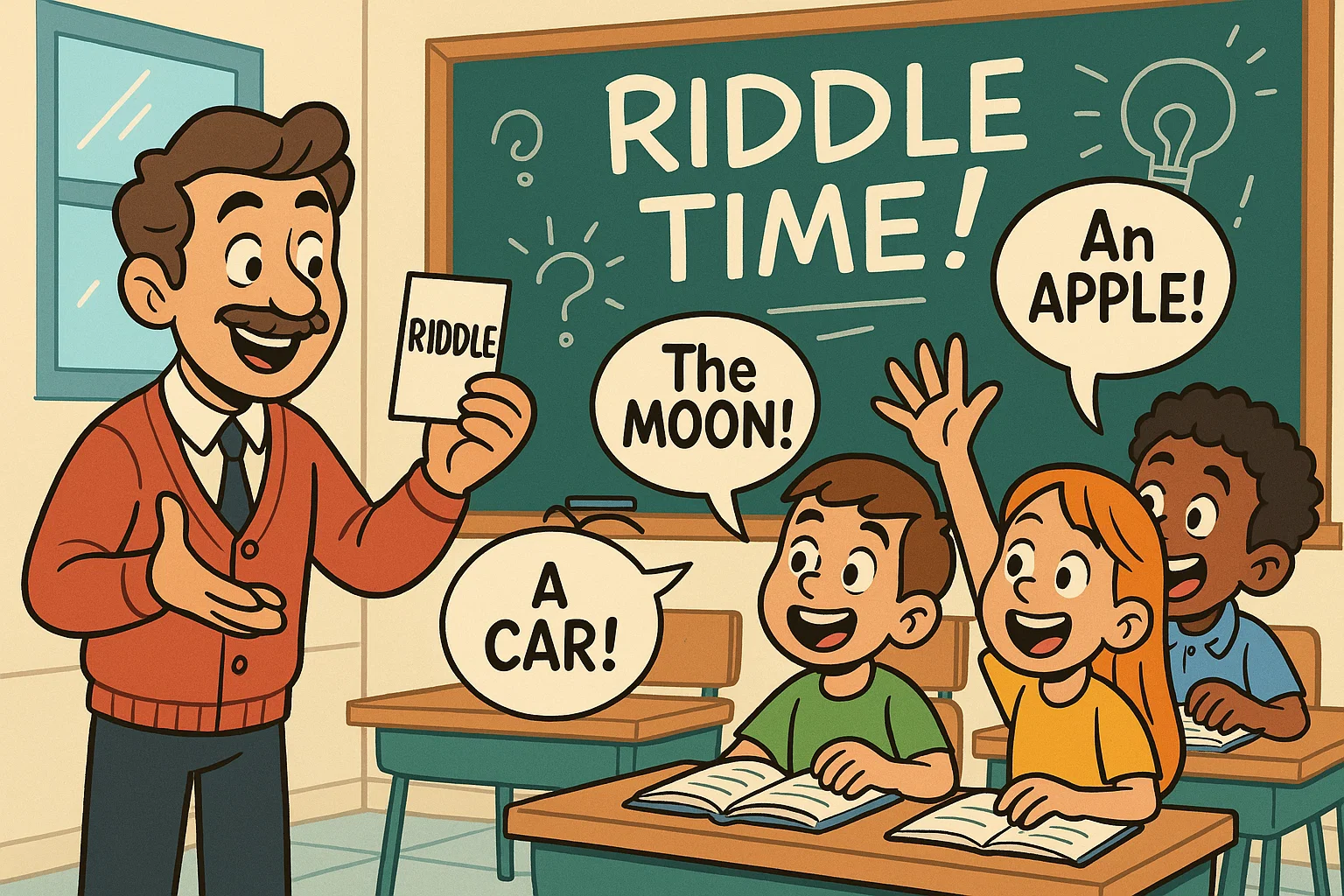
Riddles are a secret weapon in the educator’s toolkit. They provide a fun and effective means to achieve educational goals without students even realizing they are learning. Riddles allow students to practice key skills in an enjoyable context.
Riddles for Critical Thinking
The primary benefit of riddles in education is the development of deductive reasoning.
- Encouraging Deduction: The process of eliminating possibilities based on clues is the essence of deduction. Present a complex hard riddle and ask students to state why a potential answer is incorrect—forcing them to focus on the constraint of each clue.
- Fostering Curiosity: When a child can’t immediately solve a riddle, the natural frustration translates into curiosity and a desire to seek out the answer. This is a powerful learning habit that teachers can harness.
- The Power of Context: Presenting math riddles or science riddles before a lesson allows students to make initial cognitive links, priming their brains to receive the formal information.
Quote from an Educator:
“I’ve found that starting with a tough brain teaser forces every student to get their brains working. It’s the perfect, immediate engagement tool. It’s a fun way to engage and promotes a risk-free environment for making mistakes.”
Riddles for Team Activities
Turning riddles into a group activity promotes invaluable social and collaborative skills.
- Organizing Riddle Contests: Divide the class into teams and present a series of easy to hard riddles. The first team to submit the correct answer (written down to prevent shouting) gets a point. This turns a solo challenge into a dynamic, competitive game for kids.
- “Riddle Relay”: For a physical twist, one student runs up to read a riddle, runs back to discuss with the team, and another brings the written answer.
- Collaborative Riddle Writing: Have groups of students write their own riddles with answers based on a current lesson topic (e.g., using terms from a history lesson). They can then challenge the other teams. This is how kids can help make learning engaging for their peers.
Rhyming Riddles and Wordplay
Rhyming riddles are particularly effective for young minds because the rhythm and rhyme scheme aid memorization and prediction. They are often the most shared and classic forms.
Short Rhyming Riddles
These are quick, two-line puzzles for immediate mental stimulation.
- I have cities, but no houses or people to say howdy. I have mountains, but no trees – my name is a bit cloudy. (A map)
- I am round and flat, and I am usually hot. You put toppings on me. What have you got? (A pizza)
- I have a long neck, but I drink no milk. I can be found in the kitchen, as smooth as silk. (A bottle)
- I am full of water, but I hold no rain. You can see your face in me again and again. (A mirror)
Long Rhyming Riddles
These tell a short, imaginative story, requiring greater focus and comprehension.
- I wear a coat, but it’s always made of glass,
I live in a building where hours quickly pass.
I speak without a mouth and tell a tale of time,
If you break my windows, it will be a crime.
What am I? (A window) - I visit rivers, oceans, and streams,
I follow you closely, like something from dreams.
I come in a storm, yet I’m silent and deep,
The world would be sad if I ceased to creep.
What am I? (Water/Rain)
The Most Popular Riddles with Answers
Every age group has its classic, viral riddles. This collection of best riddles for kids covers a range from easy to hard, ensuring every child finds a familiar favorite or a new challenge.
Everyday Object Riddles
These are great for encouraging children to look at common objects in a new, clever way.
- What has a neck but no head, and two arms but no hands? (A sweater)
- I have keys but open no locks, I have a space but no room, you can enter but can’t go outside. What am I? (A keyboard)
- What has 88 teeth but never brushes them? (A piano)
- What has one face and two hands, but no arms or legs? (A clock)
- What can you hold in your left hand but not your right hand? (Your right elbow)
Classic Logic Riddles
These timeless puzzles have been circulating for generations and are essential for advanced critical thinking skills.
- The more you take, the more you leave behind. What am I? (Footsteps)
- What is light as a feather, but even the strongest man can’t hold it for long? (Breath)
- I have no voice, but I can tell you all the secrets of the world. What am I? (A book)
- What is always in front of you but can’t be seen? (The future)
- What can you break, even if you never pick it up or touch it? (A promise)
Modern Pop-Culture Riddles
These are fun ones that relate to contemporary interests, making the riddle concept feel current and cool.
- I have a name that everyone calls me, but I am not the one who named myself. What am I? (A character in a story or game)
- I am like a picture, but I move and talk. I keep you entertained. What am I? (A video/movie)
- I am a world inside a screen, where you can build anything you dream. What am I? (A video game like Minecraft)
How to Help Kids Create Their Own Riddles
Teaching children to create their own riddles for kids is the ultimate cognitive exercise. It shifts them from being passive solvers to active creators, dramatically strengthening their command of language, descriptive vocabulary, and lateral thinking. This process naturally encourages creativity and self-expression.
Step 1: Choose an Object or Idea
Explain to the child that the first step is to pick a familiar subject – a favorite toy, a pet, a food riddle item, or a school supply. A concrete object is always easier to start with than an abstract concept.
- Example: Let’s choose an Apple.
Step 2: Brainstorm Clues
Guide the child to describe the object using its features, function, and characteristics without naming it. Focus on sensory details: what color is it? What does it feel or smell like? What does it do?
Clues:
- It’s red or green.
- It’s round and crunchy.
- It grows on a tree.
- It keeps the doctor away.
Step 3: Add a Twist
Encourage them to use figurative language, rhymes, or wordplay to make the riddle interesting and challenging. This is where they can turn a simple description into a fun brain teaser. The riddle is a great way to use metaphors.
- Riddle Draft: I wear a coat of red or green, I’m round and crunchy, the best ever seen. I’m a simple snack, I keep the doctor away. What am I that you eat every day?
Step 4: Test the Riddle
The final step is to have friends or classmates solve riddles the child created. Based on their feedback (“That was too easy,” “That clue was confusing”), the child can go back and improve the wording, making the challenge just right. This iterative process of creation and revision is a valuable lesson in communication.
Best Online Riddle Games and Apps for Kids
In the digital age, technology offers interactive and personalized ways for kids to think and learn. Integrating high-quality, educational apps and online tools can complement traditional learning.
Free Educational Riddle Apps
Look for apps that offer a variety of riddle types and track progress, making the learning process measurable and motivating.
- Logic Puzzle Apps: These often present hard riddles or multi-level logic scenarios that gradually increase in difficulty, perfect for students seeking a real challenge.
- Vocabulary Builder Apps: Many use picture or word riddles with answers to subtly teach new vocabulary words within a game context.
- The Power of Digital: Digital platforms offer immediate feedback and the ability to customize the difficulty to ensure the child is always appropriately challenged.
Online Riddle Quizzes
Quick, online quizzes are excellent for a fast check of logic and memory, especially after a lesson. They offer an instant reward and can be easily shared via a classroom link.
- Speed Challenges: Timed quizzes on simple easy riddles can help kids with rapid recall and quick thinking.
- Thematic Quizzes: Look for quizzes that group animal riddles or math riddles together to reinforce a subject area.
Printable vs Digital Riddles
Both formats have unique advantages for learning engagement. A blend of the two is often most effective.
| Format | Key Advantage | Best Use Case |
| Printable Riddles | Tangible, low-tech, promotes fine motor skills (writing answers). | Quiet time, car rides, homework packets. |
| Digital Riddles | Interactive, instant feedback, tracks progress, offers animations. | Classroom warm-ups, individual learning centers, games for kids. |
Make Learning Fun with Daily Riddle Time
A daily routine incorporating fun riddles is a high-value, low-effort way to consistently engage a child’s brain and demonstrate that “Make learning fun” isn’t just a phrase — it’s a truly achievable goal. A dedicated “riddle time” only takes a few minutes but yields significant cognitive benefits.
How to Start a Daily Riddle Routine
Consistency is key to forming a positive habit.
- Morning Challenges: Use a riddle as a brain warm-up while eating breakfast or as the first task upon entering the classroom.
- Bedtime Riddles: Before reading a story, share a calming, easy riddle. This provides a gentle mental exercise before sleep.
- The “Teaser”: If the riddle is difficult, leave the answer as a “teaser” until the afternoon or the next day, building anticipation and encouraging continued thought.
Family and Classroom Challenges
Creating a competitive, yet inclusive, environment can be highly motivating.
- “Riddle Champion” Board: In the classroom or at home, keep a rotating list of names for who solved the “Riddle of the Day,” ensuring all kids of all ages have a chance to shine by varying the difficulty from easy to hard.
- Collaborative Solving: For hard riddles, assign roles – one person to read the clues, one to write down ideas, and one to present the final answer. This highlights the importance of teamwork.
Creative Extensions
The answer to a riddle can be the starting point for a creative task.
- Drawing: Ask the child to draw the object the riddle describes before and after they know the answer.
- Acting: Have them act out the riddle’s object (e.g., pretend to be a clock) to reinforce comprehension.
- Writing: The answer to a riddle could be the main subject of a short story or poem they write.
Key Benefits of Riddles for Kids and Students
Riddles are a great way to integrate education and play seamlessly. They are one of the simplest yet most effective tools for building essential cognitive skills.
- They enhance critical thinking skills and deductive reasoning.
- They naturally increase vocabulary and language comprehension.
- They are a fun and effective tool for classroom engagement and team building.
- They promote a positive attitude toward problem-solving and challenge (problem-solving skills).
- They provide a significant, immediate boost to a child’s confidence and self-efficacy.
- They help young minds focus and get their brains working.
This extensive list of riddles provides endless opportunities to make learning fun and cultivate a lifelong love of intellectual challenge in the kids of all ages you teach or care for.
Take a short quiz to find out what your everyday choices say about your parenting style
When your child is curious about something new, what’s your instinct?
Take a short quiz to find out what your everyday choices say about your parenting style
“Can I download this app?” What happens next?
Take a short quiz to find out what your everyday choices say about your parenting style
When it comes to rules at home, which sounds most like you?
Take a short quiz to find out what your everyday choices say about your parenting style
If you could give your child one life skill today, what would you pick?
Take a short quiz to find out what your everyday choices say about your parenting style
Your child gets to choose what to watch. What would your ideal setup look like?
Take a short quiz to find out what your everyday choices say about your parenting style
Pick your parenting superpower ✨