Year 8 Curriculums in the UK: What Students Learn in KS3

 Discover a Free Education Video App for Kids
Pastory uses AI to personalize educational video content based on your child’s interests and personality. Safe, engaging, and built for curious young minds. Sign up now to stay updated and enjoy early access with a free trial
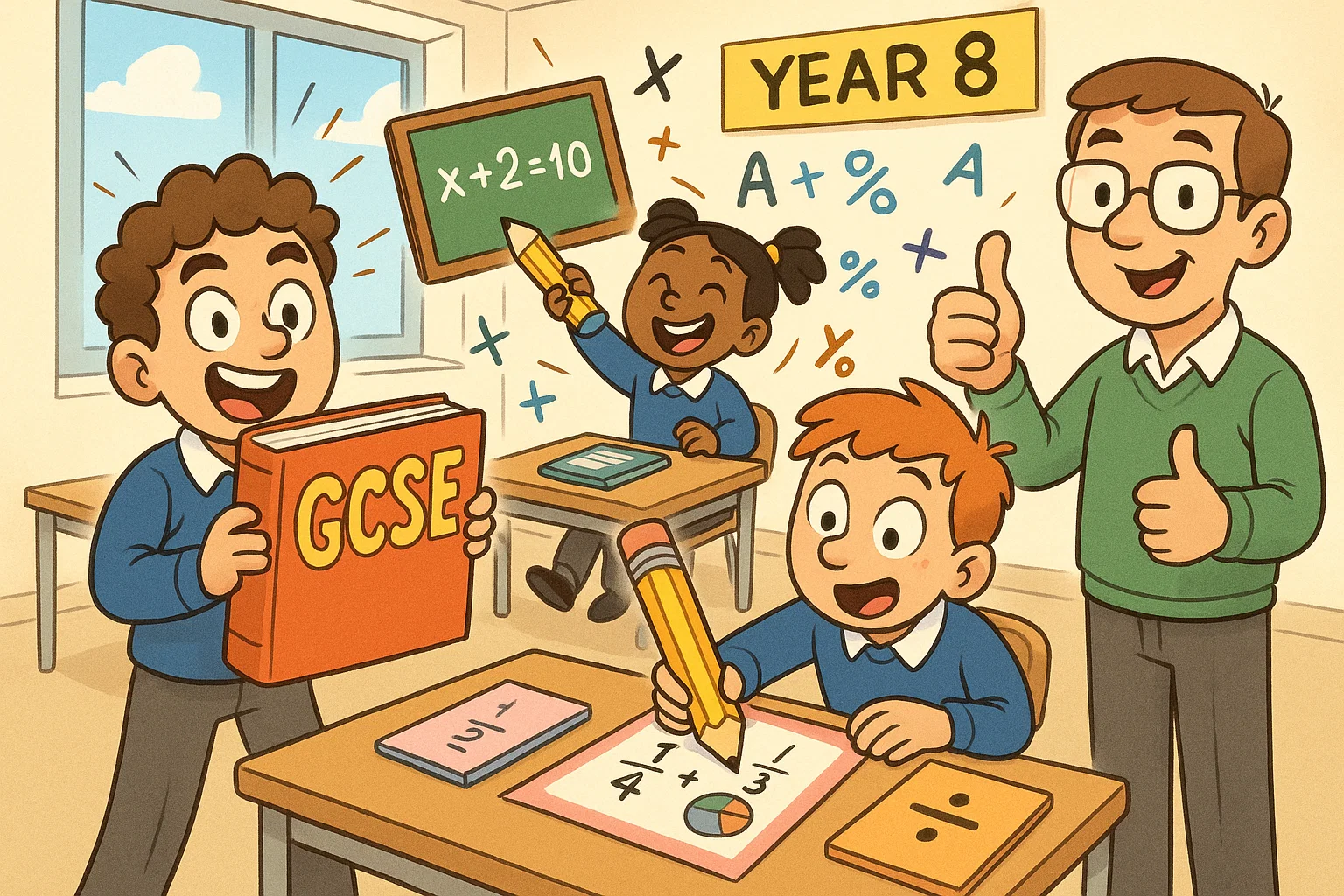
Year 8 curriculums in the UK sit at the heart of Key Stage 3, covering students aged 12 to 13 across every core and foundation subject — from English and Maths to Science, Humanities, Languages, and Creative Arts. This is the year where KS3 skills deepen and early GCSE habits begin to form.
This guide breaks down what Year 8 students learn in each subject, how schools assess progress, and how the year builds toward the subject choices and demands of Year 9 and GCSE study. It is written to help parents and tutors understand the full scope of the KS3 curriculum at this stage.
Key Takeaways
- Year 8 is the second year of Key Stage 3 in the UK, covering students aged 12 to 13.
- The curriculum spans core subjects including English, Maths, Science, Humanities, and Languages, plus Creative and Physical subjects.
- Assessment in Year 8 includes ongoing classroom checks and end-of-unit reviews that track progress across all subjects.
- Year 8 builds foundational skills that directly support GCSE subject choices and study habits in Year 9 and beyond.
- Computing, Digital Citizenship, and PE are also part of the Year 8 curriculum alongside traditional academic subjects.
Key Stage 3 Curriculum Structure
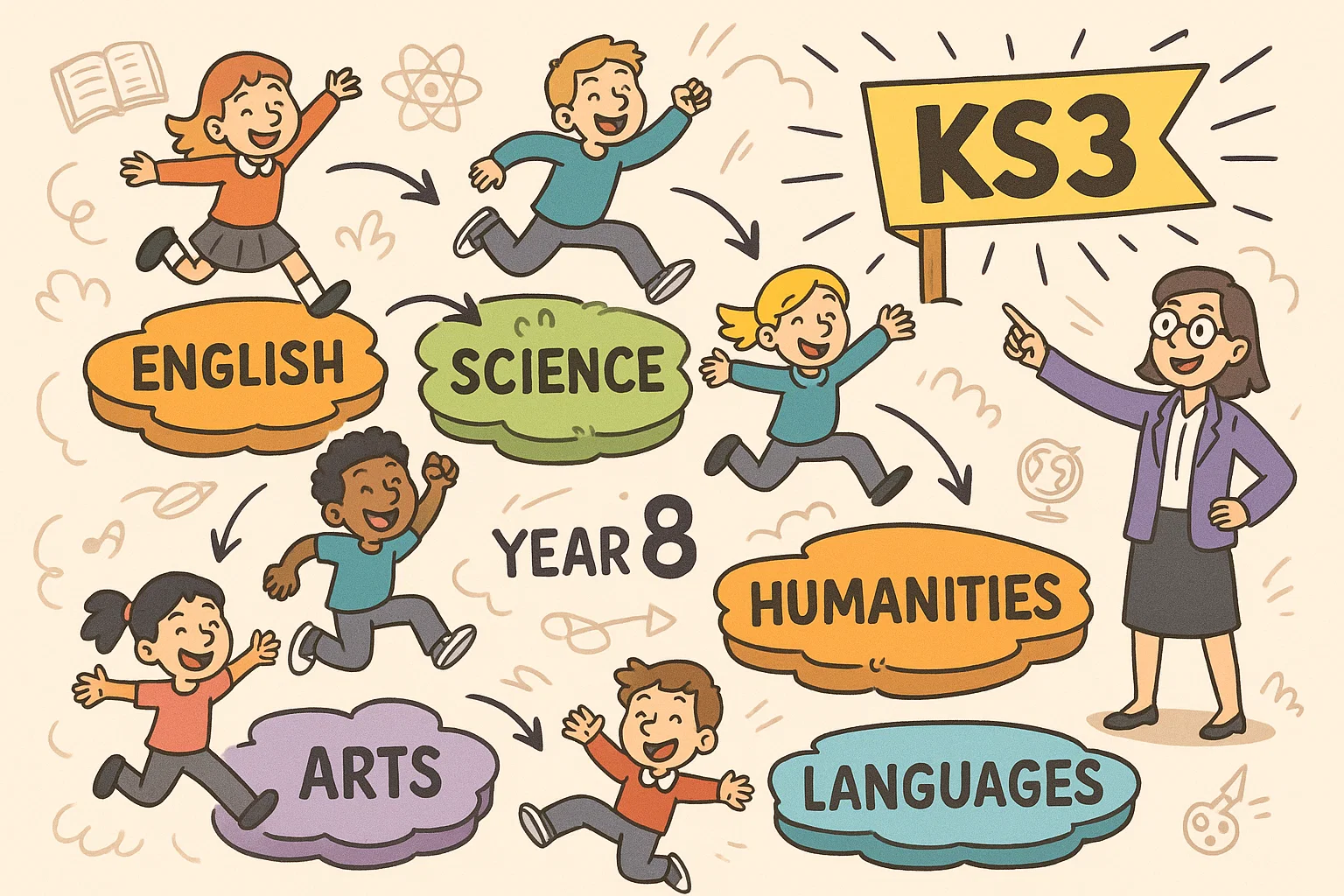
Key Stage 3 (Years 7, 8, and 9) forms the bedrock of secondary school education in England. It serves as the transition from the broader learning of primary school (Key Stage 1 and 2) to the qualification-focused study of Key Stage 4 (GCSEs). While the curriculum includes flexibility for schools (especially academies and independent institutions), the National Curriculum Framework sets clear statutory requirements for subjects taught, ensuring a consistent and comprehensive educational experience for all pupils.
KS3 Learning Goals
The overall expectation for 8th graders is to consolidate and extend the key skills introduced in Year 7. This stage moves beyond simply acquiring facts, focusing heavily on application, analysis, and critical evaluation. General expectations across different subjects include:
- Deepening Literacy: Enhancing reading and writing abilities, moving towards more formal, analytical and sophisticated speaking and writing.
- Strengthening Numeracy: Becoming more confident with multi-step problem-solving, applying maths concepts to real-world scenarios, and mastering foundational algebra and geometric principles.
- Developing Critical Thinking: Learning to evaluate sources in history curriculum and geography curriculum, design experiments in science, and interpret data.
- Fostering Independence: Taking greater ownership of learning, including organising notes, managing homework, and performing research.
National Eighth Grade Curriculum Framework
The National Curriculum Framework outlines the minimum programme of study for all maintained schools. The content for Year 8 is structured to ensure continuity and progression. For instance, in science, it mandates coverage of core concepts that feed directly into the separate science specialisations later on. For subjects like religious studies (RE) and relationships and sex education (RSE), schools must provide teaching, although parents retain the right to withdraw their children from certain components, in line with legal guidance.
Subject Coverage in Year 8
While the specific timetable varies, the typical curriculum includes the following statutory and non-statutory different subjects at most UK secondary schools:
- Core Subjects: English, Maths, and Science.
- Humanities: History and Geography.
- Languages: At least one Modern Foreign Language (e.g., French, Spanish, German).
- Arts & Design: Art and Design, Music, and Design and Technology (DT).
- Physical & Digital: Physical Education (PE) and Computing.
- Statutory Requirements: Religious Studies (RE) and Citizenship.
- Health and Well-being: Relationships and Sex Education (RSE) and Personal, Social, Health and Economic (PSHE) education.
Core Subjects in Year 8
The core subjects—English, math, and science—are the backbone of the Year 8 timetable and are mandatory for all pupils up to GCSE level. These subjects receive the most teaching time because they are universally essential for future study and employment.
Skill Development Across Core Subjects
The core curriculum is designed to encourage the development of transferable key skills necessary for success across all different subjects. Students learn not just the content, but the methods of inquiry:
| Core Subject | Primary Skill Focus in Year 8 | Application Examples |
| English | Analytical Thinking | Deconstructing themes and character motivation in English literature. |
| Math | Problem Solving | Using algebra and equations to model real-world problems. |
| Science | Data Interpretation | Analysing results from experiments on chemical reactions or forces. |
| General | Reading and Writing | Producing well-structured reports and essays with sophisticated grammar and vocabulary. |
Assessment Approach in Core Subjects
In Year 8, assessment is primarily formative, meaning it’s used to track a child’s progress and guide future teaching, rather than determine a final grade for a qualification. Methods typically include:
- In-class quizzes and tests to check recall of key knowledge.
- Extended writing tasks and project-based assignments.
- Homework that consolidates learning from lessons.
- End-of-unit or summer term exams that mimic the structure of GCSE exam papers to provide early practice.
Teacher feedback is paramount, focusing on how a pupil can move to the next level of understanding. As stated in a recent education white paper: “Effective KS3 assessment must be seen as a tool for progress, not just a measure of attainment, enabling students to clearly identify their next steps.”
Link to Future GCSE Content
Year 8 is the crucial phase where the foundational work for GCSE begins in earnest. The mathematics curriculum, for instance, introduces basic manipulation of inequalities and linear equations, which are essential prerequisites for higher-level algebra in Year 9. Similarly, the science curriculum is designed to ensure basic atomic structure and cell biology are fully understood before students delve into the level of detail required by GCSE specifications of the GCSE specification. A tutor often works with students at this stage to explicitly bridge this gap, ensuring that the skills and knowledge acquired are robust enough for the step-up. The goal is to set the trajectory for students learning to achieve a grade 8 or top grade at the end of Key Stage 4.
Year 8 English Curriculum
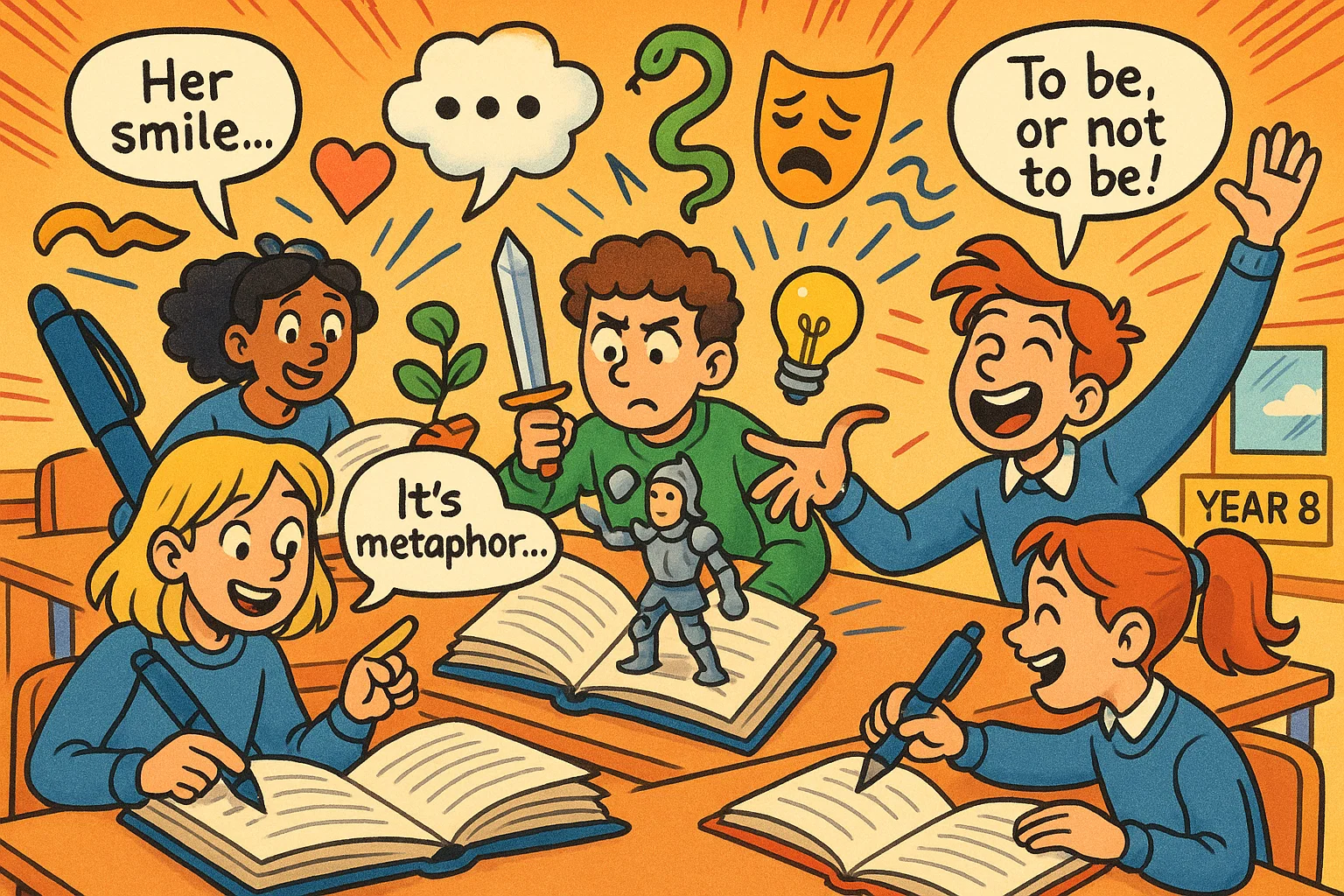
The English curriculum for Year 8 aims to significantly enhance a pupil’s ability to engage with language, both as a reader and a writer. The focus shifts towards greater nuance in understanding and expression, expanding their vocabulary and grammar for more sophisticated communication.
Reading and Text Analysis
Students will learn to read critically, moving beyond simple plot comprehension to deep textual analysis.
- Text Types: Study a broader range of topics and literary forms, including a range of older and modern texts, and often a full Shakespeare play (e.g., Macbeth or Romeo and Juliet), building on the foundational work from Year 7.
- Literary Devices: Identifying and interpreting techniques such as metaphor, symbolism, and irony, and explaining their effect on the reader.
- Interpretation: Students are taught to support their interpretations of character, theme, and structure using precise textual evidence, a key skill required for high marks in GCSE English Literature.
Writing and Composition
Developing fluency and accuracy in writing is a major goal. Pupils are expected to write for a wider variety of purposes and audiences.
- Non-Fiction: Producing persuasive essays, informative articles, and formal letters, focusing on clear argument structure and appropriate tone.
- Narrative Writing: Experimenting with descriptive techniques and narrative voice, learning to craft engaging plots and believable characters.
- Editing Skills: The emphasis is placed on the drafting, editing, and proof-reading process, improving clarity and style through self- and peer-assessment.
Grammar and Vocabulary Skills
A strong grasp of grammar and vocabulary is the foundation for effective speaking and writing.
- Grammar Accuracy: Consolidating knowledge of complex sentence structures, varying sentence starters, and ensuring correct punctuation (including the accurate use of semi-colons and dashes).
- Expanded Vocabulary: Explicit teaching of Tier 2 (high-utility academic) and Tier 3 (domain-specific, e.g., ‘pathetic fallacy’ in English literature) vocabulary, often through dedicated lessons or tutor time sessions.
- Spelling: Applying knowledge of morphology and etymology (word origins) to improve spelling of complex words.
Year 8 Maths Curriculum
The mathematics curriculum in Year 8 is instrumental in bridging the gap between basic arithmetic from primary school and the abstract concepts of GCSE math. The core disciplines of Number, Algebra, Ratio, Geometry, and Statistics are explored in greater depth, with a significant increase in the complexity of problem-solving. A focus on clear mathematical notation and logical reasoning is introduced.
Algebra and Equations
This is arguably the most significant area of progression in Year 8, as algebra underpins almost all higher math.
- Expressions and Formulae: Simplifying and manipulating algebraic expressions, including expanding single and double brackets. Substituting positive and negative values into formulae.
- Linear Equations: Solving one- and two-step linear equations, and beginning to solve those with variables on both sides.
- Inequalities: Introduction to representing and solving simple linear inequalities.
- Graphs: Plotting linear equations and interpreting graphs in real-life contexts.
Geometry and Measurement
In geometry, students will learn to apply formulae and reasoning to solve problems involving two- and three-dimensional shapes.
- Area and Volume: Calculating the area and perimeter of complex shapes (e.g., trapeziums) and the volume and surface area of 3D forms like prisms.
- Angles and Parallel Lines: Applying knowledge of angle facts and the properties of parallel lines to find missing angles in complex diagrams.
- Transformations: Understanding and performing reflections, rotations, translations, and enlargements.
- 2D and 3D visualisation and representation.
Number and Problem Solving
Number work in Year 8 shifts from calculation fluency to applying that fluency in multi-step problems, often involving percentages and ratios.
- Percentages and Fractions: Calculating percentage increase and decrease, finding the original amount, and applying this to real-world finance problems.
- Ratio and Proportion: Solving problems involving direct proportion and expressing quantities as a ratio.
- Standard Form: Introduction to standard form for very large or very small numbers (e.g., relevant in later science topics).
- Estimation and Bounds: Understanding the concept of rounding and error.
Statistics and Data Skills
Data handling skills are crucial for modern literacy, and the Year 8 statistics component of the mathematics curriculum focuses on robust interpretation.
- Charts and Graphs: Constructing and interpreting different types of graphs, including frequency polygons and pie charts.
- Averages: Calculating and comparing the mean, median, mode, and range from a set of data.
- Probability: Introduction to the language of probability and calculating the probability of single events.
Year 8 Science Curriculum
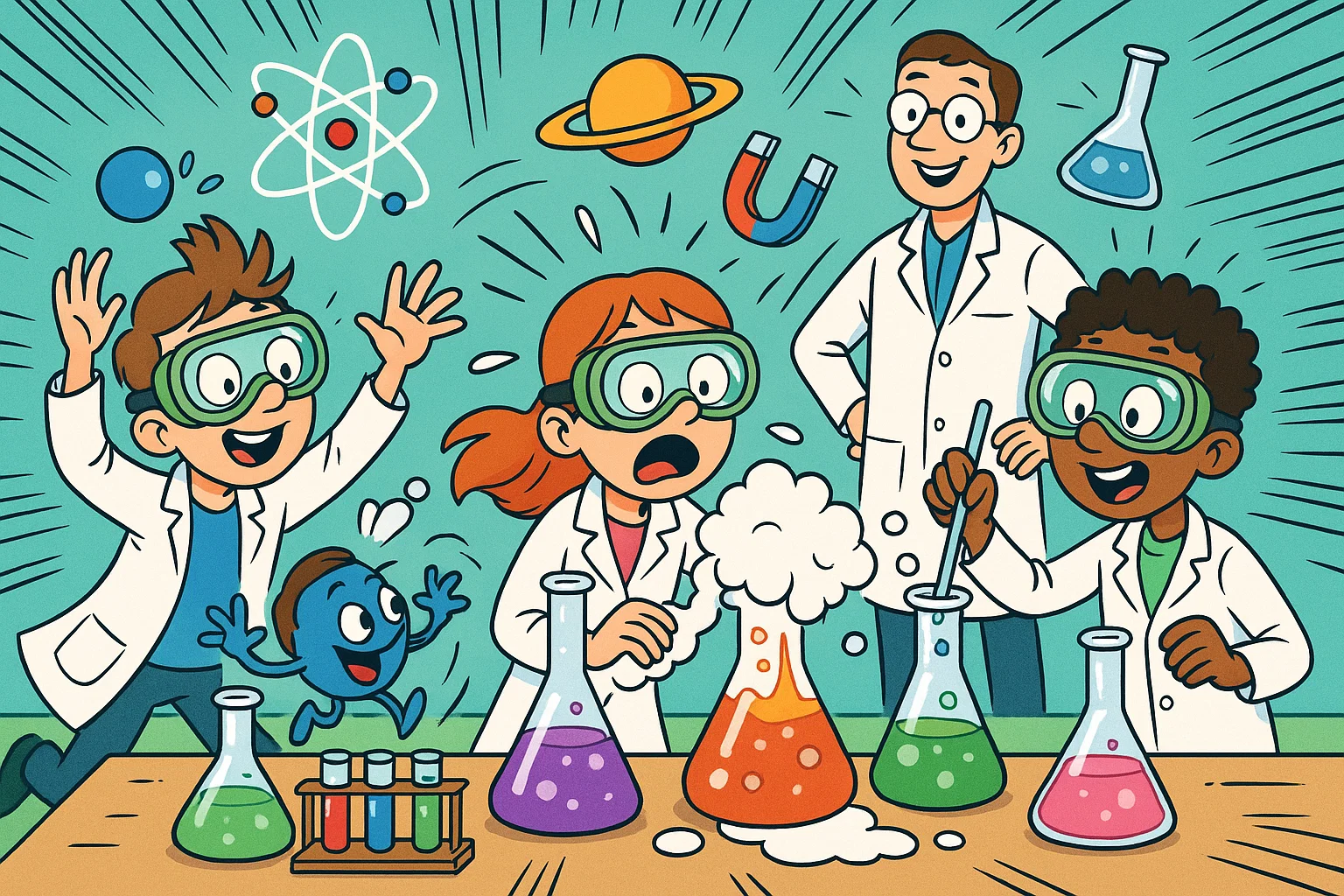
The Year 8 science curriculum is designed to continue the separate teaching of the three scientific disciplines—Biology, Chemistry, and Physics—while highlighting the overarching scientific investigation skills that unite them. This structure directly mirrors the GCSE system, preparing pupils for the transition to more detailed study, often using OCR or equivalent specifications.
Biology Topics
Biology focuses on the microscopic and macroscopic systems that govern life.
- Cells: In-depth study of plant and animal cells, including cell specialisation (e.g., nerve and muscle cells).
- Body Systems: Detailed exploration of systems like the circulatory and respiratory systems, focusing on how they work together.
- Reproduction: Understanding the processes of sexual and asexual reproduction in plants and animals.
- Ecology: Study of ecosystems, food chains, and the impact of human activity on the environment.
Chemistry Topics
Chemistry delves into the composition and properties of matter and the changes it undergoes.
- Particles and Materials: Expanding on the particle model to explain properties of solids, liquids, and gases.
- Atomic Structure: Basic understanding of atomic structure, including protons, neutrons, and electrons, and the organisation of the Periodic Table.
- Chemical Reactions: Investigating chemical reactions, including neutralisation, combustion, and thermal decomposition, and learning to write simple word and symbol equations.
- Acids and Alkalis: Exploring the pH scale and performing practical investigations involving neutralisation.
Physics Topics
Physics explores forces, energy, and the fundamental laws of the universe, with increasing mathematical application.
- Energy: Different forms of energy, energy transfers, and the concept of conservation of energy.
- Forces: Deeper study of forces like gravity, friction, and resistance, including calculation of resultant forces.
- Motion and Waves: Introduction to speed, distance-time graphs, and the basic properties of sound and light waves.
- Magnetism and Electricity: Simple circuits, series and parallel connections, and the relationship between electricity and magnetism.
Scientific Investigation Skills
A key element of KS3 science is the practical application of the scientific method. Students are taught to:
- Plan Experiments: Formulate testable hypotheses and design fair tests.
- Collect and Analyse Data: Take accurate measurements, use appropriate units, and present results in tables and graphs.
- Evaluate Results: Identify anomalies, draw conclusions, and suggest improvements to experimental methods. This process helps pupils develop confidence in their investigative skills.
Humanities in Year 8
History and Geography are the key humanities subjects in Year 8, offering pupils the opportunity to explore the world’s past and present, developing vital critical thinking skills along the way.
History Curriculum Focus
The history curriculum often covers major periods and events, linking them to contemporary issues.
- Period Study: Moving through a chronological arc, often covering the medieval to modern periods, which may include the reigns of the Tudors, the English Civil War, and the causes of the First World War.
- Social Changes: Examining political systems, the development of democracy, and significant social changes such as the abolition of slavery or the impact of the Industrial Revolution.
- Historical Concepts: Exploring concepts such as cause and consequence, change and continuity, and historical significance.
Geography Curriculum Focus
Geography curriculum study combines the human and physical geography of the world, fostering a sense of global citizenship.
- Physical Processes: Investigating key physical processes, such as plate tectonics (earthquakes and volcanoes), river landscapes, and climate and weather systems.
- Human Geography: Topics like urbanisation, population distribution, globalisation, and different types of economies.
- Sustainability: Focusing on environmental issues, resource management, and the principles of sustainable development.
Critical Thinking in Humanities
The ability to evaluate evidence and form reasoned judgments is central to humanities. Pupils learn to:
- Evaluate Sources: Discern the reliability and usefulness of different types of evidence (primary and secondary sources).
- Synthesise Arguments: Combine information from a variety of resources to construct coherent and persuasive arguments in speaking and writing.
- Analyse Bias: Understand how perspective and bias can influence historical accounts or geographical interpretations.
Year 8 Languages Curriculum
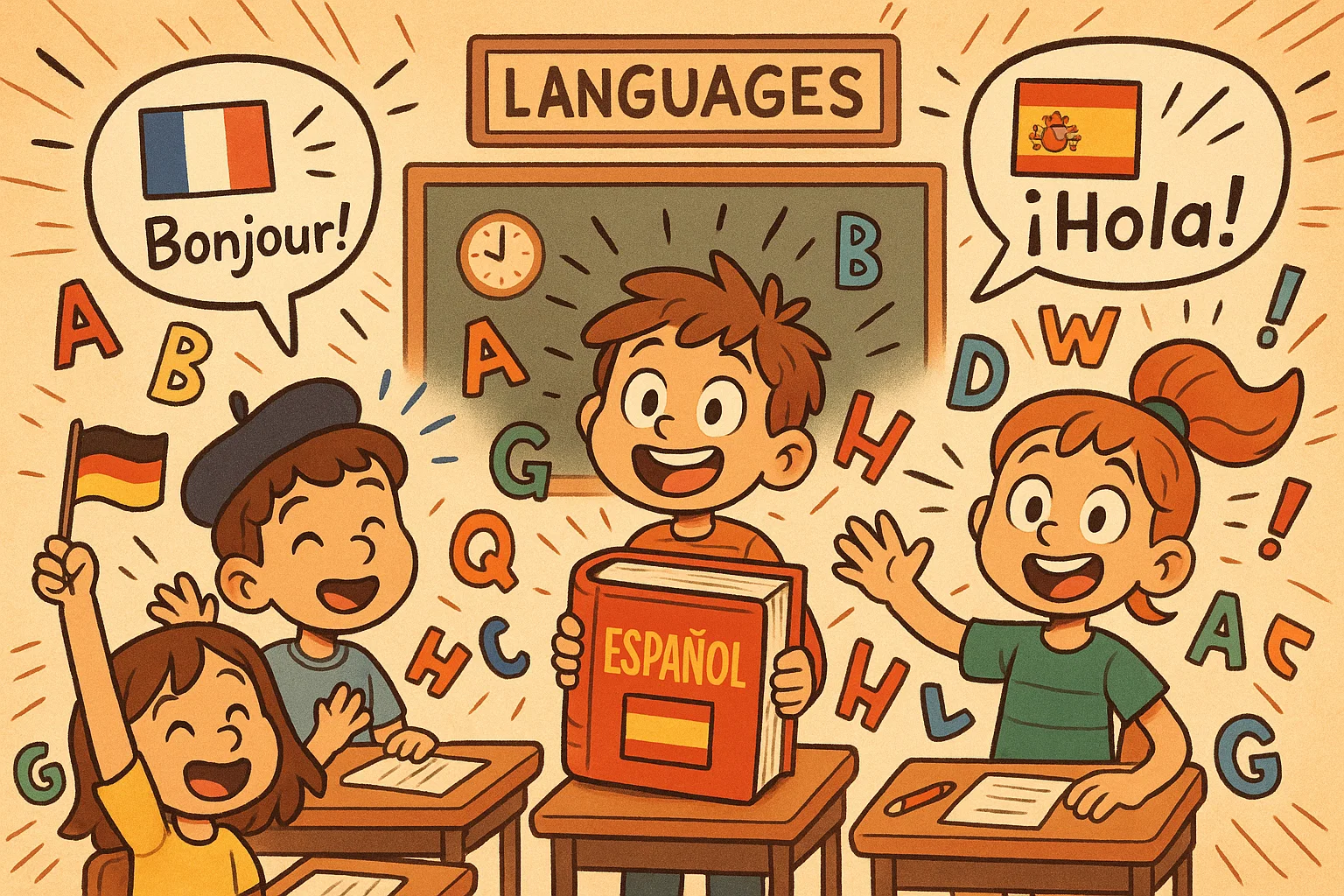
Most secondary schools continue the study of at least one Modern Foreign Language (MFL) begun in Year 7, with French, Spanish, or German being the most common choices. The KS3 MFL curriculum is designed to give pupils the key skills to communicate effectively in the target language.
Vocabulary Expansion
The expansion of grammar and vocabulary allows students to discuss a broader range of topics.
- Themes: Students will learn vocabulary related to personal life (family, friends, hobbies), school routines, ordering food, and travel/holidays.
- Retention: Strategies are taught for more effective memorisation, often leveraging digital tools and retrieval practice.
Grammar Progression
Grammar development is a structured progression, vital for moving towards fluency.
- Verb Tenses: Consolidating the present tense and introducing the past tense (e.g., the passé composé in French or the preterite in Spanish) to allow for narrative.
- Sentence Structure: Using more complex connectors and subordinate clauses to link ideas, building longer and more varied sentences.
Speaking and Listening Skills
These are the communicative key skills that bring the language to life.
- Dialogues: Creating and performing short conversations or role-plays in pairs or individual and group settings.
- Pronunciation Practice: Focusing on accurate pronunciation and intonation to ensure clear communication.
- Listening Tasks: Understanding spoken language in different contexts, often involving native speakers or authentic media.
Creative Subjects in Year 8
Art and Design, Music, and Design and Technology (DT) are essential components of a balanced KS3 education, encouraging creativity, practical application, and problem-solving.
Art and Design
The Art and Design curriculum includes the development of both technical ability and critical appreciation.
- Techniques: Experimenting with a variety of resources and techniques, including drawing, painting, printmaking, and an introduction to 3D work (sculpture and ceramics).
- Analysis: Students are taught to analyse the work of established artists and designers, understanding how cultural context influences art.
- Portfolio: Developing a personal portfolio that showcases skills and reflects artistic intent.
Music and Performance
Music broadens cultural horizons and introduces principles of rhythm, harmony, and composition.
- Performing: Developing skills on various instruments (keyboard, guitar, drums) and group singing.
- Composing: Creating original short pieces of music using music notation and digital sequencing software.
- Appraising: Listening to and analysing music from different topics, genres, and historical periods.
Design and Technology
Design and Technology applies scientific and creative knowledge to real-world problems.
- Design and Make: Engaging in practical tasks that involve designing, planning, and creating a finished product, often working with materials like wood, textiles, or food.
- Digital Design: Using CAD (Computer-Aided Design) and other software to prototype and refine designs.
- Engineering Basics: Introduction to mechanical and electrical systems, focusing on how different components work together.
Physical Education and Health
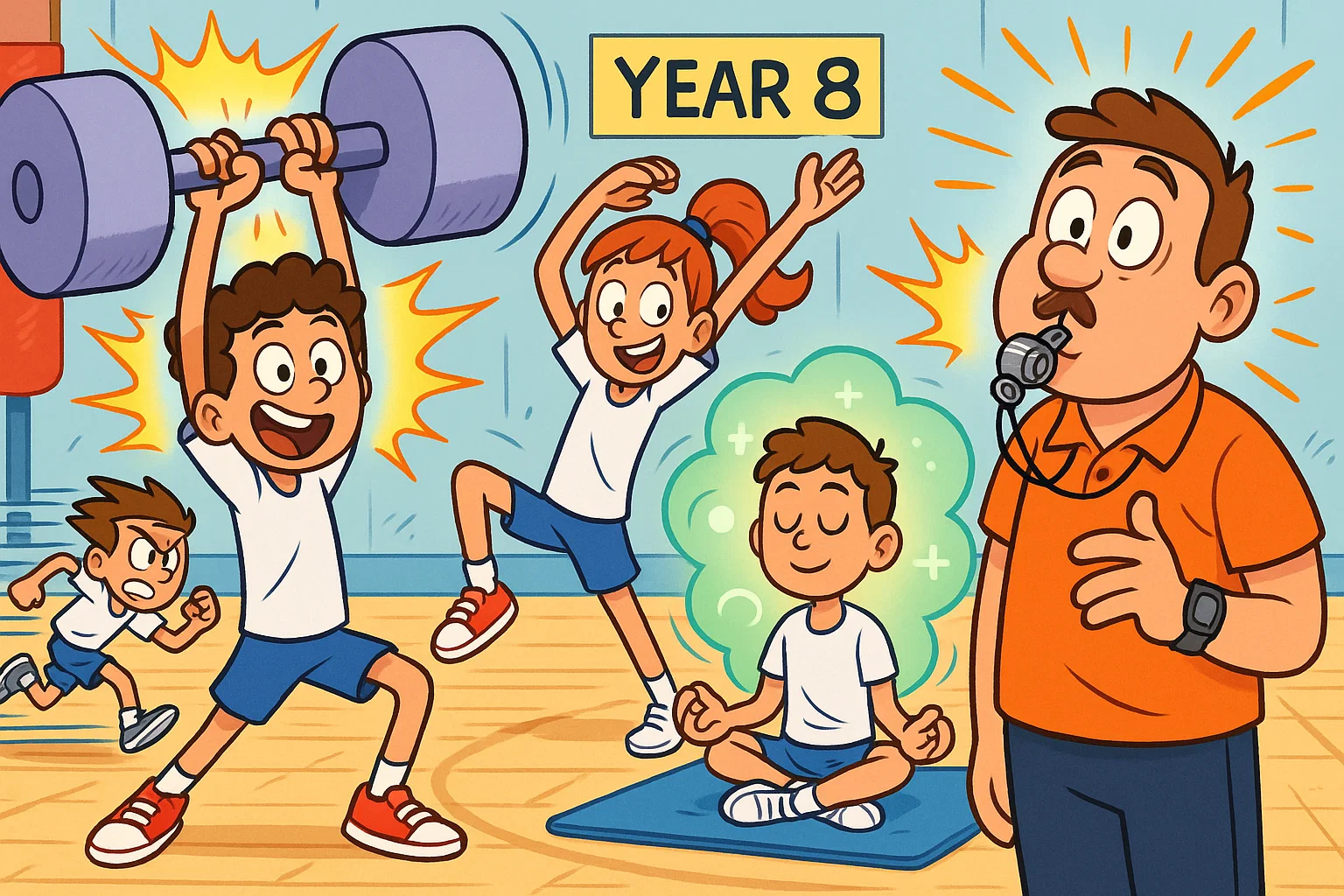
Physical Education (PE) in Year 8 goes beyond simply playing games. It focuses on health, fitness, skill refinement, and the development of teamwork and leadership.
Fitness and Training
PE curriculum is designed to promote a healthy, active lifestyle and improve physical literacy.
- Core Physical Skills: Developing stamina, strength, agility, and coordination through structured drills and exercises.
- Training Principles: Learning basic principles of fitness training and their impact on the body’s systems.
Team Sports
Participation in team sports is vital for developing social and emotional key skills.
- Variety of sports: Exposure to a wide range of activities, such as football, basketball, netball, rugby, and athletics, often allowing pupils to represent the school.
- Teamwork and Tactics: Understanding offensive and defensive strategies, and working effectively in individual and group settings.
Health and Wellbeing
This area often overlaps with RSE and PSHE, covering essential life skills.
- Healthy Lifestyle: Understanding the importance of nutrition, sleep, and hydration for physical and mental health.
- Resilience and Leadership: Using school activities to build confidence, manage pressure, and demonstrate fair play.
Computing and Digital Skills
The Year 8 computing curriculum is designed to ensure students are digitally literate and understand the core principles of computer science, preparing them for an increasingly digital world.
Programming Basics
Moving beyond block coding, students will learn the logic behind programming.
- Algorithms: Designing and writing clear, efficient algorithms to solve problems.
- Code Implementation: Introduction to text-based programming languages (e.g., Python), focusing on variables, loops, and conditional statements.
- Debugging: Developing the methodical key skill of identifying and fixing errors in code.
Digital Citizenship
Understanding the responsibilities and risks of being online is essential.
- Online Safety: Learning about cyberbullying, protecting personal data, and appropriate online behaviour.
- Data Privacy: Understanding how data is collected, stored, and used by companies and online platforms.
Practical IT Skills
These are the transferable skills needed for academic and professional life.
- Productivity Software: Proficient use of spreadsheets (for data analysis in science or math), presentation software, and effective use of the internet for research.
- Computational Thinking: Applying logical processes to break down complex problems in all different subjects.
Year 8 Assessment System
Assessment in Year 8 is focused on progress tracking and providing actionable feedback, often adopting a system that attempts to mimic the rigour of GCSE without the final stakes. This helps pupils become familiar with formal testing environments.
Classroom Assessment
Daily work is the most important measure of learning and progress.
- Quizzes and Topic Tests: Short, frequent assessments to check knowledge retention and identify gaps.
- Classwork and Participation: Regular teacher judgment based on the quality of work in their books and engagement in classroom discussion.
Major End-of-Unit Checks
Throughout the academic year, schools use larger tests to consolidate progress.
- Summary Tests: Comprehensive tests at the end of a unit or term, often including exam-style questions to build early familiarity with formal assessments.
- Formal Exam Weeks: Many secondary schools implement an exam week, often during the summer term, to give pupils experience with timed, formal assessments across their different subjects.
How Schools Use Progress Data
Data gathered from these assessments is used strategically to ensure every pupil reaches their potential.
| Data Use | Description | Benefit for the Pupil |
| Target Setting | Aligning performance data with aspirational GCSE targets (e.g., working towards a grade 8). | Provides clear focus and motivation for improvement. |
| Intervention Planning | Identifying students who need extra support (e.g., a tutor or small-group sessions) in a specific area like algebra or reading and writing. | Ensures timely support to prevent falling behind. |
| Reporting to Parents | Providing detailed reports that go beyond a single mark, commenting on effort, skills and knowledge, and areas for growth. | Facilitates constructive parent-child-school conversations about their progress. |
How Year 8 Prepares for Year 9 and GCSE
Year 8 is the definitive staging post for the GCSE journey. By the end of the academic year, students will be able to see a clear link between their current studies and the specialisation that lies ahead.
Early Skill Formation for Key GCSE Subjects
The core skills embedded in Year 8 are the prerequisites for GCSE success.
- Maths Reasoning: Mastery of linear equations forms the basis of the entire higher-level GCSE math syllabus.
- Scientific Method: The investigative skills in science (planning, collecting, analysing) are directly assessed in the practical and written papers for OCR and other exam boards.
- Essay Writing: The ability to construct a well-evidenced argument with sophisticated grammar and vocabulary in history and literature directly prepares pupils for the extended writing requirements of all humanities and English literature GCSEs.
Subject Pathway Planning
Toward the end of Year 8, or the start of Year 9, students begin the process of choosing their GCSE options.
- Identifying Strengths: A diverse KS3 curriculum allows pupils to discover where their knowledge and skills truly lie, whether in the practical applications of design and technology or the theoretical rigour of advanced math.
- Informed Choices: Understanding the content of religious studies, MFL, and the arts in Year 8 helps them make informed decisions about the subjects they wish to pursue for their final grade.
Study Habits Built in Year 8
More than curriculum content, Year 8 solidifies the behavioural foundations for academic success.
- Time Management: Juggling multiple different subjects and extracurricular school activities forces pupils to develop effective planning and organisational skills.
- Independent Study: Moving away from reliance on the teacher and learning to use a variety of resources for homework and revision is a crucial habit for the self-directed learning required at Key Stage 4.
By embracing the challenges of Year 8, pupils transition from being guided learners to becoming independent, critical thinkers, fully equipped with the skills and knowledge needed to thrive in Year 9 and beyond, with a clear sight set on achieving strong results in their GCSE examinations.
Frequently Asked Questions (FAQ)
How does the Year 8 curriculum prepare pupils for the jump to GCSE in Year 9?
Year 8 is a critical consolidation year. The course is designed to deepen core knowledge and sharpen the academic skills necessary for GCSE. For example, in math, pupils move from simple equations to foundational techniques like factorising and manipulating quadratics, essential steps before completing the square at the higher GCSE level. In all different subjects, students are pushed to extend their knowledge beyond basic recall, focusing on analytical thinking, evidence evaluation, and extended speaking and writing, directly mimicking the GCSE assessment style.
Does the Year 8 curriculum include advanced topics like Astronomy?
While the core studies curriculum in science is focused on Biology, Chemistry, and Physics, many schools incorporate astronomy or space science as an engaging context for learning core physics principles (like gravity, forces, and motion). It is often covered as part of a variety of topics within the broader Key Stage 3 science framework, designed to spark curiosity and link physics to the real world. Check your specific school’s programme of study for exact details, as this can vary.
What are the main differences between Year 7 and Year 8?
In Year 7, the focus is primarily on adapting to secondary schools and ensuring all pupils have the foundational key skills. In Year 8, the depth and complexity increase significantly across every different subject. The pace quickens, requiring more independent study. Students in this year’s group are expected to handle more abstract ideas (e.g., advanced algebra, more complex literary themes) and manage their workload more effectively. The course is designed to challenge students to apply, analyse, and evaluate information, rather than just remember it.
How can I help my child extend their knowledge in challenging subjects like Maths?
The best approach is to encourage practice and conceptual understanding. For challenging math topics like algebra or geometry, students must practice a variety of topics and problem types. For example, if they are learning about solving equations, encourage them to extend their knowledge by applying these skills to real-world word problems. Using a tutor or online resources can provide additional structured practice. Understanding that many abstract concepts build upon earlier ones is key, so revisiting fundamentals often helps build confidence.
Are there specific topics covered in the Year 8 Humanities curriculum?
Yes, the humanities (History curriculum and Geography curriculum) cover a variety of topics to build a wide worldview. In history, the studies curriculum often progresses from medieval to early modern periods, including the First World War or aspects of the British Empire. In geography, the focus shifts to more complex human and physical geography concepts, such as globalisation, plate tectonics, and sustainability. Both subjects train pupils to evaluate sources and arguments, which are essential skills and knowledge for their later GCSE choices.

Take a short quiz to find out what your everyday choices say about your parenting style
When your child is curious about something new, what’s your instinct?
Take a short quiz to find out what your everyday choices say about your parenting style
“Can I download this app?” What happens next?
Take a short quiz to find out what your everyday choices say about your parenting style
When it comes to rules at home, which sounds most like you?
Take a short quiz to find out what your everyday choices say about your parenting style
If you could give your child one life skill today, what would you pick?
Take a short quiz to find out what your everyday choices say about your parenting style
Your child gets to choose what to watch. What would your ideal setup look like?
Take a short quiz to find out what your everyday choices say about your parenting style
Pick your parenting superpower ✨