
120 Easy Riddles for Kindergarten Kids and Preschoolers

 Discover a Free Education Video App for Kids
Pastory uses AI to personalize educational video content based on your child’s interests and personality. Safe, engaging, and built for curious young minds. Sign up now to stay updated and enjoy early access with a free trial
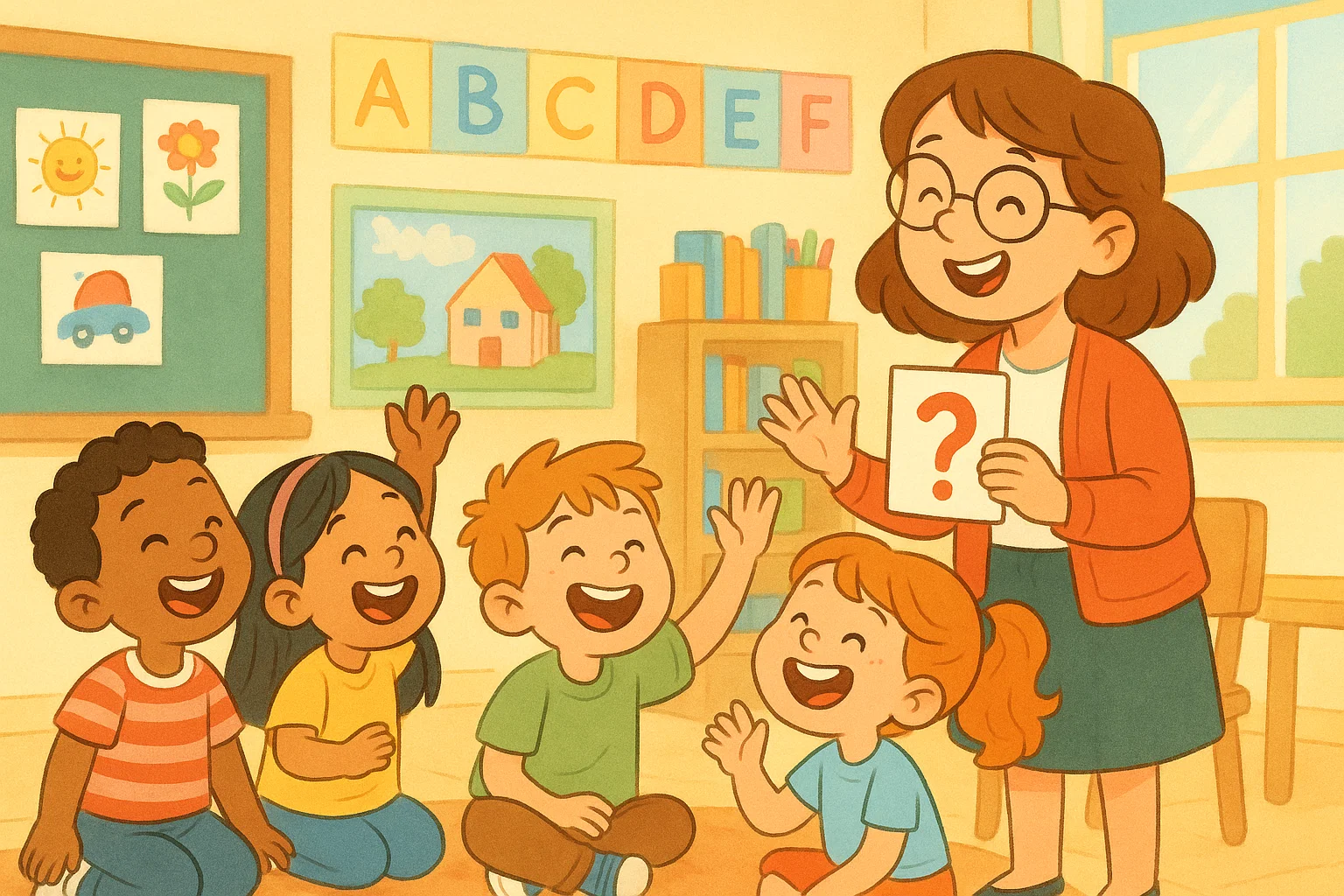
Easy riddles for kindergarten give 4- to 6-year-olds a fun, low-pressure way to build vocabulary, sharpen early logic, and stay curious. This collection includes 120 riddles organized by theme — animals, everyday objects, food, shapes, seasons, phonics, and more — each with a short, kid-friendly answer that is easy to read aloud.
Whether you need a quick activity for circle time, a car ride, or a quiet evening at home, the themes here make it simple to find the right riddle for the moment. Tips for creating original riddles with your child are also included.
Key Takeaways
- This collection includes 120 easy riddles for kindergarten children ages 4 to 6.
- Riddles are organized by theme, covering animals, food, math, seasons, and classroom topics.
- What Am I and phonics-based riddles support early language and reading development.
- The article includes tips for creating original riddles with your child using familiar objects.
- Riddles suit circle time, car rides, family evenings, and everyday kindergarten routines.
What Is a Riddle for Kindergarten Kids
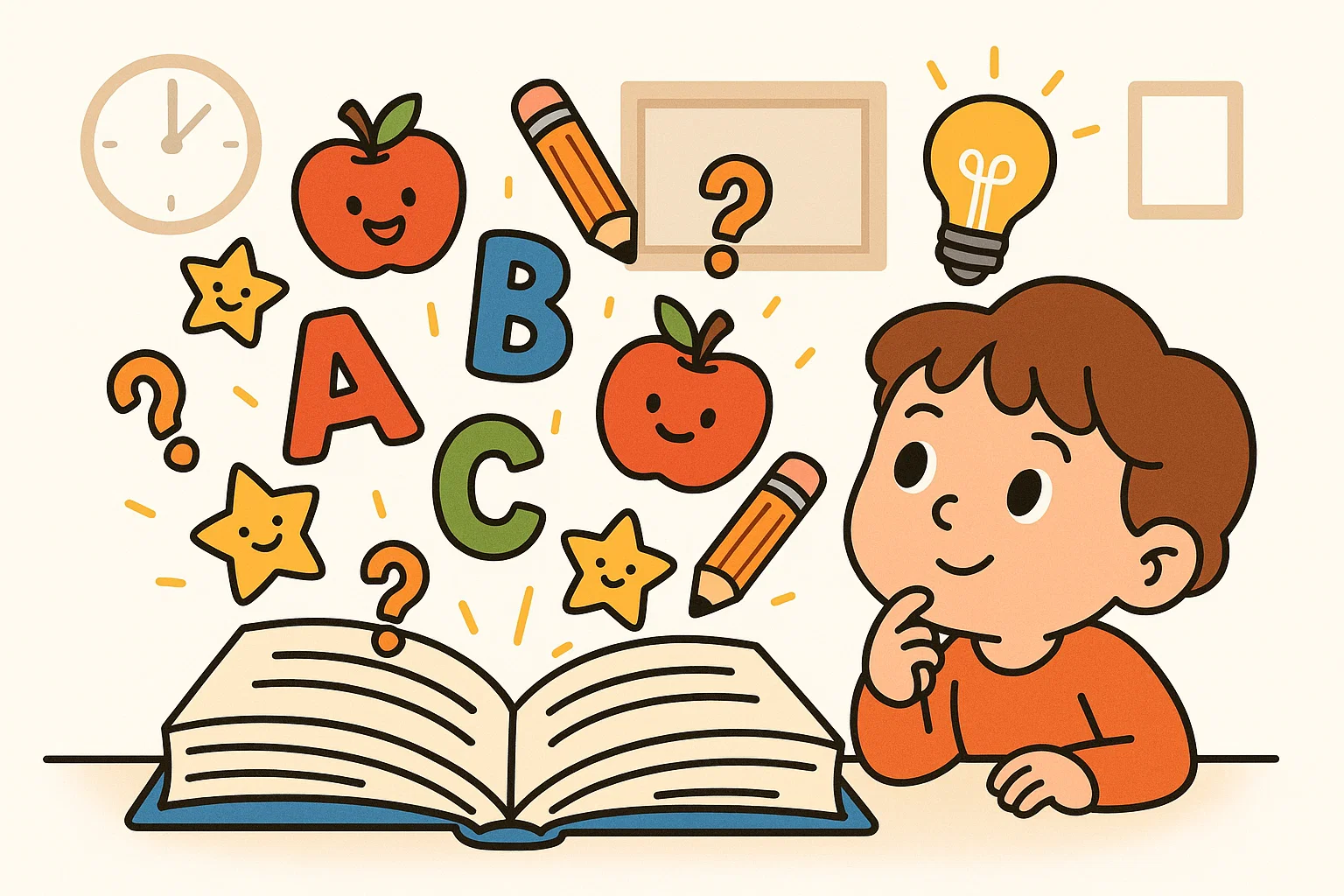
A riddle is a statement or question that has a hidden meaning or offers a puzzle to be solved. For kindergartners, a riddle is a short, descriptive clue that hints at a familiar object, animal, or idea without naming it directly. Unlike a simple joke, which is told for a laugh, a riddle requires the listener to actively engage their critical thinking skills to find the solution. Unlike a jigsaw puzzle, which is visual, a riddle is entirely verbal—making it a powerful tool for language development.
How Riddles Help Early Thinking Skills
Guessing the answer to a riddle promotes logic, pattern recognition, and intellectual curiosity in young learners. The process of listening to the clues, holding them in memory, and testing potential answers against those clues strengthens several core cognitive functions:
- Logical Deduction: Children practice the fundamental skill of elimination. For example, if the riddle says, “I am soft and white,” they logically eliminate hard or colored objects.
- Pattern Recognition: They learn that certain categories of riddles (like animal riddles) have answers with specific attributes (sounds, habitats, movements).
- Abstract Thinking: Riddles often use metaphors or descriptive language, helping children move beyond concrete thought to consider the “hidden meaning” of words. This is an essential step in academic readiness.
When to Use Riddles in Kindergarten Routine
Riddles are incredibly flexible and can be seamlessly integrated into almost any part of the day. Using them strategically can help keep kids busy and engaged while smoothing transitions.
- Circle Time: Start the day with a fun riddle to get their brains working and set a positive, problem-solving tone.
- Transition Activities: Use one or two short riddles as a calm, fun signal to transition between activities—like lining up or tidying toys. “I have a mouth but never eat. What am I?” (A jar)
- Family Evenings: Encourage parents to use fun riddles for kids during dinner or car rides to reinforce learning at home.
- Downtime/Free Play: Have a chart of simple riddles with answers for kids available for children to challenge each other, promoting peer interaction.
Easy Riddles for Kindergarten
These simple riddles are perfect for beginners. The answers are often direct and focus on one or two clear clues, building confidence as kids successfully solve riddles.
Classic Short Riddles Kids Love
These are timeless riddles that 4–6-year-olds can grasp quickly.
| Riddle | Answer |
| I have keys, but open no locks. I have a space, but no room. You can enter, but can’t go outside. What am I? | (A keyboard) |
| What has to be broken before you can use it? | (An egg) |
| I am tall when I am new, and I am short when I am old. What am I? | (A candle) |
| What is full of holes but still holds water? | (A sponge) |
| What question can you never answer yes to? | (Are you asleep yet?) |
| I follow you all day, but when the sun goes down, I disappear. What am I? | (A shadow) |
Everyday Object Riddles
Focusing on items familiar to young kids helps them make quick connections between the verbal clues and their physical world.
- I have a tongue, but I can’t talk. I run all day, but never walk. What am I? (A shoe)
- I have four legs but can’t walk. I have a back but wear no coat. What am I? (A chair)
- I have many teeth, but I cannot eat. I help you make your hair look neat. What am I? (A comb)
- I can be sharp, and I help you write. I get smaller with every bite. What am I? (A pencil)
- You use me to open a door. What am I? (A key)
- I wear a green coat, but I have no buttons. I keep you dry in the rain. What am I? (An umbrella)
Rhyming Riddles for Preschoolers
Rhyming makes riddles catchy and aids in phonetic development and memory. Kids love the sing-song quality!
- I am round and red, or yellow too. I taste so sweet and grow on a tree for you. What am I? (An apple)
- I start with a “P” and can roll all around. You toss me and kick me right off of the ground. What am I? (A ball)
- I float up high, all soft and white. I may bring rain with all my might. What am I? (A cloud)
- You put me on top of your birthday cake. When you blow me out, a wish you can make. What am I? (A candle)
- I keep all your clothes clean and bright. I spin around quickly with all of my might. What am I? (A washing machine)
Funny Riddles for Kindergarten
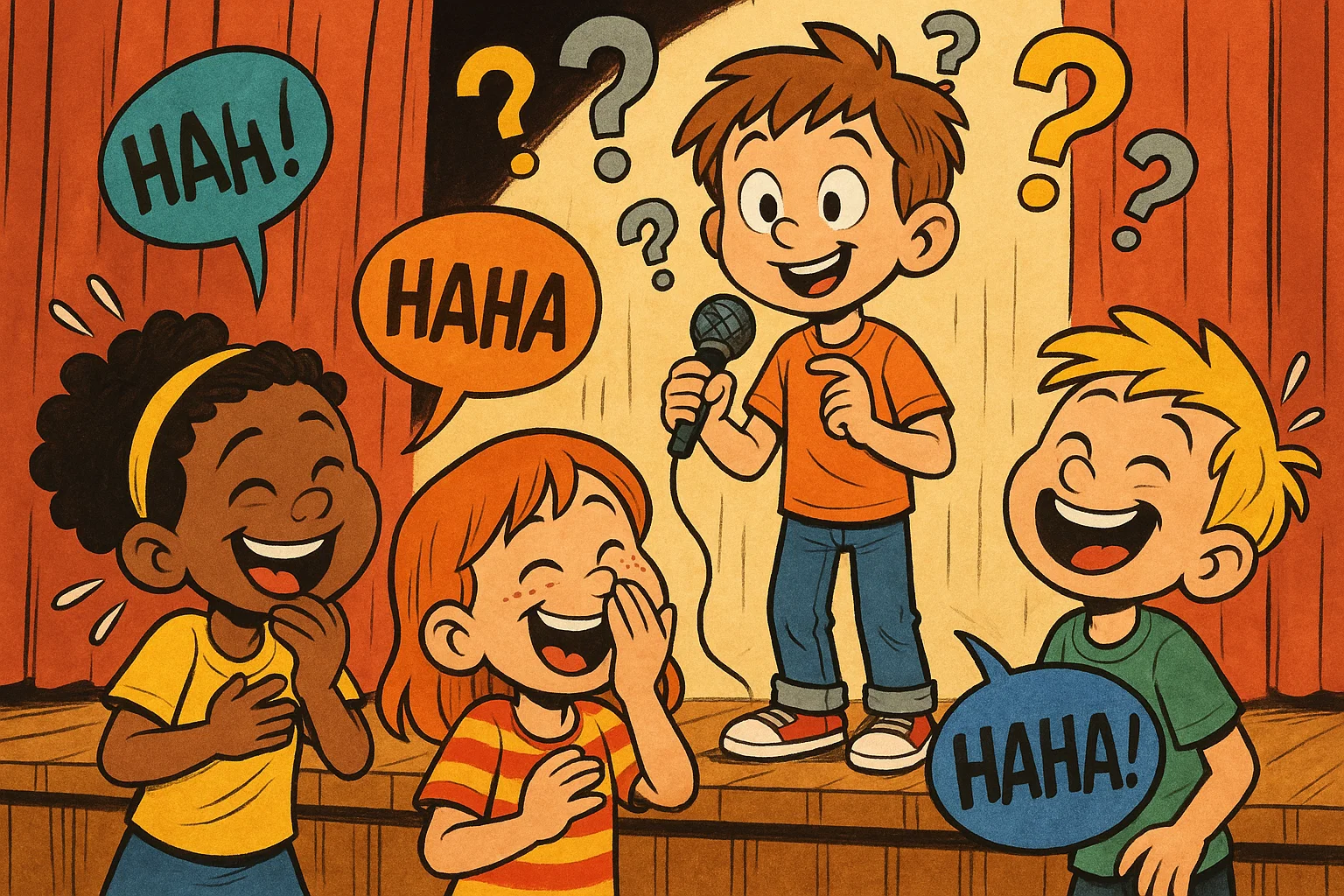
Humor is a powerful motivator! Funny riddles build engagement and confidence, showing kids that learning is fun. Laughter also helps children remember new information more easily.
Silly and Giggle-Worthy Riddles
These are laugh-out-loud examples that are easy for kids to retell to friends, boosting their social skills and verbal confidence.
- Why did the teddy bear say no to dessert? (Because she was stuffed!)
- What is always coming but never arrives? (Tomorrow)
- You’re running a race and you pass the person in second place. What place did you finish in? (Second place)
- What has an eye but cannot see? (A needle)
- What smells the best on a farm? (Your nose)
- What has one head, one foot, and four legs? (A bed)
School and Playground Riddles
Using funny scenarios from the classroom or recess makes the riddles relatable.
- Why did the student eat his homework? (Because the teacher said it was a piece of cake.)
- I have many pages, but I am not a story. I get smarter the more you read me. What am I? (A book)
- I have a big mouth and I am used to store things. Kids throw things inside of me all day long. What am I? (A trash can)
- I have a hard cover and lots of lines. You use me to practice your writing and rhymes. What am I? (A notebook)
- I get kicked, but I never complain. I am round and help you play fun games. What am I? (A soccer ball)
Food and Snack Riddles
These relatable riddles about apples, cookies, and sandwiches are fun and familiar for little ones.
- What has a neck but no head? (A bottle or a shirt)
- I am brown and sweet and sometimes round. I am a fun treat to eat when you are unwound. What am I? (A cookie)
- I am white and flat, and I sit on the table. You put your food on me while you eat. What am I? (A plate)
- You peel me to eat me, but I never cried. I am a yellow fruit that monkeys like too. What am I? (A banana)
- I am the center of a sandwich, but I’m not the bread. I am sticky and sweet. What am I? (Peanut butter or jelly)
Animal Riddles for Kindergarten
Animal riddles are always a hit! Focus on popular animals and include hints tied to sounds, colors, or actions. This is a great way for kids to reinforce early science learning.
Farm Animal Riddles
These are ideal for kids learning animal sounds and the names of baby animals.
| Riddle | Clue | Answer |
| I oink and I squeal. I roll in the mud, but it’s part of my meal. | Sound and action. | (A pig) |
| I give you white milk. I say “Moo!” and I walk very slow. | Product and sound. | (A cow) |
| I pull a cart or carry a rider. I say “Neigh!” and have a long tail. | Action and sound. | (A horse) |
| I have soft white wool. My baby is called a lamb. I say “Baa!” | Texture and baby name. | (A sheep) |
| I wake you up in the morning. I say “Cock-a-doodle-doo!” | Action and sound. | (A rooster) |
Wild Animal Riddles
Mention lions, monkeys, and giraffes with playful clues about how they move or roar.
- I have a very long neck to reach the leaves high up. I am yellow and brown. What am I? (A giraffe)
- I love to swing from trees and eat bananas all day. I chatter and jump. What am I? (A monkey)
- I have a mane and a loud roar. I am the king of the jungle. Who am I? (A lion)
- I have a big trunk and very large ears. I am the biggest land animal. What am I? (An elephant)
- I have black and white stripes, but I’m not a tiger. I live on the grassy plains. What am I? (A zebra)
Sea Animal Riddles
These creatures are simple but visual, encouraging imagination about the ocean.
- I can swim all day and have fins and scales. I live under the sea. What am I? (A fish)
- I can snap with my claws and walk sideways on the sand. What am I? (A crab)
- I am very big and squirt water high into the air. I am a giant mammal of the sea. What am I? (A whale)
- I have eight long arms and can squirt ink to hide. What am I? (An octopus)
- I have a soft, rounded body and love to jump out of the water. I make clicking sounds. What am I? (A dolphin)
Math and Logic Riddles for Kindergarten
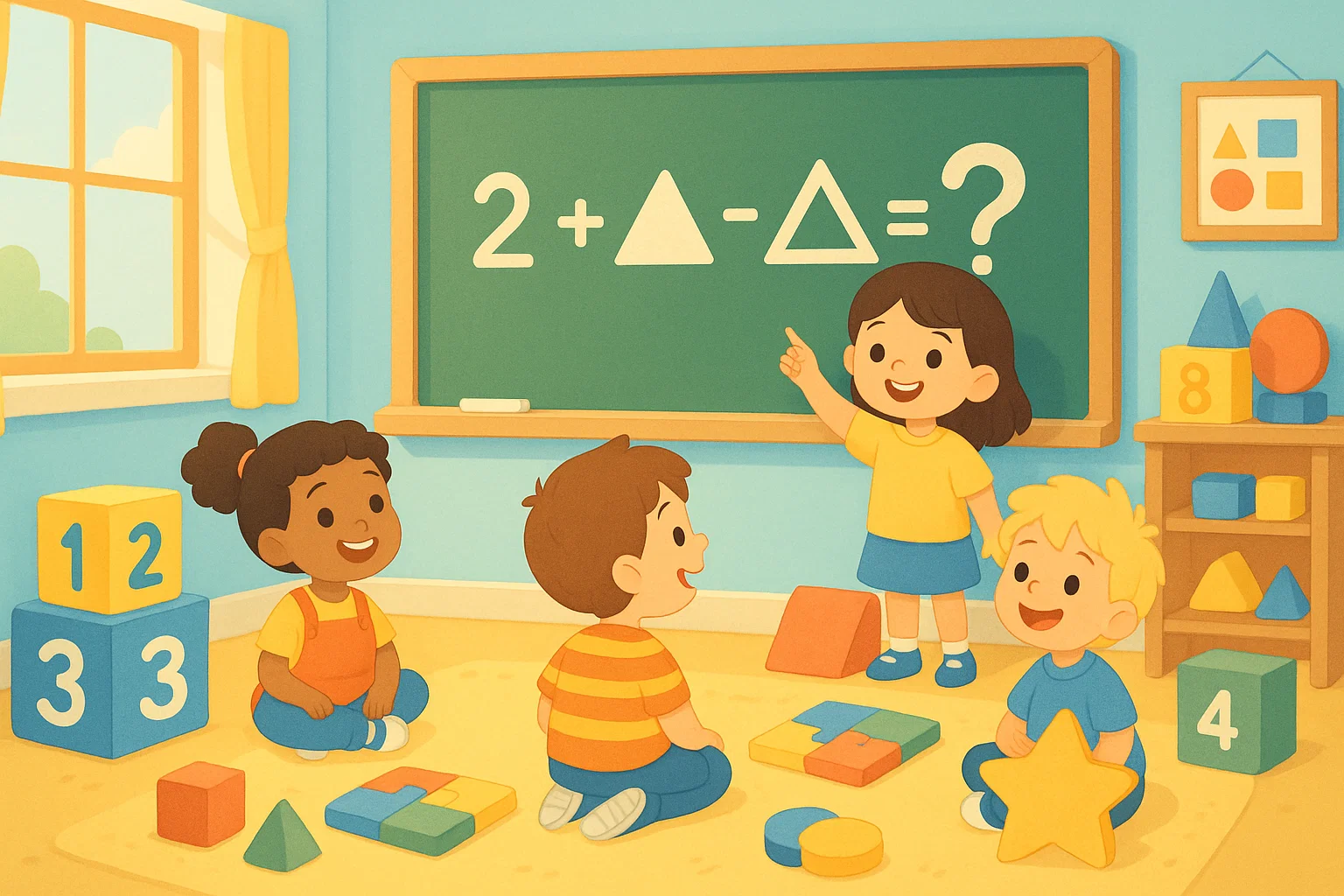
Introducing early numeracy and reasoning through simple number and shape riddles helps develop problem-solving skills for future learning.
Counting Riddles for Preschoolers
These riddles involve counting up to 10 or recognizing simple patterns.
- I have two wheels and you sit on me to ride. What am I? (A bicycle)
- I have four legs and one seat. You sit on me to eat your meat. What am I? (A chair)
- Count my sides: one, two, three! I am pointed at the top. What shape am I? (A triangle)
- How many toes do you have on one foot? (Five)
- How many colors are in the rainbow? (Seven)
Shape Riddles for Early Learners
Describing circles, triangles, or squares in poetic riddle form.
- I have four straight sides that are all the same length. I have four corners. What shape am I? (A square)
- I have no sides and no corners. I am round like a ball. What shape am I? (A circle)
- I have three sides. I look like a slice of pizza. What shape am I? (A triangle)
- I have two long sides and two short sides. I look like a door or a window. What shape am I? (A rectangle)
Number Riddles with Simple Answers
These include examples using “one,” “two,” “three” with visual or story clues.
- If you have three apples and eat one, how many are left? (Two)
- How many eyes do you have? (Two)
- I am the number that comes after one and before three. What number am I? (Two)
- If you put a one and a zero together, what number do you make? (Ten)
- What is the smallest number you need to be able to jump rope? (One)
Seasonal and Holiday Riddles
Festive riddle sets are fun and can be used by teachers year-round to match classroom themes and lessons.
Spring and Summer Riddles
Focus on sunshine, flowers, and outdoor play.
- I am yellow and warm, and I make flowers grow. You love to play outside when I glow. What am I? (The sun)
- I am a pretty insect that flies to a flower. I have colorful wings. What am I? (A butterfly)
- I am red and sweet and you pick me from a patch. I make a delicious shortcake. What am I? (A strawberry)
- I am cold and sweet and drip down your chin. You eat me to cool off when the sun is out. What am I? (Ice cream)
Fall and Winter Riddles
Include leaves, snowmen, and cozy indoor activities.
- I fall from the trees in many colors: red, yellow, and brown. What am I? (A leaf)
- I am white and fluffy and fall from the sky. You use me to build a snowman. What am I? (Snow)
- I am a white doll made of snow, with a carrot nose. What am I? (A snowman)
- I keep your hands warm when it’s cold outside. I come in a pair. What am I? (Mittens or gloves)
Holiday Riddles for Kindergarten
Easy riddles that match classroom themes for major holidays.
- On Halloween, I am scary and round and can be carved with a face. What am I? (A pumpkin/jack-o’-lantern)
- I wear a red suit and a white beard. I bring presents on Christmas Eve. Who am I? (Santa Claus)
- I hide colored eggs and bring candy for good girls and boys. What animal am I? (The Easter Bunny)
- I have a feather tail and I am eaten on Thanksgiving day. What am I? (A turkey)
- I am small and round, and I have many lights. You hang me on a Christmas tree. What am I? (An ornament)
What Am I Riddles for Kindergarten
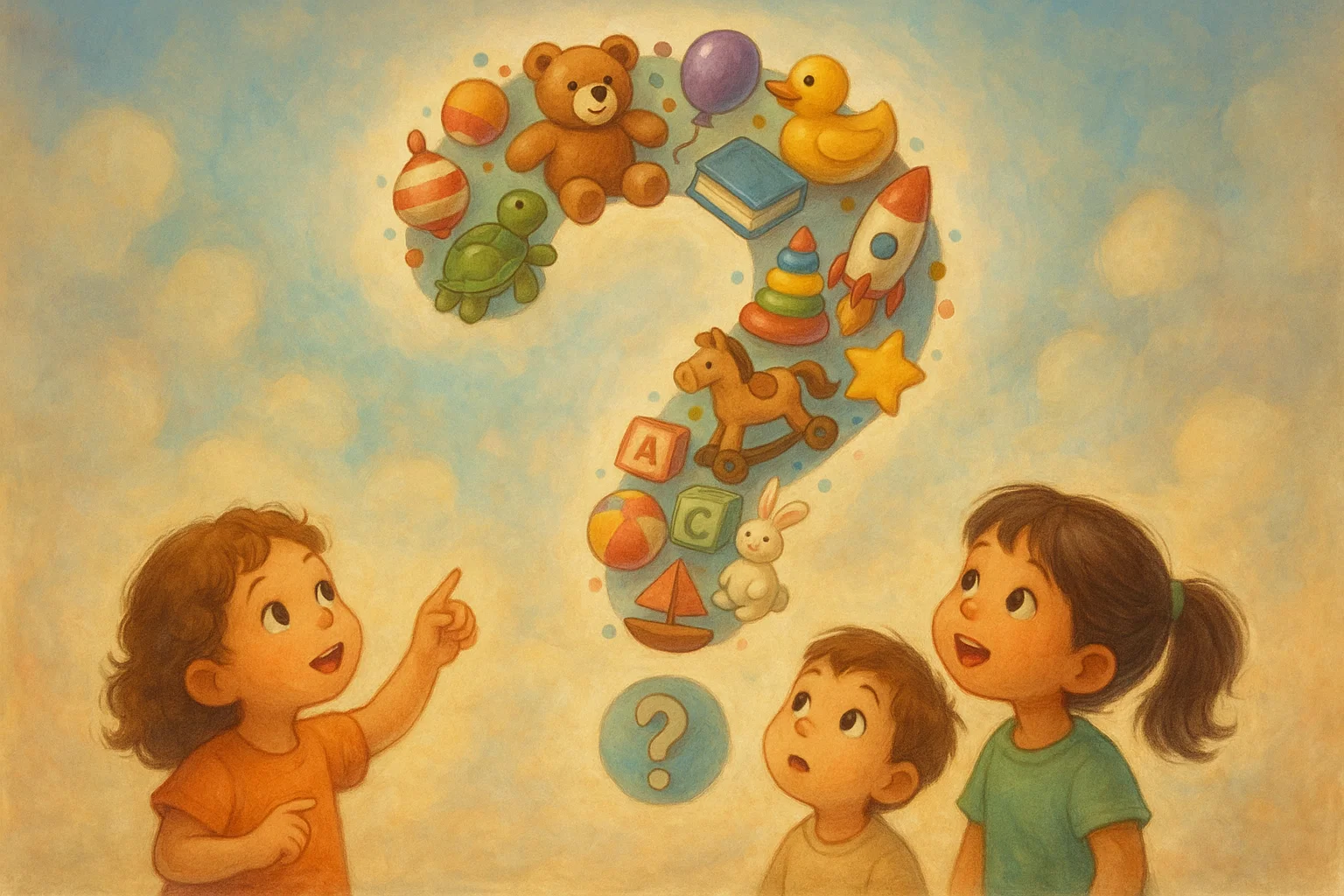
“What Am I” riddles use short “I am…” clues that encourage descriptive thinking and sentence comprehension, improving listening skills.
Object Guessing Riddles
Simple first-person clues that are easy to visualize.
- I shine in the sky at night, but I’m not the moon. I twinkle. What am I? (A star)
- I hold your juice or your milk. You drink out of me. What am I? (A cup)
- I have a face and hands, but I can’t clap. I tell you the time. What am I? (A clock)
- I am soft and you sleep on me every night. I am on your bed. What am I? (A pillow)
- I have a thumb and four fingers, but I am not alive. You wear me on your hand. What am I? (A glove)
Character Riddles for Imagination
Fun personification helps build creative thinking skills.
- I wear a pointy hat and sometimes have a broom. I love the night and might cast a spell. Who am I? (A witch)
- I wear a hat and live in a one-story house made of snow. I love to fish. Who am I? (An Eskimo/Inuit)
- I am famous for my red nose and help guide Santa’s sleigh. Who am I? (Rudolph the Reindeer)
Classroom-Themed What Am I Riddles
Focus on pencils, crayons, books, and other daily school items to reinforce vocabulary.
- I am colorful and help you draw pictures. I am made of wax. What am I? (A crayon)
- I have a handle and help you see yourself. What am I? (A mirror)
- I get bigger the more you take away from me. What am I? (A hole)
- You must wash me after you use me, or your mouth will get hairy. What am I? (A toothbrush)
- I am so light as a feather but no one can hold me for long. What am I? (Breath)
English Riddles for Kindergarten
These are perfect for ESL or EFL learners—using clear words, repetition, and phonics-based clues helps build vocabulary and reading readiness.
Vocabulary-Building Riddles
Integrate basic words like colors, numbers, and animals.
- I am the color of the grass. What am I? (Green)
- I am the biggest cat and have black stripes. What am I? (A tiger)
- I come after Saturday. What day am I? (Sunday)
- I am a small circle that you use to buy things. I am money. What am I? (A coin)
- I am the opposite of fast. What word am I? (Slow)
Riddles for Reading Practice
Encourage kids to sound out rhyming or simple phrases.
- I rhyme with “hat” and love to chase a mouse. What animal am I? (A cat)
- I rhyme with “sun” and am a very big number. What number am I? (One)
- I rhyme with “fox” and have numbers on my face. What am I? (A clock)
Phonics-Based Riddles
Highlight riddles built around beginning sounds or letters.
- I start with the letter B and I fly from flower to flower. What am I? (A bee)
- I start with the letter D and I love to wag my tail. What am I? (A dog)
- I start with the letter S and I am round and yellow in the sky. What am I? (The sun)
- I start with the letter T and I have four wheels and carry people. What am I? (A train)
How to Create Riddles with Your Child
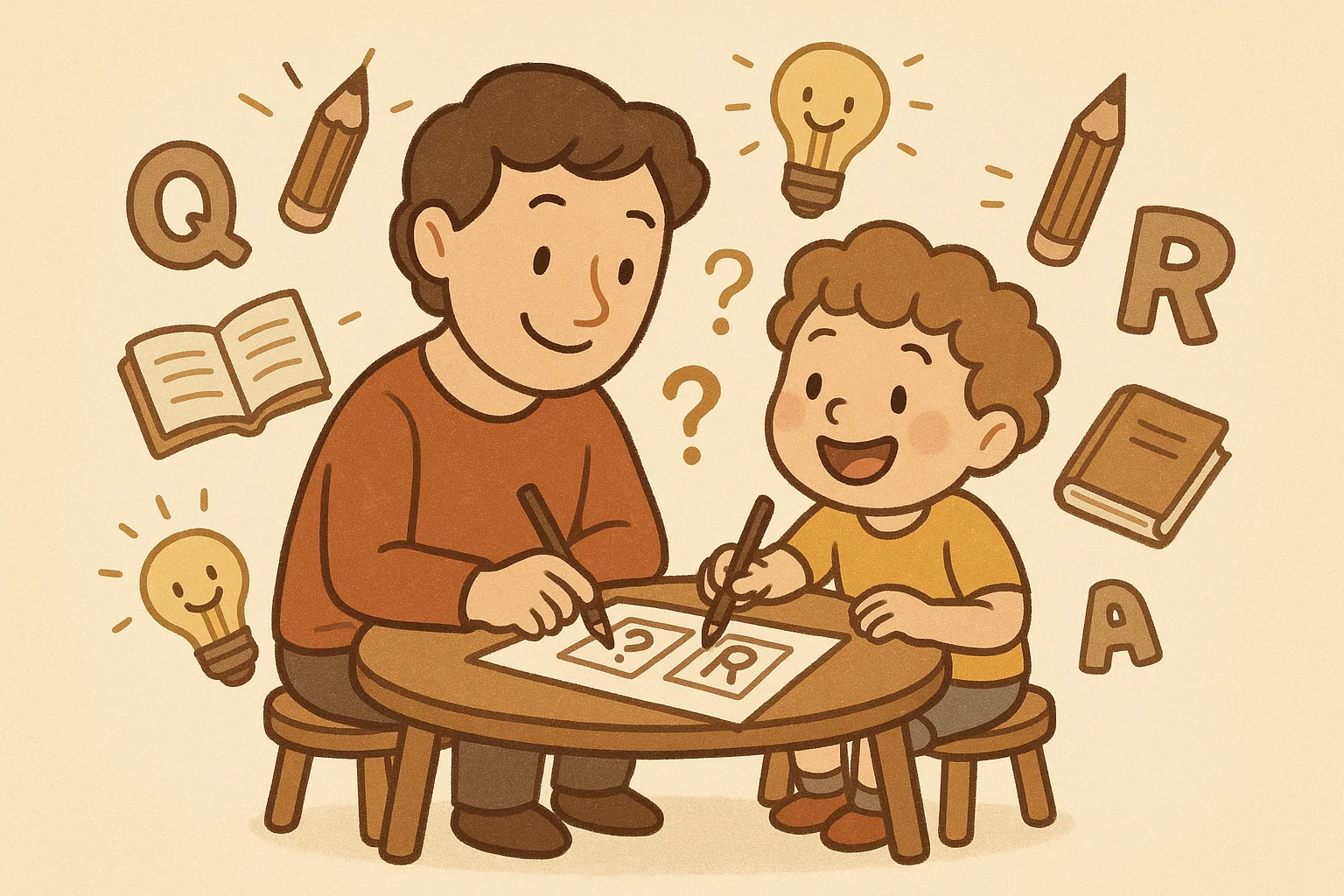
The ultimate way to engage your kindergartner’s critical thinking is to turn them into a riddle inventor! This activity, which you can use as a fun way to reinforce family time, is crucial for fostering advanced language and problem-solving skills to find the answer. Here’s a simple guide to help kids invent their own tricky riddles:
Start with Familiar Objects
- Choose a subject: Pick a toy, a favorite snack, or something nearby, like a block or a crayon.
- List its attributes: Ask the child, “What color is it? What does it do? Where do we keep it? How does it feel?” Example: Block: Red. It stacks. It lives in the toy bin. It is hard.
- Write the clues: Transform those facts into fun descriptive sentences.
Use “I Am” Sentences
Teach the structure of “I am…” to make the process easy and repeatable. This gives them a framework to build on.
Clue 1: “I am red and a square.”
Clue 2: “I like to be built into a tower.”
Clue 3: “I live in the toy box.”
Riddle: “I am red and a square. I like to be built into a tower. What am I?” (A block)
Turn Guessing into a Game
Encourage playful group activities and story-based riddles to enhance the experience.
- Riddle Time: Designate a special “Riddle Time” where the child gets to be the riddle master.
- The Story Riddle: Instead of listing clues, turn them into a short, imaginative story. For example, “I went on an adventure today! I was taken from a mine, then I was shut up in a wooden container, but I don’t need air because I don’t have lungs! What am I?” (Pencil lead/Graphite)
- Guess My Feeling: Make a riddle about an emotion (“I make you laugh and smile. What am I?”) to introduce emotional vocabulary.
Benefits of Riddles for Kindergarten
The seemingly simple act of solving these riddles is a powerful cognitive exercise. It’s a research-backed method that supports overall child development—one reason it’s a cornerstone of many early childhood education programs.
Improves Speech and Vocabulary
Riddles enhance pronunciation, word recall, and descriptive language skills.
- Vocabulary Expansion: Children encounter new words and semantic variations (e.g., light as a feather, tricky riddles, critical thinking), improving their expressive and receptive language.
- Listening Comprehension: To solve riddles, kids must carefully listen to all the clues in the correct order, which is essential for following multi-step directions in the classroom.
Develops Logic and Memory
Problem-solving skills are strengthened as children actively engage their early cognition.
| Cognitive Skill | How Riddles Help | Supporting Statistic/Observation |
| Working Memory | Holding multiple clues in mind simultaneously while testing answers. | While no exact figure is universally agreed, educators estimate that just a few minutes of focused, multi-step activity each day can help preschoolers improve their attention span by around 10–20% over a school year |
| Inference/Logic | Understanding the hidden meaning and inferring the answer from partial information. | The ability to correctly solve a riddle correlates strongly with later reading comprehension success, as both require inferring information not explicitly stated. |
| Patterning | Recognizing common riddle structures and using past knowledge to predict the answer type. | Children who regularly solve riddles and simple puzzles show advanced skills in mathematical crossword and sequencing activities. |
Builds Confidence and Creativity
Answering riddles in groups nurtures expression, teamwork, and a healthy sense of achievement. When a child solves a challenging riddle, their confidence grows and they’re eager to try the next one. This practice of playful risk-taking builds the resilience needed for complex learning.
More Fun Brain Teasers for Young Kids
Keep the engagement going! Riddles are just one part of a balanced diet of brain teasers and games for kids.
Simple Puzzles and Word Games
- Connect-the-Dots: Simple numerical or alphabetical sequences that practice order and counting.
- Rhyming Word Pairs: Asking kids to come up with words that rhyme with “pig,” “man,” or “tree.”
- Easy Matching Games: Matching pictures to words or shapes to objects. This helps reinforce visual discrimination.
Guessing Games for Preschoolers
These are great for small groups and enhance social language skills.
- “Who Am I?”: A child secretly chooses an animal or character and gives simple English riddles clues until someone guesses.
- “What’s Missing?”: Place a few objects on a tray, let the child look, then cover them and secretly remove one. The child then guesses “What’s Missing?”
- Simon Says: This classic game enhances auditory processing and the ability to follow directions, which are foundational skills for solving riddles.
Rhyming Songs with Riddles
Blend music and riddle play for auditory learning, which is a powerful memory tool.
- Action Songs with Clues: Create simple songs that describe an action or animal, and the last line is the question, “What do you think that is?”
- Color Riddle Songs: Sing about an object’s color and where it is found (e.g., “I am blue and I fly high. I live far up in the great big sky. What am I?”). The answer is a bird or a kite.
The journey of learning is best when it’s fun. By incorporating riddles for kids with answers into your daily routine, you are not just passing the time; you are building the intellectual foundation for a lifetime of curiosity and academic success. See how many riddles your child can solve today!
FAQ: Riddles for Kindergarten
What are the best riddles for young children?
The best riddles for early learners are short, concrete, and based on familiar objects or animals. Simple kids riddles that encourage young minds to notice patterns and clues help get kids thinking while building confidence through successful answers.
Are there free printable riddles available for classroom or home use?
Yes, many free printable sets include themed collections that support math practice, vocabulary growth, and logical thinking. Printable formats make it easy to solve together during circle time or use as a quick family game at home.
How does introducing riddles support early development?
Introducing riddles at an early age strengthens memory, listening skills, and reasoning. When children solve clues creatively, they develop logical thinking abilities while building a lasting love of learning.
Can riddles really help with math practice?
Yes, number-based brain teasers and counting challenges reinforce early numeracy in an engaging way. Math-focused kids riddles get kids to analyze clues step by step, supporting foundational problem-solving skills.
What are picture riddles and why do preschoolers enjoy them?
Picture riddles combine visual clues with short descriptions, making them especially accessible for preschoolers. These formats make learning fun by allowing children to connect images with words, strengthening comprehension and creative interpretation.
How can families use riddles as a shared activity?
Riddles work well as a family game during dinner or travel time. Even really tricky brain teasers become manageable when children solve together with siblings or parents, creating positive learning moments that inspire curiosity and collaboration.

Take a short quiz to find out what your everyday choices say about your parenting style
When your child is curious about something new, what’s your instinct?
Take a short quiz to find out what your everyday choices say about your parenting style
“Can I download this app?” What happens next?
Take a short quiz to find out what your everyday choices say about your parenting style
When it comes to rules at home, which sounds most like you?
Take a short quiz to find out what your everyday choices say about your parenting style
If you could give your child one life skill today, what would you pick?
Take a short quiz to find out what your everyday choices say about your parenting style
Your child gets to choose what to watch. What would your ideal setup look like?
Take a short quiz to find out what your everyday choices say about your parenting style
Pick your parenting superpower ✨



