What Do Second Graders Learn? Subjects, Skills, and Milestones

 Discover a Free Education Video App for Kids
Pastory uses AI to personalize educational video content based on your child’s interests and personality. Safe, engaging, and built for curious young minds. Sign up now to stay updated and enjoy early access with a free trial
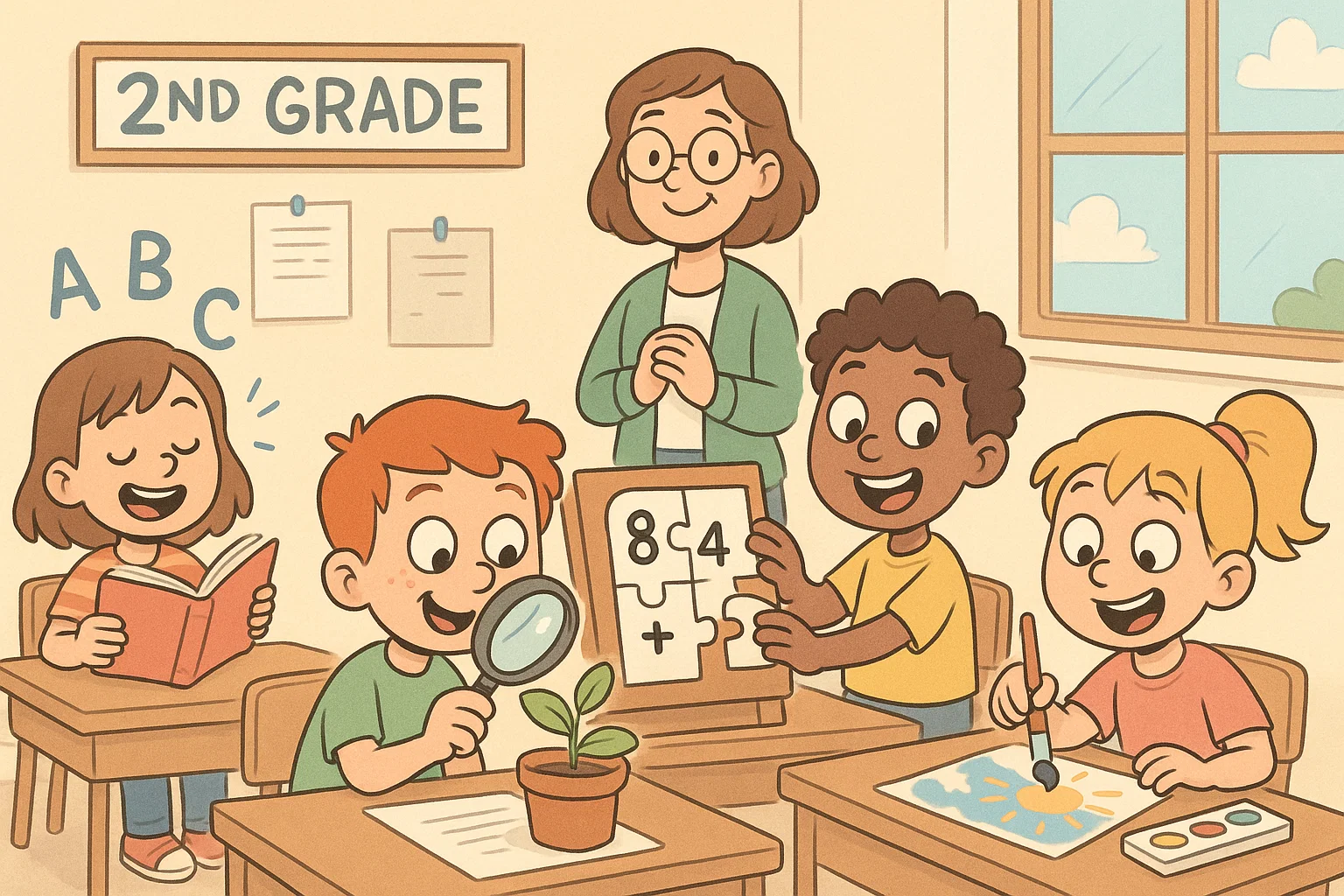
If you are wondering what second graders learn in the UK or the US, the answer spans far more than basic reading and arithmetic. Second grade is the year children shift from learning to read toward reading to learn, while building stronger math reasoning, writing confidence, and independence across every subject area.
This article covers the core subjects taught in second grade, the specific skills children are expected to develop in reading, writing, math, science, and social studies, and practical ways parents can support learning at home throughout the year.
Key Takeaways
- Second grade covers reading, writing, math, science, social studies, and social-emotional learning as core subject areas.
- Children move from basic decoding toward reading fluency, comprehension, and independent reading habits this year.
- Math skills expand to include addition and subtraction within 100, place value to 1,000, and early geometry.
- Progress varies by child, school, and curriculum, so expectations serve as a guide rather than a fixed standard.
- Parents can support second grade learning through shared reading, consistent routines, and at-home math practice.
Second Grade Builds Core Academic Skills
The second-grade curriculum is designed to strengthen foundational literacy and math skills. The National Association for the Education of Young Children (NAEYC) describes second grade as a transitional reading and writing stage, when children begin to read more fluently and write in a wider range of forms. Students also begin to connect basic facts with deeper conceptual understanding.
Progress Looks Different for Each Child
It is important to remember that children develop at different rates. A second grader may excel in math while still needing extra support in reading or writing, or vice versa. Frameworks such as Universal Design for Learning (UDL) emphasize flexible learning environments that reduce barriers and help all learners access meaningful, challenging work.
Parent Support Can Improve Learning Outcomes
Harvard Graduate School of Education emphasizes that family engagement plays a critical role in student achievement. You can help your child by establishing consistent routines, reading aloud together, and using hands-on tools such as coins or blocks to reinforce math concepts. Open communication with your child’s teacher helps keep home and school strategies aligned.
What Subjects Do Second Graders Learn?
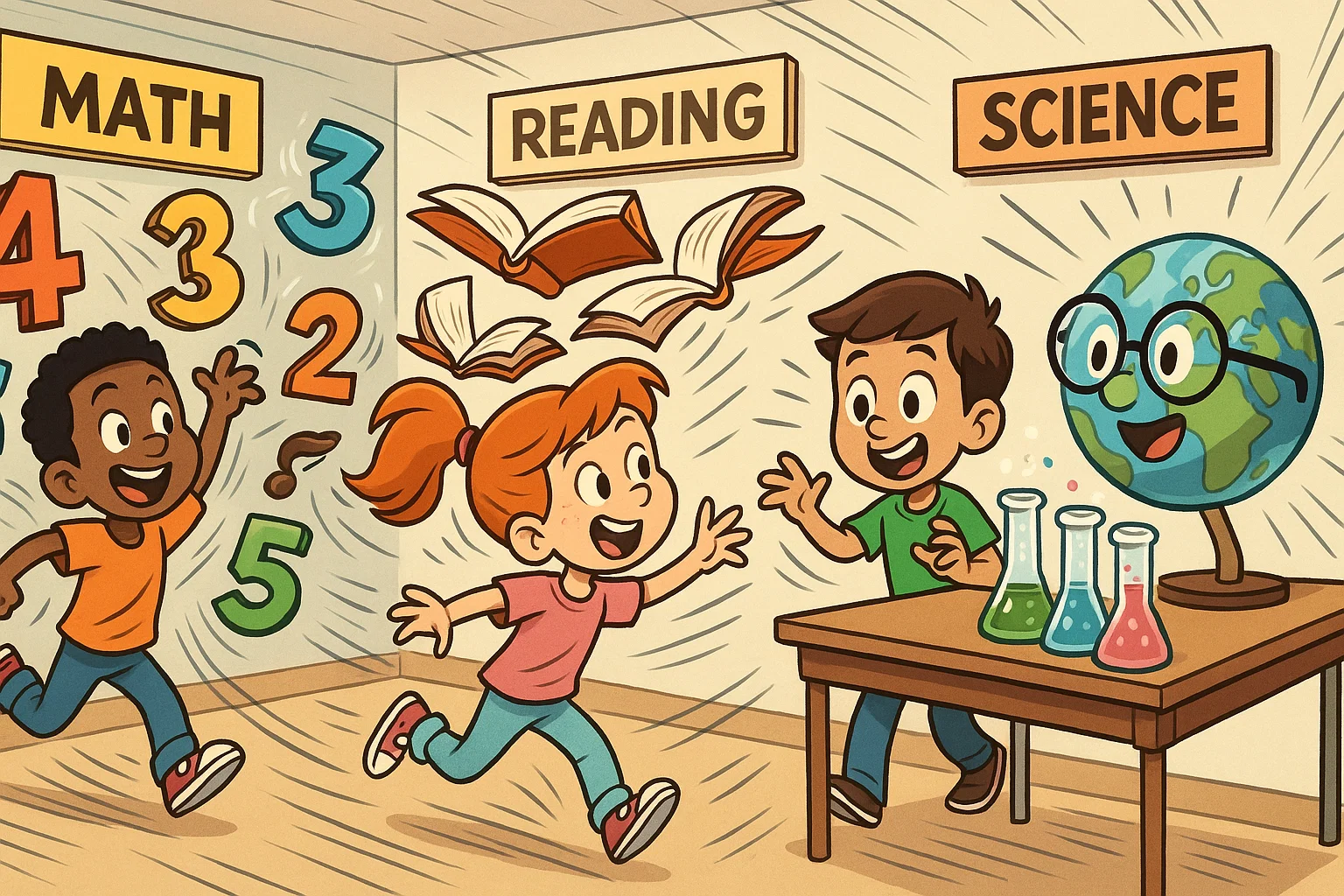
In second grade, the curriculum typically expands to include a broader range of academic and creative subjects. Teachers also begin integrating subjects, using social studies and science topics to reinforce reading and writing skills. This interdisciplinary approach helps kids learn how different fields of knowledge connect to the real world.
Mathematics in Second Grade
Second-grade math moves beyond basic counting and focuses on the base-ten system and problem-solving. Students work extensively with place value, including ones, tens, and hundreds. Key topics include:
- Adding and subtracting numbers up to 100, including regrouping.
- Telling time to the nearest five minutes.
- Identifying two-dimensional and three-dimensional geometric shapes.
- Solving two-step word problems.
English Language Arts and Literacy
Language arts instruction focuses on helping students become more fluent readers and capable writers. Second graders continue strengthening phonics so they can decode longer words and use context to support comprehension. In writing, the focus shifts to grammar, sentence structure, and using precise nouns, verbs, and adjectives to add detail.
Science in Second Grade
Science is often a playful, hands-on subject in second grade. Kids practice scientific thinking by making observations, asking questions, and collecting evidence. Common units of study include what plants need to grow, how animals help with seed dispersal or pollination, the diversity of habitats, Earth processes, and the observable properties of materials.
Social Studies in Second Grade
The social studies curriculum helps children begin developing the knowledge and habits of informed, active citizens. Second graders explore different types of communities and build basic geography skills.
- Maps and Globes: Identifying continents and oceans.
- Citizenship: Understanding rules, rights, and responsibilities.
- History: Using timelines to compare the past and present.
Social-Emotional Learning
Second grade is an important year for social-emotional skills. Students are expected to learn how to cooperate in groups, show patience, and manage their emotions during challenging tasks. Many schools use structured programs to teach empathy and conflict resolution, helping second graders navigate increasingly complex peer relationships.
Art, Music, Movement, and Handwork
Creative subjects support fine motor development, self-expression, and creativity. Many programs include:
- Art: Exploring color, texture, observational drawing, and simple diagrams.
- Music: Keeping rhythm and learning simple instruments.
- Handwork: Activities like paper folding, origami, or weaving to improve hand-eye coordination.
Reading Skills Second Graders Learn
By the end of second grade, many students are expected to move beyond decoding individual sounds and focus more on fluency, vocabulary, and comprehension. This involves a mix of phonics, fluency, vocabulary, and higher-level comprehension.
Phonics and Word Recognition
Second graders explore more complex spelling patterns. They learn to identify vowel teams, such as “ai” and “ea,” decode words with common prefixes and suffixes, and recognize compound words. At home, families can support these skills with word games, magnetic letters, or word-building puzzles.
Reading Fluency
Fluency involves reading with accuracy, appropriate speed, and expression. A fluent second grader no longer needs to sound out most familiar words and can read in phrases that sound like natural speech. Educators often suggest having kids practice the same poem or story several times to build automaticity.
Reading Comprehension
To build comprehension, students do more than read the words; they ask and answer questions about the “who,” “what,” “where,” “when,” “why,” and “how.”
- Identifying the main idea and supporting details.
- Comparing and contrasting two versions of the same story.
- Making predictions based on cover art, illustrations, titles, or early chapters.
Vocabulary Growth
Second graders’ vocabularies expand as they encounter stories, poems, and informational texts. They learn to use synonyms and antonyms and begin to understand that a single word can have multiple meanings depending on context.
Independent Reading Habits
A major goal of the school year is fostering a love for reading. Many second graders begin reading their first chapter books during this time. Encouraging your child to choose books based on their interests—whether they love dinosaurs, space, mysteries, or sports—helps build the stamina needed for academic learning.
Writing Skills Second Graders Learn
Writing in second grade becomes more structured and purposeful. Students learn that writing is a process that involves planning, drafting, revising, editing, and proofreading.
Sentence Writing
Students move away from repetitive “I see a…” sentences. They are taught to use adjectives to describe nouns and conjunctions, such as “and” and “because,” to create longer and more varied sentences. Teachers also emphasize starting each sentence with a capital letter and ending it with appropriate punctuation.
Paragraph Writing
Second graders begin grouping related sentences into short, organized paragraphs. A typical second-grade paragraph includes:
- A topic sentence that introduces the main idea.
- Supporting details that provide more information.
- A closing sentence that wraps up the thought.
Narrative, Opinion, and Informational Writing
Students usually practice three main types of writing throughout the year:
- Narrative: Real or imagined stories with a clear sequence.
- Opinion: Stating a preference, such as “The best pet is a dog,” and providing reasons.
- Informational: Writing facts about a specific topic, such as a report on animal habitats, weather, or community life.
Spelling, Grammar, and Editing
While phonetic or “invented” spelling is common in early writing, second graders are increasingly expected to use conventional spelling for common words. They also begin to proofread their own work, looking for grammar errors and missing punctuation before turning it in.
Math Skills Second Graders Learn
Second-grade math is often aligned with Common Core or similar state standards, which emphasize number sense—understanding how numbers relate to one another.
Addition and Subtraction Within 100
Students are expected to add and subtract within 100 fluently, using strategies based on place value, properties of operations, and the relationship between addition and subtraction. This includes the regrouping method, formerly known as “carrying” or “borrowing.” Mental math is also emphasized, helping kids solve simple problems without always relying on paper.
Place Value to 1,000
Understanding place value is one of the key foundations of second-grade math. Students learn that the digit 5 in the number 523 represents 500, not just 5. They use base-ten blocks and place-value charts to visualize these whole numbers.
Word Problems and Logic
Word problems require students to turn everyday language into mathematical thinking. Second graders often tackle two-step problems, such as: “Sarah had 20 apples. She gave 5 apples to Tom and 3 apples to Sue. How many apples does she have left?”
Time and Money
Telling time moves to five-minute intervals on an analog clock. In money lessons, kids learn to identify and count combinations of pennies, nickels, dimes, and quarters to solve real-world problems.
| Coin | Value | Identifying Features |
| Penny | 1 cent | Copper-colored; Abraham Lincoln on the front |
| Nickel | 5 cents | Silver-colored; smooth edge; Thomas Jefferson on the front |
| Dime | 10 cents | Silver-colored; smallest U.S. coin; Franklin D. Roosevelt on the front |
| Quarter | 25 cents | Silver-colored; ridged edge; George Washington on the front |
Measurement and Data
Students learn to measure length using standard units such as inches, feet, centimeters, and meters. They also learn to collect data and use charts and graphs to display their findings, such as a bar graph showing the class’s favorite fruits.
Geometry and Fractions
In geometry, students identify attributes of shapes, such as sides, angles, faces, edges, and vertices. They also explore equal parts, which introduces early fraction concepts such as halves, thirds, and fourths.
Science Skills Second Graders Learn
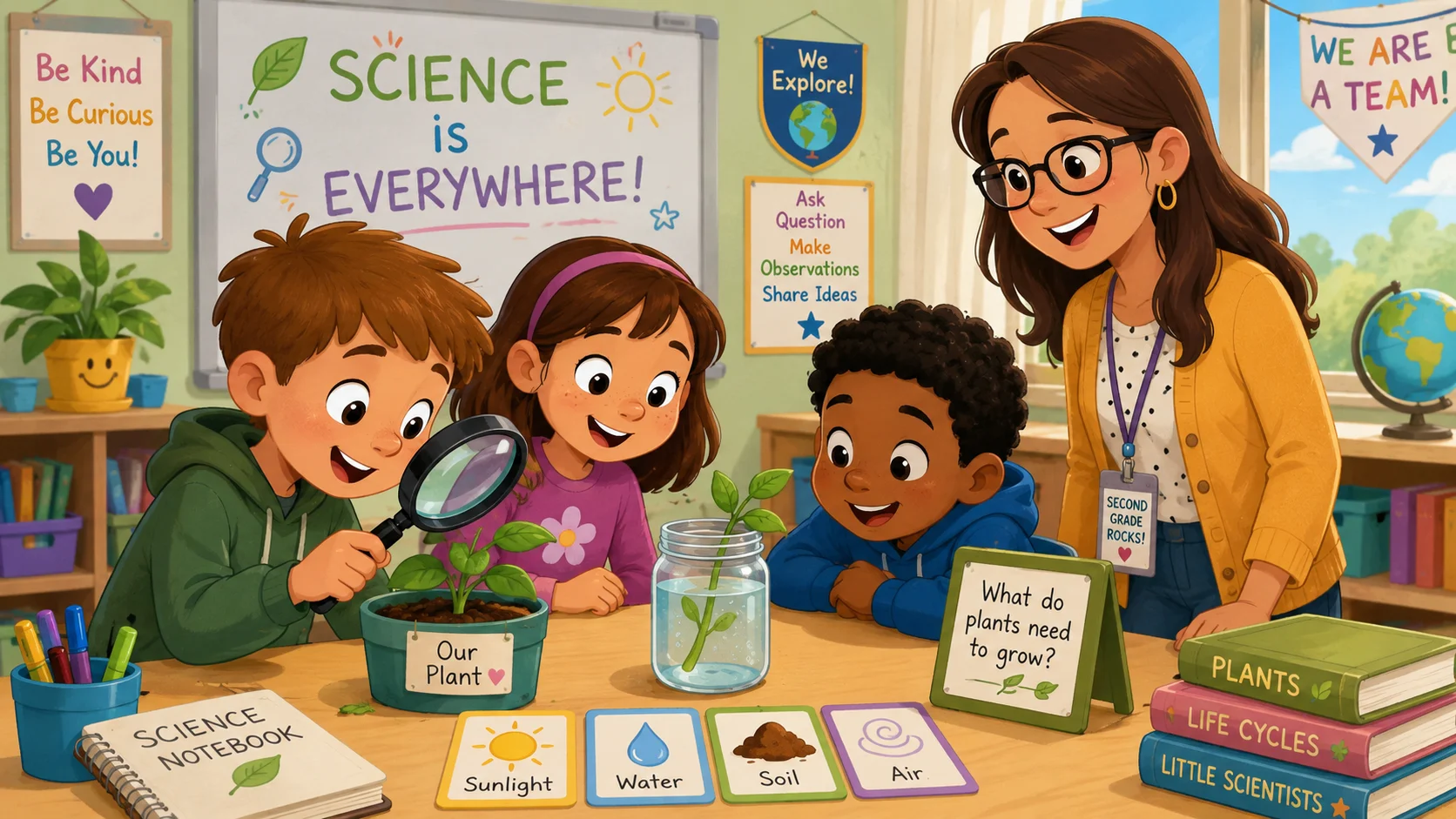
Second-grade science is designed to spark curiosity. In the Next Generation Science Standards (NGSS), second graders are asked to investigate, observe, model, compare, and use evidence rather than simply memorize facts.
Plants, Animals, and Habitats
Students study how living things survive. They might grow a bean plant to observe what plants need to grow or compare habitats, such as a rainforest or desert, to see how plants and animals differ across environments.
Weather and Earth Science
Second graders may track weather patterns, but NGSS-aligned Earth science in Grade 2 focuses more on landforms, bodies of water, and changes to Earth’s surface caused by wind and water. They study landforms, bodies of water, and ways people can reduce the effects of wind and water on land.
Matter and Its Properties
Matter is a favorite unit for many second graders. Students conduct investigations to see how heating or cooling changes materials, such as melting ice or warming butter, and sort materials by observable properties.
Social Studies Skills Second Graders Learn
The goal of social studies is to help children begin developing the habits of informed, active citizens.
- Community: Learning about community helpers, such as firefighters, doctors, and mail carriers.
- Geography: Using maps and globes to identify continents, oceans, and basic location features.
- Economics: Understanding the difference between needs and wants and how people earn money through jobs.
Skills Kids Need Going Into Second Grade
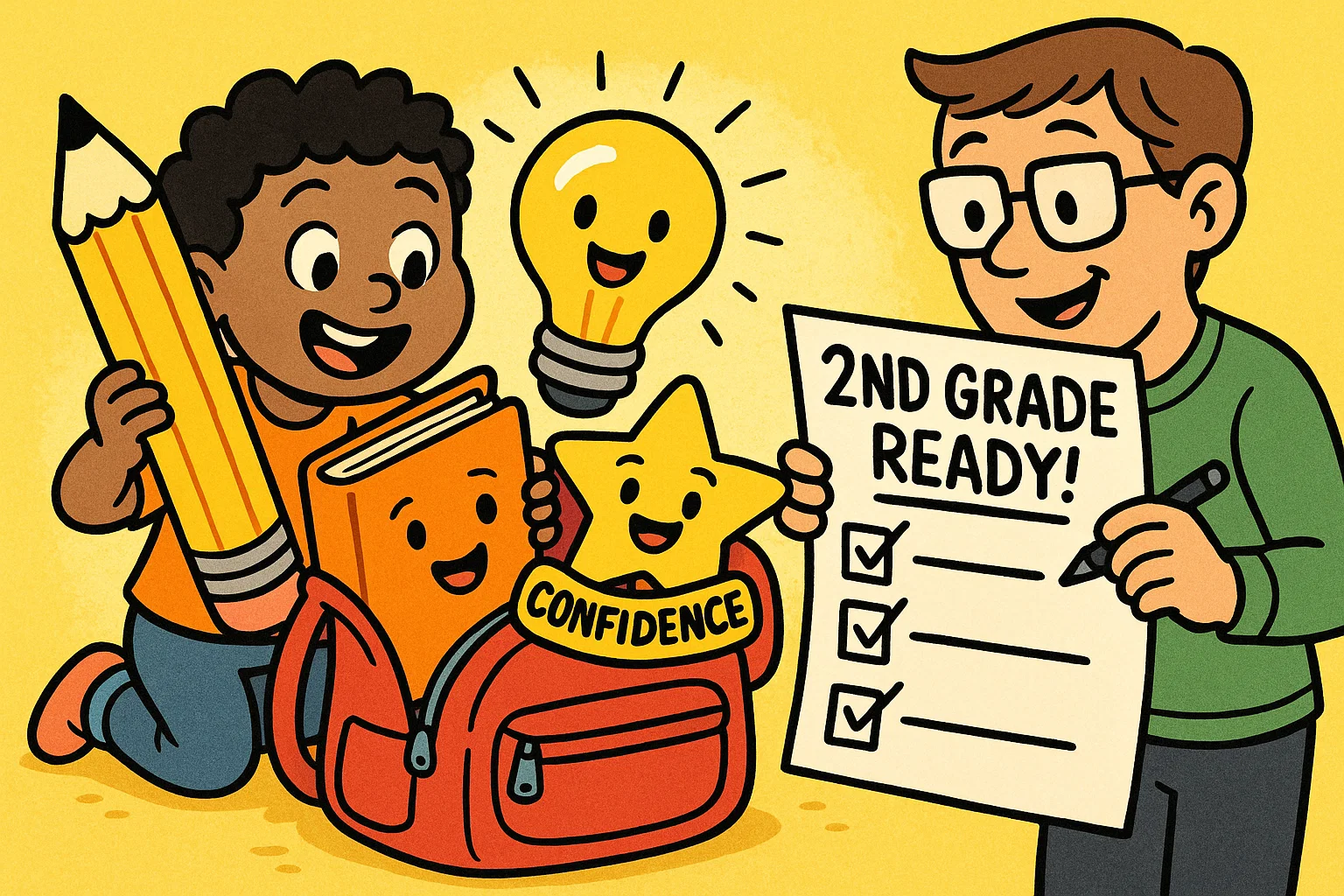
Students entering second grade benefit from a solid first-grade foundation.
- Reading: The ability to read beginning-reader books and recognize many common high-frequency words.
- Math: Comfort with basic addition and subtraction facts, especially within 10 and moving toward 20.
- Social: The ability to follow simple multi-step directions and work independently for short periods.
What Second Graders May Know by the End of the Year
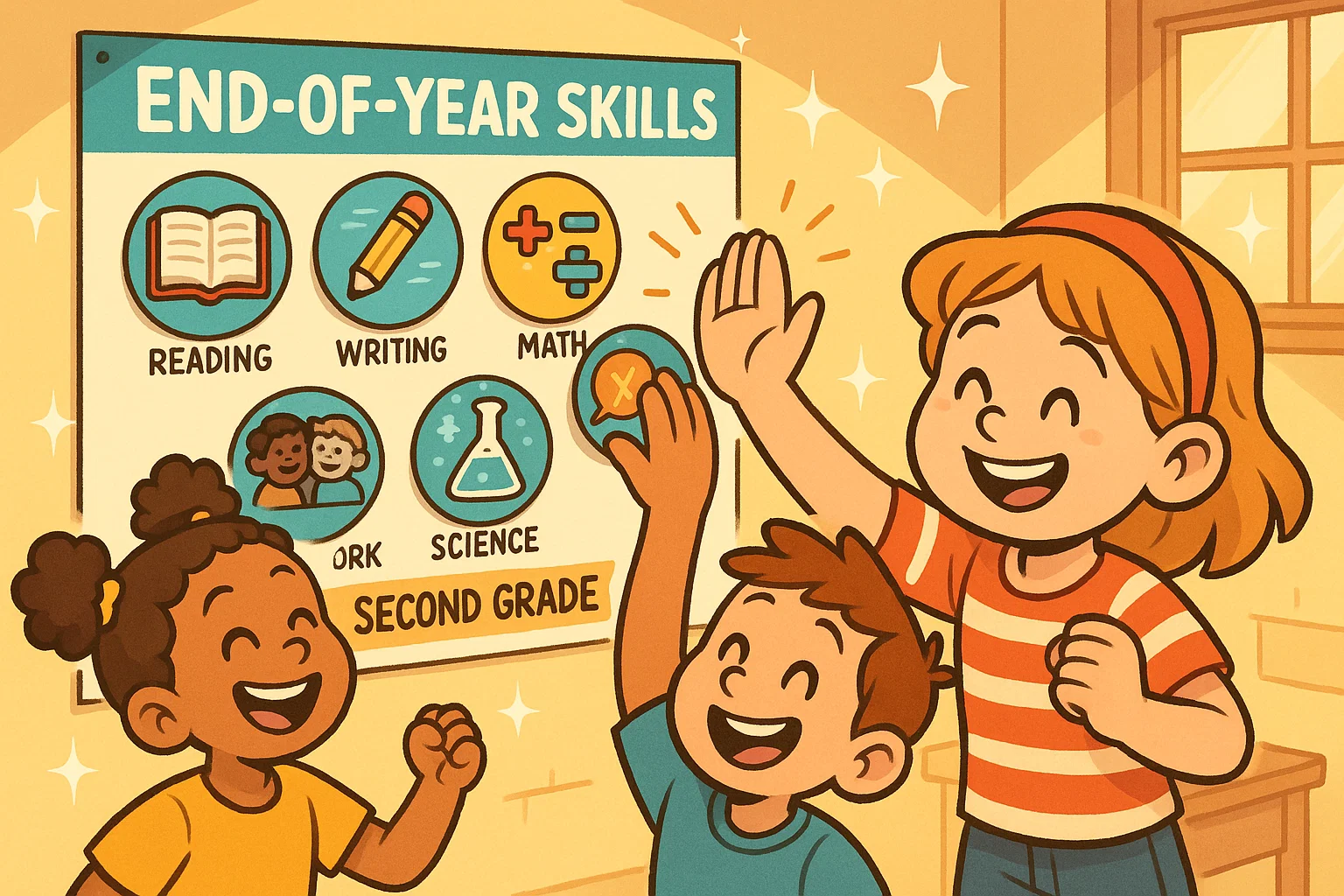
By the end of second grade, many children show remarkable growth. A typical end-of-year checklist includes:
- Reading grade-level text with accuracy and fluency.
- Writing a short, organized piece with a clear topic, supporting details, and a conclusion.
- Adding and subtracting two-digit numbers with ease.
- Telling time to the nearest five minutes and solving simple money word problems with coins and dollar bills.
How To Support 2nd Grade Learning
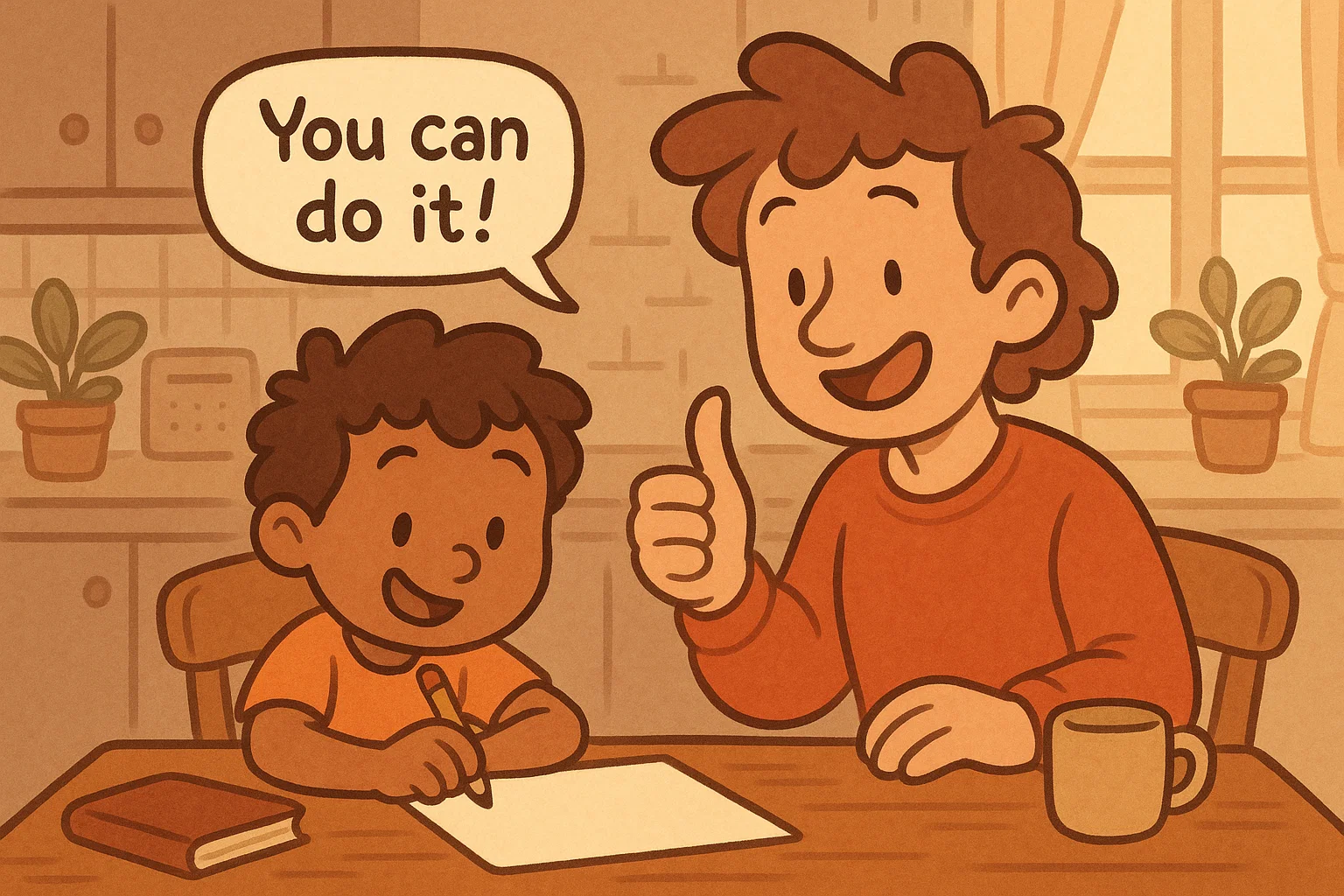
You can support your child’s learning without making it feel like extra schoolwork. The key is to make learning fun and weave it into daily life.
Read Together and Practice Math
Do not stop reading aloud just because your child can read independently. This builds vocabulary and comprehension. For math, involve your child in grocery shopping by asking them to compare prices, count coins, or estimate the total cost of a few items.
Build Positive Learning Routines
Create a dedicated homework space that is quiet and well-lit. Public-health guidance links adequate sleep with better focus, concentration, and academic performance, so a consistent bedtime routine can support learning.
Second Grade Homeschooling Essentials
If you homeschool, you can personalize the curriculum to fit your child’s pace, interests, and learning needs. Use hands-on tools for math and take frequent nature walks for science. Form drawing and creative handwork can connect art with fine motor development.
Common Signs a Child May Need Extra Support
If you notice that your child is consistently frustrated, it may be time to talk with the teacher.
- Reading: If your child struggles to decode basic three-letter words.
- Math: If your child cannot count past 100 or struggles with basic “plus one” facts.
- Social-emotional: If your child has frequent meltdowns over small changes in routine.
Seeking help early from a teacher, specialist, or tutor can give your child the tools they need to regain confidence and manage second-grade challenges.
Frequently Asked Questions
What should a 2nd grader know by the end of the year?
By the end of second grade, a child is typically expected to read grade-level text with growing fluency, write organized short pieces, and add and subtract within 100 with increasing confidence.
What is taught in second-grade math?
The curriculum typically covers place value up to 1,000, addition and subtraction strategies, word problems, telling time, money, measurement, data, and basic geometry.
How can I help my second grader at home?
Some of the best ways to support your child are reading together daily, practicing mental math during errands, and keeping academic learning playful and low-pressure.
What Should a 2nd Grader Know Before Moving Ahead?
What a 2nd grader should know depends on the child’s school and pace, but most children should have a strong foundation from kindergarten and first grade. By the end of 2nd grade, students usually read simple chapter books, make words with common spelling patterns, write with correct punctuation, and understand numbers up to 20, 10s, and hundreds. A strong foundation gives children a helpful head start for third grade.

Take a short quiz to find out what your everyday choices say about your parenting style
When your child is curious about something new, what’s your instinct?
Take a short quiz to find out what your everyday choices say about your parenting style
“Can I download this app?” What happens next?
Take a short quiz to find out what your everyday choices say about your parenting style
When it comes to rules at home, which sounds most like you?
Take a short quiz to find out what your everyday choices say about your parenting style
If you could give your child one life skill today, what would you pick?
Take a short quiz to find out what your everyday choices say about your parenting style
Your child gets to choose what to watch. What would your ideal setup look like?
Take a short quiz to find out what your everyday choices say about your parenting style
Pick your parenting superpower ✨