
100 Charades for Kids: Rules, Themes, and Ideas for All Ages

 Discover a Free Education Video App for Kids
Pastory uses AI to personalize educational video content based on your child’s interests and personality. Safe, engaging, and built for curious young minds. Sign up now to stay updated and enjoy early access with a free trial
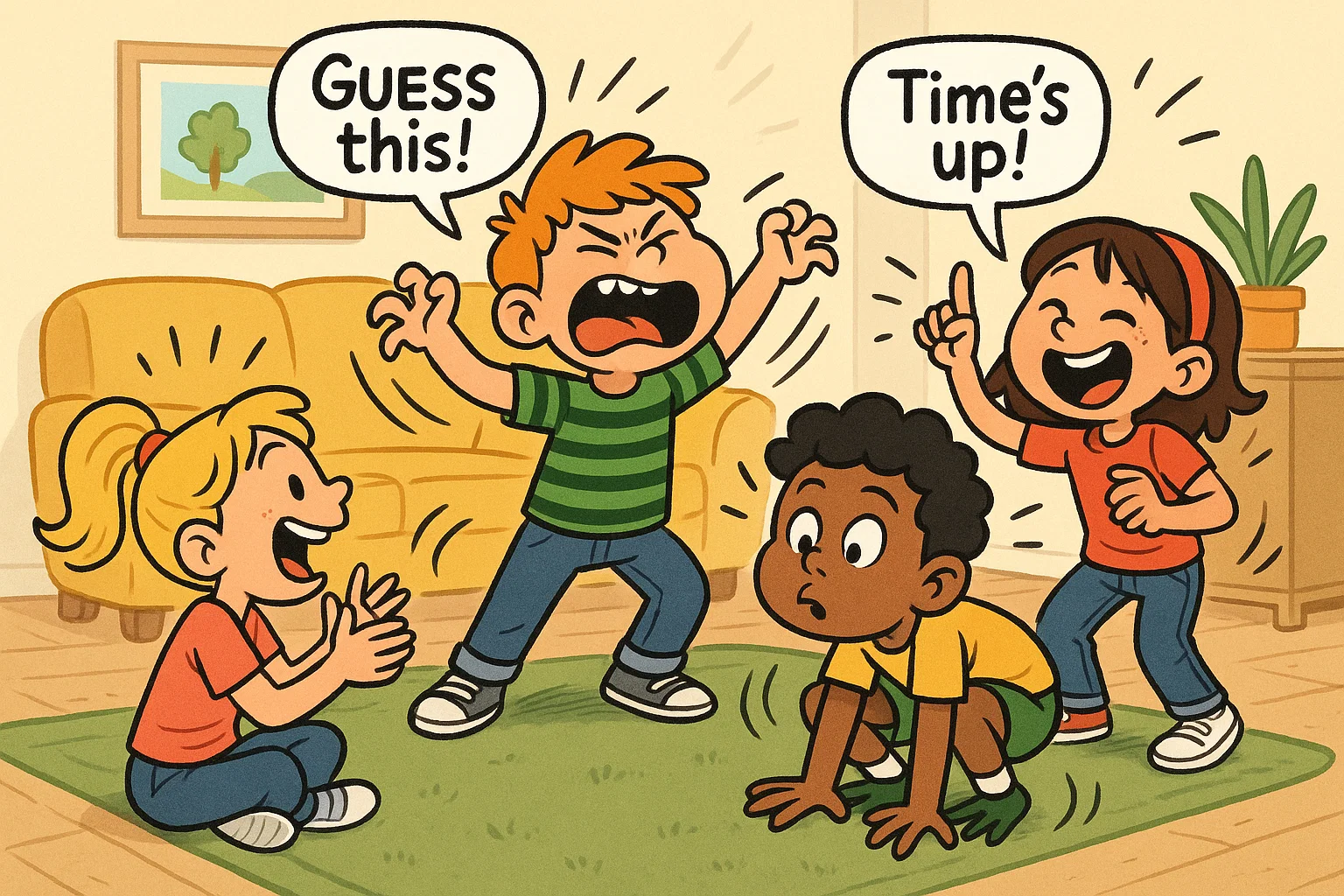
Charades for kids is one of the simplest screen-free games to run at home, in the classroom, or at a party. It builds communication, creativity, and teamwork with no special materials — just a group of kids ready to act and guess.
This guide covers how to play charades step by step, with rules adapted for different ages, over 100 themed prompt ideas, game variations like Reverse Charades and Speed Rounds, and tips for virtual play and classroom settings.
Key Takeaways
- Charades for kids needs no materials and works for family nights, classrooms, parties, and virtual gatherings.
- The article includes 100 charades ideas organized by themes such as animals, food, movies, books, and holidays.
- Rules and setup are adapted by age group, with picture card options and cooperative play for younger children.
- Game variations including Reverse Charades and Speed Rounds help keep sessions engaging over time.
- Virtual play tips, reward ideas, and classroom adaptations are included to fit a range of settings.
What Charades Is and How Kids Play It
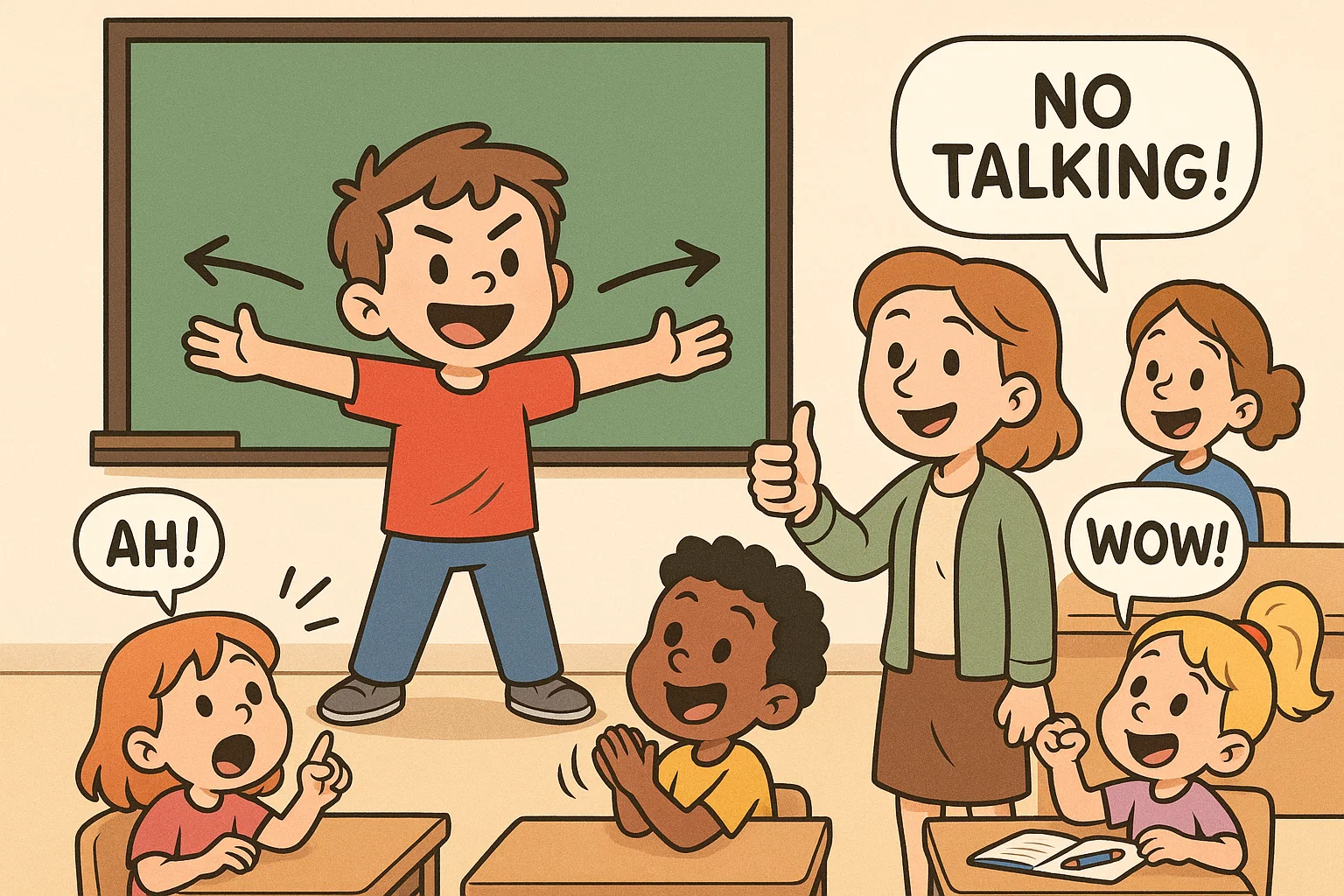
Charades is a classic game where one player silently acts out a word or phrase while the rest of their team or a group of players try to guess the correct answer within a set amount of time. The core rule is simple: no talking. This encourages the acting player to rely on body language, gestures, and creative movement, making it a powerful tool for expressive communication. It’s a fun game that fosters quick thinking and social bonding.
The structure of the charades game is straightforward:
- Preparation: Prompts (words or phrases) are written on small pieces of paper or used as charade cards.
- The Actor: The first player secretly draws a card.
- The Act: The player stands before their team and silently acts out the prompt. They may use widely accepted gestures (e.g., holding up fingers for the number of words, pointing to the mouth for a word that rhymes with another).
- The Guessing: The rest of the team calls out guesses.
- The Point: If the team guesses the correct phrase before the timer runs out, they get a point.
- Rotation: Play rotates to the next player or different teams.
Charades Rules for Kids
Clear rules keep charades organized, fair, and fun. When expectations are explained before the first round, participation becomes smoother and frustration decreases. A simple structure works best for both home and classroom settings.
Basic Rules
- Divide participants into teams or play individually.
- Write prompts on paper and place them in a bowl.
- One player draws a prompt and acts it out silently.
- No speaking, mouthing words, or pointing at objects.
- Set a timer for 60 seconds (30–45 seconds for younger players).
- Award one point for each correct guess.
- Rotate turns so everyone acts.
Helpful Signals
Traditional gestures improve clarity:
- Hold up fingers to show the number of words.
- Tug the ear for “sounds like.”
- Pretend to open a book for a book title.
- Imitate a camera for a movie title.
Age Adjustments
- Younger children benefit from picture cards and shorter rounds.
- School-age players can handle phrases and competitive scoring.
Simple structure, clear limits, and expressive movement ensure charades remains engaging while supporting communication and teamwork.
Setup for Family or Classroom
Setting up for this great game for kids is fast, which is ideal for keeping children engaged.
- Divide into Teams: For a large group, divide into teams of at least three to four players. For a small family game night, you can play individually, or split into two teams (e.g., Kids vs. Adults).
- Choose Categories: Decide whether you will use a single category (like Animals or Actions) or a mixed list. Themed prompts often work best for teaching and focus.
- Prepare Prompts: Write out your chosen word or phrase ideas on small pieces of paper and fold them, or use a free printable list of charades ideas for kids. Place them in a hat or bowl.
- Organize Space: Clear a small acting area so the first player has room to move and exaggerate their actions. A clock or phone timer is all the equipment you need.
Tips for Clear Acting
Even the shyest player can shine with a few acting pointers. This is a great way to teach kids non-verbal communication skills.
- Be Big: Encourage kids to use exaggeration. A small movement can be missed; a huge, silly movement is impossible to ignore!
- Use Body Language: If acting out an animal, encourage them to mimic the animal’s walk or key feature (e.g., a monkey scratching, an elephant’s trunk).
Gestures are Key: Teach the traditional signals:
- Book Title: Hands together, as if opening a book.
- Movie Title: Pretend to crank a vintage movie camera.
- Song Title: Pretend to sing.
- Number of Words: Hold up the corresponding number of fingers.
- Which Word: Hold up the number of fingers for the word’s position in the phrase.
- Sounds Like: Tug on your ear.
Adapting Charades for Younger Children
Younger kids—toddlers and preschoolers—can fully enjoy playing charades, but the game needs a few adjustments to match their developmental stage. The focus should be on participation and fun, not winning.
Using Picture Cards Instead of Words
For non-readers or a child just starting to recognize letters, skip the text entirely.
- Create simple charade cards with clear drawings or printed pictures (e.g., a banana, a cat, a jumping child).
- Picture prompts remove the need for reading and allow the child to focus purely on the visual link to the action. This makes it a perfect game for kids who learn best through visual cues.
Choosing Safe and Easy Actions
Keep the prompts concrete and familiar. Abstract ideas confuse small children. Focus on:
- Actions: Sleeping, eating, running, throwing a ball, dancing.
- Animals: Dog, cat, snake, frog, bird.
- Familiar Characters: Mommy, Daddy, the mail carrier, Elmo.
Short Rounds and Cooperative Play
Modify the competition level to ensure everyone has a good time and helps each other.
- Reduce Round Length: Limit acting time to 30 seconds or even less. If the team hasn’t guessed, simply tell them the answer and move on.
- Cooperative Guessing: Instead of dividing into teams, let everyone work together. When the actor succeeds, everyone cheers and gets a point as a group. This makes it a great way for kids to build positive social skills.
- Team Acting: In a fun variation, let two young kids act out a single prompt together! This encourages teamwork and reduces performance pressure.
Kids Charades Themes and Ideas Lists
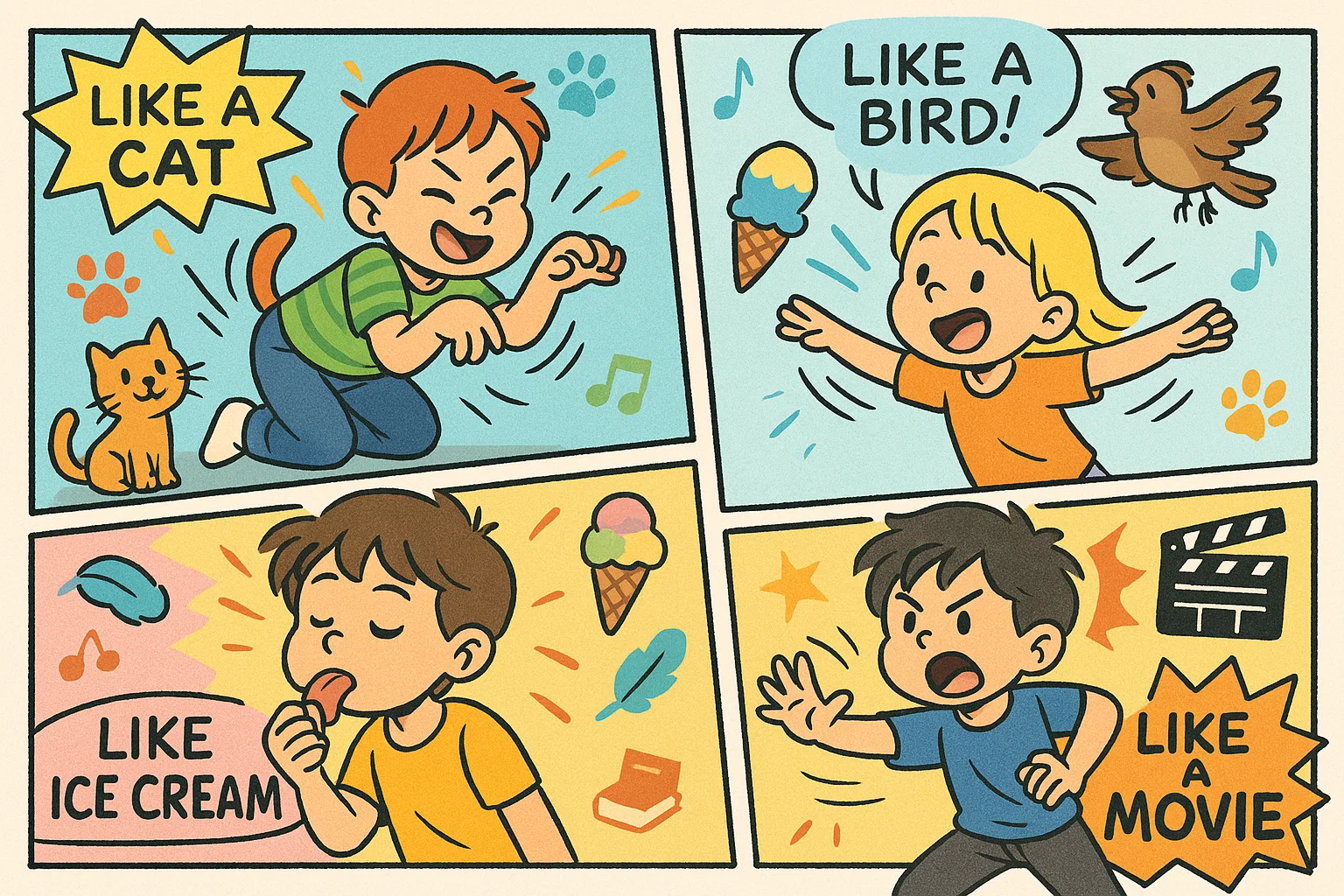
The best way to tailor the difficulty of the charades game is by selecting an appropriate theme. Themed lists help focus the guessing and make it easier for the entire family to laugh together. Here is a large collection of charades ideas you can use for your next family game night or classroom activity.
| Theme Category | Example Prompts | Recommended Age |
| Animal Ideas | Elephant, Puppy, Frog, Kangaroo, Penguin, Giraffe, Spider | Preschool & Up |
| Action Ideas | Brushing teeth, Jumping rope, Sleepwalking, Tying a shoe, Digging a hole | All Ages |
| Food deas | Eating spaghetti, Peeling a banana, Sipping soup, Making a pizza | Young Kids & Up |
| Object Ideas | Clock, Umbrella, Guitar, Toothbrush, Computer, Pencil | 5 Years Old & Up |
| Holiday Ideas | Santa, Snowman, Tinsel, Eating a turkey, Opening a present | All Ages (Seasonal) |
Animal Charades Ideas
- Dog barking
- Cat sleeping
- Monkey swinging
- Kangaroo jumping
- Snake slithering
- Elephant walking
- Bird flying
- Fish swimming
- Frog jumping
Action Charades Ideas
These are simple and concrete, making them great for young kids.
- Climbing a ladder
- Shoveling snow
- Brushing hair
- Washing dishes
- Mowing the lawn
- Playing basketball
- Skipping
- Wiping a tear
- Sleepwalking
Food Charades Ideas
- Eating an apple
- Making a sandwich
- Drinking milk
- Stirring soup
- Tasting something sour
- Baking a cake
- Eating ice cream
Object Charades Ideas
- A cell phone
- A backpack
- A bicycle
- A swing set
- A guitar
- A pillow
- A pair of scissors
Cartoon and TV Character Ideas
These are popular and highly recognizable for most school-age children.
- SpongeBob
- Pikachu
- Elsa (from Frozen)
- Buzz Lightyear
- Minion
- Paw Patrol
- Mickey Mouse
Kids Movies Ideas
- The Lion King
- Toy Story
- Finding Nemo
- Moana
- How to Train Your Dragon
- Trolls
Kids Songs and Singers Ideas
The acting can be the title or a distinctive movement from the song.
- “If You’re Happy and You Know It”
- “Twinkle Twinkle Little Star”
- “Head, Shoulders, Knees, and Toes”
- “Baby Shark”
Kids Books Ideas
- The Cat in the Hat
- Where the Wild Things Are
- Goodnight Moon
- The Very Hungry Caterpillar
- Harry Potter (great for older kids)
Places Charades Ideas
- The beach
- The park/playground
- School classroom
- The farm
- A castle
- The library
People and Jobs Ideas
- A doctor
- A firefighter
- A teacher
- A chef
- A police officer
- A dancer
Holiday and Christmas Charades Ideas
Charades is a great way to celebrate special occasions and add fun to your holiday party.
- Santa Claus
- An Elf
- Opening a present
- Building a snowman
- Decorating a Christmas tree
- Reindeer flying
Video Game Ideas for Kids
Suitable for older kids who are more familiar with popular, age-appropriate games.
- Minecraft (building a block)
- Super Mario (jumping)
- Animal Crossing (fishing)
- Pokémon (throwing a Poké Ball)
Fun Variations and Extra Game Modes
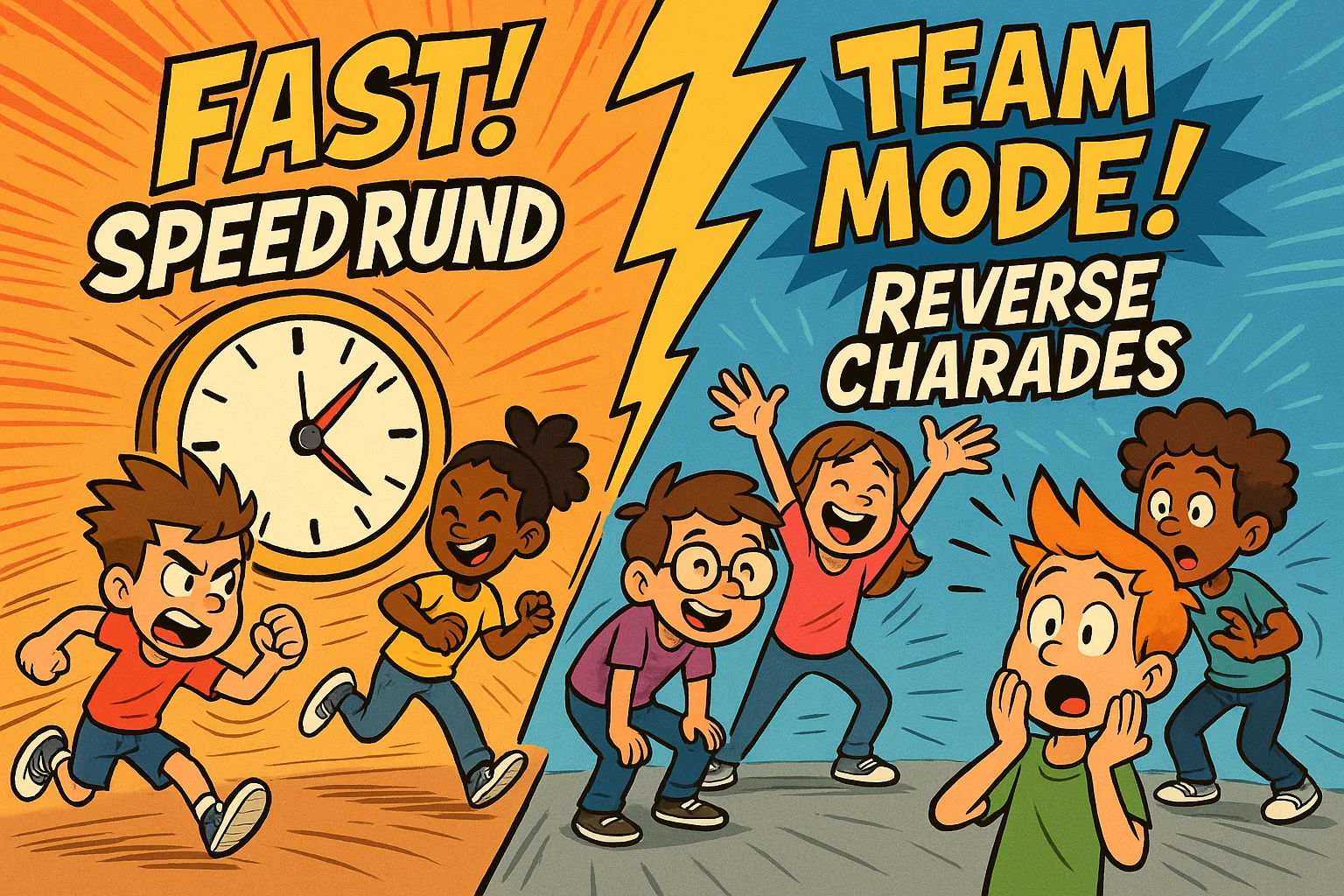
Once your family or class masters the basic rules, mixing up the game with new variations keeps the charade fresh and challenging.
Team Mode and Solo Mode
The classic way to play charades is Team Mode, where players divide into teams, and the player or team with the most correct guesses wins.
- Solo Mode: For a smaller group or competitive older kids, everyone can play for themselves. The player who correctly guesses the prompt gets a point, and the actor also gets a point. The next player acts. This ensures everyone gets plenty of chances to act and guess.
Speed Rounds
Need a burst of energy? Try a Speed Round!
- Set the timer for a very short duration, such as 15 or 20 seconds.
- The pace is fast, requiring the actor to use minimal, decisive gestures. This is an excellent challenge for quick thinkers and experienced players.
Reverse Charades
This clever twist on the classic game is incredibly fun and promotes maximum teamwork.
- One player (the guesser) stands away from the group.
- The rest of your team looks at the prompt.
- The entire team acts out the word or phrase together for the single guesser. It often turns into a hilarious scene as everyone tries to coordinate their movements.
Why Charades Helps Kids Learn and Grow
More than just a fun way to pass the time, charades is a valuable educational activity. Charades are a great way to secretly teach important life skills.
Communication Skills Boost
Because the game prohibits speaking, it forces children to explore the power of non-verbal communication.
- Expressive Communication: Kids learn to convey complex thoughts and ideas using only their bodies. This strengthens their overall expressive language skills.
- Interpreting Cues: Guessers must focus on decoding body language, improving their ability to read social cues and empathy.
Teamwork and Cooperation
Playing this game naturally encourages collaboration.
- Social Bonding: Working together to help a teammate succeed builds camaraderie and positive peer relationships.
- Turn-Taking: The structured nature of the game teaches patience and the importance of taking turns, which are critical social skills for school and life.
Confidence and Creativity
Getting up in front of a group—even a small one—requires courage, and trying to convey a word through action requires creative improvisation.
- Improvisation: Children have to think on their feet and quickly come up with an action, supporting creativity and flexible thinking.
- Self-Assurance: Successfully acting out a prompt builds confidence and reduces stage fright. It’s a low-stakes environment to practice performing.
How to Play Charades Online or Virtually
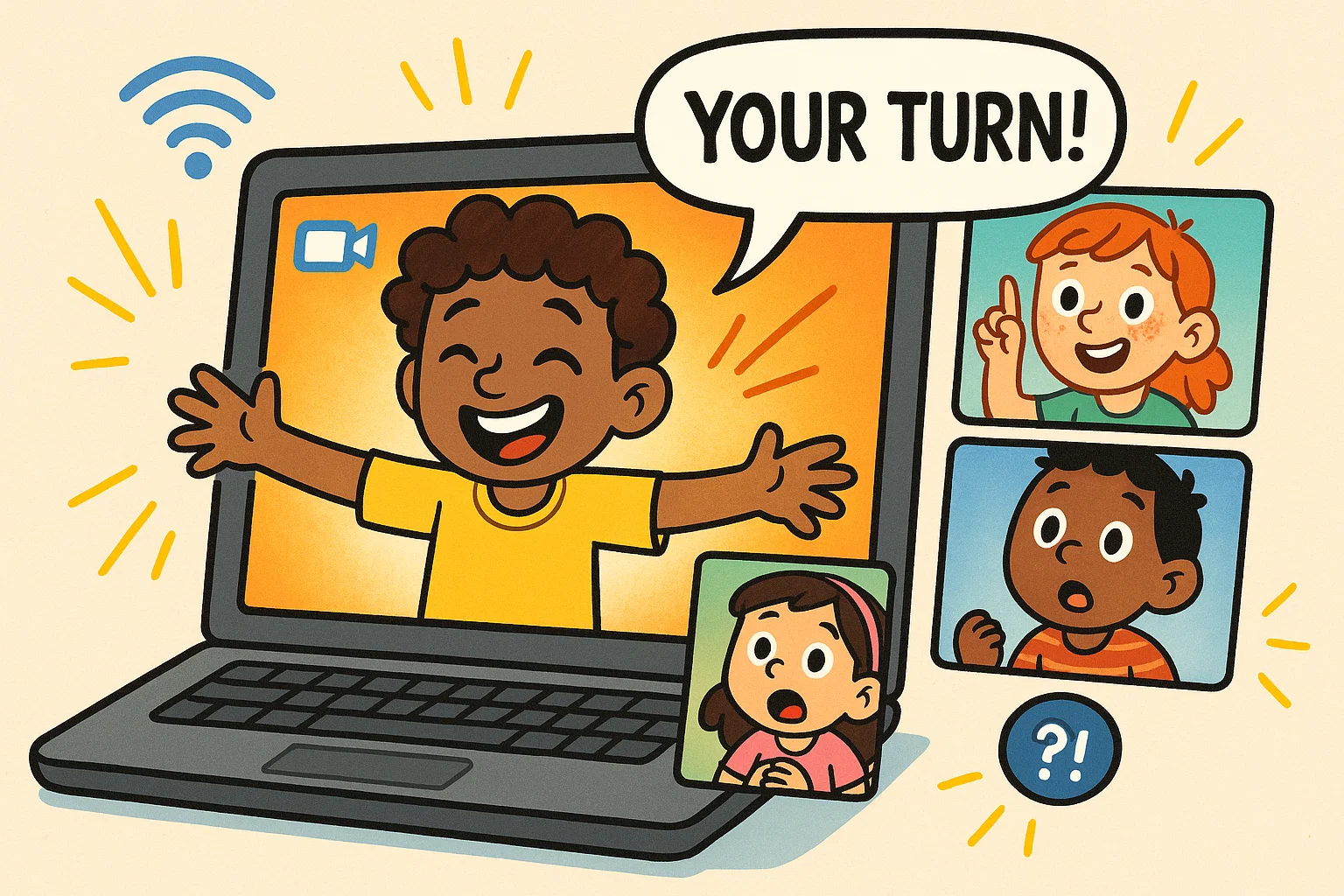
In today’s connected world, a virtual game of charades is a fantastic way for family and friends who live far apart to play together for special occasions or just for fun.
Setup on Zoom or Video Chat
- Camera Placement: Ensure the acting player has their camera positioned so their whole body (or at least from the waist up) is visible. Clear a small space for acting.
- Virtual Prompts: The host can use the private chat feature in Zoom/Google Meet to send the word or phrase to the actor secretly.
- Sharing Charade Cards: The actor can read the prompt in the private chat, ensuring the rest of your team doesn’t see it. The actor should give a thumbs-up to the host when ready to start.
Group Size and Timing Tips
- Attention Spans: Keep the overall game short, especially with young kids. 30-40 minutes is usually the limit for effective focus online.
- Timing: The host should be the official timer, announcing when the time is up.
Ideas for Virtual Holiday or Birthday Play
- Themed Lists: Stick to the themed charades list (like the Holiday list) to make the guessing easier over video, as non-verbal cues can sometimes be less clear.
- Virtual Backgrounds: Encourage players to use themed virtual backgrounds (e.g., a birthday cake background for a birthday party game) to add to the fun.
Charades Reward Ideas for Children
While the fun for everyone involved is the main reward, a small token of achievement can motivate the best family efforts and make the game of charades feel more substantial.
Small Treats
These are simple, low-cost rewards for individuals or the winning team.
- Stickers or temporary tattoos.
- A fun pencil or a colorful bookmark.
- A small, pre-approved snack or candy.
Achievement Certificates
A free printable “Charades Champion” or “Most Creative Actor” certificate can be downloaded, printed, and signed. It provides a tangible memory of the win.
Cooperative Rewards
Reward the entire group for excellent effort, regardless of who won.
- The privilege of choosing the next family game night activity.
- Five extra minutes of free time or recess (for classrooms).
- Choosing the background music for the next hour.
Frequently Asked Questions (FAQs)
How to play charades for kids step by step?
Divide participants into teams or play individually. One player draws a prompt and acts it out silently while others guess within a set time limit. No speaking, mouthing words, or pointing at objects is allowed. Clear rotation and simple scoring keep the game structured and fair.
What are simple charades rules for beginners?
- Basic charades rules include silent acting, a 30–60 second timer, and one point for each correct guess. Traditional hand signals, such as showing the number of words, help simplify communication. Keeping prompts short and concrete makes the game easier for younger participants.
What are good charades ideas for kids?
How many prompts should a kids charades list include?
A balanced session typically uses 50–100 prompts, depending on group size and time available. A “kids charades 100” list works well for parties or classroom events. Larger collections prevent repetition and maintain energy throughout multiple rounds.
Charades or Pictionary: which game is better?
Charades relies on body language and movement, while Pictionary focuses on drawing skills. For active groups, charades game variations often generate higher physical engagement. Pictionary may suit quieter settings where visual creativity is preferred.
What are fun charades game variations?
A twist on charades keeps the activity fresh. Options include reverse play (group acting for one guesser), musical rounds, speed challenges, or themed character prompts. These variations strengthen teamwork and reduce predictability while preserving the classic structure.

Take a short quiz to find out what your everyday choices say about your parenting style
When your child is curious about something new, what’s your instinct?
Take a short quiz to find out what your everyday choices say about your parenting style
“Can I download this app?” What happens next?
Take a short quiz to find out what your everyday choices say about your parenting style
When it comes to rules at home, which sounds most like you?
Take a short quiz to find out what your everyday choices say about your parenting style
If you could give your child one life skill today, what would you pick?
Take a short quiz to find out what your everyday choices say about your parenting style
Your child gets to choose what to watch. What would your ideal setup look like?
Take a short quiz to find out what your everyday choices say about your parenting style
Pick your parenting superpower ✨



