Fun Facts for Kids: Sharks, Animals & More – Best Picks for 4-Year-Olds!

 Discover a Free Education Video App for Kids
Pastory uses AI to personalize educational video content based on your child’s interests and personality. Safe, engaging, and built for curious young minds. Sign up now to stay updated and enjoy early access with a free trial
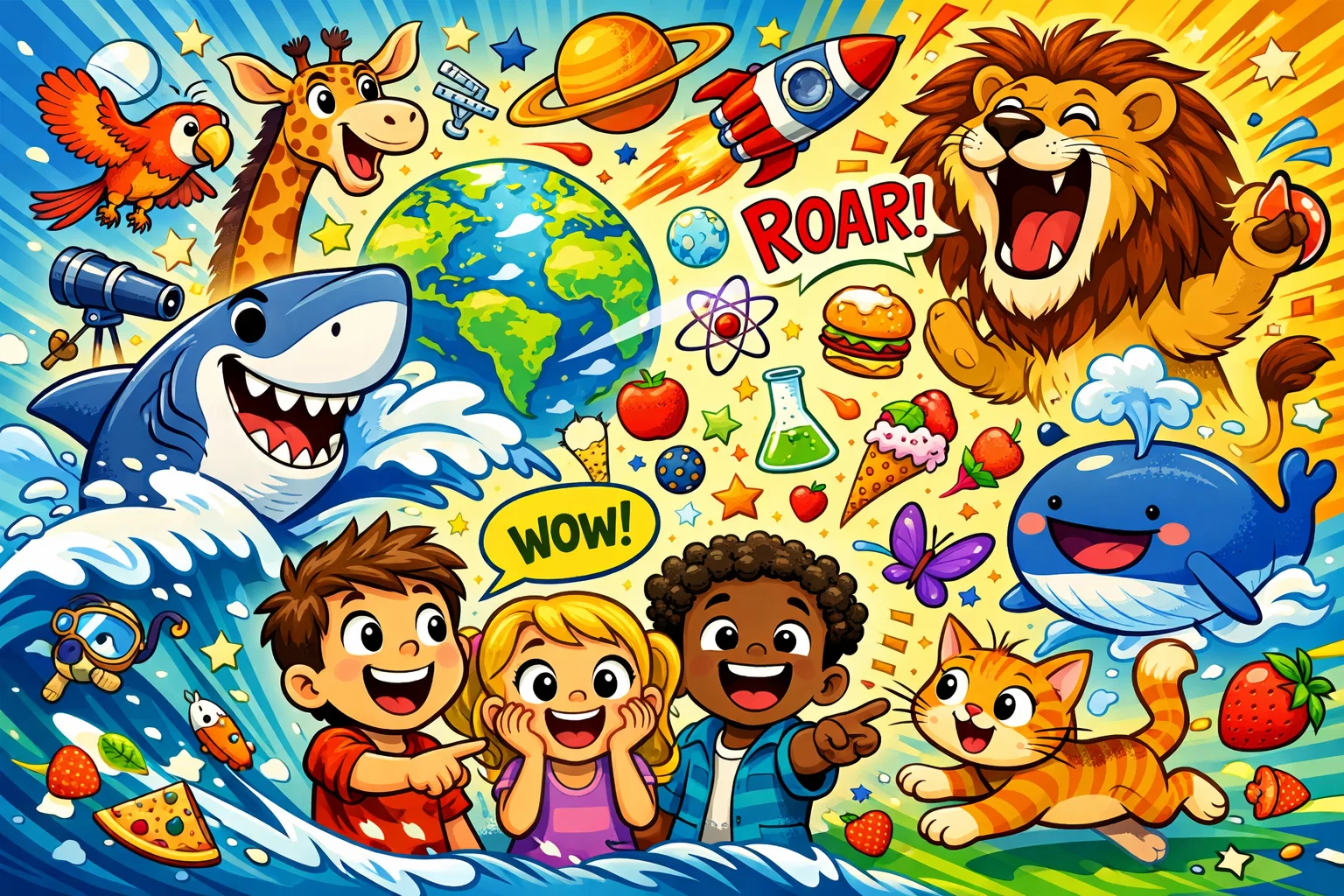
Imagine a preschooler’s surprise when they learn that sharks can grow new teeth throughout their lives or that sloths move so slowly that algae can grow on their fur. For a four-year-old, the world can feel full of mysteries, and fun facts are a great way to open the door to curiosity. This collection offers short, safe, and surprising facts designed to spark curiosity during bedtime, car rides, or circle time.
Quick Overview
This guide offers a curated list of fun facts designed to match the attention span and interests of many four-year-olds. AAP guidance generally encourages age-appropriate conversation, shared media use, and active parental involvement, so short fun facts can work well as prompts for talking and learning together. The facts are grouped into themes children usually enjoy, such as animals, the human body, and space, with an emphasis on short, easy-to-repeat, kid-friendly wording.
Who This List Fits
This resource is designed for parents, grandparents, and preschool teachers looking for age-appropriate trivia for young children. It is perfect for:
- Mealtime Conversations: Turn a vegetable struggle into a food fun fact session.
- Road Trips: Use random fun facts to pass the time without a screen.
- Bedtime Rituals: End the day with a “gentle wonder” about the moon or penguins.
What Makes Facts 4-Year-Old Friendly
To help keep these facts age-appropriate, the list follows these simple guidelines:
- Concrete Imagery: Every fact relates to a familiar object or animal.
- Zero Jargon: No complex scientific formulas—just the wow factor.
- Safe Themes: We avoid scary details and focus instead on silly or dazzling moments.
- Short Length: Each point is a single, punchy thought that fits a child’s attention span.
How To Use This List During the Day
Don’t read all 100 at once! To maximize critical thinking, try introducing 1–3 facts at a time. After sharing a fact about a giraffe being the tallest animal, ask a follow-up question like, “If you were as tall as a giraffe, what could you see over the fence?” This turns a random fact into a meaningful learning moment.
Find Fun In: Animals, Space, the Human Body, Food, Geography, History, and Sports
Jump straight to the most popular clusters including animal facts for kids and human body fun facts. These are the most reliable crowd-pleasers for preschoolers.
Best Picks for Bedtime
Focus on calming topics like the stars, how emperor penguins huddle for warmth, or why we blink. These sections provide wonder without overstimulation.
Best Picks for Car Rides
Explore the random, geography, and sports sections. These facts to share are great for quick call-and-response games to keep young minds occupied.
Random Fun Facts for Kids
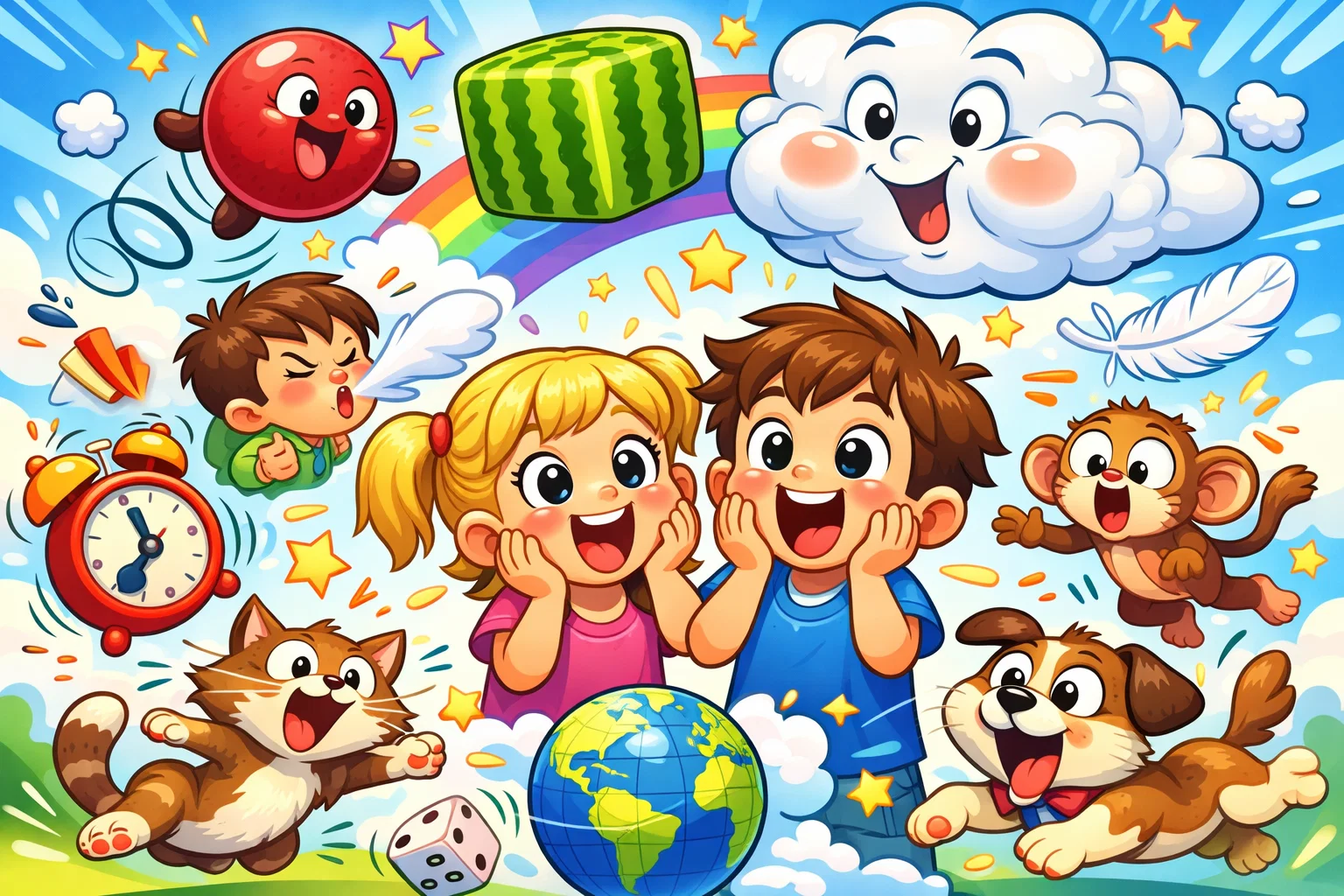
Random fun facts work well for kids because they deliver a quick wow moment without requiring much explanation.
Silly Facts About Everyday Things
- The Ice Pop: An 11-year-old boy invented the ice pop by accident when he left a soda outside on a cold night with a stir stick in it.
- Sneezing: Most people blink or close their eyes when they sneeze because it is a reflex.
- Shoes: Most people have one foot that is slightly larger than the other, which is why you should always try on both shoes!
- Bubble Wrap: This popping plastic was originally invented to be a type of 3D wallpaper before it became a tool for protecting packages.
Easy Wow Facts Kids Can Repeat
- The Number 4: In some languages, the word for “four” has four letters in it!
- Dice: If you look at a standard die, the opposite sides always add up to the number 7.
- The Moon: The moon has no wind, so footprints left by astronauts will stay there for millions of years.
Tiny Interesting Facts Kids Can Test Right Away
- The Nose Trick: You cannot hum while holding your nose tightly closed because humming requires air to pass through your nose.
- The Elbow Trick: Most people cannot lick their own elbow, even if they try.
- Fingerprint Check: Look at your fingertips; your human fingerprints are unique, meaning no one else in the world has the same patterns as you.
Fun Animal Facts For Kids
Animal facts are often children’s favorite because many young kids are naturally interested in living creatures.
Farm Animals
| Animal | Fun Fact | Value |
| Cow | Cows have “best friends” | They get stressed when separated |
| Pig | Pigs are very clean | They roll in mud only to stay cool |
| Chicken | Chickens can remember faces | They recognize over 100 people |
Wild Animals
- The Giraffe: A giraffe is the tallest land animal, and its neck alone can be 6 feet long.
- The Sloth: A sloth is the slowest mammal; it moves so slowly that it can take a whole month to digest one meal.
- The Elephant: Elephants are the only animals that cannot jump, but they can “hear” with their feet by feeling vibrations in the ground.
Underwater Animals
- The Octopus: An octopus has three hearts and blue blood, and it can squeeze through a hole the size of a coin.
- The Shark: A shark does not have any bones; its skeleton is made of cartilage, the same bendy stuff in your ears.
- The Immortal Jellyfish: The immortal jellyfish can theoretically live forever by turning back into a baby jellyfish when it gets old or hurt.
Birds
- The Emperor Penguin: These penguins live in Antarctica, and the fathers balance the eggs on their feet to keep them warm.
- The Owl: An owl cannot move its eyes, so it turns its whole head almost all the way around to see behind it.
- The Flamingo: Flamingos are born gray, but they turn pink because of the tiny shrimp they eat.
Reptiles and Insects
- The Flea: A tiny flea can jump over 100 times its own body height; that’s like a human jumping over a skyscraper!
- The Bee: Bees have five eyes, even though they are very small.
- The Ant: There are thousands of ant species on Earth, and ants rest in short periods instead of sleeping the way people do.
Cats, Lions, and Sharks
- House Cats: Cats use their whiskers to feel if they can fit through a small opening or a doorway.
- Lions: A lion’s roar is so loud it can be heard from 5 miles away, which is like hearing a sound from across a whole town.
- Shark Teeth: Great White Sharks can grow and lose over 30,000 teeth in their lifetime.
Human Body Fun Facts for 4 Year Olds
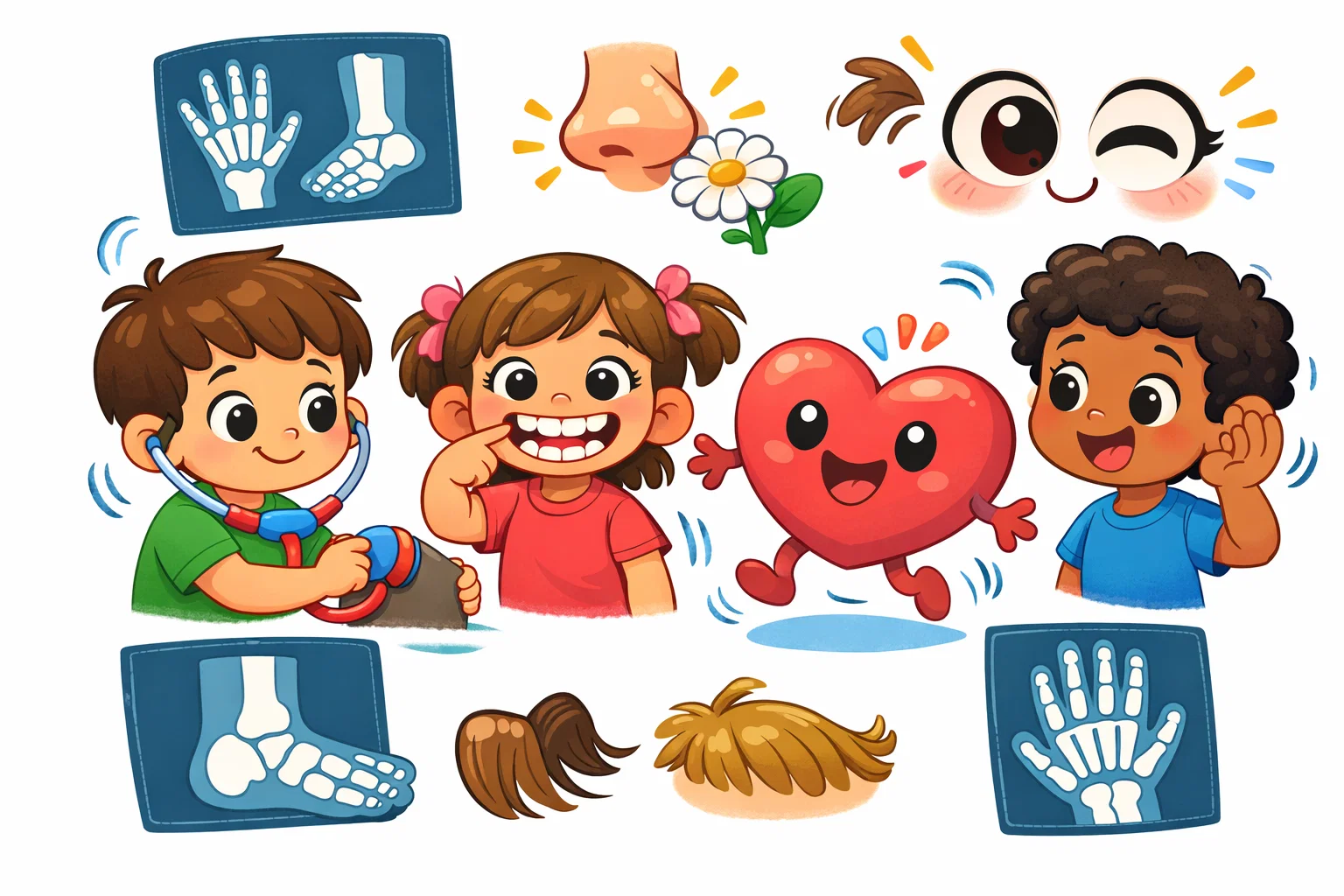
Learning about the human body helps children understand their own physical experiences and promotes healthy habits.
Bones, Teeth, Hands, and Feet Facts
- Baby Bones: You were born with about 300 bones, but as you grow, some bones join together, leaving you with 206 as a grown-up.
- Strong Teeth: Your tooth enamel is the hardest part of your whole body, even stronger than your bones!
- Hand Power: Over half of all the bones in your body are located in your hands and your feet.
Eyes, Nose, and Ears Facts
- Blinking: People blink many times each minute to help keep their eyes moist and protected.
- Smell Memory: Smells can bring back strong memories, which is why certain scents may remind you of home or cookies.
- Growing Ears: As people get older, their noses and ears can look bigger over time.
Heart, Sleep, and Growth Facts
- Heartbeat: Your heart is a muscle that pumps blood through your body about 100,000 times every single day.
- Night Growth: You actually grow a tiny bit taller while you sleep because your spine stretches out when you lie down.
- Hair Strength: A single strand of hair can be surprisingly strong.
Left-Handed Facts
- Hand Preference: Most people use their right hand, but left-handed people make up about 10% of the world.
- Left-Handed Facts: Left-handed people make up a smaller part of the population, but being left-handed does not mean someone is simply ‘right-brained’ or more creative.
Food Fun Facts for 4 Year Olds
Food fun facts can help make fruits and vegetables feel more fun and interesting to young children.
Fruit and Veggie Facts
- The Strawberry: A strawberry is the only fruit that wears its seeds on the outside; one berry can have 200 seeds!
- The Banana: Bananas are actually berries, but strawberries are not—nature has some funny food mix-ups.
- The Apple: Apples can float in water because they are made of 25% air, which makes them perfect for “bobbing” games.
Snack and Dessert Facts
- Popcorn: Popcorn kernels pop because they have a tiny drop of water inside that turns to steam and explodes when heated.
- Chocolate: In ancient times, people used cocoa beans as money to buy things like clothes and toys.
- Ice Pops: The very first ice pop was called an “Epsicle” after its young inventor, Frank Epperson.
Space Fun Facts for 4 Year Olds
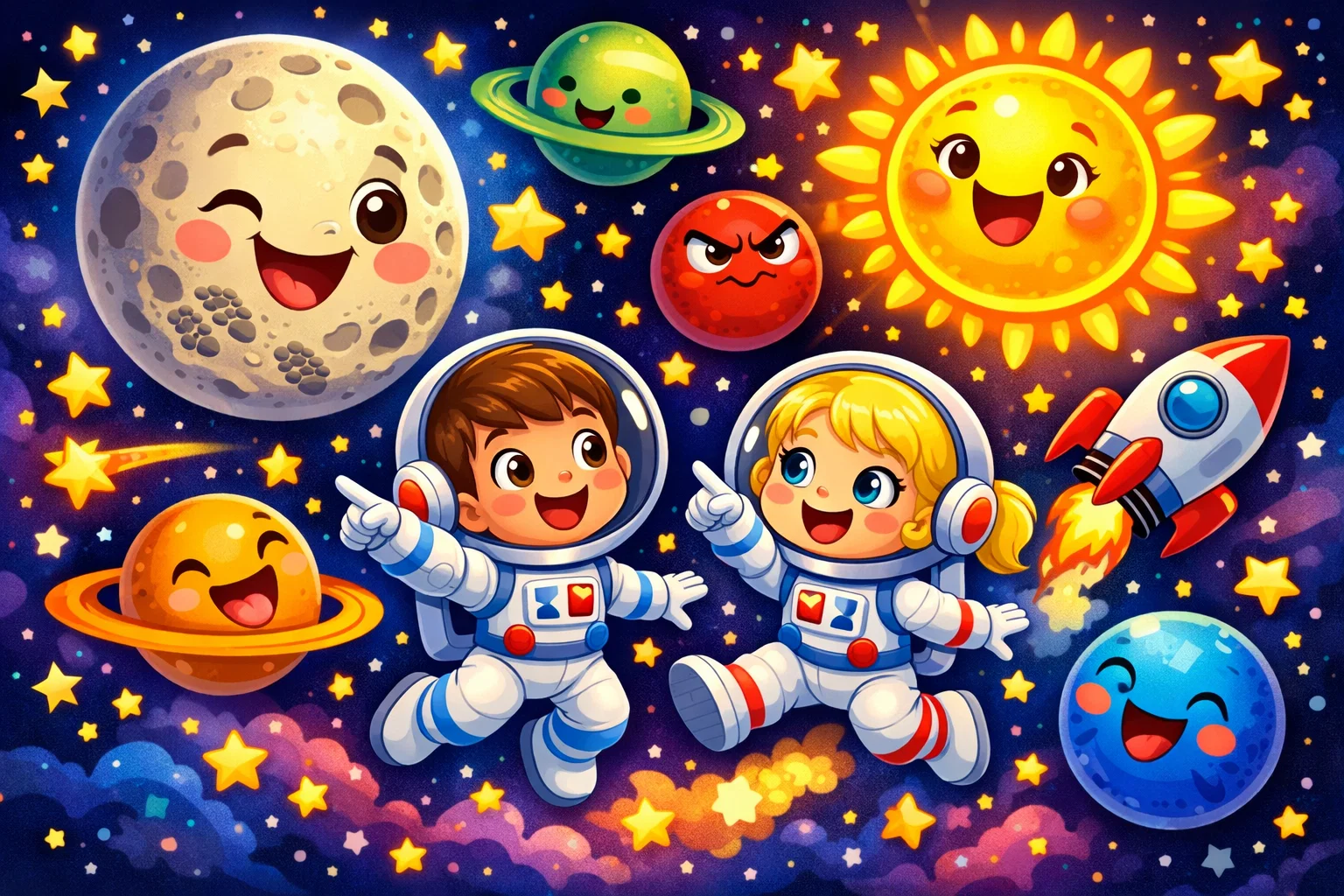
Stories about space stations and the solar system can spark a child’s imagination.
Sun, Moon, and Star Facts
- The Sun: The Sun is so big that you could fit one million Earths inside of it.
- The Stars: Every star you see in the sky is actually a sun that is very, very far away.
- Moonlight: The Moon does not make its own light; it reflects light from the Sun.
Planet Facts
- Saturn: Saturn has beautiful rings made of billions of pieces of ice and dust, some as small as a grain of sand.
- Mars: Mars is known as the “Red Planet” because its dirt is rusty, just like an old bike left in the rain.
- The Earth: Earth is the only planet in the solar system known to have liquid water on its surface and life.
Rocket and Astronaut Facts
- Floating: Astronauts float in space because they are in microgravity, so they strap themselves in while sleeping.
- Space Suits: An astronaut’s suit is like a tiny one-person spaceship that provides air and protection from the cold.
Geography Fun Facts for 4 Year Olds
Introducing geography helps children understand their place on Earth and the scale of the natural world.
Earth, Ocean, and Continent Facts
- The Blue Planet: About 70% of the Earth is covered in water, which is why it looks blue from space.
- The Pacific Ocean: This is the largest ocean on Earth, and its total area is bigger than the land area of all Earth’s continents combined.
Mountain and Volcano Facts
- Mount Everest: This is the tallest mountain in the world, and it is still growing a tiny bit every year.
- Volcanoes: Some volcanoes are under the ocean, and when they erupt, the lava cools down to create new islands.
Weird History Fun Facts for 4 Year Olds
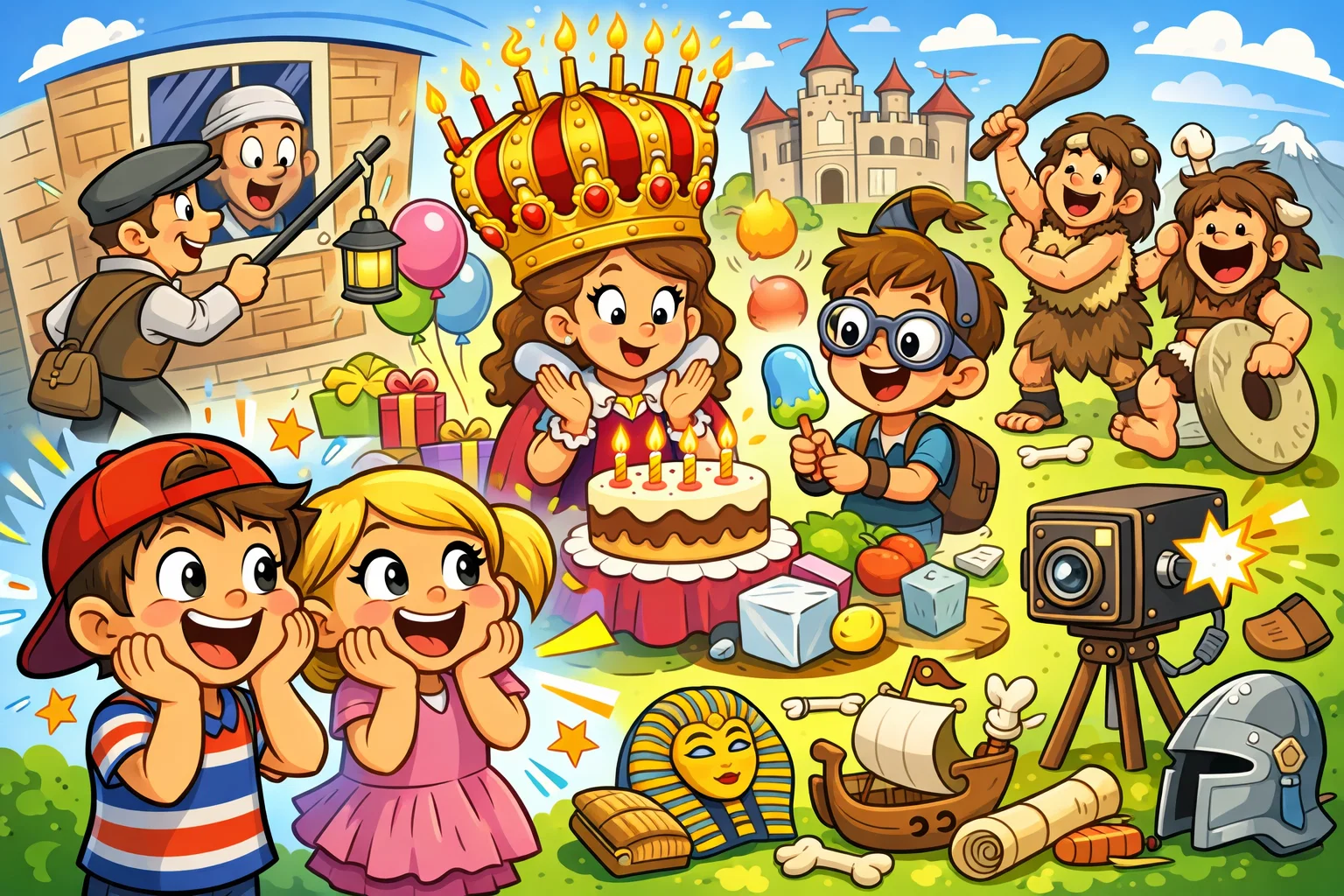
History doesn’t have to be about dates; it can be about mind-blowing stories of how people used to live.
Dinosaur and Fossil Facts
- The T-Rex: A Tyrannosaurus rex had very large teeth—about the size of bananas.
- Dino Fossils: We know dinosaurs existed because we find their bones and footprints turned into stone, called fossils.
- Long-Lived Turtles: Some turtles can live for a very long time—longer than many human generations.
Sports Fun Facts for 4 Year Olds
Big Record Facts
| Record | Fact | Comparison |
| Fastest Man | Usain Bolt | One of the fastest humans ever recorded, but slower than a galloping horse |
| Highest Jump | High Jumpers | Can jump over a tall refrigerator |
| Longest Swim | Some people swim for days | Like driving a car for hours |
Conclusion
Sharing fun facts is more than just a way to pass the time; it can also encourage curiosity, conversation, and listening. By sharing facts about animals, the human body, and space, you can encourage curiosity, conversation, and a love of learning.
Best Facts to Reuse Tomorrow
- Octopus hearts (they have 3!).
- Strawberries have seeds on the outside.
- Astronauts float in bed.
- Giraffes have blue tongues.
- Sharks have no bones.
How To Keep Curiosity Going
To keep curiosity going, do not just give the answer—encourage your child to wonder, guess, and explore. If your child asks why a zebra has stripes, look at a picture together and ask them what they think! This kind of back-and-forth conversation can help build confidence and keep curiosity going.
FAQ
What are these "Preschool Discoveries"?
These short facts for kids are true, surprising statements designed to entertain while teaching something new about the world. They spark curiosity by presenting unexpected information in a way that is easy for young children to understand and remember.
Which topics do 4-year-olds enjoy most?
Many children enjoy topics such as animals, space, and surprising facts about the human body. Specifically, fun animal stories—like how a cheetah can sprint at 70 miles per hour—are consistent favorites because they involve high energy and impressive speed.
Can this type of trivia support early learning?
Yes. Children often respond well to fun facts because they feel more like stories than lessons. Sharing a simple science-based fact can build vocabulary and introduce children to the natural world.
How should parents explain these surprises?
One simple way to share amazing facts is to pair an observation with an image and a follow-up question. For example, tell them a tiny bee weighs less than a penny, show them a photo of a honeybee, and then ask: “If a bee is that light, how do you think it stays on a flower when the wind blows?”
Which subjects work best at bedtime?
For the evening, choose calming trivia for kids, such as the way a polar bear uses its white fur to blend into the snow. Avoid high-energy topics and focus on quieter wonders, such as how Earth takes about 365 days to complete one orbit around the Sun.
What secrets does the deep sea hold?
Many children are fascinated by marine animals living in the darkest part of the ocean. You might mention the Greenland shark, which can live for centuries, or explain how emperor penguins survive the Antarctic winter.
Are there interesting things to learn about common animals?
Kids love weird stories about familiar creatures. You can discuss the differences between cats and dogs, or point out that there are thousands of different species of ants in the world and that ants in a colony often do different jobs.
Should I share all "100 ideas" at once?
While having a long list of fun facts is useful for parents, it is best to share only 1–3 snippets at a time. Quality matters more than quantity; giving a child just a few surprising facts to think about helps them absorb the information and ask their own follow-up questions.

Take a short quiz to find out what your everyday choices say about your parenting style
When your child is curious about something new, what’s your instinct?
Take a short quiz to find out what your everyday choices say about your parenting style
“Can I download this app?” What happens next?
Take a short quiz to find out what your everyday choices say about your parenting style
When it comes to rules at home, which sounds most like you?
Take a short quiz to find out what your everyday choices say about your parenting style
If you could give your child one life skill today, what would you pick?
Take a short quiz to find out what your everyday choices say about your parenting style
Your child gets to choose what to watch. What would your ideal setup look like?
Take a short quiz to find out what your everyday choices say about your parenting style
Pick your parenting superpower ✨