Best Board Games for 10-Year-Olds: Family and Strategy Picks

 Discover a Free Education Video App for Kids
Pastory uses AI to personalize educational video content based on your child’s interests and personality. Safe, engaging, and built for curious young minds. Sign up now to stay updated and enjoy early access with a free trial
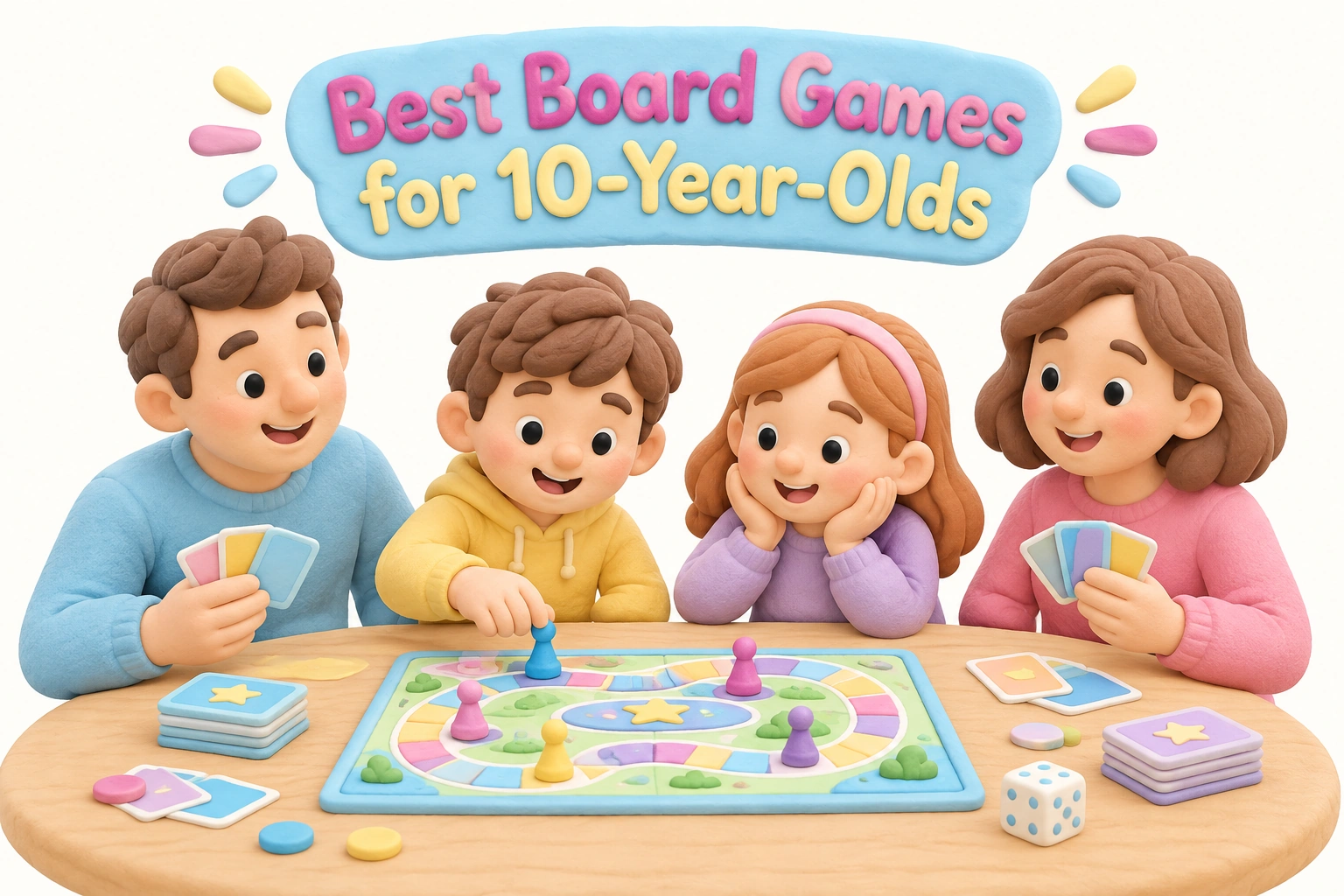
Ten-year-olds occupy a genuinely exciting sweet spot for board gaming. They have the attention span and cognitive flexibility to handle real strategic thinking, yet they still bring the enthusiasm and imagination that makes family game night memorable. The challenge for parents and gift-buyers is finding games that sit at the right level of age-appropriate complexity — engaging enough to hold a tween’s interest, accessible enough that the whole family can join in, and rewarding enough to come back to again and again.
Key Takeaways
- The best board games for 10-year-olds balance strategic depth with a manageable learning curve — look for games described as easy to learn, hard to master.
- Cooperative board games, gateway strategy games, and social deduction titles each serve different family dynamics and developmental goals.
- Research suggests that regular board game play may support executive function, working memory, and problem-solving skills in children aged 8–11.
- Replayability, player count flexibility, and a playtime sweet spot of 30–60 minutes are the most practical criteria when choosing a game for this age group.
- Knowing which games to skip — those with excessive complexity or 2-hour-plus runtimes — is just as useful as knowing which ones to buy.
Why Age 10 Is a Turning Point for Board Games
Around age 10, children enter what developmental psychologists describe as middle childhood — a period marked by significant growth in logical reasoning, forward planning, and the ability to hold multiple rules in mind simultaneously. These are precisely the cognitive tools that gateway strategy games are designed to engage. A 10-year-old can typically understand resource management, anticipate an opponent’s next move, and tolerate the uncertainty of not winning every round — skills that were genuinely difficult at age six or seven.
Peer-reviewed research published in journals indexed by PubMed and ScienceDirect has found associations between regular board game play and improvements in executive function, working memory, and mathematical reasoning in primary school-aged children. While these studies note that outcomes vary by child, game type, and frequency of play, the evidence is consistent enough to suggest that well-chosen board games offer more than entertainment. They may actively support the cognitive development happening naturally at this age.
For parents, this means the transition from simple roll-and-move games like Candy Land toward genuine strategy titles is not just about fun — it is developmentally well-timed. The key is choosing games that challenge without overwhelming, a balance that avoids the frustration of analysis paralysis while still offering real strategic depth.
What to Look for When Choosing a Board Game for a 10-Year-Old
Before diving into specific recommendations, it helps to understand the criteria that separate a great game for this age group from one that will sit unopened after the first session.
Age-Appropriate Complexity
Games rated for ages 10 and up typically introduce mechanics like resource management, card drafting, or tile placement without requiring players to track dozens of variables at once. The ideal game has a rulebook that can be explained in under 15 minutes and a first playthrough that feels manageable even if not perfectly optimized. If a game’s rulebook runs to 30 pages with multiple exception cases, it is likely better suited to ages 14 and up.
Playtime Sweet Spot
For most 10-year-olds, a playtime of 30–60 minutes is the practical sweet spot. Games that run under 20 minutes can feel unsatisfying after the setup effort; games that regularly exceed 90 minutes risk losing younger players’ attention and can turn a fun evening into a test of endurance. Player count flexibility also matters — a game that works well with 2 players (parent and child) and scales to 5 or 6 (birthday party or extended family) offers far more value than one locked into a narrow range.
Replayability
High replayability is one of the most important factors for families investing in a board game. Games with modular boards, variable player powers, or randomized starting conditions play differently each session, keeping the experience fresh across dozens of plays. This is particularly important for 10-year-olds, who tend to want to replay games they enjoy rather than constantly rotating to new titles.
Cooperative vs. Competitive Play
Both cooperative board games and competitive titles have a place in a 10-year-old’s collection, but they serve different purposes. Cooperative games — where all players work together against the game itself — are excellent for building teamwork, reducing the emotional sting of losing, and supporting good sportsmanship in children who struggle with competitive outcomes. Competitive games, when chosen well, teach forward planning, negotiation, and graceful losing — skills that are genuinely valuable but may need adult scaffolding for some children.
Best Gateway Strategy Games for 10-Year-Olds
Gateway strategy games are designed to introduce players to deeper mechanics without the steep learning curve of hobby-level titles. They are the ideal entry point for a tween who has outgrown simple games but is not yet ready for complex rulebooks.
Catan (Settlers of Catan)
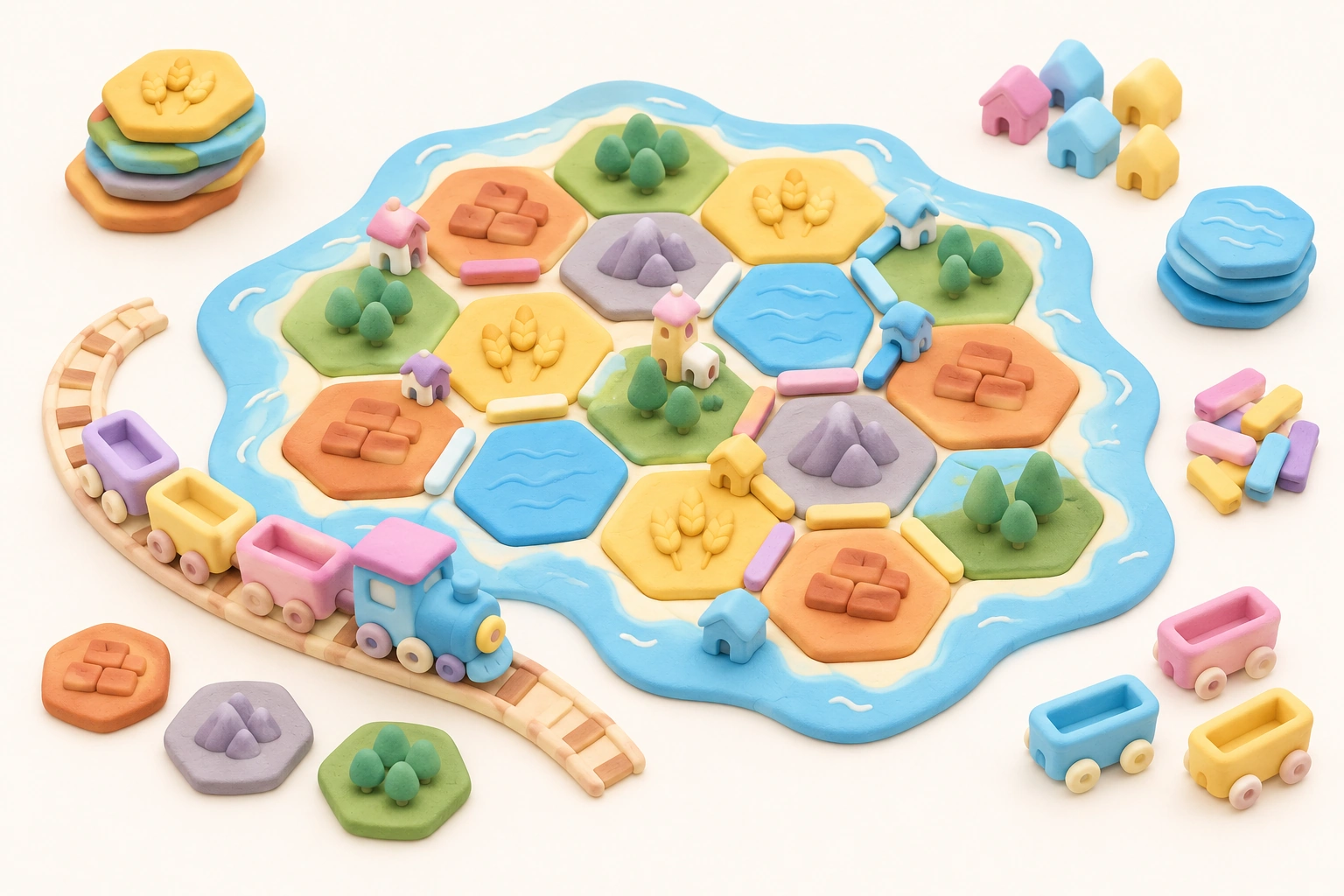
Catan remains the most widely recommended gateway strategy game for this age group, and for good reason. Players collect and trade resources — wood, brick, grain, ore, and sheep — to build roads, settlements, and cities on a modular board that changes every game. The trading and negotiation element makes every session social and dynamic, and the resource management mechanics introduce genuine strategic thinking without overwhelming new players. Catan plays 3–4 players (expandable to 5–6 with an expansion), takes approximately 60–90 minutes, and is rated for ages 10 and up. The main caveat is that it works best with at least three players, making it less ideal for a parent-child two-player session.
Ticket to Ride
Ticket to Ride is arguably the most family-friendly gateway game available. Players collect colored train cards and use them to claim railway routes across a map, completing destination tickets for points. The rules are simple enough to explain in five minutes, yet the strategic depth — deciding when to block opponents, which routes to prioritize, and how to manage your hand — keeps experienced players engaged. Ticket to Ride plays 2–5 players, runs 45–75 minutes, and is rated for ages 8 and up, making it one of the most accessible options on this list. Its replayability is high thanks to the variety of destination tickets drawn each game.
Splendor
Splendor is a compact engine-building and card drafting game in which players collect gem tokens to purchase development cards, gradually building a resource engine that makes future purchases easier. It is genuinely easy to learn — the rules fit on a single page — yet the strategic decisions around which cards to reserve, which gems to collect, and how to block opponents give it real depth. Splendor plays 2–4 players, takes 30–45 minutes, and is rated for ages 10 and up. Its relatively short playtime makes it an excellent choice for families who want a satisfying game that does not consume an entire evening.
Azul
Azul is a tile placement game in which players draft colorful tiles to complete patterns on their personal boards. It won the prestigious Spiel des Jahres award — the most recognized prize in board gaming — and its combination of simple rules and deep strategic planning has made it a consistent recommendation for this age group. Azul plays 2–4 players, takes approximately 30–45 minutes, and is rated for ages 8 and up. The spatial reasoning and pattern recognition it develops make it particularly well-suited to children who enjoy visual and mathematical thinking.
King of Tokyo
King of Tokyo brings a monster-movie theme to a dice-rolling game in which players compete to dominate Tokyo. The push-your-luck mechanics — deciding whether to stay in Tokyo and absorb damage or retreat to safety — make every turn feel exciting, and the power card system adds a light deck-building element. King of Tokyo plays 2–6 players, takes 30–45 minutes, and is rated for ages 8 and up. Its high energy and accessible rules make it an excellent birthday party game, and its player count flexibility means it works for a wide range of group sizes.
Best Cooperative Board Games for 10-Year-Olds
Cooperative board games place all players on the same team, working together to beat the game itself. For families with a child who finds losing difficult, or for parents who want to model collaborative problem-solving, cooperative titles are an excellent choice.
Pandemic
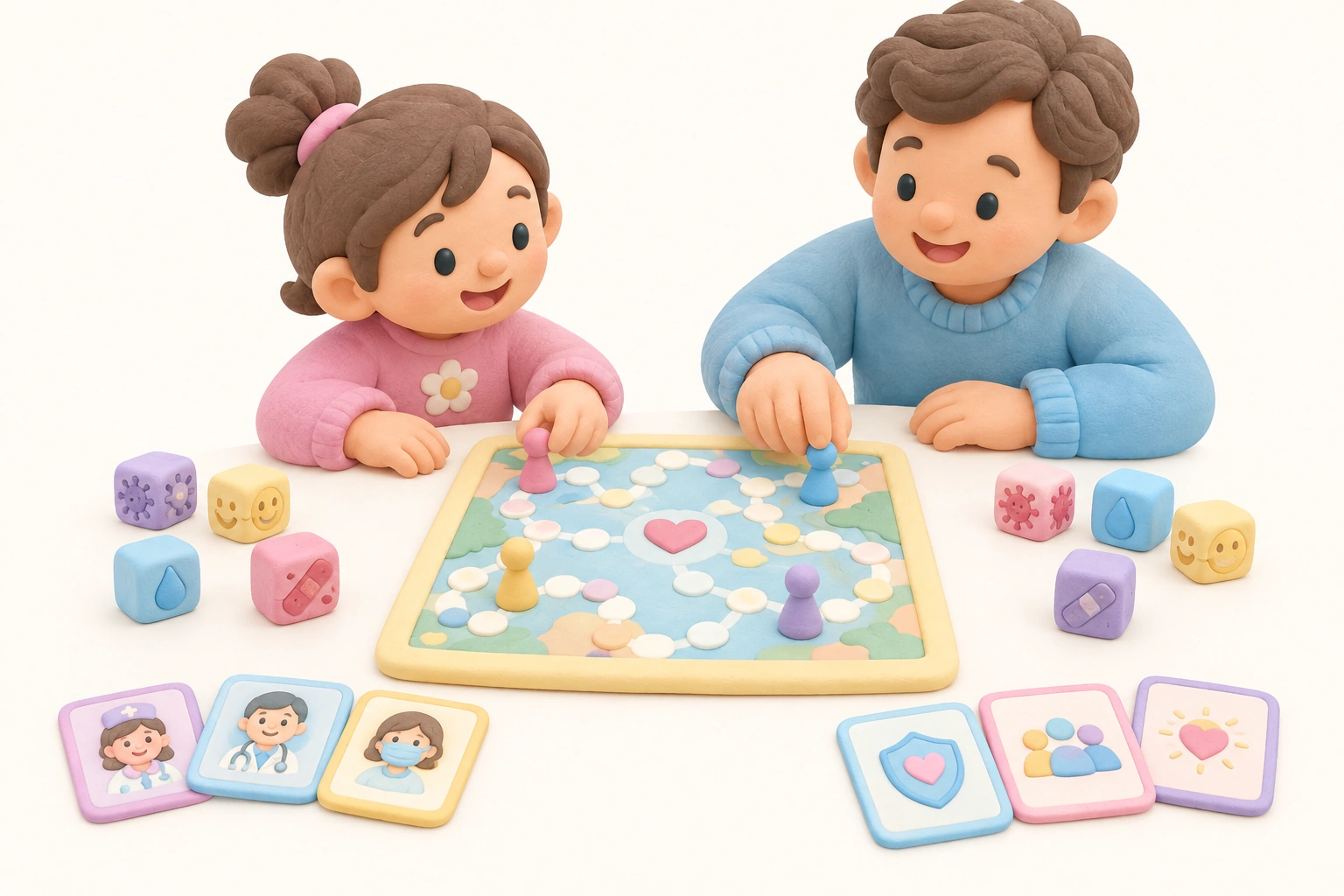
In Pandemic, players take on specialist roles — medic, scientist, researcher — and work together to contain and cure four diseases spreading across a global map. The game is a masterclass in cooperative design: every player has a meaningful role, decisions require genuine discussion and forward planning, and the difficulty can be adjusted by changing the number of epidemic cards in the deck. Pandemic plays 2–4 players, takes 45–60 minutes, and is rated for ages 8 and up. It is worth noting that Pandemic can feel intense when the disease spreads quickly, so parents should gauge whether their child handles in-game pressure comfortably.
Forbidden Island
Forbidden Island is a lighter cooperative board game from the same designer as Pandemic, making it an ideal stepping stone for families not yet ready for Pandemic’s complexity. Players work together to collect four treasures from a sinking island before it disappears beneath the water. The modular board means every game plays out differently, and the game also offers a solo play mode — a feature rarely highlighted but genuinely useful for children who want to play independently. Forbidden Island plays 2–4 players, takes 30–45 minutes, and is rated for ages 10 and up.
Castle Panic
Castle Panic is a cooperative tower-defense game in which players work together to defend a castle from waves of monsters. The hand management mechanics — players can trade cards with each other — encourage communication and shared strategy, and the escalating difficulty keeps the game tense without becoming frustrating. Castle Panic plays 1–6 players, takes approximately 60 minutes, and is rated for ages 10 and up. Its high player count makes it one of the better cooperative options for larger family groups or birthday parties.
Best Social Deduction and Bluffing Games for 10-Year-Olds
Social deduction and bluffing games develop a different set of skills — reading social cues, constructing logical arguments, and managing information — that are highly relevant to the social development happening at age 10.
Codenames
Codenames is a word association game in which two teams compete to identify their agents using one-word clues given by a spymaster. It is one of the most versatile games on this list: it works with 2 players using a cooperative variant, scales comfortably to 8 or more, and plays in 15–30 minutes. The lateral thinking and vocabulary skills it engages make it a genuine educational tool as well as a party game. Codenames is rated for ages 10 and up and has become a staple of family game nights for good reason.
Coup
Coup is a compact bluffing game in which players claim to hold influence cards they may or may not actually have, using bluffing and social deduction to eliminate opponents. It plays 2–6 players, takes only 15 minutes, and is rated for ages 10 and up. Its very short playtime makes it an excellent filler game between longer sessions, and its low price point makes it an accessible gift option. The bluffing element requires a degree of emotional maturity — children who find deception-based games stressful may prefer a different title.
Quick Comparison: Board Games for 10-Year-Olds
| Game | Players | Playtime | Type | Best For | Replayability |
|---|---|---|---|---|---|
| Catan | 3–4 (up to 6) | 60–90 min | Strategy / Trading | Family game night, negotiation | Very High |
| Ticket to Ride | 2–5 | 45–75 min | Gateway Strategy | Mixed-age play, beginners | High |
| Splendor | 2–4 | 30–45 min | Engine Building | Shorter sessions, 2-player | High |
| Azul | 2–4 | 30–45 min | Tile Placement | Visual thinkers, spatial reasoning | High |
| King of Tokyo | 2–6 | 30–45 min | Dice / Push-Your-Luck | Birthday parties, large groups | Medium-High |
| Pandemic | 2–4 | 45–60 min | Cooperative | Teamwork, problem-solving | High |
| Forbidden Island | 2–4 | 30–45 min | Cooperative | Beginners, solo play | High |
| Castle Panic | 1–6 | ~60 min | Cooperative | Large groups, communication | Medium-High |
| Codenames | 2–8+ | 15–30 min | Social Deduction | Parties, vocabulary building | Very High |
| Coup | 2–6 | ~15 min | Bluffing | Filler game, budget gift | High |
Games Worth Skipping at Age 10
Knowing which games to avoid is genuinely useful information that most buying guides overlook. Some titles are frequently recommended for this age group but carry practical drawbacks worth understanding before purchasing.
Games with runtimes regularly exceeding two hours — such as Twilight Imperium or Arkham Horror — are generally not appropriate for most 10-year-olds. The cognitive and emotional stamina required to sustain engagement across a four-hour session is simply not typical at this developmental stage, and a game that ends in frustration or abandonment is unlikely to be revisited. Similarly, games with rulebooks that require multiple read-throughs before the first play — sometimes called analysis paralysis-inducing titles — can create a negative first impression that puts children off strategy gaming entirely.
Standard Monopoly deserves a specific mention. While it is a cultural institution, its combination of very long playtime (often 2–3 hours in practice), significant luck dependency, and player elimination mechanics — where one player can be knocked out early and must watch others play — makes it a poor choice for family game night with a 10-year-old. Monopoly Deal, the card game version, is a much faster and more satisfying alternative that preserves the trading theme in a 15–20 minute format.
Choosing Games for Specific Situations
Family Game Night with Mixed Ages
Mixed-age play — where a 10-year-old plays alongside younger siblings and adults — requires games with a low entry barrier but enough depth to keep adults genuinely engaged. Ticket to Ride and Azul are the strongest options here: both can be enjoyed by players aged 8 and up without adults feeling they are playing down to a child’s level. Codenames also works exceptionally well for mixed-age groups because the team structure allows younger and older players to contribute differently.
Birthday Party with Six or More Players
For larger groups, player count flexibility becomes the primary criterion. King of Tokyo (2–6 players), Castle Panic (1–6 players), and Codenames (effectively unlimited with teams) are the strongest options. These games also share the advantage of relatively short playtimes, which matters when managing a group of excited children at a party.
Parent-Child Two-Player Sessions
Many of the games on this list work well with two players, but Splendor and Azul are particularly well-suited to the parent-child pairing. Both play in under 45 minutes, offer genuine strategic depth for adults, and are accessible enough that a 10-year-old can compete meaningfully rather than simply going through the motions.
Travel and Short Attention Spans
For travel or situations where setup time and table space are limited, Coup (fits in a pocket), Codenames (compact box), and Sushi Go! (a quick card drafting game that plays in 15–20 minutes) are practical choices. All three offer high replayability in a small footprint.
Developmental Benefits of Board Games at Age 10
The developmental case for board games at this age goes beyond keeping children away from screens. Research published in peer-reviewed sources has found that board game play in middle childhood may support executive function — the cluster of cognitive skills that includes working memory, cognitive flexibility, and inhibitory control. These are the same skills that underpin academic performance in mathematics, reading comprehension, and science.
Strategic board games in particular may help develop forward planning and logical reasoning by requiring players to think several moves ahead, weigh probabilities, and adjust their strategy based on new information. Cooperative board games add a social dimension, encouraging communication, shared decision-making, and the kind of perspective-taking that supports emotional intelligence. Trading and negotiation games like Catan may support social skills and the ability to advocate for one’s own interests while remaining sensitive to others — a genuinely useful life skill for tweens navigating increasingly complex peer relationships.
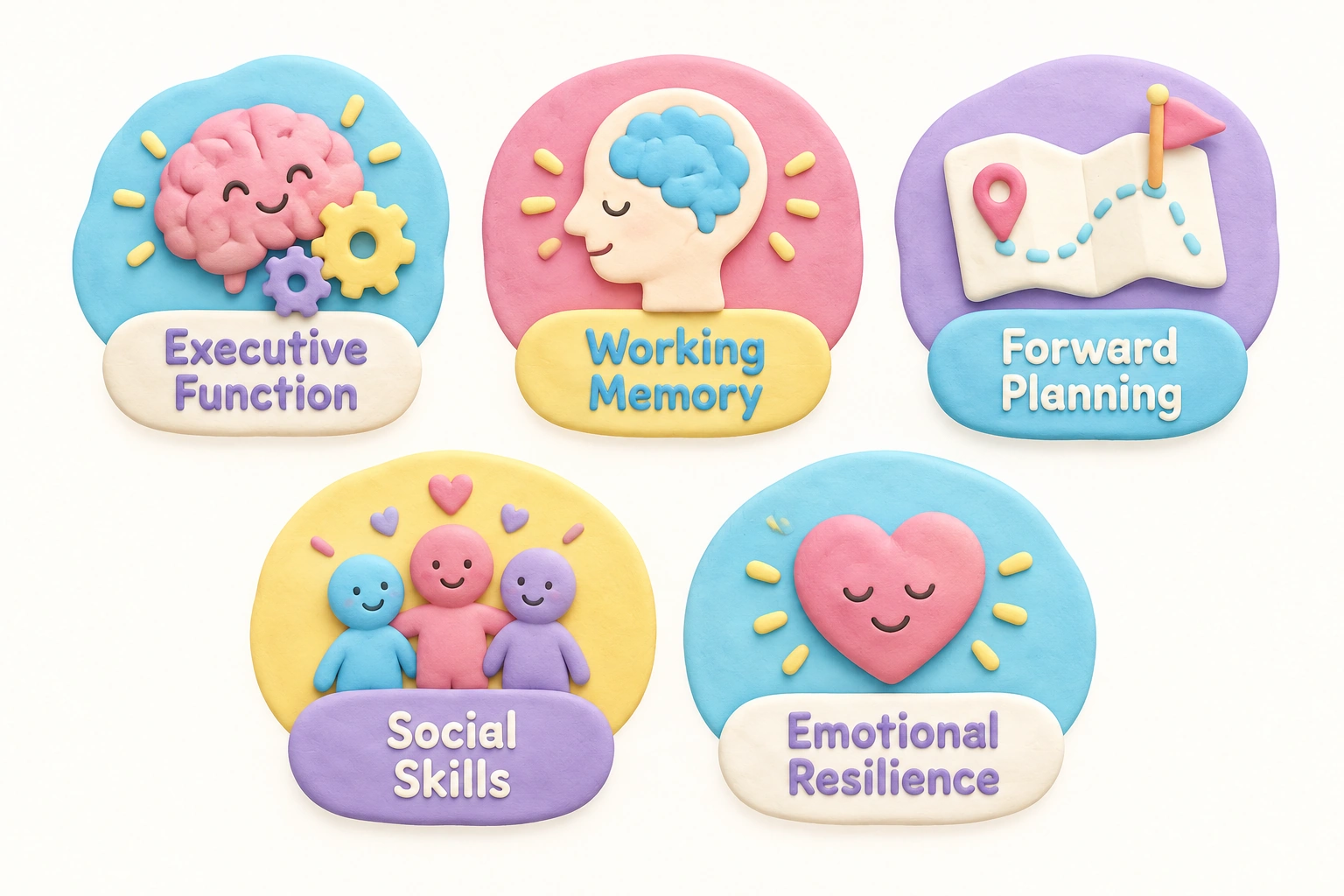
It is important to note that these benefits are not guaranteed and depend on factors including how often the child plays, whether an adult is involved in guiding reflection after the game, and the child’s individual temperament and developmental stage. Board games are a valuable complement to a child’s broader learning environment, not a standalone developmental intervention.
Helping a 10-Year-Old Who Struggles with Losing
Good sportsmanship is a genuine developmental challenge at age 10. Children at this stage are increasingly aware of social comparison — how they perform relative to peers — and losing can feel disproportionately significant. Parents can support emotional regulation around competitive games by normalizing losing as part of the experience, modeling graceful losing themselves, and choosing cooperative board games as a lower-stakes entry point for children who find competitive outcomes particularly difficult.
It also helps to frame the post-game conversation around strategy rather than outcome: asking “What would you do differently next time?” shifts the focus from winning and losing to learning and improvement. Over time, this approach can help children develop the resilience and perspective that make competitive games genuinely enjoyable rather than stressful.
Frequently Asked Questions
What is the best first strategy board game for a 10-year-old?
Ticket to Ride is widely considered the best first gateway strategy game for this age group. Its rules are simple enough to learn in one sitting, the train-route theme is broadly appealing, and the strategic depth increases naturally as players become more experienced. Azul is an excellent alternative for children who prefer visual and spatial challenges.
How long should a board game session be for a 10-year-old?
A playtime of 30–60 minutes is generally the most practical range. Games in this window are long enough to feel satisfying and allow genuine strategic development, but short enough to fit into an evening without fatigue. If a game regularly runs longer than 90 minutes, consider whether it is genuinely age-appropriate for your child’s current attention span.
Are cooperative board games better than competitive ones for this age?
Neither type is universally better — they serve different developmental purposes. Cooperative board games are particularly valuable for building teamwork, reducing competitive anxiety, and supporting children who find losing difficult. Competitive games develop strategic thinking, negotiation, and resilience. A balanced collection that includes both types is ideal for most families.
Can a 10-year-old play Catan with adults?
Yes, Catan is one of the most successful mixed-age play games available. Most 10-year-olds can grasp the trading and resource management mechanics within the first game, and the social negotiation element means that adults do not need to hold back significantly to make the game enjoyable for a child. The game works best with three or four players, so it suits a family of that size well.
What board games work well for a 10-year-old’s birthday party?
King of Tokyo, Codenames, and Castle Panic are the strongest birthday party options because they accommodate larger groups, play in under an hour, and have accessible rules that do not require lengthy explanation. Codenames is particularly flexible because it can be played in teams of any size.
Are there board games for 10-year-olds that can be played solo?
Forbidden Island and Castle Panic both include solo play modes, making them useful options for children who want to play independently. Solo board gaming is a growing area of interest, and these titles offer a genuine single-player experience rather than simply adapting a multiplayer game awkwardly.
What price range should I expect for a quality board game for a 10-year-old?
Most of the games recommended here fall into three broad price tiers. Budget options under $20 include Coup and Sushi Go!. Mid-range games between $20 and $40 cover Azul, Splendor, King of Tokyo, Forbidden Island, and Codenames. Premium titles above $40 include Catan, Ticket to Ride, Pandemic, and Castle Panic. In general, mid-range games offer the best value for most families, combining strong replayability with manageable cost.
Finding the Right Game for Your Family’s Game Night
The best board game for a 10-year-old is ultimately the one that gets played repeatedly, generates genuine enthusiasm, and fits the specific dynamics of your family. A cooperative board game like Pandemic may be the perfect fit for a family that values teamwork and shared problem-solving. A gateway strategy game like Ticket to Ride may suit a family that enjoys friendly competition without high emotional stakes. A social deduction title like Codenames may be the right choice for a household that loves wordplay and lateral thinking.
Rather than searching for a single universally correct answer, consider starting with one game that matches your child’s current interests and your family’s typical group size. Gateway games are designed to be approachable, and a positive first experience with a well-chosen title is the most reliable way to build a lasting enthusiasm for board gaming. As your child’s strategic thinking develops and their tolerance for complexity grows, the range of games available to them will expand naturally — from accessible gateway titles toward richer, more demanding experiences that can sustain interest well into the teenage years.

Take a short quiz to find out what your everyday choices say about your parenting style
When your child is curious about something new, what’s your instinct?
Take a short quiz to find out what your everyday choices say about your parenting style
“Can I download this app?” What happens next?
Take a short quiz to find out what your everyday choices say about your parenting style
When it comes to rules at home, which sounds most like you?
Take a short quiz to find out what your everyday choices say about your parenting style
If you could give your child one life skill today, what would you pick?
Take a short quiz to find out what your everyday choices say about your parenting style
Your child gets to choose what to watch. What would your ideal setup look like?
Take a short quiz to find out what your everyday choices say about your parenting style
Pick your parenting superpower ✨