15 Best Board Games for Families: Fun Picks for All Ages

 Discover a Free Education Video App for Kids
Pastory uses AI to personalize educational video content based on your child’s interests and personality. Safe, engaging, and built for curious young minds. Sign up now to stay updated and enjoy early access with a free trial
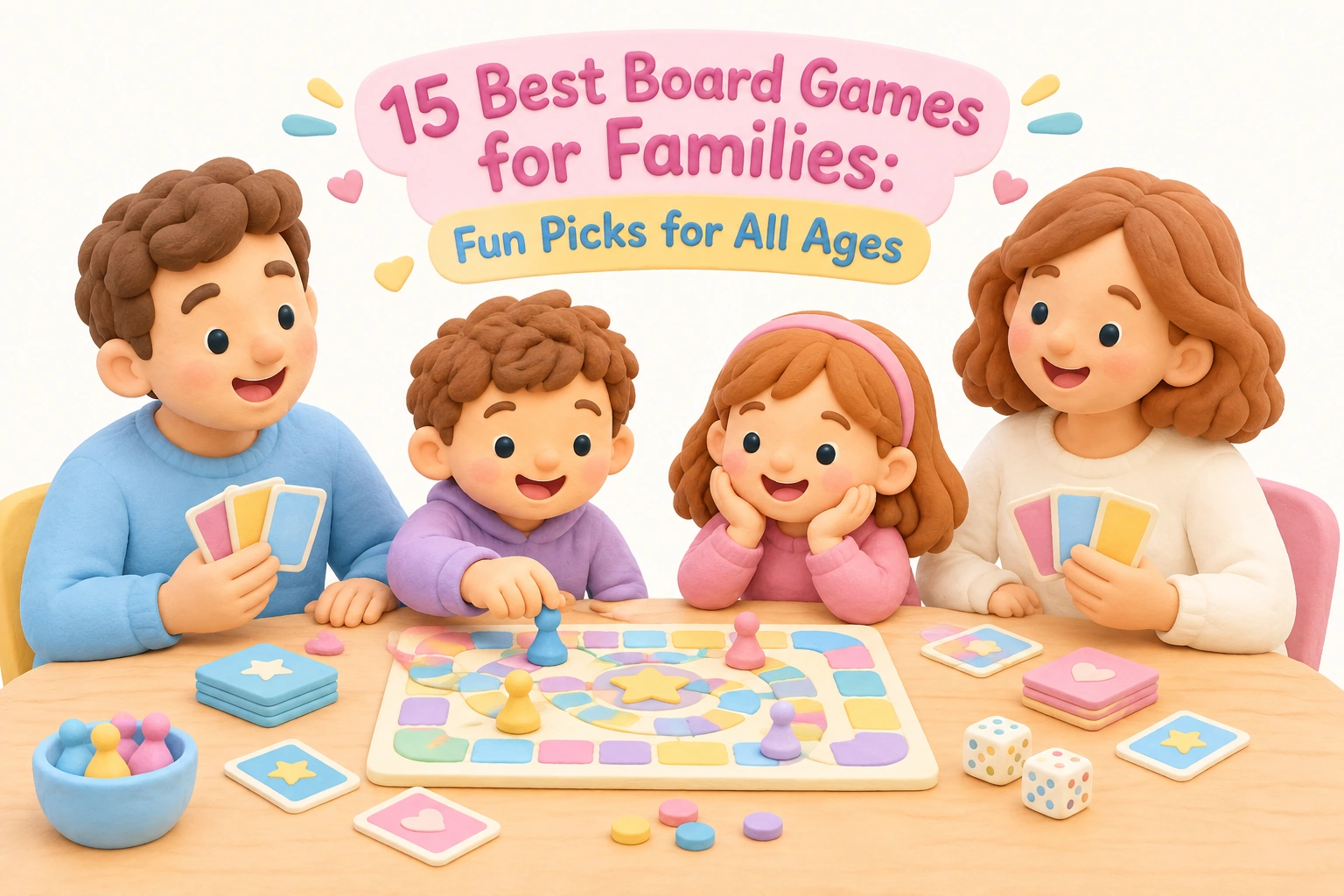
Choosing the best board games for families is harder than it looks. The shelves are packed with options, box art makes everything look equally appealing, and what works brilliantly for one family can fall flat for another. This guide cuts through the noise with 15 carefully selected games, honest notes on each one’s strengths and real-world limitations, and practical advice on matching a game to your family’s ages, temperament, and available time.
Key Takeaways
- The best family board games balance accessibility for younger players with enough depth to keep adults genuinely engaged.
- Cooperative games tend to work better for families with wide age gaps or children who find losing difficult; competitive games often suit older kids and teens who want a real challenge.
- Box play times are frequently optimistic — budget extra time for rules explanation and slower decision-making when younger children are involved.
- A handful of modern board games serve as excellent gateway games for families moving beyond classic titles like Monopoly or Scrabble.
- Screen-free family game nights support communication, critical thinking, and family bonding in ways that passive media consumption generally cannot replicate.
How to Choose the Right Family Board Game
Before browsing individual titles, it helps to think through a few practical factors. The most important is the age of your youngest regular player. A game that requires reading, abstract strategy, or fine motor precision will frustrate a five-year-old and slow the whole table down. Equally, a game pitched entirely at young children will bore a twelve-year-old within two rounds. The sweet spot is a game where every player has a meaningful decision to make, regardless of age.
Player count matters more than many buyers realize. Some games shine with exactly four players but become chaotic with six or drag with two. Check the recommended player count on the box and read whether reviewers agree it holds up at both ends of that range. Play time is the other frequently underestimated factor: a game listed as 45 minutes will often run 75 to 90 minutes with a family that includes children under eight, once rules are explained and slower turns are accounted for.
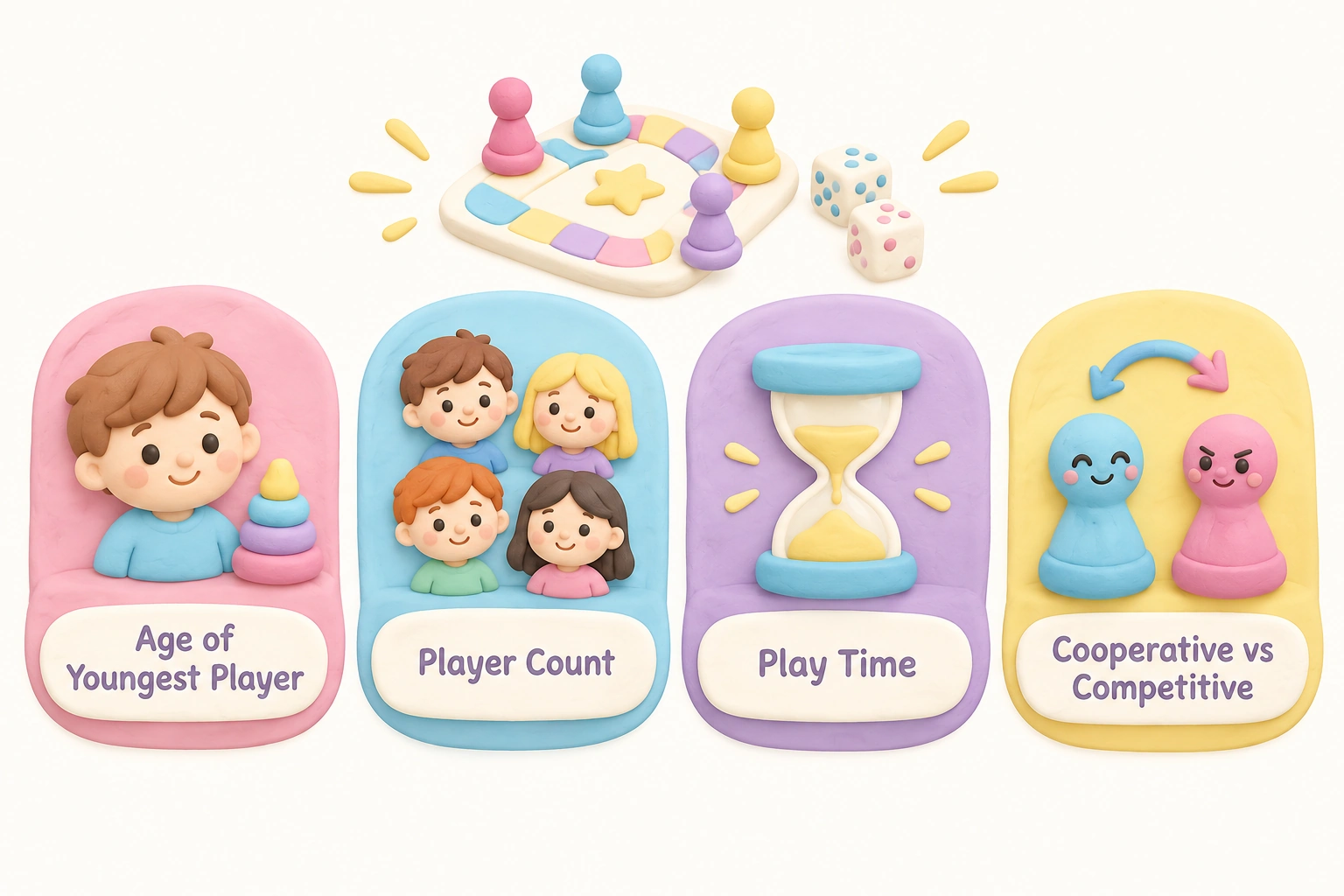
Finally, consider whether you want a cooperative game, where everyone works together against the game itself, or a competitive game, where players work against each other. Cooperative games reduce the sting of losing and can be easier to manage across a wide age range. Competitive games tend to feel more exciting for older children and teens but can occasionally cause friction if the skill gap between players is large.
Quick Comparison: 15 Best Family Board Games at a Glance
| Game | Players | Recommended Age | Play Time | Type | Best For |
|---|---|---|---|---|---|
| Ticket to Ride | 2–5 | 8+ | 45–75 min | Competitive | Best overall gateway game |
| Catan | 3–4 | 10+ | 60–120 min | Competitive | Strategy lovers, tweens+ |
| Pandemic | 2–4 | 8+ | 45–60 min | Cooperative | Teamwork, wide age gaps |
| Carcassonne | 2–5 | 7+ | 30–45 min | Competitive | Tile-laying, beginners |
| Codenames | 4–8+ | 10+ | 15–30 min | Competitive | Word lovers, large groups |
| Sushi Go! | 2–5 | 8+ | 15–20 min | Competitive | Quick play, younger kids |
| Forbidden Island | 2–4 | 10+ | 30–45 min | Cooperative | Adventure, teamwork |
| Kingdomino | 2–4 | 8+ | 15–20 min | Competitive | Fast, beginner-friendly |
| Dixit | 3–6 | 8+ | 30 min | Competitive | Creative, mixed ages |
| Azul | 2–4 | 8+ | 30–45 min | Competitive | Pattern recognition, adults |
| Outfoxed! | 2–4 | 5+ | 20 min | Cooperative | Young children, preschool+ |
| Qwirkle | 2–4 | 6+ | 45 min | Competitive | No reading required |
| Camel Up | 3–8 | 8+ | 20–30 min | Competitive | Large families, chaos fun |
| Blokus | 2–4 | 7+ | 20–30 min | Competitive | Spatial reasoning, quick |
| Just One | 3–7 | 8+ | 20–30 min | Cooperative | Word games, parties |
Best Overall Gateway Game: Ticket to Ride
Ticket to Ride consistently tops lists of the best board games for families, and the reputation is well earned. Players collect colored train cards and use them to claim railway routes across a map, trying to complete destination tickets before opponents block their paths. The rules take about ten minutes to explain, the map gives everyone a clear visual sense of progress, and the tension builds naturally without requiring complex strategy.
What makes Ticket to Ride such an effective gateway game is that it rewards planning without punishing beginners too harshly. A child of eight or nine can grasp the core loop quickly, while adults find enough route-building decisions to stay engaged. The recommended age of 8+ is realistic. Real-world play time with a family including younger children typically runs 60 to 75 minutes rather than the 45 minutes on the box. The main downside is that player count is capped at five, and the game can feel slightly passive if a player’s routes are not being threatened. Expansion packs covering different maps — Europe, Asia, and others — extend the game’s replay value considerably.
Best Strategy Game for Families: Catan
Catan (formerly Settlers of Catan) introduced millions of families to modern board games and remains one of the most-played strategy games in the world. Players collect resources — wood, brick, grain, ore, and wool — through dice rolls and trading, then use those resources to build roads, settlements, and cities on a modular board that changes every game. The trading element creates natural conversation and negotiation, which many families find as enjoyable as the game itself.
Catan works best with players aged ten and above. Younger children can participate with adult support, but the resource management and trading decisions can be genuinely complex. The game requires three or four players to function well; the two-player variant is less satisfying. Play time is the most honest caveat: a first game with a family new to Catan will often run two hours or more. Once everyone knows the rules, 60 to 90 minutes is more typical. The expansion ecosystem is extensive, with Seafarers, Cities and Knights, and others adding significant replayability for families who want to grow with the game.
Best Cooperative Games for Families
Cooperative games ask every player to work together toward a shared goal, which changes the social dynamic at the table entirely. There is no winner who gloats and no loser who sulks — the family either succeeds or fails together. Research on cooperative play in children suggests it may support communication skills, perspective-taking, and shared problem-solving, though outcomes vary by child and context.
Pandemic is the most widely recommended cooperative game for families. Players take on specialist roles — medic, scientist, dispatcher — and work together to contain four simultaneous disease outbreaks before they spiral out of control. The game is genuinely tense and rewards thoughtful planning. It suits families where the youngest player is around eight or older, as the card management and strategic decisions require some reading and abstract thinking. Real-world play time is typically 45 to 60 minutes.
Forbidden Island is a slightly simpler cooperative game from the same designer, making it a good stepping stone for families not yet ready for Pandemic’s complexity. Players collect treasures from a sinking island before it disappears beneath the water. The recommended age of 10+ is slightly conservative; confident readers of eight or nine often manage well with a patient adult at the table.
Just One is a cooperative word game that works beautifully for mixed-age groups. One player must guess a mystery word; everyone else writes a one-word clue, but duplicate clues are eliminated before the guesser sees them. The challenge is writing a clue that is helpful but unique. It plays in 20 to 30 minutes, requires no complex setup, and is genuinely funny for adults and children alike.
Best Board Games for Young Children (Ages 5–8)
Games for younger children need short play times, simple rules, minimal reading, and enough luck to keep outcomes unpredictable. Pure skill games at this age tend to frustrate children who are still developing planning and patience.
Outfoxed! is one of the strongest cooperative games for families with children as young as five. Players work together to identify which fox stole a pot pie before the suspect escapes. The deduction mechanic is simple enough for preschool-age children to follow with light adult guidance, and the cooperative format means no child is singled out as the loser. Play time is around 20 minutes, which suits shorter attention spans well.
Qwirkle is a tile-laying game that requires no reading at all, making it genuinely age-appropriate for children from about six upward. Players match tiles by color or shape to build lines on the table, scoring points for longer chains. The rules are simple enough to explain in two minutes, but the spatial reasoning involved keeps adults interested. It also works well when grandparents join the table, as there are no fine motor demands and the visual logic is immediately clear.
Kingdomino is a fast, beginner-friendly tile-placement game in which players build a kingdom by selecting and placing domino-style landscape tiles. Games finish in 15 to 20 minutes, the rules are easy to learn, and the scoring is visual enough for younger children to follow. It is one of the best options when you need a game that genuinely works for mixed ages spanning a wide range.
Best Board Games for Families with Teens
Teenagers often disengage from games they find too simple or too childish. The games that tend to hold their interest involve real strategic decisions, social dynamics, or enough unpredictability to feel exciting rather than mechanical.
Codenames is a social deduction and word association game in which two teams compete to identify their agents using one-word clues. The clue-giver must link multiple words with a single hint, which creates moments of genuine creativity and collective groaning when a clue misfires. It plays well with four to eight or more players, making it one of the best options for large families or gatherings. The recommended age of 10+ is realistic, and most teens find it immediately engaging.
Azul is a tile-drafting and pattern-building game with elegant components and a satisfying scoring system. Players draft colored tiles from a central market and arrange them on their personal boards, scoring points for completed rows and patterns. The strategy is deeper than it first appears, and the game rewards careful observation of what opponents are collecting. It suits families where the youngest player is around eight or nine and older players want something with genuine strategic depth.
Camel Up is a push-your-luck betting game in which players wager on camel races with unpredictable outcomes. It plays with three to eight people, runs in 20 to 30 minutes, and generates a level of chaotic excitement that tends to appeal to teens and adults equally. It is not a deep strategy game, but it is reliably fun for large family gatherings.
Best Classic Board Games Worth Keeping
Classic board games carry genuine nostalgic value, and some hold up well even measured against modern alternatives. The honest picture is mixed, however. Monopoly, despite its cultural status, has well-documented design issues — games can run for hours, eliminated players sit idle, and the luck-to-skill ratio frustrates many families. Scrabble and Rummikub remain genuinely solid choices for families who enjoy word and number games, particularly when older children and adults are the primary players.
If your family already owns Monopoly and wants a next step up, Ticket to Ride or Catan are the most natural transitions. Both offer the familiar satisfaction of building and competing for territory, but with tighter design, shorter play times, and less player elimination. Families who enjoy Scrabble may find Codenames or Just One a fresher alternative that works across a wider age range.
Best Travel and Quick-Play Games
Not every family game night happens at a dining table with an hour to spare. Compact, quick-play games are worth having for road trips, holidays, and evenings when time is short.
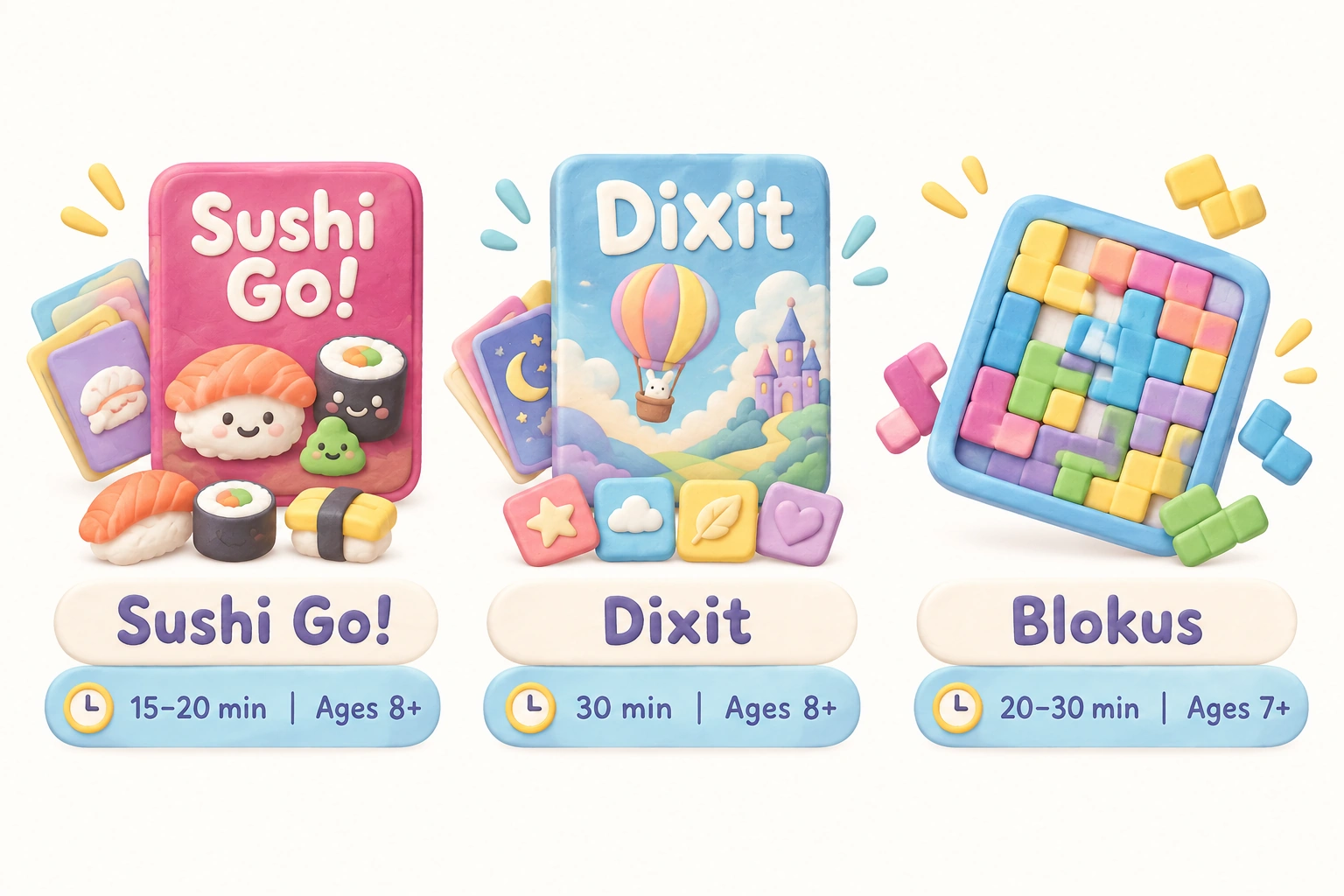
Sushi Go! is a card-drafting game in which players pass hands of cards around the table, selecting one card each round to build the best combination of sushi dishes. It plays in 15 to 20 minutes, fits in a small tin, and is easy to learn for children from about eight upward. The drafting mechanic — choosing a card and passing the rest — introduces a light strategic element without overwhelming younger players.
Dixit uses beautifully illustrated cards and a storytelling mechanic: one player gives a clue about their card, and others choose a card from their own hand that might match. Players then vote on which card was the original. It rewards imagination over knowledge, which makes it one of the most genuinely mixed-age games available. A child of eight and a grandparent can compete on roughly equal terms, which is rarer than it sounds.
Blokus is a spatial reasoning game in which players place colored tetromino-shaped pieces on a grid, with each new piece needing to touch a corner of their own color. It plays in 20 to 30 minutes, requires no reading, and develops spatial thinking in a way that feels like play rather than practice. It is compact enough to travel and works well with two to four players.
Cooperative vs. Competitive: A Practical Decision Guide
Choosing between a cooperative game and a competitive game is one of the most useful decisions a family can make before buying. Cooperative games tend to work better when the age gap between players is large, when younger children are still developing emotional resilience around losing, or when family dynamics make head-to-head competition feel stressful rather than fun. They also work well for families new to modern board games, since everyone is learning together rather than being beaten by a more experienced player.
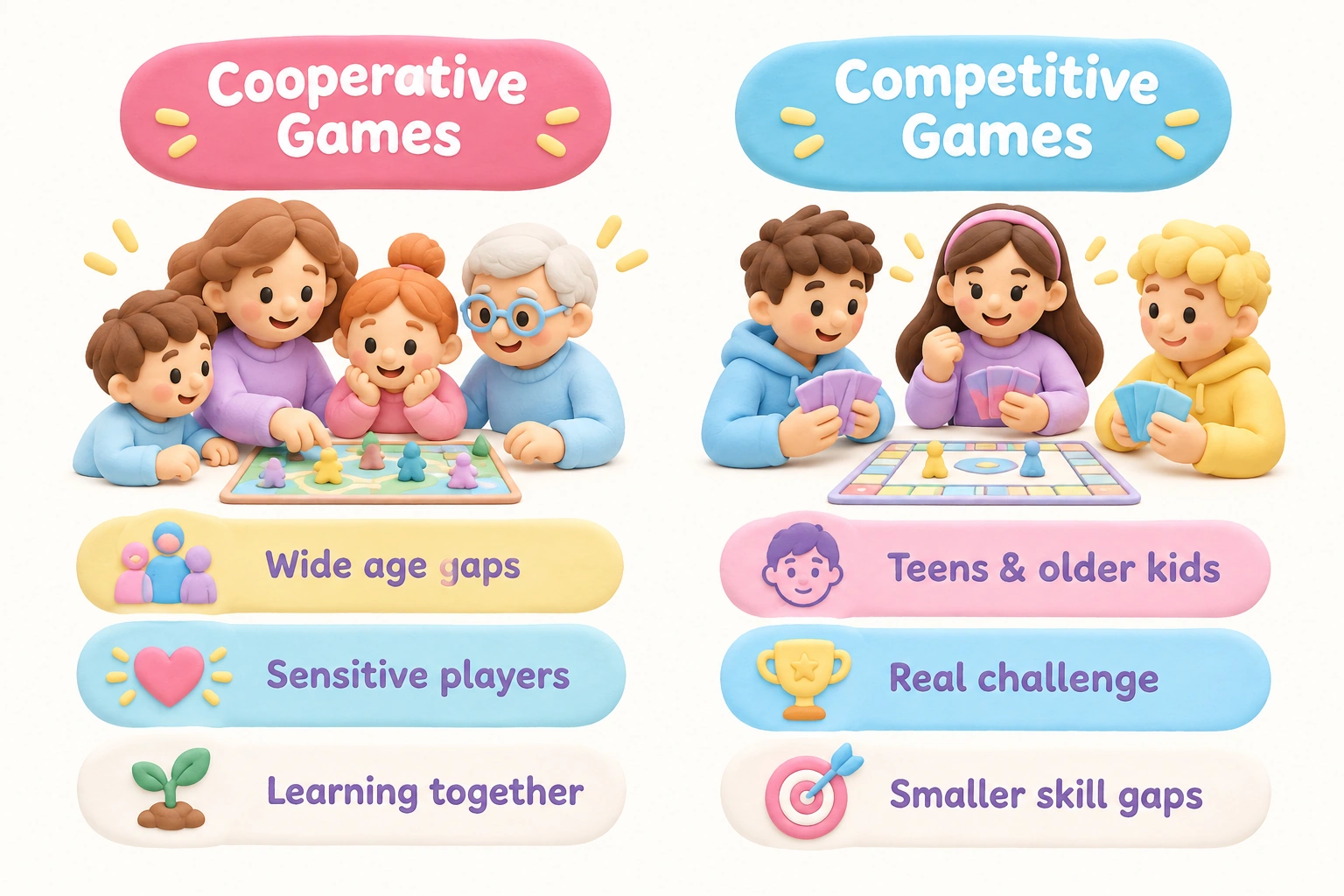
Competitive games tend to suit families where older children and teens want a genuine challenge, where players enjoy the social tension of blocking and outmaneuvering each other, and where the skill gap between players is not so large that outcomes feel predetermined. Many families find that owning one or two games from each category gives them the flexibility to match the game to the mood of the evening.
Educational Value and Child Development Benefits
Board games are not primarily educational tools, but many of the skills involved in playing them overlap with developmental goals that parents and educators care about. Strategy games may support planning, sequential thinking, and working memory. Cooperative games can encourage communication, turn-taking, and perspective-taking. Word games may reinforce vocabulary and verbal reasoning. Tile-laying and pattern games like Qwirkle and Blokus involve spatial reasoning that some research associates with early mathematical thinking, though the evidence for direct academic transfer remains limited and outcomes vary by child.
Perhaps the most consistent benefit of regular family game nights is less about specific cognitive skills and more about the quality of interaction they create. A screen-free evening around a board game gives families a structured reason to talk, laugh, problem-solve together, and practice managing both winning and losing — experiences that are harder to replicate through passive media consumption. The family bonding dimension is real, even if it is difficult to quantify.
Frequently Asked Questions
What is the single best board game for families with mixed ages?
Ticket to Ride is the most consistently recommended choice for mixed-age families. Its rules are easy to learn, the visual map keeps younger players oriented, and the route-building decisions are engaging enough for adults. Dixit is a strong alternative if your family includes very young children, as it requires no reading and rewards imagination over strategy.
Are cooperative games better than competitive games for families?
Neither type is universally better. Cooperative games reduce conflict and work well across wide age gaps, but competitive games often feel more exciting for older children and teens. Many families benefit from owning at least one of each type and choosing based on who is playing and what mood the evening calls for.
How long should a family board game last?
For families with children under eight, games of 20 to 30 minutes tend to hold attention most reliably. Families with older children can comfortably manage 45 to 75 minutes. Add roughly 15 to 30 minutes to any box estimate when younger children are learning the rules for the first time.
Which games work well when grandparents join?
Games with no reading requirement, minimal fine motor demands, and clear visual logic work best for multigenerational play. Qwirkle, Dixit, Kingdomino, and Camel Up all fit this profile. Avoid games with very small components or complex iconography that can be hard to read at a glance.
What is a gateway game and which ones should families try first?
A gateway game is a modern board game designed to be accessible enough for players who are used to classic titles like Monopoly or Uno, while offering more interesting decisions and better design. Ticket to Ride, Carcassonne, and Sushi Go! are the most widely recommended gateway games for families. All three have simple rules, short to moderate play times, and enough depth to remain enjoyable after many plays.
Do any of these games have expansion packs worth buying?
Several of the games on this list have well-regarded expansion packs. Ticket to Ride has map expansions covering Europe, Asia, and other regions. Catan has Seafarers and Cities and Knights, which add significant complexity and replayability. Carcassonne has dozens of small expansions that add new tile types and mechanics. Expansions are generally worth considering once a family has played the base game enough to want more variety.
Which Family Board Game Is the Right Fit for Your Family?
The best board game for your family is the one that matches your youngest player’s age and patience, your available time, and the kind of experience you want to create together. If you are new to modern board games, start with a gateway game like Ticket to Ride or Kingdomino before investing in something more complex. If your family includes a wide age range, a cooperative game like Outfoxed! for younger children or Pandemic for older ones will reduce friction and keep everyone at the table. If you have teens who want a real challenge, Catan, Codenames, or Azul will hold their interest far longer than most classic board games.
No single game works perfectly for every family, and it is worth accepting that some purchases will be played twice and shelved. The games that tend to earn their place are those with genuine replay value, honest age-appropriateness, and rules simple enough that setup does not eat into playing time. Starting with one well-chosen game and playing it regularly will do more for family game night than a shelf full of titles played once. If you are unsure where to begin, Ticket to Ride remains the most reliable first choice for families across the widest range of ages and experience levels.

Take a short quiz to find out what your everyday choices say about your parenting style
When your child is curious about something new, what’s your instinct?
Take a short quiz to find out what your everyday choices say about your parenting style
“Can I download this app?” What happens next?
Take a short quiz to find out what your everyday choices say about your parenting style
When it comes to rules at home, which sounds most like you?
Take a short quiz to find out what your everyday choices say about your parenting style
If you could give your child one life skill today, what would you pick?
Take a short quiz to find out what your everyday choices say about your parenting style
Your child gets to choose what to watch. What would your ideal setup look like?
Take a short quiz to find out what your everyday choices say about your parenting style
Pick your parenting superpower ✨