Pronouns for Kids: How to Teach Them in 8 Easy Steps

 Discover a Free Education Video App for Kids
Pastory uses AI to personalize educational video content based on your child’s interests and personality. Safe, engaging, and built for curious young minds. Sign up now to stay updated and enjoy early access with a free trial
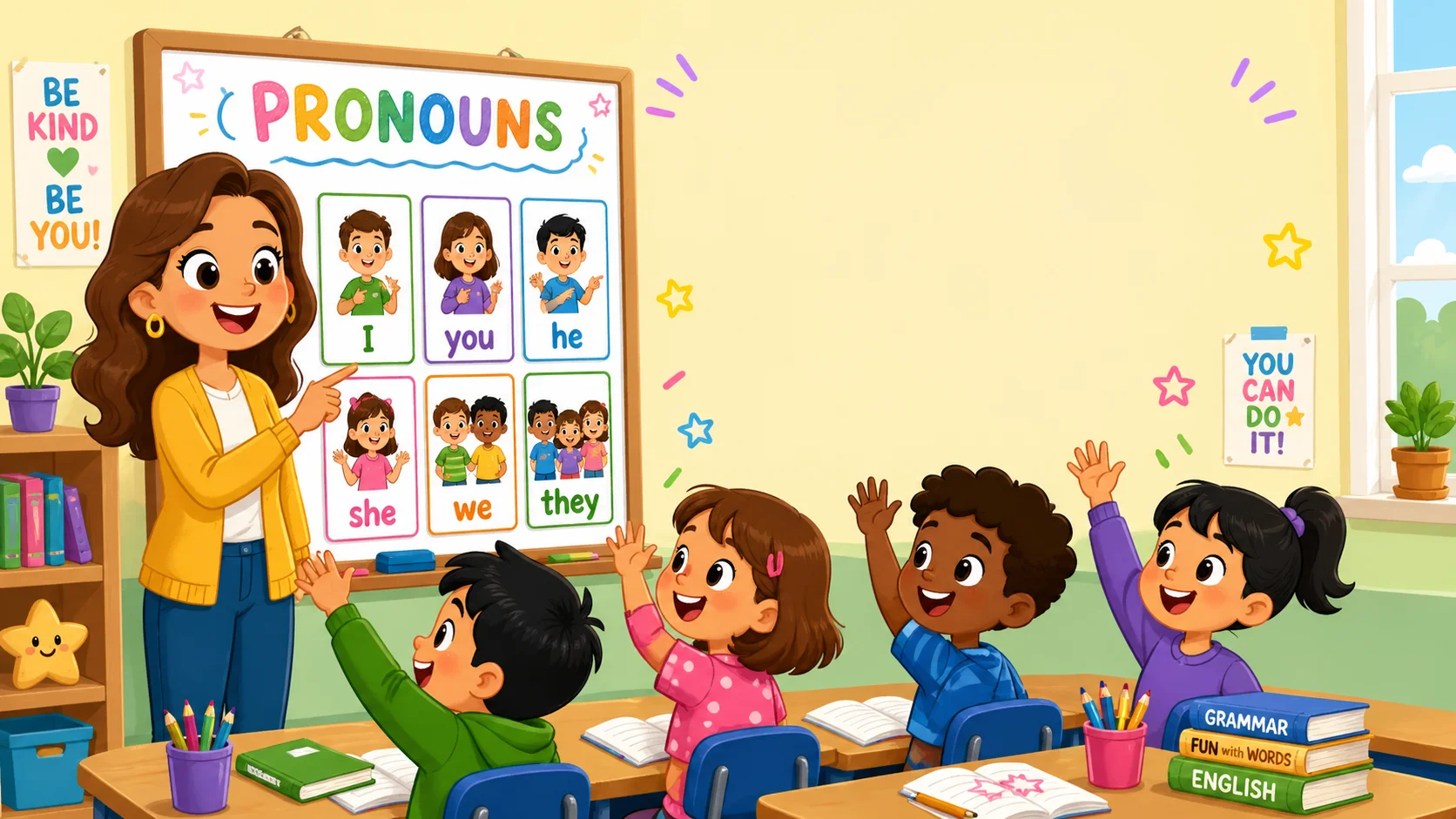
Teaching grammar to children can feel daunting, but understanding how pronouns simplify communication is an important milestone in language development. This guide gives parents and educators a structured, step-by-step approach to teaching pronouns through engaging activities, visual aids, and clear sentence examples. By following this guide, you can help your child move from repeating names to using pronouns more fluently and accurately.
What Kids Should Know Before Learning These Words
Before a child is formally introduced to grammar, certain language building blocks should already be in place. Most children begin using early pronouns around age 2 and expand their use between ages 2 and 3, although every child develops at their own pace.
Noun Basics Kids Need First
A child must first understand that people, places, animals, and things have names, and that these names are nouns. Before teaching these words, make sure the child can identify common nouns such as “mom,” “dog,” “school,” and “toy.” Understanding that a noun in a sentence represents a specific entity is the first step toward learning how to replace it later.
Simple Sentence Skills
These short words help make speech smoother, but the child should first be able to build basic “subject + verb” sentences. If a child can say “Tom runs” or “The dog sleeps,” they are ready to learn how pronouns can replace those subjects to avoid repetition.
Subject and Object Roles
Children need a basic understanding of who does the action and who receives it. A basic understanding of the subject as the person or thing doing the action helps children later distinguish between subject forms, such as “she,” and object forms, such as “her.”
Everyday Words Kids Already Use
Most children use these words before they know the formal grammar rules. Words such as “I,” “me,” “you,” and “mine” often appear in a child’s vocabulary around age 2. Noticing these common words in the child’s everyday speech gives you a strong starting point for teaching.
What Are Pronouns for Kids?
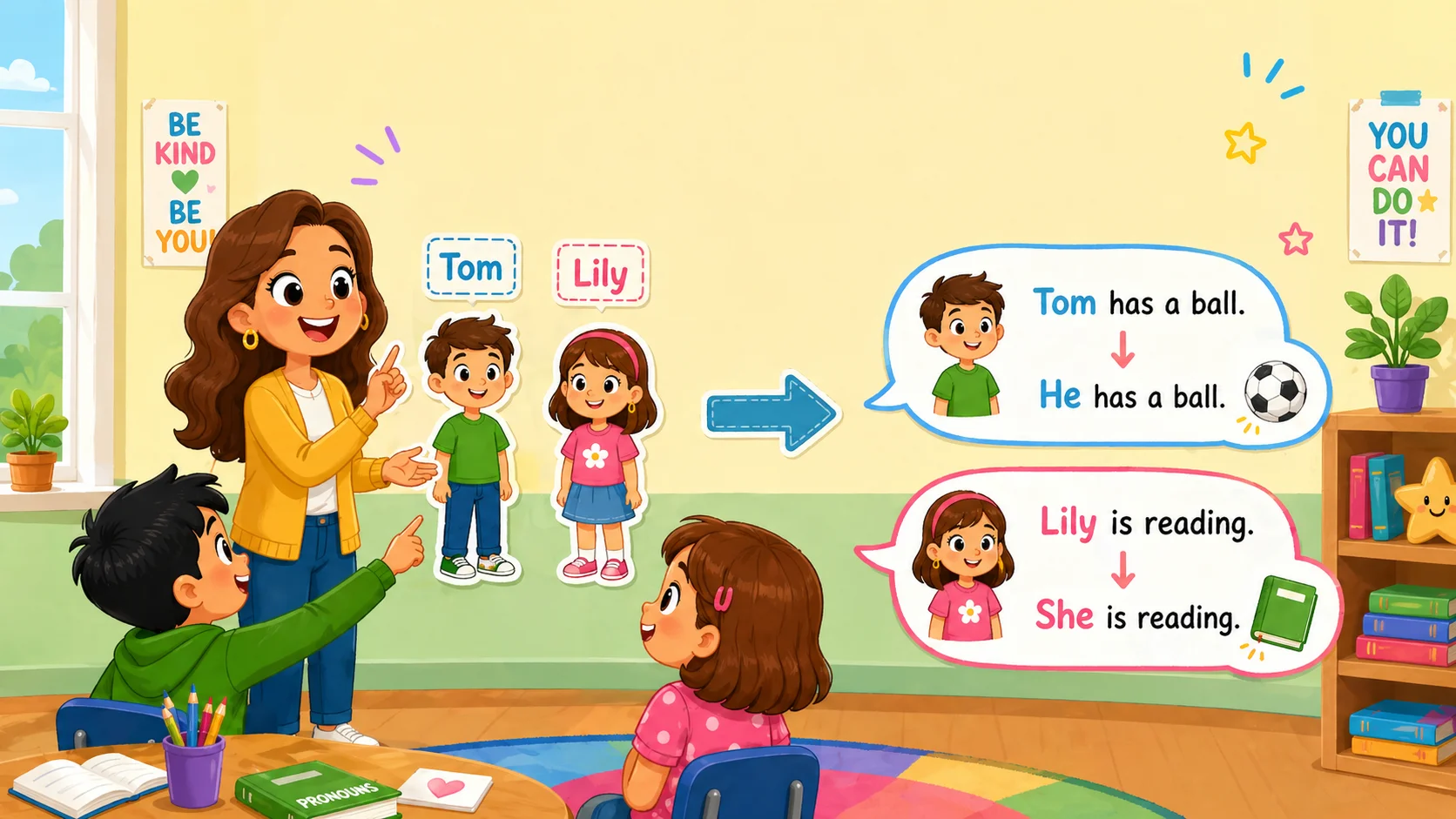
In the simplest terms, a pronoun is a word used to replace a noun.These words make speech and writing smoother because they help us avoid repeating a person’s, animal’s, or object’s name over and over.
Meaning for Kids
To help children understand, use this simple definition: “It is a small word we use instead of saying the same name over and over again.” It works like a stand-in for the noun.
Nouns These Words Replace
To help your child visualize the concept, show how these words can replace specific nouns:
- Emma becomes “she”
- Dad becomes “he”
- The ball becomes “it”
- The children become “they”
These Words Versus Nouns
Compare these two versions of a story about Sally:
- Repetitive: Sally has a cat. Sally feeds the cat. Sally loves the cat.
- Natural: Sally has a cat. She feeds it. She loves it.
By using pronouns instead of repeating the noun, the sentences sound more natural.
Useful Fact About This Word
The term pronoun comes from the Latin pronomen, from pro meaning “in place of” and nomen meaning “name” or “noun.” It roughly means “in place of a noun.”
When Kids Use These Words
When used correctly, pronouns help children express more complex thoughts and tell clearer stories. Children develop these skills through daily exposure, modeling, and targeted practice.
After Naming a Person or Thing
Third-person pronouns such as “he,” “she,” “it,” and “they” are clearest after we have established who or what we are talking about. If a child says, “He is fast,” without first mentioning “The car,” the listener won’t understand. These words help maintain clarity once the noun has been introduced.
To Avoid Repeating Names
One important function of these words is to avoid repeating the same noun. Instead of repeating “the teacher” five times, we can switch to “she,” “he,” or “they,” depending on the teacher’s pronouns.
During Storytelling
When children learn to tell stories, pronouns can stand in for characters and keep the story moving. This allows the child to focus on the plot rather than repeating names.
During Daily Conversation
In daily conversation, children use pronouns to ask for help, describe actions, and talk about shared plans. Common phrases include:
- “Can you help me?”
- “They are playing with my toy.”
- “We are going to the park.”
Development by Age
While every child develops at their own pace, the following milestones are commonly seen in early language development:
| Age Range | Expected Word Usage | Common Characteristics |
| 2 Years | I, me, you, mine | Focuses on self and immediate needs. |
| 3 Years | He, she, we, they | Begins identifying others; may mix up genders. |
| 4-5 Years | Us, them, his, hers | Understands subject and object distinctions clearly. |
| 6+ Years | Myself, themselves, whose | Masters reflexive and relative forms. |
Signs Kids Need Extra Practice
If a child older than 4 or 5 consistently says “Me want cookies” instead of “I want cookies,” or has broader difficulty answering simple who/what questions, targeted practice may help; if concerns persist, parents should consider speaking with a pediatrician or speech-language pathologist.
How to Teach Pronouns in 8 Easy Steps
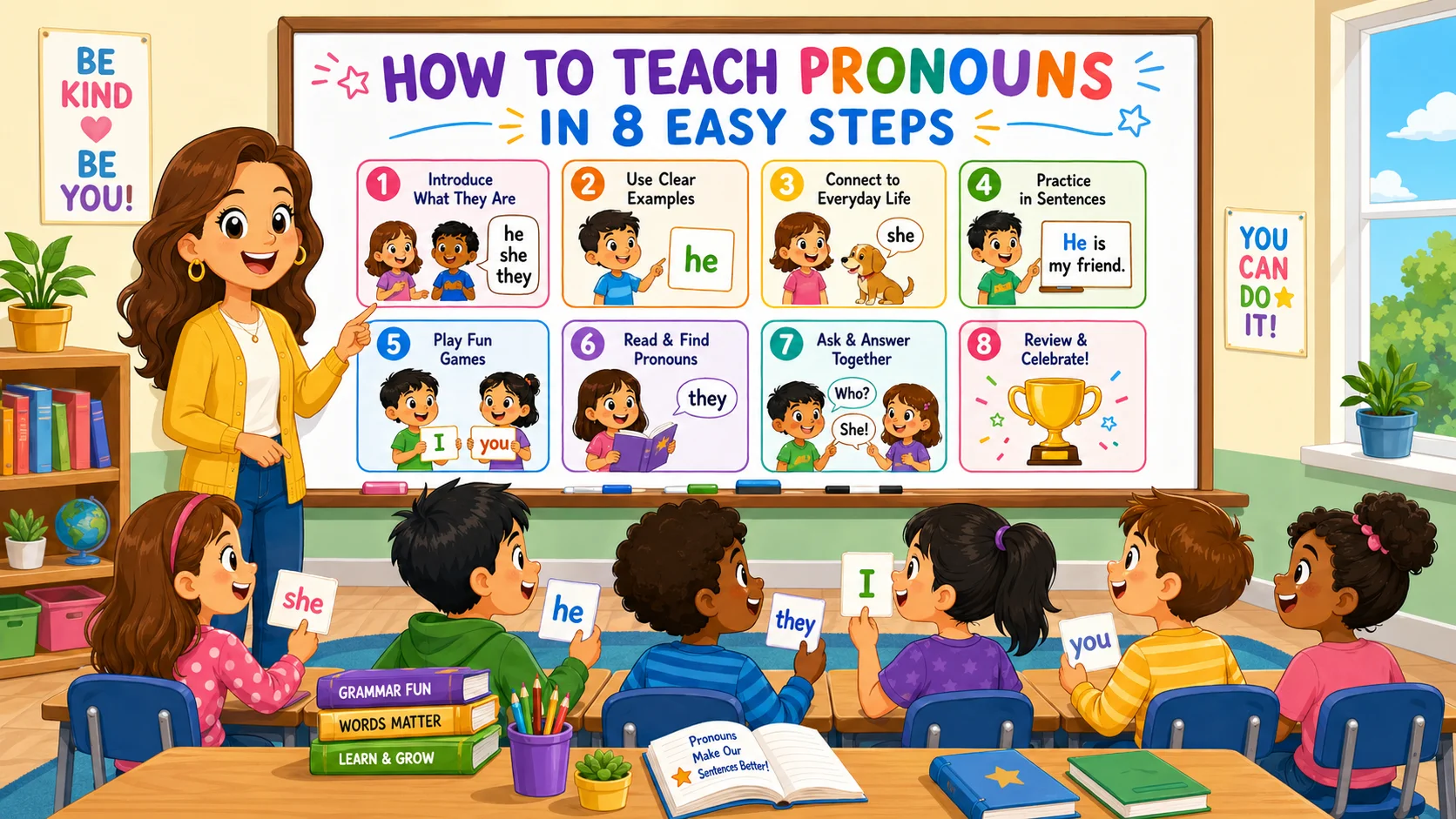
This learning process should be enjoyable and effective. Follow these steps to teach pronouns to kids systematically.
Step 1: Identify Nouns
Before moving to different types of pronouns, have the child point out objects around them. Use a worksheet or picture book to label people, animals, and things.
Step 2: Match Nouns With Substitutes
Create a fun way to link nouns to pronouns. Use a video lesson or flashcards to show that “the boy” can be replaced by “he” and “the girl” can be replaced by “she.”
Step 3: Introduce Personal Pronouns
Start with the basics: I, you, he, she, it, we, they. Explain that these refer to people or things directly involved in the sentence.
Step 4: Practice Subject Pronouns
A subject pronoun is the “star” of the sentence. Practice sentences in which the subject is doing the action, such as “He jumps” or “They eat.”
Step 5: Practice Object Pronouns
Explain that the object of a sentence receives the action. Use examples like “Mom hugged me” or “Give the ball to them.”
Step 6: Move to Possessive Pronouns
Introduce possessive pronouns to show ownership. Use the child’s belongings: “This is my book; it is mine.”
Step 7: Add Reflexive Pronouns
Teach reflexive pronouns, such as “myself” and “yourself,” by showing actions people do for or to themselves. “I dressed myself” is a great child-friendly example of self-care vocabulary.
Step 8: Check Pronoun Agreement
Make sure the pronoun matches the noun in number. Singular nouns usually take singular pronouns, such as “he,” “she,” or “it,” while plural nouns take plural pronouns, such as “they.”
Helpful Chart for Kids
A visual chart helps children understand the different categories at a glance.
Personal Forms Chart
| Person | Singular | Plural |
| 1st Person | I | We |
| 2nd Person | You | You |
| 3rd Person | He, She, It | They |
Subject and Object Forms
- Subject forms: I, you, he, she, it, we, they
- Object forms: me, you, him, her, it, us, them
Possive Forms Chart
These forms show ownership:
- My / Mine
- Your / Yours
- His / Her / Hers
- Our / Ours
- Their / Theirs
Reflexive Forms Chart
- Singular: myself, yourself, himself, herself, itself
- Plural: ourselves, yourselves, themselves
Printable Pronoun Chart Tips
A physical chart can reinforce learning. Hang it in a study area or use it as a reference during reading time. This helps the child connect the written word with how it is used in speech.
Examples for Kids
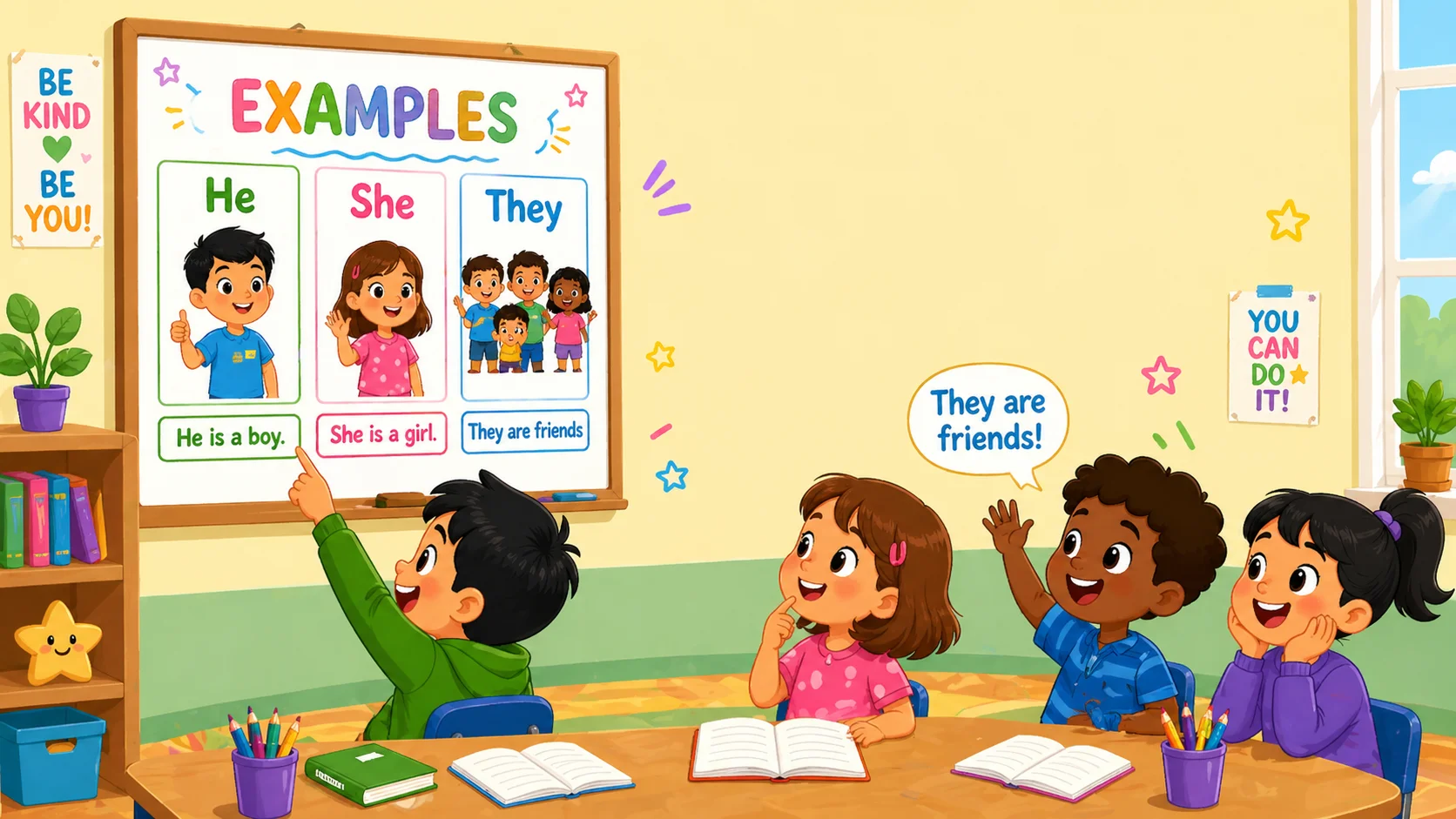
Example 1: Name to Pronoun
Noun: “Jack has a bike.”
Replacement words: “He rides it.”
Here, “he” replaces Jack and “it” replaces the bike.
Example 2: Repeated Noun Fix
Bad: “The dog saw the bone and the dog ate the bone.”
Better: “The dog saw the bone and ate it.”
Using shorter replacement words instead of repeating nouns makes the sentence smoother.
Example 3: Subject Versus Object
“She (subject) sees him (object).”
“He (subject) sees her (object).”
This helps the learner see how the word changes based on its role in the sentence.
Example 4: Possessive Pronoun Use
Ownership is a key concept. For example: “This is my pencil. The pencil is mine.” This demonstrates how we show that something belongs to someone.
Using These Words in Sentences
Understanding these words in isolation is only the beginning. The goal is for the child to use these forms naturally in complete sentences.
Pronouns in Short Sentences
For beginners, keep it simple. Use sentences like “She is tall” or “We are happy.” This builds confidence with subject forms without overwhelming the child with complex grammar.
Pronouns in Questions
Learning how to ask questions is vital. Practice phrases like “Is she reading?” or “Did you see him?” This helps children recognize that these words can also appear in different parts of a question.
Pronouns in Stories
When reading together, point out how the author uses these words to avoid repetition. A short story might go: “The cat found a fish. It was hungry. It ate the fish quickly.” This shows the practical application of the learning process.
Pronouns in Speech Practice
Spoken practice can be fun and effective. During dinner or play, ask the child to describe what others are doing: “He is eating,” or “They are building a tower.”
Personal Pronouns for Kids
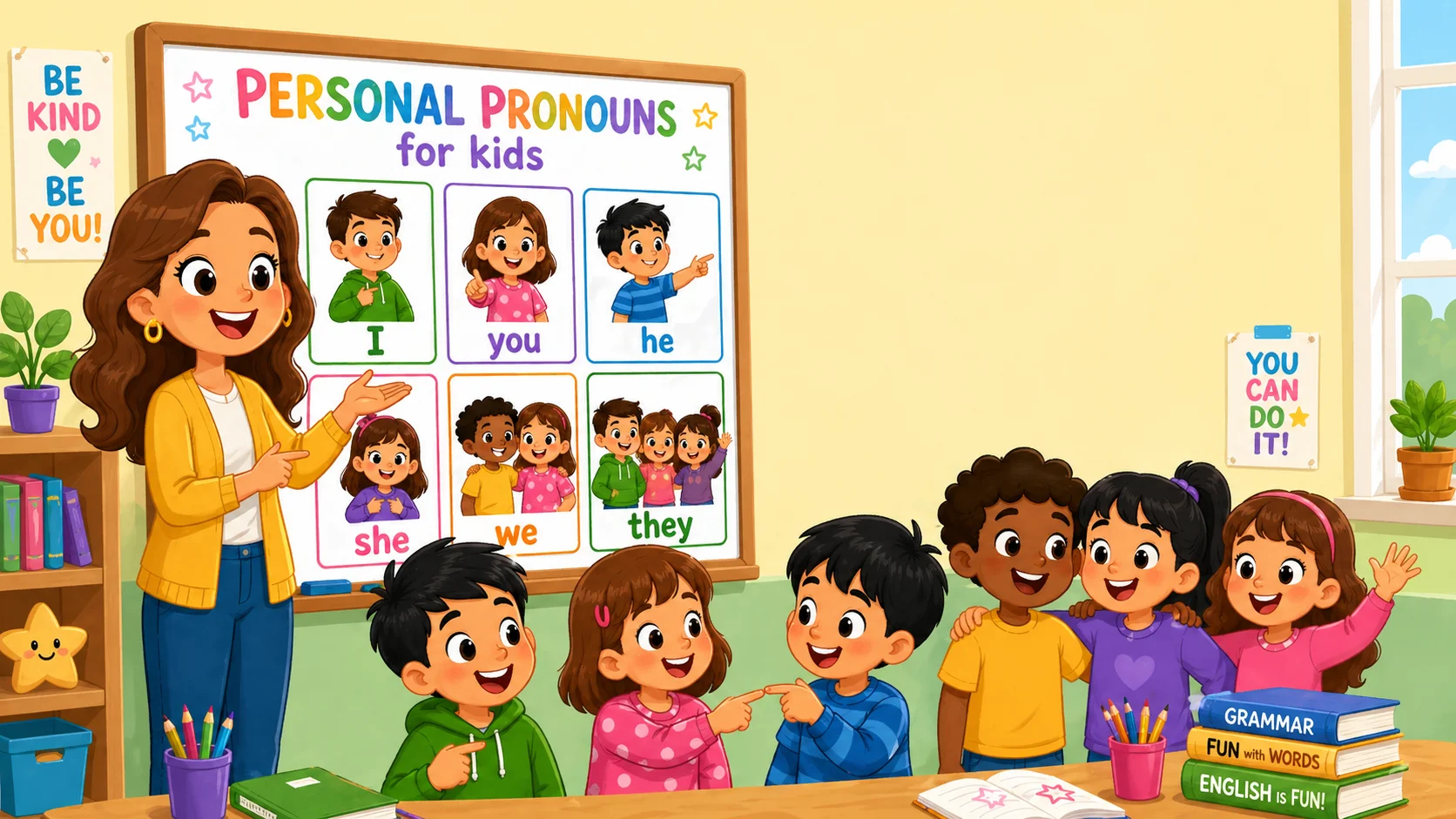
This category includes some of the most common words in English. It allows us to refer to people directly and clearly.
I, You, He, She, It
These are singular forms. “I” refers to the speaker, “you” to the listener, and “he,” “she,” and “it” to another person, animal, or thing. Practice these with objects around the room.
We and They
These are plural forms used for groups. Explain that “we” includes the speaker, while “they” usually refers to people or things outside the speaker’s group.
Me, Him, Her, Us, Them
These object forms often appear after verbs or prepositions. For example: “Give the toy to me” or “The teacher called us.”
Common Personal Pronoun Mistakes
It is normal for children to learn at different speeds. Common errors include saying “Me go” instead of “I go” or confusing “he” and “she.” Correct errors gently by repeating the sentence back correctly.
Possessive Pronouns for Kids
These words are essential for describing ownership and boundaries.
My, Your, His, Her, Its
These forms function like adjectives or determiners because they come before a noun. Example: “My dog,” “your car,” or “his hat.”
Our and Their
Used for group ownership. “Our house” means the house belongs to us. “Their game” means the game belongs to a different group.
Mine, Yours, His, Hers, Ours, Theirs
These can stand alone without the following noun. Example: “The book is mine.”
Possessive Pronouns Versus Possessive Adjectives
Explain that “my” needs a partner (my ball), while “mine” can stand alone. This distinction helps the child sound more natural and grammatically accurate.
Reflexive Forms for Kids
Reflexive forms are used when the subject and the object are the same.
Myself and Yourself
Focus on self-directed actions. “I can tie my shoes myself.” This reinforces the child’s sense of independence.
Himself, Herself, Itself
Use these forms for people, animals, or things doing actions themselves. “The cat cleaned itself” is a simple way to show this concept in nature.
Ourselves and Themselves
Use plural reflexive forms for group activities. “We made these cookies ourselves.”
Simple Reflexive Pronoun Examples
Use everyday chores to practice:
- “He dressed himself.”
- “She made herself a snack.”
- “The bird washed itself in the water.”
Agreement Rules for Kids
Agreement means the pronoun should match the noun it replaces in number, person, and, when relevant, gender.
Singular and Plural Matching
If you are talking about one person, use the pronoun that fits that person: “he,” “she,” or “they.” If you are talking about more than one person or thing, use “they.” This is a fundamental rule in grammar.
Person Matching in Sentences
Ensure the child knows the difference between the speaker (1st person), the listener (2nd person), and the person being talked about (3rd person).
Gender Matching When Needed
In simple beginner lessons, explain that “he” often refers to a boy or man, “she” often refers to a girl or woman, “they” can refer to more than one person or to one person when gender is unknown or not specified, and “it” is used for objects and, when appropriate, animals.
Quick Agreement Check
Teach the child a 3-step check:
- Who is the sentence about?
- Is it one or many?
- Which word fits best to avoid repeating names?
8 Fun Ways to Teach These Words
1. Pronoun Scavenger Hunt
Search through books for words like “he,” “she,” and “it.” It’s a great way to build recognition through real examples.
2. Pronoun Bingo
A classic game. Instead of numbers, use short grammar words on the bingo cards.
3. Pronoun Sorting Game
Sort pictures into categories. Does this picture show one person, an animal, an object, or a group? Which word fits best: “he,” “she,” “it,” or “they”?
4. Role-Playing Scenarios
Use toys to act out scenes. “This is his truck, but he wants to share it with her.”
5. Pronoun Puzzles
Match a picture of a group to the word “they.”
6. Picture Card Pronoun Match
Use cards showing different family members and match them to the correct pronoun.
7. Story Starter Challenge
“Once there was a dragon. It lived in a cave…” Let the child continue the story using different pronouns.
8. Mirror and Photo Practice
Look at family photos. “Who is this? She is my aunt.” This makes the learning process personal.
Practice Task for Kids
Find Pronouns in a Story
Read this: “Tim went to the park. He saw a bird. It was blue. He liked it.”
Ask the child to circle the words that replace Tim and the bird.
Replace Nouns With Pronouns
Change the repetitive words: “The girl found a doll. The girl picked up the doll.”
Answer: “The girl found a doll. She picked it up.”
Fix Pronoun Mistakes
Correct this: “The boys are playing. They are fast.”
Answer: “The boys are playing. They are fast.”
Answer Key for Parents and Teachers
Checking work is vital for a supportive environment. Always explain why a certain word is correct in that specific sentence.
Can Kids Identify These Words?
Beginner Quiz
- Is “Apple” a pronoun? (No, it’s a noun)
- What word replaces “The Boy”? (He)
- What word replaces “The Girl”? (She)
Multi-choice Test
Pick the right word: “___ are going to school.” (Answer: B) They.)
A) Me
B) They
C) Him
Fill-in-Blank Practice
“Mom gave the cookie to ____ (me/I).” (Answer: me.)
Video Lesson
A video lesson can help visual and auditory learners.
What Video Should Cover
A good educational video should include a clear definition, multiple examples, and a colorful chart to keep the child engaged.
Best Moments to Pause
Pause the video after a question is asked. This gives the child time to ask questions or answer the prompt before the video continues.
Practice After Watching
Follow up with a worksheet or a quick sorting game to solidify what they just saw.
Strategies to Help Kids Learn These Forms
Use Gestures
Pointing to yourself for “I” or “me” helps the child understand the subject and object relationship.
Model Correct Pronoun Use
Instead of saying “That’s wrong,” simply model the right way. Child: “Me want toy.” Parent: “Oh, I want the toy too!”
Use Mirrors, Photos, and Books
Visuals are powerful. They help children connect abstract words to real people and things.
Give Choices During Play
“Is he eating or is she eating?” This encourages the child to think about which types of pronouns apply.
Correct Errors Gently
Keep the learning process positive. Constant correction can discourage a child from speaking.
FAQ
What are pronouns for kids?
They are words that take the place of a noun so we don’t have to keep repeating names.
When should kids learn pronouns?
Most children develop the ability to use “I” and “me” by age 2. Complex forms like reflexive pronouns usually come later, around age 5 or 6.
How can parents teach pronouns at home?
Use everyday life. Point to family members, use visual aids, and play simple pronoun games during playtime.
Which pronouns should kids learn first?
Start with common personal pronouns such as “I,” “you,” “he,” “she,” and “it.”
Why do kids mix up pronouns?
Because pronouns shift depending on who is speaking, who is listening, and who or what is being talked about. It takes time for the brain to master this shifting perspective.
Take a short quiz to find out what your everyday choices say about your parenting style
When your child is curious about something new, what’s your instinct?
Take a short quiz to find out what your everyday choices say about your parenting style
“Can I download this app?” What happens next?
Take a short quiz to find out what your everyday choices say about your parenting style
When it comes to rules at home, which sounds most like you?
Take a short quiz to find out what your everyday choices say about your parenting style
If you could give your child one life skill today, what would you pick?
Take a short quiz to find out what your everyday choices say about your parenting style
Your child gets to choose what to watch. What would your ideal setup look like?
Take a short quiz to find out what your everyday choices say about your parenting style
Pick your parenting superpower ✨