Letter E Activities: Fun Ideas for Preschoolers and Kids

 Discover a Free Education Video App for Kids
Pastory uses AI to personalize educational video content based on your child’s interests and personality. Safe, engaging, and built for curious young minds. Sign up now to stay updated and enjoy early access with a free trial
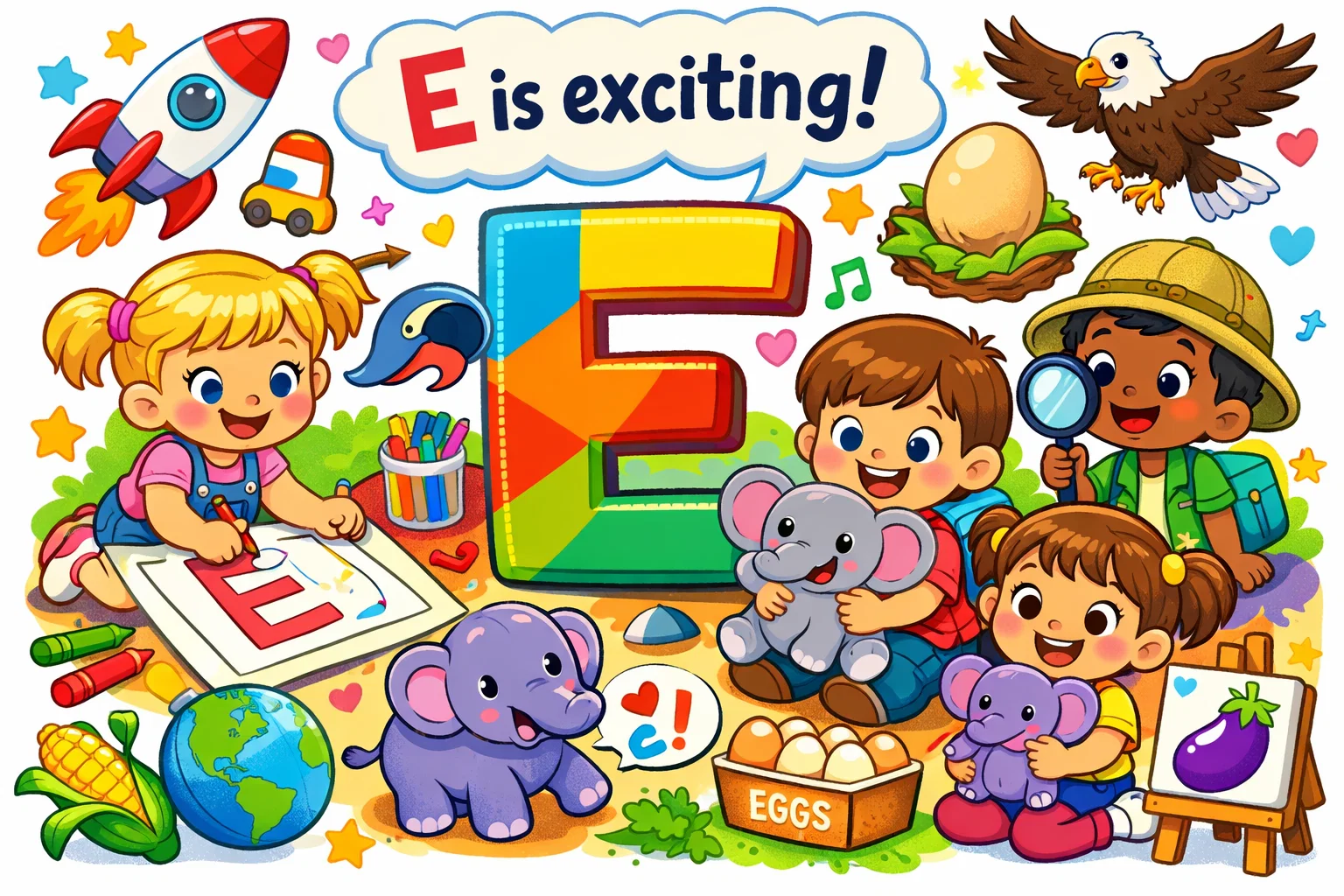
Teaching the alphabet is one of the most rewarding milestones in early childhood. This guide is packed with engaging letter E activities for preschoolers, parents, and teachers looking for creative, hands-on ways to develop letter recognition, early literacy, and fine motor skills. From crafts and sensory bins to free printables and outdoor games, these fun ideas make alphabet learning genuinely enjoyable for young learners.
Engaging Letter E Activities for Preschoolers
Preschool is the ideal time to introduce the alphabet through play, repetition, and sensory exploration. Engaging letter E activities work best when they involve movement, touch, and everyday objects that children already recognize and love. The goal at this stage is not perfection — it is building familiarity and a positive association with the letter name, the shape, and the sounds it makes.
Sounds: Short and Long E
The letter E makes two distinct sounds: a short E as in “egg” and “elf,” and a long E as in “eagle” and “eat.” Helping children distinguish between these two sounds early on supports stronger phonics skills down the road.
Simple repetition games work well here. Say a list of words and ask your child to clap when they hear the short E sound, then again when they hear the long E sound. You can also use picture cards — show an image of an elephant and an eagle side by side and practice both pronunciations together. Consistent, playful practice with sounds helps children internalize phonics before they ever pick up a pencil.
Elephant and Other Animals That Start With E
Animals are a natural hook for young learners, and there are plenty of engaging letter E examples in the animal kingdom. Some favorites to explore include:
- Elephant — a preschool curriculum staple
- Eagle — introduces the long E sound naturally
- Eel — a fun, unusual animal that sparks curiosity
- Emu — great for expanding vocabulary beyond the obvious
Use animal flashcards for matching games, or build a simple storytelling activity where your child creates a short adventure featuring their favorite E animal. These alphabet activities reinforce beginning letter sounds while developing vocabulary and imagination at the same time.
Letter E Craft Ideas for Preschoolers
Hands-on craft ideas connect the abstract shape of the letter to something tangible and memorable. Some popular options include:
- Elephant paper craft — create a simple elephant using colored paper, glue, and cut-out shapes; helps develop fine motor skills and animal recognition
- Egg carton caterpillar — use sections of an egg carton to build a caterpillar, then paint and decorate; great for creativity and recycling awareness
- Earth day craft — make a simple globe using paper plates and paint; introduces basic environmental concepts
- Elastic band painting — stretch bands over a box or paper and paint across them for unique patterns; builds hand coordination
- Eraser stamping — dip erasers in paint and use them as stamps to create patterns; simple and fun for repetition practice
- Eggshell mosaic — glue crushed, colored eggshells onto paper to form designs; enhances texture exploration and patience
These letter E art projects are perfect for preschool because they build fine motor skills while reinforcing letter recognition. Even simple coloring pages featuring the E help children internalize its shape through hands-on creativity and repetition.
Letter E Books for Kids
Reading aloud is one of the most research-supported strategies for building early literacy. Research from the National Institute for Literacy consistently shows that shared reading builds phonological awareness, vocabulary, and print concepts in young children.
Top Letter E books for kids are:
- Green Eggs and Ham by Dr. Seuss
- The Little Engine That Could by Watty Piper
- Elmer by David McKee
- Elephants Cannot Dance! by Mo Willems
- An Egg Is Quiet by Dianna Hutts Aston
- Edward the Emu by Sheena Knowles
- The Emperor’s Egg by Martin Jenkins
- The Mighty Silent E! by Kimberlee Gard
- E-mergency! by Tom Lichtenheld
When choosing letter E books, look for titles that emphasize E words throughout the story. During reading, pause on words like “elephant,” “eat,” or “explore” and ask your child to repeat the beginning sound. This interactive approach turns storytime into active learning that helps children remember the letter E in context.
Foods That Start With E
Connecting letters to food makes learning multisensory and memorable. Foods that start with E include eggs, eggplant, edamame, and English muffins. Build a simple sorting or tasting activity around these — lay out pictures or real items and ask your child to name each one, emphasizing the E sound at the start.
Pretend cooking activities using toy food are also a great way to help your child practice letter recognition naturally. Children love role-playing, and narrating their play (“I’m cooking eggs!”) reinforces sounds without feeling like a structured lesson.
Science E Words
Even preschool-aged children can engage with simple science vocabulary that starts with E. Words like “earth,” “energy,” “echo,” and “experiment” introduce early STEM concepts in accessible, age-appropriate ways.
Try a simple echo experiment outdoors — clap near a wall and listen for the echo, then explain what happened. Or pour water into different containers and talk about how water has “energy” when it moves. These hands-on activities attach meaning to E words and build scientific curiosity from an early age.
Using Worksheets for Letter E
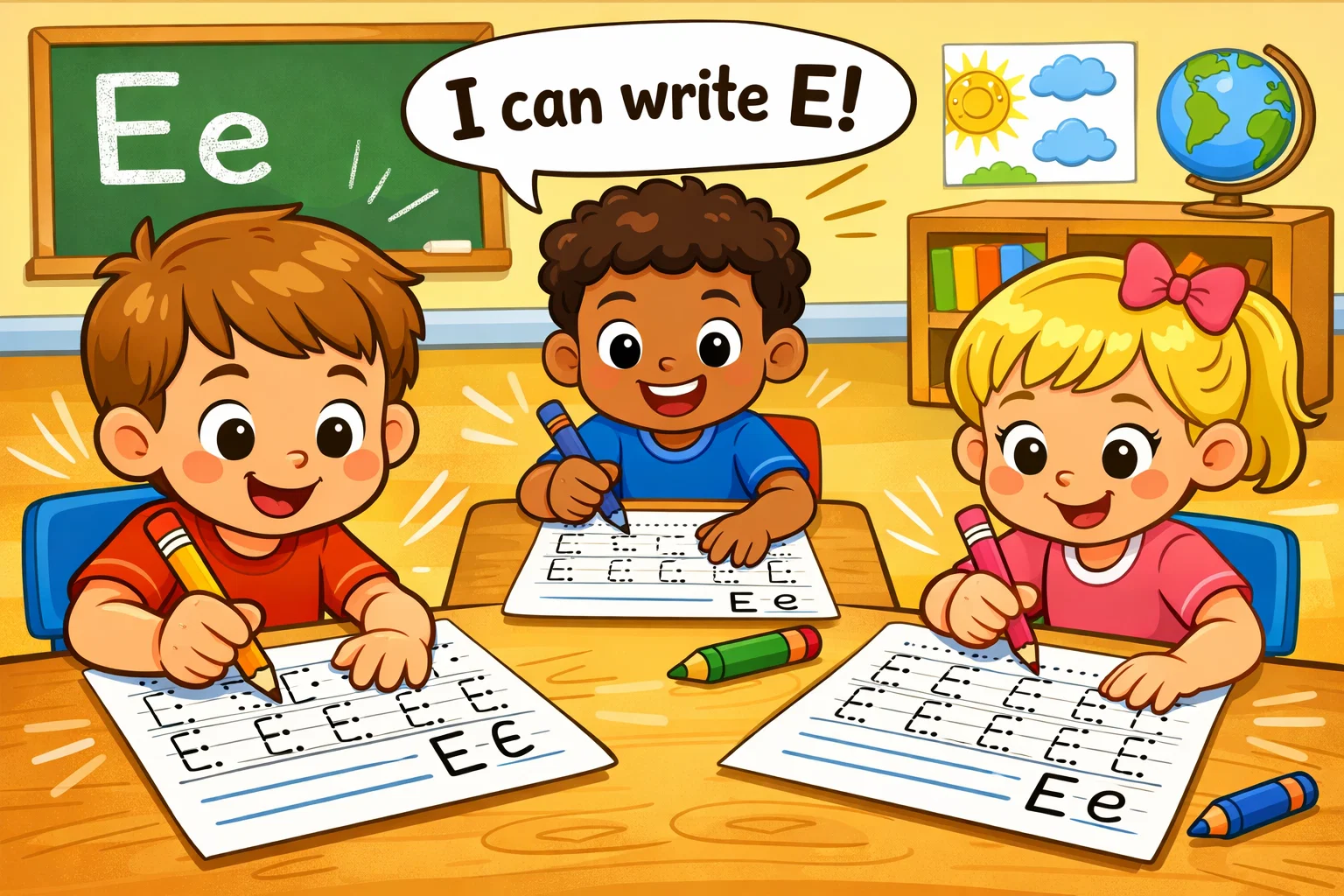
Free printables and worksheets are some of the most practical tools for reinforcing letter E learning at home or in the classroom. A good set of letter E worksheets typically includes tracing practice, coloring pages, and recognition activities — all of which support a well-rounded preschool curriculum without requiring expensive materials.
Letter E Tracing Worksheets
Tracing is one of the most effective motor activities for building the hand strength and muscle memory needed for writing. Look for free printables that guide children through forming both the uppercase letter E and the lowercase e, starting with large strokes and gradually reducing the size as confidence grows.
Encourage children to verbalize as they trace — saying “down, across, across, across” reinforces both letter formation and stroke sequence. After tracing, ask children to try writing the letter E independently on blank lines to practice formation without visual support.
Color Recognition and Coloring Pages
Coloring activities that feature the E word images build color recognition alongside letter learning. A worksheet showing an uppercase E next to a picture of an elephant, for example, reinforces both the letter name and its beginning sound in a single activity.
These pages are particularly useful for children who are not yet ready for pencil-and-paper writing tasks but still benefit from structured, focused engagement with the shape. Free printables of this type are widely available and easy to incorporate into daily practice sessions.
Matching Activities
Matching activities that pair the uppercase “E” with the lowercase “e” help children understand that both forms represent the same letter. You can create simple card games at home — write uppercase E on half a set of index cards and lowercase e on the other half, then mix them up and ask your child to find the matching pairs.
These matching games are a low-prep way to practice letter recognition that kids love precisely because they feel like play rather than schoolwork. Digital matching tools and alphabet apps also work well here, especially for children who respond well to screen-based learning.
More Fun Activities for Kids
As children build confidence with the basics, it is time to take letter E learning off the page and into the real world.These fun activities give kids the chance to practice letter recognition in fresh, exciting contexts that keep motivation high.
Letter E Hunt Ideas
A letter E hunt is one of the most engaging activities you can set up in minutes. Hide cards or objects around the room — or simply use a printed page — and ask your child to find every E they can spot. You can run the hunt in several ways:
- Indoor object hunt — find things around the house whose names start with E
- Hidden letter hunt — find all the uppercase and lowercase E letters on a printed page or in a picture book
- Outdoor E hunt — spot the E on signs, packaging, and labels outside
These variations are perfect for building letter recognition in real-world contexts, which helps children understand that the alphabet exists everywhere — not just on worksheets.
Art Activities for Letter E
Letter E art activities give children a creative outlet while reinforcing the letter name and shape. Some crowd-pleasing craft ideas include:
- Stamping the E onto paper using a sponge or potato stamp
- Painting an elephant using only shades of gray and then labeling it with the “E”
- Gluing natural materials like dried grass or leaves onto a “E” outline
These art projects integrate fine motor skills, creativity, and letter learning in a single activity. They are also a natural fit for preschool curriculum planning because the finished pieces make excellent classroom displays that reinforce learning for all students.
Alphabet Activities and Word Games
E word games are a fun, no-prep way to help your child practice letter recognition and build vocabulary at the same time. Call out a category — animals, foods, or things you find outside — and challenge your child to think of an E word that fits. Start simple with words they already know, then gradually introduce less familiar vocabulary.
These alphabet activities work well as transition activities during the school day or as quick engagement strategies during a car ride or a wait at the doctor’s office. Kids play along naturally when the activity feels casual and conversational rather than like a test.
Letter E Activities That Build Fine Motor Skills
Fine motor skills develop alongside literacy skills in early childhood, and many of the best activities naturally support both at once. Cutting, gluing, threading, and tracing all strengthen the small muscles of the hand that children need for writing.
Craft and Cutting Activities
Cut-and-paste letter E crafts are a favorite motor activity in preschool classrooms because they require precision and focus without demanding any prior literacy knowledge. Children cut out E-shaped templates, elephant body parts, or pictures of E words from magazines, then assemble them into a collage or craft project.
These activities are perfect for developing the hand control and coordination that directly supports letter E tracing and writing practice later on.
Sensory Bin Activities
Sensory bins filled with materials like rice, sand, and small objects that start with E give children a tactile way to explore the letter. Bury small plastic animals — an elephant, an eagle — in a bin of kinetic sand and ask children to find each one, naming the beginning sound as they go.
Sensory play is particularly valuable for children who learn best through touch and movement. It transforms letter learning into a full-body experience that kids love and naturally want to return to.
Tips for Teaching Engaging Letter E Activities
Choosing Age-Appropriate Activities
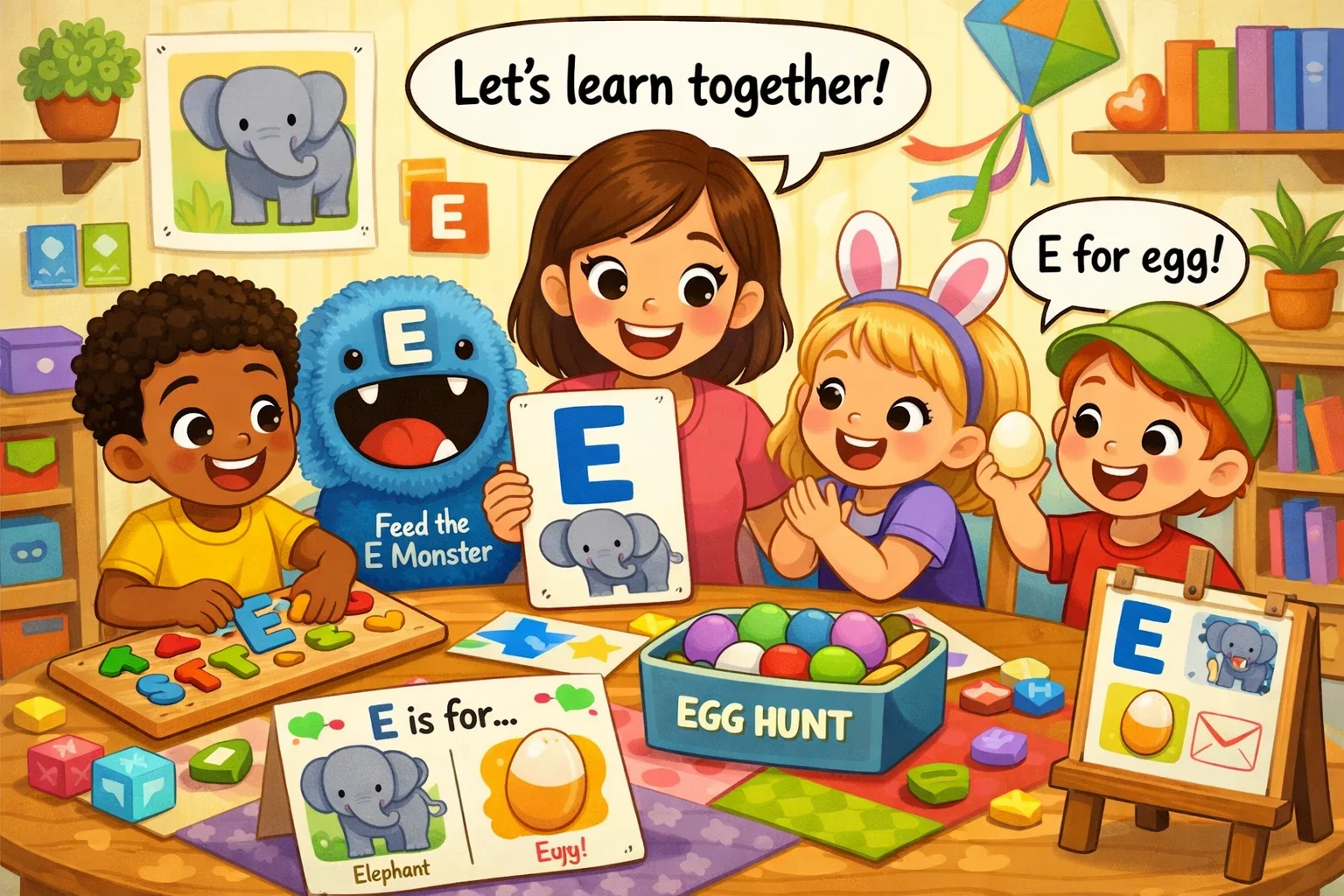
The most effective letter E activities match a child’s current developmental stage. For preschoolers aged 2–4, focus on sensory play, repetition, and short five-to-ten-minute sessions. For kindergarteners, structured worksheets and matching games become more appropriate. Early elementary students can handle more complex word hunts, writing practice, and reading-based activities.
When in doubt, follow the child’s lead. If an activity causes frustration, simplify it. If a child is breezing through it, add a layer of challenge — ask them to think of their own E words or write a short sentence using one.
Using Everyday Objects for Letter E Learning
You do not need expensive materials to help your child practice letter recognition. Everyday household objects are some of the most effective teaching tools available. Use eggs from the refrigerator, go exploring outside together, or point out the letter E on food packaging during grocery shopping. When children encounter it in real-world contexts, it becomes part of their natural environment rather than something that only exists on a worksheet.
Best Ways to Practice Letter E Daily
Building letter E recognition does not require long, structured lessons. Short, consistent daily practice is far more effective than occasional marathon sessions. Point it out on signs, food labels, and books throughout the day. Spend five minutes on a tracing worksheet after breakfast, or play a quick E word game during a car ride.
The most important thing is to make engaging letter E learning a natural, enjoyable part of everyday life. Whether you choose sensory bins, art projects, printables, or outdoor hunts, the best activity is the one your child will engage with enthusiastically — and ask to do again tomorrow.
Frequently Asked Questions
What are some letter E activities?
Letter E activities include tracing and writing practice, elephant-themed crafts, sensory bins, a letter hunt, matching uppercase and lowercase E cards, and reading books that emphasize E vocabulary. Free printables and coloring pages are also widely available for quick, structured practice.
What are fun activities for learning E sound?
Fun activities include sound-matching games, singing songs with E words, scavenger hunts for objects like egg or elephant, and interactive storytelling. These methods help children connect sounds with real-life objects in an engaging way.
What crafts can help kids learn E words?
Crafts such as making an elephant mask, decorating eggs, or creating an earth collage allow kids to associate creative play with vocabulary. Hands-on projects improve memory and make learning more enjoyable.
What words start with letter E?
Common E words that are appropriate for young learners include: egg, elephant, eagle, eat, earth, eel, emu, explore, energy, and envelope. These words cover both short and long E sounds and span a variety of content areas including animals, science, and food.
How to teach letter E to preschoolers?
A simple, step-by-step approach works best:
- Introduce the letter name and shape using a large visual or tactile model
- Practice the short and long E sounds with picture cards
- Engage in hands-on letter E craft activities
- Use worksheets for tracing and recognition practice
- Read aloud books that emphasize E vocabulary
- Reinforce learning through daily routines, pointing out E words in the environment
How can kids practice E words at home?
Practice can be done through everyday routines like naming foods (eggs, edamame), reading simple books, playing matching games, and pointing out objects during walks. Repetition in daily life helps reinforce recognition and pronunciation.
Take a short quiz to find out what your everyday choices say about your parenting style
When your child is curious about something new, what’s your instinct?
Take a short quiz to find out what your everyday choices say about your parenting style
“Can I download this app?” What happens next?
Take a short quiz to find out what your everyday choices say about your parenting style
When it comes to rules at home, which sounds most like you?
Take a short quiz to find out what your everyday choices say about your parenting style
If you could give your child one life skill today, what would you pick?
Take a short quiz to find out what your everyday choices say about your parenting style
Your child gets to choose what to watch. What would your ideal setup look like?
Take a short quiz to find out what your everyday choices say about your parenting style
Pick your parenting superpower ✨