15 Fun Cooperative Play Activities for Toddlers and Older Kids: Stages, Benefits, and Examples

 Discover a Free Education Video App for Kids
Pastory uses AI to personalize educational video content based on your child’s interests and personality. Safe, engaging, and built for curious young minds. Sign up now to stay updated and enjoy early access with a free trial
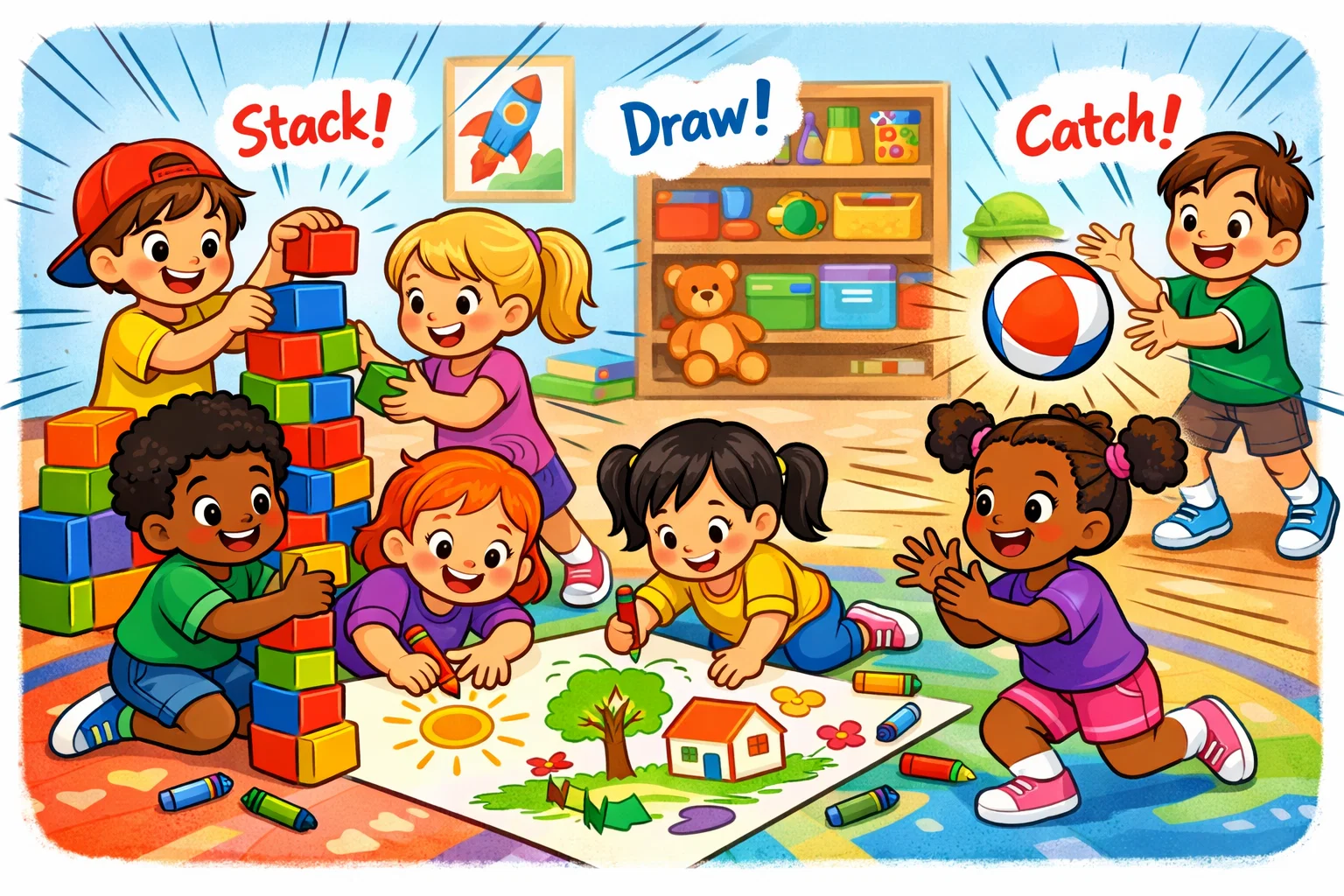
Cooperative play is a major milestone in early childhood because it marks the point where children move from individual activity to working together with others. At this stage, they begin to share ideas, negotiate roles, solve simple conflicts, and stay focused on a common goal. For parents and teachers, this shift matters because these shared experiences build communication, patience, empathy, and confidence.
This guide explains the definition of cooperative play, outlines the six stages of play, highlights its benefits, and shares practical group activities for kids. It also explains how children collaborate, when cooperative play usually begins, and how adults can encourage teamwork without making group time feel forced.
What Is Collaborative Play?
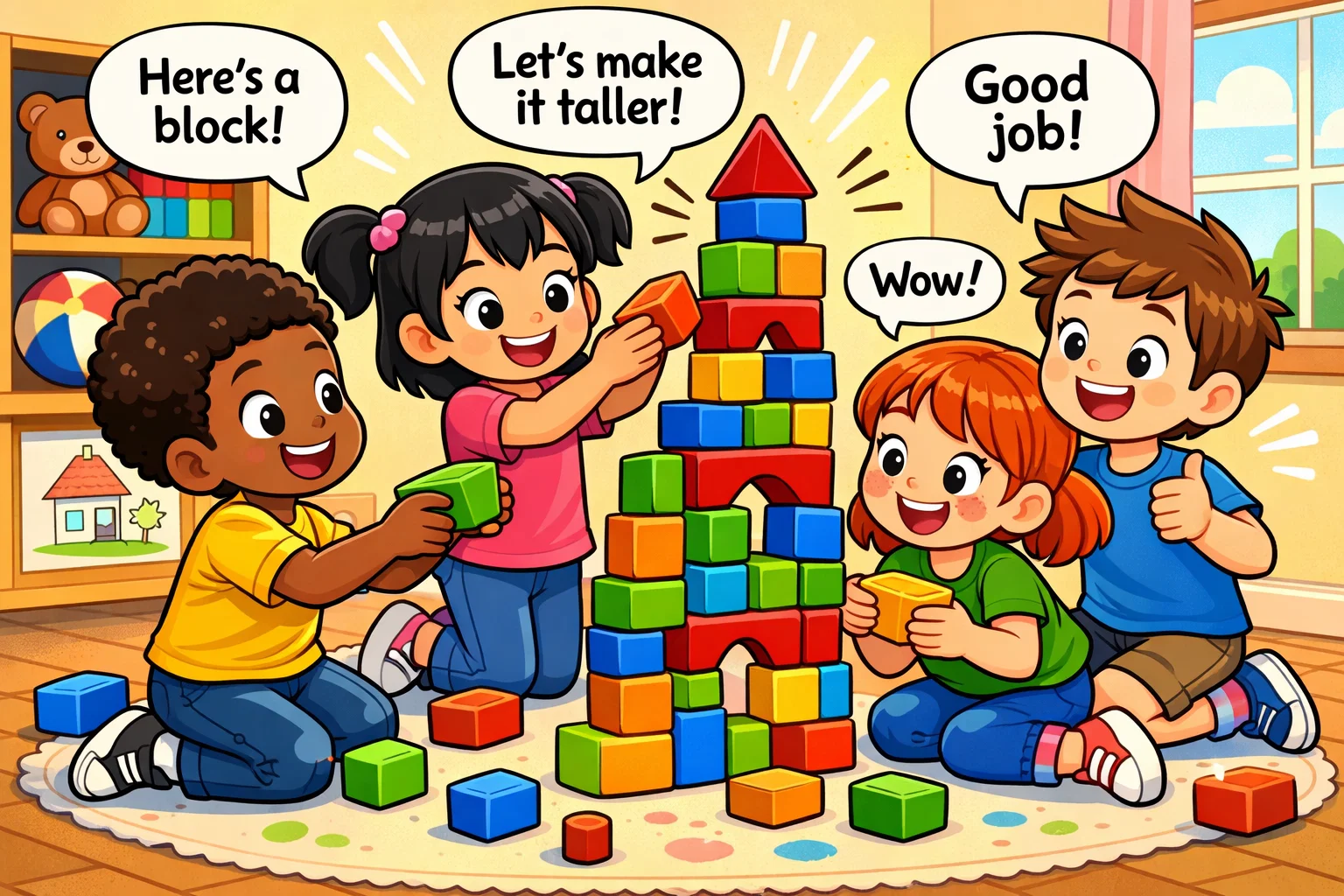
Cooperative play is a type of social interaction in which children work with one another to complete a shared task. Instead of acting side by side, they begin working together, dividing responsibilities, and adjusting their behavior as the activity unfolds. This form of interaction depends on communication, flexibility, and mutual effort.
Cooperative Play Definition
Cooperative play is a stage in which children organize their actions around a common goal. It involves shared rules, role allocation, and a clear group outcome. In other words, cooperative play involves children contributing to one result rather than staying focused only on individual interests.
Because cooperative play requires coordination, children often need to listen, respond, and adapt in real time. One child may gather materials, another may lead part of the task, and another may help solve a problem. That is why many educators describe it as a social setting that teaches responsibility as well as teamwork.
Main Features of This Stage
At this level, children often:
- work together towards a common result
- share ideas and materials
- take turns without constant prompting
- stay involved long enough to solve simple problems
- accept that different people may have different roles
This stage requires more self-regulation than earlier ones because success depends on how well the group can coordinate with one another.
Examples in Daily Life
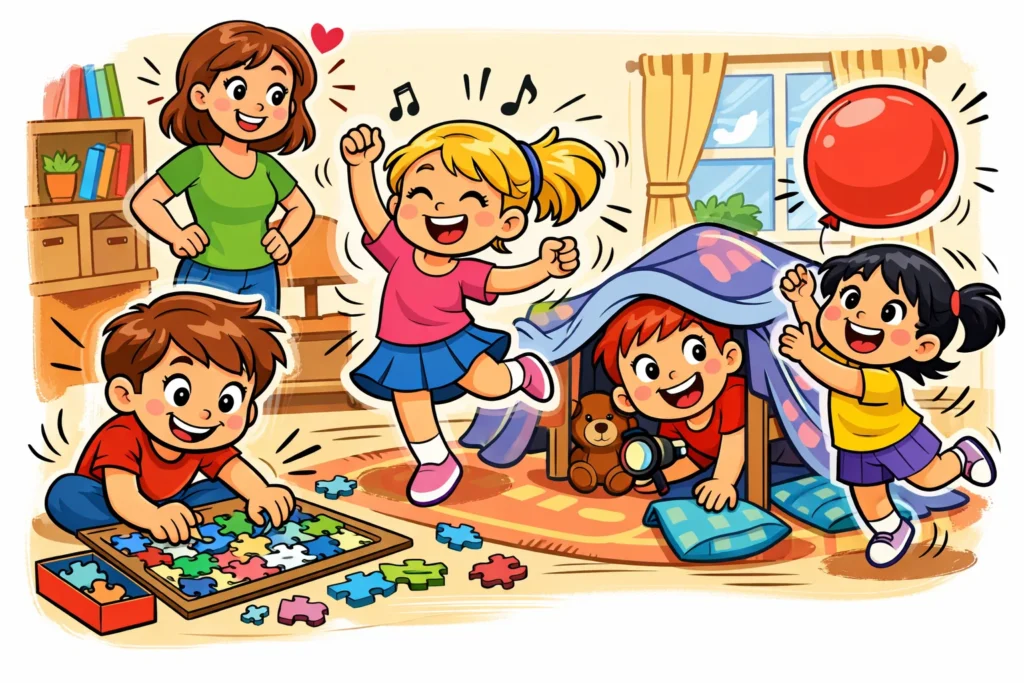
Many examples of this stage are simple and easy to recognize in daily life. Children may build a fort, prepare a pretend meal, create a large mural, or solve a big puzzle. These examples show how children work together and stay focused on one outcome.
A younger kid may first show readiness by inviting others to join, waiting for a turn, or staying with the group after a small disagreement. A child may also begin to accept suggestions from peers instead of leaving the activity right away.
15 Fun Cooperative Play Activities for Kids
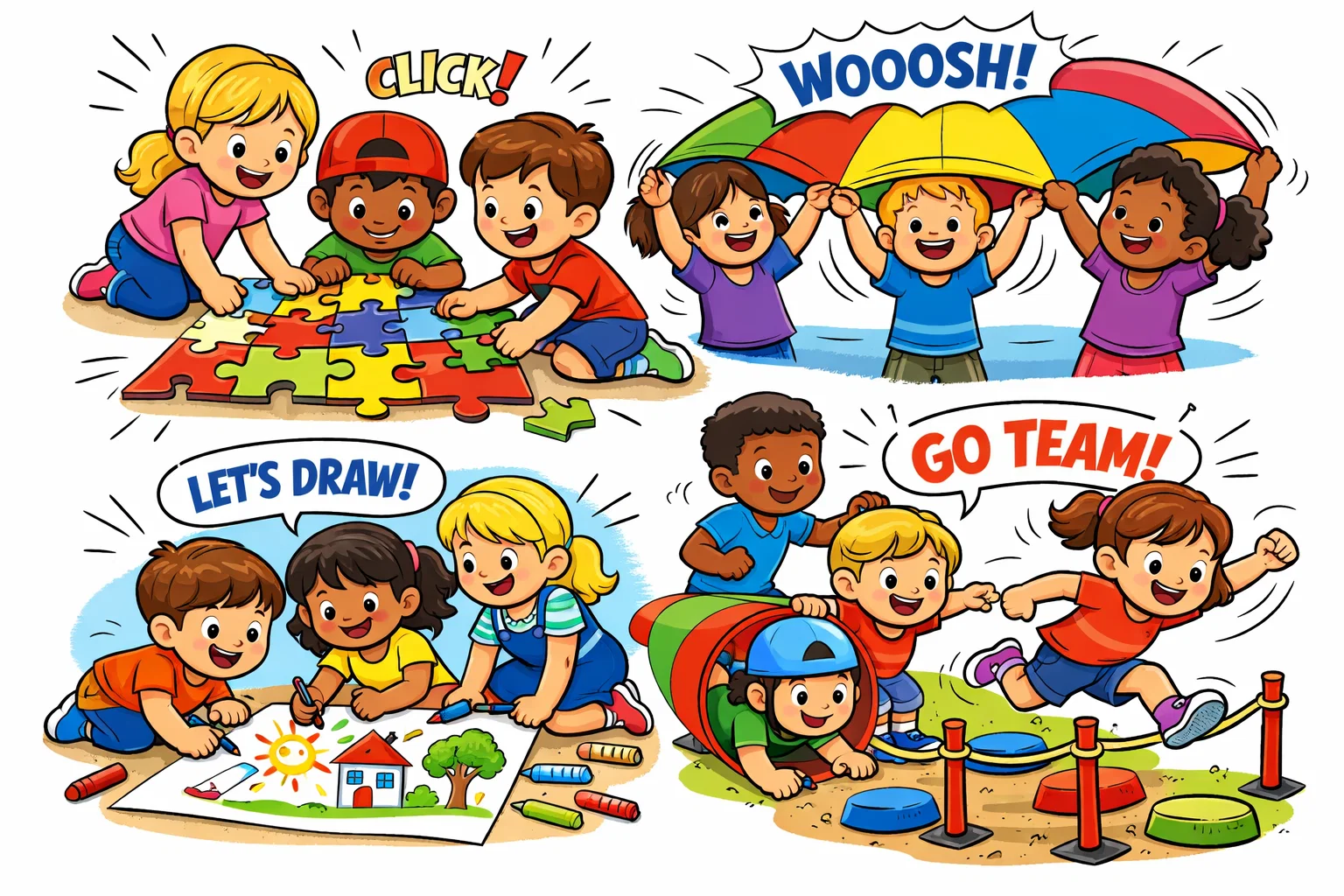
These activities work well in classrooms, small groups, and at home.
- Blanket Parachute
Everyone holds the edges of a blanket and lifts in rhythm to bounce lightweight balls. - Guided Obstacle Course
One participant gives directions while another moves through a simple route. - Story Circle
Each person adds one sentence, which makes it easy to share ideas without many materials. - Team Puzzle
A large puzzle encourages coordination, sorting, and discussion. - Hula Hoop Pass
The group passes a hoop around a circle without breaking the chain. - Tall Tower Challenge
Children build as high as possible with blocks or cups and then improve the design if it falls. - Linked Walk
Two or three children move together from one point to another while staying connected. - Big Mural
A shared sheet of paper invites discussion about color, space, and theme. - Nature Mission
The group collects leaves, sorts stones, or plants seeds together. - Simple Music Ensemble
Children use basic instruments to follow one beat and create one sound pattern. - Construction Task
Build a bridge, animal habitat, or cardboard house using shared materials. - Shop or Restaurant Scenario
This is one of the clearest examples because the group depends on roles and sequence. - Treasure Hunt Teams
A clue-based challenge asks the group to discuss options and solve the route together. - Snack Prep
Making fruit salad or assembling sandwiches is practical, sensory, and motivating. - Relay Rescue
The team moves items from one area to another with simple rules and one shared mission.
These activities are especially useful for parents and teachers who want repeatable routines. They also work as easy group ideas for classes, family time, and after-school groups.
Associative vs Cooperative Interaction
Associative play and cooperative play both involve social contact, but they are not the same. In associative play, children may talk, share materials, and stay near one another, yet each person still follows their own direction. In cooperative play, the group depends on shared structure and one agreed result.
The Main Difference in Goals
The biggest difference is the group objective. During associative play, several children can enjoy the same materials without producing one outcome together. In a cooperative setting, they work together toward a common end, such as finishing a puzzle, building a tower, or acting out a restaurant scene.
The Main Difference in Communication
Communication is also different. Associative play usually involves casual comments and simple exchanges. Cooperative interaction requires more planning, clearer language, and more active listening. Children learn to explain, respond, and adjust instead of only describing what they are doing.
Signs a Child Has Reached This Stage
A child may be ready for this level when they can:
- accept a role in a group task
- take turns more consistently
- stay engaged when something goes wrong
- suggest ways to solve a disagreement
- invite peers to join in
These are strong signs that a youngster is ready to engage in more structured group activities and, over time, participate with less adult support.
When Does It Start?
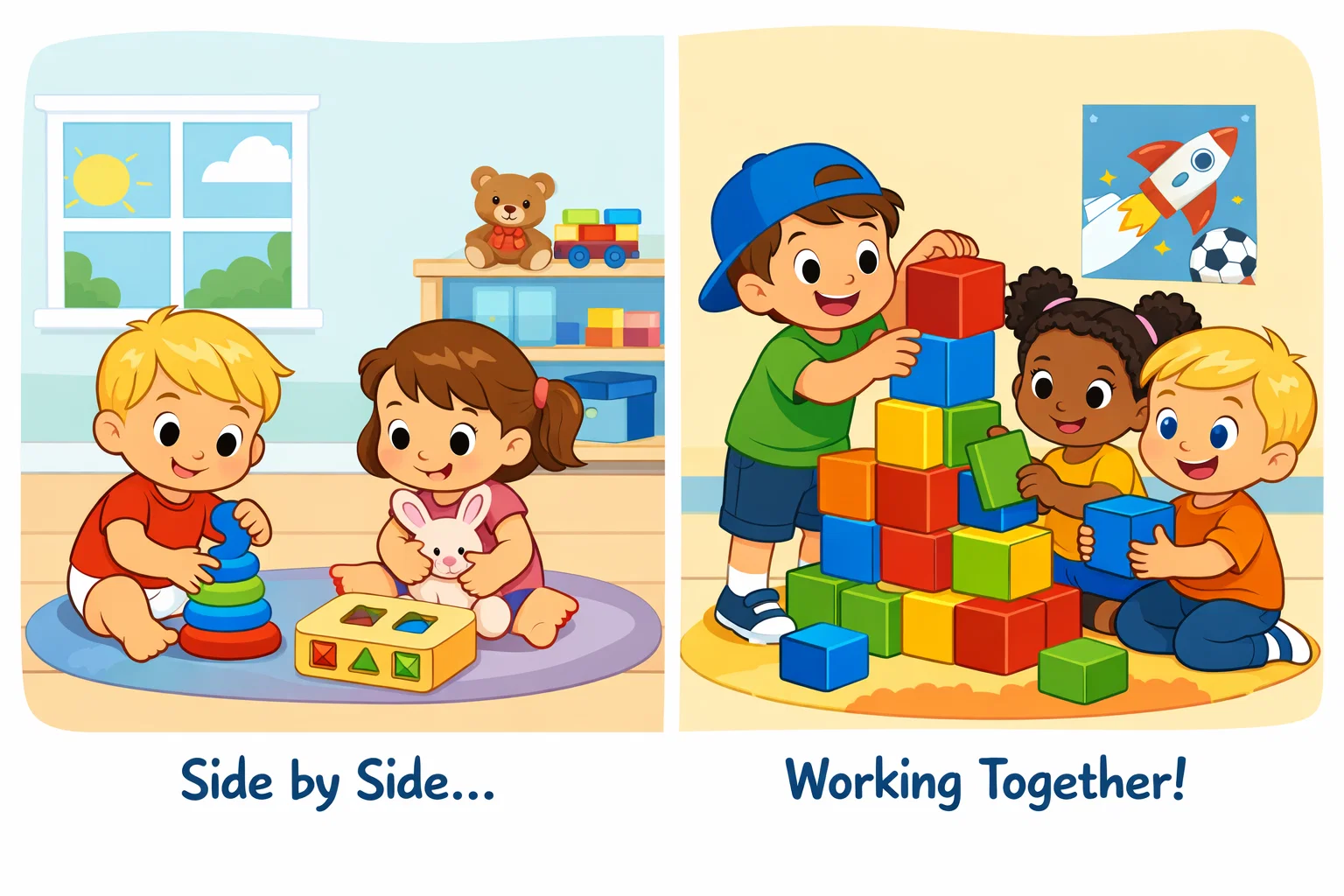
The timing varies, but many children begin to take part in cooperative group activities between ages 3 and 5. Development is not always linear, so some move back and forth between stages depending on personality, environment, and experience.
Skills Needed Before This Stage
Before children can work together smoothly, they usually need:
- enough language to express ideas
- some impulse control
- a willingness to share materials
- the ability to wait briefly and take turns
- basic understanding that other people have feelings and intentions
These early abilities support stronger cooperative play skills over time.
Signs of Readiness
Children often show readiness when they start joining peer activities more willingly, accepting suggestions from others, and staying longer in shared tasks. They may also become more comfortable with routines that ask them to work with others and solve small problems as a group.
Why Timing Varies
Temperament, language growth, classroom exposure, and family dynamics all shape the timeline. Some children need smaller groups and more preparation, while others move into this stage earlier because of regular practice with siblings or classmates.
Six Stages Leading to Group Cooperation
Mildred Parten identified six stages that explain how social interaction develops over time. These six stages are still useful because they show how social interaction develops from early exploration to full group coordination.
1. Unoccupied Play
Unoccupied play is the earliest stage. Movement may look random, but it supports sensory exploration and awareness of the environment.
2. Solitary Play
Solitary play happens when a youngster focuses on an activity alone. This stage supports independence and concentration.
3. Onlooker Play
In onlooker play, a youngster watches others, asks questions, and learns the social script before joining in.
4. Parallel Play
Parallel play is when children stay near one another and use similar materials, but each still follows an individual plan.
5. Associative Play
Associative play brings more conversation and sharing, although there is still no strong shared product or organized structure.
6. Cooperative Play
This is the final stage of play because the group now works toward one outcome with shared roles, agreed rules, and mutual responsibility.
Benefits of Cooperative Play
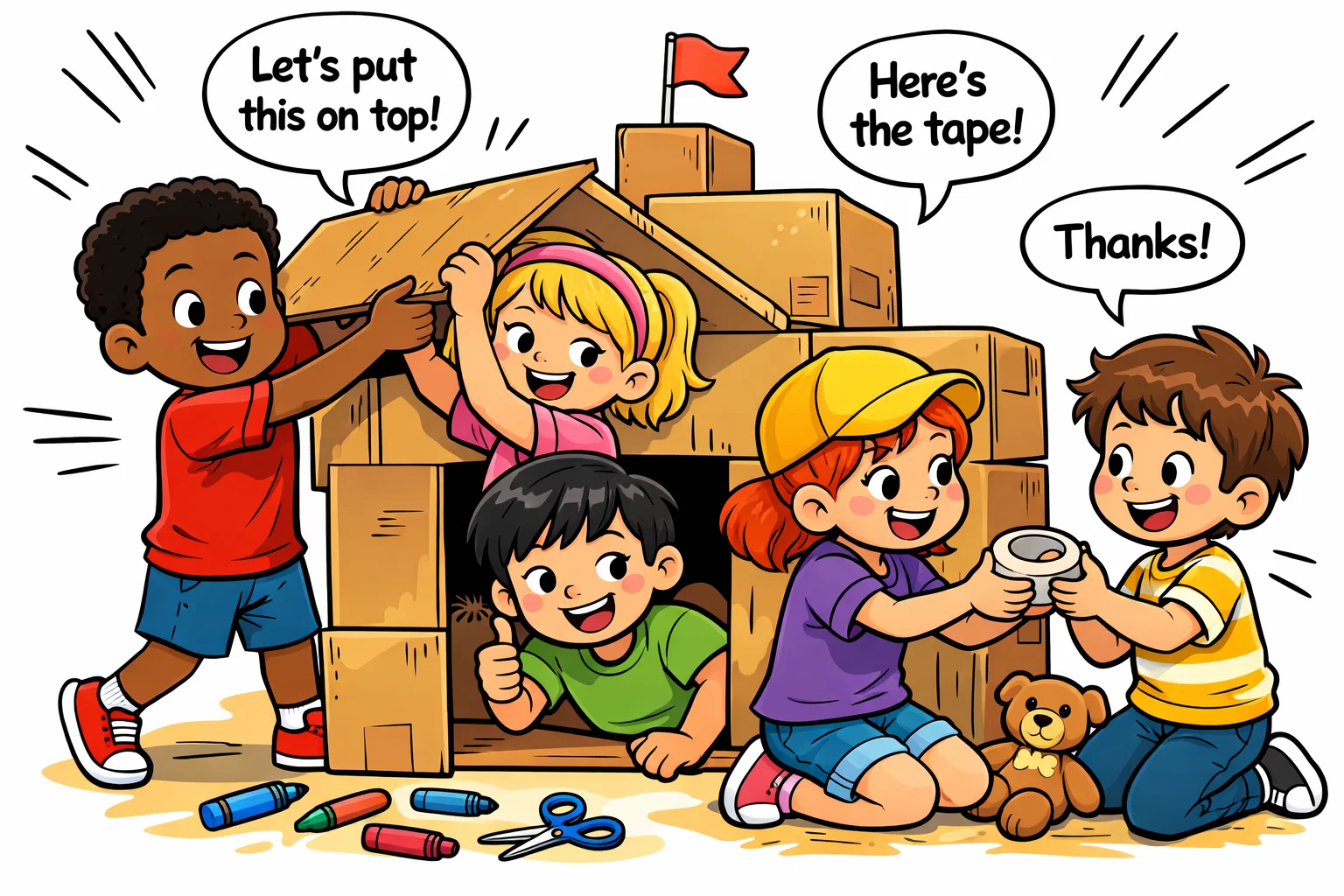
The benefits of cooperative play go far beyond entertainment. This stage helps children build social understanding, language, self-regulation, and problem-solving ability. In practical terms, this stage offers repeated chances to practice working together in a safe and motivating setting.
Encourages Social Interaction and Teamwork
This stage teaches children that success is not just individual. The group does better when everyone contributes, listens, and supports the shared objective.
Strengthens Communication
It teaches children to explain ideas clearly and respond to others, strengthening both expressive and receptive language. It also helps children learn how to solve small conflicts with words instead of frustration.
Builds Trust and Empathy
When children participate in collaborative tasks, they begin to notice how others feel and why fairness matters. Over time, it supports stronger friendships and better emotional awareness.
Supports Self-Regulation
Group tasks naturally require patience. Children need to wait, adjust, and take turns. Since this kind of social activity depends on shared timing, it becomes a useful space for practicing emotional control.
Improves Creativity and Problem-Solving
Many play ideas involve design, storytelling, planning, and rebuilding. If a structure falls or a plan stops working, the group has to rethink the next step together.
Prepares Kids for School
The value of this stage becomes especially clear in classrooms. Small-group projects, partner work, and shared routines all depend on the same basic habits: listening, contributing, and staying involved.
Activities Across Developmental Domains
Well-chosen group tasks support more than one area of growth at once.
Social and Emotional Growth
Turn-based tasks, role scenarios, and shared building projects help children notice others, stay patient, and handle frustration more calmly.
Cognitive Growth
Planning a structure, sorting puzzle pieces, or deciding how to complete a challenge helps children think ahead and organize information.
Language Growth
Story circles, pretend shops, and simple missions can teach children how to clarify roles, ask questions, and respond more thoughtfully during shared activities.
Physical Growth
Movement challenges, rhythm tasks, and coordinated obstacle work support timing, balance, and body awareness.
Creative Growth
Murals, puppet scenes, construction challenges, and pretend restaurants are useful collaborative experiences because they combine imagination with shared structure.
9 Ways to Encourage Cooperation at Home and School
Adults can encourage cooperation without controlling every moment. The best approach is to create conditions that make teamwork easier and conflict more manageable.
1. Set Up the Space Intentionally
A calm environment with enough materials and defined areas can support cooperation and reduce tension.
2. Use Open-Ended Materials
Blocks, art tools, dramatic props, and loose parts make it easier to involve children in shared tasks because there is more than one way to use them.
3. Model Teamwork Language
Adults can encourage children with phrases such as “Let’s solve this together,” “Who wants which role?” and “How can you help each other?”
4. Start With Clear, Short Tasks
A visible goal helps children work toward a result they can understand. Short tasks are especially useful when adults want to foster cooperative skills without overwhelming the group.
5. Use Role-Based Scenarios
Pretend cafés, shops, rescue missions, and building challenges are strong cooperative games because each participant has a purpose.
6. Support Sharing Explicitly
Some youngsters still need help with materials, timing, and waiting. Gentle guidance can help children to share tools and space more successfully.
7. Adjust for Individual Needs
Shy children and those with additional Support Needs often do better in smaller groups or with visual role cards. This is an important part of helping children participate successfully.
8. Reflect After the Activity
A short conversation about what worked, what felt hard, and who helped whom reinforces cooperative skills and group awareness.
9. Step In, Then Step Back
Adults should guide when needed, but not solve every small disagreement. That balance helps promote cooperative interaction over time.
Common Challenges
Even with support, cooperative play doesn’t always look smooth. That is normal. Group activities involve trial and error, conflict, repair, and repeated attempts.
Sharing and Waiting
Some children still struggle when tools or attention must be shared. This is common, especially when the task feels exciting.
Conflict Between Peers
Disagreements often happen when two people want different outcomes. Adults can help by slowing the moment down and asking each person to explain what they want.
Leadership Clashes
One youngster may try to control everything while another withdraws completely. Role rotation usually helps.
Overstimulation
Large groups, too many materials, or too much noise can make cooperation harder.
Extra Support Needs
Some youngsters need smaller groups, clearer structure, or more preparation before they can participate comfortably.
Because cooperative play requires communication, regulation, and flexibility all at once, progress is often uneven. That is one reason adults should stay patient and realistic.
Why This Stage Matters
This stage is a developmental turning point because play helps children practice real cooperation. When adults encourage children to work together, they help young learners build trust, flexibility, and confidence. That is why this stage is so often emphasized in early childhood settings.
In the long run, this experience helps children succeed not only in group tasks but also in friendships, classrooms, and daily life.
Frequently Asked Questions
How can teachers encourage cooperative play?
Teachers can encourage cooperative play by using small-group stations, visible goals, role cards, and short shared tasks. These supports make it easier for children to join in without confusion.
What are the best examples of cooperative play?
Building a tower, preparing a snack, solving a large puzzle, creating a mural, and acting out a restaurant are all strong examples of cooperative play.
Why is this stage important in early childhood?
This stage helps children build patience, empathy, language, and teamwork. It also prepares them for school routines and later collaboration.
What materials work best?
Blocks, large puzzles, art materials, dramatic props, and open-ended construction tools are especially effective because they can be used in many different ways.
Can toddlers do this too?
Yes, but support matters. A toddler usually needs shorter tasks, simpler roles, and more adult guidance. Over time, they may join group routines more independently.
How Can I Start Introducing Cooperative Play Ideas at Home?
You can foster cooperative play by choosing activities that naturally encourage children to work together towards a common goal. Start with simple games like building a tower or assembling a puzzle, which are excellent cooperative play examples for beginners. As children engage in these activities, model how to take turns and share ideas, as this form of play requires children to practice patience and active communication. By keeping early sessions short and low-pressure, you can effectively promote cooperative play and help your child build the confidence needed for more complex social play.

Take a short quiz to find out what your everyday choices say about your parenting style
When your child is curious about something new, what’s your instinct?
Take a short quiz to find out what your everyday choices say about your parenting style
“Can I download this app?” What happens next?
Take a short quiz to find out what your everyday choices say about your parenting style
When it comes to rules at home, which sounds most like you?
Take a short quiz to find out what your everyday choices say about your parenting style
If you could give your child one life skill today, what would you pick?
Take a short quiz to find out what your everyday choices say about your parenting style
Your child gets to choose what to watch. What would your ideal setup look like?
Take a short quiz to find out what your everyday choices say about your parenting style
Pick your parenting superpower ✨