Mastering Spelling: Rules for Using Double Consonants

 Discover a Free Education Video App for Kids
Pastory uses AI to personalize educational video content based on your child’s interests and personality. Safe, engaging, and built for curious young minds. Sign up now to stay updated and enjoy early access with a free trial
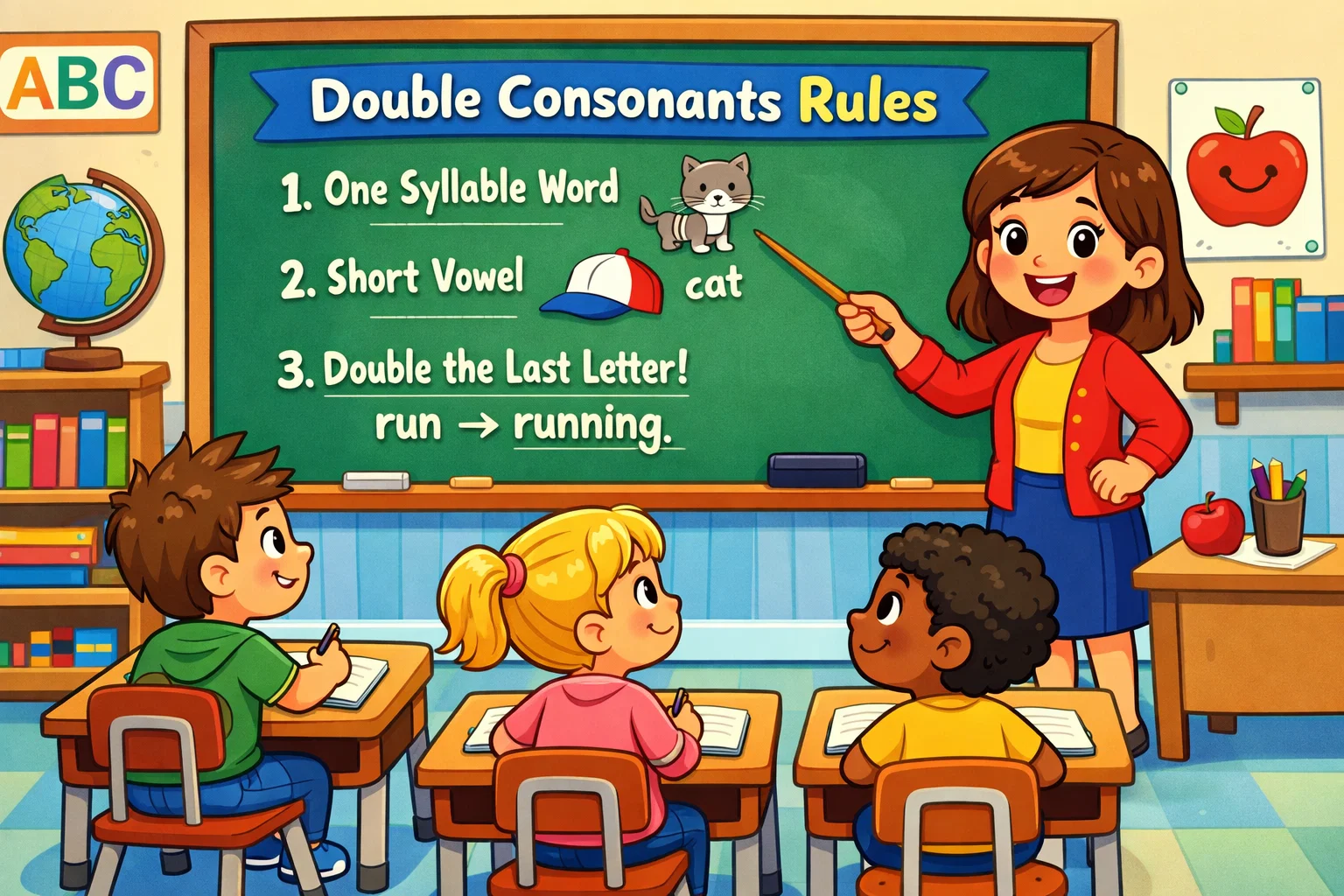
Learning the rules for using double consonants helps readers decode unfamiliar spellings, improve their spelling, and build stronger reading and writing abilities. Many words containing double consonants look simple at first, but this pattern matters because it often signals a short vowel sound or marks a spelling change when a suffix is added.
This guide explains the use of double consonants in clear, natural English. It will help readers explore words containing double consonants, learn the rules, and apply them with confidence in both reading and writing.
What Double Consonants Mean
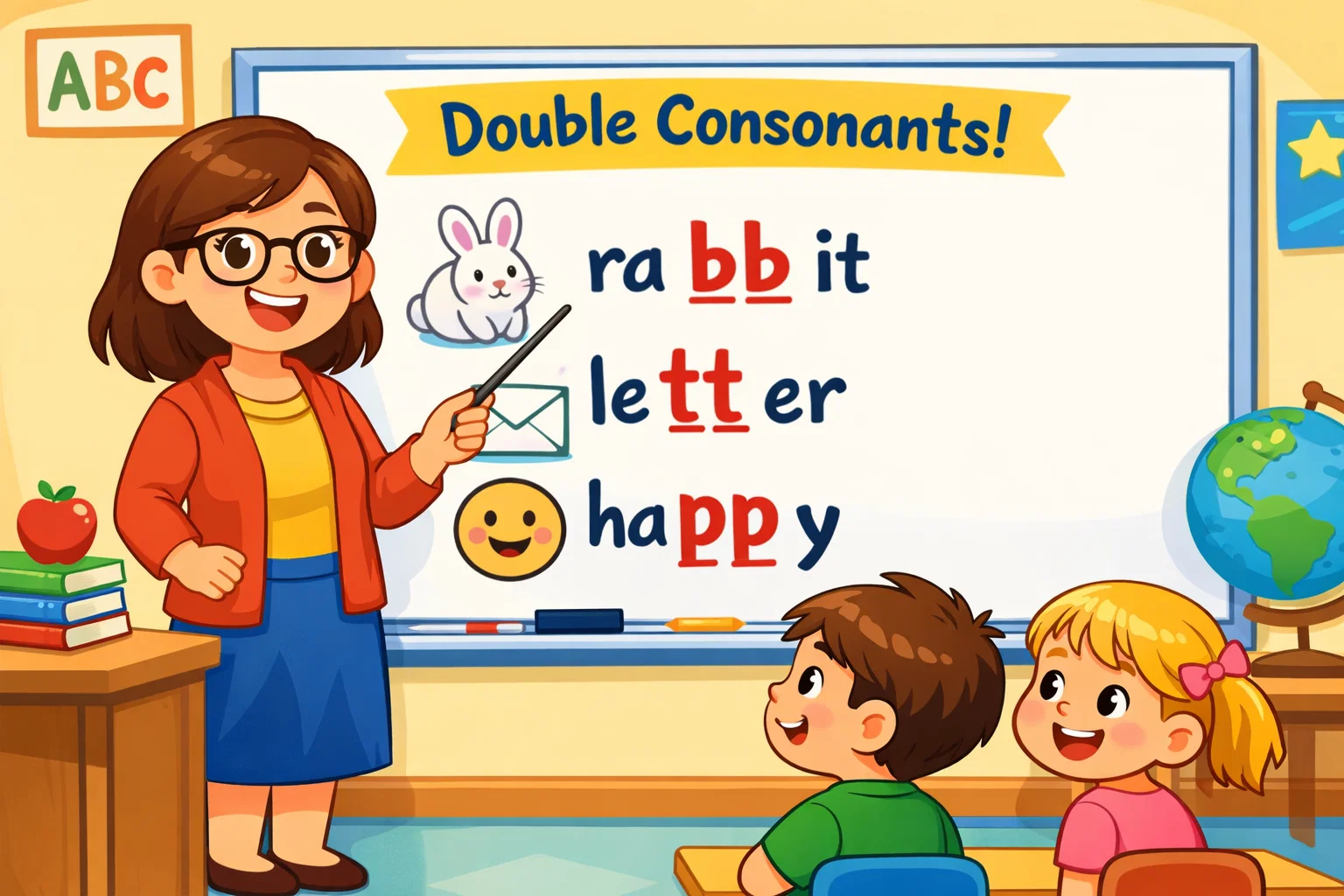
A double consonant appears when the same consonant letter is written twice in succession in a word. Common examples include rabbit, summer, happy, bell, and miss.
These spellings are often found in words in two main places:
- in the middle of words, as in rabbit or summer
- at the endings of words, as in bell or buzz
A doubled letter is different from a consonant pair such as st, mp, or nd. In those combinations, two different letters appear together. In a doubled form, the same letter is repeated.
Why This Pattern Matters
The use of double consonants affects both pronunciation and meaning. In many cases, it helps show that the vowel is short. It can also separate one form from another when adding certain suffixes.
A well-known example is:
- hoping — from hope
- hopping — from hop
That extra p changes how the reader understands the form. Because of this, learning when to use double consonants supports accuracy, fluency, and confidence.
The Main Doubling Rule
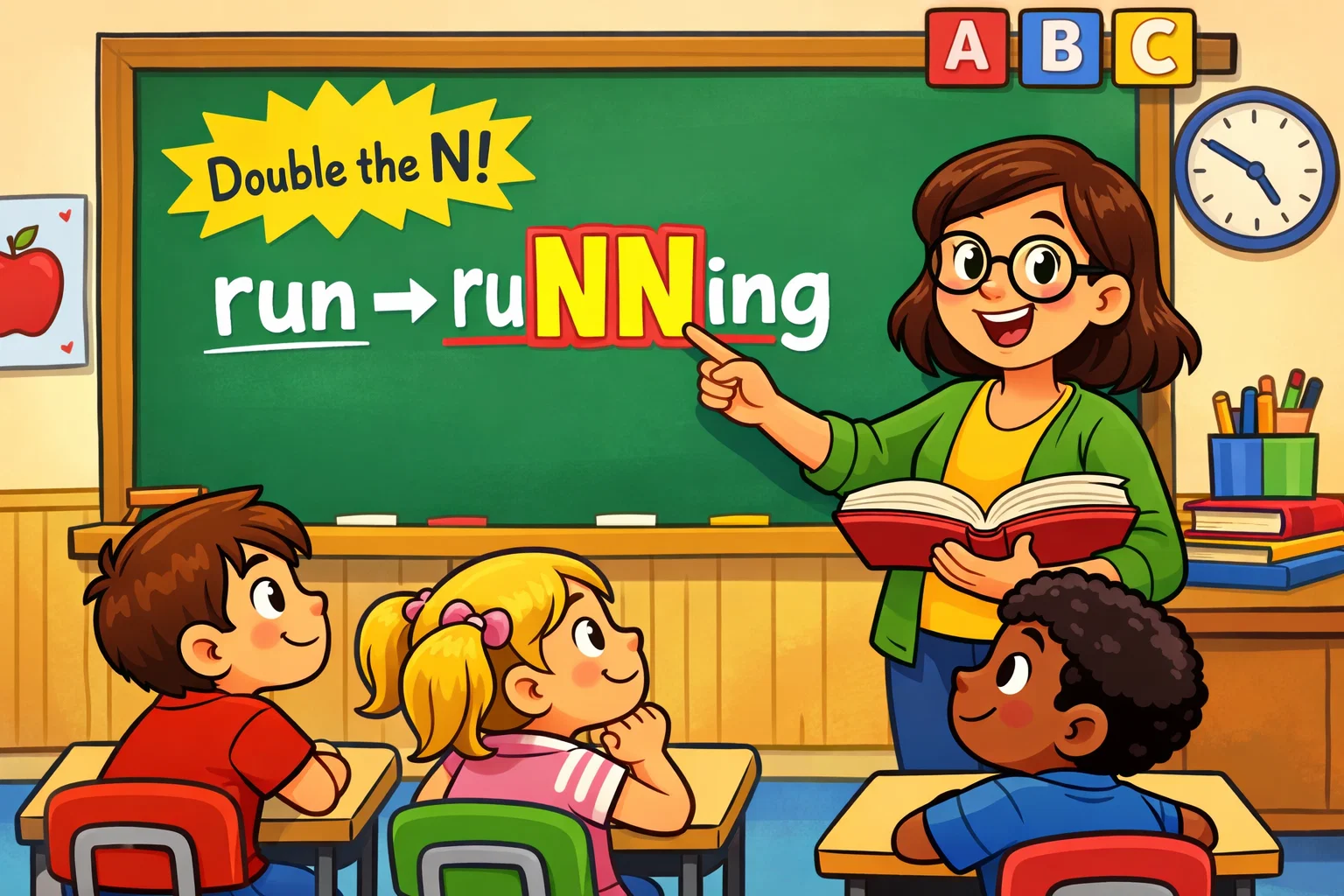
A common rule for double consonants is this: if a base word has one syllable, the vowel is short, and the form ends in a single consonant, that final letter is usually doubled before a suffix that starts with a vowel.
This is often called the doubling rule.
Examples:
- run → running
- sit → sitting
- big → bigger
- hot → hotter
This pattern is especially common when adding the suffix -ing, -ed, -er, or -est to words.
The 1-1-1 Pattern
Many teachers explain the rule through a simple three-part check:
- one syllable
- one short vowel
- one final consonant
If all three are true, the ending letter is usually doubled before adding the suffix.
Examples:
- swim → swimming
- drop → dropped
- thin → thinner
- fat → fattest
This is one of the most useful rules of spelling for early learners.
The Rabbit Rule
The rabbit rule helps with words with two syllables. In many cases, if a two-syllable form has a short vowel in the first syllable and only one consonant sound between the vowels, the middle is doubled in spelling.
Examples:
- rabbit
- kitten
- happy
- summer
This rule is especially helpful for students who are learning to read and spell longer items. It also explains why the middle of words often contains two of the same letters.
Doubling When Adding Suffixes
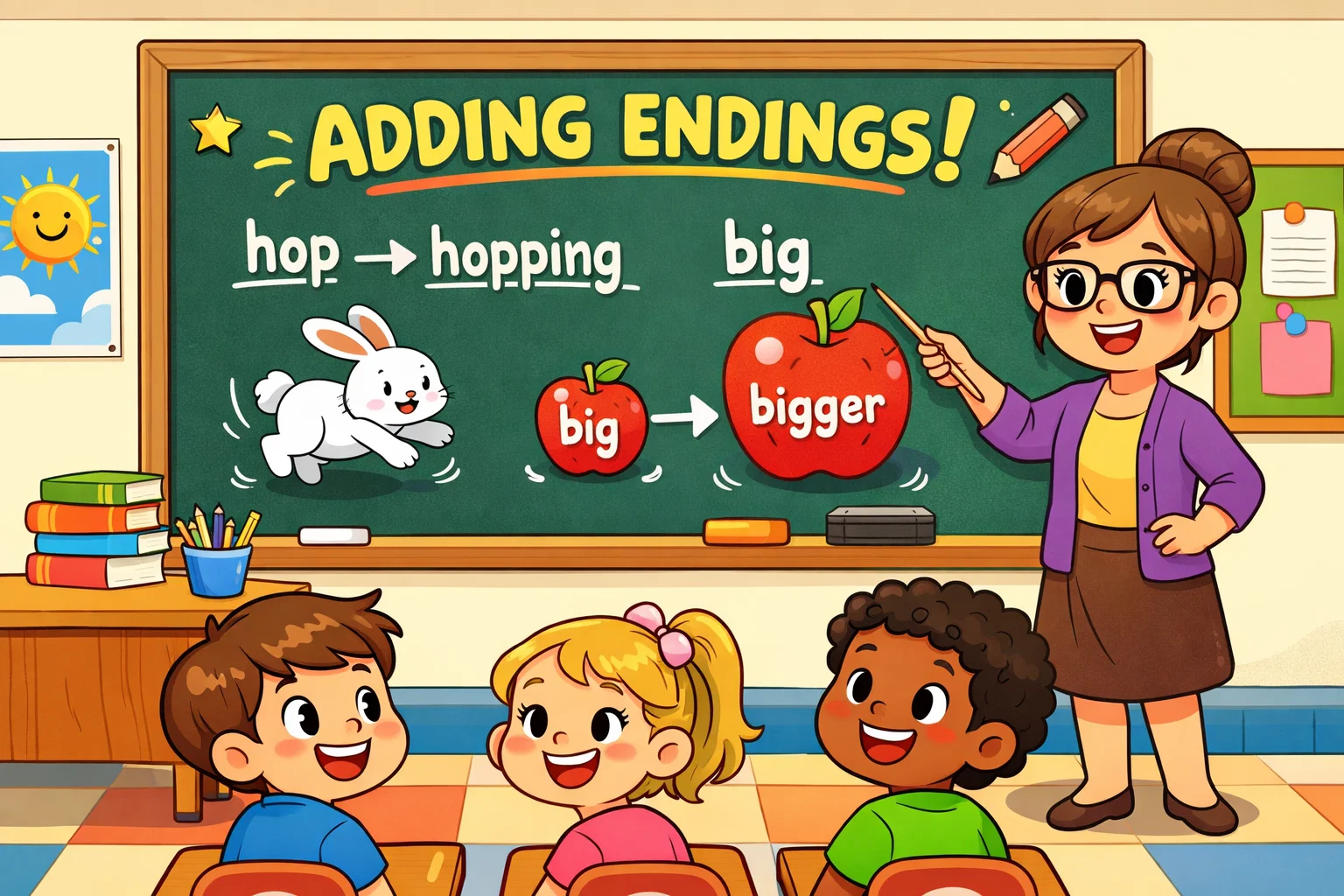
Writers often see this pattern when adding certain suffixes to a base word.
Adding ‘ing’
When adding ‘ing’, check the base word first. If it ends in a single consonant after a short vowel, double that consonant.
Examples:
- run → running
- stop → stopping
- plan → planning
If the vowel is long or the ending already has more than one consonant sound, no extra letter is needed.
Examples:
- sleep → sleeping
- jump → jumping
- paint → painting
Adding -ed
The same rule often applies with -ed:
- stop → stopped
- drop → dropped
- plan → planned
These spellings keep the correct vowel sound and prevent confusion.
Adding -er and -est
The pattern also appears in comparative and superlative forms:
- big → bigger → biggest
- sad → sadder → saddest
- thin → thinner → thinnest
When adding -est to words like big or thin, the same short-vowel logic applies.
Adding ‘able’
Some longer forms also keep the doubled letter before endings such as ‘able’.
Example:
- regret → regrettable
This does not happen in every case, so learners should focus first on the most common endings: -ing, -ed, -er, and -est.
When Not to Double
Not every form needs a repeated final letter. In general, writers do not add another letter when:
- the vowel sound is long
- the ending contains a consonant cluster
- the form ends in w, x, or y
Examples:
- snow → snowing
- box → boxing
- play → playing
- jump → jumping
A helpful question is whether the vowel is short. If yes, the consonant may need to be doubled. If not, it usually stays single.
One-Syllable Forms
One-syllable forms are the easiest place to start. They make the pattern clear because the sound structure is easier to hear.
Common examples include:
- big
- hot
- run
- sad
- wet
These forms are ideal for early spelling lessons because learners can quickly hear whether the vowel is short and whether the ending has a single consonant.
Longer Forms and Stress
Stress matters in longer forms. When the stress falls on the final syllable, doubling a consonant is more likely before a vowel suffix.
Examples:
- begin → beginning
- prefer → preferred
When the stress does not fall on the last syllable, the letter usually stays single.
Examples:
- offer → offered
- visit → visited
This is an important part of the rule for double consonants in multisyllable forms.
British and American Usage
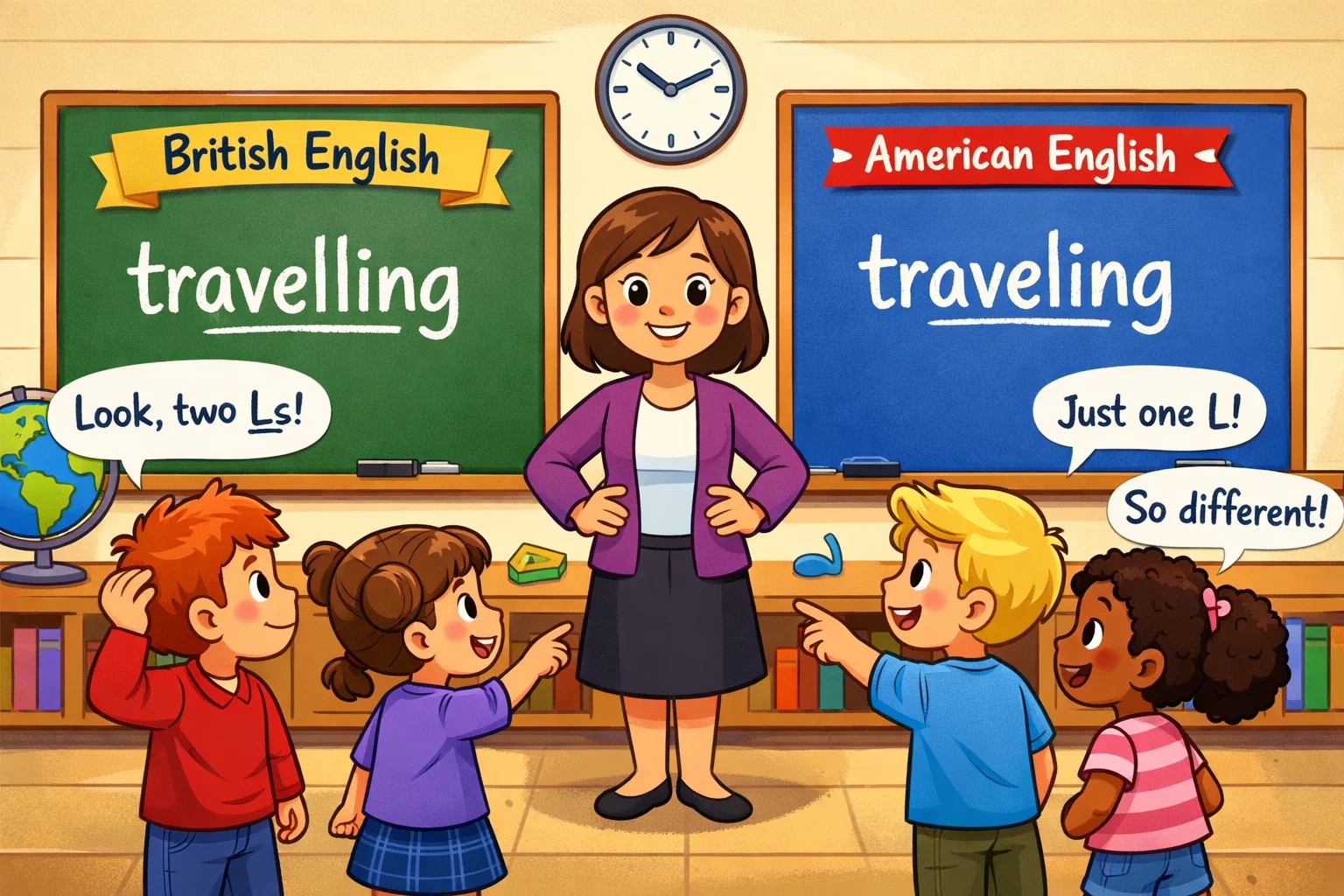
Some spellings differ by region. British English often keeps an extra l in forms such as:
- travelling
- cancelled
American English more often uses:
- traveling
- canceled
Both styles are correct within their own standards.
Common Examples
Here are some common examples of words with double consonants:
apple, butter, dinner, funny, hammer, happy, kitten, little, rabbit, summer
These are useful starter examples because the pattern is easy to see and easy to practice.
Sentence Examples
Using examples of words in sentences helps learners remember how the pattern works in context.
- The rabbit hopped across the grass.
- She was happy to be running again.
- The kitten slept beside the fire.
- We had a bigger table at dinner.
- The bell rang at the end of class.
Common Mistakes
There are two common error types.
Missing a Letter
Learners may write:
- runing instead of running
- stoped instead of stopped
This usually happens when they hear the sound but do not apply the spelling rule.
Adding an Extra Letter Where It Does Not Belong
Learners may also overuse the pattern:
- snowwing instead of snowing
- playying instead of playing
This happens when they know the rule but do not yet know its limits.
Practical Ways to Teach the Pattern
A step-by-step approach works best.
- Start with one-syllable forms.
- Practice short vowels and single-consonant endings.
- Introduce -ing, -ed, -er, and -est.
- Move to words with two syllables, such as rabbit and happy.
- Add stress-based examples later.
Teachers and parents can also use sorting games, dictation, and a double consonants word mat for visual review. Short daily practice is usually more effective than long drills.
Easy Practice Ideas
To practice double forms in a natural way, try activities such as:
- sorting forms into “double” and “single” groups
- filling in missing endings
- reading pairs like hoping and hopping
- asking students to spot another example in a sentence
- building new words by adding the suffix to a base word
These tasks help learners notice the pattern, hear the correct vowel sound, and use it accurately in writing.
Final Takeaway
To learn when to use double consonants, focus on three things: vowel length, the final letter, and the suffix being added. Once learners understand those three parts, the pattern becomes much easier to recognize.
With steady practice, readers can learn the rules, improve their spelling, and feel more confident when reading and writing new words.
FAQ
What are words with double consonants?
These are words containing double consonants, meaning the same consonant letter appears twice in succession in a word.
When should writers use double consonants?
Writers usually use double consonants when a base word has a short vowel, ends in a single consonant, and takes a suffix that starts with a vowel.
Why does hopping have two p’s, but hoping does not?
In hop, the vowel is short, so adding -ing creates hopping. In hope, the final e changes the vowel sound, so the form becomes hoping.
Are double consonants found only in short forms?
No. They are common in short forms, but they are also found in words with two syllables and in longer forms affected by stress, such as beginning and preferred.
What should learners check first?
They should check whether the vowel is short, whether the base word ends in a single consonant, and whether they are adding a suffix such as ‘ing’ or -ed.
Take a short quiz to find out what your everyday choices say about your parenting style
When your child is curious about something new, what’s your instinct?
Take a short quiz to find out what your everyday choices say about your parenting style
“Can I download this app?” What happens next?
Take a short quiz to find out what your everyday choices say about your parenting style
When it comes to rules at home, which sounds most like you?
Take a short quiz to find out what your everyday choices say about your parenting style
If you could give your child one life skill today, what would you pick?
Take a short quiz to find out what your everyday choices say about your parenting style
Your child gets to choose what to watch. What would your ideal setup look like?
Take a short quiz to find out what your everyday choices say about your parenting style
Pick your parenting superpower ✨