Simple Letter A Activities for Preschoolers and Kindergartners

 Discover a Free Education Video App for Kids
Pastory uses AI to personalize educational video content based on your child’s interests and personality. Safe, engaging, and built for curious young minds. Sign up now to stay updated and enjoy early access with a free trial
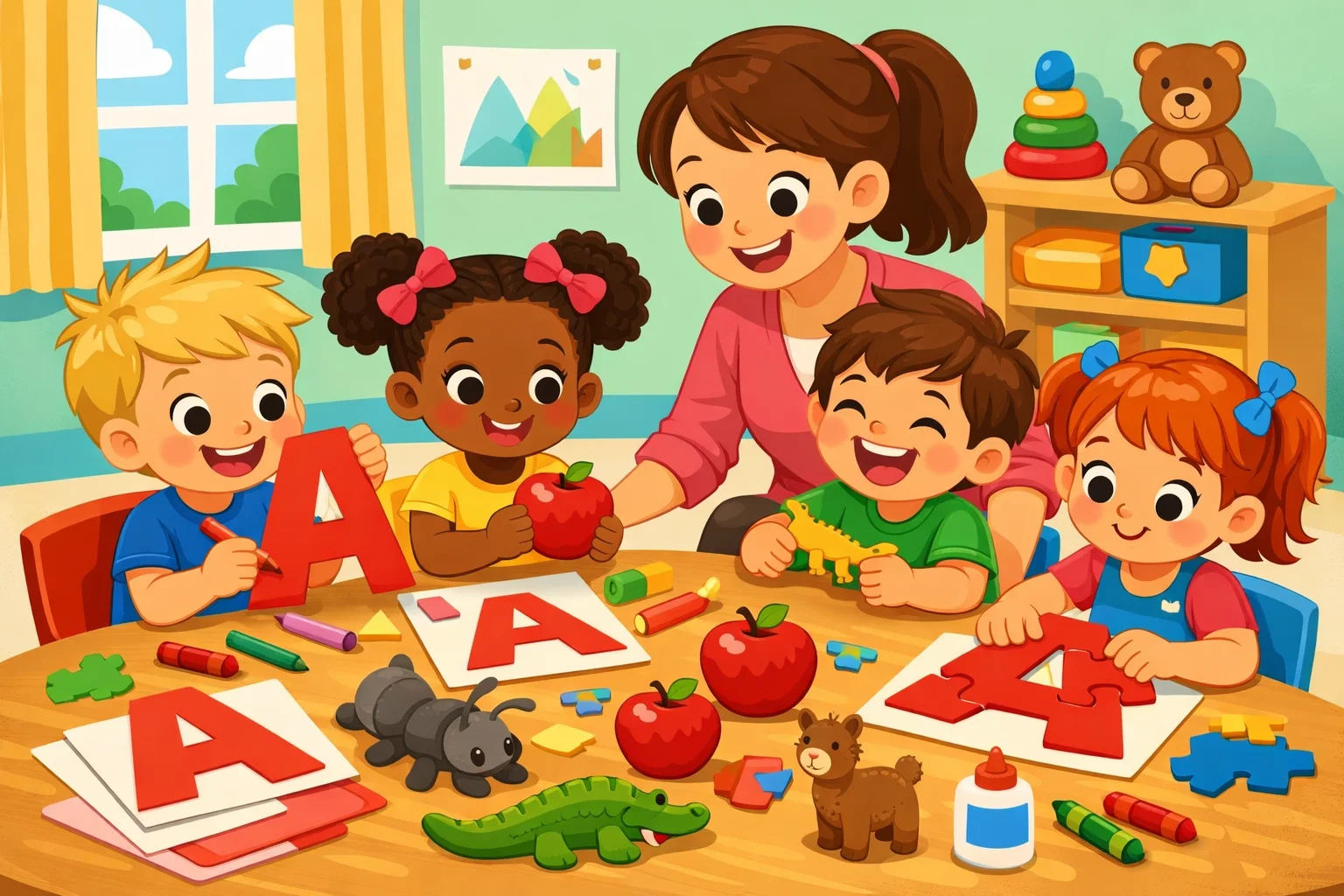
Teaching the alphabet is a foundational step in early childhood education. For many families and teachers, starting with Letter A activities is an easy way to introduce phonics, print awareness, and early writing. This guide brings together 15 engaging activities for preschoolers and kindergartners to help them build confidence with the first letter of the alphabet through art, movement, sensory play, and simple routines at home or in the classroom.
These ideas support learning the alphabet in a playful way rather than through drill alone. Across the list, children will work on letter recognition, beginning sound awareness, letter formation, and fine motor skills. Some tasks are ideal for a literacy center, some are perfect for circle time, and others are excellent hands-on activities for families who want easy practice at home. The goal is not only to help kids name the letter A, but also to help them connect its printed form, its sound, and the words that often begin with it.
Quick Activity Guide
Use this quick chart to choose the best option based on time, prep, and instructional focus.
| Activity Name | Primary Skill | Prep Level | Best For |
| Letter Tracing | letter formation | Low | kindergarten |
| Apple Printing | fine motor skills | Medium | preschool |
| Sky Writing | motor activity | No-prep | Both |
| Scavenger Hunt | beginning sound | Low | Both |
| Alphabet Hop | letter identification | Medium | Active learners |
Activities by Skill
Strong phonics instruction works best when children use their eyes, ears, and hands at the same time. The activities below strengthen letter recognition, sound awareness, visual memory, and motor skills through play. Each section gives teachers and parents an easy way to practice the target concept without making young learners sit still for too long.
Activities by Prep Level
Classrooms and homes need a variety of Letter A activities. This list includes no-prep movement games, simple printable work, and crafts that use everyday materials. If you need a fast learning activity, choose Sky Writing or a short search game. If you want more table work, try letter a worksheets, tracing pages, or sorting cards. If you want art, a letter a craft such as Apple Printing or a letter collage can make the lesson more memorable.
Activities by Age
The best activities for preschool and kindergarten are not always identical. Preschoolers often do best with large movements, sensory materials, and big visual models. Kindergartners are usually ready for more controlled tracing, matching, and simple worksheet tasks. Younger children may need thick crayons and large shapes, while older learners can begin to recognize and write the letter in more structured ways.
Materials Families Already Have
You do not need a special program to teach the letter A. Most homes and classrooms already have what is needed for these fun activities:
- paper, markers, crayons, and glue
- playdough, popsicle sticks, and tape
- toy animals, plastic counters, or letter a toys
- rice, beans, pom-poms, or stickers
- an apple, a box, and a simple printable
Letter Tracing
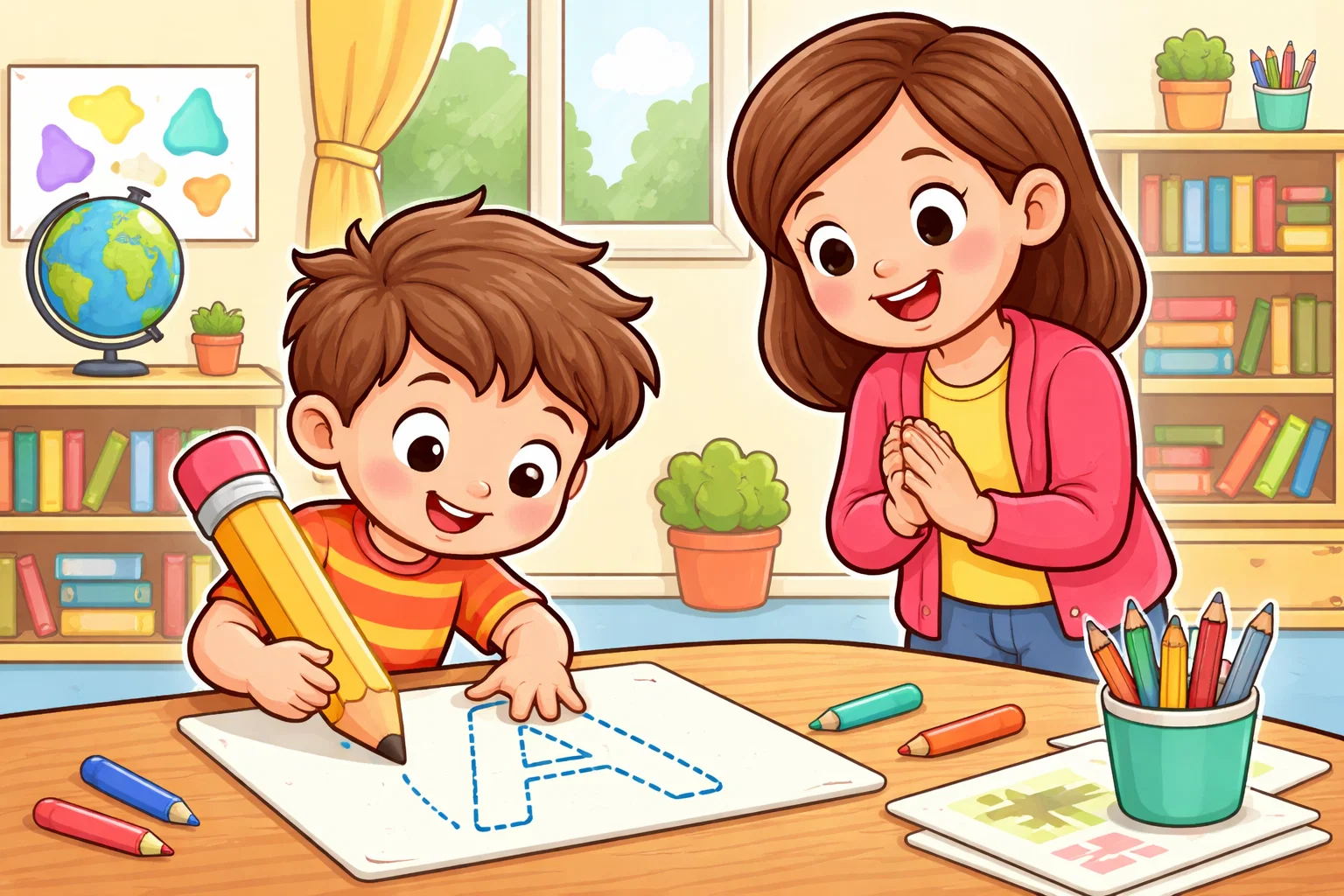
Letter tracing is one of the most familiar activities for teaching early print skills. It supports letter formation, pencil control, and the ability to follow a model from top to bottom. When children trace slowly and say the sound out loud, they begin to connect hand movement with symbol recognition.
Materials
Use one of your Letter A worksheets or any printable tracing page with arrows and dotted lines. You will also need crayons, markers, or pencils. A dry-erase sleeve is useful if you want to reuse the page during a letter-of-the-week routine.
Setup
Choose a page that shows the uppercase and lowercase letter together. Make sure the child has enough elbow room and that the model is easy to see. For preschool, use a page with larger lines. For kindergarten, you can use a narrower format that encourages better pencil control.
How to Do
Model how to form the letter first. Then invite the child to trace with a finger before using a crayon or pencil. Encourage them to say the short A sound each time they move across the page. This routine helps children practice letter recognition while also learning how to write the letter with confidence.
Why It Works
Tracing gives learners repeated exposure to the same printed form without overwhelming them. Over time, the movement pattern becomes more familiar, which can make independent writing easier. It is also one of the simplest individual letter activities to send home for extra review.
Apple Printing
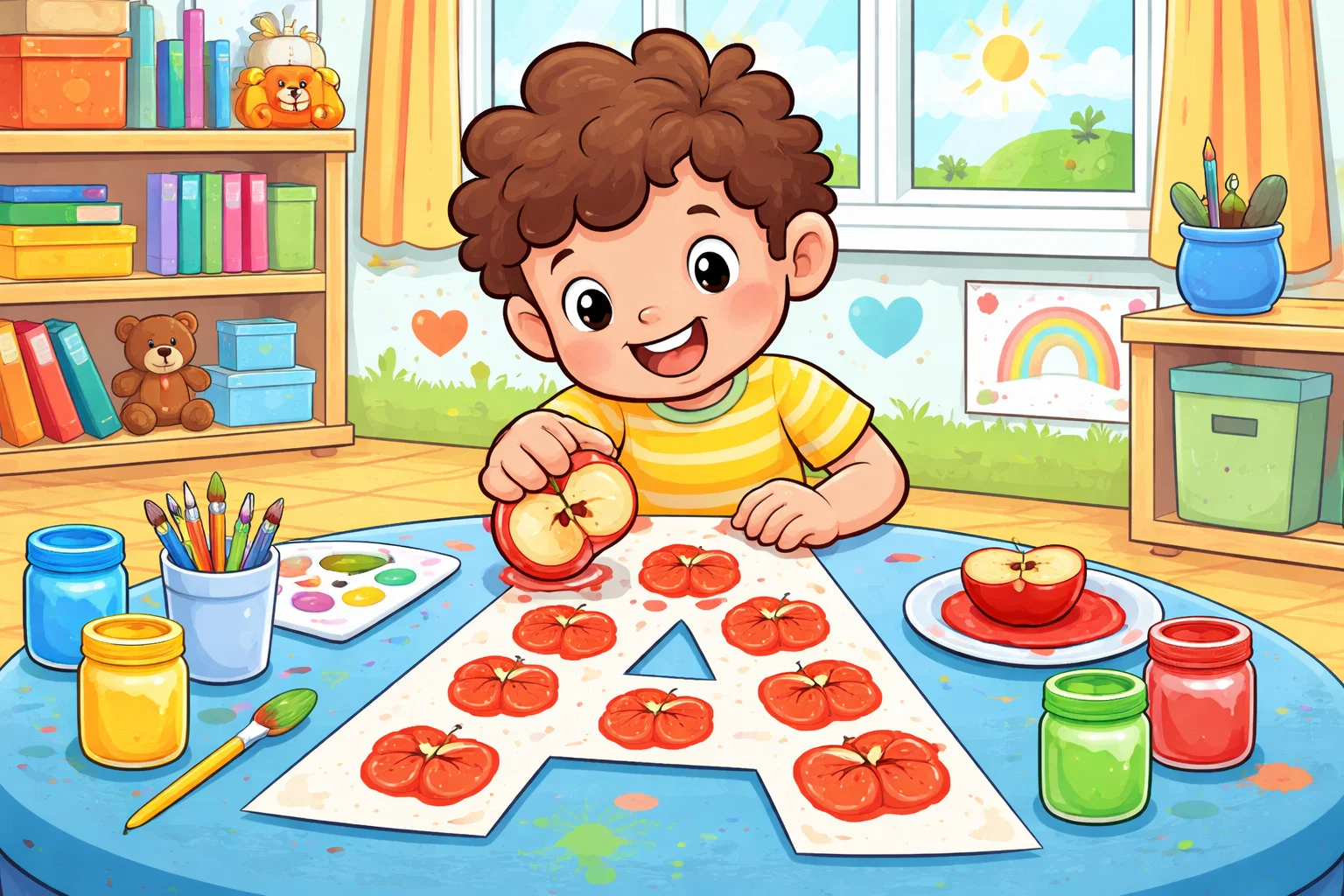
Apple Printing is a playful art project and a classic letter a craft. Because children already know the word apple, it is easy to connect the picture, the beginning sound, and the printed form. This is one of the best letter a activities for preschoolers because it combines paint, texture, and repetition.
Materials
Cut an apple in half, prepare washable paint, and print out a large outline of the letter A. You can also provide paper towels and smocks for easier cleanup.
Setup
Pour paint into shallow trays and place the big outline in the middle of the table. If you are working with a group, pre-cut the apples before the lesson begins. Remind children that apples start with the letter A.
How to Do
Children dip the apple half into paint and stamp inside the letter outline until the full shape is covered. As they work, ask them to repeat the word apple and listen for the beginning sound. The repeated stamping strengthens fine motor skills and letter awareness at the same time.
Extension
After the paint dries, invite children to trace around the outline with a finger and name other objects that start with A. This turns a simple craft into a richer phonics lesson.
Sky Writing
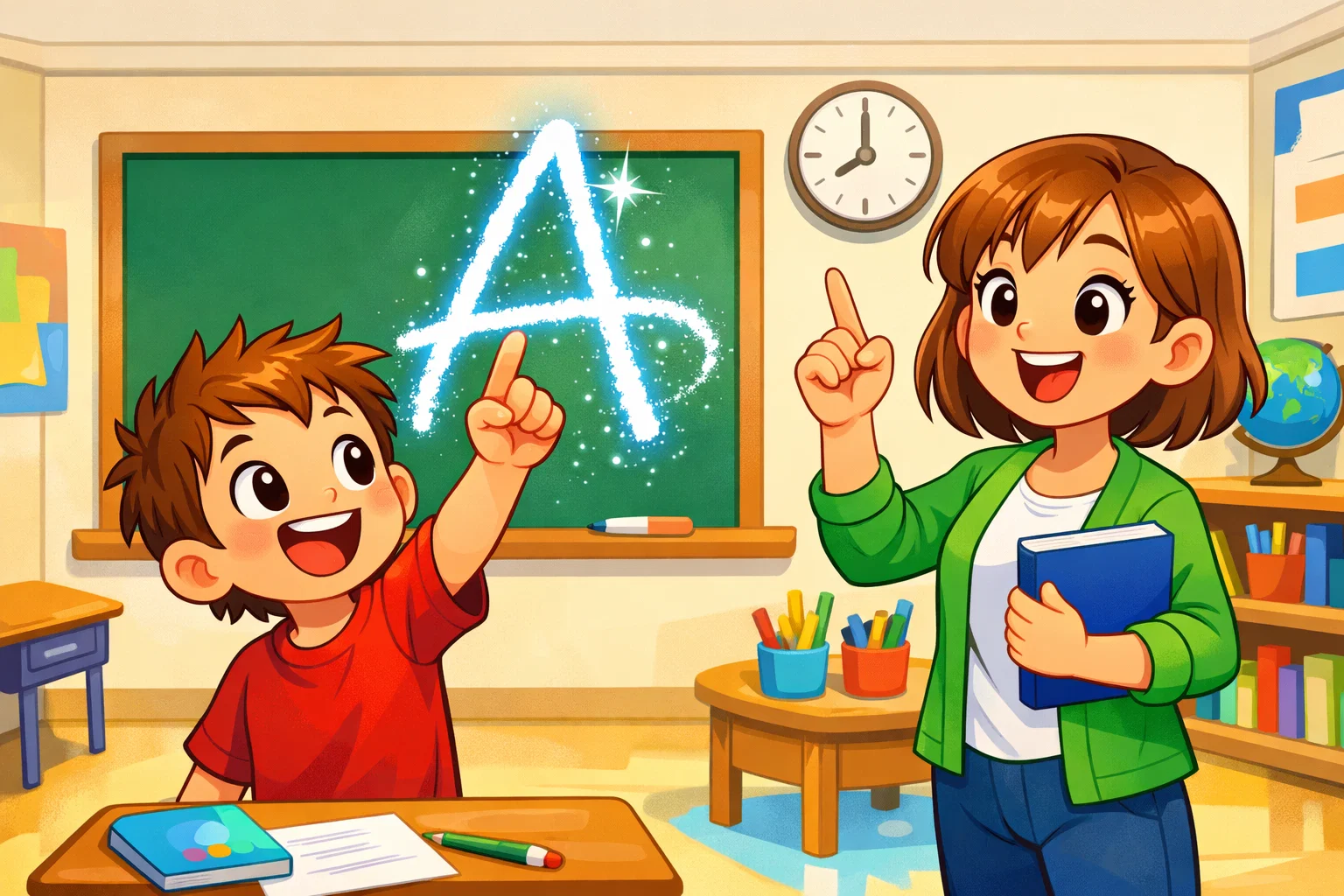
Sky Writing is a fast, joyful motor activity that helps children learn through movement. Instead of relying on paper, children use the air as a giant writing surface. It is especially useful for active learners and for students who need bigger motions before table work feels comfortable.
Materials
This no-prep learning activity only requires open space. You may add a ribbon wand or scarf if you want children to see the motion more clearly. A model card with A and a can help if the child still needs a visual reference.
Setup
Stand where children have room to stretch their arms. Hold up a card that shows the printed form, or draw it on a board first. Briefly point out the difference between the tall uppercase form and the smaller lowercase version.
How to Do
Ask children to draw the letter in the air using one finger. First go slowly together, then try it again in a giant size, a tiny size, or even with two hands. This is a fun way to remember the letter shape while keeping bodies active. It can also help children who are not yet ready to sit down and write the letter on paper.
Teacher Tip
Pair the movement with sound. Each time the class traces the form in the air, say the short A sound together. This simple routine can reinforce letter recognition without extra prep.
Scavenger Hunt
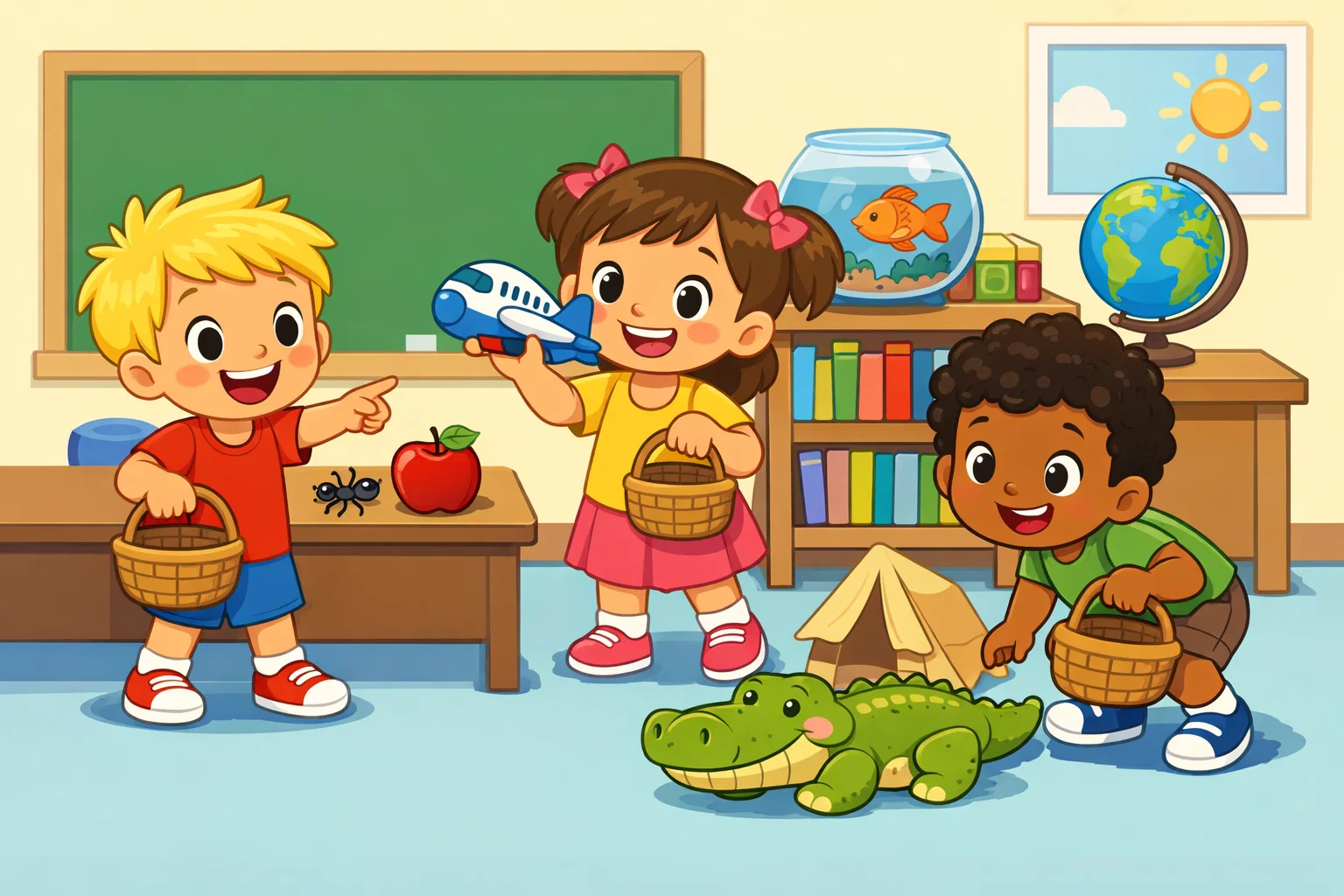
A scavenger hunt is one of the easiest fun letter A activities for home or school. Children search for familiar items that begin with the letter A, which helps them understand that phonics is connected to the real world around them.
Materials
You need a basket, a simple checklist, and a few objects such as an apple, apron, airplane toy, or art brush. Older learners can use a clipboard and beginning-sound worksheets to record what they find.
Setup
Place several target items around the room, or simply use what is already available in your environment. If you are working with a group, keep the list short so the activity stays focused and successful.
How to Do
Tell children they are looking for items around the room whose names begin with A. Each time they find an item, ask them to name it and listen for the first sound. This is a practical way for children to practice listening and sorting without sitting at a desk.
Why It Works
Many young children learn best when instruction starts with concrete objects. Searching for real things helps them notice that print stands for words they already know. It also gives adults a natural chance to help kids use new vocabulary in context.
Animal Sorting
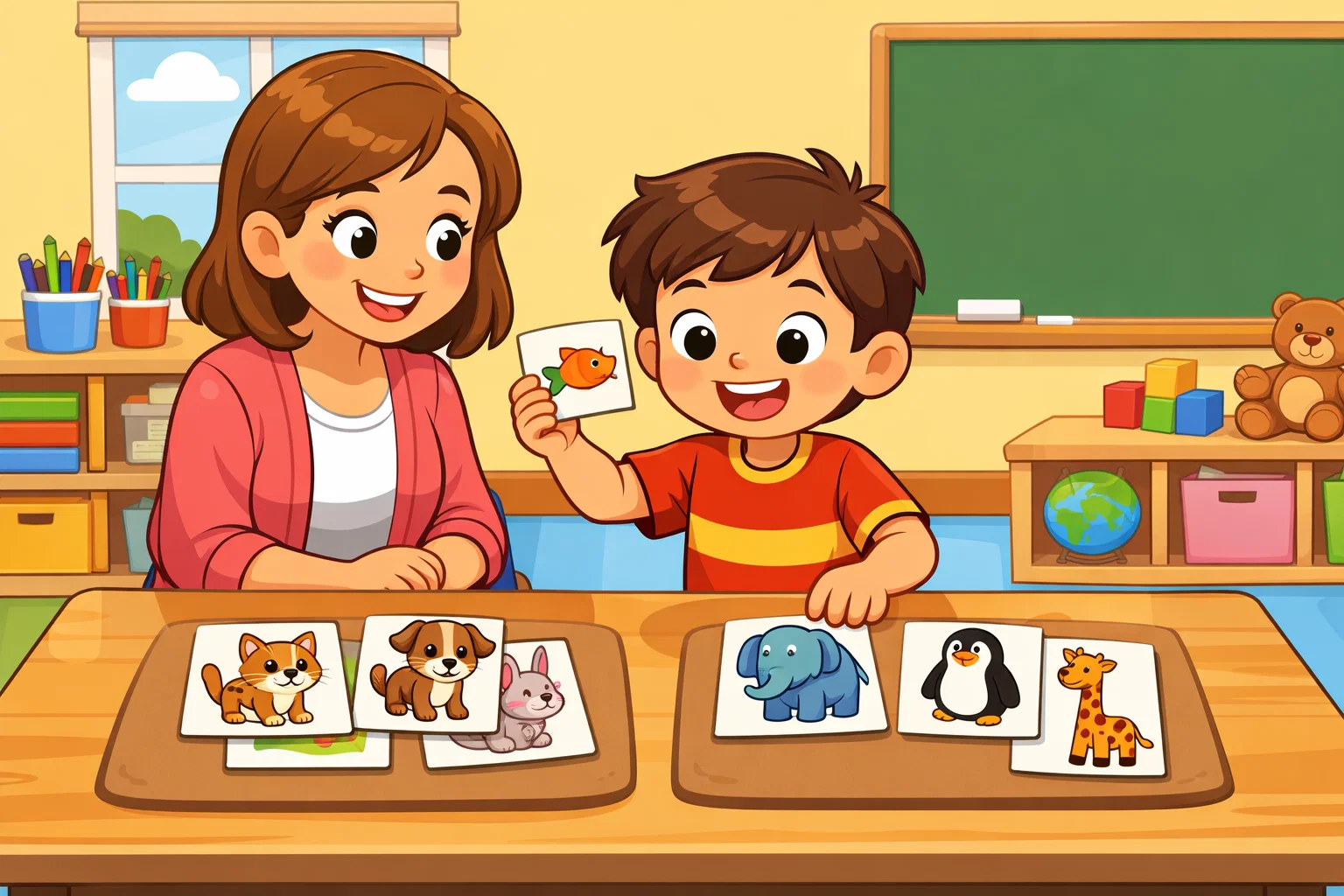
Animal Sorting is an effective phonics task because it focuses closely on sound. Children compare animals that start with A to animals that do not, which sharpens listening and categorization.
Materials
Prepare animal cards or mini figures. Include ants, alligators, alpacas, and apes along with non-A examples such as bears or dogs. You will also need two mats or buckets.
Setup
Label one mat with A and the other with an X or a different symbol. Spread the animal pieces out in a pile that children can reach easily. This format works well in literacy centers.
How to Do
The child picks up one card, says the animal name, and decides whether it belongs on the A mat. This is a letter-sound matching task because children are connecting a spoken word to a printed letter. As you model, stress the first sound in each animal name.
Extension
For extra speaking practice, ask children to use the word in a short sentence after sorting. This adds language development without making the task much longer.
Spot the Symbol
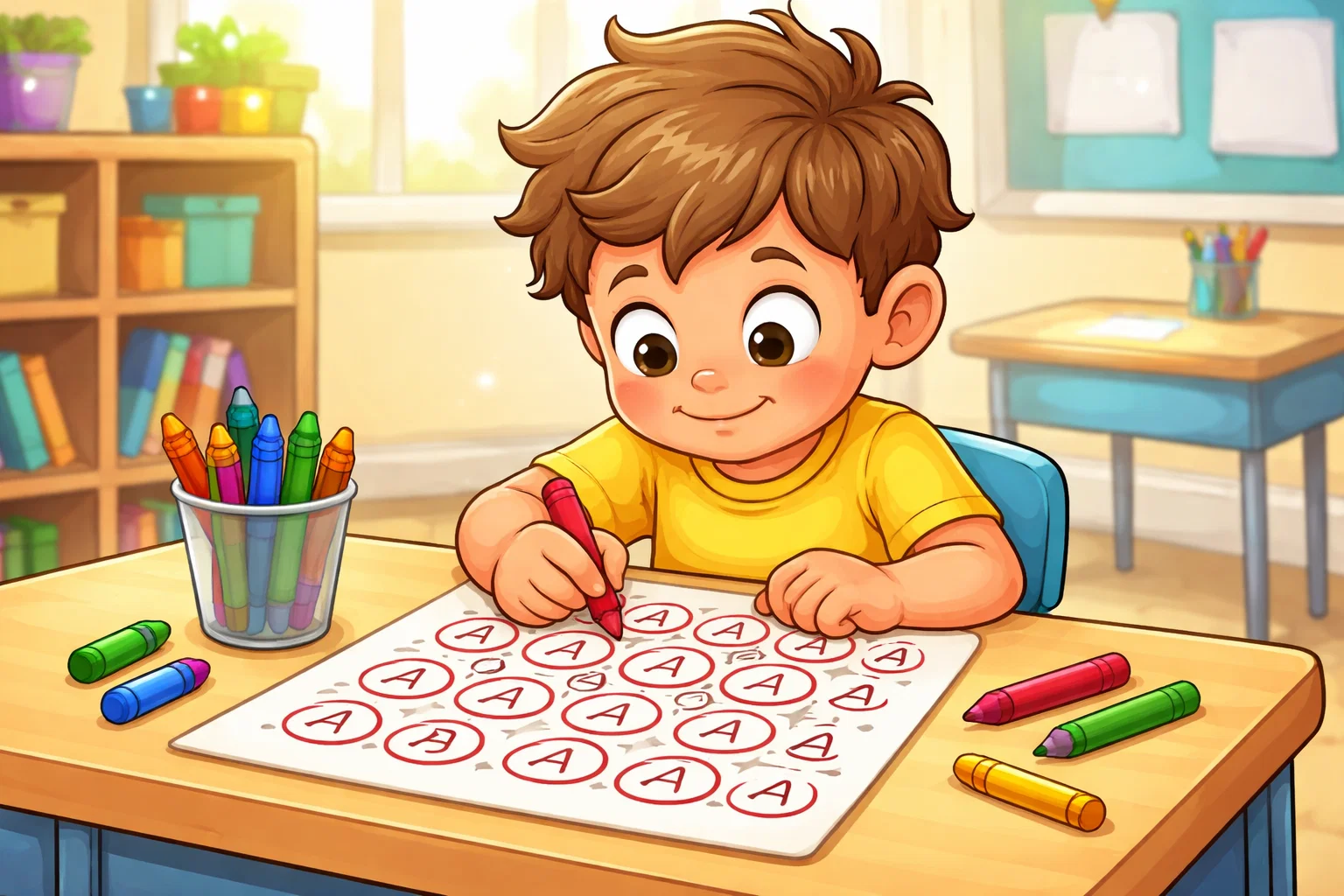
This search game is excellent for visual scanning and letter identification. Children look across a page full of mixed symbols and try to find every A they can see. It is simple, familiar, and easy to repeat.
Materials
Prepare a worksheet or printable page with mixed symbols, or create a sensory tray with magnetic alphabet pieces. Dot markers, crayons, and stickers all work well here.
Setup
Make sure the page includes enough A examples to keep the activity rewarding. If you use a tray, mix the pieces thoroughly so children need to search with care.
How to Do
Invite the child to find and mark each target symbol. You can say, “Circle every A,” or, for more challenge, “Find the uppercase forms first and the lowercase forms next.” This kind of visual hunt helps with letter recognition and supports children who are still recognizing the letter in busy print.
Variation
To add movement, hide the search page in different stations around the room. Children can travel from one location to another and complete a new mini hunt each time.
Alphabet Hop
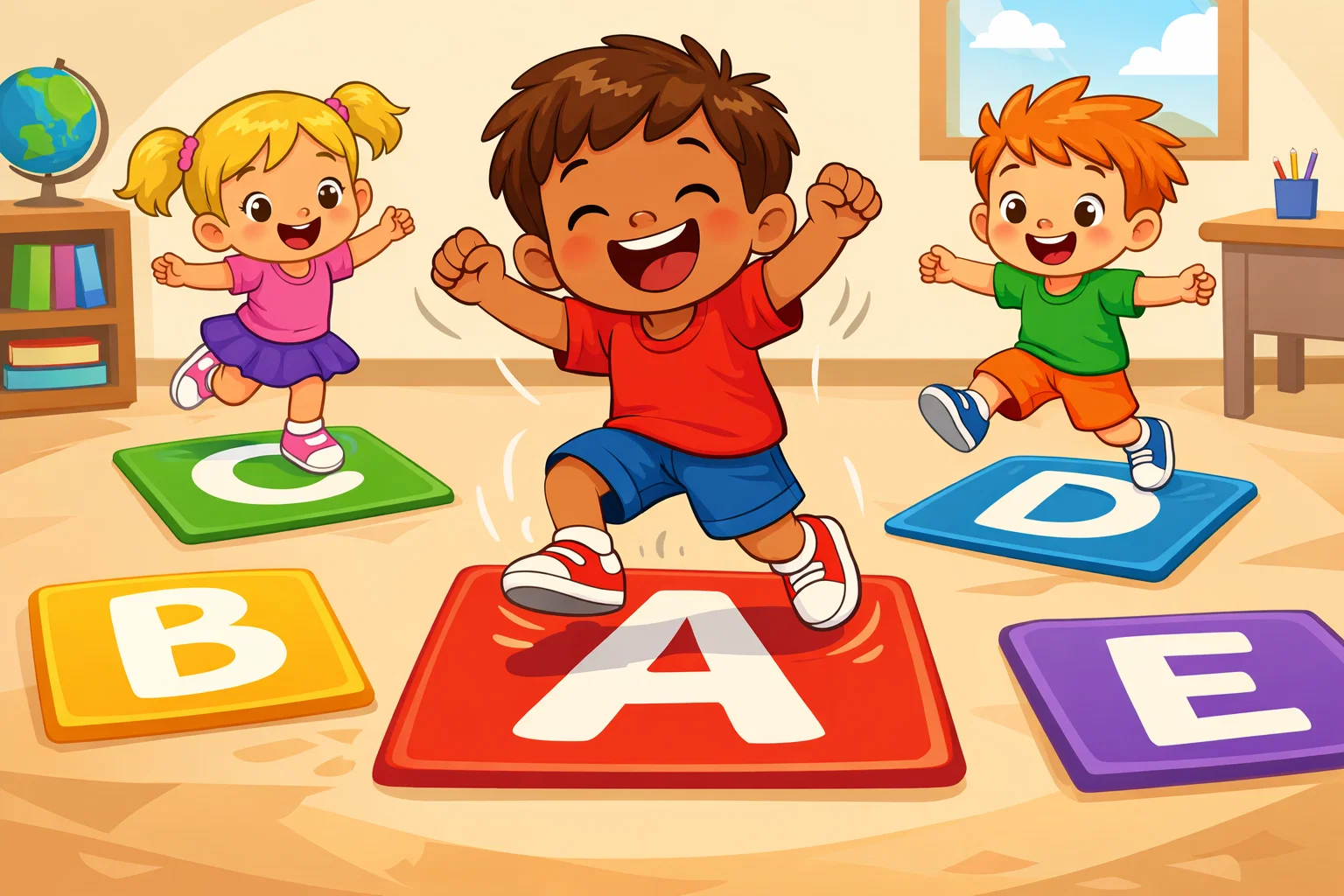
Alphabet Hop combines movement with recognition and is ideal for children who learn best on their feet. It turns floor cards into a game and helps build quick response skills.
Materials
Use paper circles, foam tiles, or floor cards. Include one or more A cards plus several distractor cards from the rest of the alphabet.
Setup
Tape the cards to the floor in a path or grid. Leave enough space for hopping and turning. If you have a larger group, create two paths so children do not need to wait too long.
How to Do
Call out “Jump to A!” or “Hop to the one that starts the word apple!” Children must move to the correct card. This is a great motor activity for reinforcing visual memory while staying playful.
Teaching Note
You can make the game easier by using only a few symbols at first. Later, add more distractors to build stronger attention and faster recognition.
Letter A Race
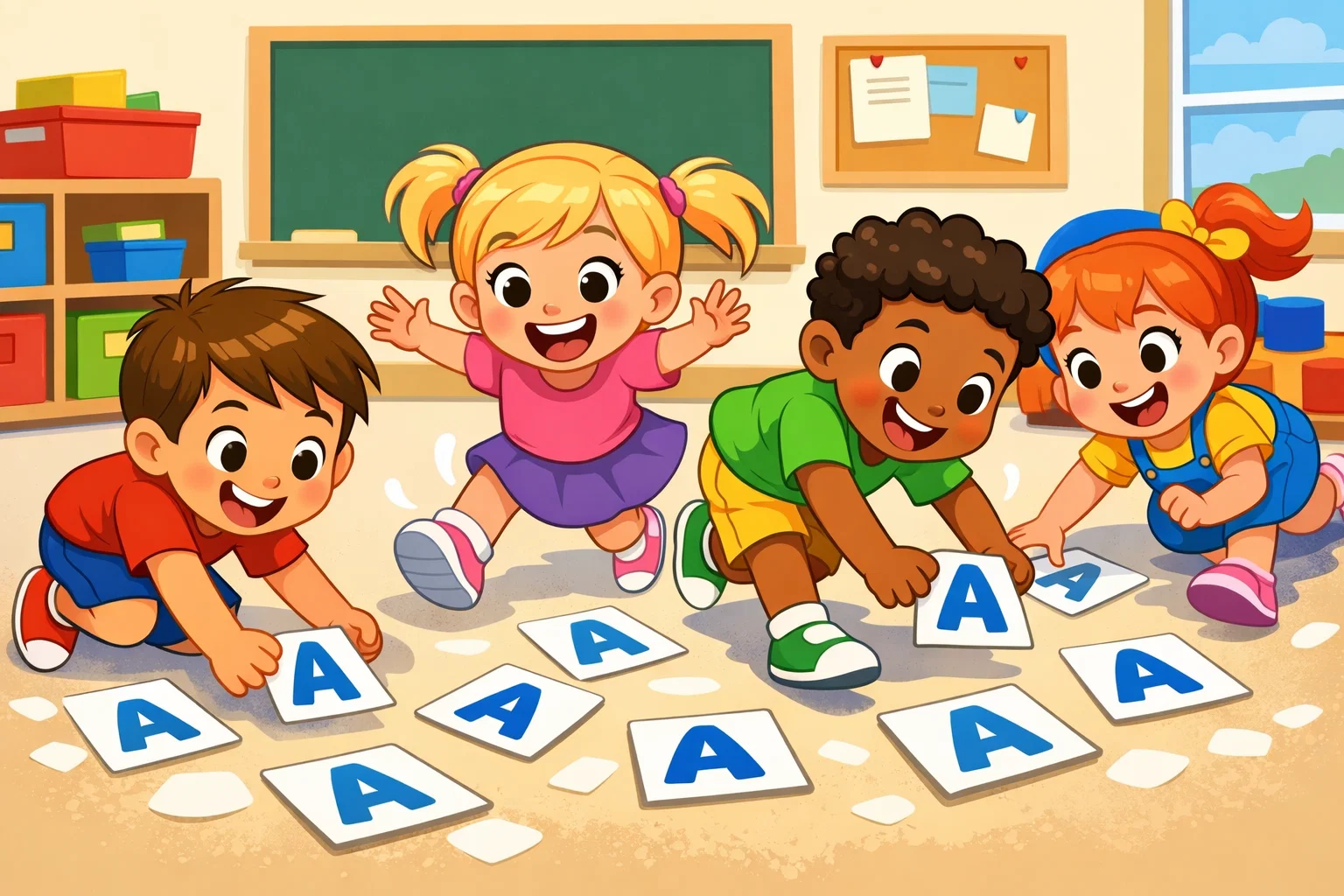
Letter A Race adds excitement and speed to phonics review. It works especially well for small groups in kindergarten, but younger learners can also enjoy it with fewer cards and shorter running space.
Materials
Set up a starting basket with picture cards and a finish basket across the room. Include cards for apple, ant, alligator, and other familiar words, plus a few non-A examples.
Setup
Explain the rule clearly before children begin: only cards that start with the letter A go to the finish basket. Place both baskets where children can move safely.
How to Do
On your signal, the child chooses a card, names it, and decides whether it belongs in the finish basket. This active format keeps attention high and gives children another chance to work on the beginning sound. Because learners must decide quickly, the game also strengthens fluency.
Extension
After the race, lay out the “winning” cards and ask children to describe what they notice. This can lead into a short review of picture vocabulary or another quick sorting round.
Match and Sort
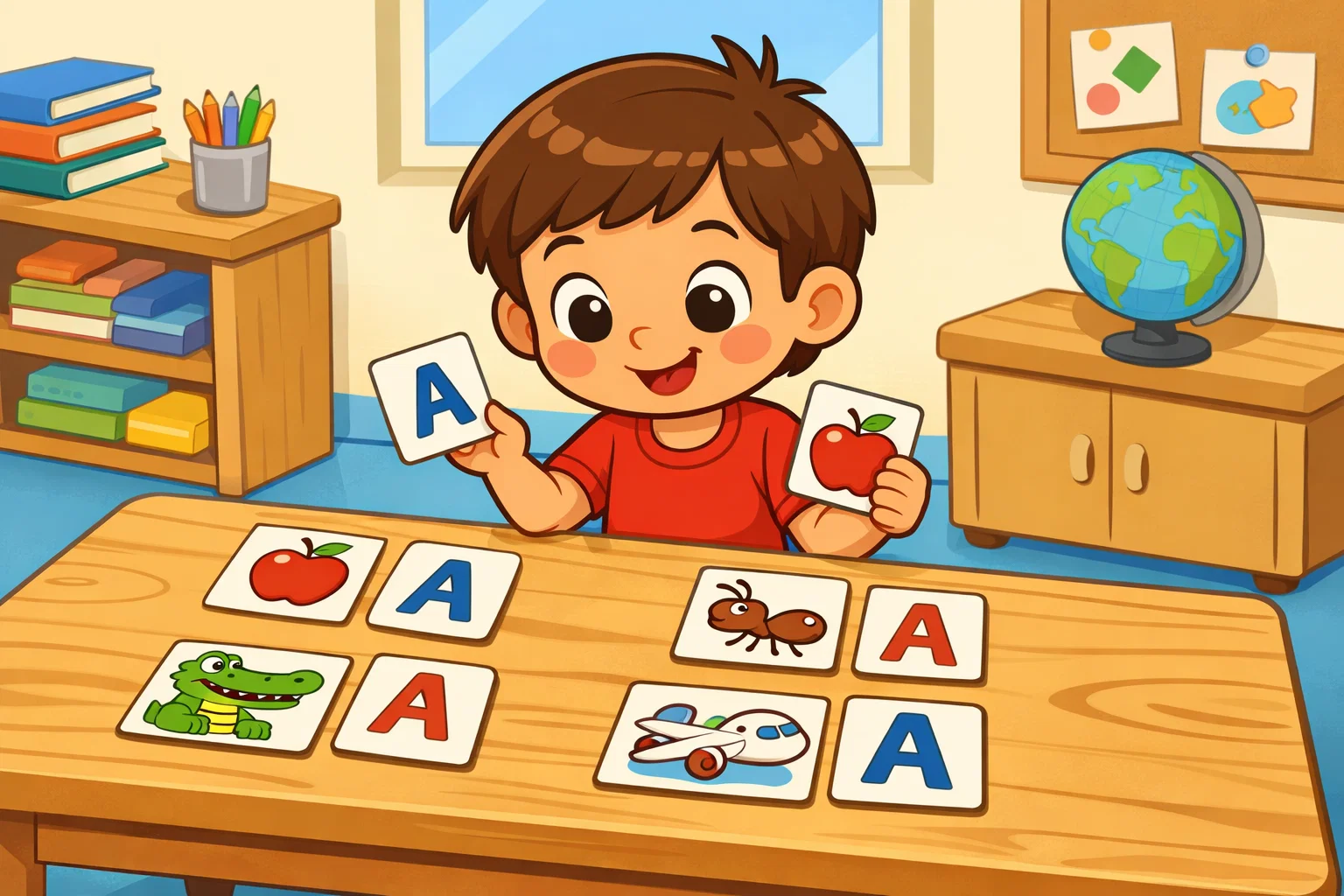
This is one of the easiest ways to show the connection between the letter and its different forms. Children match pictures to symbols, pair uppercase and lowercase forms, or sort cards by category.
Materials
Use cut-apart cards, magnets, or one of your letter A worksheets. Include a big A, a small a, and a few matching pictures such as apple or ant.
Setup
Lay the pieces in a mixed pile. Label two simple spaces for uppercase and lowercase if you want children to sort by print form.
How to Do
Ask children to pair the related pieces. They might match uppercase to lowercase, picture to letter, or word card to picture. This kind of work helps children connect the letter to meaning and builds confidence before more formal writing tasks.
Why It Works
Matching gives children repeated practice with print differences in a calm format. It is also one of the most flexible alphabet activities because you can make it easier or harder just by changing the cards.
Letter Slap
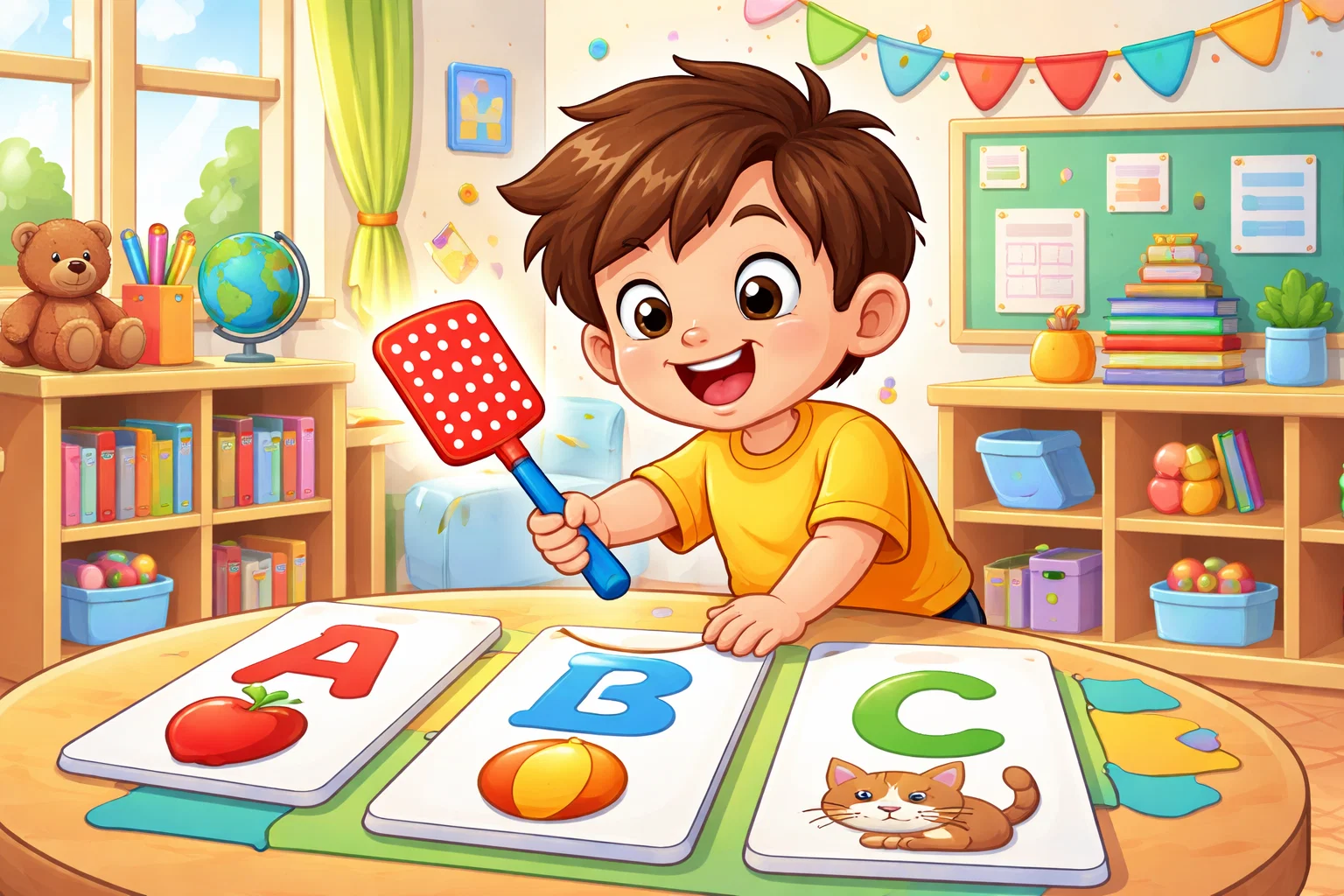
Slap the Letter is a quick-response classroom favorite. It is an easy letter game to set up, but it feels exciting because children react fast and get immediate feedback.
Materials
Use a clean fly swatter, pointer, or just hands. Spread flashcards across a table or rug. Include both uppercase and lowercase A cards in the set.
Setup
Arrange the cards face up where children can reach them. If you have a small group, allow turns so everyone has a chance to respond.
How to Do
Call out “A!” or make the /a/ sound. The child must slap the correct card. This game can reinforce letter knowledge quickly because it combines listening, recognition, and movement in one short burst.
Variation
To increase difficulty, ask children to slap the card that matches a word you say, such as apple or ant, instead of naming the symbol directly.
Feed the Monster
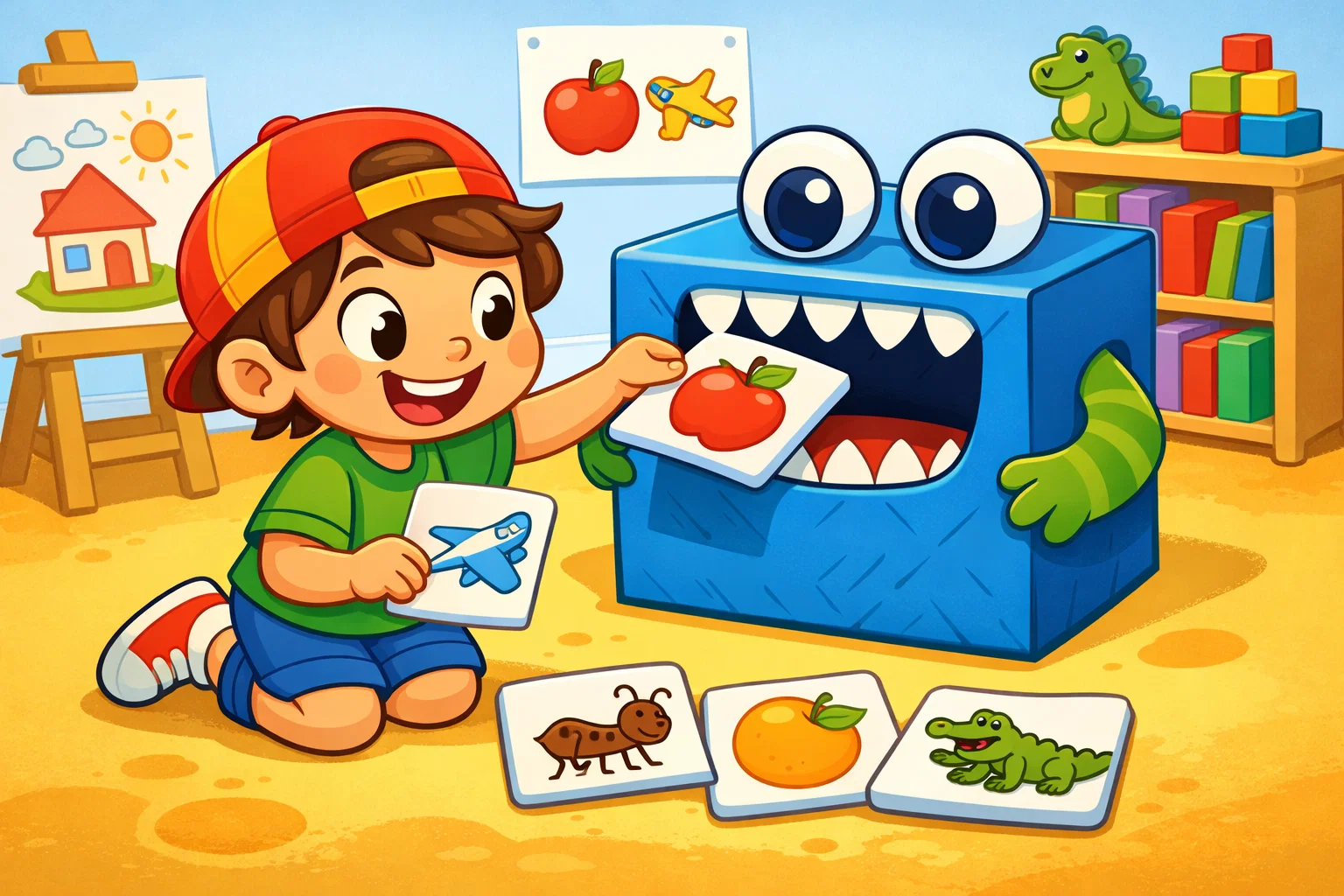
Feed the Monster is one of those interactive activities that children ask to repeat again and again. It mixes pretend play with sound sorting and is ideal for small groups or centers.
Materials
Decorate a tissue box like a monster and cut out a mouth opening. Prepare cards with pictures of ants, alligators, apples, and several non-A items.
Setup
Place the monster on the table and spread the food cards nearby. Explain that the monster only eats items that begin with the letter A.
How to Do
Children pick up one card at a time, name the picture, and decide whether the monster should eat it. Because the task is playful, even reluctant learners often join in. This is a strong hands-on Letter A activity for young children who need frequent repetition without using a worksheet.
Extension
After the sorting round, ask children to count how many cards the monster ate. This adds a simple math link and extends the lesson by a few useful minutes.
Rhyme Search
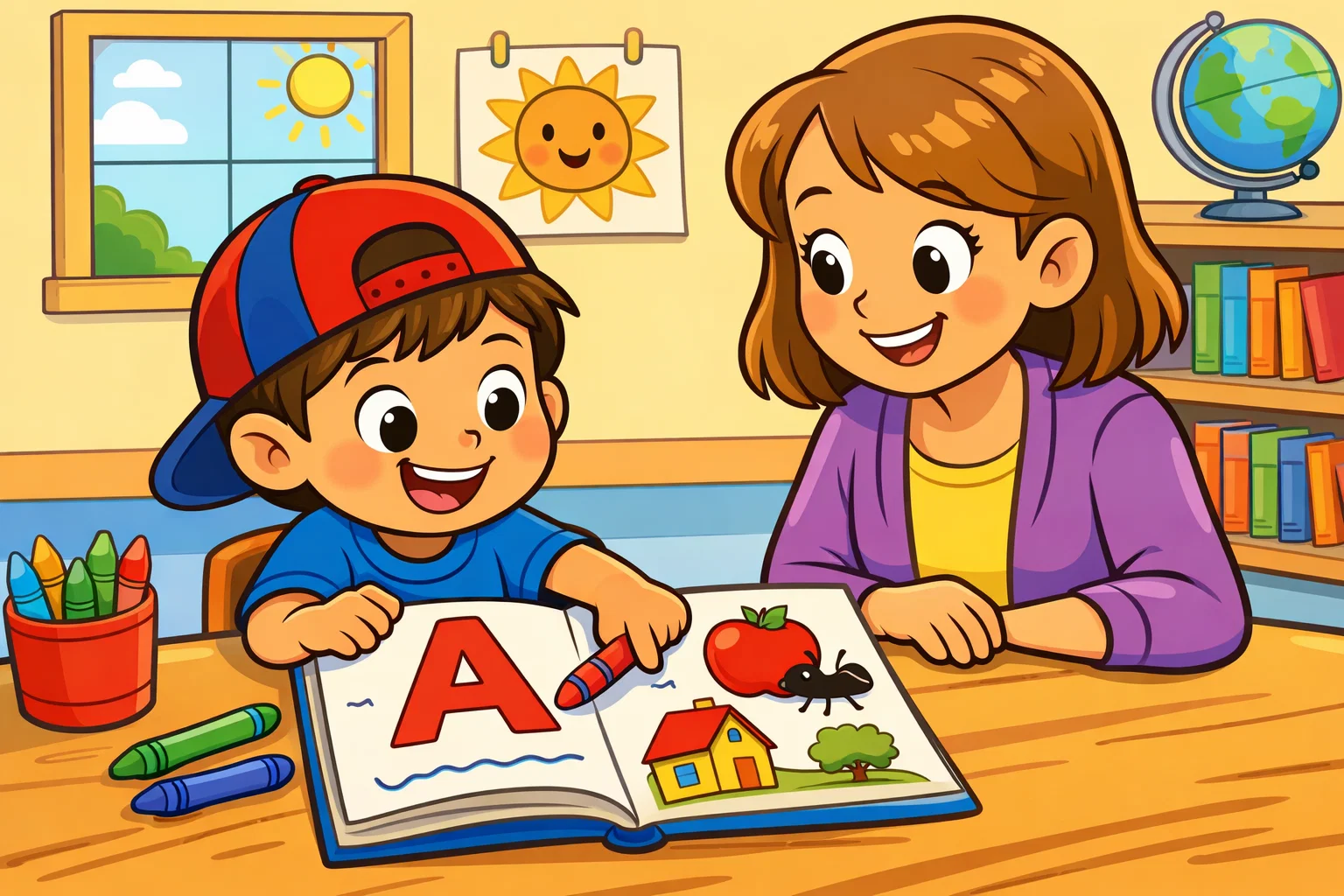
Rhyme Search helps children move from isolated symbols to real text. By spotting A in a short poem or chant, they begin to see how print appears in meaningful language.
Materials
Use a short printable rhyme, a highlighter, and a large font. Select text with several visible examples of A and a.
Setup
Read the rhyme aloud before children begin searching. This gives context and lets them hear the repeated sound pattern before they scan the page.
How to Do
Ask the child to act like a detective and highlight each A or a they find. You can do one line at a time if the child is still developing tracking skills. This supports letter-recognition practice and introduces the idea that print can be noticed in connected text, not just on flashcards.
Teacher Tip
For advanced learners, ask them to name one word from the poem that begins with the target sound after they finish highlighting.
Apple Collage
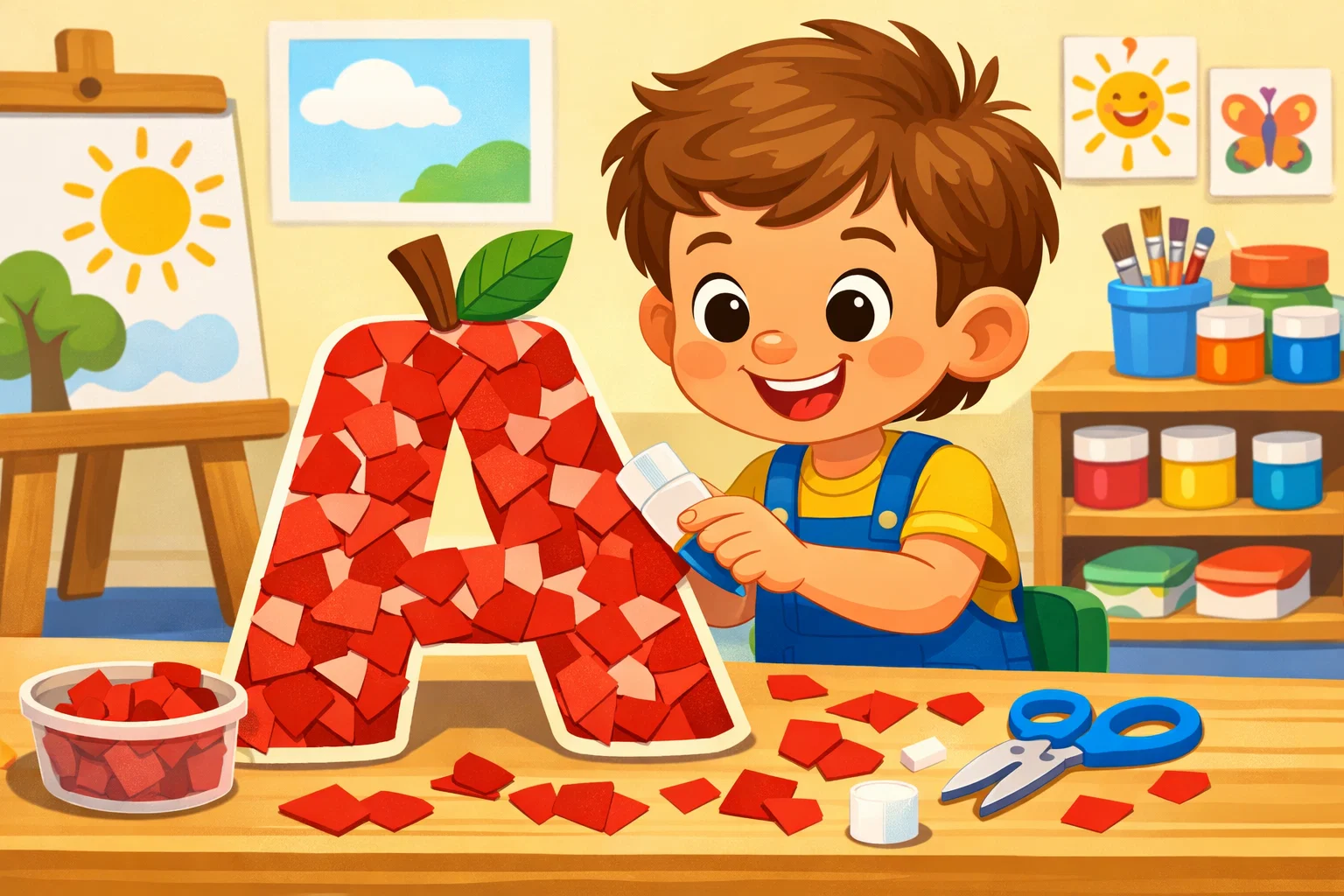
Apple Collage is a sensory-rich art project that gives children a memorable visual and tactile experience. It is one of the most popular hands-on letter A activities for preschoolers because it feels creative while still targeting phonics.
Materials
Prepare a large letter A template, glue, red tissue paper, pom-poms, and optional seeds or stickers.
Setup
Place the collage materials in bowls and set the template in front of each child. Model how to spread glue only where the red pieces should stick.
How to Do
Children cover the A shape with red materials until the whole design is full. While they work, repeat that apples begin with A and invite them to name more A words. This is a great craft for visual memory, fine motor skills, and quiet table work.
Why It Works
Craft projects slow the pace down and give children time to look closely at the shape. That extra attention can be especially helpful during a letter of the week routine when you want repetition without boredom.
Airplane Craft
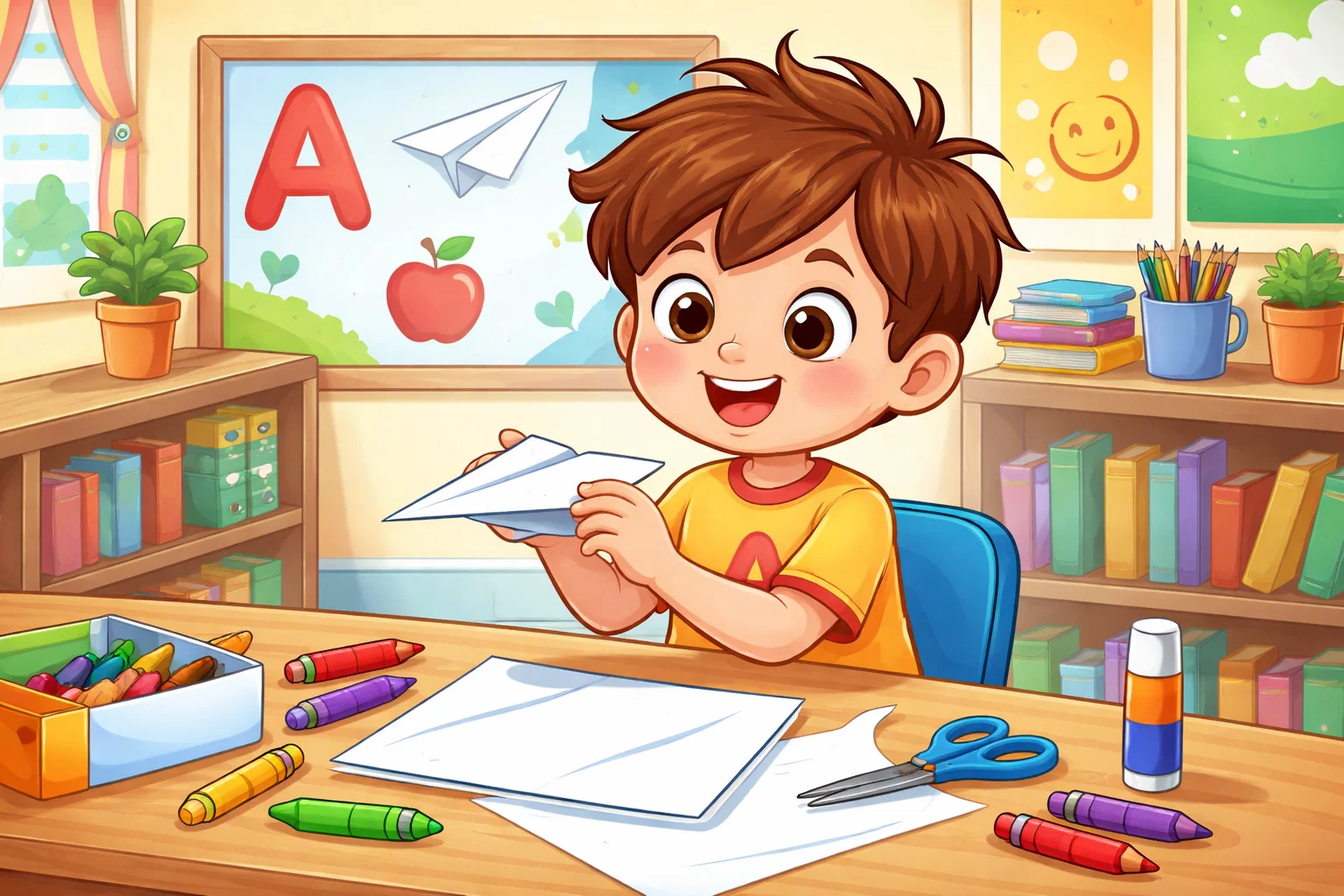
The Airplane Craft expands vocabulary beyond apple, which helps children understand that many words can share the same first sound. It is also a strong choice if you want a project with movement at the end.
Materials
Use paper for folding, crayons or markers, and stickers. You can also add craft sticks if you want a mixed-media version.
Setup
Show children a picture of an airplane and emphasize the first sound. Then demonstrate how to fold or decorate the plane.
How to Do
After the plane is ready, invite children to write A on the wings or decorate with A stickers. Then let them fly the plane across the room and repeat the target sound. This is one of the easiest fun letter A activities to extend into free play.
Extension
Create a simple “airport” sign or landing zone labeled with A. This keeps the target print visible even after the craft is finished.
Counting Ants
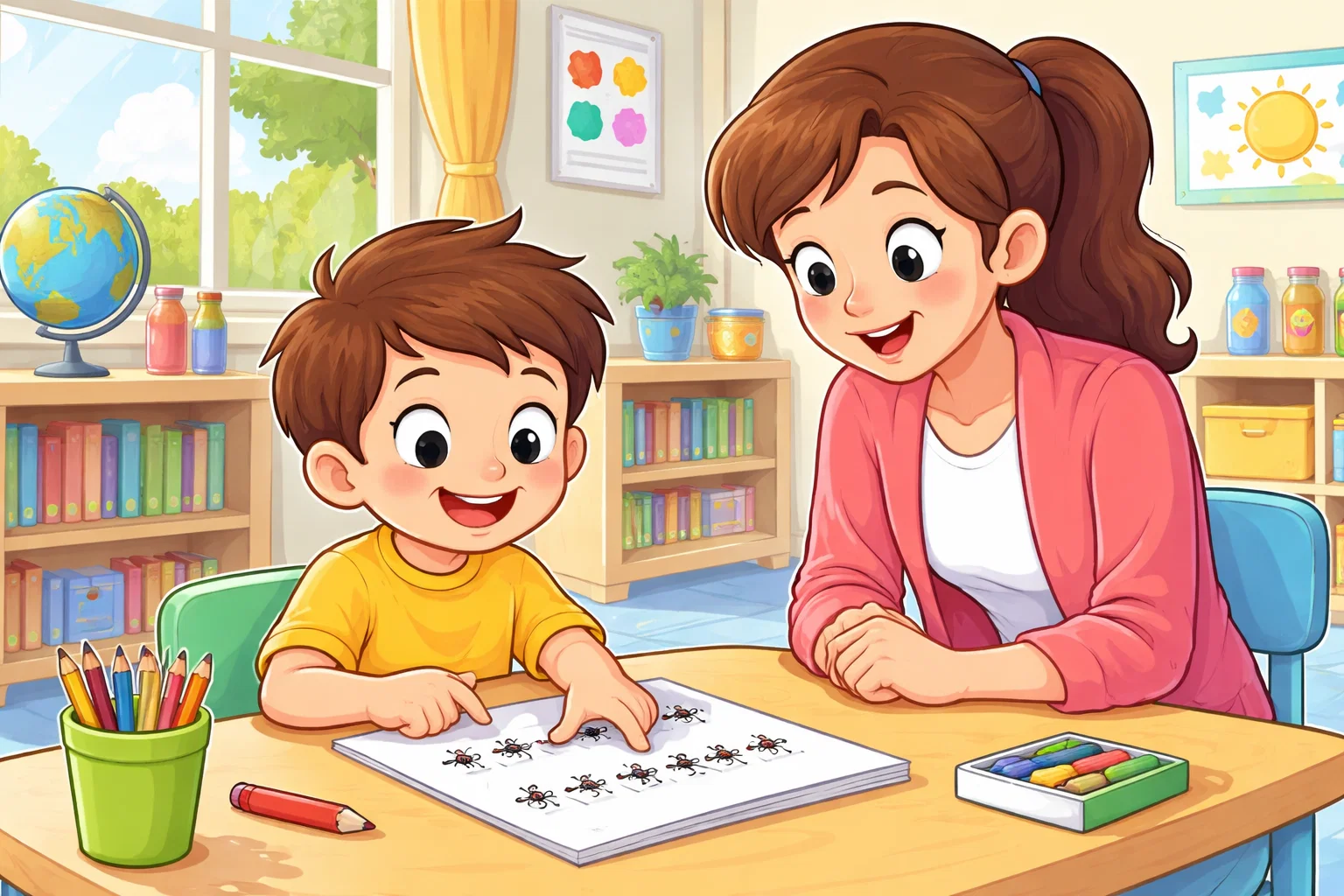
Counting Ants blends early numeracy with phonics and is a smart choice for cross-curricular instruction. It works well in both preschool and kindergarten because the math demand can be adjusted easily.
Materials
Use plastic ants, thumbprint ants, or black counters, along with a counting mat that shows an anthill or an A shape.
Setup
Place the counters beside the mat and decide whether children will roll one die or two. For younger learners, keep the numbers small.
How to Do
The child rolls, counts out the correct number of ants, and places them on or around the target shape. As each ant is added, repeat the word and stress the first sound. This is an effective blend of counting practice and phonics review.
Variation
Invite children to compare groups: Which mat has more ants? Which has fewer? This extends the lesson while keeping the theme connected.
Why A Matters in Early Literacy
The letter A is often one of the first letters children learn because it is easy to pair with familiar words like apple, ant, and alligator. Early success with this sound-symbol connection can build confidence for the rest of the alphabet.
Print Recognition and Visual Memory
Children need to notice the difference between the tall uppercase form and the rounded lowercase form. Seeing those forms in books, posters, cards, and games helps develop visual memory over time. Repetition matters, but variety matters too. The same concept becomes stronger when children trace, stamp, hop, sort, and search in different contexts.
Sound Awareness
The short A sound is one of the easiest sounds for many children to hear and repeat. When teachers use familiar pictures and clear examples, children begin to understand that spoken language and print are connected. That understanding supports reading readiness and gives children a strong first step into phonics.
Writing Readiness
Many A-themed tasks also strengthen the hand muscles needed for writing. Glue bottles, dot markers, pom-poms, tracing pages, and small toys all build control in different ways. This is why activities designed around art and movement can still support academic growth in meaningful ways.
Words That Start with “A” for Young Learners
Vocabulary growth is an important part of teaching the letter A. The more examples children hear, sort, and say, the easier it becomes to remember the pattern.
Animals
- Ant
- Alligator
- Ape
- Alpaca
Foods
- Apple
- Apricot
- Avocado
Everyday Objects
- Acorn
- Anchor
- Arrow
- Apron
Action Words
- Act
- Add
- Ask
How to Use the Word List
Use these words during circle time, center work, read-aloud follow-up, or a quick home game. You can sort them by category, clap the first sound, or ask children to draw one favorite example.
Books and Read-Alouds
Books make a wonderful companion to letter activities because they place the target letter and sound in meaningful language. A short read-aloud can prepare children for a craft, or it can reinforce what they already practiced in centers.
Picture Books and A-Themed Stories
Look for stories with apples, ants, alligators, or repeated short-A sounds. A predictable text can help children hear the sound again and again without feeling like they are doing another formal lesson.
Follow-Up Questions
After reading, ask:
- Can you find A on this page?
- Which picture shows something that starts with A?
- What other word in the story has the same first sound?
- Can you think of another object from home that begins the same way?
Why Read-Alouds Help
Read-aloud time supports vocabulary, listening, and print awareness all at once. It also gives adults a relaxed setting to repeat target words naturally instead of forcing them into every sentence.
Literacy Center Ideas
If you are planning a classroom unit, centers make it easy to revisit the same concept in different ways.
- Pocket Chart Sorting: Place pictures into A and not-A categories.
- Magnet Match: Pair uppercase and lowercase forms on a cookie sheet.
- Sensory Tray Writing: Use salt, sand, or rice so children can trace with a finger.
- Fine Motor Station: Use tweezers to place “ants” on an A outline.
- Printable Table Work: Offer one short worksheet with tracing or sorting.
- Build and Form Station: Use playdough or craft sticks to build the letter with hands-on materials.
These center ideas give children multiple entry points into the same goal. Some will prefer movement, some will prefer sorting, and some will enjoy art-based tasks the most.
Show and Tell Ideas for Preschool
Show and tell can extend the theme in a way that feels personal and meaningful.
Easy Home Items
Invite families to send an apple, apron, acorn, art brush, or airplane toy. These are all familiar objects that support sound awareness and vocabulary.
Sentence Frame for Sharing
Children can practice saying:
“This is my apple. It starts with A.”
“This is my apron. I use it when I paint.”
“This is my airplane. It can fly.”
Short sentence frames help children speak with more confidence while reinforcing the weekly target.
How to Adapt Activities for Different Learners
One reason these ideas work well is that they can be adjusted easily. Some children need larger motions and less pencil work. Others are ready for quieter table tasks and more detailed matching. If a learner is just beginning, focus on one or two familiar words, a large visual model, and short, successful practice. If a learner is more advanced, add simple word cards, sound sorting, or independent tracing.
For children who need sensory support, try finger tracing in sand, playdough shaping, or collage work. For children who love movement, repeat Alphabet Hop, Sky Writing, and quick room hunts. For children who enjoy routines, use one short printable page each day during the same part of the schedule.
Common Mistakes to Avoid
Adults sometimes try to do too much in one sitting. A short lesson is usually better than a long one, especially for preschoolers. Another common mistake is introducing too many examples at once. Start with familiar words such as apple and ant before adding less common vocabulary. It also helps to avoid correcting every small error immediately. Young children benefit from encouragement, modeling, and another try.
Most importantly, do not rely on one format only. Some children understand a concept quickly in a craft but struggle on a page. Others can point to the correct symbol in a book but still need more time before they can form it with a pencil. Mixing movement, art, sorting, and print work gives more learners a chance to succeed.
Tips for Teaching A Successfully
- Start simple. Introduce one sound and a few familiar words first.
- Use real objects. Concrete materials make abstract print easier to understand.
- Keep sessions short. Ten to fifteen minutes is often enough.
- Repeat in different ways. Use books, games, crafts, and quick reviews.
- Model first. Show children what to do before expecting independence.
- Use a mix of tasks. A tracing page, a game, and a craft create balance.
- Celebrate progress. Small wins help children stay motivated.
These tips make it easier to teach the letter in a way that feels natural and developmentally appropriate.
FAQ
How many activities should I use in one week?
For a typical letter of the week plan, three to five focused tasks are often enough. That gives children repetition without overload. You might combine one movement game, one art project, one search or sort task, and one short printable review page.
Which activities work best for centers?
Sorting games, the monster box, magnetic matching, and a short tracing page are all strong center choices. They are easy to repeat and simple to explain.
Which activities work best at home?
Scavenger Hunt, Sky Writing, and Airplane Craft are excellent choices for families because they require little prep and use materials many people already have.
What if my child still confuses letters?
That is very common in early learning. Go back to larger models, slower pacing, and more tactile work. Finger tracing, playdough shaping, and collage work can help build stronger visual memory.
How do I know if my child is making progress?
Look for small signs: naming the letter A correctly, noticing it in books, identifying the short A sound in familiar words, or showing more control during tracing. Progress often happens gradually, especially when practice is playful and consistent.
How can I help my child distinguish between the upper and lower case letters?
The best way for children to learn about the letter A in both its forms is through visual matching letter games and hands-on creation. You can use letter toys like magnets or wooden blocks to show the difference, then ask your child to create each letter using playdough or sticks. This physical engagement reinforces the letter shapes in their memory, making it much easier to tell them apart when they start looking for letter A’s in their favorite picture books.
What is the best way to teach the letter A sound to a beginner?
When teaching letter sounds, focus on the “short A” (/ah/) by connecting it to a specific letter animal or object. An alligator craft where the child opens the “A-shaped” mouth while making the sound is a highly engaging letter activity. You can also use beginning letter worksheets that feature images of ants or apples to help them master the letter sound. Combining motor skills and letter recognition this way ensures the child makes a strong connection between the visual symbol and its phonemic value.
Take a short quiz to find out what your everyday choices say about your parenting style
When your child is curious about something new, what’s your instinct?
Take a short quiz to find out what your everyday choices say about your parenting style
“Can I download this app?” What happens next?
Take a short quiz to find out what your everyday choices say about your parenting style
When it comes to rules at home, which sounds most like you?
Take a short quiz to find out what your everyday choices say about your parenting style
If you could give your child one life skill today, what would you pick?
Take a short quiz to find out what your everyday choices say about your parenting style
Your child gets to choose what to watch. What would your ideal setup look like?
Take a short quiz to find out what your everyday choices say about your parenting style
Pick your parenting superpower ✨