70 Fun Animal Facts for Kids

 Discover a Free Education Video App for Kids
Pastory uses AI to personalize educational video content based on your child’s interests and personality. Safe, engaging, and built for curious young minds. Sign up now to stay updated and enjoy early access with a free trial
Discovering the wonders of the animal kingdom is more than just a pastime; it is a vital part of cognitive and emotional development. Early childhood research suggests that learning about animals and nature can help children build empathy, observation skills, and critical thinking. This guide provides 70 fun animal facts for kids that are short, surprising, and easy to read. Whether you are a parent looking for bedtime reading, a teacher planning a lesson, or a curious student, these animal facts are organized by theme so they are easy to explore.
Most Popular Animal Facts
Before diving into our full list, let’s look at the “superstars” of the animal kingdom. These fun and surprising facts about popular animals are often the most searched because they challenge what we think we know about nature. Learning these cool facts helps kids of all ages develop a scientific mindset by encouraging them to look more closely at the world around them.
Penguin Facts Kids Love
- Gentoo Penguins are the fastest swimming birds, reaching speeds of up to 22 mph (36 kph) underwater.
- Adélie penguins use pebbles to build nests, and males may offer stones during courtship, but calling it a ‘proposal’ is a cute simplification rather than a literal scientific description.
- Emperor Penguins exhibit incredible teamwork, huddling in large groups to stay warm in Antarctic temperatures that can drop to -76°F (-60°C).
Shark Facts Kids Love
- Great white sharks can grow and lose several thousand teeth over their lifetime, as they have rows of backup teeth that move forward like a conveyor belt.
- Sharks do not have bones; instead, their skeletons are made of cartilage, the same flexible material found in human ears and noses.
- Hammerhead sharks have 360-degree vision because of the wide placement of their eyes, allowing them to see above and below them at all times.
Elephant Facts Kids Love
- African Elephants possess a trunk containing over 40,000 individual muscles, allowing them to pick up a single blade of grass or knock down a tree.
- Elephants cannot jump because they always keep at least one foot on the ground, even when moving quickly.
- Elephant calves (babies) suck their trunks for comfort, much like human infants suck their thumbs.
Octopus Facts Kids Love
- Octopuses have three hearts; two hearts pump blood to the gills, while the third circulates blood to the rest of the body.
- Octopuses have blue blood because it uses a copper-based protein called hemocyanin to carry oxygen, which is more efficient in cold, low-oxygen water.
- Common Octopuses are highly intelligent and have been observed using tools, such as coconut shells, to build mobile shelters.
Kangaroo Facts Kids Love
- Red Kangaroos use their powerful tails as a “fifth leg” to provide balance and push off the ground while hopping.
- Kangaroos are physically unable to walk backward because of their large feet and thick, heavy tails.
- Mother Kangaroos can pause a pregnancy if environmental conditions, like a drought, make it too difficult to raise a joey.
Fun Facts about Animals
This section contains a full list of animal facts to wow your friends and family. To make the list easy for kids of all ages to navigate, we have organized the facts into categories.
Fun Animal Facts about Pets
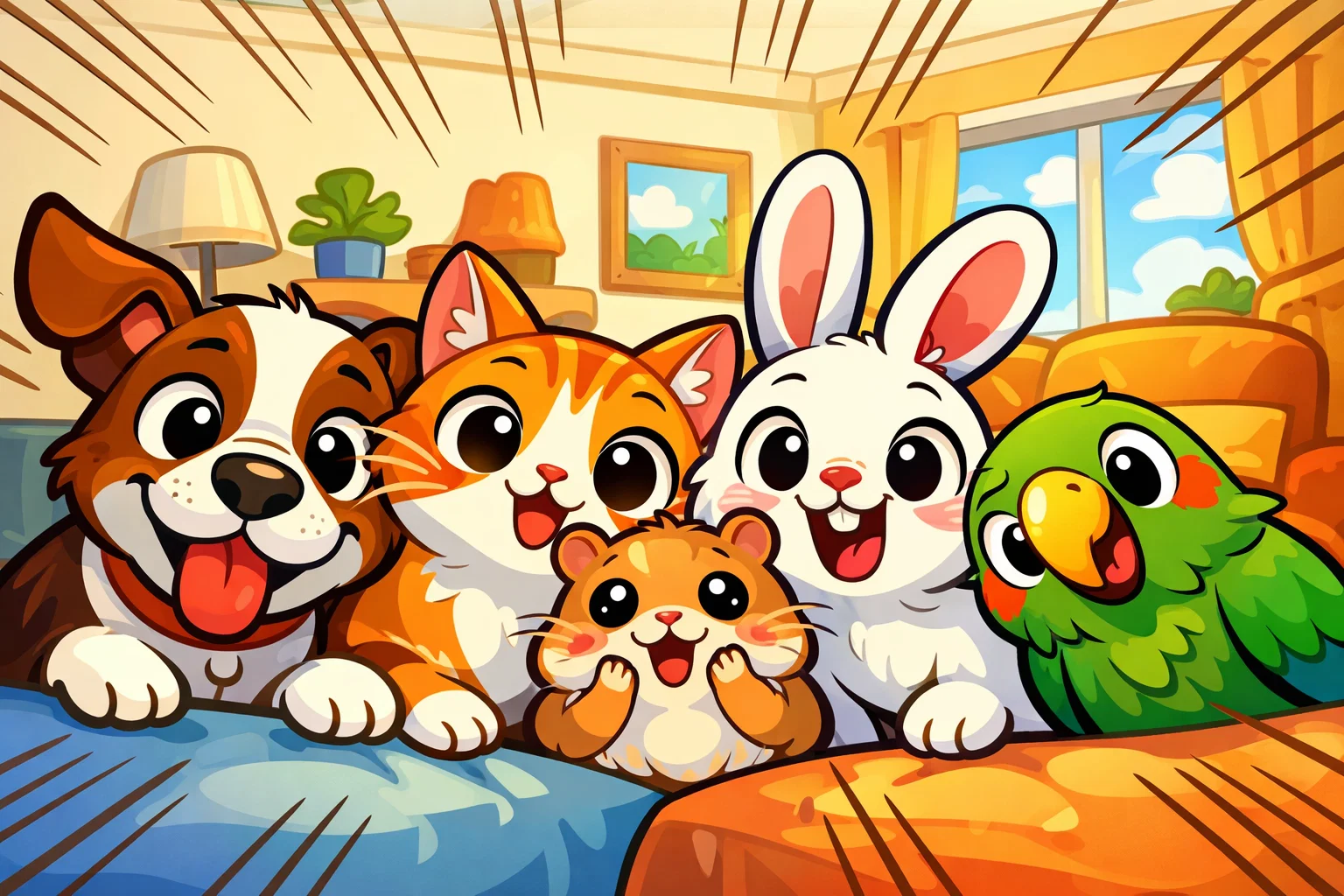
- Dogs have unique nose prints, much like human fingerprints, which can be used to identify them.
- Cats have 32 muscles in each ear, allowing them to rotate their ears 180 degrees to locate sounds.
- Rabbits perform a “binky” – a joyful hop and twist in the air – when they are feeling happy.
- Guinea Pigs do not sleep for long periods; instead, they take many short naps throughout the day and night.
- Parakeets (Budgies) can count up to three and recognize basic patterns in colors.
- Hamsters have expandable cheek pouches that can stretch all the way back to their shoulders to carry food.
- Goldfish do not actually have a three-second memory; studies show they can remember information for up to five months.
- Beagles have approximately 220 million scent receptors, making their sense of smell 10,000 times stronger than a human’s.
- Cats spend about 70% of their lives sleeping to conserve energy for hunting.
- Rats are highly social and can actually “laugh” (at a high frequency humans can’t hear) when they are tickled.
Farm Animal Facts for Kids
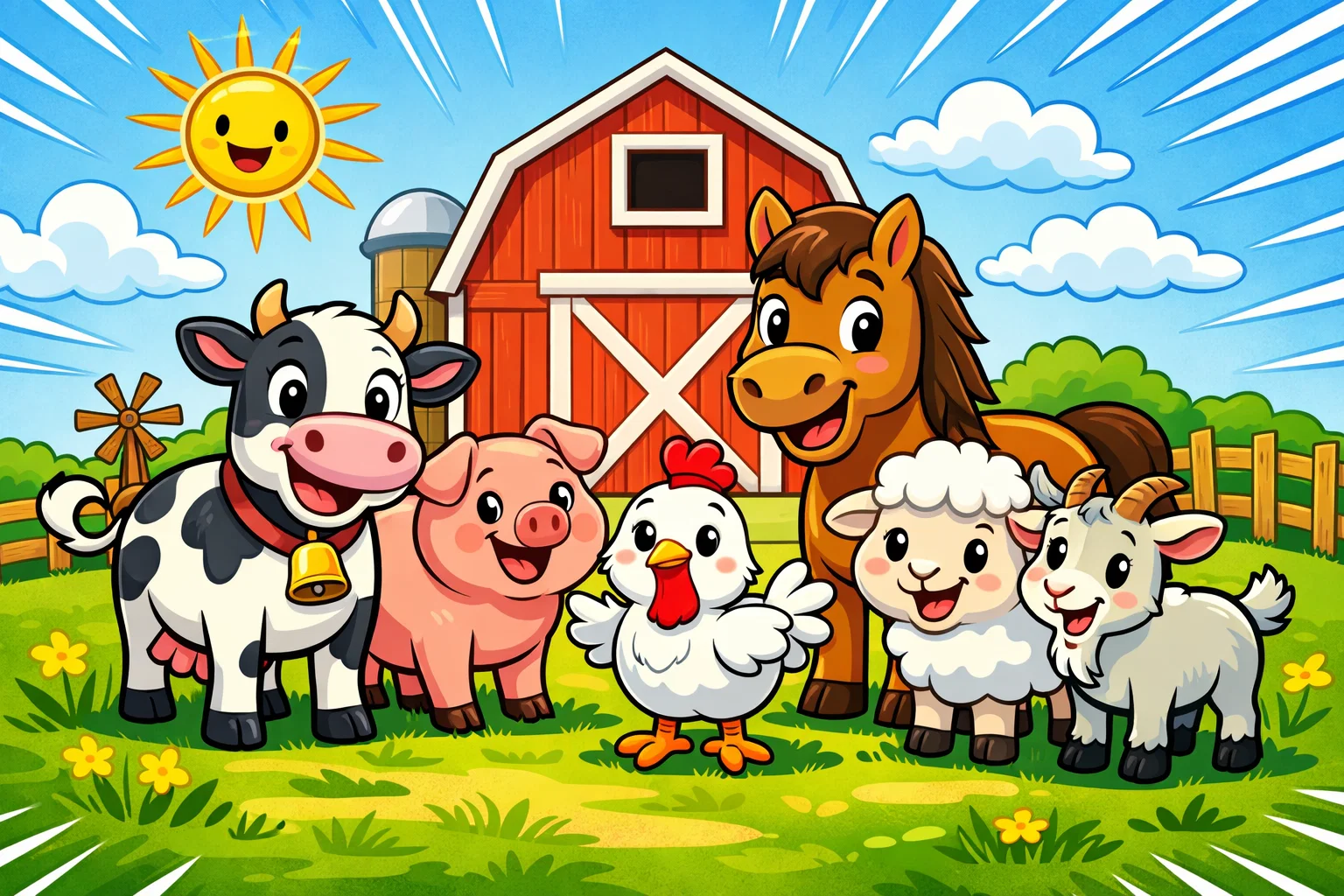
- Cows are social mammals that form “best friend” bonds and experience stress when they are separated from their favorites.
- Goats have rectangular pupils, which provide them with a 320-degree field of vision to spot predators.
- Horses can sleep both standing up and lying down thanks to a “stay apparatus” in their legs that locks their joints.
- Chickens can produce eggs in different colors, including blue and green, depending on the specific breed.
- Pigs are highly intelligent animals and often do well in cognitive tests, sometimes outperforming dogs in specific tasks.
- Sheep have an excellent memory and can recognize the faces of up to 50 other sheep for over two years.
- Turkeys can blush; the skin on a turkey’s head and neck changes color to red, white, or blue based on its emotions.
- Donkeys have a very strong sense of self-preservation and will refuse to move if they sense a path is unsafe.
- Ducks have “waterproof” feathers because of an oil-producing gland that coats their wings while they preen.
- Llamas are often used as “guard animals” for sheep because they are brave and will chase away predators like coyotes.
Underwater Animal Facts for Kids
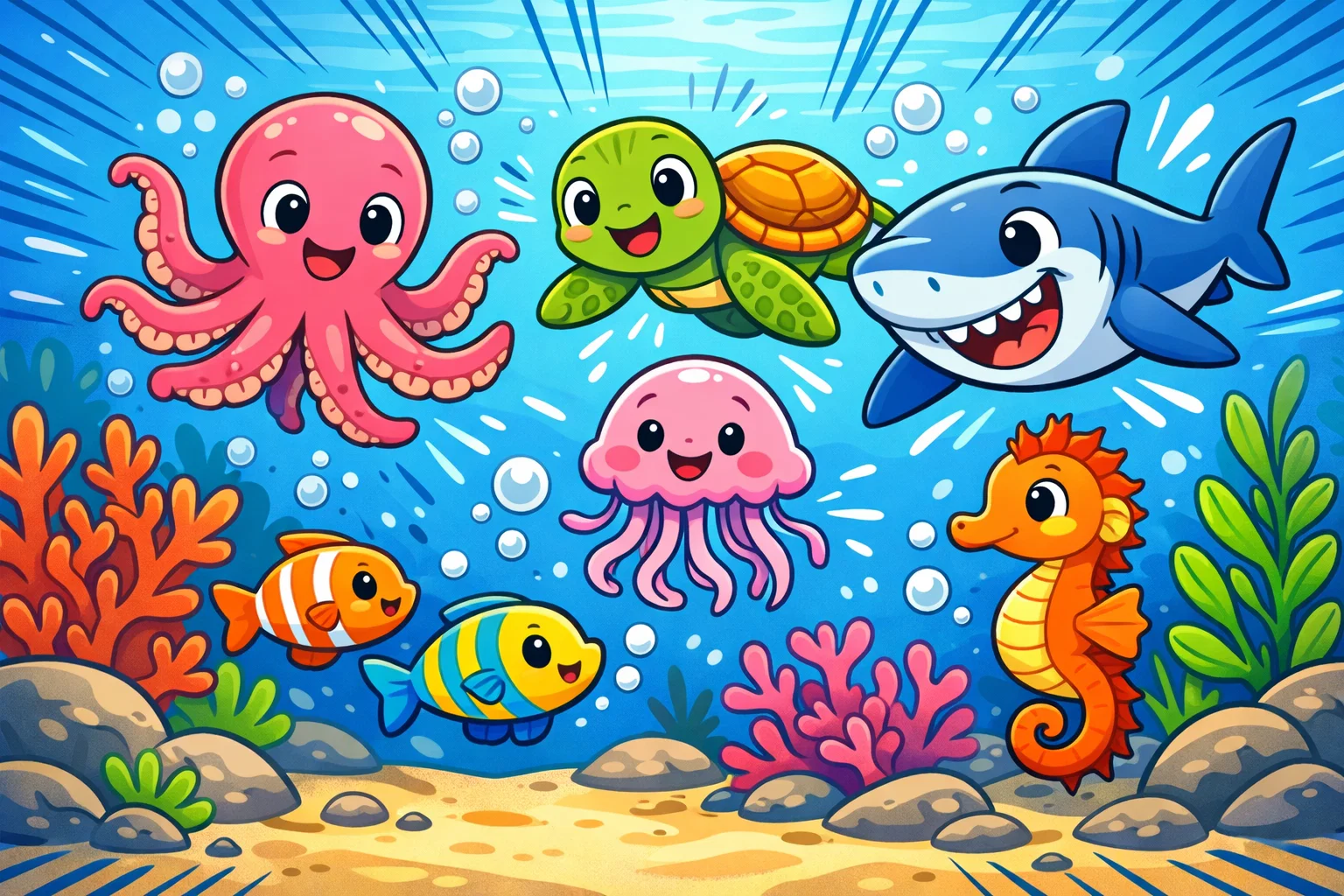
- Dolphins have names for one another; they use unique “signature whistles” to identify and call to specific friends.
- Sea otters sometimes hold paws while resting, and they also wrap themselves in kelp so they do not drift away.
- Sea turtles are long-lived animals and may live for several decades, with many estimates placing their lifespan at roughly 50 to 100 years, depending on the species; they also navigate long distances using the Earth’s magnetic field.
- Male Seahorses are the ones who carry the babies; they have a pouch where the female deposits eggs until they hatch.
- Jellyfish are 95% water and have survived on Earth for over 500 million years, making them older than dinosaurs.
- Electric Eels can generate a shock of up to 600 volts, which is five times the power of a standard wall socket.
- Blue Whales are so large that a human child could swim through their largest arteries.
- Clownfish are born male, but they can change sex and become female if the dominant female in their group dies.
- Starfish do not have blood; instead, they use a water vascular system to pump seawater through their bodies.
- Shrimp have their hearts located in their heads, protected by a thick layer of shell.
Bird Facts for Kids
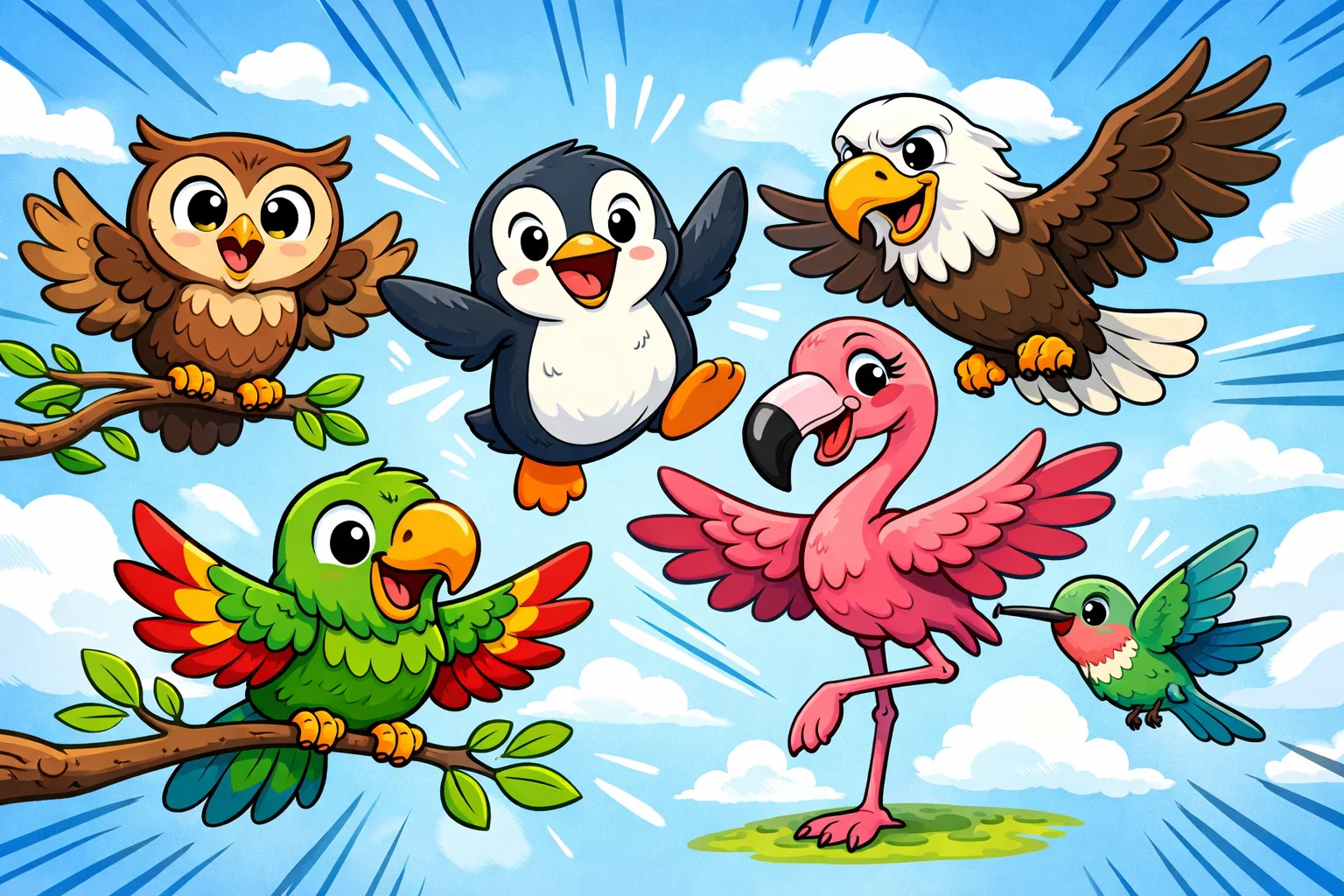
- Owls have specialized feathers that muffle the sound of air passing over their wings, allowing for almost silent flight.
- Hummingbirds are the only birds that can fly backward and upside down, flapping their wings up to 80 times per second.
- Peregrine Falcons are the fastest animals on the planet, reaching speeds over 200 mph (320 kph) during a hunting dive.
- Crows are known to leave “gifts,” like shiny pebbles or buttons, for humans who feed them or show them kindness.
- Pigeons are expert navigators; research suggests they use a combination of the sun, landmarks, and magnetic fields to find home.
- Flamingos are not born pink; they are born grey and turn pink because of the carotenoid pigments in the shrimp and algae they eat.
- Woodpeckers have a tongue that wraps around their brain to act as a shock absorber while they hammer on trees.
- Ostriches have eyes that are larger than their brains, measuring about two inches (5 cm) across.
- Parrots are unusual because they can move the upper part of the beak independently of the skull.
- Bald Eagles build the largest nests of any bird; some nests weigh as much as a small car!
Wild Animal Facts for Kids
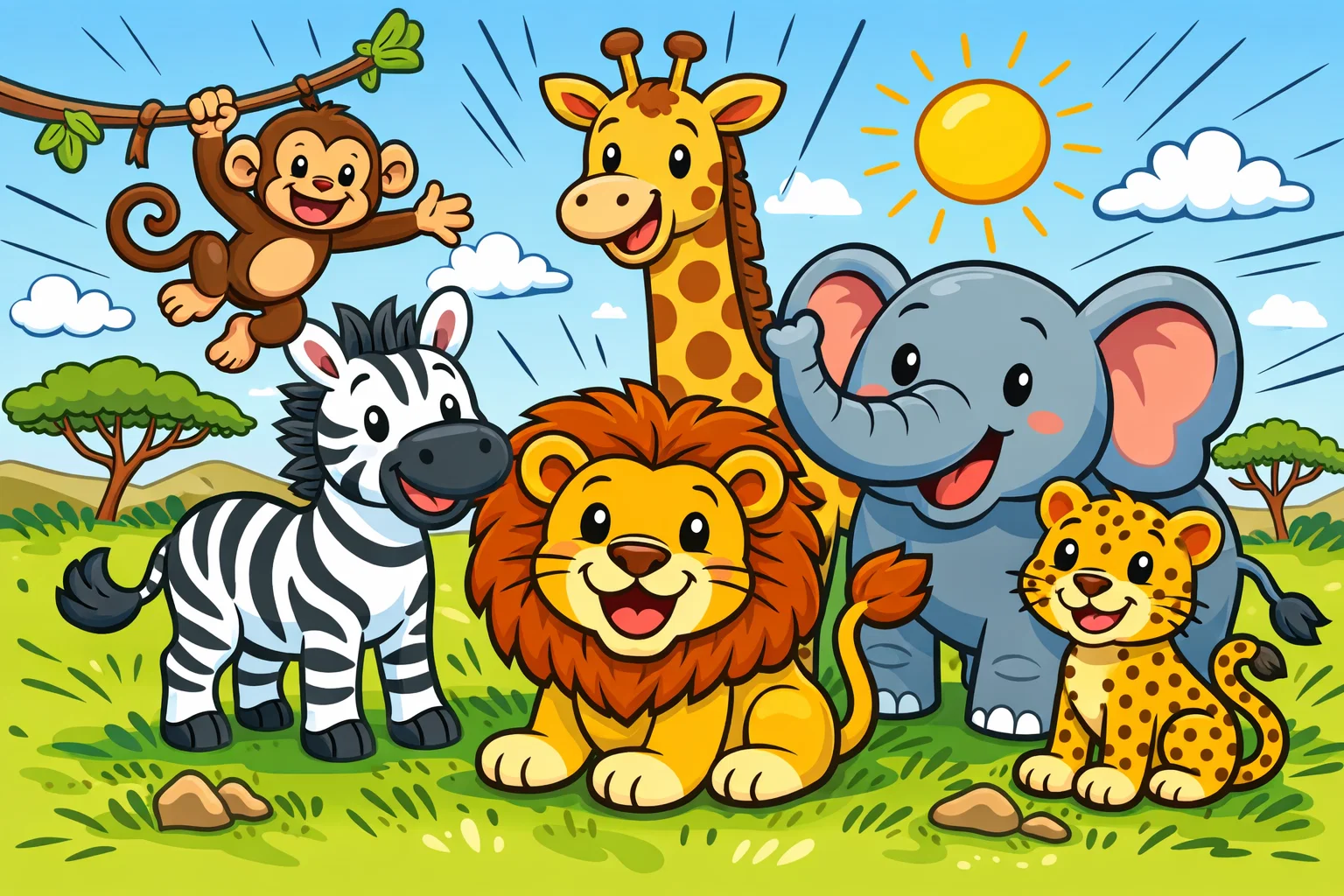
- Giraffes have tongues that are up to 21 inches (53 cm) long and are dark blue or purple to prevent sunburn.
- Cheetahs can accelerate from 0 to 60 mph in just three seconds, making them the fastest land animals.
- Hippopotamuses produce a natural “blood sweat” that acts as a moisturizer and a powerful sunscreen.
- Lions are the only cats that live in large social groups called “prides,” where the females do most of the hunting.
- Zebras have unique stripe patterns, much like fingerprints; no two zebras look exactly the same.
- Koalas sleep for up to 22 hours a day because their diet of eucalyptus leaves is very low in energy and nutrition.
- Sloths are so slow that algae actually grows on their fur, providing them with green camouflage in the rainforest.
- Tiger skin is striped just like their fur; if you shaved a tiger, the pattern would still be visible on its skin.
- Pandas spend 12 to 14 hours a day eating bamboo to meet their energy needs as large mammals.
- Gorillas develop unique “nose prints” that researchers use to identify individuals in the wild.
Bear Facts for Kids
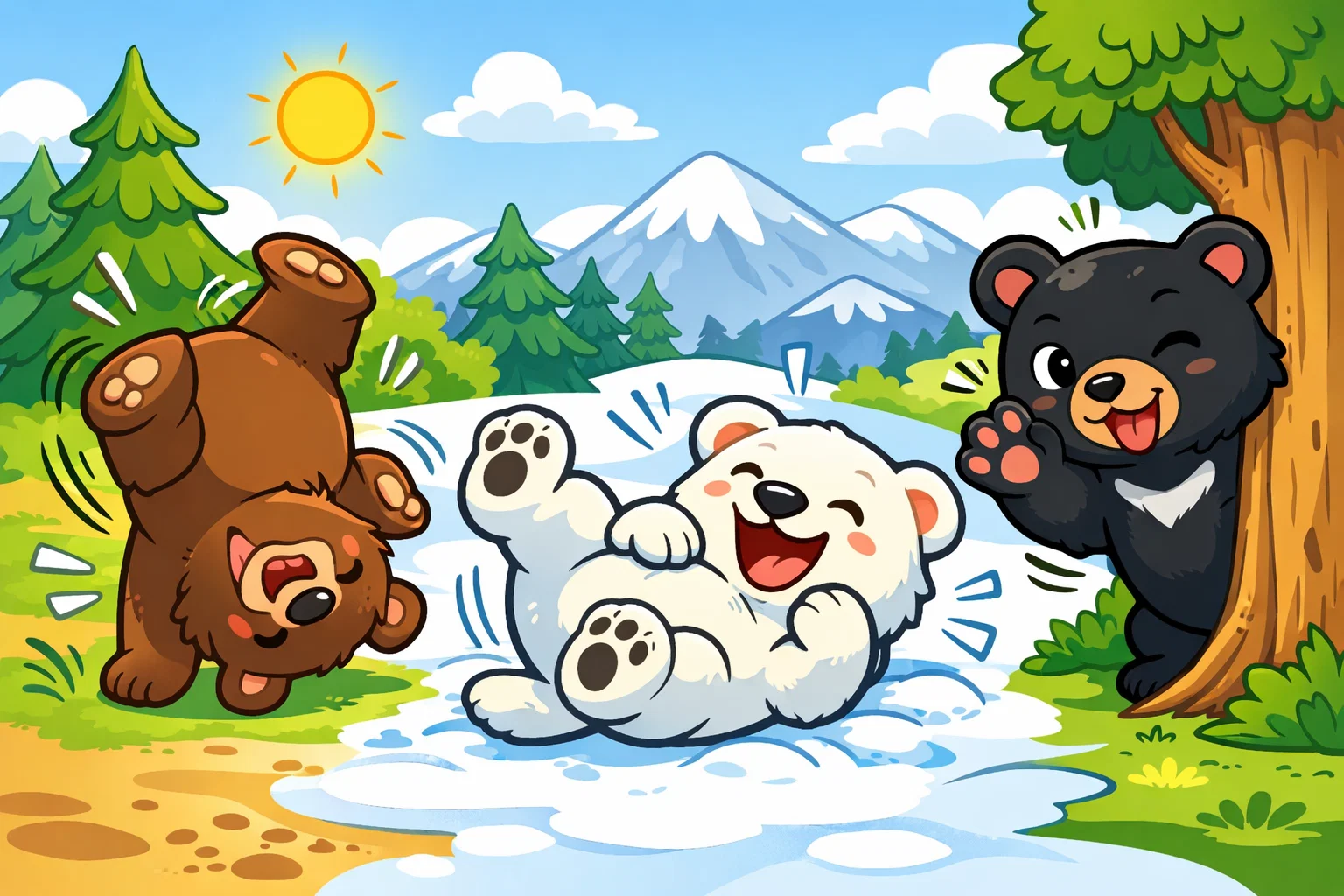
- Polar bears have black skin underneath their white fur, which helps them absorb heat from the sun.
- Polar bear fur is not actually white; it is translucent (clear) and hollow, reflecting light to appear white.
- Grizzly bears have a hump of muscle on their shoulders that gives them incredible strength for digging and sprinting.
- Black bears are excellent climbers and can run up to 35 mph (56 kph) despite their bulky size.
- Sun bears have the longest tongues of any bear species, used to extract honey and insects from trees.
- Bears have a sense of smell that is roughly 2,100 times more sensitive than a human’s, allowing them to find food miles away.
Reptile Facts for Kids
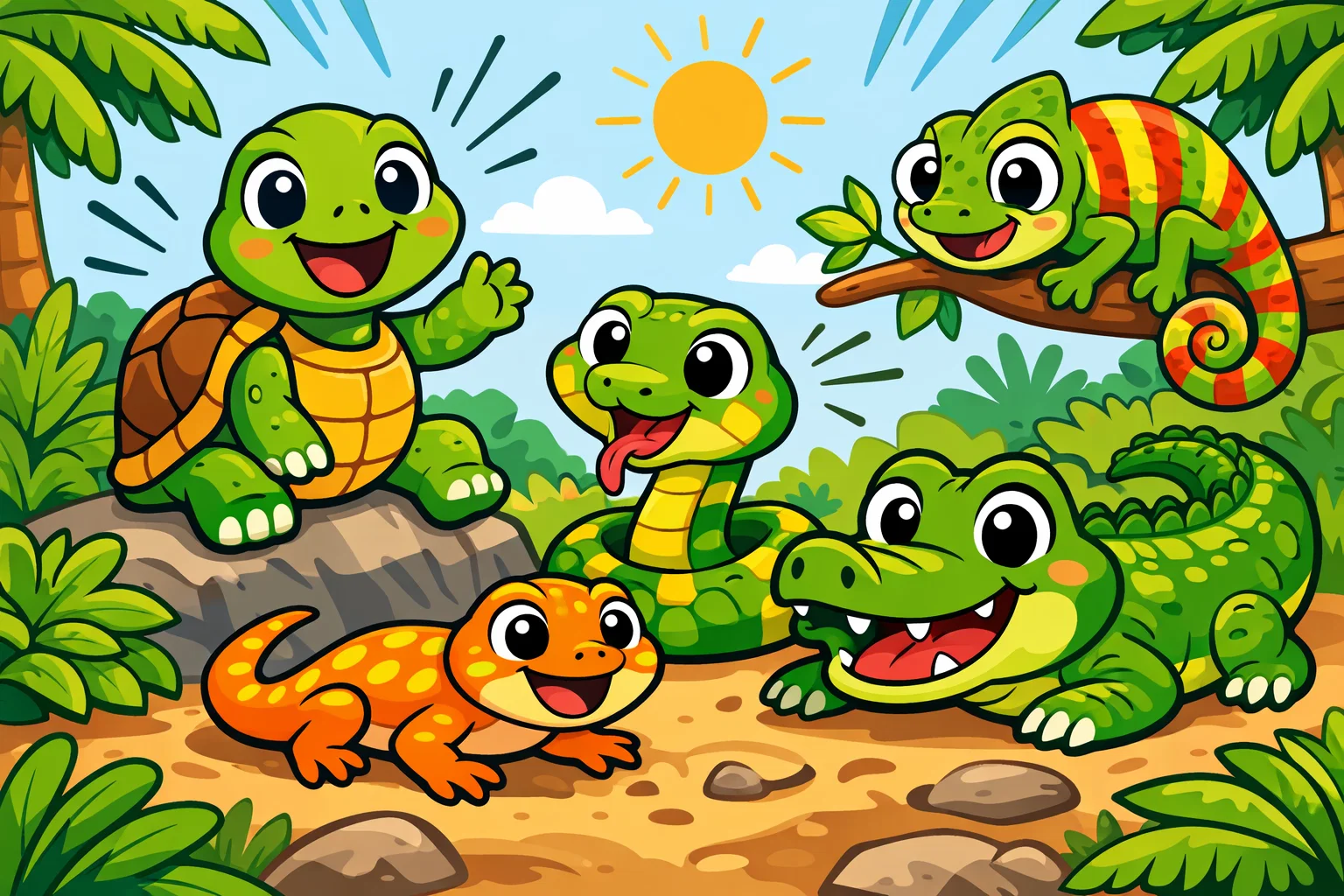
- Turtles are found on every continent except Antarctica and have lived on Earth for over 200 million years.
- Chameleons change color not just for camouflage, but also to regulate their body temperature and signal their mood.
- Crocodiles can live for months without a meal because their metabolism is extremely efficient at storing energy.
- Horned Lizards can squirt a stream of foul-tasting blood from their eyes to scare away predators like coyotes.
- Snakes smell with their tongues; they flick them into the air to pick up scent particles and bring them to a special organ in their mouth.
- Komodo Dragons are the largest lizards on Earth and use their sense of smell to detect a meal from up to 5 miles away.
Bug, Bee, Bat Facts for Kids
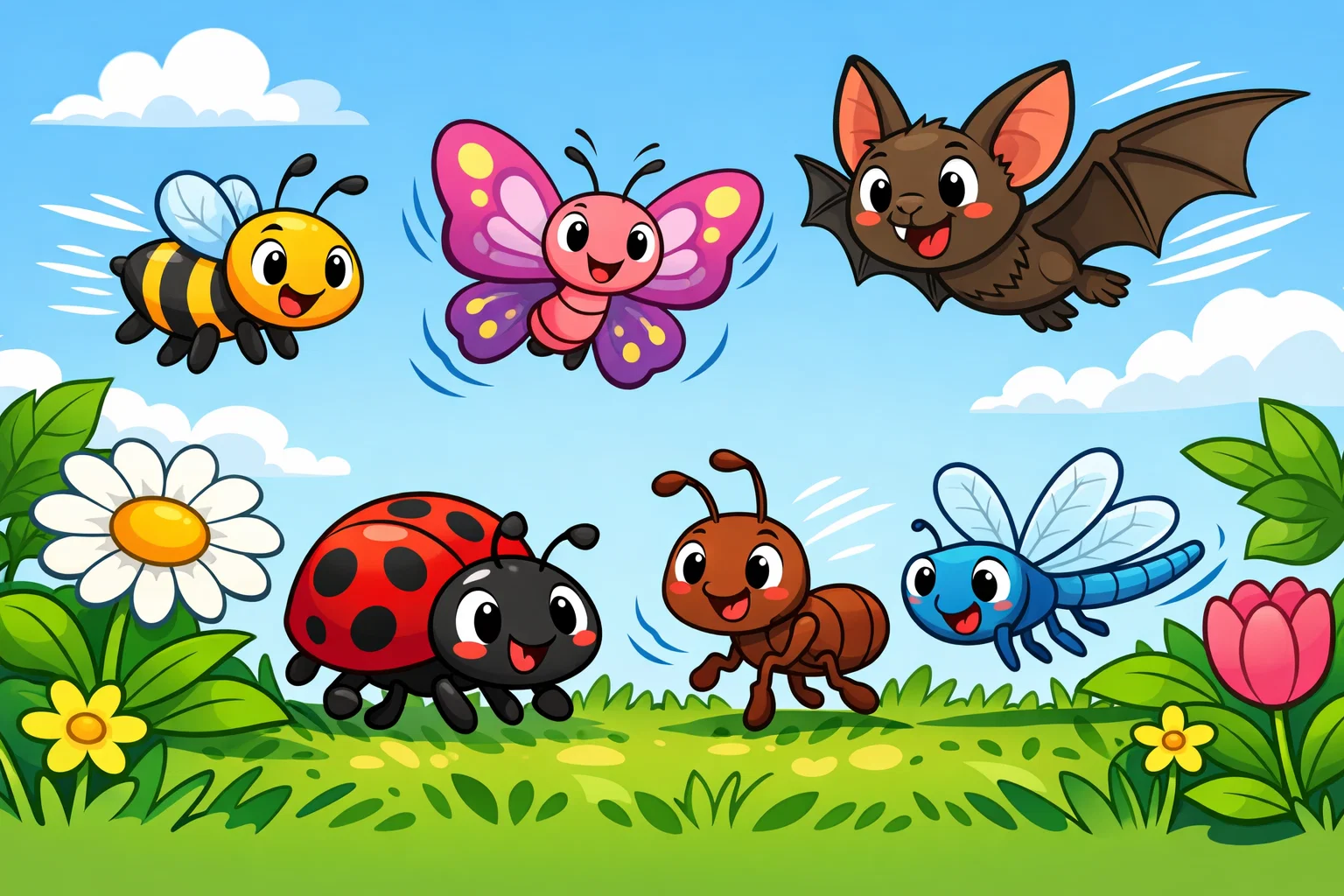
- Ants and termites live in highly organized colonies; some ant colonies have millions of members working together.
- Honey bees perform a “waggle dance” to tell their hive-mates exactly where to find the best flowers.
- Butterflies taste their food with their feet, using sensory receptors to decide if a leaf is a good place to lay eggs.
- Bats are the only mammals capable of true flight, using echolocation to “see” in total darkness.
- Snails can sleep for up to three years if the weather is too dry or cold for them to survive.
- Mosquitoes may be more attracted to some people than others, and one small study suggests that eating bananas can increase attractiveness to certain species.
- Dung Beetles can pull 1,141 times their own body weight, which is like a human pulling six double-decker buses!
- Silk Worms are so valuable that it takes about 2,500 silkworm cocoons to produce just one pound of raw silk.
Did You Know?
This section provides short, surprising animal facts that kids will love. These are perfect for sharing with kids during a quick break or as a ‘fact of the day’ on a classroom whiteboard.
Weirdest Animal Body Fact
Octopuses have a highly decentralized nervous system. While it has a central brain, two-thirds of an octopus’s neurons are actually located in its arms. This means each arm can sense and react to the environment semi-independently, such as helping open a shell while the main brain handles other tasks.
Fastest Animal Movement Fact
While the Cheetah is the fastest land animal, the Peregrine Falcon is the overall speed champion. When diving for prey, this bird reaches speeds of 240 mph (386 kph). To help kids picture that speed, imagine a car driving at full speed on a highway – the falcon is moving nearly four times faster!
Quietest Animal Hunter Fact
The Barn Owl is the ultimate “quiet hunter.” Its feathers have a velvety fringe that breaks up the air as it flies, eliminating the “whoosh” sound most birds make. This allows the owl to fly inches above a mouse without being heard, making it one of the most effective predators in the animal kingdom.
Smartest Animal Memory Fact
Elephants are famous for their memory, but pigeons are surprisingly competitive in this area. Research has shown that pigeons can categorize large sets of images, and some studies suggest they can memorize roughly 800 to 1,200 pictures. They can even distinguish between different styles of art, such as paintings by Picasso and Monet.
Animal Fact Kids Can Use in School
For your next science report, remember this: Reindeer are the only deer species in which both males and females grow antlers. In addition, reindeer eyes change from golden in summer to blue in winter, which helps them see better in the low light of the Arctic.
Conclusion
Learning animal fun facts is a powerful way to spark curiosity and foster a lifelong love of nature. For children, these interesting animal facts serve as building blocks for more complex scientific concepts, such as adaptation, biology, and ecology. By understanding the unique traits of a polar bear or the social intelligence of a dolphin, children learn that different animals have different adaptations that help them survive.
Best Facts to Remember
- Octopuses have three hearts and blue blood.
- Cheetahs are the fastest land animals, but Peregrine Falcons are the fastest overall.
- Honey bees communicate through dancing.
- Sea otters hold hands so they don’t get lost at sea.
Best Facts to Share at Home
The fact that dogs have unique nose prints and that cats sleep for much of the day makes for great dinner-table conversation. These facts are relatable because they involve pets that children see every day, making the science feel real and accessible.
Best Facts to Use in Class
The ‘superpower’ facts – like a woodpecker’s unusual tongue structure or a reindeer’s changing eye color – are perfect for school projects. They provide a clear “Entity → Attribute → Value” structure that teachers love to see in presentations.
Frequently Asked Questions
What Is the Strangest Animal Fact?
One of the strangest facts is that wombat poop is cube-shaped. This prevents the droppings from rolling away, allowing the wombat to mark its territory on flat rocks or logs more effectively. Another strange fact is that shrimp have their hearts in their heads.
Which Animal Lives the Longest?
The Greenland Shark is the longest-lived vertebrate on Earth, with some individuals estimated to be over 400 years old. Scientists determine their age using radiocarbon dating on the proteins found in the lenses of their eyes.
Are Any Animals Effectively Immortal?
While no animal is known to have a confirmed 1,000-year lifespan in this context, the immortal jellyfish (Turritopsis dohrnii) may avoid aging in theory by reverting to an earlier life stage. When it becomes sick or old, it can transform its cells back to their earliest stage and start its life cycle all over again.
Which Animal Fact Makes Kids Laugh the Most?
The fact that hippos use their sweat as sunscreen or that turkeys can blush usually gets the most laughs. Kids find the idea of animals having “human” problems – like getting sunburned or feeling embarrassed – to be very funny and memorable.

Take a short quiz to find out what your everyday choices say about your parenting style
When your child is curious about something new, what’s your instinct?
Take a short quiz to find out what your everyday choices say about your parenting style
“Can I download this app?” What happens next?
Take a short quiz to find out what your everyday choices say about your parenting style
When it comes to rules at home, which sounds most like you?
Take a short quiz to find out what your everyday choices say about your parenting style
If you could give your child one life skill today, what would you pick?
Take a short quiz to find out what your everyday choices say about your parenting style
Your child gets to choose what to watch. What would your ideal setup look like?
Take a short quiz to find out what your everyday choices say about your parenting style
Pick your parenting superpower ✨