110 Fun Get to Know You Questions for Kids and Teens

 Discover a Free Education Video App for Kids
Pastory uses AI to personalize educational video content based on your child’s interests and personality. Safe, engaging, and built for curious young minds. Sign up now to stay updated and enjoy early access with a free trial
Building meaningful connections with children and adolescents takes more than proximity; it requires intentional engagement. Thoughtful questions can help kids and teens express themselves and connect with others. This guide includes 110 fun get-to-know-you questions for kids and teens, curated for educators, parents, and group leaders who want to build rapport in classrooms, at the dinner table, or in youth programs.
When used thoughtfully, get-to-know-you questions can help reduce social anxiety and foster a stronger sense of belonging within a group. Whether you’re looking for icebreaker questions to kick off the first day of school or fun prompts to brighten a long car ride, the categories below are designed to spark curiosity. These get-to-know-you questions move from simple preferences to more imaginative scenarios, so there’s something suitable for every age and stage.
110 Fun Get to Know You Questions
The 110 questions below are organized into 11 themed sections. This structure allows facilitators to select the most appropriate questions to ask kids based on the setting and the time available. By moving from low-stakes “favorites” to creative hypotheticals, you can help kids feel comfortable and gradually encourage them to share more thoughtful answers.
Favorite Things
- What is your absolute favorite food to eat for dinner?
- Which color makes you feel the happiest when you see it?
- What is your favorite game to play during recess or free time?
- If you could spend the whole day in just one school subject, which would you choose?
- What is the best book you have ever read or had someone read to you?
- Which cartoon character or movie hero is your favorite?
- What is your favorite holiday to celebrate with your family?
- Which season of the year do you enjoy the most?
- What is your favorite thing to do immediately after school ends?
- If you could visit any place in the world, where would you go?
Tell Us About You
- Who do you live with at home?
- Do you have any pets, or is there a specific animal you wish you had?
- What hobby do you enjoy doing at home?
- How would you describe your perfect day?
- What is the first thing you usually do when you wake up?
- What is your favorite way to relax after a busy day?
- What is one thing you are really good at doing?
- Do you prefer spending time indoors or playing outside?
- What is a special tradition your family has?
- What is one thing that always makes you feel proud of yourself?
Who, What, When
- Who is the person in your life who makes you laugh the most?
- What is the most exciting thing that has happened to you this week?
- When do you feel most energetic?
- Who is someone you look up to as a role model?
- What is a “must-have” item you bring with you everywhere?
- When is your favorite time of day to work on a creative project?
- What sound do you find really annoying?
- Who would you want to be stranded on a deserted island with?
- What is a skill you have that most people don’t know about?
- When do you feel the most helpful toward others?
If You Could
- If you could have any superpower, which one would you choose?
- If you could travel back in time to any era, which one would you choose?
- If you could create a brand-new animal, what would it look like?
- If you could start a new tradition at your school, what would it be?
- If you could meet any fictional character in real life, who would it be?
- If you could be the principal of your school for one day, what rule would you change?
- If you could only eat one meal for the rest of your life, what would it be?
- If you could talk to animals, which animal would you interview first?
- If you could live in a house made of any material, what would it be?
- If you could be any age for a whole year, how old would you want to be?
Hopes, Dreams, Goals
- What is one dream you have for the future?
- Is there a specific place in the world you hope to visit someday?
- What is a new skill or talent you really want to learn this year?
- If you could win an award for anything, what would you want it to be for?
- What is one thing you hope to accomplish by the end of this month?
- What kind of job do you think would be the most fun to have?
- If you could change one thing about the world to make it better, what would it be?
- What is a goal you are currently working toward?
- Where do you see yourself living ten years from now?
- What is something you want to be remembered for?
Strengths and Growth Areas
- What is something that comes easily to you?
- What is one thing you are trying to get better at right now?
- How do you usually help your friends when they are having a hard time?
- Which of your personality traits are you most proud of?
- If you could “level up” one of your skills instantly, which would it be?
- What is a subject or activity that you find a bit challenging?
- How do you keep going when something gets difficult?
- What is a compliment someone gave you that you still remember?
- What is a habit you would like to start doing every day?
- What makes you a good leader or teammate?
Entertainment
- What is the last movie you watched that you really liked?
- Who is your favorite YouTuber or online content creator?
- What kind of music do you like to listen to when you want to dance?
- If you could live inside any video game, which one would you pick?
- What is a TV show you could watch over and over again?
- Who is your favorite character from a book or comic?
- Do you prefer watching movies at home or at the theater?
- What is the funniest meme or internet video you’ve seen lately?
- If you could direct a movie, what would the story be about?
- What is your favorite way to discover new music or games?
Sports
- What is your favorite sport to play with your friends?
- Which professional sports team do you cheer for the most?
- What is an outdoor activity that always gets you moving?
- If you could try any extreme sport safely, what would it be?
- What was your favorite moment in gym class or during a sports game?
- Do you prefer team sports or individual sports like swimming or running?
- If you could meet any famous athlete, who would you choose?
- What is a sport you’ve never tried but want to learn?
- What do you think is the hardest part about being an athlete?
- Do you prefer being the one playing the game or watching it from the stands?
Funny Get to Know You Questions
- What is the weirdest food combination you actually enjoy?
- If you had to make a funny sound right now, what would it be?
- What is the most useless or silly talent you have?
- If you were an animal based on your personality, which one would you be?
- If you could build your own theme park, what would the main ride be called?
- What is the silliest thing you have ever seen a pet do?
- If your life had a theme song that played every time you walked into a room, what would it be?
- What would you do if you woke up and were only three inches tall?
- If you could replace all the grass in the world with something else, what would it be?
- What is the funniest joke you know by heart?
Questions to Spark Creativity
- If you could invent a new national holiday, what would we celebrate?
- What is a new subject you think every school should teach?
- If you created a new ice cream flavor, what ingredients would it have?
- Imagine a world where people live underwater; what does a typical house look like?
- If you could make one new rule for your house on weekends, what would it be?
- How would you design a city that is built entirely in the clouds?
- If you could combine two different animals to make a “super-pet,” which two would they be?
- What would a planet look like if it were made entirely of your favorite things?
- If you could design a new outfit for a superhero, what special features would it have?
- What is a secret room you would add to your house if you had an unlimited budget?
Would You Rather
- Would you rather have the ability to fly or the ability to be invisible?
- Would you rather always have to sing instead of speaking or dance instead of walking?
- Would you rather explore the deep ocean or outer space?
- Would you rather have a pet dinosaur or a pet dragon?
- Would you rather it always be summer or always be winter?
- Would you rather be the funniest person in the room or the smartest?
- Would you rather live in a giant treehouse or a castle under the sea?
- Would you rather have ten brothers or ten sisters?
- Would you rather only be able to eat breakfast foods or only dinner foods?
- Would you rather be able to teleport anywhere or read people’s minds?
Best Get to Know You Questions by Age Group
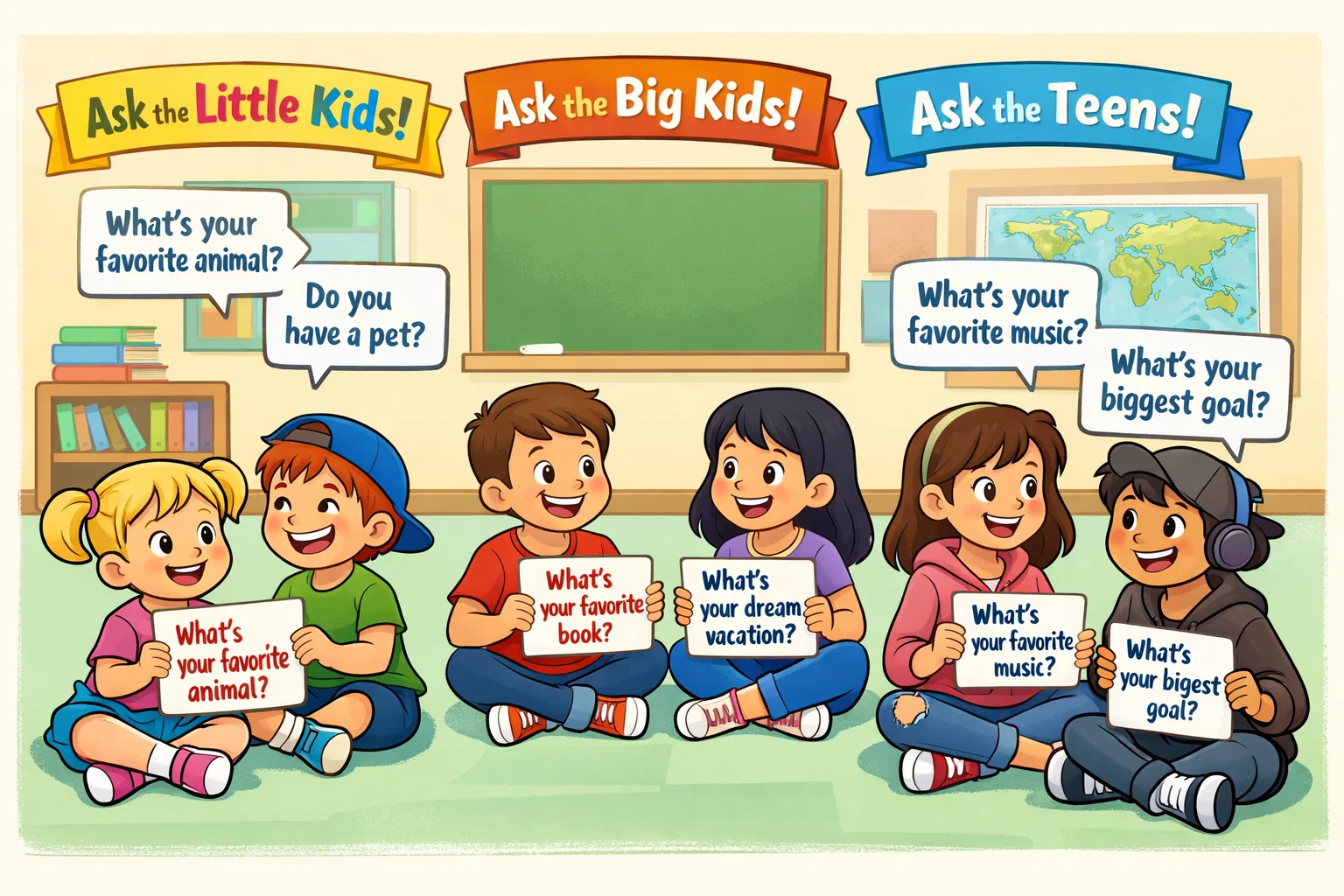
Choosing the right questions starts with understanding a child’s developmental stage. As children grow, their thinking typically becomes less concrete and more abstract. That’s why questions should be tailored to a child’s age and stage, so they feel comfortable answering.
Younger Kids
For children ages 4 to 7, questions should focus on concrete, everyday interests. Younger kids usually respond best to questions about their world, such as favorite snacks, animals, or colors. These get-to-know-you questions should be simple, concrete, and supported by visual cues when helpful.
| Category | Focus Area | Example |
| Sensory | Colors, Sounds, Textures | What is your favorite fuzzy animal? |
| Routine | Home, School, Play | What is your favorite toy to sleep with? |
| Imaginative | Simple “What if” | If you were a cat, where would you hide? |
Upper Elementary
Children in the 8 to 10 age range are developing more social awareness. Questions can help them explore their friendships and emerging interests. At this stage, thoughtful questions about “if you could” scenarios or school experiences allow kids to share more of their personality while still keeping the tone light and fun.
Middle School
During the middle school years, social identity becomes especially important. Middle school icebreaker questions should focus on music, digital interests, and personal achievements. It is crucial to avoid questions that feel “childish,” as these students are seeking autonomy and a more mature conversational tone.
Teen
For teens ages 14 and up, get-to-know-you questions can focus more on identity, future goals, and social preferences. Thought-provoking questions about goals, travel, or complex hypotheticals allow teens to share their thoughts and feelings in a way that respects their developing adulthood.
Mixed-Age Group
When working with a mixed-age group, such as at a family reunion or summer camp, stick to universal themes. “Would you rather” and funny questions are excellent for mixed ages because they are accessible to everyone and don’t require specific life experience to answer.
Ways to Use Get to Know You Questions
Having a strong list of questions is only half the job; how you use them is what builds connection. In classrooms, groups, and families, these questions can be used to strengthen connection and encourage participation.
First Day of School
The first day of school is often high-stress. Using five to ten low-pressure icebreaker questions during a morning meeting can help ease first-day nerves. Teachers should start with “Favorite Things” to allow for quick successes before moving to more open-ended questions.
Classroom Meetings and Advisory
In middle or high school, get-to-know-you questions can work well as bell-ringers. Using a pair-share format – where students answer with a partner before sharing with the class – can help shy students feel heard without the pressure of speaking to a large group.
Parties, Camps, Clubs
In informal settings like camps or birthday parties, silly questions and funny get to know you questions keep the energy high. These settings allow for more movement-based answering, such as “stand up if you like pizza,” to get the ball rolling and keep the group engaged.
Family Time
For parents, the dinner table can be a natural place for meaningful conversations. Asking your child open-ended questions to ask about their day – rather than “yes/no” questions – can help kids learn to narrate their own lives. These questions give children space to feel valued and understood by the adults who care for them.
Virtual Learning and Online Groups
In digital spaces like Zoom or Google Meet, questions can be a great way to build connections and keep participants engaged. Using the chat function for “lightning round” answers or using emoji reactions for “would you rather” choices helps maintain focus and encourages participation in a virtual environment.
Get to Know You Games and Activities
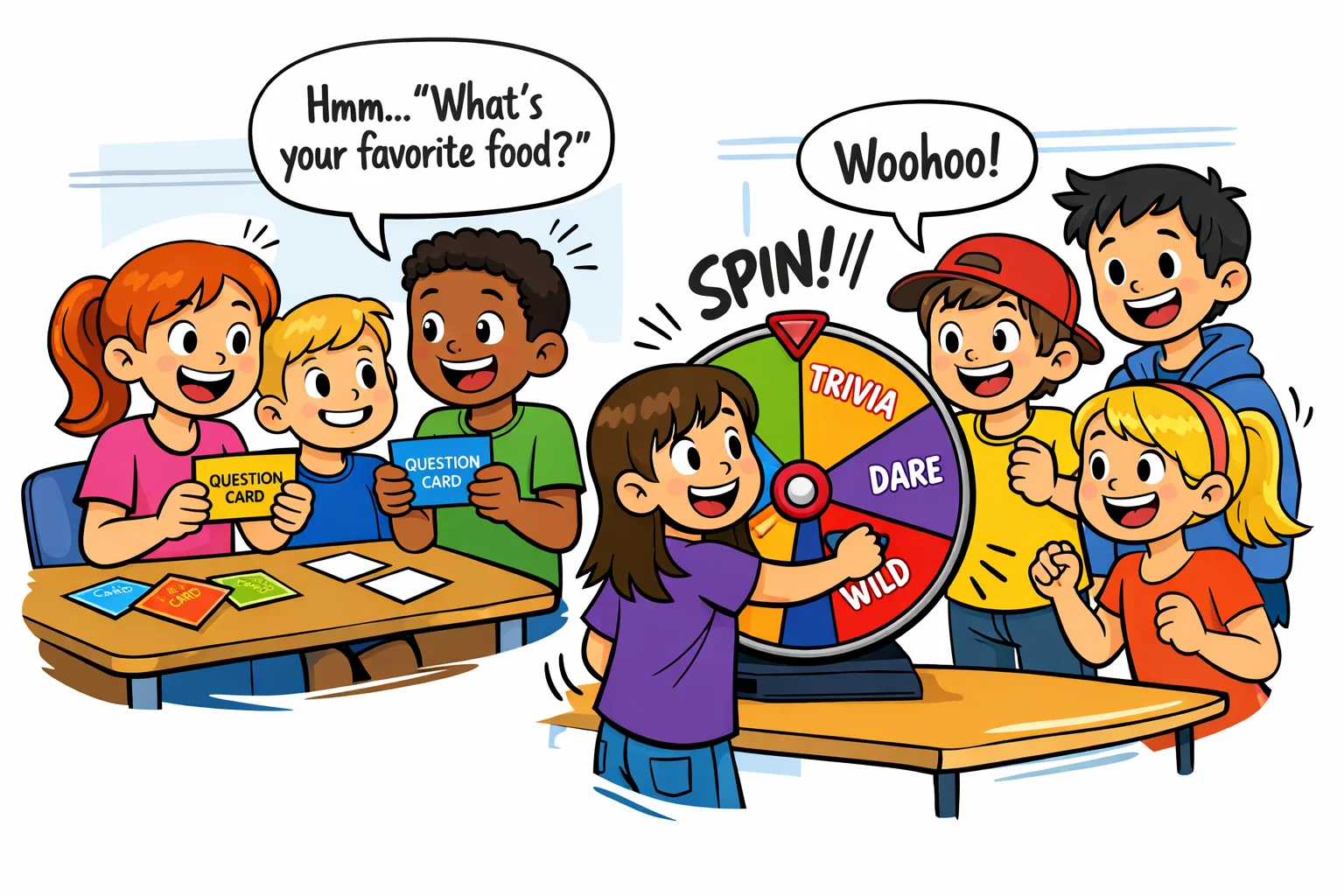
To make asking questions more dynamic, incorporate them into structured activities. Adding a playful structure can make get-to-know-you activities feel more memorable and enjoyable.
Question Jar
A “Question Jar” is a simple yet effective tool. Write down various get to know you questions on slips of paper and place them in a jar. Participants take turns pulling a slip and answering.
- Pro tip: Color-code the slips (for example, green for easy, yellow for funny, and blue for creative) so children can choose the type of question they want to answer.
Jenga Questions
Use a standard Jenga set and write numbers on the blocks that correspond to a numbered list of the questions in this article. When a player pulls a block, they must answer the corresponding question. This adds movement to the activity, which may help children who find it easier to talk while doing something with their hands.
Emoji Response Game
For digital or tech-savvy groups, present a question and ask participants to respond only with emojis. For example, to the question “What is your favorite weekend activity?”, a child might post a soccer ball, a pizza, and a sleeping face. This encourages kids to share in a non-verbal, creative way.
Charades and Meme Replies
Instead of a verbal answer, ask the child to act out their response. If the question is “What is your favorite animal?”, they must use gestures to help the group guess. For teens, you can invite them to choose or describe a meme that represents their answer to a funny get-to-know-you question.
Partner Introductions
This is a classic icebreaker for kids. Pairs of students spend three minutes asking questions from a provided list. Then, each student introduces their partner to the class. This reinforces active listening and helps break the ice by making the introduction about someone else.
Circle Share
In a circle share, everyone sits in a circle while a ball is passed around. The person holding the ball answers a quick get-to-know-you question and then passes it to someone else. This ensures everyone gets a turn and keeps the pace of the conversation moving quickly.
Benefits of Get to Know You Questions
Integrating thoughtful questions into a child’s routine can support social and emotional development. Used consistently, structured conversation can support both emotional growth and stronger communication skills.
Better Conversation Skills
Regularly engaging with open-ended questions teaches children the “ping-pong” nature of conversation. They learn how to wait for a turn, listen to an answer, and provide a follow-up. These questions help build the communication skills children need for more complex social interactions later on.
More Confidence and Belonging
When a child’s answer is met with interest, it validates their identity. This is particularly important during the first day of school or when joining a new club. Feeling seen through a simple answer about a favorite color can be a first step toward building confidence in other settings too.
More Creativity and Imagination
Questions that start with “If you could…” or “Imagine if…” encourage imaginative thinking. By exploring hypothetical scenarios, kids can practice flexible thinking and creative problem-solving.
Stronger Empathy and Group Bonding
Discovering shared interests – or even shared fears – can help kids feel more connected to one another. Questions can help children realize that despite their differences, they have shared human experiences. Over time, that sense of connection can support empathy and make group settings feel more inclusive.
Easier Back-to-School Transitions
The transition back to a structured environment can be jarring. Using get-to-know-you questions can make the transition feel gentler and more welcoming. It shifts the focus from academic pressure to social connection, making the school environment feel like a safe and welcoming space.
Tips for Choosing the Right Questions
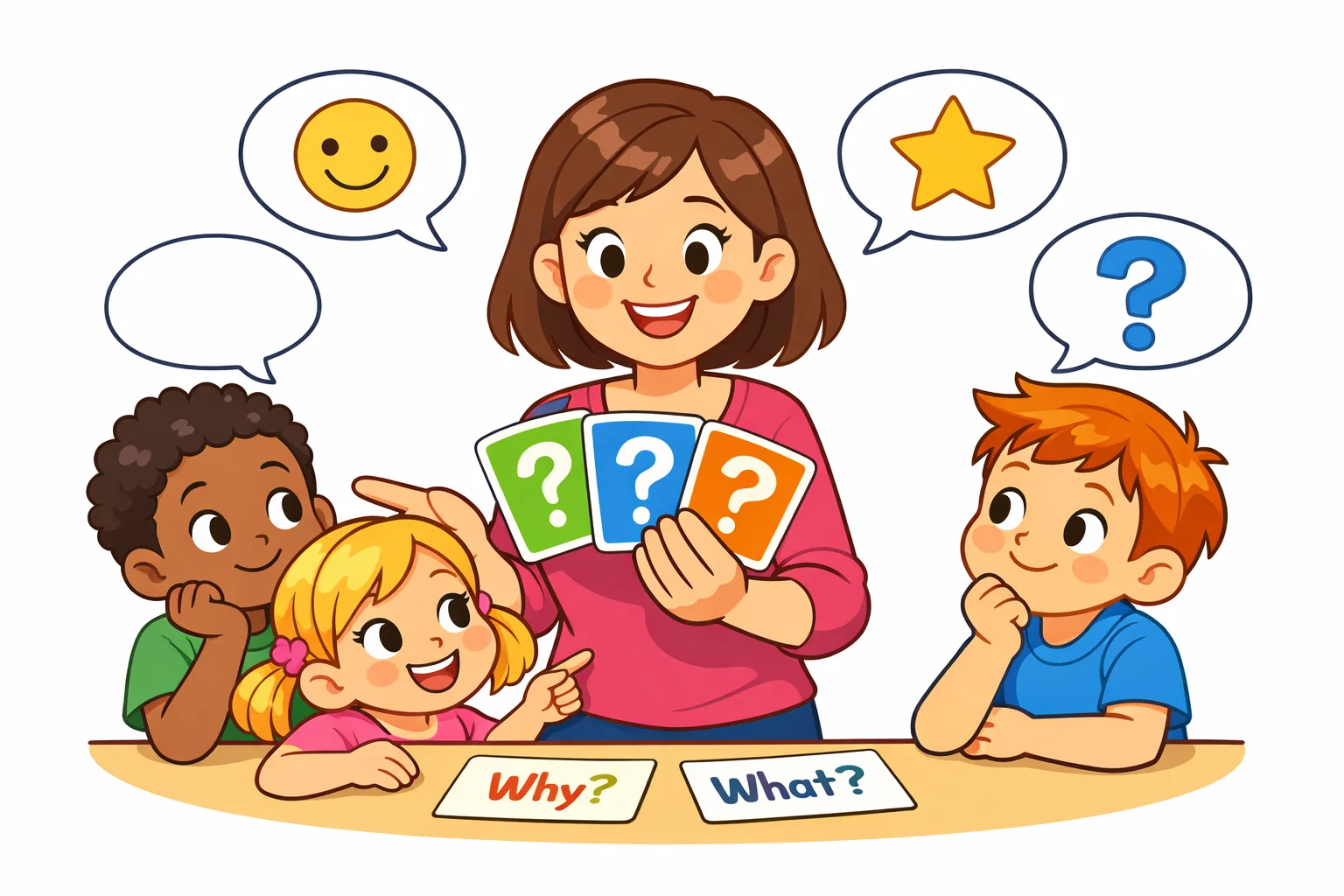
Not all questions work equally well for every child or setting. To make your get-to-know-you sessions successful and inclusive, keep these four principles in mind.
Matching By Age
Always keep your audience’s developmental level in mind. Younger kids will get frustrated with abstract logic, while teens will roll their eyes at overly simplistic questions. Use the age-group guidance above to choose questions that fit your group.
Keep Tone Light and Safe
The goal is to connect with your child or student, not to conduct an interrogation. Avoid questions that might touch on sensitive topics like household income, family conflict, or personal insecurities. Stick to “fun” and “interesting” to ensure everyone feels safe participating.
Mix Quick and Open Questions
A long string of open-ended questions can be exhausting. Balance them with “this or that” or “would you rather” questions to keep the energy up. This variety helps keep the conversation from feeling like a chore.
Avoid Pressure and Private Topics
Always provide a “pass” option. If a child doesn’t want to answer a question, let them observe for a round. Forcing an answer can create a negative association with sharing. Respecting their boundaries is the best way to eventually encourage kids to open up on their own terms.
Reuse Questions Across Settings
Don’t be afraid to ask the same question twice! A child’s answer to “What do you want to be when you grow up?” might change every month. Revisiting these questions allows you to notice how their interests and responses change over time.
Frequently Asked Questions
What Are Get to Know You Questions for Kids and Teens?
These are structured conversation starters designed to encourage more than one-word responses. They range from basic preferences to imaginative scenarios and can help build rapport, confidence, and self-expression.
How Many Questions Should Be Used at Once?
For a quick transition or “icebreaker,” 3 to 5 questions are sufficient. For a dedicated “get to know you” game or lesson, you might use 15 to 20. The key is to stop while the energy is still high.
Which Questions Work Best for Shy Kids?
Shy children often prefer forced-choice questions, such as “Would You Rather” or “Favorite Things” prompts. These provide a clear framework for an answer and don’t require the child to generate a complex narrative from scratch.
Which Questions Work Best for Teens?
Teens respond most authentically to questions about their interests (music, gaming, content creators) and their future plans. They appreciate humor that isn’t patronizing and questions that acknowledge their growing independence.
How Can Teachers Use These Questions in Class?
Teachers can use them as exit tickets, bell-ringers, or as part of an advisory period to build a positive classroom culture.
How Can Parents Use These Questions at Home?
Parents can turn these into a “Question of the Day” at the dinner table or use them to pass the time during long commutes. They are a useful way to move beyond the standard “How was school?” and get a more meaningful answer.

Take a short quiz to find out what your everyday choices say about your parenting style
When your child is curious about something new, what’s your instinct?
Take a short quiz to find out what your everyday choices say about your parenting style
“Can I download this app?” What happens next?
Take a short quiz to find out what your everyday choices say about your parenting style
When it comes to rules at home, which sounds most like you?
Take a short quiz to find out what your everyday choices say about your parenting style
If you could give your child one life skill today, what would you pick?
Take a short quiz to find out what your everyday choices say about your parenting style
Your child gets to choose what to watch. What would your ideal setup look like?
Take a short quiz to find out what your everyday choices say about your parenting style
Pick your parenting superpower ✨