Best Educational Apps For Kids: Free and Safe Online Learning

 Discover a Free Education Video App for Kids
Pastory uses AI to personalize educational video content based on your child’s interests and personality. Safe, engaging, and built for curious young minds. Sign up now to stay updated and enjoy early access with a free trial

Finding free educational apps that combine quality, safety, and real learning value has become a priority for families navigating the digital age. With tablets and smartphones now part of everyday routines, parents increasingly look for a free app that supports best learning outcomes without distractions or unnecessary costs. The challenge lies in identifying tools that balance fun learning with academic substance and do not break the bank.
The best learning apps go beyond entertainment. High-quality platforms integrate interactive games, simple games, and structured games and activities designed to teach kids essential skills such as math learning, phonics lessons, and problem-solving skills. Many options also include emotional learning, supporting social and emotional growth alongside academic progress, especially for preschoolers and kids ages 4.
“Education is not the filling of a pail, but the lighting of a fire.” – William Butler Yeats, poet and philosopher
Each app below is built on proven principles of child development and supports academic growth without turning play into pressure.
Khan Academy Kids (Ages 2–8)

Khan Academy Kids is one of the most trusted educational apps available today, created in collaboration with early learning experts at Stanford. The platform offers a broad range of subjects including reading, math, language, logic, and even social-emotional skills—making it ideal for holistic learning.
The intuitive interface uses colorful animations and a cast of lovable characters like Kodi the bear to guide children through lessons. The content adapts in difficulty, ensuring that each child progresses at a personalized pace. Offline access, downloadable activities, and a free cost model make it highly accessible for all families.
ABCmouse (Ages 2–8)

ABCmouse provides an immersive educational experience with over 850 lesson plans and more than 10,000 interactive activities. Subjects include phonics, math, science, music, and art, structured along a gamified “Learning Path” that motivates kids to earn tickets and rewards for each completed activity.
Each lesson is carefully sequenced to align with academic standards for preschool through grade 2. With printable worksheets and assessment tools, it supports both school-readiness and ongoing reinforcement at home. For parents, progress dashboards and adaptive challenges help monitor their child’s learning in real time.
HOMER Learning (Ages 2–8)

HOMER offers a deeply personalized educational app experience by building each learning path around a child’s unique interests—be it dinosaurs, space, or fairy tales. Its science-backed approach boosts early literacy, critical thinking, and problem-solving through multi-sensory activities that include drawing, reading, and songs.
The app’s main strength lies in its narrative structure, encouraging children to connect emotionally with what they learn. It also incorporates guided reading, phonemic awareness, and vocabulary development, all while helping young learners build confidence and focus.
Duolingo ABC (Ages 3–7)

Duolingo ABC is a free, research-based learning app that introduces kids to foundational reading skills through short, phonics-based lessons. Its gamified format keeps children engaged as they learn letter sounds, word recognition, and sentence formation with no ads or distractions.
Ideal for beginning readers, especially those who need short, consistent practice sessions, the app offers playful animations and audio narration that support auditory learners. The minimalist design promotes focus, making it suitable for use during commute times or as part of a bedtime routine.
🌐 Visit Duolingo ABC on App Store
Prodigy Math Game (Ages 6–12)

Prodigy turns math practice into an epic fantasy adventure. In this curriculum-aligned educational app, kids explore magical worlds, battle creatures, and cast spells—all by solving math problems tailored to their current skill level.
Teachers and parents can assign specific content to reinforce classroom lessons, while the adaptive algorithm ensures personalized learning. The app also includes a paid premium version that unlocks extra accessories and pets, but the full core experience remains free and academically robust.
Thinkrolls Play & Code (Ages 3+)

Thinkrolls Play & Code is a puzzle-based educational app that develops early computational thinking and logic. It introduces young minds to cause-and-effect, sequencing, loops, and conditional reasoning—all through trial-based, interactive gameplay.
The app includes hundreds of carefully crafted puzzles divided into difficulty levels, allowing both toddlers and older kids to engage at their own pace. It’s particularly valuable for building resilience and problem-solving without ever feeling frustrating or repetitive.
ScratchJr (Ages 5–7)

Developed by the MIT Media Lab, ScratchJr is an intuitive platform that lets kids create animated stories by snapping together visual code blocks. It’s an ideal introduction to coding, helping children grasp abstract concepts like loops, events, and triggers without requiring reading skills.
By allowing learners to direct characters, add voice recordings, and control scene transitions, ScratchJr fosters both logical learning and creative storytelling. It’s widely used in elementary classrooms to develop both computational thinking and narrative expression.
SplashLearn (Ages 2–11)

SplashLearn combines fun and structured lessons in math and reading aligned with U.S. curriculum standards. Its colorful interface and reward-based learning journey make it suitable for both home and school settings.
For younger kids, the app emphasizes number sense and phonics; for older learners, it expands into multiplication, fractions, and reading comprehension. Parents receive weekly performance reports, while teachers can use it to assign targeted practice.
Todo Math (Ages 5+)

Todo Math is a visually rich learning app designed for independent exploration and skill reinforcement. It includes over 2,000 math activities across counting, geometry, telling time, and more—supported by text-to-speech, visual cues, and multilingual options.
Its accessibility features make it an excellent choice for children with learning differences. The open-play sandbox mode encourages curiosity, while daily missions provide a structured approach for regular skill-building.
Epic: Kids’ Books & Reading (Ages 3–12)
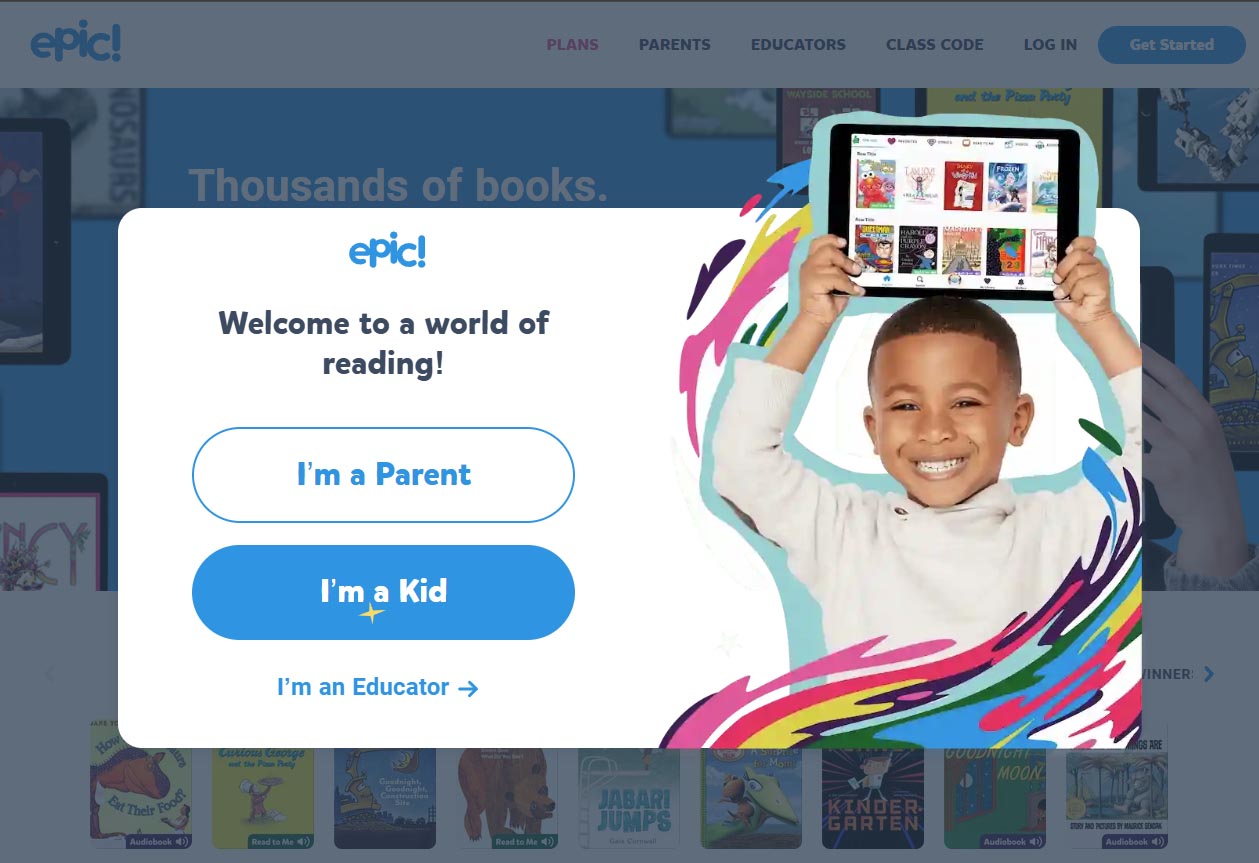
Epic is the leading digital reading app for kids, featuring a curated library of over 40,000 books, audiobooks, and videos. With personalized recommendations based on a child’s reading level and interests, Epic transforms screen time into meaningful literacy development.
The platform includes read-to-me stories, graphic novels, and nonfiction selections from trusted publishers like National Geographic and HarperCollins. Quizzes and tracking tools allow parents and teachers to monitor reading progress, making Epic ideal for independent readers and classroom enrichment alike.
Lingokids (Ages 2–8)

Lingokids uses songs, stories, and mini-games to support a broad range of early learning goals—spanning vocabulary, math, science, and emotional regulation. Developed in collaboration with Oxford University Press, the app offers a safe, ad-free space for young learners to explore.
Parents benefit from the detailed progress dashboard and curated lesson plans. Lingokids adapts to each child’s pace and includes interactive stories that nurture social-emotional intelligence alongside academic development.
BrainPOP Jr. (Ages 5–9)

BrainPOP Jr. introduces complex topics through age-appropriate animated videos and interactive quizzes. Covering science, math, reading, health, and social studies, it encourages learning through storytelling, humor, and inquiry-based content.
Each lesson includes extension activities like concept maps, drawing prompts, and vocabulary games, making it perfect for visual learners. The app is widely used in classrooms and homeschools to support critical thinking and knowledge retention.
PBS Kids Games (Ages 2–8)

Backed by one of the most trusted names in children’s media, this educational app features games based on PBS shows like Daniel Tiger, Wild Kratts, and Curious George. Each game teaches literacy, numeracy, or science through recognizable characters and real-world scenarios.
The app works offline and includes no ads, making it a safe and practical option for parents seeking screen time that genuinely supports learning. Plus, its alignment with classroom standards enhances school readiness.
Pastory (All Ages)

Pastory is a unique AI-powered platform that personalizes educational video content from trusted platforms like YouTube and TikTok. Designed for busy parents who want to enrich digital experiences, Pastory curates a tailored learning feed based on each child’s interests, personality traits, and cognitive style.
Whether a child is a visual learner, needs emotional regulation support, or loves building things, Pastory adjusts dynamically to maximize meaningful screen time.
Fish School (Ages 2+)

This charming app takes preschool basics underwater. Fish School teaches letters, numbers, shapes, colors, and matching through playful animations and interactive touchpoints.
The app’s pace is relaxed, making it suitable for toddlers or neurodivergent learners who benefit from low-stimulation environments. It’s a gentle yet effective introduction to academic foundations in a visually appealing aquatic world.
🌐 Visit Fish School on App Store
Busy Shapes (Ages 2–8)

Inspired by Piaget’s theories of cognitive development, Busy Shapes uses open-ended puzzles to help kids develop spatial reasoning and logic. Children explore how objects interact and fit into specific environments—without written instructions, allowing intuitive learning.
The adaptive engine increases difficulty as the child progresses, ensuring engagement and challenge. The minimalist design avoids distraction and encourages focus, which makes it especially suitable for early and focused skill-building.
🌐 Visit Busy Shapes on App Store
DragonBox (Ages 4–12)

DragonBox turns abstract math concepts into interactive storytelling. Its suite of apps—covering everything from algebra and geometry to basic number sense—use visual metaphors to make advanced learning accessible to young minds.
Each game is structured as a narrative adventure, helping kids build mathematical intuition without rote memorization. DragonBox is frequently cited by educators as one of the best tools for transitioning from concrete to abstract thinking in math.
Toca Boca (Ages 4–10)

Toca Boca offers a collection of open-ended play apps that support creativity, imagination, and emotional exploration. With no time limits or points, kidscreate their own stories in digital worlds like salons, kitchens, cities, and hospitals.
These apps aren’t structured like traditional educationalgames—but they serve essential cognitive and social development goals. Ideal for roleplay-based learners, Toca Boca games help children explore real-life situations in a safe, judgment-free format.
Read Along by Google (Ages 4–10)

Read Along offers voice-enabled reading support via an AI tutor named Dia. As children read aloud, the app listens and gives real-time pronunciation help, encouraging confident independent reading.
The platform includes hundreds of stories in multiple languages, from beginner to intermediate levels. Gamified rewards, progress charts, and personalized suggestions enhance the reading journey, especially for bilingual learners or reluctant readers.
What Should Parents Consider When Selecting the Best Educational App for Their Child?
Choosing the right educational appfor your child means more than picking the most popular title in the store. A thoughtful approach ensures that screen time genuinely supports learningand development. Use these practical criteria to guide your decision:
- Age Appropriateness: The app’s design, content, and tone should align with your child’s developmental stage.
- Learning Goals: Clarify whether the app supports literacy, numeracy, social-emotional skills, or subject-specific skills like coding or science.
- Subject Coverage: Look for comprehensive or focused content depending on your child’s needs—broad curriculum support or targeted skill-building.
- Engagement Style: Consider whether the app uses gamification, storytelling, challenges, or creativity-based interaction to maintain interest.
- Safety and Privacy: Ensure the app is ad-free, data-secure, and COPPA/GDPR-K compliant. Check for a clear privacy policy.
- Offline Access: Especially helpful for travel or limiting internet exposure.
- Parent Tools: Dashboards, reports, and controls allow you to track progress and adjust settings.
- User Feedback: Read app store reviews and endorsements from educators or other parents. These often highlight hidden strengths or issues.
- Interest Matching: Apps tailored to a child’s passions—animals, space, music—are more likely to spark consistent engagement and deeper learning.
📌 Matching content to your child’s personality and curiosity increases both retention and enjoyment. Apps like HOMER and Pastory excel in this area through personalized paths.
Benefits of Educational Apps For Kids
The right educational app can make a meaningful difference in how a child absorbs, applies, and retains knowledge. Used intentionally, apps help bridge classroom learning and real-world skills.
Here are long-term benefits supported by child development research and educator insights:
- Improved cognitive development in areas like memory, logic, and decision-making
- Accelerated academic readiness in reading, math, and science
- Encouragement of independent learning and personal responsibility
- Greater motivation and engagement through play-based learning
- Early digital literacy, preparing kids for future education and tech-driven environments
- Development of self-confidence, as children navigate challenges and celebrate progress
When used alongside parental guidance and in moderation, learning apps for kidsprovide a structured, enjoyable path to long-term academic and emotional growth.
Enhance Cognitive Skills
Apps that combine visual, auditory, and tactile elements stimulate multiple areas of brain development. Games focused on sequencing, memory, or categorization help enhance:
- Short-term and working memory
- Logical reasoning
- Pattern recognition
- Spatial awareness
- Strategic problem-solving
🧠 Apps like Thinkrolls, DragonBox, and Khan Academy Kids integrate puzzle-based or adaptive tasks that challenge kids without overwhelming them—an approach linked to stronger neural connections in early childhood.
Make Learning Fun
Children are more likely to return to apps that feel like play, not homework. High-quality educational apps balance fun with purpose, using:
- Interactive stories
- Reward systems and levels
- Music, animation, and humor
- Gamified challenges and avatars
🎮 Epic, Prodigy, and Lingokids are designed to keep kids curious and emotionally invested, increasing time-on-task and concept retention. The fun isn’t a distraction—it’s the delivery system for effective learning.
Support Independent Learning
Self-paced exploration helps children take ownership of their progress. Many apps offer built-in scaffolding, which means kids can succeed without constant adult intervention. Look for:
- Adaptive content that adjusts to skill level
- Intuitive navigation and voice instructions
- Daily missions or open-ended activities
🌱 Apps like Todo Math, HOMER, and Pastory promote autonomy by combining structure with flexibility. This nurtures self-discipline, focus, and goal-setting from a young age.
Prepare Future Success
Digital fluency is now a foundational skill—just like reading and math. Apps that teach coding, problem-solving, or digital navigation build critical capabilities for future education and careers.
🔍 Exposure to tech-based learning prepares children for:
- STEM pathways
- Digital classrooms
- Self-directed research and project-based learning
- Collaborative digital environments
Tools like ScratchJr, Duolingo, and Pastory combine subject knowledge with modern delivery. This dual benefit makes them ideal companions for long-term academic success in a tech-forward world.
FAQ: Free Educational Apps for Kids
What makes a free educational app effective for young learners?
Effective free educational apps combine interactive learning, clear structure, and age-appropriate design. Strong platforms focus on basic concepts, offer fun and engaging tasks, and use interactive games or brain teasers to reinforce understanding without cognitive overload.
Can free apps really help kids learn to read and build math skills?
Yes. Many free content options include phonics lessons, sight words, and early math skills practice. Apps such as Reading Eggs demonstrate that structured literacy and numeracy support can exist within a no-cost or free trial learning program.
Are educational games suitable for preschoolers and early elementary ages?
Well-designed educational games are developed with a clear age range in mind. For preschoolers and early learners, the focus is on simple games, repetition, and visual cues that support early comprehension and confidence building.
How do familiar characters improve learning outcomes?
Apps featuring familiar characters, such as those inspired by Daniel Tiger’s Neighborhood, increase engagement and emotional connection. Recognizable figures help support emotional learning, reinforce routines, and encourage consistent participation in fun activities.
Is interactive learning better than passive video content?
Interactive learning encourages active participation through touch, choice, and feedback. Compared to passive viewing, fun and interactive formats strengthen problem-solving skills, attention, and retention, especially on a tablet for kids.
Which free apps support coding and logical thinking?
Platforms such as Code.org introduce interactive games and challenges that develop logic and sequencing. These tools support math learning and analytical thinking while remaining accessible on tablets and smartphones.
Besides academics, do any of these apps focus on social and emotional learning, similar to platforms like ClassDojo?
Yes. While platforms like ClassDojo are well-known in educational settings for this, several apps on the list integrate social and emotional development. Khan Academy Kids and Lingokids specifically include activities and stories that help children ages 2-8 develop skills like empathy, self-regulation, and problem-solving.
With such a range of educational options, how do I pick the right app for my child’s age and interests?
The best app for children is one that matches your child’s age and what they love. Consider if they want to explore science, read kids books, or dive into language learning. A good learning platform will offer a variety of content, often with images and videos, to keep them engaged. The goal is to find an app that supports their curiosity and makes online learning a positive experience.

Take a short quiz to find out what your everyday choices say about your parenting style
When your child is curious about something new, what’s your instinct?
Take a short quiz to find out what your everyday choices say about your parenting style
“Can I download this app?” What happens next?
Take a short quiz to find out what your everyday choices say about your parenting style
When it comes to rules at home, which sounds most like you?
Take a short quiz to find out what your everyday choices say about your parenting style
If you could give your child one life skill today, what would you pick?
Take a short quiz to find out what your everyday choices say about your parenting style
Your child gets to choose what to watch. What would your ideal setup look like?
Take a short quiz to find out what your everyday choices say about your parenting style
Pick your parenting superpower ✨