Fossil Formation Experiment for Kids: A Journey Through Prehistoric Time

 Discover a Free Education Video App for Kids
Pastory uses AI to personalize educational video content based on your child’s interests and personality. Safe, engaging, and built for curious young minds. Sign up now to stay updated and enjoy early access with a free trial
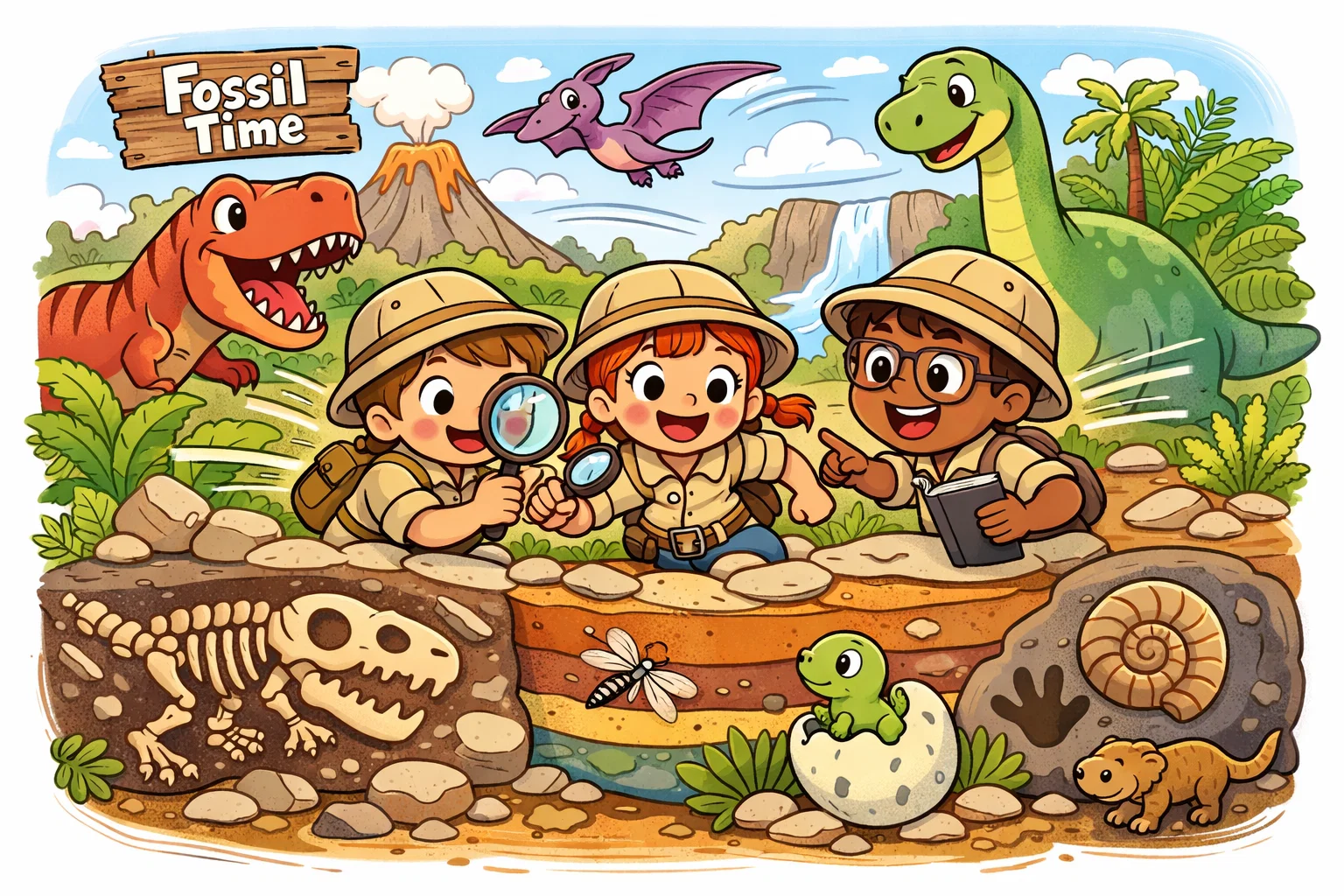
Have you ever wondered how a massive dinosaur that roamed the Earth millions of years ago can still be studied by scientists today? The secret lies in the incredible, natural process of fossilization. For children, understanding how these ancient records emerge can feel like a magic trick performed by nature over vast stretches of time. By bringing a fossil formation experiment for kids into your kitchen or classroom, you transform abstract geological concepts into a tangible, hands-on learning adventure that sparks curiosity about our planet’s prehistoric past.
Whether you are a parent looking for a rainy-day activity or a teacher following a science curriculum, exploring how life is preserved allows children to step into the shoes of a paleontologist. This guide provides a comprehensive roadmap for recreating the wonders of palaeontology using simple household items. This guide explores how living things—from a delicate shell to sturdy dinosaur bones—leave their mark on history, teaching kids that even the smallest organism has a story to tell if it is preserved correctly.
Fossil Formation Basics for Kids
Before diving into the dough and clay, it helps to establish a foundation. Children are naturally inquisitive, and explaining the “why” behind the “how” enriches the educational value of any fossil activity.
What Fossils Are
In the simplest terms, fossils are the remains or traces of animals and plants that lived a very long time ago. Think of such a find as a snapshot of past life preserved in stone. These include a wide variety of things; they aren’t just dinosaur skeletons. A fossil can be a hard part of a body, like bones and teeth, or it can be a trace fossil, such as a footprint or a burrow left behind in the mud.
When a plant or animal dies, most of it will decompose or rot away. However, if the conditions are just right, the original organism can fossilize instead of disappearing forever.
How Fossils Form Over Time
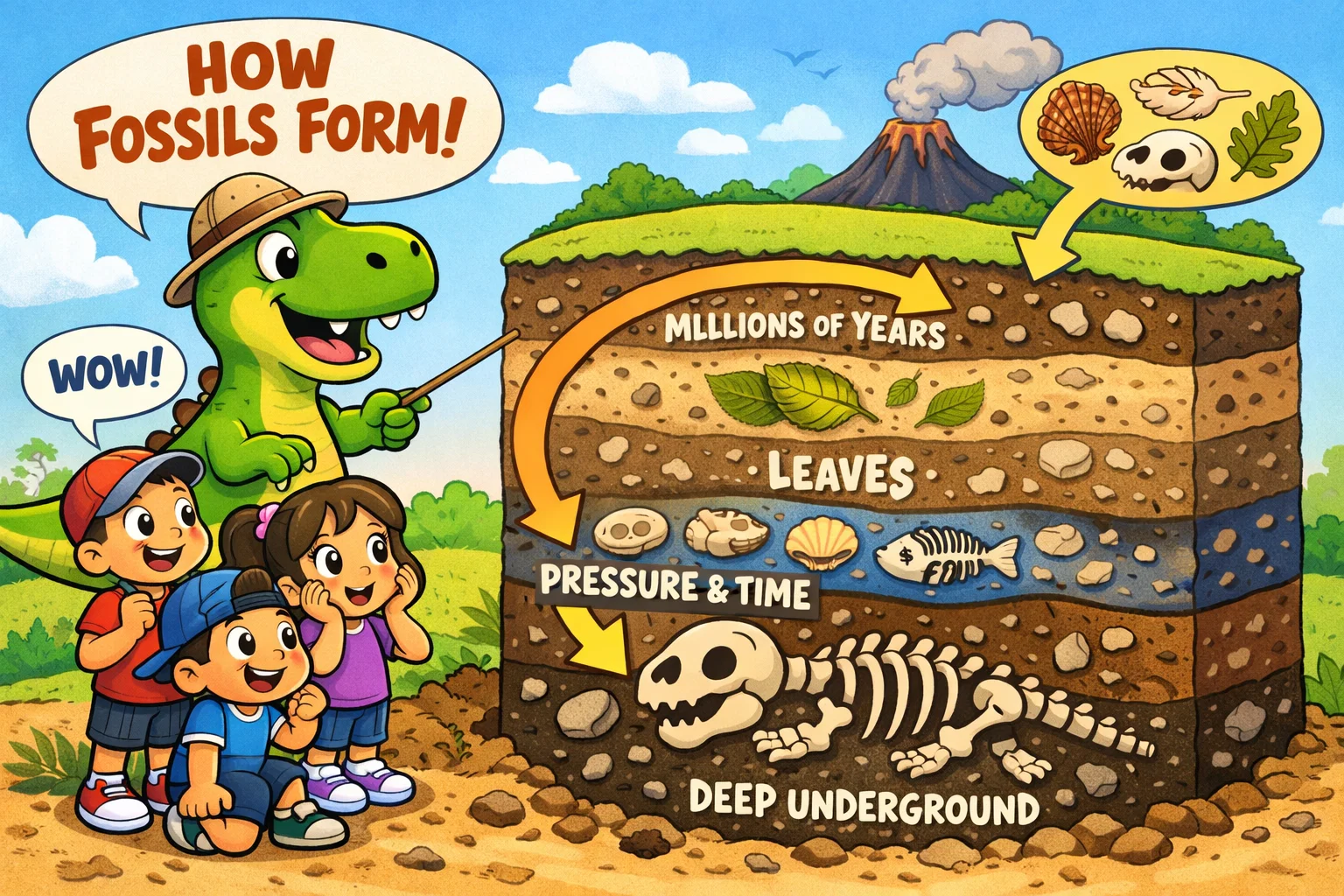
The journey from a living thing to a specimen in a museum is a slow one. It begins when an animal dies and is quickly covered by layers of sediment, such as silt, sand, or clay. This usually happens near water, like on the ocean floor or in a swamp.
Over millions of years, these layers of sediment become compact and harden into sedimentary rock, like limestone. As the soft parts of the creature decay, minerals from the water seep into the spaces inside the bones. Little by little, the bone is replaced by mineral crystals, essentially turning the remains into stone. This is why we say these ancient items are “made of rock” rather than actual bone!
Types of Fossils Kids Can Make
In our experiments, we can recreate different types of fossils that palaeontologists find in the field:
- Mold Fossil: A hollow imprint left behind in the sediment (like a footprint in the mud).
- Cast Fossil: This occurs when a fossil mold is filled with minerals, creating a 3D replica of the original organism.
- Trace Fossils: These aren’t parts of the body but marks left by behavior, like tracks or nests.
Fossil Formation Experiment Overview
An experiment isn’t just about making a mess; it’s about observation and the scientific method. Using a fossil formation experiment for kids helps bridge the gap between a textbook and reality.
What Experiment Demonstrates
This activity demonstrates how an object leaves an imprint in a soft material that then becomes preserved as that material hardens. It models the process of fossilisation where organic material is replaced or represented by a more permanent medium. By using flour and salt to create a “rock” base, kids see how soft sediment can eventually become hard rock.
Age Groups Suitable for Experiment
| Age Group | Involvement Level | Key Learning Focus |
| Preschool (3-5) | High Supervision | Sensory play and basic vocabulary (bone, dirt, old). |
| Primary (6-10) | Moderate Supervision | Understanding layers of sediment and the palaeontologist role. |
| Middle School (11+) | Independent | Chemical changes, mineral replacement, and geological eras. |
Learning Goals for Kids
The primary goal is to help children grasp the concept of deep time. It is difficult for a child to imagine a million years, but by explaining that the “rock” they made today would need to stay buried for eons, the scale becomes clearer. The activity also helps develop fine motor skills and practice the “observe and record” method used in professional palaeontology.
Materials for Fossil Formation Experiment
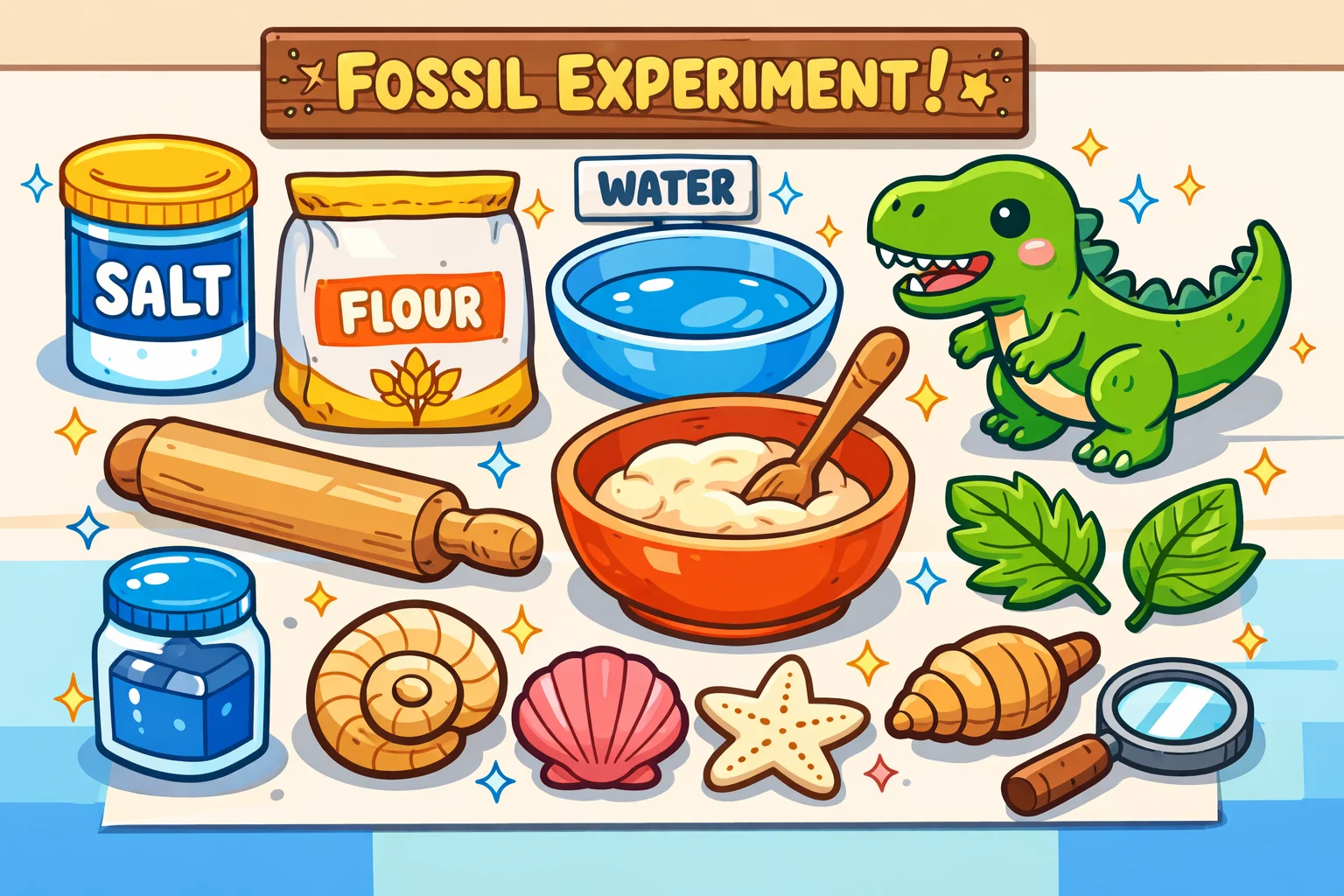
You don’t need a volcanic lab to study prehistoric life! Most of these items are likely in your pantry right now.
Household Materials List
- All-purpose flour (2 cups)
- Salt (1 cup)
- Water (1/2 to 1 cup)
- Coffee grounds (optional, for a “dirt” look)
- Objects to fossilize: Plastic dinosaur toys, shells, sturdy leaves, or even thoroughly cleaned bones from a chicken dinner.
Optional Classroom Supplies
If you are running this as part of a scheme of work for a science curriculum, consider adding:
- Magnifying glasses for inspection.
- Trays to catch the “sediment” (flour).
- Labels for each specimen.
- Paint (browns and greys) to make the results look like real limestone or silt.
Safety Notes for Kids
Pro-Tip: While salt dough is non-toxic, it contains a very high amount of salt which can be harmful if eaten in large quantities by pets or toddlers. Always supervise the activity and ensure a thorough cleanup of the “excavation site” afterward!
Salt Dough Fossil Formation Experiment
The salt dough method is a popular and reliable option for molds and casts in a home setting. It is durable, easy to mold, and dries quite hard.
Salt Dough Recipe
- Mix 2 cups of flour and 1 cup of salt in a large bowl.
- Gradually add water while stirring until a stiff, clay-like dough forms.
- If the dough is too sticky, add a bit more flour; if it’s crumbly, add a tiny splash of water.
- Optional: Mix in old coffee grounds to give the “sediment” a gritty, realistic texture.
Creating Fossil Impressions
Once the dough is ready, roll it into small balls and flatten them into round discs about 2cm thick. Take your dinosaur or shell and press it firmly into the dough. You want to press hard enough to get a deep imprint, but not so hard that you go all the way through to the table!
Drying and Hardening Process
To preserve your creation, you must let it harden.
- Air Dry: Leave in a warm, dry place for 2-4 days. Flip them occasionally.
- Oven Bake: Place on a baking sheet at a low temperature (around 100°C or 200°F) for 2-3 hours. This loosely represents the role of heat and pressure in natural fossil formation.
Step-by-Step Fossil Formation Procedure
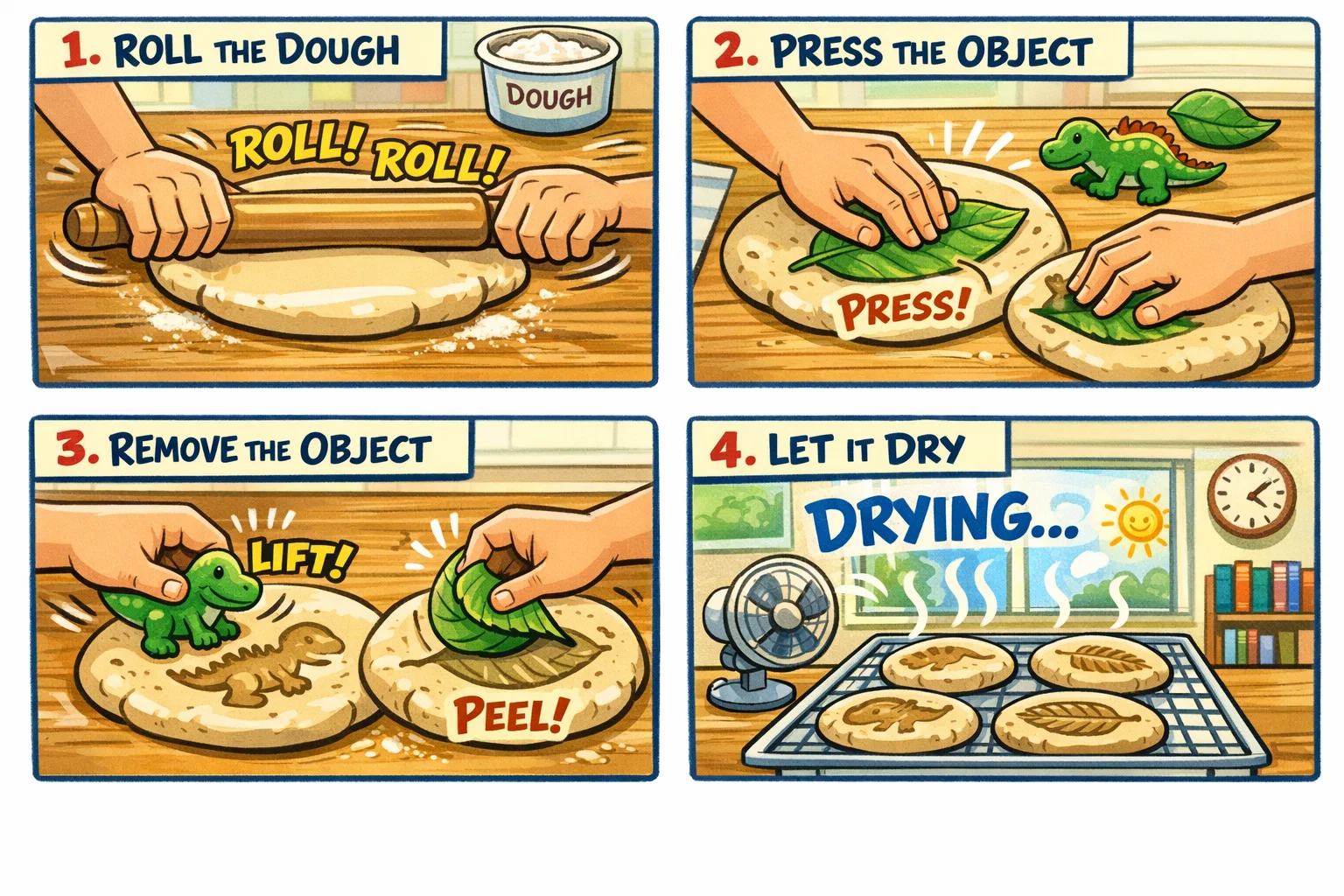
Following a structured natural process helps kids understand that science is a series of careful steps.
Step One: Preparing Fossil Base
Think of your dough as the ocean floor. Roll the dough out and use a circular cutter or a cup to make uniform shapes. This represents the deposit of silt and mud that settles at the bottom of a body of water.
Step Two: Making Imprints
Gently press your chosen object (toy or leaf) into the “sediment.” Explain to the children that in the real world, the animal dies and is covered up. When you lift the toy away, the “hole” left behind is a mold fossil.
Step Three: Setting Fossils
As the dough dries, it represents the millions of years where sedimentary layers compact together. The water evaporates, much like how minerals dissolve and then re-solidify in nature.
Step Four: Final Fossil Reveal
Once hard, the specimen is ready! Kids can use a soft brush to “clean” the find, just like a palaeontologist in the field. Have them look at the fine details—can they see the ribs of the shell or the scales on the dinosaur?
Fossil Types Kids Can Explore
There are a variety of ways that nature saves a specimen. You can adapt your experiment to show different results.
Mold Fossils Experiment
The basic salt dough impression is a perfect mold fossil. It is a negative image of the object. In nature, the original organism would rot away completely, leaving only this hollow space in the rock.
Cast Fossils Experiment
To take it a step further, you can create molds and casts.
- Make your dough mold and let it dry/harden completely.
- Rub a little vegetable oil inside the mold.
- Fill the hole with wet Plaster of Paris or even more dough of a different color.
- Once that sets, pop it out. You now have a cast, which is a 3D model of the original object!
Plant Fossil Experiment
Leaves and ferns make incredible carbon films. In nature, as a leaf is compressed, it leaves a thin layer of carbon behind. In your experiment, pressing a leaf with prominent veins into the dough creates a beautiful, delicate imprint that demonstrates how even soft parts can sometimes be recorded.
Fossil Formation Activities for Kids
Keep the momentum going with these extension activities that reinforce the science curriculum goals.
Fossil Dig Activity
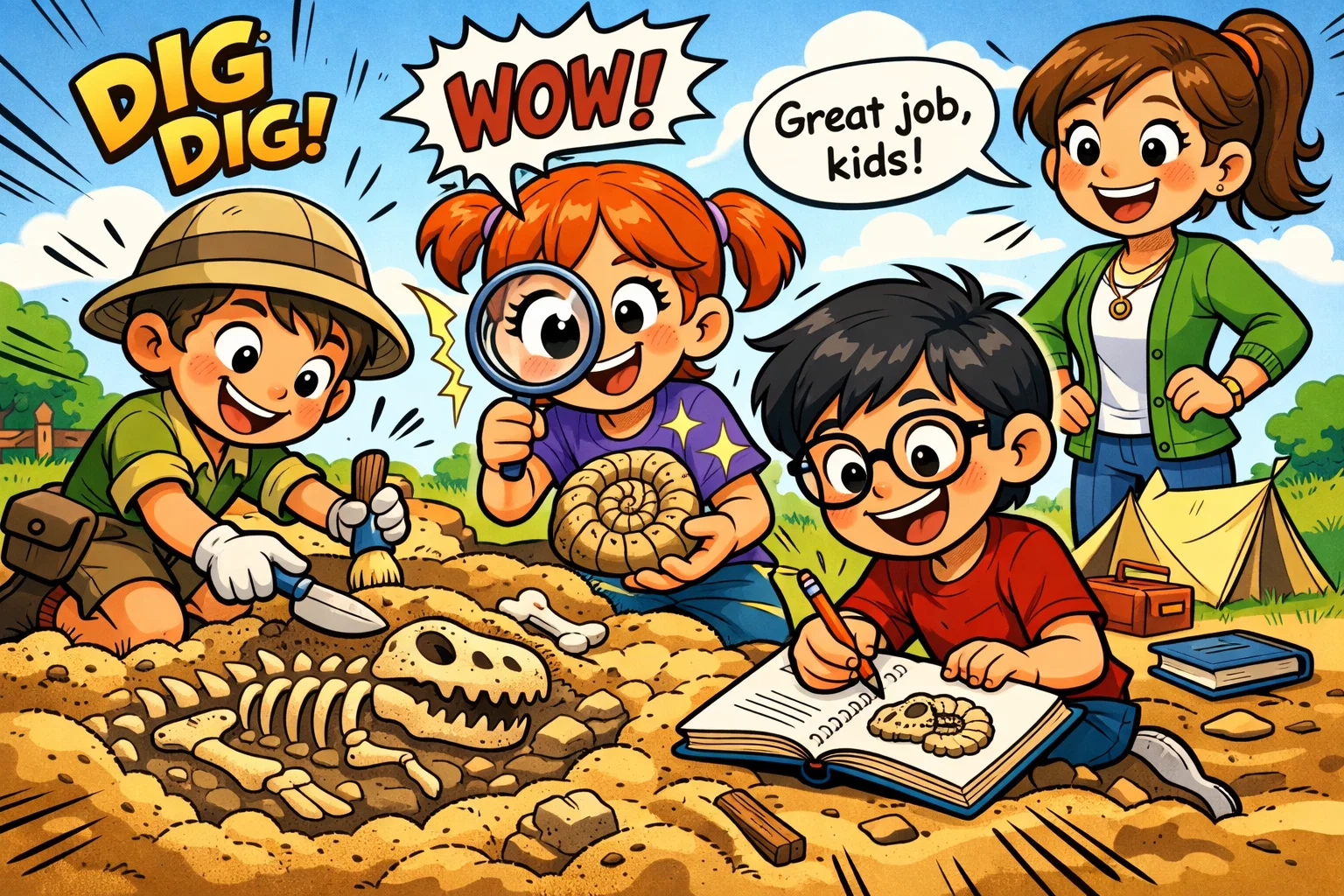
Hide your hardened dough creations in a plastic bin filled with sand or cornmeal. Give the kids paintbrushes and small spoons. This simulates erosion and excavation. As they “discover” the dinosaur remains, they can map out where they found them.
Drawing and Labeling Fossils
Provide a “Field Journal.” Ask the children to sketch their finds. Labels might include:
- Date of “discovery”
- Type of relic (Mold or Cast?)
- Estimated age (Make up a fun prehistoric number!)
- Name of the organism
Fossil Ordering Activity
Use a series of flashcards to show the stages of the process:
- An animal dies by a river.
- Silt and sediment cover the body.
- The soft parts decompose and rot.
- Minerals petrify the hard parts.
- Erosion brings the hidden treasure to the surface.
Science Concepts Behind Fossil Formation
It is vital to distinguish between our “kitchen science” and the actual geological timeline.
Sediment and Pressure Role
In our experiment, we use our hands to provide pressure. On the Earth, the weight of miles of rock and water does this job. Over millions of years, that pressure becomes so intense it can flatten objects and turn loose sand into solid limestone.
Time and Natural Change
A key takeaway for kids is that these relics are made over vast amounts of time. While our dough hardens in an afternoon, real dinosaur skeletons took ages to fossilize. In general geological terms, it takes thousands of years for remains to be officially considered a part of the record.
Difference Between Real Fossils and Models
| Feature | Salt Dough Model | Real Fossil |
| Time | 2 hours – 2 days | Millions of years |
| Material | Flour and Salt | Mineral and Rock |
| Cause | Human activity | Natural process |
| Strength | Can break easily | Very hard/heavy |
Classroom and Homeschool Fossil Experiments
If you are a teacher, integrating this into a broader scheme of work adds depth to your Earth Science units.
Lesson Plan Ideas
- Day 1: Introduction to palaeontology and the early history of life on Earth.
- Day 2: The “Death and Burial” phase—creating the dough and making imprints.
- Day 3: The “Mineralization” phase—discussing how things harden.
- Day 4: The “Excavation”—digging the ancient records out of a sand bin.
Cross-Subject Connections
- Art: Painting the models to look like real sedimentary rock.
- History: Researching Mary Anning or other famous palaeontologists.
- Math: Measuring the length and width of different dinosaur bones.
Printable Worksheets and Extensions
Encourage kids to create a “Field Fact Sheet.” They can research a specific dinosaur and find out what kind of sediment it was found in (e.g., was it found in an old swamp or a dry desert?).
Fun Fossil Facts for Kids
Fascinating Fossil Discoveries
Did you know that some of the largest dinosaur finds ever discovered were the size of a school bus? In 2014, palaeontologists in Argentina discovered Patagotitan, a creature so large it weighed as much as 12 elephants!
Did You Know Fossil Facts
- The word “fossil” comes from the Latin word fossilis, which means “dug up.”
- Coprolite is actually ancient dinosaur poop! It helps scientists learn what prehistoric animals ate.
- Soft things like jellyfish and flowers rarely become fossils because they decay too quickly.
Fossils Around the World
These ancient markers are found on every continent—even Antarctica! This tells us that Antarctica was once a warm, green place where animals and plants could thrive before the Earth’s plates moved.
Teaching children about how these ancient remains are formed is more than just a science lesson; it’s an invitation to imagine a world that existed long before humans. By using a fossil formation experiment for kids, this activity provides a bridge between the present and the prehistoric past. As they press a shell into the dough, they aren’t just making a craft—they are learning the language of the Earth.
Frequently Asked Questions About Fossil Formation Experiments❓
How Long Fossil Experiment Takes
The hands-on portion takes about 30 minutes. However, the “waiting” is part of science! To get a truly hard specimen, expect to wait 48 hours for air-drying or 3 hours for oven-baking.
Best Materials for Fossil Imprints
While salt dough is the most accessible, Plaster of Paris provides the most professional-looking cast fossils. For very young children, play-dough is a great “temporary” way to practice making an imprint, though it won’t harden into a permanent keepsake.
Fossil Experiments for Younger Kids
For toddlers, skip the hardening and focus on the “hide and seek” aspect. Bury plastic dinosaur bones in a kinetic sand bin. It develops their motor skills and introduces the vocabulary of palaeontology without the need for an oven.

Take a short quiz to find out what your everyday choices say about your parenting style
When your child is curious about something new, what’s your instinct?
Take a short quiz to find out what your everyday choices say about your parenting style
“Can I download this app?” What happens next?
Take a short quiz to find out what your everyday choices say about your parenting style
When it comes to rules at home, which sounds most like you?
Take a short quiz to find out what your everyday choices say about your parenting style
If you could give your child one life skill today, what would you pick?
Take a short quiz to find out what your everyday choices say about your parenting style
Your child gets to choose what to watch. What would your ideal setup look like?
Take a short quiz to find out what your everyday choices say about your parenting style
Pick your parenting superpower ✨