Sedimentation Experiment for Kids in Water

 Discover a Free Education Video App for Kids
Pastory uses AI to personalize educational video content based on your child’s interests and personality. Safe, engaging, and built for curious young minds. Sign up now to stay updated and enjoy early access with a free trial
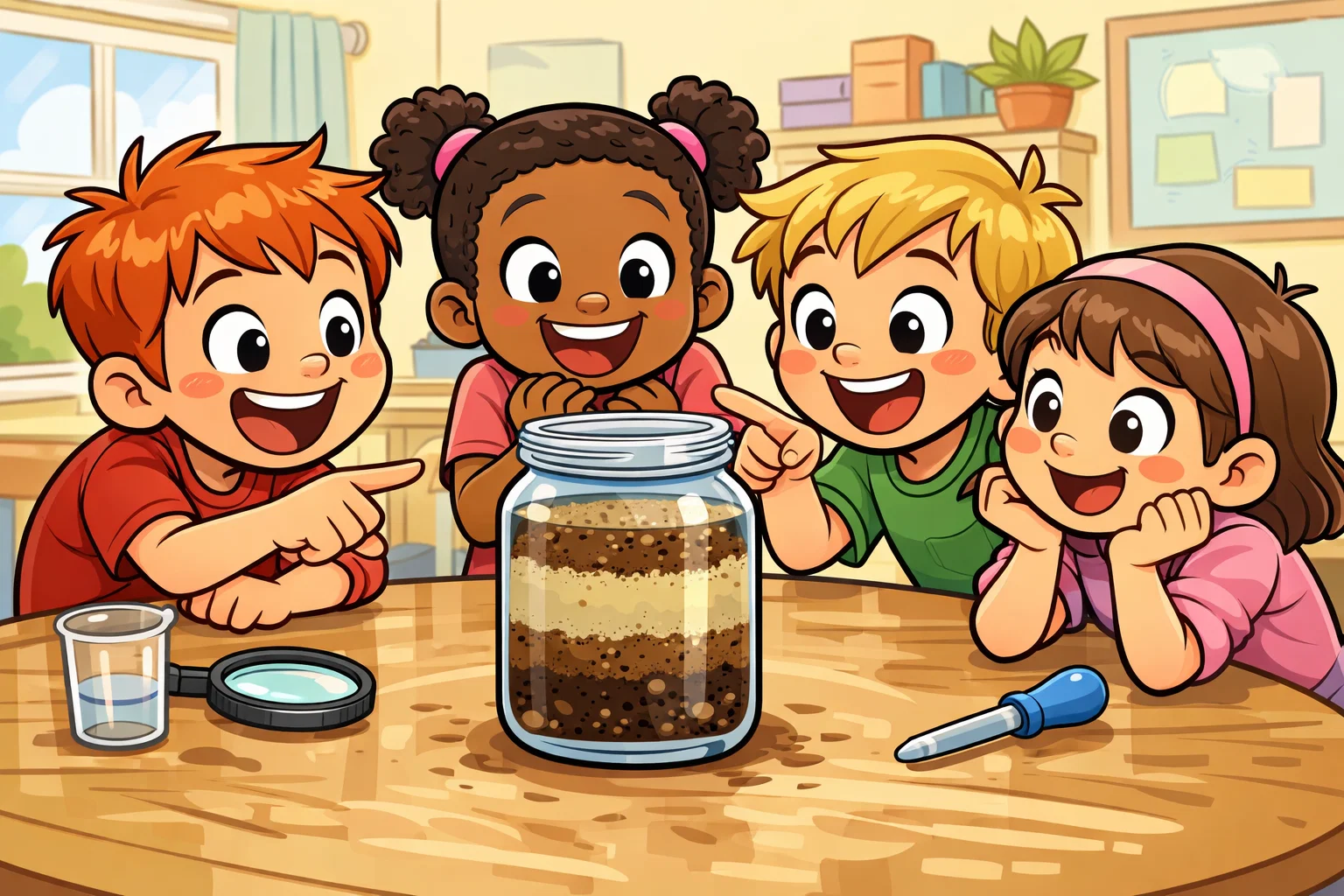
Have you ever waded into a river or a shallow pond and noticed how the water turns cloudy the moment you step in, only to become clear again once you stand still? This disappearing effect isn’t magic at all; it is a fundamental geological process called sedimentation. For children, seeing is believing. A hands-on science project like a sediment jar experiment provides a clear window into how Earth’s surface changes over time.
By using simple water-based experiments, we can transform a complex earth science concept into a visual masterpiece. These activities allow kids to observe how a mixture of earth and water behaves under the influence of gravity, teaching them about the very ground they walk on. Whether you are a parent looking for a weekend rainy-day activity or a teacher planning a geology unit, this guide will help you navigate the fascinating world of various sediments and sedimentary rocks.
Sediment Jar Science Experiment
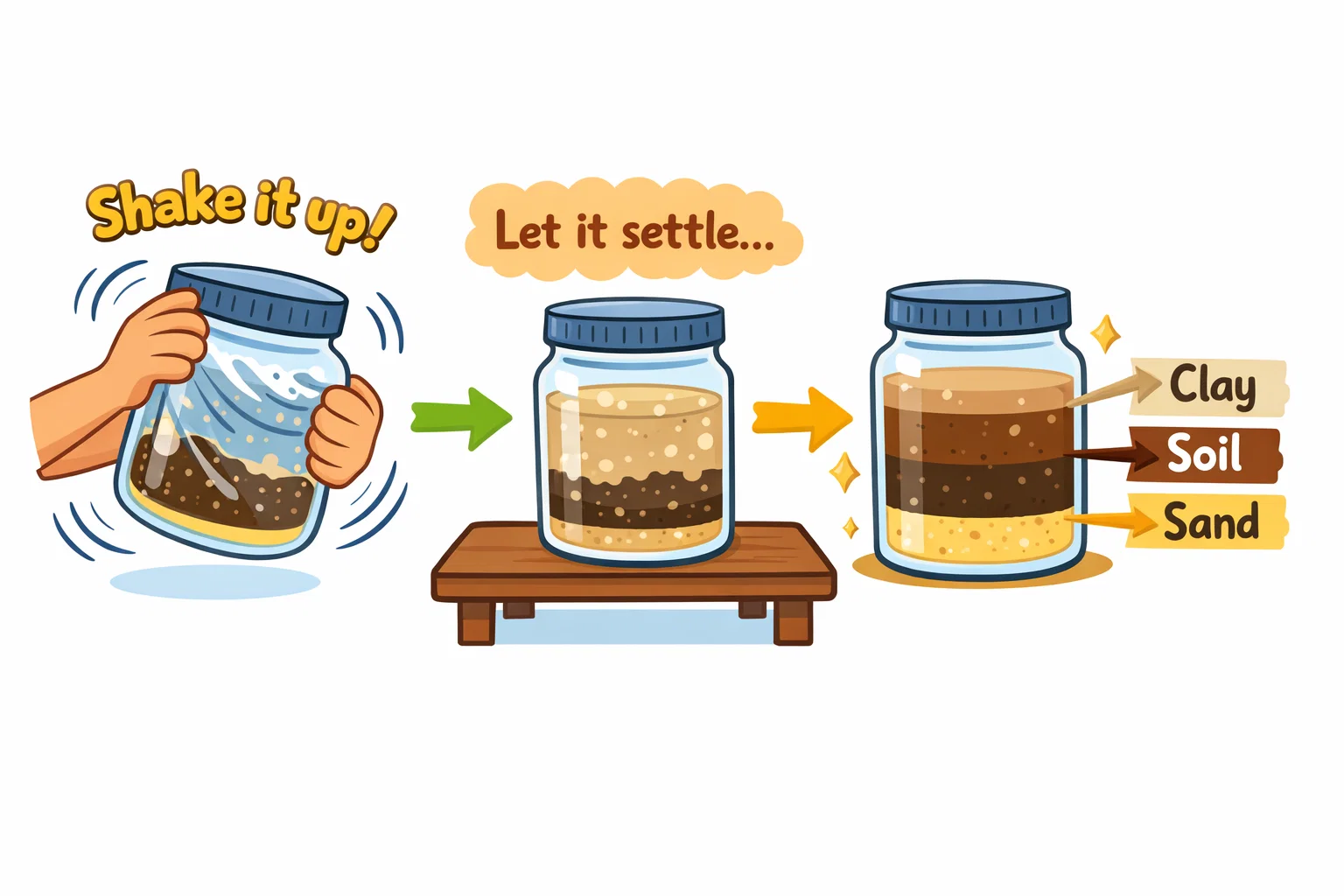
The sediment jar is the gold standard of sedimentation experiments. It is essentially a “mini-world” in a bottle that simulates how rivers and still water bodies process the debris they carry. When you shake the jar, you are simulating a high-energy event – like a flood or a storm – and when you set it down, you are observing the deposition that occurs when the flow of energy stops.
This experiment is highly effective because it provides immediate visual feedback. Kids don’t have to wait thousands of years to see sediment layers form; they can see the particles settle in real-time, right on their kitchen counter or school desk.
Materials for Sedimentation Experiment
To get started, you don’t need fancy laboratory equipment. Most of these items are likely sitting in your backyard or under your kitchen sink.
| Item | Purpose | Safety Note |
| Clear Jar or Beaker | To observe the layers of sediment | Use plastic for younger children to avoid breakage. |
| Garden Soil/Dirt | Provides bits of dirt, silt, and clay | Ensure it is free of sharp debris or animal waste. |
| Sand | To represent larger rock particles | Play sand or beach sand works perfectly. |
| Pebbles/Gravel | The largest and heaviest particles in the mixture | Standard driveway gravel or decorative stones. |
| Water | The medium that allows particles to suspend | Tap water is fine. |
| Optional: Pumice | To demonstrate that some rocks can float | A great way to discuss density. |
Preparation Steps
Before you begin, gather your various sediments. It is best to have a heterogranular mixture – which is just a fancy way of saying a mix of different sizes. If your soil is very dry and clumpy, you might want to break it up a bit so the small particles can move freely. If you are using clay, keep in mind it may stay suspended in the water for a very long time, making the water look muddy initially.
Directions for Experiment Setup
- Fill the Jar: Fill your clear jar about one-third full with your soil, sand, and pebble mixture.
- Add Water: Pour water into the jar until it is about three-quarters full, leaving some space at the top for air.
- The Shake: Secure the lid tightly. Now, let your child shake the jar vigorously! This represents a turbulent river or a volcanic mudflow carrying a variety of materials.
- The Settle: Place the jar on a flat, stable surface where it won’t be bumped.
Observation Time and Changes
Immediately after shaking, the jar will look like a messy, brown mixture. This is where patience comes in.
- 0-5 Minutes: You will see the largest, heaviest pieces (the gravel and coarse sand) settle almost instantly.
- 30 Minutes: The water will begin to look slightly clearer, and distinct layers of sediment will start to appear.
- 24 Hours: The finest silt and clay particles will continue settling toward the bottom, and the water at the top should be mostly transparent.
How Sedimentation Works in Water
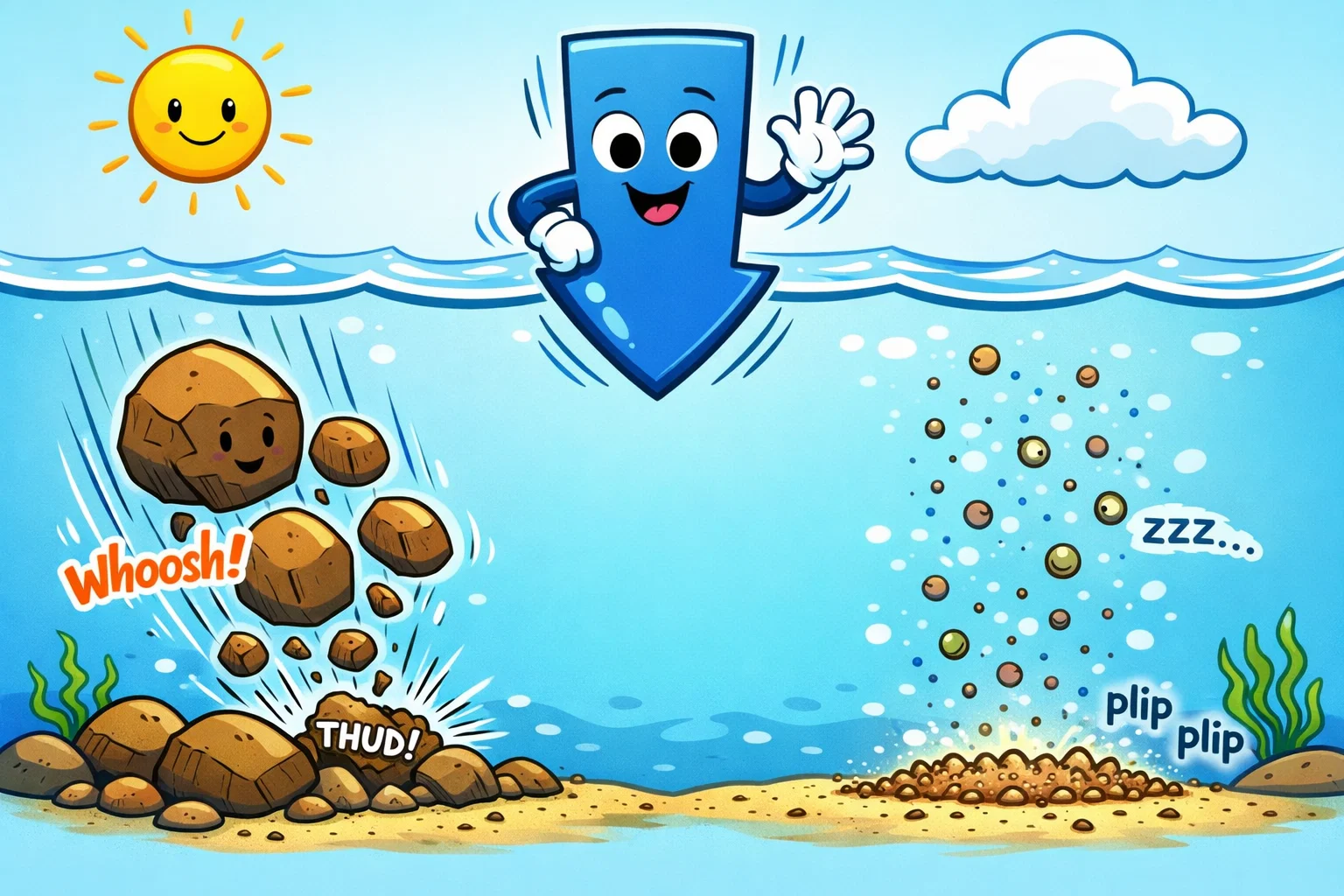
Sedimentation is the process of particles in suspension settling out of the fluid in which they are entrained and coming to rest at the bottom of the container. In our case, the barrier is the bottom of the jar.
Gravity Role in Sedimentation
Gravity is the invisible motor of this experiment. It constantly pulls everything toward the center of the Earth. When the water is moving fast (like when you shake the jar), the energy of the movement overcomes gravity. But as soon as the water becomes still, gravity wins, pulling each particle down.
Particle Size and Weight Impact
Not all particles are created equal. Heavier and larger particles, like pebbles, have more mass and are more affected by gravity, so they fall first. This process is called particle sorting. Smaller particles, like fine sand or silt, take longer to fight through the resistance of the water.
Liquid Thickness Effect
While we usually use water, the “thickness” or viscosity of the liquid changes how fast things settle. If you were to try this experiment with corn syrup, the sediment settles much more slowly than in water because the liquid is thicker, providing more resistance to the falling particle.
Sedimentation Experiment Results
Once the jar has rested, you are left with a miniature geological record. This is a great time to grab a magnifying glass and look closely at the texture of each layer.
Layer Formation Explanation
The layers form because of the different speeds at which various sediments fall. This vertical sorting is what geologists call graded bedding. In nature, resulting from repeated changes in water energy, we see these same patterns in large rock formations found in nature.
Color and Texture Differences
- Bottom Layer: Usually dark or multi-colored pebbles. Rough texture.
- Middle Layer: Often tan or grey sandstone-like particles. Gritty texture.
- Top Layer: Very fine, smooth clay or silt. This may look like a thin lamina (a very thin layer).
Water Clarity Changes
The transition from muddy to clear is the result of decantation. As the finest suspended particles finally reach the bottom, there is nothing left to scatter the light, making the water appear clearer.
Sedimentation in Nature and Everyday Life
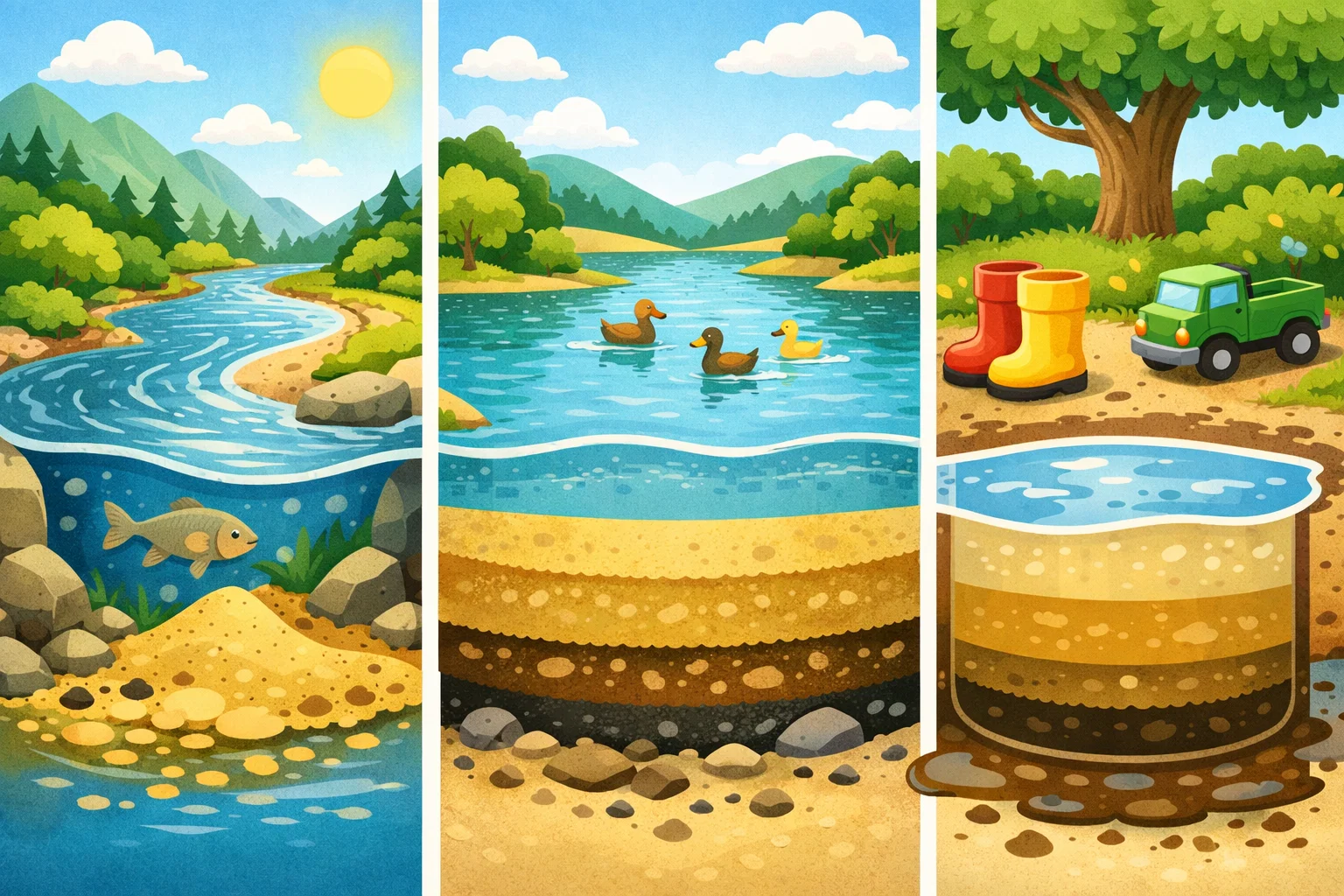
The sediment jar isn’t just a kitchen trick; it’s a model of the entire planet’s history.
Sedimentation in Rivers and Lakes
Rivers are like giant conveyor belts. They pick up bits of dirt and rocks from the mountains and carry them toward the ocean. When a river enters a lake or the sea, its flow slows down. This is where deposition happens, creating deltas and rich fertile plains.
Sedimentation in Oceans
Over long periods, the ocean floor becomes a massive accumulation of dead organisms, shells, and fine clay. Over millions of years, the weight of the water and new layers compact the bottom layers into rock.
Sedimentation in Daily Activities
You see sedimentation when:
- You stir a glass of chocolate milk and see the powder at the bottom later.
- A puddle dries up, leaving a thin layer of fine dirt.
- A water filter traps small particles.
Sedimentation in Science and Industry
Separating Mixtures with Sedimentation
In chemistry, sedimentation is used to separate a solid from a liquid. Scientists use this to isolate specific minerals or to study soil composition.
Water Cleaning Processes
Water treatment plants use huge sedimentation tanks. They let the “yucky” stuff settle to the bottom so they can skim the clean water at the top. It’s the same principle as your jar, just on a massive scale!
Sedimentation in Rock Formation
When sediment is buried under new layers, it starts to compact. Eventually, the minerals act like glue, and a sedimentary rock forms. Examples include:
- Sandstone: Made from compressed sand.
- Shale: Made from fine clay and silt.
- Limestone: Often contains the remains of a marine organism.
Outdoor Science Activities with Sedimentation
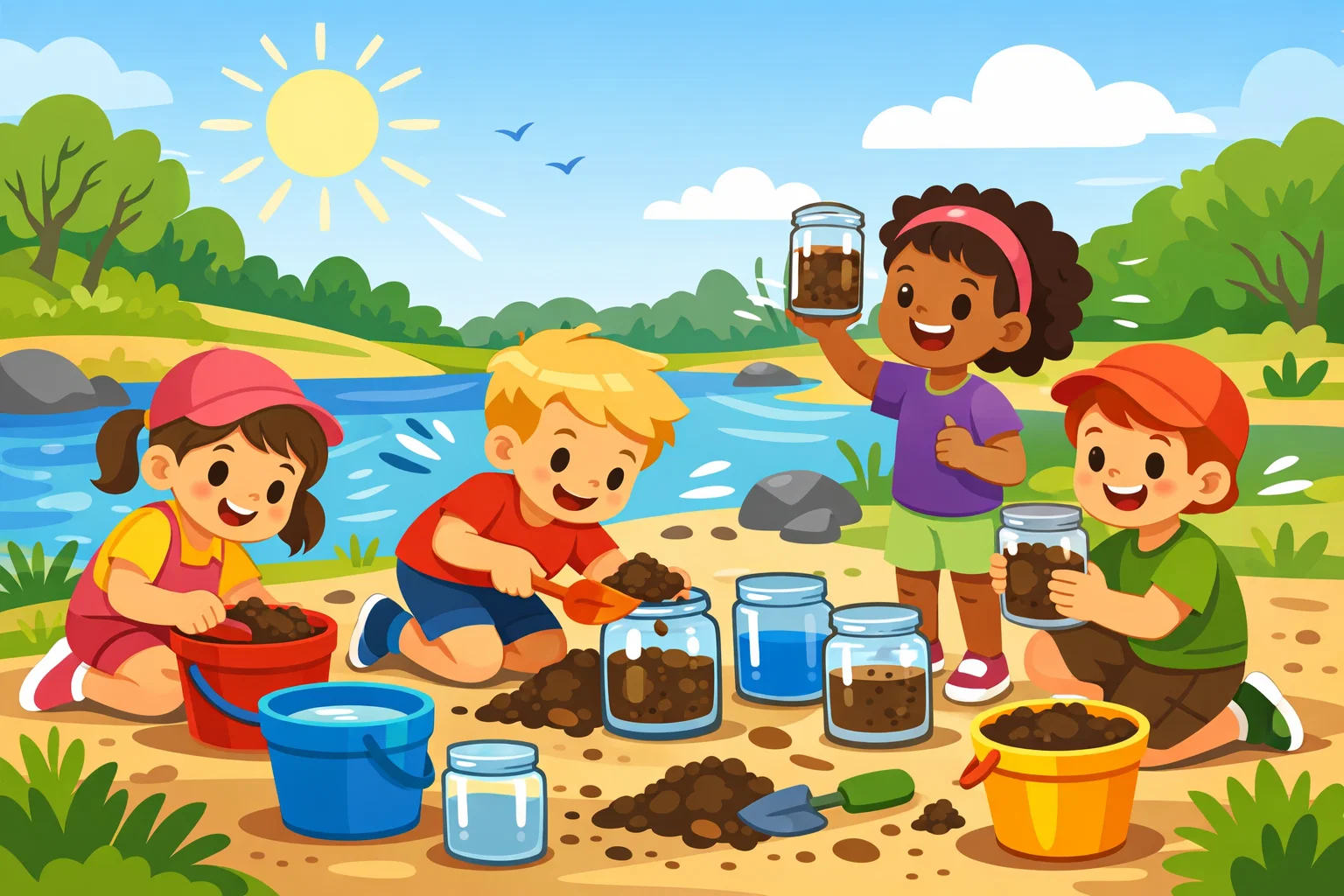
Take the learning outside! Backyard sediment collection is a fantastic way to see how soil differs from place to place.
- The Comparison Test: Collect soil from under a tree, from a flower bed, and from a nearby creek. Put each in a separate sediment jar. You’ll notice that some have more organic matter (which might float!) while others have more sand.
- Seasonal Variations: Try the experiment in the spring after heavy rain and again in the dry summer. The silt levels in local runoff will change significantly!
Experiments and Activities for Kids
Candy Sedimentation Activity
If you want a tasty version of this, use a clear glass and layer different crushed candies (sprinkles for silt, chocolate chips for pebbles). An adult can pour melted chocolate over it to act as the “mineral glue.” Once it hardens, you’ve made a “Sedimentary Snack.”
Water Flow and Sediment Movement
Use a plastic tray or a “stream table.” Tilt it slightly and pour water down the “river.” Watch how the water picks up particles and where it deposits them. This is a great way to see the effects of erosion.
Learning Topics Connected to Sedimentation
Forming Sedimentary Rocks
The process of turning sediment into rock is called lithification. It requires long periods of time and a lot of pressure. This is why we find fossils primarily in sedimentary environments – the soft sediment gently covers the organism before it can decay.
Earth Surface Changes
Geology is never “finished.” The Grand Canyon was carved by a river, but it was also built by sedimentation over millions of years. The layers we see today were once the bottom of an ancient sea.
Did You Know? Scientists have observed that sediment layers can sometimes form faster under certain flow conditions than many people expect.
Kids Science Resources
To keep the curiosity alive, check out these themes:
- The Rock Cycle: How one rock turns into another.
- Fossil Hunting: Where to find history hidden in the stratum.
- Water Filtration: Building your own filter using various sediments.
Safety Tips for Sedimentation Experiment
- Safe Materials: Stick to natural soils. Avoid using chemicals or treated potting soils that might contain fertilizers.
- Adult Supervision: An adult should help with the “vigorous shaking” to ensure the lid doesn’t fly off (creating a muddy mess!).
- Cleanup: Never pour your sediment jar down the sink! The sand and pebbles can clog your pipes. Instead, dump the contents back into the garden.
Frequently Asked Questions
Best Age for Sedimentation Experiment?
This experiment is perfect for ages 5 to 12. Younger kids love the visual “shake and watch” aspect, while older kids can delve into the geology and the process of sediment layering.
Experiment Duration?
While the big rocks settle in seconds, a truly clearer result takes about 24 hours. It’s a great lesson in “slow science.”
Why Do Sediment Layers Form?
Layers form because of periodic graded-bedding. Each time the energy of the water changes, a new layer is formed, with the heaviest particles always seeking the bottom due to gravity.
Take a short quiz to find out what your everyday choices say about your parenting style
When your child is curious about something new, what’s your instinct?
Take a short quiz to find out what your everyday choices say about your parenting style
“Can I download this app?” What happens next?
Take a short quiz to find out what your everyday choices say about your parenting style
When it comes to rules at home, which sounds most like you?
Take a short quiz to find out what your everyday choices say about your parenting style
If you could give your child one life skill today, what would you pick?
Take a short quiz to find out what your everyday choices say about your parenting style
Your child gets to choose what to watch. What would your ideal setup look like?
Take a short quiz to find out what your everyday choices say about your parenting style
Pick your parenting superpower ✨