Yeast Fermentation Science Experiment for Kids Using a Balloon

 Discover a Free Education Video App for Kids
Pastory uses AI to personalize educational video content based on your child’s interests and personality. Safe, engaging, and built for curious young minds. Sign up now to stay updated and enjoy early access with a free trial
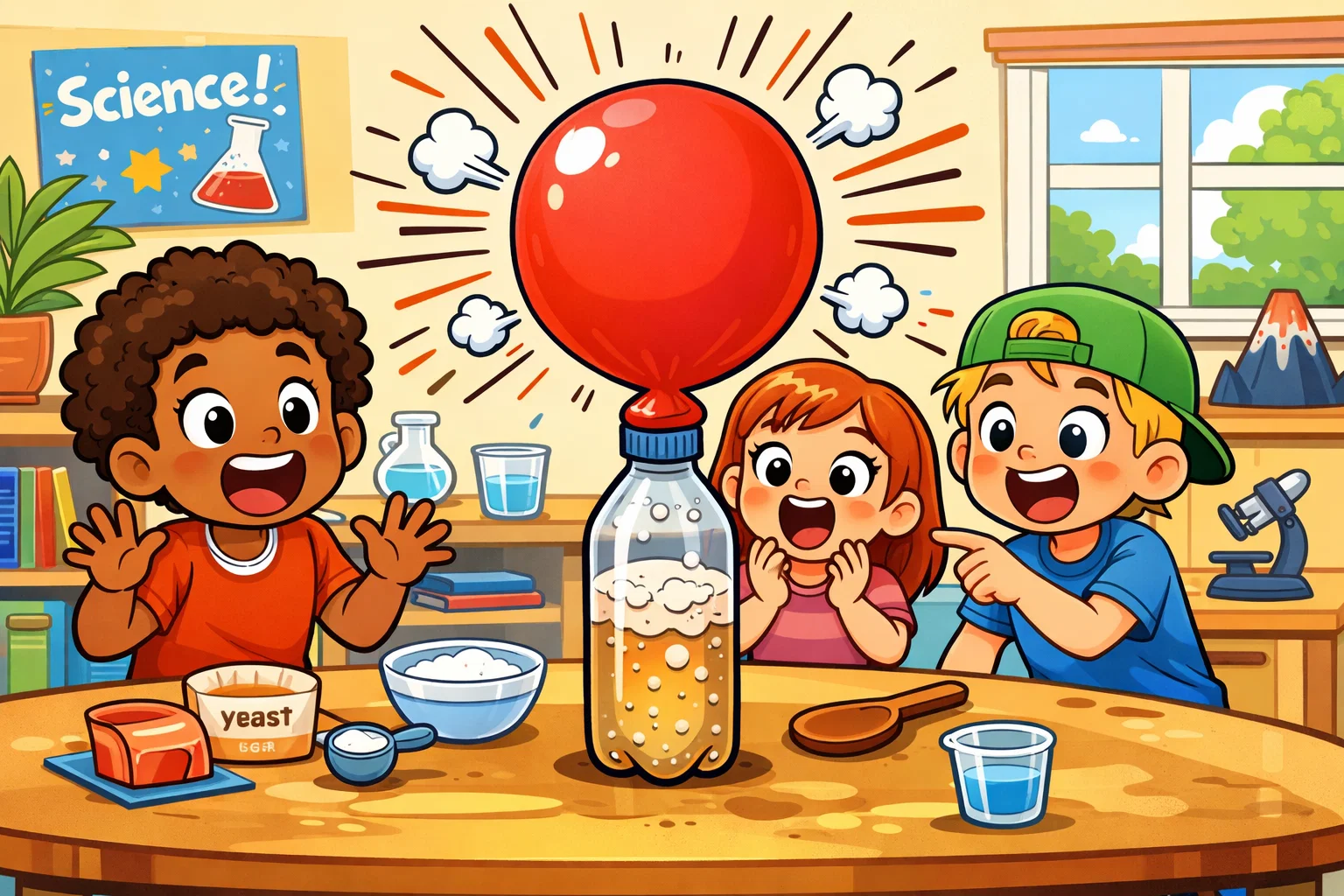
Ever wondered how a tiny, dusty-looking powder can make a heavy loaf of bread transform into a fluffy, light masterpiece? The secret lies in a microscopic powerhouse. For parents and educators, demonstrating this invisible process does not require a laboratory; in fact, you can witness the “breath” of this living organism right in your kitchen using a simple balloon.
This fermentation activity is more than just a craft; it is a fundamental introduction to biology and chemistry. By the end of this experiment, children gain a clear understanding of how this microorganism consumes sugar and releases carbon dioxide, all while watching a balloon magically inflate without anyone blowing into it. This activity introduces the science behind this so-called “living dust.”
Materials for Yeast Balloon Experiment
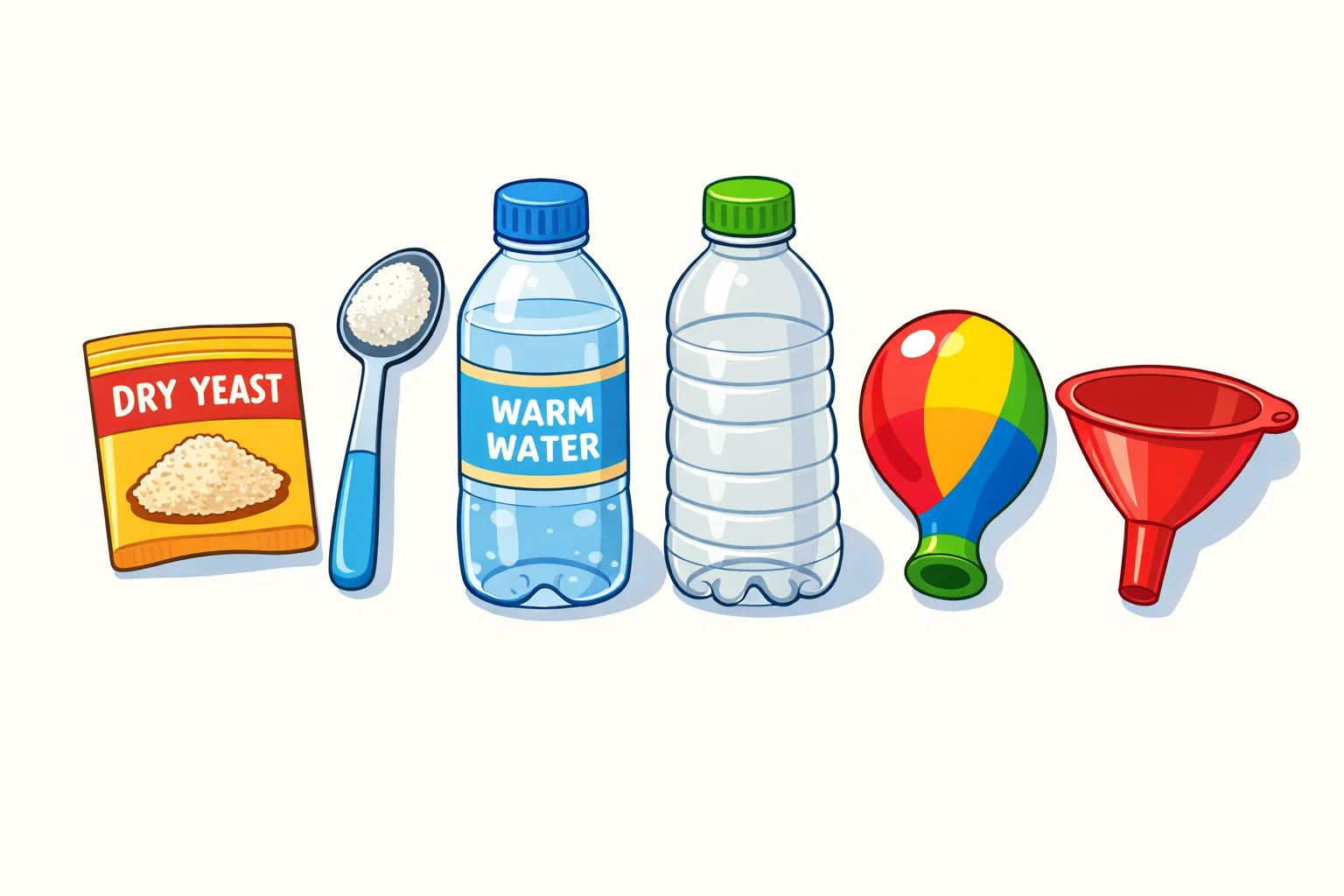
To get the best results from your science projects, gathering the right materials is essential. Most of these items are already sitting in your pantry, making this one of the most accessible science activities for a rainy afternoon.
Ingredients list for fermentation reaction
The core of this experiment relies on the biological reaction between a fungus and its food source. You will need:
- One packet of yeast (typically the active dry variety).
- Two tablespoons of white sugar.
- One cup of warm water (ideally between 100°F and 110°F).
- Optional: Different sugar sources, such as honey or maple syrup, can be tested to see if the organism reacts differently or if the balloon will inflate faster.
Tools and household items needed
Having the right vessel is key to capturing the carbon dioxide gas.
- Empty bottle: A transparent plastic water bottle (16 oz or 500 ml) is perfect because it allows you to see the bubble formation clearly.
- Balloon: A standard 9-inch latex balloon.
- Funnel: This makes pouring the dry yeast and crystals much cleaner when pouring ingredients into the narrow neck of the bottle or balloon.
- Thermometer: To ensure the temperature of the water is just right for the biological culture.
- Measuring tape: To measure the size and circumference of the balloon as it grows over time.
Safety notes for kids experiment
While this is a safe preschool and elementary-level activity, a few precautions ensure a smooth experience:
- Water Temperature: Water that is too hot can kill the yeast cells. Use a thermometer to stay within the safe range of 38-43°C.
- Supervision: An adult should handle the water and help stretch the latex to prevent snapping or potential choking hazards.
- Cleanup: Once the active dry yeast is mixed with sugar, the solution can get sticky. Wipe down surfaces promptly to avoid a sugary film that might attract ants.
Step-by-Step Yeast Fermentation Instructions
Following a structured approach helps children understand the scientific method. Use this guide to try this experiment at home and observe how the organism wakes up.
Mixing yeast with warm water
First, pour about one inch of warm water into your clear bottle. It is vital that the liquid is temperate, not scalding. This type of fungus is a living organism and thrives under suitable environmental conditions. If the water is too cold, the yeast remains inactive; if it’s too hot, the organism dies instantly.
Adding sugar to activate fermentation
Using your funnel, add one tablespoon of sugar to the liquid. Swirl the bottle gently until the crystals dissolve. Next, add the packet of yeast. This is when the fungus starts to eat the sugar, kicking off the fermentation process.
Attaching balloon to bottle securely
Blow up the balloon once and let the air out to stretch the material. Carefully stretch the neck of the balloon over the top of the bottle. Ensure it is tight and secure so carbon dioxide does not escape into the room instead of into the expanding chamber.
Setting up comparison bottles
To turn this into a true science experiment, set up “control” bottles. This allows children to see how variables affect the rate of the reaction.
| Bottle A (The “Pro”) | Bottle B (The “Hungry” One) | Bottle C (The “Cold” One) |
| Warm water + culture + sugar | Warm water + culture (no sugar) | Cold water + culture + sugar |
Waiting period for balloon inflation
Now comes the patience part. Place the bottle in a warm, draft-free spot. Within 10 to 20 minutes, you will see a bubble layer forming on the surface. The balloon typically inflates within 45 to 60 minutes as the gas accumulates.
Measuring balloon size growth
Use a measuring tape to record the circumference of the balloon every 15 minutes. This is a great way for kids to practice measuring how much gas is being produced and creating a visual chart for their science resources.
What Happens During Yeast Fermentation

Carbon dioxide production inside bottle
As the living organism consumes the fuel, a chemical reaction occurs. The yeast cells break down simple sugars, such as the white sugar used in this experiment to create energy. A byproduct of this energy production is carbon dioxide gas. Since gases expand to fill available space, it fills the balloon as it escapes the water.
Yeast role as living microorganism
It’s fascinating to explain to children that this powder is actually a fungus. Specifically, it is a single-celled microorganism called Saccharomyces cerevisiae. Because it is a microscopic entity, it needs food, water, and the right temperature to survive and reproduce.
Temperature impact on fermentation speed
Temperature acts as a catalyst for the yeast and sugar reaction. Warmth speeds up the enzyme activity within the cells, causing them to eat the sugar faster. This results in more gas being produced in a shorter amount of time. However, excessive heat denatures the proteins within the microorganism, stopping the process entirely.
Science Behind Balloon Inflation
Fermentation process explained for kids
Think of the fungus like a tiny factory. When you give the factory workers their favorite food (sugar), they start working hard. As they work, they release carbon dioxide as a byproduct, just like we do. Since the bottle is sealed by the balloon, that “breath” has nowhere to go but up!
Relationship between sugar and gas output
The amount of carbon dioxide produced is generally related to the “food” available. More sugar generally leads to a larger balloon, up to the point where the microscopic workers become “full” or the concentration of ethanol (another byproduct) slows them down.
Visual signs fermentation is working
- Foam: A thick layer of tan foam (sometimes referred to as a foam layer) on top of the water.
- Bubbles: Constant movement of carbon dioxide gas rising to the surface.
- Smell: A distinct, “bready” or slightly sour aroma indicating the yeast is mixed and active.
Fun Facts About Yeast and Fermentation
Yeast use in bread and baking
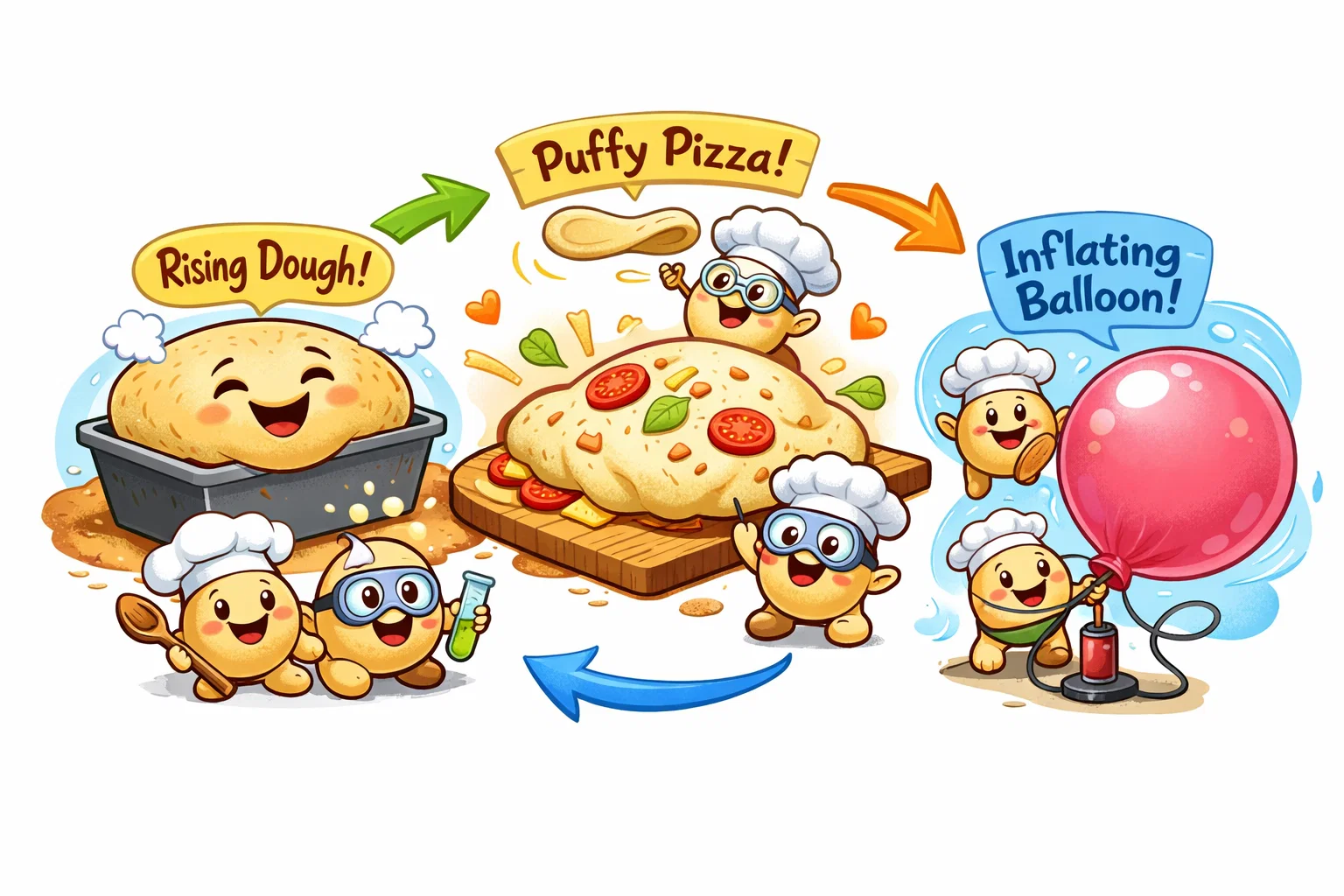
The organism makes bread fluffy! When a loaf of bread is made, the carbon dioxide is released inside the dough. The stretchy gluten in the flour traps these bubbles, which is what makes bread rise. When the bread is baked, the fungus dies, but the “air pockets” remain, giving bread its texture.
Fermentation in everyday foods
These microorganisms are essential in global food production. Beyond basic bread, this biological process is responsible for:
- Fluffy pizza dough.
- The tang in sourdough bread and yogurt.
- Probiotic drinks and certain types of cheese.
Yeast visibility under microscope
Even though one cell is too small to see with the naked eye, under a microscope, you can see them “budding.” This is how they reproduce – one cell grows a small bump that eventually breaks off to become a new, independent organism.
Experiment Variations to Try
- Warm and Cold: Compare how warm and cold water affect the rate of inflation.
- Natural Sugars: Use fruit juice instead of sugar and water to see if the yeast produces more gas from fructose.
- Baking Powder vs. Yeast: Replace the biological agent with baking powder in one bottle. Does it inflate a balloon in the same way? (Hint: One is a chemical reaction, the other is biological!)
Questions to Ask Kids After Experiment
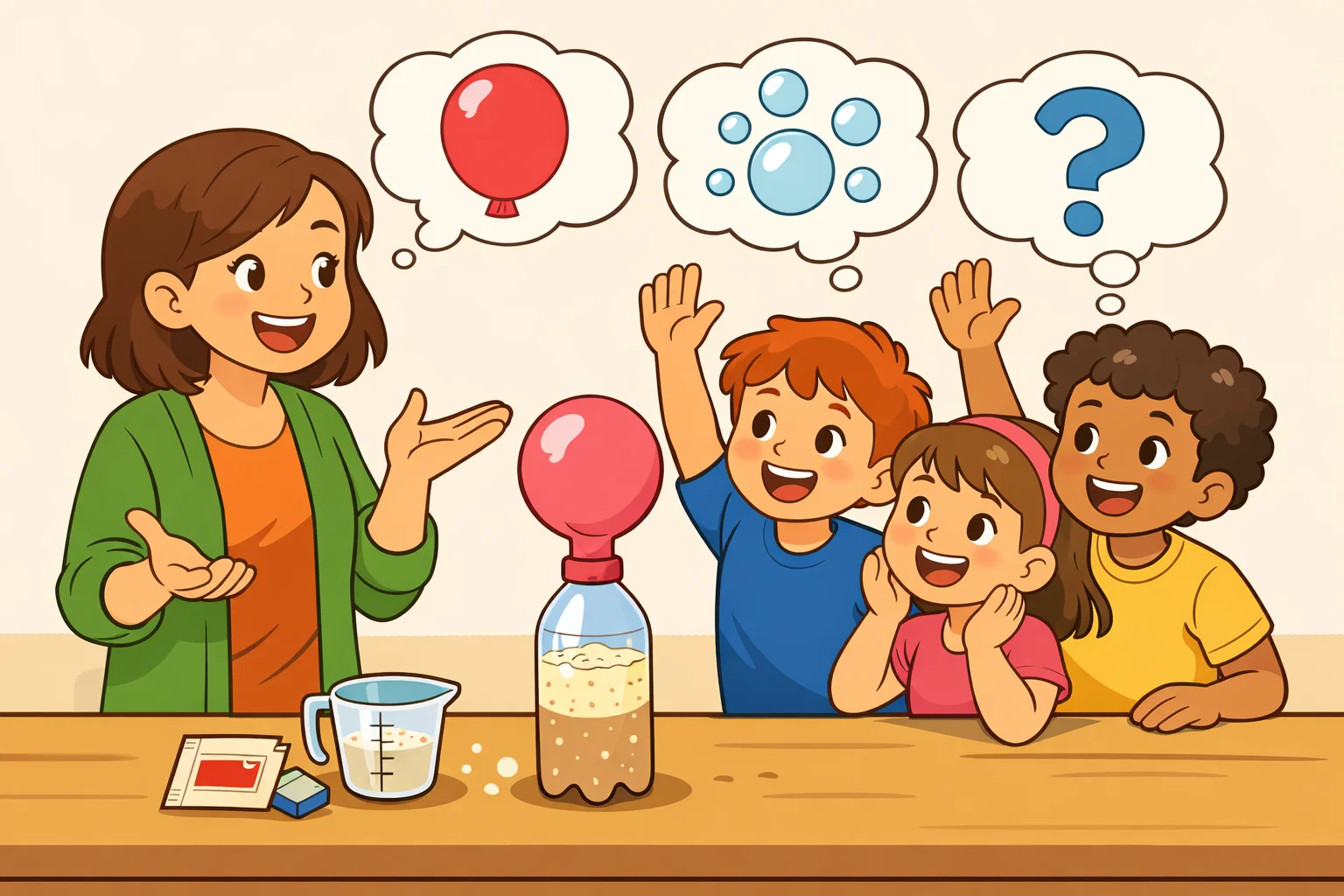
- “Why did the balloon inflate even though we didn’t use an air pump?”
- “What do you think would happen if we used five tablespoons of sugar instead of one?”
- “How does the size of the balloons change if we move the bottle from a cold fridge to a sunny window?”
Common Mistakes in Yeast Balloon Experiments
Balloon not inflating reasons
If your yeast experiment isn’t working, check for these issues:
- Inactive Culture: If the water is too cold, the microorganism is still dormant.
- Expired Product: Check the date on the packet of yeast. Fresh yeast is essential for a strong reaction.
- Leaks: Ensure the seal around the bottle neck is airtight.
Too hot water killing yeast
Water above 120°F (50°C) will essentially cook the microorganism. If you use a thermometer to measure and find it’s too hot, the fermentation will never start because the cells are no longer alive.
Incorrect ingredient ratios
Adding too much sugar can actually dehydrate the yeast cells through osmosis, while too little won’t provide enough energy to blow up the balloon.
Related Science Experiments for Kids
- Balloon Rockets: Explore physics and air pressure by racing balloons down a string.
- Kitchen Chemistry: Mix vinegar and baking soda to see a faster (but shorter-lived) gas release.
- Biology Experiments with Microorganisms: Observe how different environmental factors like pH or light affect the growth of the fungus.
Frequently Asked Questions
How long does the yeast balloon experiment take?
You will see bubbles within 5 minutes, but for the balloon to noticeably inflate, expect to wait 30 to 60 minutes.
Best yeast type for balloon experiment?
Active dry is the most reliable for a demonstration because the activation process is very visual. Instant varieties work faster but may peak before you’ve finished your measurements.
Age range for kids experiment?
This is perfect for children aged 4 to 12. Younger children enjoy the “magic” of inflation, while older kids can dive into the science behind the chemical equations and ethanol production.
Take a short quiz to find out what your everyday choices say about your parenting style
When your child is curious about something new, what’s your instinct?
Take a short quiz to find out what your everyday choices say about your parenting style
“Can I download this app?” What happens next?
Take a short quiz to find out what your everyday choices say about your parenting style
When it comes to rules at home, which sounds most like you?
Take a short quiz to find out what your everyday choices say about your parenting style
If you could give your child one life skill today, what would you pick?
Take a short quiz to find out what your everyday choices say about your parenting style
Your child gets to choose what to watch. What would your ideal setup look like?
Take a short quiz to find out what your everyday choices say about your parenting style
Pick your parenting superpower ✨