Homemade Yogurt Experiment for Kids Using Bacteria Cultures

 Discover a Free Education Video App for Kids
Pastory uses AI to personalize educational video content based on your child’s interests and personality. Safe, engaging, and built for curious young minds. Sign up now to stay updated and enjoy early access with a free trial
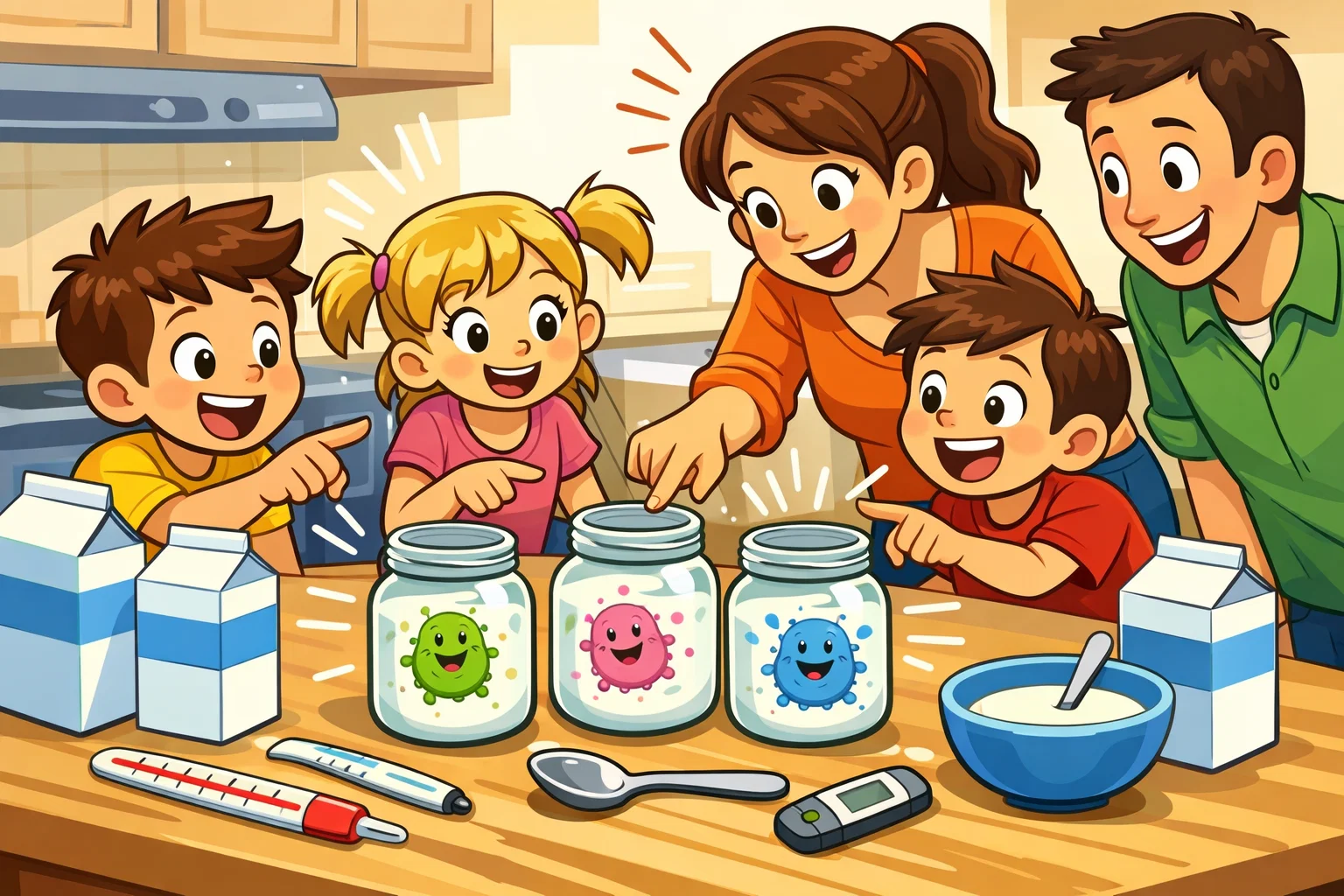
Welcome to a hands-on journey into the invisible world of microbiology! Hands-on activities are often one of the most effective ways to spark a lifelong interest in science, especially when learning takes place in familiar settings like the kitchen. This experiment is designed for parents, homeschoolers, and educators who want to transform a simple snack into a profound lesson on the human microbiome. By the end of this activity, the kitchen becomes a laboratory where billions of tiny, good bacteria work together to transform liquid milk into a creamy, tangy treat.
This guide provides a comprehensive, safe, and educational roadmap for exploring yogurt-making as a biological process. This guide explains how lactic acid bacteria function, the importance of incubation, and how fermented foods support our health. Whether you are prepping for a science fair or looking for a weekend family project, this experiment offers a perfect blend of sensory play and rigorous scientific observation.
Microbiome Basics for Kids and Families

What Microbiome Means in Simple Terms
Imagine the human body as a giant, bustling planet. On this planet, there are trillions of tiny residents called microbes. These are so small you need a microscope to see them! The collection of all these tiny living things – including bacteria, viruses, and fungi – is called a microbiome.
Most of these residents are incredibly helpful. In the human gut, they act like a protective internal system and digestive crew, helping us break down food and keeping us from getting sick. When we talk about the gut microbiome, we’re talking about the “community” of microbes that live in our tummies and help us stay strong.
Role of Yogurt Cultures in Microbiome
Yogurt is made through the hard work of specific bacterial strains. When we add a yogurt starter to milk, we are essentially introducing a specialized team of microbes to a new environment. These live cultures – primarily Lactobacillus species and Streptococcus thermophilus – eat the milk sugar (known as lactose) and turn it into lactic acid. This process not only thickens the milk but also populates the food with probiotics that can join our own internal microbiome when we eat them.
Difference Between Harmful and Helpful Bacteria
It is a common misconception that all bacteria are “germs” that make us sick. In reality, our world is filled with good bacteria.
- Harmful Bacteria: These can cause tummy aches or infections. We use soap and antibacterial cleaners to keep them away.
- Helpful Bacteria: These are the superstars of the food world. They are essential for producing foods such as cheese, sourdough bread, kefir, and yogurt.
By using bacteria in a controlled way, kids learn that microbial life is essential for life on Earth.
Yogurt Culture Experiment Overview
Goal of Microbiome Experiment for Kids
The primary goal is to witness fermentation in action. Children observe how a liquid changes its physical state through protein coagulation. Beyond the “cool factor,” this experiment fosters:
- Observation skills: Tracking changes in texture and smell.
- Data collection: Using a thermometer to monitor heat.
- Patience: Learning that biological processes take incubation time.
Why Yogurt Works for Child-Friendly Experiments
Unlike some general microbiology experiments that require petri dishes and agar, yogurt-making is “food-grade” science. It is safe to handle, the results are visible to the naked eye within hours, and the equipment is already in your cabinets. It provides a tactile way to see how a bacterial culture grows without the risks associated with culturing unknown wild microbes.
Expected Learning Outcomes
| Skill Category | What They Will Learn |
| Biology | How microbes eat, grow, and reproduce. |
| Chemistry | How pH changes (acidity) coagulate proteins. |
| Physics | The importance of heat and insulation for energy. |
| Health | The link between fermented foods and the human microbiome. |
Materials for Yogurt Culture Microbiome Experiment

Kitchen Ingredients List
To make yogurt, you only need two main things, but quality matters:
- Whole Milk: High-fat milk provides the best protein structure for a thick result.
- Yogurt Starter: You can use 2 tablespoons of store-bought yogurt or a professional starter culture designed for yogurt fermentation. Note: Ensure the commercial yogurt says “live cultures” on the label, or the bacteria might be dead, and the experiment won’t work!
Tools and Equipment Needed
- Glass Jars: Clean glass jars allow kids to see the yogurt mixture from the side.
- Thermometer: Crucial for ensuring we don’t kill the bacteria with too much heat.
- Large Pot: To heat the milk.
- Incubator: This can be a water bath, a slow cooker, or even an oven with the light turned on. We need a steady room temperature or slightly warmer (around 110°F or 43°C).
Optional Variations and Supplies
- Greek Yogurt Strainer: To see how removing whey (the liquid) changes the texture.
- pH Strips: To measure how the milk becomes more acidic over time.
Step-by-Step Yogurt Culture Experiment
Step 1: Preparation and Setup
First, the milk must be scalded. Under adult supervision, heat the milk in a pot until it reaches about 180°F (82°C).
Scientific Why: This step changes the protein structure of the milk so it can thicken later, and it reduces unwanted microorganisms that might compete with our yogurt culture.
Step 2: Adding Yogurt Cultures
Once heated, let the milk cool until it is warm to the touch (around 110°F / 43°C). If the milk is too hot, you will kill the bacteria in your starter. Take 2 tablespoons of your unflavored yogurt and stir it into a small cup of the cooled milk to create a slurry, then mix it back into the main batch.
Step 3: Incubation Process
Pour the mixture into a jar and put the lid on. The mixture is then incubated. The yogurt mixture needs to stay warm for 6 to 12 hours. Kids can wrap the jars in towels or place them in a warm spot. Incubation is when the Streptococcus thermophilus starts eating the lactose, creating the perfect environment for Lactobacillus to finish the job.
Step 4: Final Result and Observation
After the incubation time, check the jar. Is it still liquid? No! It should be a solid mass. You might see a little liquid on top – that’s the whey. Give it a sniff; it should smell clean and tangy. This tanginess is the lactic acid produced by the microbial colony.
Microbiome Science Explained Through Yogurt

Fermentation Process in Simple Language
Fermentation is like a tiny party where bacteria consume sugar and produce lactic acid as a byproduct. In our yogurt-making experiment, the bacteria eat the milk sugar and produce lactic acid. This acid makes the milk “curdle” in a controlled way, turning it from a drink into a food you can eat with a spoon.
How Cultures Multiply Over Time
When we start, we only have a small amount of bacteria culture. But inside that warm jar, these microbes can divide every 20–30 minutes under optimal conditions. By the time the experiment is done, there are billions of them! This is a great way to talk about exponential growth in microbiology.
Connection Between Food and Gut Microbiome
Eating homemade yogurt introduces these live cultures into our human gut. A diverse gut microbiome is often associated with immune function and overall well-being. Some educational sources note that probiotics from fermented foods may temporarily interact with gut microorganisms.
Safety Rules for Kids Microbiome Experiments
Hygiene and Clean Hands
In any microbiology project, we want to grow the right microbes. Always wash hands and ensure all glass jars are thoroughly cleaned before starting. This prevents “bad” bacteria from joining the party.
Safe Temperature and Storage Practices
- Heating: Always have an adult handle the stove.
- Cooling: Ensure the milk has cooled before adding the starter; otherwise, the experiment fails.
- Refrigeration: Once the yogurt has thickened, it must be moved to refrigeration to stop the fermentation and keep it fresh.
Adult Supervision Guidelines
Adults should handle the scald phase and monitor the thermometer. Children are excellent at whisking, timing the incubation, and recording observations in a science journal.
Age Suitability and Learning Levels

- Preschool: Focus on the “magic” of liquid turning to solid. Allow supervised interaction with the warm jar and tasting of the final result.
- Upper Elementary: Introduce the thermometer. Let them lead the project ownership by choosing different starter yogurts to see which makes the tartest batch.
- Middle School: Discuss the chemical reaction of lactic acid on milk proteins. Use pH strips to graph the acidity levels every 2 hours.
Experiment Results and Taste Test
What Happened During Experiment
During the fermentation, the lactic acid changed the pH of the milk. This caused the milk proteins to coagulate.
Reflection Question: “Did the volume of the milk change, or just its thickness?”
Texture and Flavor Differences
Homemade yogurt is often less “stiff” than store-bought yogurt because some commercial brands add thickeners such as gelatin or starches. Your yogurt gets its body purely from the bacterial activity.
Talking About Results With Kids
- “How does the smell change from the beginning to the end?”
- “Why do you think the yogurt tastes sour?” (Answer: The lactic acid!)
- “What would happen if we left it to incubate for 24 hours?” (Answer: It would become very sour and potentially separate.)
Experiment Variations and Extensions
- Starter Showdown: Compare yogurt as a starter from three different brands. Does the one with “extra probiotics” thicken faster?
- Temperature Trial: Incubate one jar at room temperature and one in a warm water bath. Which one ferments first?
- Sweetener Study: Does adding sugar before incubation help or hurt the microbes?
Common Issues and Experiment Modifications
Yogurt Did Not Thicken
This usually happens if the starter was too old or if the milk was too hot when the starter was added, which killed the bacteria. If it’s still liquid, you might need a fresh starter culture.
Sour or Unpleasant Taste
If it smells “off” rather than tangy, “bad” microbes may have entered the jar. In scientific observation, unexpected results are also valuable data. Clean your tools better and try a new batch!
Educational Benefits of Microbiome Experiments for Kids
Engaging in yogurt-making helps children see themselves as scientists. It demystifies the microbial world and teaches them that they can collaborate with nature to create something healthy. It builds a bridge between the food on their plate and the complex systems of the human body.
Frequently Asked Questions
Is yogurt culture experiment safe for kids?
Yes, as long as you follow basic kitchen hygiene and have adult supervision during the heating stages.
Can kids eat yogurt made during the experiment?
If you used clean equipment and food-grade milk/starters, yes! It is a delicious way to consume good bacteria.
How long does the experiment take?
The active work is about 30 minutes, but the incubation takes 6 to 12 hours. It’s a great “overnight” science project.
Does this experiment show real microbiome activity?
Absolutely. While the human microbiome is much more complex, the way these bacterial strains interact with their environment is a perfect micro-model of biological life.

Take a short quiz to find out what your everyday choices say about your parenting style
When your child is curious about something new, what’s your instinct?
Take a short quiz to find out what your everyday choices say about your parenting style
“Can I download this app?” What happens next?
Take a short quiz to find out what your everyday choices say about your parenting style
When it comes to rules at home, which sounds most like you?
Take a short quiz to find out what your everyday choices say about your parenting style
If you could give your child one life skill today, what would you pick?
Take a short quiz to find out what your everyday choices say about your parenting style
Your child gets to choose what to watch. What would your ideal setup look like?
Take a short quiz to find out what your everyday choices say about your parenting style
Pick your parenting superpower ✨