Insect Habitat Observation Experiment for Kids

 Discover a Free Education Video App for Kids
Pastory uses AI to personalize educational video content based on your child’s interests and personality. Safe, engaging, and built for curious young minds. Sign up now to stay updated and enjoy early access with a free trial
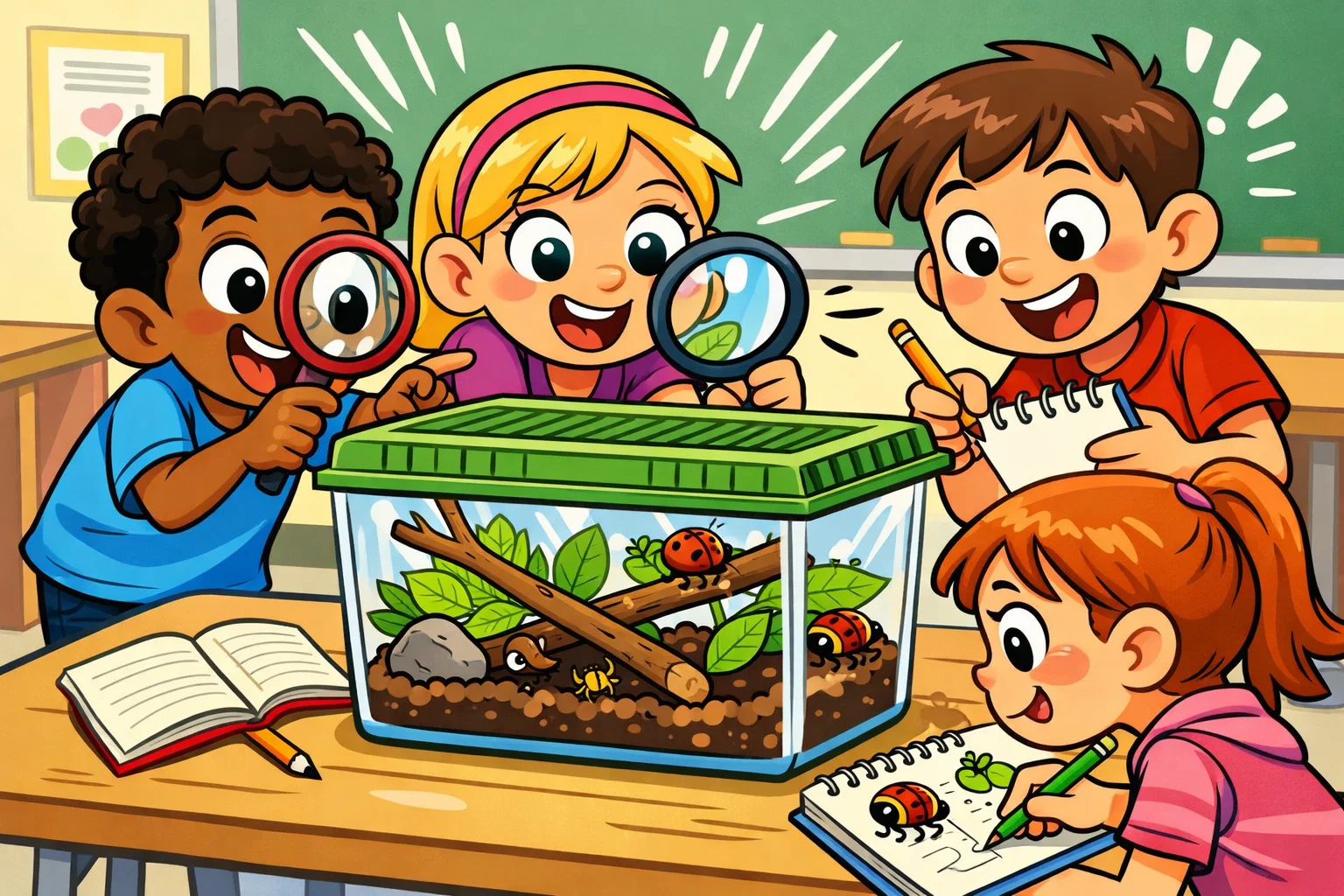
Welcome to the fascinating world of entomology! For a child, the backyard isn’t just a patch of grass; it is a bustling metropolis filled with incredible creatures performing vital jobs. An insect habitat observation experiment is one of the most effective ways to bridge the gap between abstract biological concepts and tangible, hands-on discovery. Whether the activity is led by a homeschooling parent, a classroom teacher, or a curious guardian, guiding a child through the study of a bug and its home fosters a lifelong respect for the natural environment.
This guide provides a comprehensive framework for conducting meaningful scientific inquiry with children. By setting up a controlled environment – whether it’s a sophisticated insect hotel or a simple clear plastic container – kids learn to engage with the world through the lens of a scientist. This guide explores how to magnify the tiny details of an antenna, understand the complex ecosystem roles of pollinators like bees, and observe the quiet work of a decomposer in the soil. This exploration begins with the microscopic world right beneath our feet.
Purpose of Insect Habitat Observation
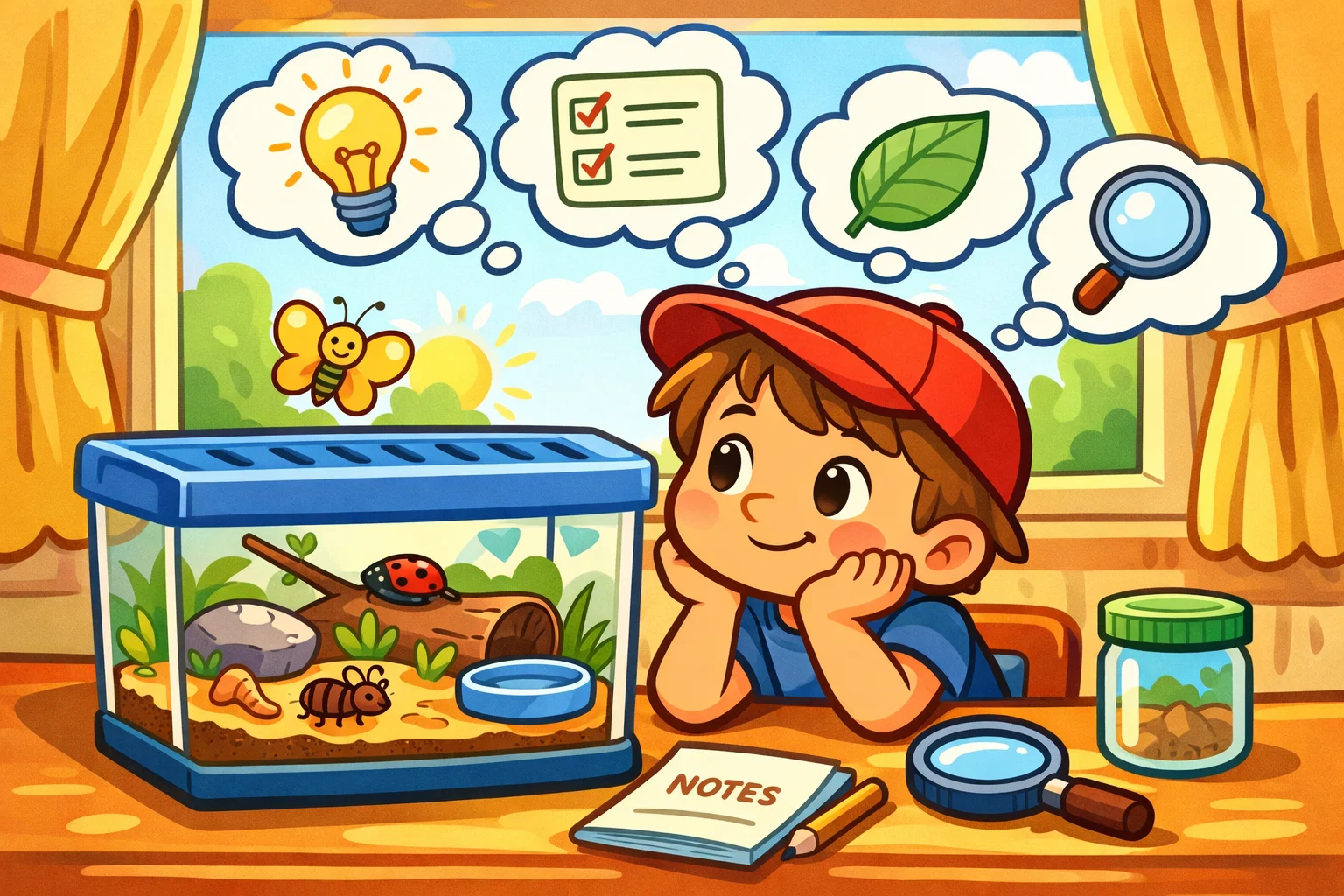
The primary goal of observing an insect habitat is to encourage a child’s innate sense of wonder. While books can show us what a butterfly looks like, they cannot replicate the excitement of seeing a larva transition into a pupa in real-time. Observation-based learning encourages children to slow down and pay attention to details that are often overlooked in our fast-paced digital age.
By creating a space where a beetle or a ladybird feels “at home,” children can witness natural behaviors: feeding, seeking shelter, and interacting with their environment. This practice moves beyond simple “bug hunting” and enters the realm of scientific thinking, where children begin to ask “why” and “how” instead of just “what.”
Educational goals for kids
When kids engage in observing insects, they aren’t just looking at bugs; they are developing a robust set of cognitive and emotional skills:
- Refining Observation Skills: Learning to notice the difference between body segments or the movement of a millipede versus a centipede.
- Comparison and Classification: Identifying why a spider (an arachnid) differs from an insect (six legs and three body segments).
- Recording Data: Using a science kit or a simple notebook to draw pictures and log daily changes.
- Empathy Development: Recognizing that even a small worm or ant has specific needs for survival, such as moisture and food.
Connection to science experiments
A habitat observation becomes a true experiment for kids when variables are introduced. Instead of just watching, we ask: “What happens if we move the habitat to a dark corner?” or “Does an isopod prefer a damp sponge or a dry leaf?” By manipulating light, moisture, and food sources, children practice the scientific method – forming hypotheses, testing them, and drawing conclusions based on evidence.
Age groups suited for experiment
This activity is incredibly versatile and can be adapted for various developmental stages:
| Age Group | Focus Area | Complexity Level |
| Preschool (3-5) | Sensory exploration and naming body parts. | Low: Focus on “finding” and “watching.” |
| Elementary (6-10) | Understanding metamorphosis, life cycles, and body structure. | Medium: Keeping a daily observation log. |
| Middle School (11+) | Studying biodiversity, ecological roles, and decomposition. | High: Running controlled trials with multiple variables. |
Types of Insect Habitats for Observation
To study an insect, you first need a place to keep it comfortably. There are several ways to structure an insect habitat, ranging from permanent garden fixtures to temporary indoor setups.
Bug hotel habitat format
A bug hotel is a popular choice for long-term outdoor observation. These structures are typically made from wooden pallets, hollow reeds, and drilled logs. They serve as a sanctuary for pollinators like bees (specifically solitary bees) and predatory ladybirds (ladybugs).
While you cannot “move” this habitat easily, it allows kids to observe how different species “check in” to different “rooms” based on their needs. It’s a masterclass in seeing how natural materials from the environment attract specific wildlife.
Container-based observation habitat
For a more focused hands-on experiment, a clear plastic container or a repurposed plastic bottle works wonders. These are effective for observing ground-dwelling insects like crickets or beetles.
- Visibility: Using clear walls allows for a 360-degree view of the insect anatomy.
- Control: You can easily adjust the amount of compost, moisture, or light the inhabitant receives.
- Short-term: These are ideal for 24-48 hour studies before returning the guest to the wild.
Outdoor natural habitat zones
Sometimes, the best habitat is the one that already exists. “Zone observation” involves marking off a small square of the garden with string. This encourages children to look for the ecosystem at work in the decay of a fallen log or the busy ant trail near a sidewalk. It teaches them that habitats are everywhere, from the canopy of a tree to the fungus growing on a damp stump.
Insects Suitable for Habitat Observation
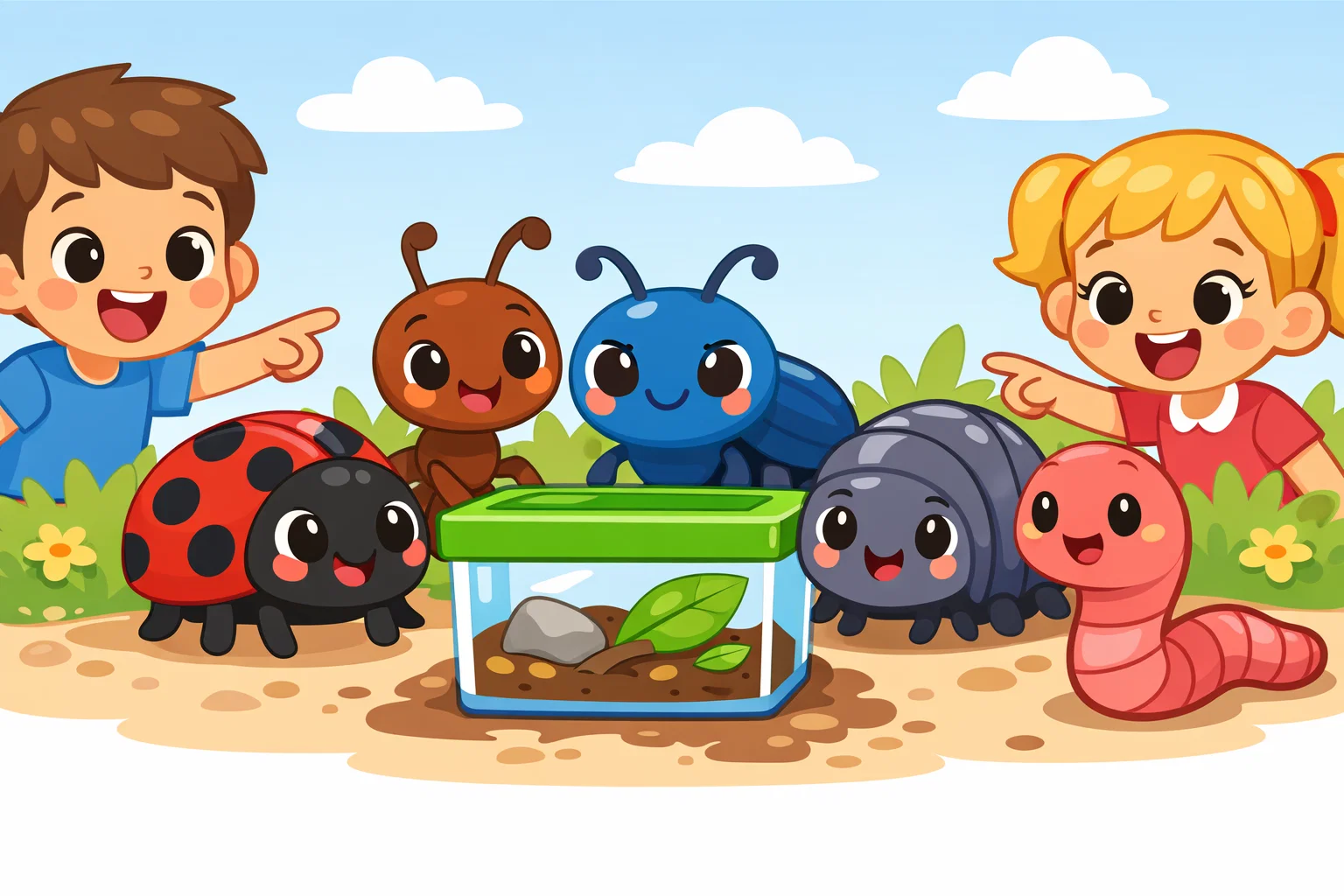
Not every “creepy crawly” is a good candidate for a home experiment. We want to choose species that are resilient, safe to handle, and active enough to be interesting.
Common garden insects
- Ladybugs (Ladybirds): Excellent for observing predatory behavior (they are carnivorous insects that feed on aphids).
- Ants: Fascinating for social structure observation, though they require a very secure container to prevent “escapes.”
- Beetles: Their hard exoskeleton and various colors make them great subjects for a magnifying glass.
Soil-dwelling insects
If you want to study recycling and decomposition, look to the “clean-up crew”:
- Worms: Though not technically insects, they are vital for compost education.
- Isopods (Pill bugs/Roly-polies): These are actually land-dwelling crustaceans! They are incredibly hardy and perfect for testing moisture preferences.
- Millipedes: Great for observing many legs and slow, rhythmic movement.
Safety considerations
Safety is paramount for both the child and the bug.
Safety reminder: To humans insects are small, but human handling can be overwhelming for them.
- Avoid Stinging/Biting Insects: Unless you are an experienced entomologist, steer clear of wasps, hornets, or certain spider species.
- Supervision: Ensure kids don’t put their hands in deep crevices where a hidden creature might nip.
- Gentle Touch: Use a soft paintbrush to move a larva or a small beetle into a container rather than using fingers.
Materials for Insect Habitat Observation Experiment
You don’t need an expensive science kit to get started. Most materials can be found in your recycling bin or backyard.
Basic household materials
- Containers: Jars (with air holes!), clear plastic tubs, or a DIY habitat made from a plastic bottle.
- Bedding: Soil, sand, dried leaves, and twigs.
- Food Sources: Pieces of fruit (for herbivorous insects), or leaf litter for a decomposer.
Observation tools
To truly magnify the experience, provide these tools:
- Magnifying glass: Essential for seeing the tiny hairs on a bumblebee or the segments of an antenna.
- Journal/Printable: A dedicated space to draw pictures and write down what they see.
- Ruler: To measure the length of a caterpillar or the distance an ant travels in one minute.
Optional science supplies
- Thermometer: To see if a cricket chirps faster when it’s warmer (a classic experiment!).
- Hygrometer: To measure humidity, especially important for isopods.
- Flashlight: For observing nocturnal activity or testing light-sensitivity.
Step-by-Step Habitat Observation Experiment
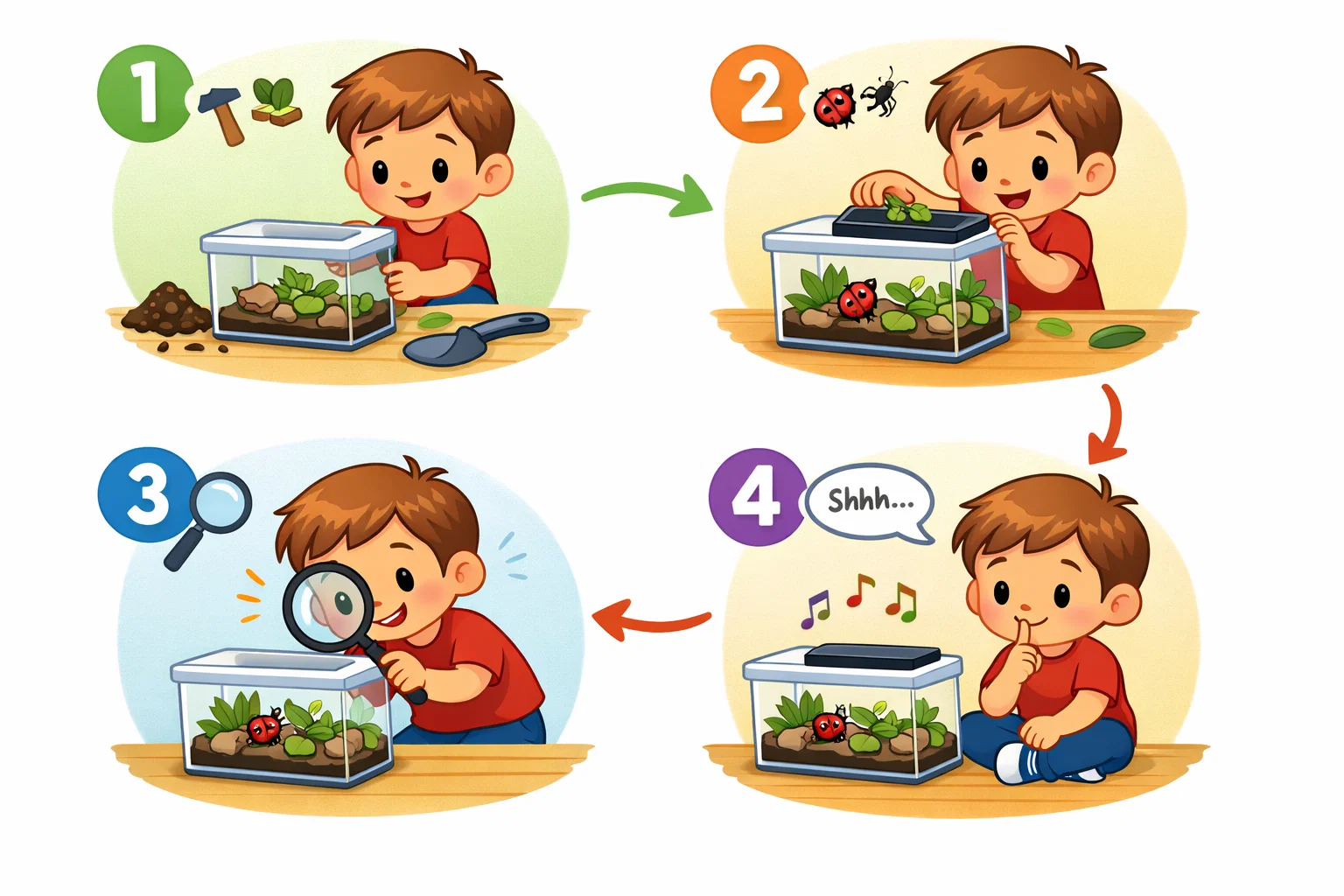
Ready to start your bug hunt? Follow these steps for a successful scientific journey.
Habitat setup process
Before you catch your subject, prepare their temporary home.
- Layering: Start with a layer of soil or compost.
- Architecture: Add “furniture” like stones or pieces of bark. These provide a place for the insect to hide, which reduces stress.
- Moisture: A light mist of water (don’t soak it!) ensures the habitat doesn’t dry out.
Introducing insects into habitat
Once the habitat is ready, carefully place your insect inside. If you found a beetle under a rock, try to include some of the soil and leaves from that exact spot. This provides familiar scents and microorganisms that help the insect feel secure.
Daily observation routine
Set a specific time each day for “Lab Work.” Encourage your young entomologist to check for:
- Movement: Is the insect active, or is it resting posture with the thorax lowered?
- Feeding: Are there bite marks on the leaves?
- Waste: Can you see “frass” (insect poop)? It’s a sign of a healthy digestive system!
Variables to Test During Observation
To turn this into a robust science project, we need to test how insects react to different stimuli.
Light versus dark areas
Cover one half of your container with black construction paper. Observe where the insects congregate. Many isopods will flee to the dark (they are photophobic), while some flying insects like a moth might be drawn to a light source.
Dry versus moist materials
Place a damp paper towel on one side and a dry one on the other. This is a classic choice chamber style comparison. It demonstrates how crucial moisture is for creatures that breathe through their skin or have thin exoskeletons.
Natural versus artificial shelter
Does a ladybird prefer to hide under a natural leaf or a piece of crumpled plastic bottle? This variable helps kids understand how human-made materials impact the natural environment.
Recording Experiment Results
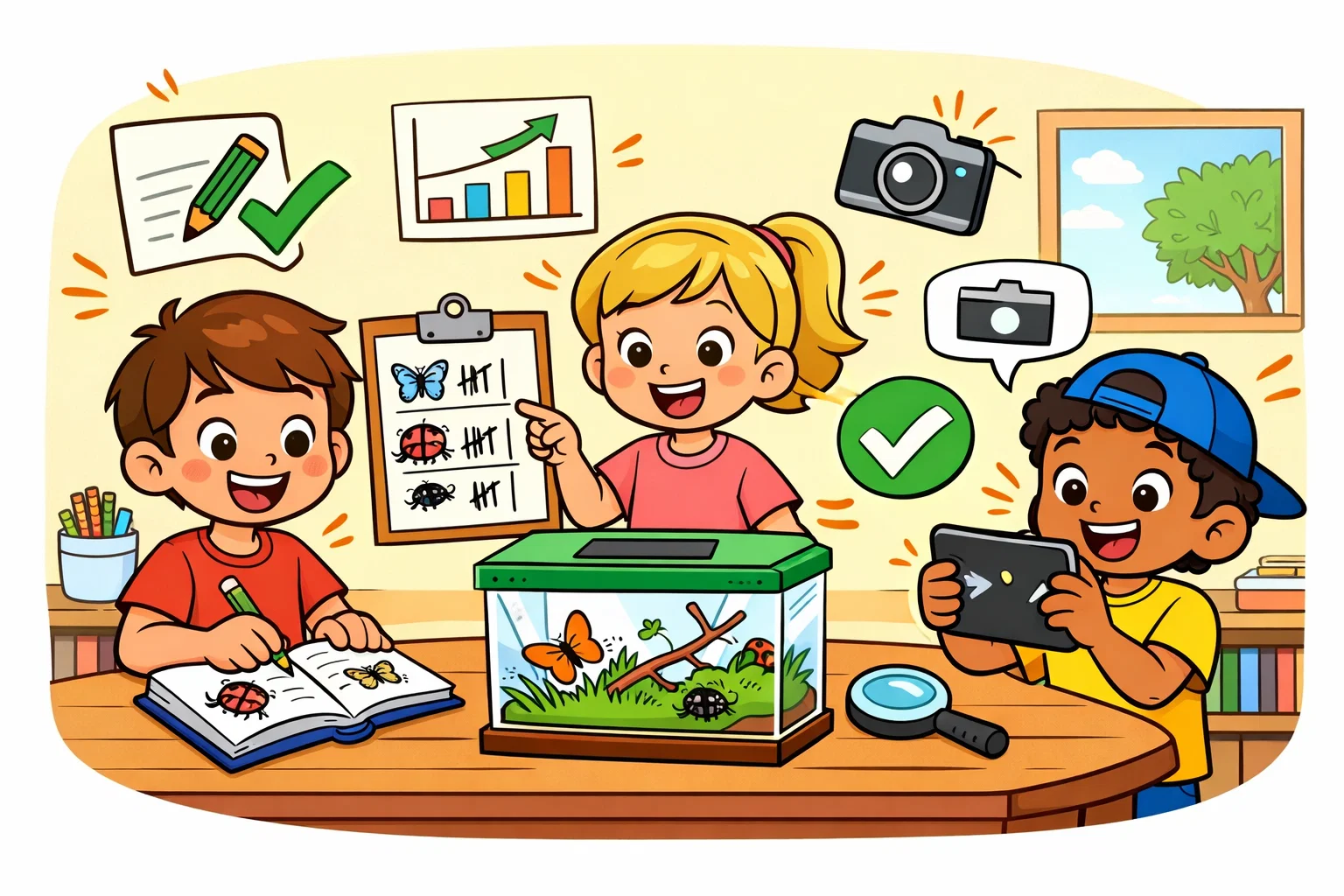
Documentation is what separates casual observation from scientific investigation.
Observation charts for kids
Create a simple table like the one below to help kids track their data. You can even create a printable version for them to take outside.
| Date | Time | Temperature | Activity Observed |
| Oct 12 | 10:00 AM | 22°C | Beetles are burrowing in the soil. |
| Oct 13 | 10:00 AM | 19°C | The beetle is still under the leaf. |
Photo and video tracking
In the age of smartphones, taking a “macro” photo is a great way to see the insects’ body in high definition. Use the zoom feature to magnify the legs and wings without disturbing the creature.
Comparing changes over days
Over a week, look for patterns. Did the caterpillar get bigger? Did it enter the pupa stage? Comparing Day 1 to Day 7 provides a powerful visual of metamorphosis and growth.
Science Topics Connected to Insect Habitat Observation
This experiment is a gateway to much larger biological themes.
Life cycles and adaptation
Every insect undergoes some form of change. Observing a larva grow or a cricket molt its exoskeleton provides a front-row seat to the wonders of adaptation. Discuss how their body structure (like the hard shell of a beetle) protects them from predators.
Environmental balance concepts
Explain that every bug has a job. Pollinators like bees help flowers grow, while decomposers such as worms and other soil-dwelling organisms turn “trash” (dead leaves) into “gold” (nutrient-rich soil). This is the essence of an ecosystem.
Seasonal habitat changes
Insects behave differently in spring than they do in autumn. Use your observations to talk about how insects lay eggs to survive the winter or how they find warm places to hide when the temperature drops.
Experiment Extensions and Variations
Choice chamber style comparison
If you have two identical containers, connect them with a small tube. Place different types of soil in each and see which one the ants prefer to build their tunnels in. This adds a layer of “behavioral science” to the project.
Habitat redesign challenge
After observing for a few days, ask the child: “How can we make this home better?” Maybe it needs more climbing sticks for a mantis or more leaf litter for a beetle. This develops engineering and problem-solving skills.
Long-term outdoor observation project
Instead of bringing the bugs inside, “adopt” a specific bush or a bug hotel in the garden. Visit it once a week for an entire season. This teaches patience and shows the slow, beautiful rhythm of nature.
Common Mistakes During Habitat Observation
Even expert scientists make mistakes! Here’s what to watch out for:
Overhandling insects
It is tempting to pick up ladybirds or isopods constantly. However, the heat from our hands and the salt on our skin can be stressful or even harmful. Encourage “eyes-on, hands-off” observation whenever possible.
Lack of consistency in observation
Scientific data is most valuable when it’s consistent. If you only check the habitat once every three days, you might miss the moment a butterfly emerges or an insect molts. Encourage a “morning check-in” routine.
Ignoring environmental factors
If the habitat is sitting in direct sunlight, it can quickly become an oven, killing the inhabitants. Always remind kids to consider the “weather” inside the container.
Insect Habitat Observation for Homeschool and Classroom
Lesson plan integration
This activity fits perfectly into units on:
- Biology: Studying insect anatomy (head, thorax, abdomen).
- Environmental Science: Learning about recycling and the role of a decomposer.
- Language Arts: Using descriptive adjectives in a nature journal.
Science fair project adaptation
For an older student, this can easily become a science fair entry. A student might ask: “Which type of organic matter do worms decompose the fastest: apple peels or cardboard?” They can use a scale to measure the weight of the materials over two weeks.
Group versus individual experiments
In a classroom setting, give each group a different “order” of insects. One group studies beetles, another studies crickets, and another studies isopods. At the end of the week, they can present their findings and compare the different body parts and behaviors.
Ethical Treatment and Release of Insects
Ethical observation emphasizes respect for living organisms and responsible interaction with wildlife.
Observation time limits
A “Catch, Study, Release” approach is recommended. Unless you have a professional-grade terrarium, keep insects for no more than 24 to 48 hours. This ensures they can return to their natural life cycles and find food or mates.
Safe habitat return
Always release the insect exactly where you found it. That specific area has the food and shelter they were already using. Releasing a “forest bug” into a “sandy playground” could be a death sentence.
Respect for living organisms
Teach children that insects are not toys. They are sentient beings that feel stress. By treating a tiny ant with care, a child learns a broader lesson about kindness and the value of all living things in our biodiversity.
Frequently Asked Questions
How long should insect habitat observation last?
For younger children (ages 3-6), a few hours is often enough to satisfy their curiosity. For older children, a 24-48 hour window allows them to see nocturnal behaviors and feeding habits. Always prioritize the health of the insect.
Can experiments be done indoors?
Absolutely! A container-based habitat is perfect for a windowsill. Just ensure it isn’t in a spot that gets too hot. Using a clear plastic jar allows you to bring the “outside in” for children who may not have a large backyard.
What if insects stop moving?
Don’t panic! Many insects, especially beetles, will “play dead” (thanatosis) when they feel threatened. Others may just be resting. However, if an insect hasn’t moved for several hours even after a gentle nudge with a paintbrush, it may be dehydrated or stressed. This is a good time to release it back to its natural environment.
Take a short quiz to find out what your everyday choices say about your parenting style
When your child is curious about something new, what’s your instinct?
Take a short quiz to find out what your everyday choices say about your parenting style
“Can I download this app?” What happens next?
Take a short quiz to find out what your everyday choices say about your parenting style
When it comes to rules at home, which sounds most like you?
Take a short quiz to find out what your everyday choices say about your parenting style
If you could give your child one life skill today, what would you pick?
Take a short quiz to find out what your everyday choices say about your parenting style
Your child gets to choose what to watch. What would your ideal setup look like?
Take a short quiz to find out what your everyday choices say about your parenting style
Pick your parenting superpower ✨