Bird Beak Adaptation Experiment for Kids Using Tools and Foods

 Discover a Free Education Video App for Kids
Pastory uses AI to personalize educational video content based on your child’s interests and personality. Safe, engaging, and built for curious young minds. Sign up now to stay updated and enjoy early access with a free trial
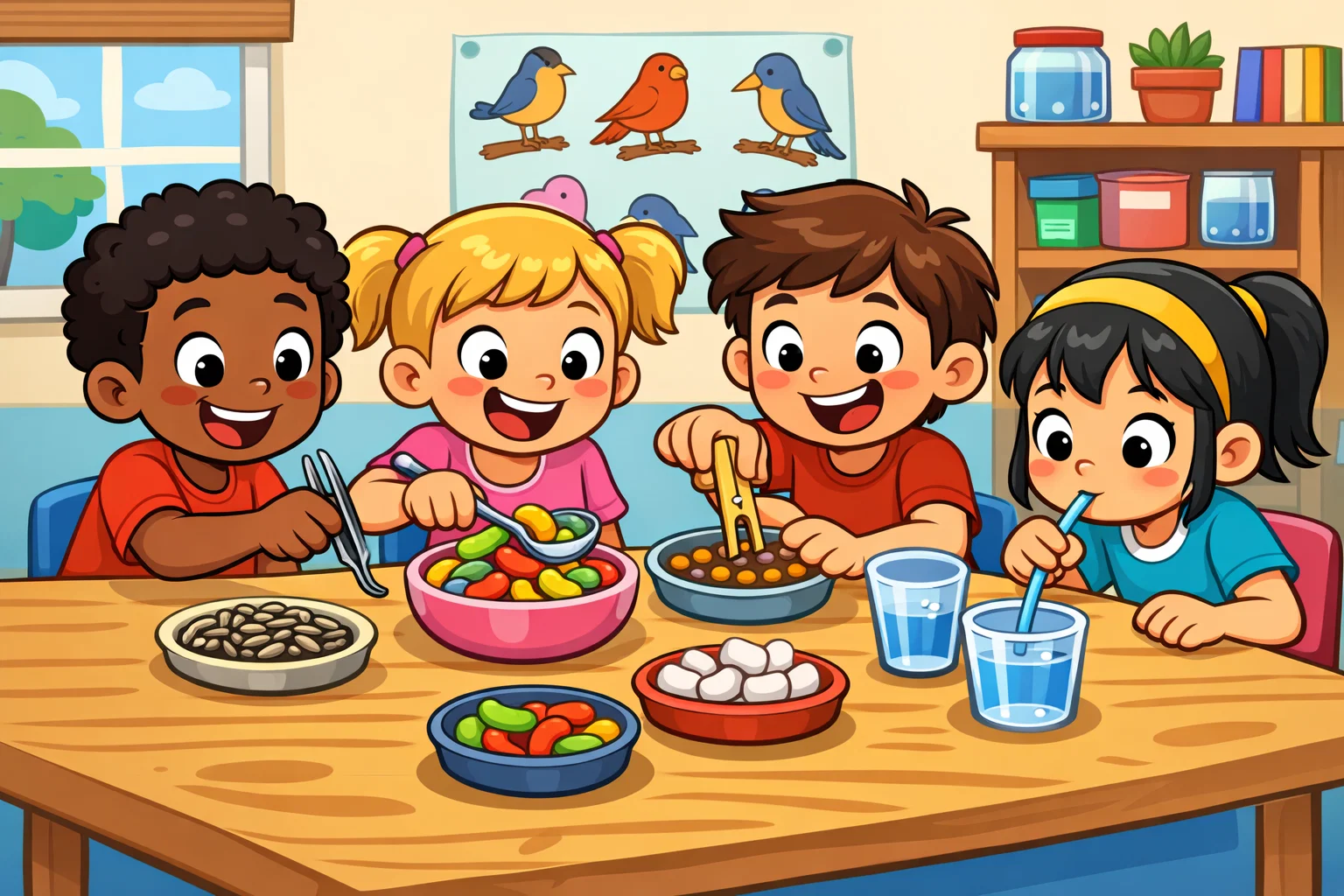
Have you ever watched a bird in your backyard and wondered why its face looks so different from the bird next to it? From the sturdy, cone-shaped beak of a sparrow to the long, elegant, needle-like beak of a hummingbird, nature has spent millions of years “engineering” the perfect equipment for survival. Hands-on activities like the “Bird Beak Buffet” are an effective way to teach complex biological concepts. By transforming your kitchen or classroom into a laboratory, children can move beyond abstract ideas and physically experience how a bird’s beak determines what it can eat and where it can live.
This experiment is a cornerstone of early STEM education because it perfectly illustrates animal adaptations through play. When children use various tools to mimic bird behavior, they aren’t just having fun – they are engaging in scientific inquiry. They observe, hypothesize, and draw conclusions about natural selection as they struggle to pick up “worms” with a “nutcracker” or “seeds” with a “straw.” This immersive approach fosters a deep sense of empathy for the natural world and helps students understand that every species of bird is a masterpiece of functional design.
Why Bird Beak Shapes Matter for Survival
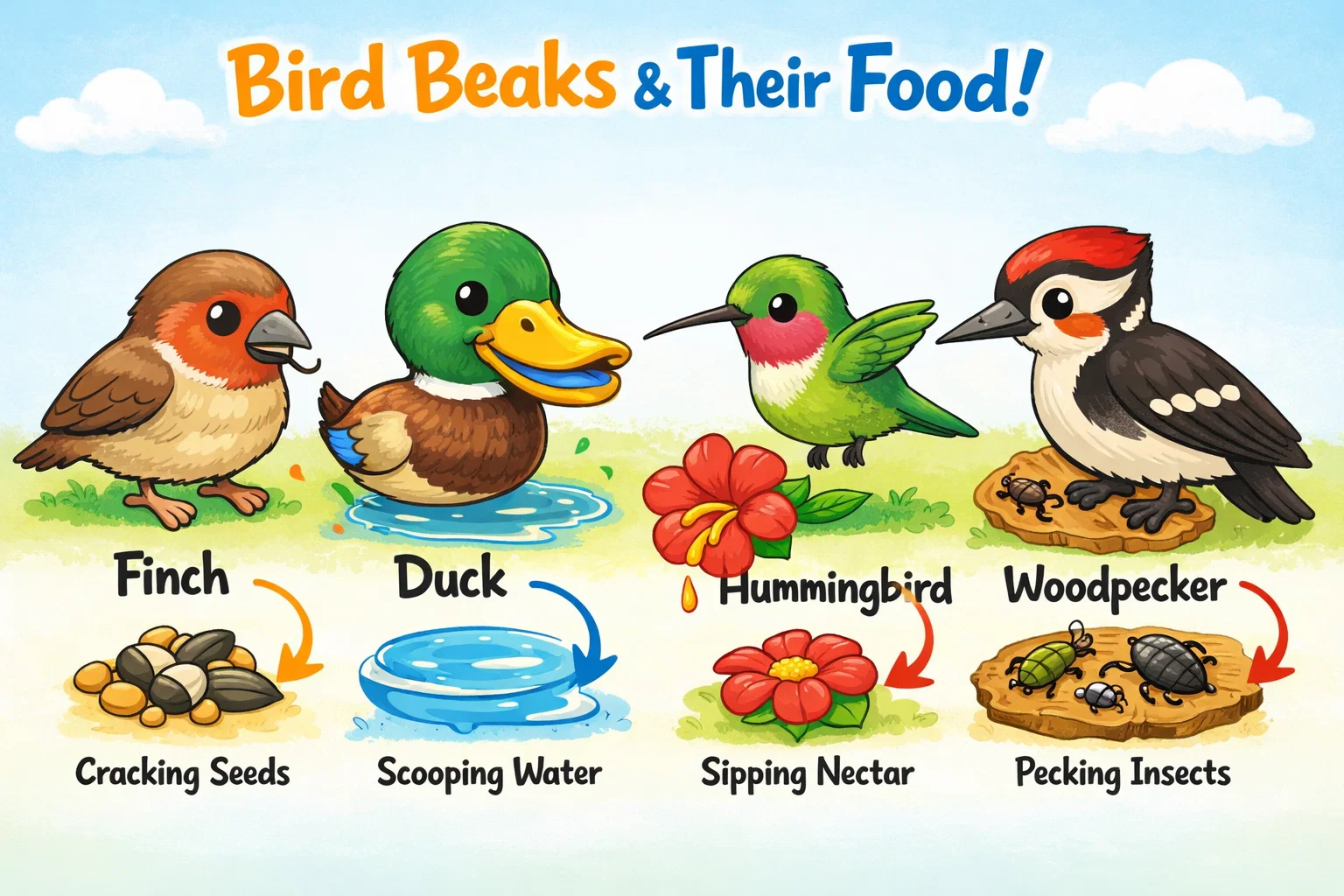
In the wild, a bird doesn’t have a grocery store; it has a habitat. If a bird cannot efficiently gather the types of food available in its immediate environment, it simply won’t survive. This is a core principle of natural selection: birds with beak shapes that match the local food supply are more likely to thrive and pass those traits on to their offspring.
Understanding that a bird’s beak is more than just a mouth – it’s a multi-purpose tool – is the first step in understanding biology. A beak is used for preening feathers, building nests, defending territory, and, most importantly, feeding. Because birds use their beaks for almost everything, the shape and size of that beak are closely matched to the bird’s feeding needs and energy demands.
How Beak Shape Matches Food Type
The relationship between a beak type and a bird’s diet is one of the clearest examples of adaptation in the animal kingdom.
- Cracking Seeds: Birds that eat hard-shelled seeds need strong beaks that act like pliers or a nutcracker.
- Probing for Insects: Birds that hunt for bugs in tree bark or mud need thin beaks that can probe deep into narrow spaces.
- Nectar Feeding: Liquid diets require a straw-like mechanism to reach deep into flower blossoms.
- Fishing: Catching a slippery fish requires a beak that can either spear the prey or scoop it up like a net.
Beaks as Natural Tools
If you look closely at a real bird, you’ll start to see household items everywhere. A pelican has a built-in fishing net. A heron carries a sharpened spear. A finch carries a heavy-duty wire cutter. These aren’t just coincidences; they are functional similarities. When we represent different beak styles using various household tools, we help children bridge the gap between a “strange animal” and a “functional design” they already understand.
Real-Life Examples from Common Birds
To make this concept stick, it helps to point out different birds your children might actually see or recognize from images of birds:
| Bird Species | Beak Shape | Primary Function | Household Tool Equivalent |
| Finch | Short, stout, conical | Cracking seeds | Pliers / Nutcracker |
| Hummingbird | Long, needle-thin | Sipping nectar | Straw / Syringe |
| Woodpecker | Strong, chisel-like | Boring into wood for grubs | Chisel / Hammer |
| Pelican | Large pouch | Scooping fish and draining water | Slotted spoon / Net |
| Heron | Long, dagger-like | Spearing fish | Large tweezers / Tongs |
Bird Beak Adaptation Experiment Overview
The “Bird Beak Buffet” is a classic hands-on science activity that allows students to use their motor skills to test evolutionary theories. The experiment places children in the role of different types of birds competing for different types of food. It’s a high-energy, high-engagement lesson that works beautifully in both a living room and a large classroom.
Experiment Goal for Kids
The primary goal is for kids to discover which beak tool is the most efficient at gathering specific types of food. By the end of the session, they should be able to “eat” (metaphorically!) enough to survive, realizing that one beak size does not fit all. They will see firsthand why a hummingbird couldn’t survive on a diet of large nuts, and why a sparrow can’t drink from a deep flower.
Skills Developed During Activity
Beyond biology, this experiment builds several critical developmental skills:
- Observation: Looking closely at how different materials interact.
- Comparison: Analyzing which different tools worked better and why.
- Data Collection: Using a worksheet to tally the amount of food collected.
- Critical Thinking: Predicting how a bird might react if its habitat changed.
Age Range and Group Size
This activity is incredibly versatile.
- Ages 3–5: Focus on the sensory aspect – simply trying to pick things up.
- Ages 6–10: Introduce the scientific concepts of natural selection and competition.
- Group Size: It works for a single child, but a group of 3–5 children per “feeding station” creates a healthy sense of competition that mimics real-world resource scarcity.
Tools Representing Bird Beaks

To run a successful bird beak buffet, you need various tools that represent different beak types. Most of these are likely sitting in your kitchen drawer right now!
Tweezers as Insect Beaks
Tweezers are the perfect stand-in for the thin beaks of a warbler or a shorebird. These birds need to be precise. They aren’t looking to crush things; they are looking to probe into small crevices or pluck a tiny worm out of the grass. Using a tweezer teaches kids the value of precision over power.
Spoons as Scoop Beaks
A spoon – or better yet, a slotted spoon or strainer – represents birds like the flamingo or the duck. These birds are filter feeders. They take a big gulp of water and mud and then “strain” out the tiny plants and animals. This shows how some birds use their beaks as a sieve rather than a grasper.
Clothespins or Pliers as Gripping Beaks
A plier or a clothespin represents strong beaks used for cracking seeds. Think of a sparrow or a finch. These birds need leverage and pressure. When students use these tools, they’ll feel the “crunch” factor required to get to the energy-rich meat inside a seed.
Straws as Nectar Beaks
A simple drinking straw is the ultimate model for a hummingbird. These nectar eaters don’t “chew” at all. Their survival depends on their ability to reach deep into a floral tube. This highlights how some beak shapes are highly specialized for a single, specific food source.
Foods Used in Bird Beak Experiment
To make the “buffet” realistic, you need different food sources that represent different ecological niches.
Seeds and Grains for Hard Foods
Use popcorn kernels, sunflower seeds, or dried beans. These represent the “hard” calories that only a bird with a beak perfectly suited for cracking can access. If a child tries to pick up a single grain of rice to represent small seeds using large pliers, they’ll see how difficult it is!
Gummy Worms or Pasta for Insects
Cooked spaghetti or gummy worms make excellent worm substitutes. These are “soft” prey. They require a tweezer or a tongs-style beak to grab without dropping. This mimics the diet of grub eaters like the woodpecker.
Water or Juice for Nectar
A small bowl of water (perhaps colored with red food dye to look like flower nectar) serves as the liquid food source. This is where the straw “beak” shines, while the plier beak fails miserably.
Small Objects for Fish or Shellfish
Marbles, beads, or even floating corks in a bowl of water can represent fish. A pelican (using a large spoon) or a heron (using long tongs) will find these much easier to catch than a tiny finch beak would.
Step-by-Step Bird Beak Experiment Instructions

Ready to play? Follow these steps to ensure your bird feeding simulation is both educational and organized.
1. Setup and Materials Preparation
Create “Feeding Stations” around a table. Each station should have one type of “food” in a container. Place a variety of different tools at each station.
- Station A: Rice/Seeds (The Seed Patch)
- Station B: Gummy Worms (The Forest Floor)
- Station C: Water in a tall vase (The Flower Garden)
- Station D: Marbles in water (The Pond)
2. Experiment Rules for Fair Testing
To keep it scientific, set a timer (e.g., 30 seconds). Students may use only one beak tool at a time and must use only one hand. This simulates the bird’s single beak. The goal is to see how much “food” they can move from the “habitat” bowl to their “stomach” (a small plastic cup).
3. Running Multiple Feeding Rounds
Have the children rotate. First, let everyone try the tweezer at every station. Then try the spoon, then the plier. This allows them to feel the frustration of having the “wrong” tool for the job.
Observing and Recording Results
This is where the “learning” happens. Without recording the data, it becomes just playing with food!
Which Tools Pick Up Food Fastest?
Ask the kids to rank the tools. They will likely find that the tweezer was the “king” of the worm station, while the plier was the “boss” of the popcorn kernels. This ranking helps them visualize the concept of adaptation.
Which Foods Are Hardest to Collect?
Often, the liquid “nectar” is the hardest for any tool except the straw. Discuss why a bird that gets its food from flowers has to be so specialized.
Simple Data Tables or Charts
Use a worksheet like the one below to help kids track their “survival” rate.
| Tool (Beak Type) | Seeds (Rice) | Worms (Pasta) | Nectar (Water) | Fish (Marbles) |
| Tweezers | 2 | 10 | 0 | 1 |
| Spoon | 5 | 2 | 8 | 12 |
| Pliers | 15 | 1 | 0 | 0 |
| Straw | 0 | 0 | 20 | 0 |
Explaining Results to Kids
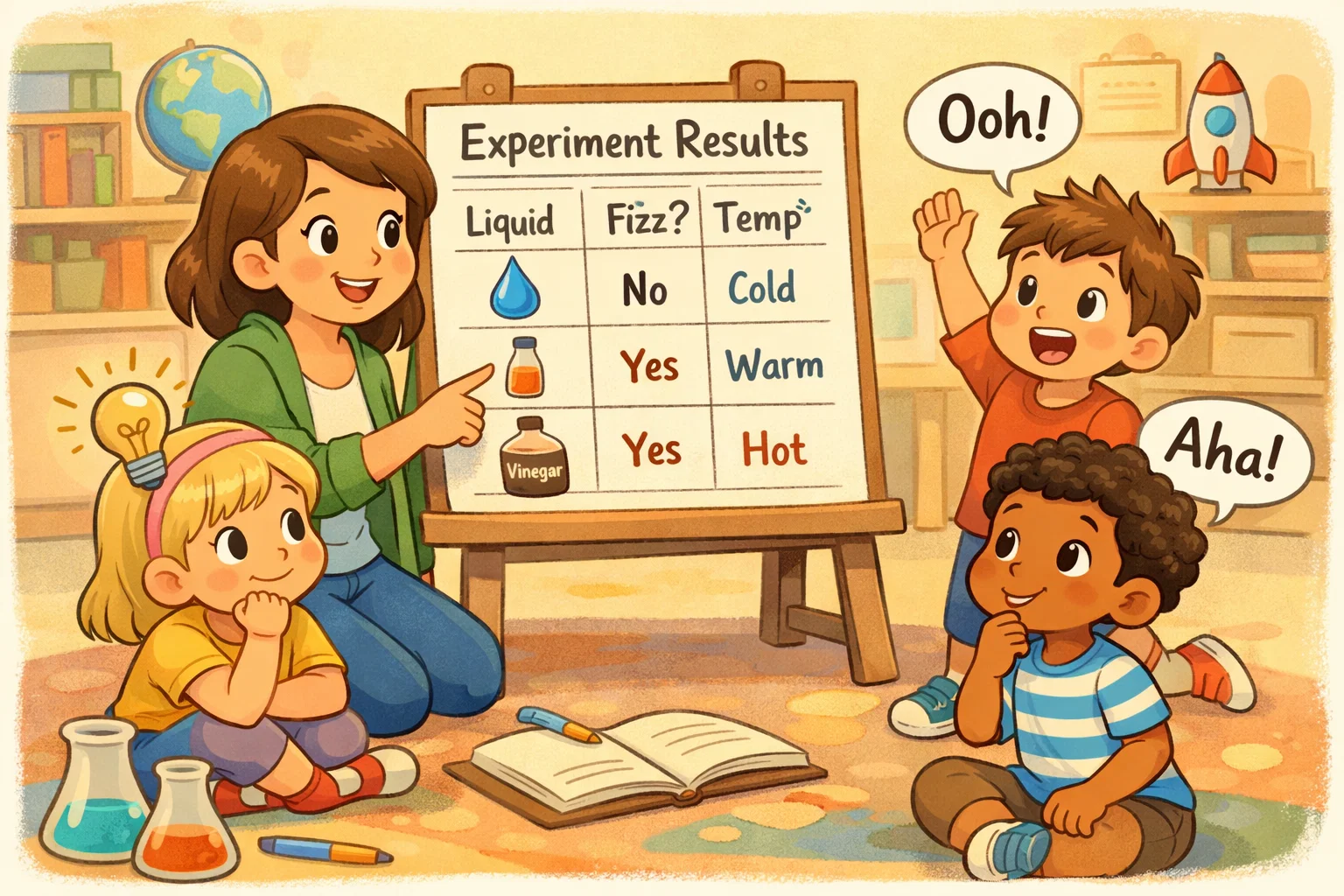
Once the “feeding frenzy” is over, sit down and discuss the “why” behind the results.
Why Some Tools Work Better Than Others
Explain that beak design isn’t random. It’s about mechanics. A pointed beak is like a needle; it can’t crush, but it can pierce. A strong beak is like a hammer; it can’t sip, but it can smash. This physical compatibility is why birds use their beaks so differently.
How Birds Adapt to Available Food
Tell the story of the Galápagos finches. Charles Darwin noticed that finches on different islands had different beaks because the islands had different plants. This is the core of natural selection using real-world examples. If an island only has hard seeds, the birds with thin beaks will go hungry, while those with strong beaks will flourish.
What Happens When Food Changes?
Challenge students with a scenario: “What if a drought killed all the flowers? Who would survive?” This helps them understand that adaptation is a double-edged sword. Specialized birds (like the hummingbird) are very efficient, but they are also very vulnerable if their specific food disappears.
Extension Activities Beyond Experiment
Don’t stop at the kitchen table! There are many ways to keep the momentum going.
Outdoor Bird Observation Activity
Take a walk in a local park. Bring binoculars and look for birds they see every day. Ask: “Based on that bird’s beak, what do you think it ate for breakfast?” Seeing a woodpecker in action after using a “tweezer” beak creates a powerful “aha!” moment.
Create Custom Beak Tools
Give kids “junk” materials – cardboard, rubber bands, tape, and plastic scraps – and ask them to “build the ultimate beak” for a specific food source. This moves them from using tools to designing them.
Draw and Label Bird Beaks
Have them draw a “fantasy bird” and its habitat. If the bird lives in a land of giant marshmallows, what would its beak type look like? This encourages creativity while reinforcing the scientific concepts they just learned.
Classroom and Home Learning Applications
Science Lessons and STEM Units
This activity fits perfectly into “Structure and Function” units in elementary science. It’s a great way to introduce bird species diversity and the basics of evolution without getting bogged down in heavy terminology.
Homeschool and Family Activities
For parents, this is a low-cost, high-impact way to spend a rainy afternoon. It requires almost no “special” equipment, making it accessible for any budget. It also keeps kids active and moving, which is great for kinetic learners.
Group Challenges and Games
Turn it into a “Survival Game.” Each child is assigned a beak type and must compete for a limited pile of mixed “food.” Those who don’t collect a certain amount of “calories” are “extinct” for the next round. It’s a bit dramatic, but kids love the high stakes!
Safety and Cleanup Tips
Whenever you mix kids, tools, and food, you need a plan!
Safe Tool Handling Rules
- Pliers and tongs can pinch small fingers. Supervise closely.
- Tweezers can be sharp; ensure kids aren’t “pecking” each other.
- Set a “no eating the specimens” rule, especially if using non-food items like beads or marbles.
Food Allergy Awareness
If you are doing this in a classroom, be mindful of nut or gluten allergies. You can easily swap popcorn kernels for beads or use plastic “worms” instead of pasta. All suggested materials should always be vetted against the group’s health needs.
Easy Cleanup Setup
Place all “feeding stations” inside large plastic trays or cookie sheets. This catches the inevitable “spills” as birds use their beaks to frantically gather food. Keep plenty of paper towels nearby for the “nectar” station!
Frequently Asked Questions About Bird Beak Experiments
Best Age for Bird Beak Adaptation Experiment?
While kids as young as 3 enjoy the tactile nature of the tools, the “sweet spot” for understanding the biological concepts is ages 7 to 11. At this age, they can grasp the connection between the tool’s shape and the bird’s survival.
How Long Activity Takes?
Set aside about 45 to 60 minutes. This allows for 15 minutes of setup/explanation, 30 minutes of “feeding rounds,” and 15 minutes of discussion and recording results on a worksheet.
Can Experiment Be Done Without Food?
Absolutely! If you want to avoid a mess, use:
- Paper clips for seeds.
- Yarn for worms.
- Cotton balls soaked in water for nectar.
- Erasers for fish.
The “Bird Beak Buffet” is more than just a game; it’s a window into the incredible logic of the natural world. By allowing children to “become” the birds they see, we foster a lifelong curiosity about how life survives in its habitat.
Take a short quiz to find out what your everyday choices say about your parenting style
When your child is curious about something new, what’s your instinct?
Take a short quiz to find out what your everyday choices say about your parenting style
“Can I download this app?” What happens next?
Take a short quiz to find out what your everyday choices say about your parenting style
When it comes to rules at home, which sounds most like you?
Take a short quiz to find out what your everyday choices say about your parenting style
If you could give your child one life skill today, what would you pick?
Take a short quiz to find out what your everyday choices say about your parenting style
Your child gets to choose what to watch. What would your ideal setup look like?
Take a short quiz to find out what your everyday choices say about your parenting style
Pick your parenting superpower ✨