Build a Bridge STEM Activity: Fun Engineering Challenge for Kids

 Discover a Free Education Video App for Kids
Pastory uses AI to personalize educational video content based on your child’s interests and personality. Safe, engaging, and built for curious young minds. Sign up now to stay updated and enjoy early access with a free trial
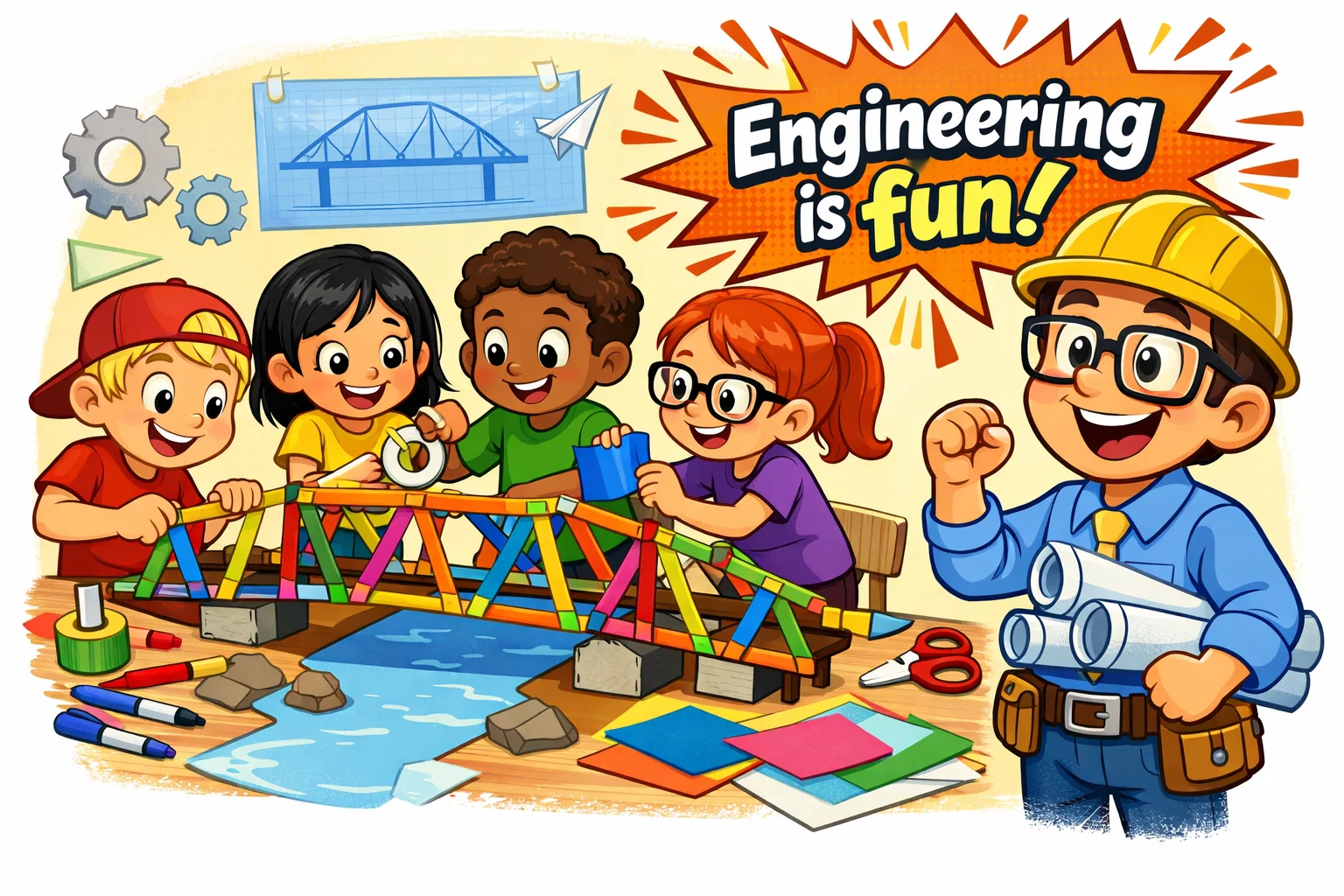
Engaging children in a bridge stem activity is one of the most effective ways to introduce complex physics concepts through play. This activity offers several key benefits:
- Fosters natural curiosity about architectural construction.
- Provides a tangible learning opportunity that outlasts textbook lessons.
- Encourages children to problem solve and think critically about structural integrity.
- Transitions kids from play into the mindset of scientists and engineers.
Whether it is a simple stem project for a rainy afternoon or a more formal engineering challenge, the process of design and construct helps students understand how the world stays standing.
Science Experiments and Bridge Design Basics

To design structures that actually hold weight, one must understand that every construction is a battle against gravity and environmental forces. In the world of professional engineering, a crossing works by distributing these forces—primarily tension and compression—to the ground. For a young child, seeing a system that supports their favorite toy car without a collapse is the first step in understanding these invisible powers.
Learn About Bridges: Stability and Structural Science
Designing a successful bridge requires selecting a typology that optimally distributes forces for a given span. In educational settings, students typically focus on four main types:
- Beam models: The simplest form, using a horizontal surface supported by piers.
- Truss designs: Systems that use triangular shapes to manage weight more effectively.
- Arch structures: Curved spans that transfer weight outward into the sides.
- Suspension systems: Long spans where the deck hangs from massive cables.
While a beam model is accessible, its efficiency is limited; the farther apart the supports, the more likely the span is to bend.
Engineering Design Process for STEM Building
The building process is rarely a straight line from start to finish. It involves a cycle of several critical stages:
- Imagining: Brainstorming potential shapes and materials.
- Planning: Drawing the design and considering the distance to cover.
- Creating: Constructing the model using craft sticks or paper.
- Testing: Applying weight to see how much the assembly can hold.
By using a triangular shapes strategy, children learn that a triangle is inherently rigid, unlike a rectangle which can easily deform into a parallelogram.
Physics of Tension and Compression in Real Bridges
Real bridges, such as the historic Brooklyn Bridge or the modern Golden Gate, rely on a delicate balance of forces:
- Compression: A pushing force that “squashes” materials together.
- Tension: A pulling force that stretches materials apart.
- Torsion: A twisting force that can cause a structure to rotate and fail.
- Shear: A sliding force that acts across the material.
In a suspension system, the massive cables are in high tension, pulling on the towers which, in turn, are under massive compression. When kids use household items like string or paper clips, they can feel these forces at work, making the abstract physics concepts much more concrete.
Bridge Building STEM Challenges by Material
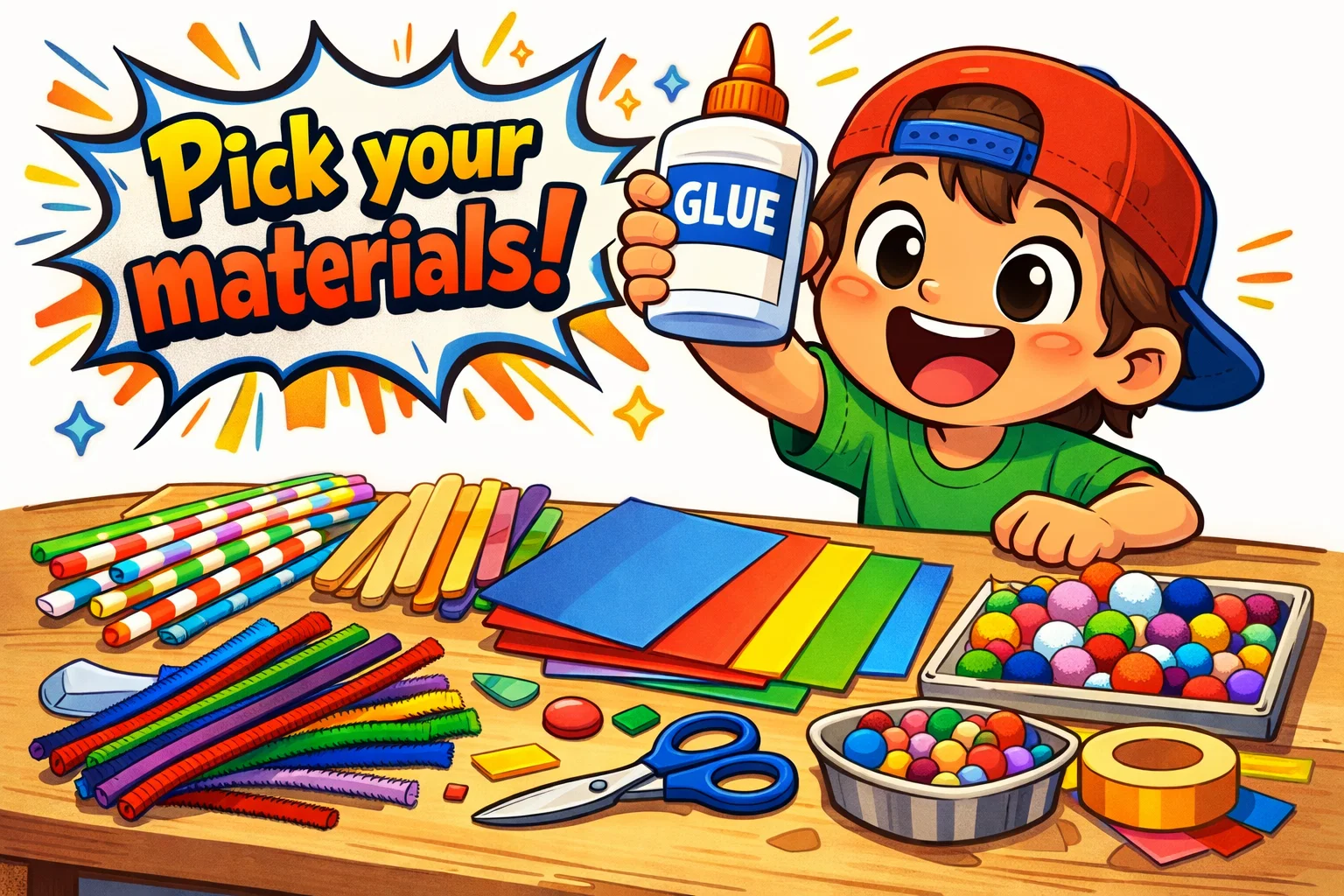
One of the best aspects of stem activities is the ability to use different materials to achieve the same goal. Depending on what you have in your pantry or craft closet, the engineering challenge can change entirely.
Popsicle Stick Bridge Building Activity
The popsicle stick bridge is a classic for a reason. Using craft sticks and glue, kids can create intricate truss designs. Because wood is an anisotropic material, its strength depends on the direction of the grain. It resists tension well when pulled parallel to the grain but can snap if the force is perpendicular. This makes the wooden project an excellent tool for teaching about material science.
Simple STEM with Paper and Index Cards
A paper bridge building task is surprisingly difficult. How can a flimsy sheet of paper hold a penny, or even a stack of them? The secret lies in how you fold the material differently. By changing the geometry, such as creating a corrugated “accordion” fold, you increase the structural depth and stiffness without adding more material to the architecture.
Straw Bridge Engineering Challenge
A straw bridge relies heavily on the strength of the joints. Since straws are hollow and flexible, they tend to buckle under compression. This challenge forces children to think about how to reinforce a structure using tape or paperclip connectors to keep the tubes from bending.
Marshmallow and Toothpick STEM Building
For younger children, using marshmallows as joints for toothpick models is a fantastic hands-on activity. It highlights the importance of the “bond area” in a joint. While the marshmallows are soft, the triangular forms they create are surprisingly stable, at least until the sugar begins to compress under the weight of the deck.
Play Dough and Cardboard Bridge Activity
Combining play dough with cardboard strips allows for the creation of an arch design. The play dough acts as the abutments, holding the curve of the cardboard in place. This demonstrates how a curved span transfers weight outward rather than just downward.
Recycled Materials and Building Blocks Construction
Using building blocks or Lego to create a system that supports heavy objects introduces the concept of interlocking strength. When kids design structures using a mix of cardboard, plastic bottles, and blocks, they learn to adapt their building process to the unique strengths of each material.
Creative Drawbridge Themes and Fun Building Ideas
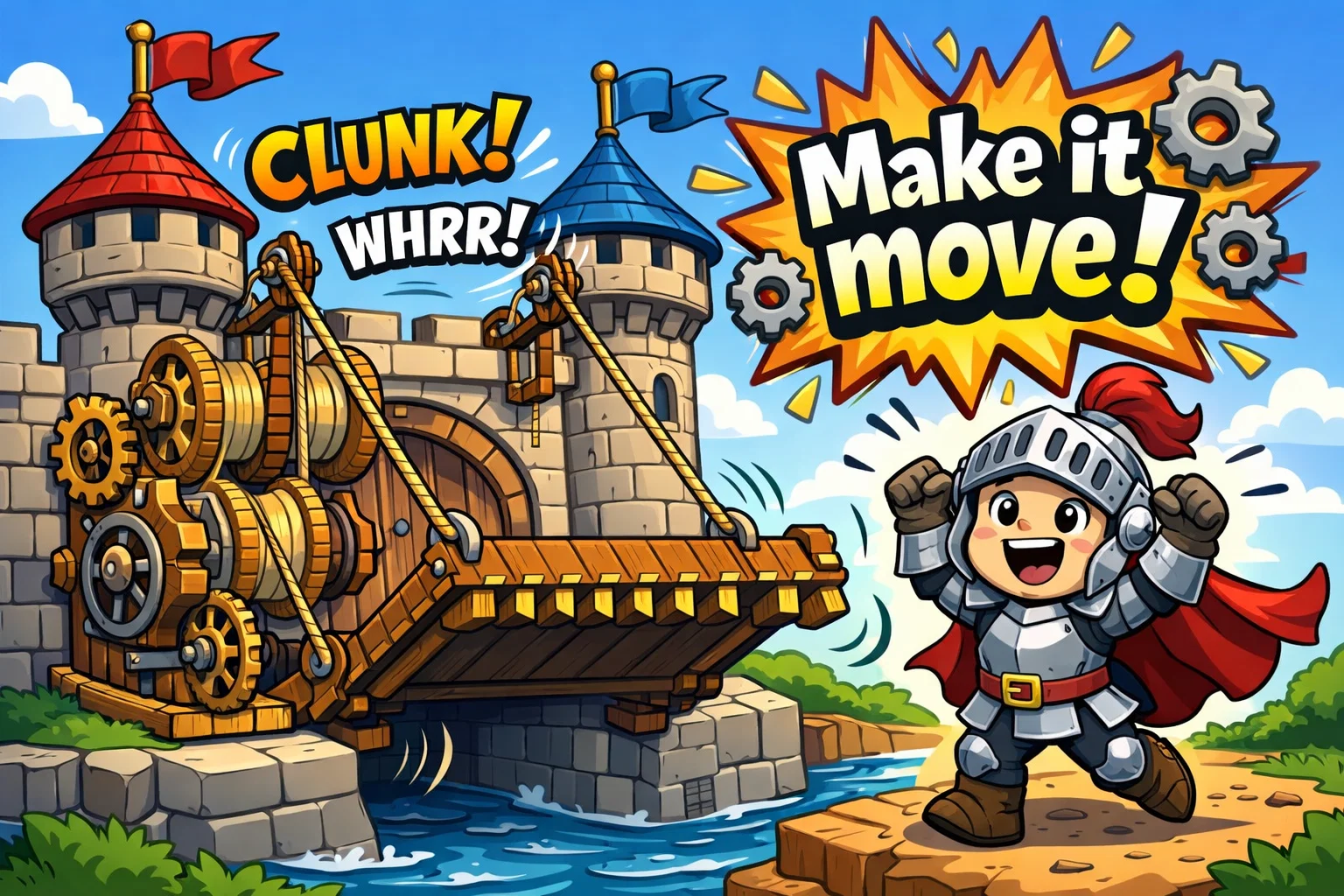
To keep kids engaged, it helps to add a narrative or a theme to the project. This transforms a simple science experiment into an imaginative play session.
Castle Drawbridge STEM Project
Building a functional drawbridge is a great way to introduce mechanical engineering. Using string and a simple pulley system (perhaps a thread spool), children can learn how a lifting mechanism can raise a roadway to let “ships” pass.
Rainbow Bridge Color Sorting Activity
For toddlers, a bridge activity can be as simple as using blue construction paper for “water” and building a crossing with multi-colored blocks. This focuses on fine motor skills and color recognition while introducing the basic idea of a span.
Acorn and Nature-Based STEM Activities
Take the learning outside! Building a crossing using sticks, stones, and mud near a small garden stream helps children see how real-world engineers must deal with uneven terrain and natural forces.
Creative Bridge Design with Building Blocks
Encourage your child to make a model that looks like a famous bridge they have seen in pictures. Whether it’s the arches of a Roman aqueduct or the steel trusses of a city landmark, building blocks are perfect for replicating these designs.
Bridge Building with Natural Elements
Active learning environments have been shown to drastically improve student outcomes. Research suggests that these hands-on projects move beyond the simple transmission of facts and allow students to actively make sense of the world around them. According to research on active learning in STEM, students in active learning environments are significantly less likely to fail compared to those in traditional lecture-based settings.
Step-by-Step Bridge STEM Challenge Guide
To run a successful challenge at home or in the classroom, follow these structured steps to ensure a high learning opportunity.
Essential Material Lists for Science Experiments
Standard materials often include:
- Popsicle sticks (birch or basswood)
- Construction paper and index cards
- Adhesives (PVA white glue or glue sticks)
- Weights (pennies, washers, or small stones)
- Tools (scissors, tape, rulers)
Design and Planning Phase for Your Bridge Activity
Before touching any glue, have the children draw their design. This is where they decide on the kind of crossing they want to build—will it be a truss, an arch, or a beam?
Construction and Assembly Directions
Remind children that a structure is only as strong as its weakest connection. Most failures occur at the joints. Encourage the use of lap joints (overlapping sticks) or gusset plates (triangular reinforcements over joints) to maximize the bond area.
Testing Load Capacity and Strength
The most exciting part is the loading phase. Place the model between two chairs or boxes. Gradually add weights, one penny at a time, to the center of the deck. It is recommended to wait a few seconds between adding weights to see how the assembly settles.
Analysis of Success and Failure in Bridge Building
Watching a structure collapse provides immediate visual data. Did the sticks snap (tension failure)? Did they bend (buckling)? Or did the glue peel (joint failure)? Analyzing these results is the core of the “learning from failure” philosophy.
Specific Paper Bridge Design Directions
Paper is a versatile medium. Here are four ways to use paper to make a project that holds weight.
| Design Type | Construction Method | Strength Factor |
| Single Strip | Flat sheet across a gap | Very Low |
| Folded Wall | Folding sides up to create a U shape | Medium |
| Accordion Fold | Multiple vertical zig-zag folds | High |
| Rolled Tube | Rolling paper into tight cylinders | Very High |
Single Strip Paper Bridge Method
This is the baseline. A flat sheet of paper will likely sag under its own weight. It demonstrates the lack of structural depth in the design.
Collapsed Oval Paper Bridge Technique
By rolling paper into an oval and taping it, you create a structure that uses the strength of the arch. This design can often hold dozens of pennies before the tube begins to flatten.
Accordion Folded High-Strength Design
Folding the paper like a fan creates vertical members that resist bending. This is essentially a series of small V shapes that act like a truss.
Freeform Innovation and Custom Bridge Design
Let the kids experiment. What happens if they combine a tube with an accordion fold? This stage of making structures is where the most creative engineering happens.
Educational Benefits of Building Bridges
The value of these stem activities goes far beyond physics. They help develop the “soft skills” that are essential for future success in any field.
Problem-Solving and Critical Thinking in STEM Activities
When an assembly fails, a child must ask “why?” and “how can I fix it?” This iterative process is the heart of critical thinking. They are learning to view a collapse not as a failure, but as data for their next model.
Resilience through Iterative STEM Challenge Testing
Engineering requires persistence. If the first structure falls, the child learns to try again. This builds emotional resilience and the confidence to tackle hard problems.
Mathematics of Measurement and Geometry
From measuring the span to calculating the structural efficiency, math is everywhere. В высокоуровневых соревнованиях эффективность рассчитывается следующим образом: Эффективность = Масса груза (г) / Масса конструкции (г). This ratio forces students to consider the strength-to-weight ratio (SWR) of their designs.
Collaboration and Team Communication Skills
Working in pairs to build a crossing requires negotiation. “Should we use more tape here?” or “Is this stick straight?” These conversations build essential communication habits.
Fine Motor Skills and Spatial Reasoning
Handling small paper clips and applying glue precisely helps develop fine motor skills. Understanding how 2D drawings become 3D objects is a core component of spatial reasoning.
Bridge Strength Testing and Durability Trials
To make the testing fair and scientific, use a standardized method. This ensures that the results are based on the architecture rather than how the weights were dropped.
Testing Static Load with Weights and Coins
A static load is a weight that stays still. Using a small bucket suspended from the assembly allows you to add sand or water gradually. This provides a very precise measurement of the capacity.
Measuring Dynamic Stress and Structural Flex
In real-world engineering, structures must handle dynamic loads, like moving cars or wind. You can simulate this by having the child gently “drive” a heavy toy truck across the crossing to see if it bounces or sways.
Evaluating Point of Collapse and Failure Analysis
Watch closely as the construction begins to fail. Does it twist? This is called torsion. Does a single joint give way? Identifying the specific point of failure helps scientists and engineers improve their next project.
Comparing Different Support Systems for Maximum Load
Test a beam structure versus a truss bridge using the same amount of material. Children will quickly see that the arrangement of the components is just as important as the material itself.
Bridge STEM Resources and Science Fair Projects

If your child is inspired, they might want to take their construction work to a science fair.
Real Bridges for Design Inspiration
Looking at famous landmarks like the Brooklyn Bridge can give kids ideas for their own designs. They can study how the trusses are arranged or how the suspension cables are anchored.
Innovative Ideas for Science Fair Projects
A great science fair project might compare how different glues—like PVA vs. cyanoacrylate—affect the strength of a popsicle stick model. Or, they could investigate how environmental factors like humidity affect the strength of a paper project.
Success Tips for Your Next STEM Challenge
To ensure the activity is both fun and safe, keep a few expert tips in mind.
Safety Protocols and Supervision Needs
Load testing can be hazardous. When a structure fails under 15 kg of sand, it can snap suddenly, sending splinters flying. Always ensure children are wearing impact-rated safety goggles (ANSI Z87.1) and maintain a clear exclusion zone around the testing area.
Encouraging Experimentation and Iteration
Avoid telling the child the “right” way to build. Let them discover that a flat sheet of paper is weak. The discovery is more valuable than the final product.
Setting Realistic Expectations for Project Outcomes
Not every model will be the strongest bridge. Some will collapse immediately. Emphasize that the goal is the learning process, not just a high weight count.
Creating Stimulating Learning Environments
Provide a wide variety of household items and a clear workspace. A stimulating environment encourages children to stay focused and engaged for longer periods.
FAQ
How Much Weight Can a Typical Paper Bridge Hold?
Depending on the design, a crossing made from a single sheet of paper can hold anywhere from 50 grams to over 2 kilograms if folded into high-strength tubes or accordion shapes.
Which Household Glue Works Best for Wooden STEM Models?
White PVA glue (like Elmer’s) is generally the best for wood because it seeps into the fibers, creating a very strong bond, though it requires a 24-hour cure time for maximum strength.
Why Did My Bridge Collapse During the Weight Test?
Most structures collapse due to buckling (where thin parts bend) or joint failure (where the glue peels off). Analyzing the collapse helps you identify if the failure was due to weak connections or material defects.
What Is the Difference Between Beam and Arch Bridges for Kids?
A beam bridge is a flat surface that pushes straight down on its supports. An arch design is curved and pushes the weight outward into the sides, which often allows the structure to hold much more weight.
Can You Build a Functional Bridge Without Using Tape or Glue?
Yes! You can use interlocking designs or friction-based methods, like a Leonardo da Vinci bridge, which uses the weight of the sticks themselves to lock the system together.

Take a short quiz to find out what your everyday choices say about your parenting style
When your child is curious about something new, what’s your instinct?
Take a short quiz to find out what your everyday choices say about your parenting style
“Can I download this app?” What happens next?
Take a short quiz to find out what your everyday choices say about your parenting style
When it comes to rules at home, which sounds most like you?
Take a short quiz to find out what your everyday choices say about your parenting style
If you could give your child one life skill today, what would you pick?
Take a short quiz to find out what your everyday choices say about your parenting style
Your child gets to choose what to watch. What would your ideal setup look like?
Take a short quiz to find out what your everyday choices say about your parenting style
Pick your parenting superpower ✨