Easy inertia experiments for kids to learn the first law of motion

 Discover a Free Education Video App for Kids
Pastory uses AI to personalize educational video content based on your child’s interests and personality. Safe, engaging, and built for curious young minds. Sign up now to stay updated and enjoy early access with a free trial
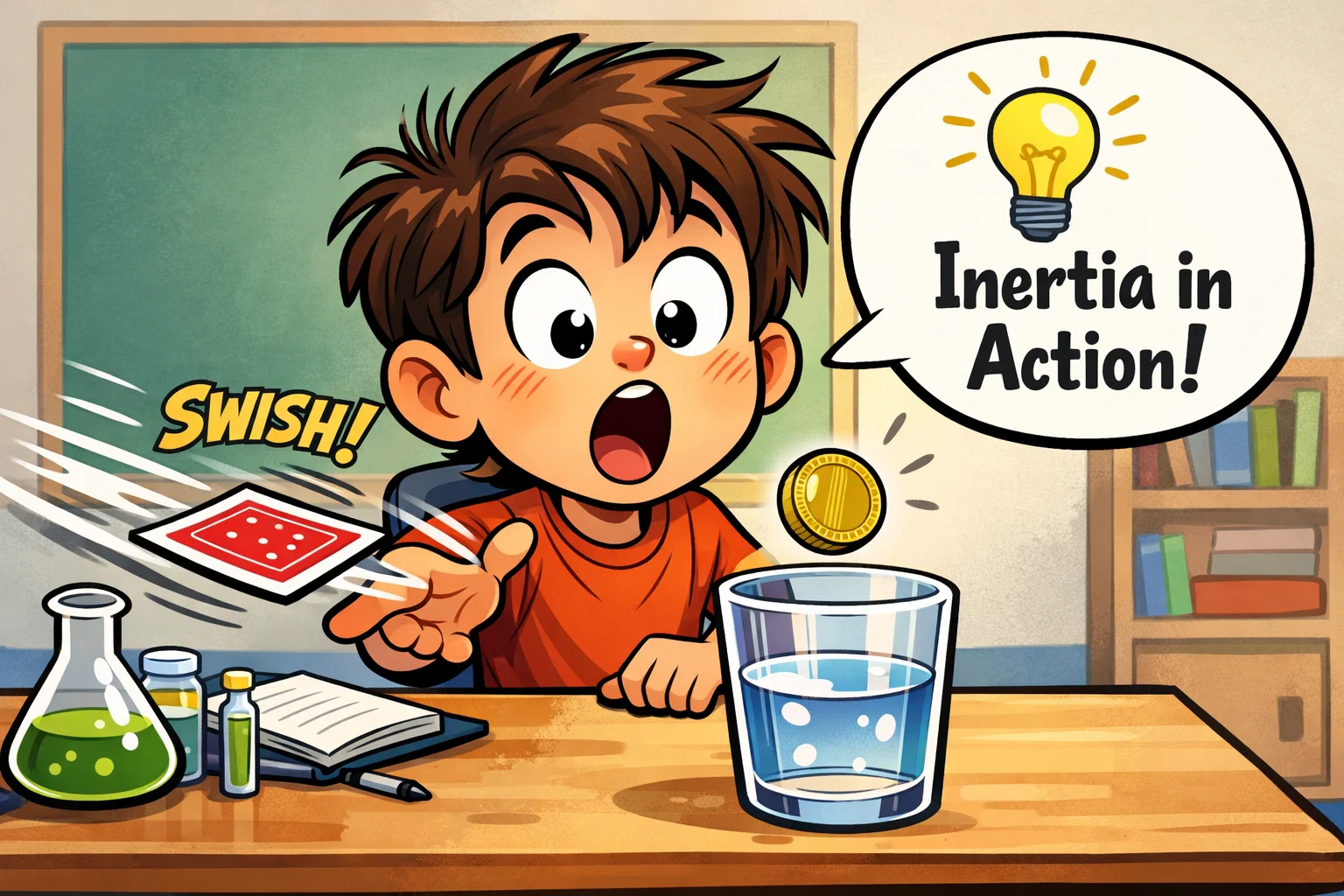
The magic of science often hides in plain sight, using nothing more than household items to challenge our perceptions of the physical world. For parents and educators, the inertia coin card trick is a classic demonstration that rarely fails to spark curiosity in children. By flicking a simple card out from under a coin, you are not just performing a trick; you are demonstrating the fundamental rules that govern every moving object in the universe. This activity introduces kids to the concept of an object at rest and how it reacts to an outside force, providing a tactile way to explore physics.
Teaching science to children requires a blend of entertainment and solid factual grounding. This specific approach helps bridge the gap between abstract theory and reality:
- It utilizes a “discrepant event” to challenge existing student beliefs.
- It encourages young learners to question their physical intuition.
- It provides a perfect opening for discussing Newton’s First Law of Motion.
- It connects simple mechanics to complex phenomena like vehicle safety.
Throughout this guide, the focus remains on how simple mechanics can explain complex phenomena, from the safety features in modern vehicles to the movement of planets.
Required Materials

Before starting the experiment, gathering the right components is essential for a successful result. The interaction between these objects determines whether the coin drops into the glass or flies across the room with the card.
Coin Selection Tips
For this activity, mass plays a significant role. Heavier items, such as a US Quarter or a stack of pennies, are generally preferred because they have more matter. Several factors make heavy coins the ideal choice:
- Increased mass translates to higher resistance to change in motion.
- Higher mass-to-volume ratios reduce the impact of air resistance.
- Heavier objects are less affected by minor surface vibrations.
- Distinct edges help children visualize the center of gravity.
While a single penny works, the higher mass-to-volume ratio of a quarter makes it less susceptible to air resistance and minor vibrations during the flick. Selecting a metal piece with distinct edges also helps children visualize the center of gravity more effectively during the setup process.
Cardboard vs Playing Cards
The surface of the card is the interface where friction happens. A standard playing card, particularly one with a plastic coating or lamination, is the ideal choice. These have a low coefficient of friction, allowing them to slide away with minimal grip on the coin. Thick cardboard can work, but it often has a rougher texture that might grab the object, pulling it along instead of letting it drop. The stiffness of the card also matters; it must be rigid enough to transfer the force of your finger without bending excessively.
Glass Tumbler Specifications
The vessel used to catch the coin should be stable and have a suitable opening. A wide-mouthed plastic cup is often the safest and most effective option for younger children.
- The wider mouth provides a larger target area.
- It accounts for the minor horizontal displacement of the coin.
- Plastic material prevents breakage during practice sessions.
- Transparent walls allow for better observation of the fall.
- A weighted base prevents the cup from tipping during the flick.
Step-by-Step Procedure

Success in this experiment depends on the precision of the setup and the speed of the hand. Following a specific sequence ensures that the variables are controlled.
Initial Setup Layout
Place the cup on a flat, stable surface like a kitchen table. Lay the playing card flat across the top of the cup, ensuring it is centered. Finally, place it directly in the center of the card, positioned right over the middle of the cup’s opening. This alignment ensures that the downward path of the coin is clear of the cup’s edges. Take a moment to ensure there are no drafts or vibrations that might prematurely disturb the balance.
Finger Flick Technique
The flick is the most important part of the motion. Instead of pushing or pulling the card, use a sharp, snapping motion with your finger. Imagine you are trying to hit the edge of the card as fast as possible. The goal is to apply a horizontal force that removes it before the coin has time to move with it. Educators often suggest practicing the motion in the air several times before making contact with the actual setup.
Perfecting Quick Lateral Motion
The direction of the force must be strictly horizontal. If you flick slightly upward, you will lift the coin, causing it to tumble. If you flick downward, you might pin the card against the rim, causing a failure.
- Align your flicking finger level with the card edge.
- Focus on a quick, snapping movement from the wrist.
- Avoid any upward lift during the strike.
- Ensure your follow-through remains level with the table surface.
- Keep your other hand away from the cup to avoid accidental bumps.
Troubleshooting Common Mistakes
It is common for the first few attempts to result in the coin flying away. Analyzing these failed data points is a great way to deepen a child’s grasp of the variables involved.
Preventing Card Friction Issues
If the coin consistently travels with the card, the friction between the two surfaces is likely too high. This can happen if the card is dirty, sticky, or too rough. Switching to a fresh card or ensuring the coin is clean can reduce this interaction. Additionally, increasing the speed of the flick reduces the time the surfaces are in contact, which is a critical factor in the physics of motion.
Correcting Coin Misalignment
If it hits the rim of the glass instead of falling inside, it was likely not centered at the start. Even a perfect flick causes a tiny bit of forward movement. By centering the coin carefully or using a cup with a wider diameter, you provide a better margin for error. Observation suggests that placing it slightly toward the back of the card (away from the flick) sometimes helps counteract the forward momentum.
Achieving Successive Hits
Consistency comes from muscle memory. Encourage kids to keep their hand level and focus on a sharp impact. If they are struggling, try using a heavier object like a stack of pennies to increase the inertia, making it even harder for the card to move the object. Repetition is key to mastering the specific mechanics required for a clean drop every time.
Core Science Concepts
To explain why the coin stays behind, one must look at the laws of physics. The success of the experiment relies on the principle that static friction requires time to convert a horizontal pull into momentum. Scientific research into tribology (the study of friction) shows that the transition from static to kinetic friction is not instantaneous. You can find detailed technical papers on these frictional thresholds in the Physical Review Journals database.
| Variable | Description | Physical Impact |
| Mass (m) | The amount of matter in the coin. | Determines both the inertia and the friction. |
| Friction (mu) | Interaction between card and coin. | High friction increases horizontal force. |
| Impulse (J) | Product of force and time. | Low impulse keeps the coin stationary. |
| Gravity (g) | Constant downward acceleration. | Pulls the coin into the cup once the card is gone. |
| Velocity (v) | The speed of the card removal. | Inversely proportional to contact time. |
Newton’s First Law Application
The coin-card experiment serves as a primary vehicle for introducing Newton’s First Law of Motion. This law posits that an object at rest will remain at rest, and an object in motion will maintain its velocity unless compelled to change that state by an external, unbalanced force. In this case, the coin is the object at rest. While your hand applies a force to the card, the inertia — its inherent resistance to change — keeps it in place for that split second.
The demonstration relies on the manipulation of specific force vectors to achieve success:
- Static Equilibrium: Gravity is initially balanced by the upward normal force of the card.
- Unbalanced Force: A rapid horizontal force is applied solely to the card.
- Impulse Management: Minimize contact time (delta t) to reduce horizontal momentum transfer.
- Friction Limitation: The low coefficient of friction between surfaces prevents the coin from accelerating with the card.
To understand the outcome, one must analyze the Impulse-Momentum Theorem: J = Fnet multiplied by delta t = delta p. By flicking the card quickly, the duration of contact (delta t) becomes exceptionally small, resulting in a minimal change in the coin’s momentum.
Mass and Resistance Factors
Inertia is not a force itself but a property of mass. Therefore, an object with greater mass possesses greater inertia, making it more difficult to accelerate. This is why a heavy quarter is easier to use than a light piece of paper. The more mass an object has, the more it wants to stay exactly where it is. Contemporary research suggests that inertia is a unified property; the state of rest is merely motion with zero velocity in a specific reference frame.
Expert educators argue that the value of this experiment extends beyond mere observation; it acts as a “discrepant event”—a phenomenon that contradicts a student’s prior beliefs, sparking critical inquiry. A large-scale study involving over 21,000 students in 93 urban high schools found that those utilizing interactive STEM simulations (Gizmos) were 1.3 times more likely to meet or exceed proficiency standards on the California Science Test (CAST) compared to low-usage groups. You can find more details on interactive learning in the ESSA Tier 3 research summaries.
Inertia Coin Tower Variation
Once the single coin trick is mastered, you can increase the difficulty with a tower challenge. This variation introduces concepts of friction and movement in a more complex system.
Stacked Coin Challenge
Stack five to ten pennies in a neat column on a smooth table. The goal is to remove the bottom coin without toppling the rest of the stack. This requires even more precision than the card trick because you are dealing with the friction between multiple metal surfaces. It effectively demonstrates that the inertia of the entire stack is cumulative.
Butter Knife Strike Method
Instead of using your finger, use the flat side of a butter knife for a more consistent impact.
- Hold the knife level with the table surface.
- Align the blade with the bottom-most penny.
- Strike the bottom coin with a very fast, horizontal motion.
- Ensure you do not hit the coins above the target.
- Watch as the stack drops vertically by one position.
Friction vs Inertia Balance
This variation highlights the battle between friction and inertia. The friction between the bottom coin and the one above it tries to pull the whole stack sideways. However, the inertia of the heavy stack resists this sideways pull. The faster the strike, the less time friction has to act on the upper coins. Experts from the NSTA suggest that educators should treat failed attempts as data points for analyzing variables rather than as simple failures.
Experiment Extensions
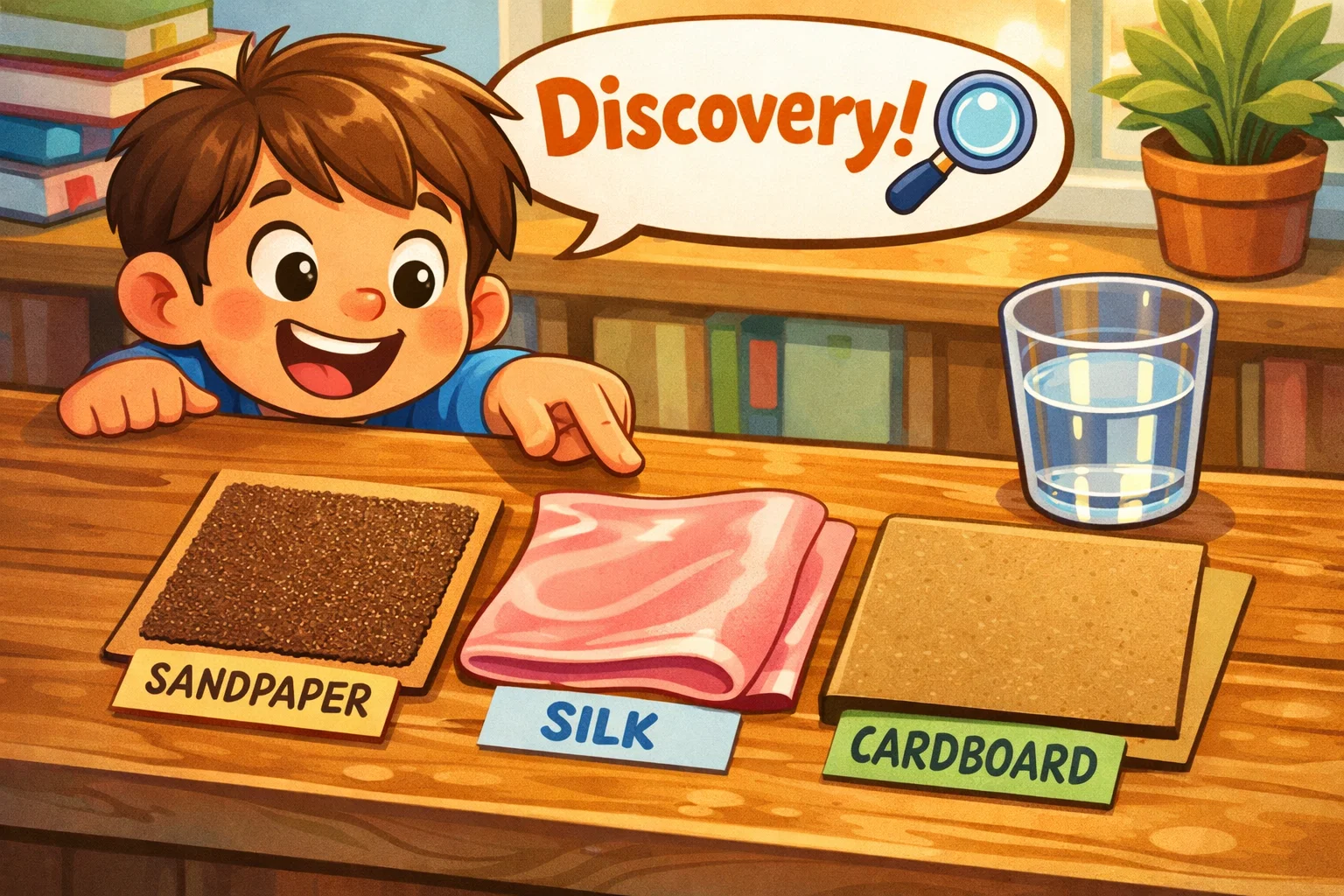
To turn this into a true scientific investigation, children can manipulate different variables and record the results. This transitions them from passive observers to active investigators.
Multiple Coin Stacks
What happens if you stack three quarters on the card instead of one? Does the increased mass make the trick easier or harder? Usually, more mass makes the trick more stable because the combined inertia is much higher, resisting the frictional pull of the card more effectively. This allows students to use the Engineering Design Process to optimize their setup.
Surface Texture Comparisons
Try using different materials instead of a playing card to see how the coefficient of friction affects the outcome.
- Sandpaper (high friction, likely to move the coin).
- Paper towel (rough texture, moderate resistance).
- Silk or satin (very low friction, smooth exit).
- Laminated (optimal balance for success).
- Index (uncoated, slightly more friction than playing cards).
Variable Speed Trials
Try pulling the card as slowly as possible. The coin will move perfectly with the card because the contact time is large enough for friction to accelerate the coin. Gradually increase the speed of the pull until the coin finally drops into the cup. This helps demonstrate that the laws of physics govern daily safety, similar to how seatbelts function in vehicles.
Safety Guidelines
While this experiment is generally safe, practicing a Duty of Care is important when working with kids and small objects.
Glassware Handling Precautions
If using real glass tumblers, ensure they are sturdy. Avoid thin-walled glasses that might break if struck by a finger or a stray coin. Using plastic vessels is highly recommended for younger children to prevent any risk of shattering. Always conduct a hazard analysis before the demonstration to check for sharp edges on cards.
Safe Workspace Setup
Ensure the area is clear of breakable items. The card can act as a projectile when flicked at high speeds. It is also vital to follow safety protocols regarding small parts.
- Keep coins away from children under three years old.
- Ensure the path of the flicked card is clear of other students.
- Use safety goggles if practicing high-velocity strikes.
- Never use button or coin-cell batteries in this experiment.
- Check for latex allergies if using rubber bands in related activities.
Reese’s Law (2022) highlights that coin-cell batteries can burn through a child’s esophagus in as little as two hours if swallowed. Therefore, real currency is acceptable for school-aged children, but electronic batteries must never be used. For more information on child safety, consult the CPSC Small Parts Regulation.
Frequently Asked Questions
Why does coin stay still while card moves?
The coin has inertia, which is a resistance to changing its current state of rest. Because the card is flicked very quickly, the friction between the card and the coin doesn’t have enough time to transfer significant energy to the coin. The impulse is too low to overcome the object’s mass.
Does weight of coin change results?
Yes, mass directly affects inertia. A heavier coin has more resistance to being moved horizontally, but it also presses down harder on the card, increasing the normal force and friction. Usually, a medium-weight like a quarter provides the best balance for beginners.
What happens if you pull card slowly?
If it is pulled slowly, the contact time is long enough for friction to accelerate the coin to the same velocity.
Can this trick work with plastic cups?
Absolutely. Plastic cups are actually preferred for safety. Just ensure the cup is heavy enough or weighted with a little water so it doesn’t tip over when it flicked. A wide-mouthed plastic cup also provides a larger target area.
Why is horizontal force essential for success?
Gravity works vertically. If you apply force at an upward or downward angle, you introduce new vectors that can cause the coin to bounce off the rim or the card to get stuck.
Take a short quiz to find out what your everyday choices say about your parenting style
When your child is curious about something new, what’s your instinct?
Take a short quiz to find out what your everyday choices say about your parenting style
“Can I download this app?” What happens next?
Take a short quiz to find out what your everyday choices say about your parenting style
When it comes to rules at home, which sounds most like you?
Take a short quiz to find out what your everyday choices say about your parenting style
If you could give your child one life skill today, what would you pick?
Take a short quiz to find out what your everyday choices say about your parenting style
Your child gets to choose what to watch. What would your ideal setup look like?
Take a short quiz to find out what your everyday choices say about your parenting style
Pick your parenting superpower ✨