Gravity Experiments for Kids at Home

 Discover a Free Education Video App for Kids
Pastory uses AI to personalize educational video content based on your child’s interests and personality. Safe, engaging, and built for curious young minds. Sign up now to stay updated and enjoy early access with a free trial
Defining Gravity
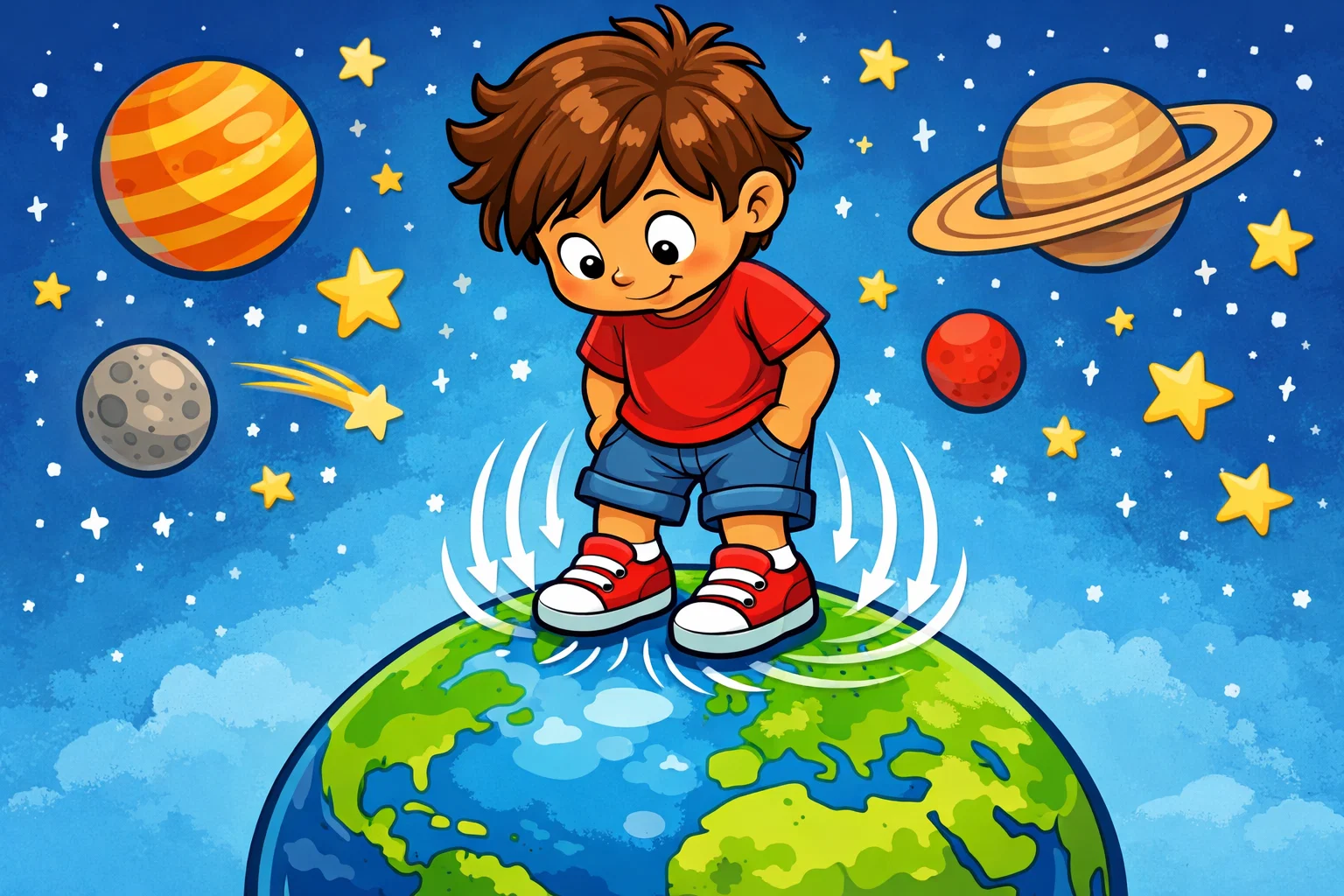
Gravity is the invisible force that keeps our feet on the ground and the planets in their orbits. To kids, it often seems like magic, but this pull follows very specific rules of mass and motion.
Newton and Apple
The story of Isaac Newton and the falling apple is the most famous introduction to this force. Newton realized that the same power pulling an apple to the Earth also keeps the moon circling our planet. This realization shifted how humans viewed the universe, moving from mystery to measurable science. Newton’s Law of Universal Gravitation establishes that this attraction is an attractive force acting between all particles with mass.
Force of Attraction Explained
The “Universal” aspect of gravity signifies that the same laws governing an object falling on a table also govern planetary orbits. For domestic experiments, the key concept is the “Inverse Square Law,” which dictates that doubling the distance between two objects reduces their gravitational pull to one-fourth of its original strength. Modern physics also incorporates Einstein’s view of this cosmic tether as a curvature in the fabric of spacetime, where massive objects create “wells” that pull smaller objects toward them.
Mass and Weight Differences
It is important to distinguish between mass and weight. Mass refers to the amount of matter in an object, which remains constant anywhere in the universe. Weight, however, is a measurement of the force pulling on that mass. On the moon, mass is the same as on Earth, but weights would be much lower because the moon has less pull.
Gravity in Space vs Earth
In space, astronauts experience weightlessness not because gravity is absent, but because they are in a constant state of freefall while orbiting the Earth. On Earth, we have a stable terrestrial acceleration of approximately 9.81 m/s^2, which provides the consistent downward sensation felt every day. This downward attraction maintains the atmosphere and oceanic tides, making life on our planet possible.
Galileo and Gravity Concepts
Before Newton, Galileo Galilei challenged the ancient idea that heavier objects fall faster than lighter ones. His work laid the groundwork for modern experimental physics and the study of falling objects.
Famous Leaning Tower Experiment
Galileo reportedly dropped two spheres of different masses from the Leaning Tower of Pisa. Contrary to the popular belief of the time, they hit the ground at the same moment. This proved that the acceleration of falling objects is independent of their mass, provided there is no other force like air resistance acting on them.
Heavy vs Light Objects
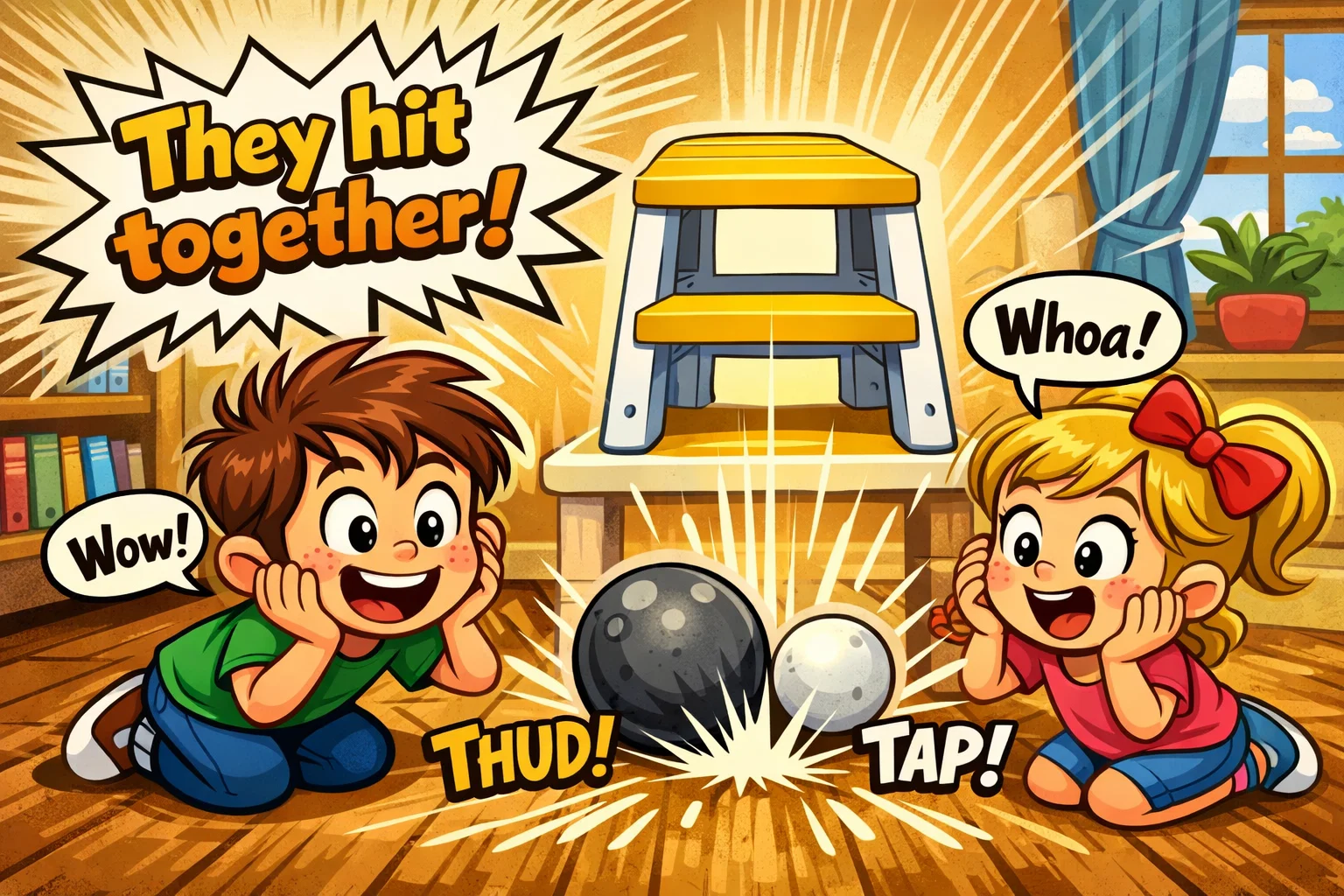
When conducting gravity experiments for kids, the results can be surprising. If you drop a heavy ball and a light ball at the same time, they hit the floor together. This suggests that the pull of the Earth acts on all objects with the same acceleration, regardless of how much they weigh.
Air Resistance Factors
A critical “fail point” often observed in home experiments is the misinterpretation of air resistance as a lack of gravitational consistency. In a ball drop experiment, many parents and children observe a feather or a flat sheet of paper falling slower than a ball. This leads to the incorrect assumption that heavier objects fall faster. In reality, this is an observation of “drag” or air resistance rather than a change in the force of the planet itself.
Acceleration of Falling Bodies
All objects near the Earth’s surface accelerate downward at the same rate. This means their velocity increases by about 9.8 meters per second every second they are falling. For older kids, this can be expressed as v = gt, where v is velocity, g represents acceleration, and t is time.
Simple Bottle Drop Experiment
This is one of the most accessible gravity experiments for any household. It requires minimal setup but provides immediate visual proof of physics in action.
Necessary Supplies
To begin, you will need:
- Two identical plastic bottles.
- Water or sand to fill one bottle.
- A stable elevated platform (safety stool).
- A clear, uncluttered floor space.
Step by Step Instructions
- Fill one bottle completely with water or sand and leave the other empty.
- Stand on the stable platform and hold both bottles at the exact same height.
- Ask the child to predict which one will hit the ground first.
- Release both objects at exactly the same time.
- Observe the impact.
Expected Scientific Results
Despite one bottle being much heavier, both should hit the ground simultaneously. This hands-on demonstration reinforces the idea that the acceleration due to the Earth’s pull is constant for all objects.
Parent Tips for Success
Ensure the work area is free of clutter and provide “safety zones” for younger siblings. The excitement of watching an impact can lead to accidental collisions if one child leans in while another is dropping an object. Recent longitudinal data from 2024 emphasizes the profound impact of active, hands-on learning on student retention. A study by Engageli (2024) revealed that active learning sessions resulted in 54% higher test scores compared to traditional, passive lecture formats.
Center of Gravity Activities
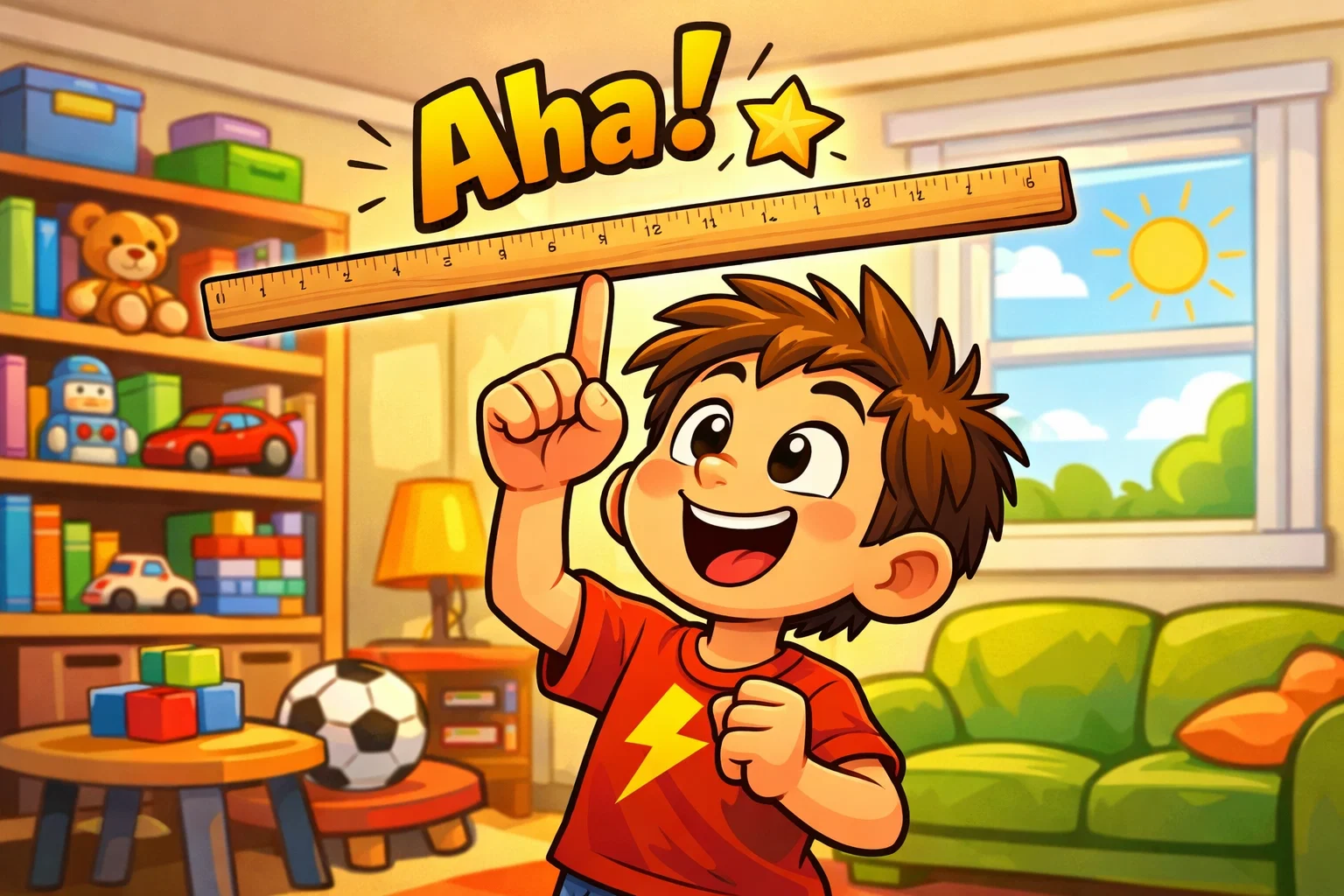
Finding the point where an object balances is a fundamental part of understanding physics and stability.
Balancing Act Challenges
Try balancing a ruler on one finger. The point where it stays level is the center of mass. You can expand this by trying to balance irregular objects like a spoon or a toy.
DIY Balance Scales
Build a simple scale using a clothes hanger, some string, and two paper cups. This allows kids to compare weights and see how the Earth’s force pulls more on objects with higher mass.
Finding Equilibrium Point
Every object has a balance point. If the center of gravity is supported, the object remains stable. If this point moves outside the base of support, the object will tip over and fall.
Gravity-Defying Postures
Have your child stand with their heels and back against a wall and try to lean forward to touch their toes without moving their feet. They will find it impossible because their center of mass shifts forward, and without the ability to move their feet, they would fall.
Parachute Design Projects
Parachutes are the perfect way to study the relationship between the force of gravity and air resistance.
Air Drag Mechanics
As a parachute falls, it catches air. This creates an upward force called drag that opposes the downward pull of the Earth. This slows the acceleration, allowing for a soft landing.
Best Materials for Slow Descent
Experiment with different materials such as plastic bags, tissue paper, or light fabric. You will find that lightweight, non-porous materials often provide the best resistance to the downward pull.
Egg Drop Challenge Integration
A classic scientist challenge involves building a protective structure or a parachute for a raw egg. The goal is to use physics to reduce the force of impact so the egg remains intact.
Testing Different Surface Areas
Compare a small parachute to a large one using the same weight. You will observe that the larger surface area catches more air, slowing the descent significantly compared to the smaller version.
Marble Run and Pipeline Building
Building a marble run is a fantastic way to see how potential energy converts into motion through the pull of gravity.
Pool Noodle Marble Run
Slice pool noodles in half lengthwise to create tracks. Tape them to a wall or furniture at different heights to create a sprawling race track powered by the Earth’s pull.
Slopes and Potential Energy
The higher you start the marble, the more potential energy it has. As it rolls down the slope, the downward force pulls it faster, converting that energy into kinetic motion.
Speed Comparison Tests
Change the angle of the tracks. A steeper track will result in a faster marble because the component of the weight acting along the track is stronger.
Friction vs Gravity
Experiment with different track surfaces. A smooth track allows the marble to move faster, while a rougher surface creates friction that opposes the motion caused by the downward attraction.
Rocket Science at Home
Rockets are essentially a battle between thrust and the weight of the vehicle being pulled down by Earth.
Film Canister Rocket Launch
Using antacid tablets and water in a film canister creates gas pressure. When the pressure builds high enough, it overcomes the force of attraction and launches the canister into the air.
Balloon Rocket Propulsion
String a piece of yarn across a room and thread a straw onto it. Tape an inflated balloon to the straw and let it go. The air escaping the balloon provides the thrust needed to move the rocket along the line.
Straw Rocket Aerodynamics
Build small rockets out of paper and blow through a straw to launch them. This teaches kids about how shape and weight affect how high or far an object can travel against the Earth’s pull.
Thrust vs Gravitational Pull
To leave the ground, an object must produce an upward force greater than its own weight. This simple balance is the foundation of all aerospace engineering.
Gravity-Powered Art Projects
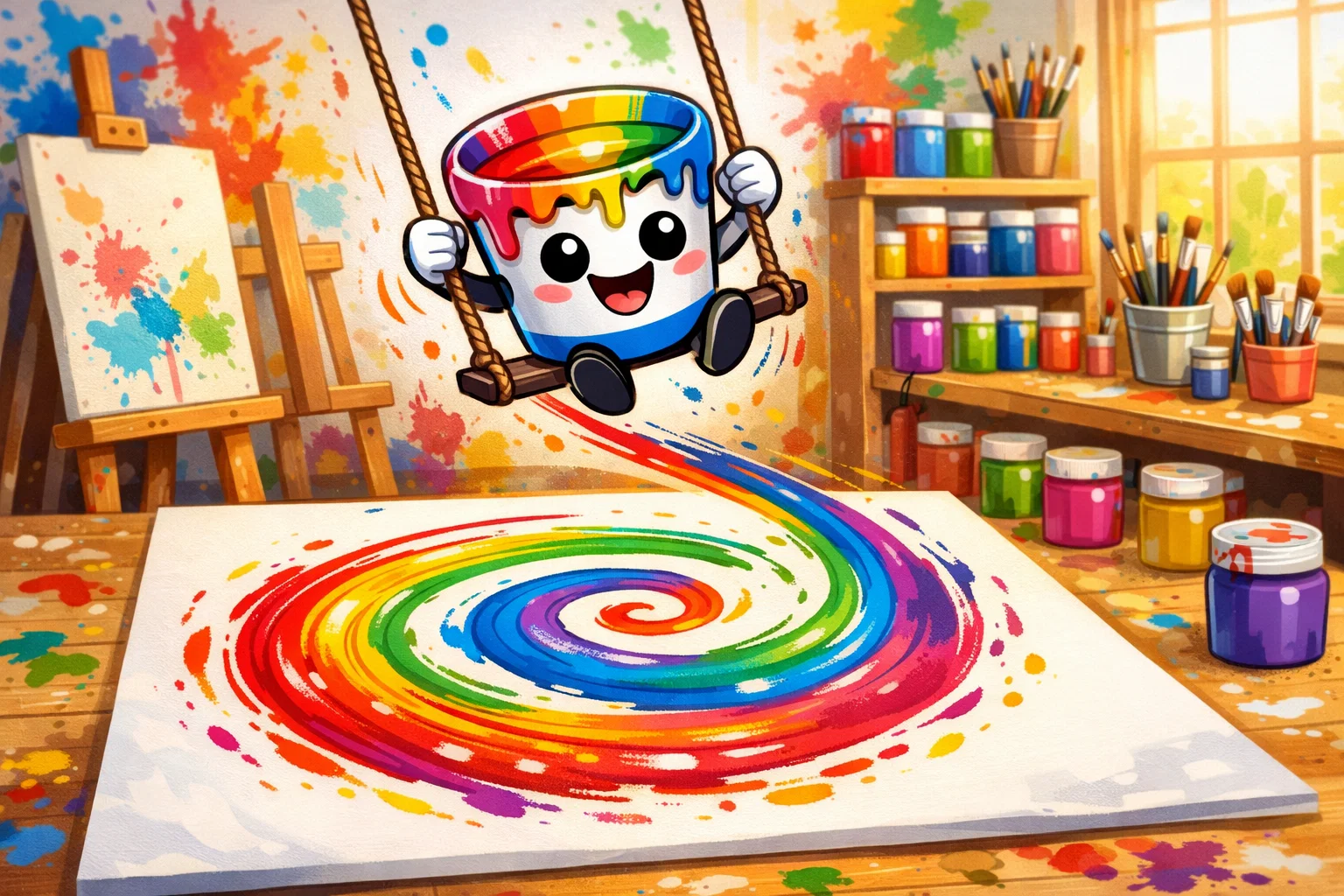
Science and art collide when you use the Earth’s pull to create beautiful patterns.
Pendulum Painting Techniques
Hang a cup with a small hole in the bottom from a string. Fill it with thinned paint and let it swing over a piece of paper. The pendulum motion created by the downward force generates intricate geometric shapes.
Drip Art Physics
Hold a paintbrush soaked in paint high above a canvas and let the drops fall. The height of the drop changes the size and shape of the splatter on impact.
Mixing Gravity and Motion
As the pendulum swings, the force of attraction pulls it back toward the center. This constant pulling and the momentum of the swing create a predictable path that results in symmetric art.
Creative Pattern Generation
By changing the length of the string or the weight of the cup, you can alter the patterns created by the pendulum, demonstrating how physical variables change outcomes.
Water and Gravity Experiments
Water behaves in unique ways when subjected to gravitational forces, especially when combined with air pressure.
Gravity Water Cup Drop
Poke a hole in the bottom of a plastic cup and fill it with water while covering the hole. When you drop the cup, the water stops leaking out of the hole during the fall because both the cup and water are accelerating at the same rate.
Water Moving Upward Phenomenon
While the Earth’s pull usually moves water down, capillary action can pull it up through a paper towel. This experiment shows how other forces can sometimes overcome the downward motion.
Building Backyard Water Wheel
Construct a simple wheel that spins when water is poured over it. The weight of the falling liquid provides the energy needed to do work, illustrating how the Earth’s pull can be harnessed for power.
Fluid Dynamics Basics
Water always seeks the lowest point due to gravity. This is why rivers flow to the sea and why levels in connected containers will always equalize.
Anti-Gravity and Magnetism
Sometimes, other forces like magnetism can make it look like we are defying the laws of physics.
Defying Gravity with Magnets
Use strong magnets to suspend a paperclip in mid-air. The magnetic force pulls up while the Earth’s pull acts down. If the forces are balanced, the paperclip stays floating.
Galaxy in Bottle Visuals
Fill a bottle with water, glitter, and oil. The different densities of the liquids and the way the glitter settles demonstrate how the force pulls more on denser materials.
Floating Paperclip Trick
By carefully placing a paperclip on the surface of water, you can use surface tension to keep it afloat, even though the metal is denser than water.
Magnetic Force vs Earthly Pull
Magnets can be much stronger than gravity over short distances. This experiment shows how the “Inverse Square Law” applies to magnetic forces as well as planetary ones.
Everyday Examples of Gravity
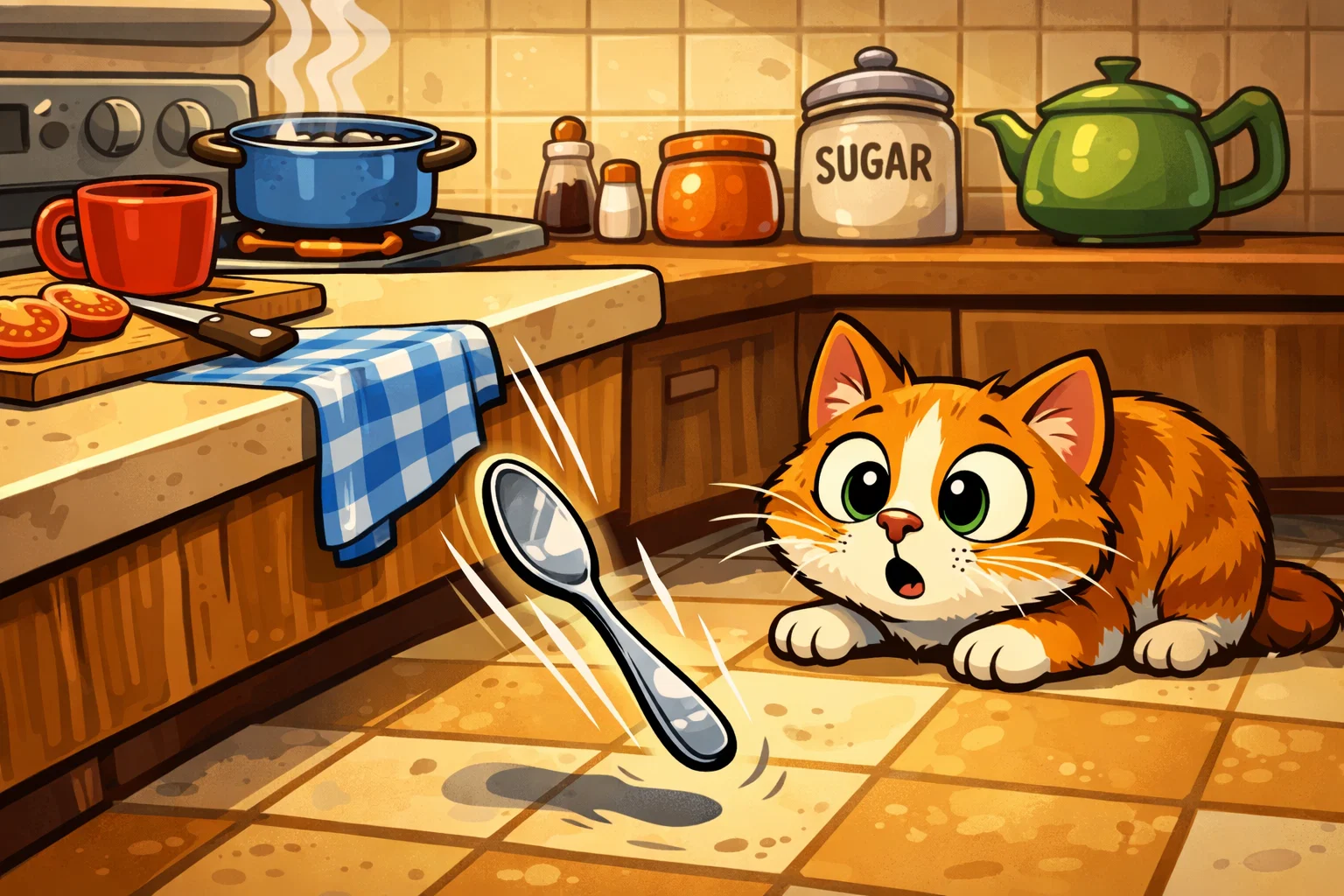
Gravity is not just for the lab; it is happening around us every second of the day.
Walking and Running Stability
When we walk, we are constantly managing our center of mass. We lean forward and use our legs to catch ourselves, essentially using the Earth’s pull to move forward.
Objects Falling in Kitchen
Whether it is a dropped spoon or water pouring from a tap, the kitchen is a constant display of physics. Everything falls toward the center of the Earth.
Planetary Orbits
The same force that drops a spoon keeps the planets revolving around the sun. The sun’s massive mass creates a gravitational well that keeps the entire solar system in motion.
Tides and Lunar Influence
The moon’s gravity pulls on the Earth’s oceans, causing the tides to rise and fall twice a day. This is a massive-scale demonstration of the force of attraction between planets and moons.
Technical Parameters for Experiments
To conduct these activities effectively, it helps to understand the underlying numbers that scientists use to describe the world.
| Parameter | Specification | Purpose |
| G Constant | 6.674 x 10^-11 m^3 / (kg s^2) | Universal calculation of force. |
| Earth’s g | 9.81 m/s^2 | Standard terrestrial acceleration. |
| Distance (r) | Inverse Square (1/r^2) | Determines force decay over distance. |
| Mass (m) | Linear proportionality | Higher mass equals higher force. |
For foundational gravity experiments, materials should include objects of varying density (golf balls, books, crumpled paper). Age-appropriateness is segmented into three tiers:
- Ages 3-5: Focus on sensory exploration (sink or float).
- Ages 6-9: Focus on variable testing (comparing drop rates).
- Ages 10+: Focus on data collection using stopwatches and calculations of velocity where v = gt.
Dr. Neil deGrasse Tyson emphasizes that scientific literacy begins with the preservation of innate childhood curiosity. He observes, “Kids are never the problem. They are born scientists. The problem is always the adults. They beat the curiosity out of kids”. Tyson argues that a scientist is essentially “a kid who never lost their curiosity.”
FAQ
Why do humans not feel Earth spinning?
We don’t feel the spin because we are moving at the exact same constant speed as the Earth. Gravity holds us and the atmosphere firmly to the surface, so there is no relative motion for our bodies to sense as a “push” or “pull” from the rotation.
Does gravity work same way underwater?
Yes, the pull works the same way, but the upward force of buoyancy from the water opposes it. This is why things feel lighter in a pool, even though the Earth is still pulling on them with the same force.
Can birds fly without gravitational force?
Birds actually need gravity to fly effectively. Flight involves a balance of four forces: lift, weight (gravity), thrust, and drag. Without this downward pull to provide a force, the mechanics of how air moves over their wings would be completely different, and they wouldn’t “fly” in the way we understand.
Who discovered laws of motion first?
While many ancient cultures studied motion, Sir Isaac Newton is credited with formalizing the Three Laws of Motion and the Law of Universal Gravitation in the 17th century, building on the earlier observations of Galileo.
Is gravity stronger on mountains or sea level?
This force is slightly weaker on top of a mountain because you are further away from the center of the Earth. According to the Inverse Square Law, as distance increases, the gravitational pull decreases. However, the difference is so small that humans cannot feel it without sensitive scientific instruments.
Take a short quiz to find out what your everyday choices say about your parenting style
When your child is curious about something new, what’s your instinct?
Take a short quiz to find out what your everyday choices say about your parenting style
“Can I download this app?” What happens next?
Take a short quiz to find out what your everyday choices say about your parenting style
When it comes to rules at home, which sounds most like you?
Take a short quiz to find out what your everyday choices say about your parenting style
If you could give your child one life skill today, what would you pick?
Take a short quiz to find out what your everyday choices say about your parenting style
Your child gets to choose what to watch. What would your ideal setup look like?
Take a short quiz to find out what your everyday choices say about your parenting style
Pick your parenting superpower ✨